
Antiplatelet Drugs objectives describe different classes of antiplatelet
Antiplatelet Drugs objectives Ø describe different classes of anti-platelet drugs and their mechanism of action Ø understand pharmacological effects, pharmacokinetics, clinical uses and adverse effects of anti-platelet drugs Color index extra information and further explanation important doctors notes Drugs names Mnemonics Kindly check the editing file before studying this document
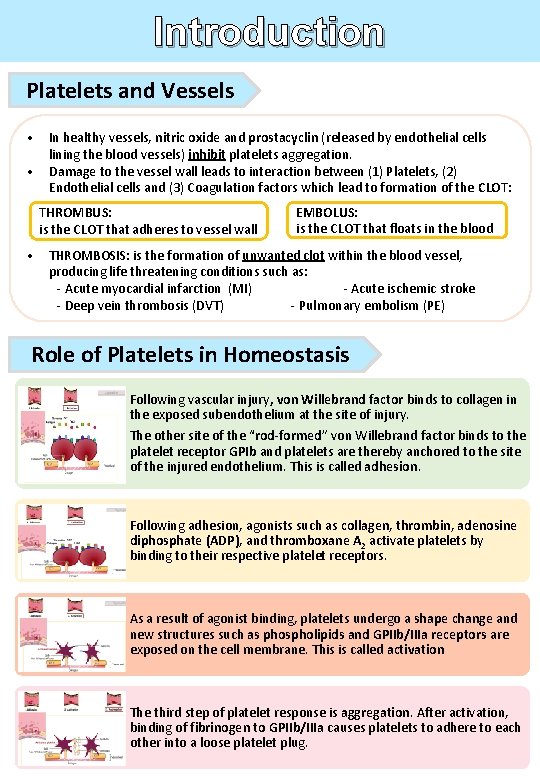
Introduction Platelets and Vessels • In healthy vessels, nitric oxide and prostacyclin (released by endothelial cells lining the blood vessels) inhibit platelets aggregation. • Damage to the vessel wall leads to interaction between (1) Platelets, (2) Endothelial cells and (3) Coagulation factors which lead to formation of the CLOT: THROMBUS: is the CLOT that adheres to vessel wall EMBOLUS: is the CLOT that floats in the blood • THROMBOSIS: is the formation of unwanted clot within the blood vessel, producing life threatening conditions such as: - Acute myocardial infarction (MI) - Acute ischemic stroke - Deep vein thrombosis (DVT) - Pulmonary embolism (PE) Role of Platelets in Homeostasis Following vascular injury, von Willebrand factor binds to collagen in the exposed subendothelium at the site of injury. The other site of the “rod-formed” von Willebrand factor binds to the platelet receptor GPIb and platelets are thereby anchored to the site of the injured endothelium. This is called adhesion. Following adhesion, agonists such as collagen, thrombin, adenosine diphosphate (ADP), and thromboxane A 2 activate platelets by binding to their respective platelet receptors. As a result of agonist binding, platelets undergo a shape change and new structures such as phospholipids and GPIIb/IIIa receptors are exposed on the cell membrane. This is called activation The third step of platelet response is aggregation. After activation, binding of fibrinogen to GPIIb/IIIa causes platelets to adhere to each other into a loose platelet plug.
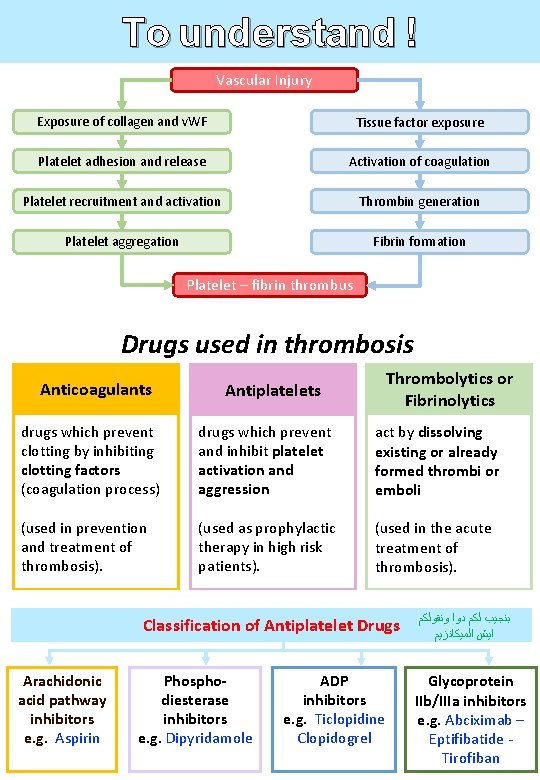
To understand ! Vascular Injury Exposure of collagen and v. WF Tissue factor exposure Platelet adhesion and release Activation of coagulation Platelet recruitment and activation Thrombin generation Platelet aggregation Fibrin formation Platelet – fibrin thrombus Drugs used in thrombosis Anticoagulants Antiplatelets Thrombolytics or Fibrinolytics drugs which prevent clotting by inhibiting clotting factors (coagulation process) drugs which prevent and inhibit platelet activation and aggression act by dissolving existing or already formed thrombi or emboli (used in prevention and treatment of thrombosis). (used as prophylactic therapy in high risk patients). (used in the acute treatment of thrombosis). Classification of Antiplatelet Drugs Arachidonic acid pathway inhibitors e. g. Aspirin Phosphodiesterase inhibitors e. g. Dipyridamole ADP inhibitors e. g. Ticlopidine Clopidogrel ﺑﻨﺠﻴﺐ ﻟﻜﻢ ﺩﻭﺍ ﻭﻧﻘﻮﻟﻜﻢ ﺍﻳﺶ ﺍﻟﻤﻴﻜﺎﻧﺰﻳﻢ Glycoprotein IIb/IIIa inhibitors e. g. Abciximab – Eptifibatide Tirofiban
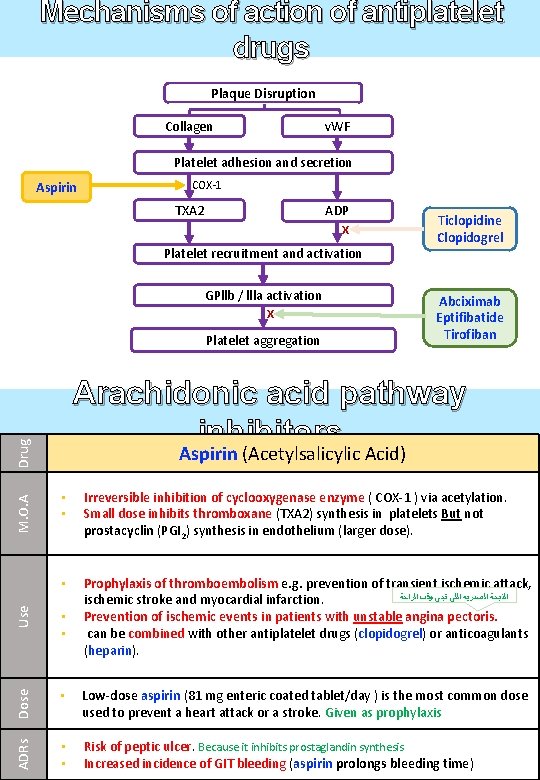
Mechanisms of action of antiplatelet drugs Plaque Disruption Collagen v. WF Platelet adhesion and secretion Aspirin COX-1 TXA 2 ADP X Platelet recruitment and activation GPllb / llla activation X Platelet aggregation Abciximab Eptifibatide Tirofiban Drug Arachidonic acid pathway inhibitors Aspirin (Acetylsalicylic Acid) • Prophylaxis of thromboembolism e. g. prevention of transient ischemic attack, ﺍﻟﺬﺑﺤﺔ ﺍﻟﺼﺪﺭﻳﻪ ﺍﻟﻠﻲ ﺗﺠﻲ ﻭﻗﺖ ﺍﻟﺮﺍﺣﺔ ischemic stroke and myocardial infarction. Prevention of ischemic events in patients with unstable angina pectoris. can be combined with other antiplatelet drugs (clopidogrel) or anticoagulants (heparin). Use Irreversible inhibition of cyclooxygenase enzyme ( COX-1 ) via acetylation. Small dose inhibits thromboxane (TXA 2) synthesis in platelets But not prostacyclin (PGI 2) synthesis in endothelium (larger dose). • • Dose • • • Low-dose aspirin (81 mg enteric coated tablet/day ) is the most common dose used to prevent a heart attack or a stroke. Given as prophylaxis ADRs M. O. A Ticlopidine Clopidogrel • • Risk of peptic ulcer. Because it inhibits prostaglandin synthesis Increased incidence of GIT bleeding (aspirin prolongs bleeding time)

ﺍﺗﻜﻠﻮﺍ ﺑﺎﻟﺪﻳﻦ Ticlopidine ﺻﺎﺭ ﻛﻠﻮ ﺑﺪﻭ ﻗﻴﺮﻝ Clopidogrel Better! These drugs specifically and irreversibly inhibit ADP receptor of subtype P 2 Y 12*, which is required for platelets activation thus prevent platelet aggregation. * P 2 Y 12 is purinergic receptor and is a chemoreceptor for adenosine diphosphate (ADP). Secondary prevention of ischemic complications after myocardial infarction, ischemic stroke and unstable angina. • • Drug Interactions P. K Bye to you (P 2 Y) ﻧﻘﻮﻝ ﺍﻷﺪﺏ ﻣﻦ Use are given orally. have slow onset of action (3 - 5 days). pro-drugs, they have to be activated in the liver. bound to plasma proteins • • ADRs M. O. A Drug ADP pathway inhibitors ﺍﻟﺪﻳﻦ ﻛﻠﻪ ﺃﺪﺏ ﺍﻟﺒﻨﺖ ﺣﻼﻫﺎ ﺑﺎﻷﺪﺏ (ADP= dine) (ADP= Grel/Girl) Sever neutropenia, CBC should be done monthly during treatment. ﻭﺳﻄﻲ ﺩﻳﻨﻨﺎ ﻷﻦ ، ﺑﺎﻟﺪﻳﻦ ﺍﺗﻜﻠﻮﺍ Bleeding ( prolong bleeding time ). (neutralize = neutropenia) Worse with ticlopidine G. I. T : nausea, dyspepsia, diarrhea. (ticlopidine) Allergic reactions. inhibit CYT P 450 causing increased plasma levels of drugs such as phenytoin and carbamazepine. Notes • • can’t be taken with food • • Why clopidogril had replaced • ticlopidine? Indication • is more potent than ticlopidine Longer duration of action than ticlopidine Less frequency of administration (given once daily ). Less side effects (less neutropenia). Bioavailability is unaffected by food. Clopidogrel has replaced ticlopidine For patients with a history of recent myocardial infarction (MI), recent stroke, or established peripheral ﻛﻠﻬﺎ ﺯﻱ ﺑﻌﺾ ﺍﻻ arterial disease. ﺍﻻﺳﺒﻴﺮﻳﻦ ﺑﺮﻭﻓﻴﻼﻛﺴﺲ • For patients with acute coronary syndrome (unstable angina/ MI): either those managed medically or with percutaneous coronary intervention* (PCI) with or without stent. • *Coronary angioplasty (percutaneous coronary intervention, PCI) is a procedure used to open clogged heart arteries. Angioplasty involves temporarily inserting and inflating a tiny balloon to help widen the artery.
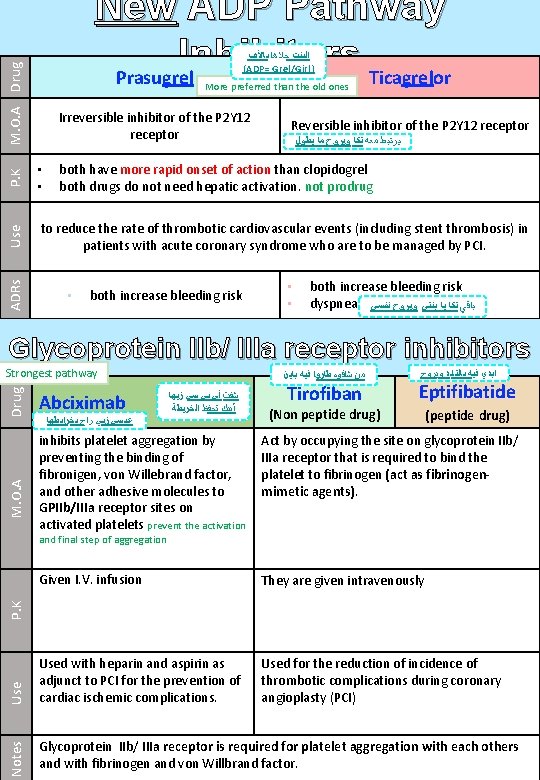
New ADP Pathway Inhibitors Prasugrel Ticagrelor M. O. A Drug ﺍﻟﺒﻨﺖ ﺣﻼﻫﺎ ﺑﺎﻷﺪﺏ (ADP= Grel/Girl) More preferred than the old ones Irreversible inhibitor of the P 2 Y 12 receptor Reversible inhibitor of the P 2 Y 12 receptor ﻭﻳﺮﻭﺡ ﻣﺎ ﻳﻄﻮﻝ ﺗﻜﺎ ﻣﻌﻪ ﻳﺮﺗﺒﻂ P. K to reduce the rate of thrombotic cardiovascular events (including stent thrombosis) in patients with acute coronary syndrome who are to be managed by PCI. ADRs Use both have more rapid onset of action than clopidogrel both drugs do not need hepatic activation. not prodrug • • • both increase bleeding risk dyspnea ﻭﻳﺮﻭﺡ ﻧﻔﺴﻲ ﺗﻜﺎ ﻳﺎ ﺑﻨﺘﻲ ﺑﺎﻗﻲ Glycoprotein IIb/ IIIa receptor inhibitors Abciximab ﻃﺎﺭﻭﺍ ﻓﻴﻪ ﺑﺎﻳﻦ ﺷﺎﻓﻮﻩ ﻣﻦ ﺯﻳﻬﺎ ﺃﻲ ﺑﻲ ﺳﻲ ﺷﻔﺖ ﺍﻟﺨﺮﻳﻄﺔ ﺗﺤﻔﻆ ﺃﺒﻴﻚ Eptifibatide (Non peptide drug) (peptide drug) Act by occupying the site on glycoprotein IIb/ IIIa receptor that is required to bind the platelet to fibrinogen (act as fibrinogenmimetic agents). Given I. V. infusion They are given intravenously Used with heparin and aspirin as adjunct to PCI for the prevention of cardiac ischemic complications. Used for the reduction of incidence of thrombotic complications during coronary angioplasty (PCI) Glycoprotein IIb/ IIIa receptor is required for platelet aggregation with each others and with fibrinogen and von Willbrand factor. M. O. A inhibits platelet aggregation by preventing the binding of fibronigen, von Willebrand factor, and other adhesive molecules to GPIIb/IIIa receptor sites on activated platelets prevent the activation Use ﺑﺨﺮﺍﻳﻄﻬﺎ ﺭﺍﺡ ﺯﻳﻲ ﻋﺒﺴﻲ Tirofiban ﻭﻳﺮﻭﺡ ﺑﺎﻟﺘﺎﻳﺪ ﻓﻴﻪ ﺍﺑﺪﻱ Notes Drug Strongest pathway P. K and final step of aggregation

Use M. O. A Drug Phosphodiesterase Inhibiter Two mole of phosphate Dipyridamole = Phosphodiesterase Dipyridamole • • It is a vasodilator. Inhibits phosphodiestrase ( an enzyme that normally break down c. AMP) thus increases c. AMP and decreased synthesis of thromboxane A 2 and other platelet aggregating factors. • • Given orally. Adjunctive therapy for prophylaxis of thromboembolism in cardiac valve replacement (with warfarin). Secondary prevention of stroke and transient ischemic attack (with aspirin). • ADRs used in combination with other drugs due to its Weakness • • Headache Postural hypotension Because it’s a vasodialator Summary Mechanism of action Drug ROA Inhibition of thromboxane A 2 synthesis via inhibiting COX-1 Aspirin Oral ADP receptor antagonists Clopidogrel Ticlopidine GP IIb / IIIa receptor antagonists Phosphodiestrase (PDE) inhibitor Abciximab Tirofiban Eptifibatide Dipyridamole Oral I. V. Given in surgeries Oral
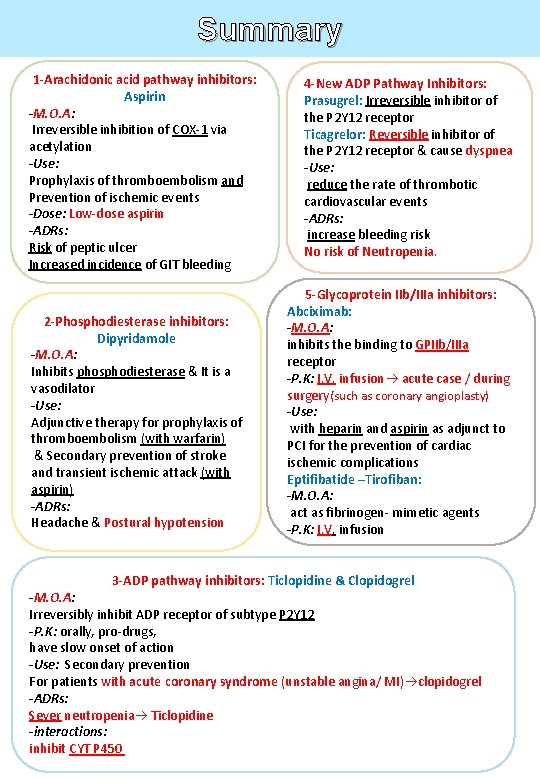
Summary 1 -Arachidonic acid pathway inhibitors: Aspirin -M. O. A: Irreversible inhibition of COX-1 via acetylation -Use: Prophylaxis of thromboembolism and Prevention of ischemic events -Dose: Low-dose aspirin -ADRs: Risk of peptic ulcer Increased incidence of GIT bleeding 2 -Phosphodiesterase inhibitors: Dipyridamole -M. O. A: Inhibits phosphodiesterase & It is a vasodilator -Use: Adjunctive therapy for prophylaxis of thromboembolism (with warfarin) & Secondary prevention of stroke and transient ischemic attack (with aspirin) -ADRs: Headache & Postural hypotension 4 -New ADP Pathway Inhibitors: Prasugrel: Irreversible inhibitor of the P 2 Y 12 receptor Ticagrelor: Reversible inhibitor of the P 2 Y 12 receptor & cause dyspnea -Use: reduce the rate of thrombotic cardiovascular events -ADRs: increase bleeding risk No risk of Neutropenia. 5 -Glycoprotein IIb/IIIa inhibitors: Abciximab: -M. O. A: inhibits the binding to GPIIb/IIIa receptor -P. K: I. V. infusion acute case / during surgery(such as coronary angioplasty) -Use: with heparin and aspirin as adjunct to PCI for the prevention of cardiac ischemic complications Eptifibatide –Tirofiban: -M. O. A: act as fibrinogen- mimetic agents -P. K: I. V. infusion 3 -ADP pathway inhibitors: Ticlopidine & Clopidogrel -M. O. A: Irreversibly inhibit ADP receptor of subtype P 2 Y 12 -P. K: orally, pro-drugs, have slow onset of action -Use: Secondary prevention For patients with acute coronary syndrome (unstable angina/ MI) clopidogrel -ADRs: Sever neutropenia Ticlopidine -interactions: inhibit CYT P 450
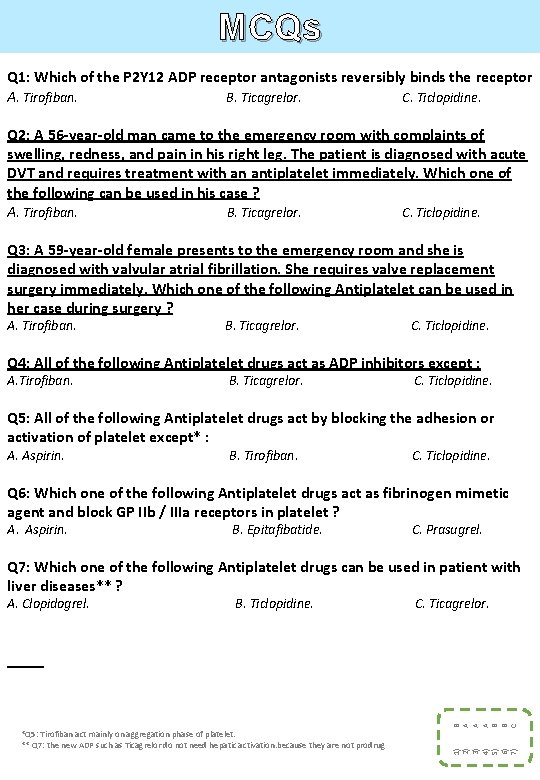
MCQs Q 1: Which of the P 2 Y 12 ADP receptor antagonists reversibly binds the receptor A. Tirofiban. B. Ticagrelor. C. Ticlopidine. Q 2: A 56 -year-old man came to the emergency room with complaints of swelling, redness, and pain in his right leg. The patient is diagnosed with acute DVT and requires treatment with an antiplatelet immediately. Which one of the following can be used in his case ? A. Tirofiban. B. Ticagrelor. C. Ticlopidine. Q 3: A 59 -year-old female presents to the emergency room and she is diagnosed with valvular atrial fibrillation. She requires valve replacement surgery immediately. Which one of the following Antiplatelet can be used in her case during surgery ? A. Tirofiban. B. Ticagrelor. C. Ticlopidine. Q 4: All of the following Antiplatelet drugs act as ADP inhibitors except : A. Tirofiban. B. Ticagrelor. C. Ticlopidine. Q 5: All of the following Antiplatelet drugs act by blocking the adhesion or activation of platelet except* : A. Aspirin. B. Tirofiban. C. Ticlopidine. Q 6: Which one of the following Antiplatelet drugs act as fibrinogen mimetic agent and block GP IIb / IIIa receptors in platelet ? A. Aspirin. B. Epitafibatide. C. Prasugrel. Q 7: Which one of the following Antiplatelet drugs can be used in patient with liver diseases** ? B. Ticlopidine. C. Ticagrelor. *Q 5: Tirofiban act mainly on aggregation phase of platelet. ** Q 7: the new ADP such as Ticagrelor do not need hepatic activation. because they are not prodrug 1) 2) 3) 4) 5) 6) 7) B A A A B B C A. Clopidogrel.

MCQs Q 8: Which of the following is a common serious side effect of ticlopidine ? A. Prolong Bleeding. B. Postural hypotension. C. Neutropenia. Q 9: Which one of the following Antiplatelet drugs should be monitored by complete blood count for the patient every month ? A. Clopidogrel. B. Ticlopidine. C. Ticagrelor. Q 10: Which one of the following Antiplatelet drugs is not recommended to be used in patient who is on phenytoin as anti-epileptic drug ? A. Tirofiban. B. Ticlopidine. C. Abciximab. Q 11: Which one of the following Antiplatelet drugs can cause dyspnea as adverse effect ? A. Tirofiban. B. Ticagrelor. C. Ticlopidine. Q 12: Which one of the following Antiplatelet drugs can cause postural hypotension as adverse effect ? A. Prasugrel. B. Clopidogrel. C. Dipyridamole. Q 13: Which one of the following drugs is the most potent as Antiplatelet ? A. Abciximab. B. Aspirin. . C. Clopidogrel. Q 14: Which one of the following Antiplatelet drugs act by blocking GP IIb/IIIa and inhibit platelet aggregation ? A. Abciximab. B. Ticagrelor. C. Prasugrel. Q 15: Which one of the following Antiplatelet drugs is given intravenously and can be used during operation and acute emergency case ? C. Clopidogrel. C B B B C A A A B. Aspirin. 8) 9) 10) 11) 12) 13) 14) 15) A. Abciximab.

- Slides: 11