
ANTIPHOSPHOLIPID ANTIBODY SYNDROME Rheumatology and Internal Diseases Clinic
ANTIPHOSPHOLIPID ANTIBODY SYNDROME Rheumatology and Internal Diseases Clinic Central Clinical Hospital in Warsaw, 137 Wołoska St, 02 -507 POLAND Prof. Małgorzata Wisłowska MD, Ph. D R 1

• The author has no conflicts of interest to disclose 2
APS • Diagnosis • Criteria • Pathogenesis • Clinical manifestation • Treatment • Own experience • CAPS own experience 3
ANTIPHOSPHOLIPID ANTIBODY SYNDROME (APS) Diagnosis 4
ANTIPHOSPHOLIPID ANTIBODY SYNDROME (APS) A synonym for APS is Hughes’ syndrome. Diagnosis requires that a patient have both a clinical event (thrombosis or pregnancy morbidity) and the persistent presence of antiphospholipid antibody (a. PL) documented by: a solid-phase serum assay (anticardiolipin or anti-beta 2 -glycoprotein I Ig. G or Ig. M), a coagulation assay (inhibitor of phospholipiddependent clotting – the lupus anticoagulant test), or both. 5
ANTIPHOSPHOLIPID ANTIBODY SYNDROME APS can occur as an isolated diagnosis, known as primary antiphospholipid antibody syndrome (PAPS), or it can be associated with systemic lupus erythematosus (SLE) or another rheumatic disease and is known as secondary APS (SAPS). 6
ANTIPHOSPHOLIPID ANTIBODIES Antiphospholipid antibodies (a. PL) can be induced by drugs and by infections. The probability that an asymptomatic person with positive tests for a. PL, discovered incidentally, will eventually develop the syndrome is low. 7
ANTIPHOSPHOLIPID ANTIBODY SYNDROME (APS) Criteria 8
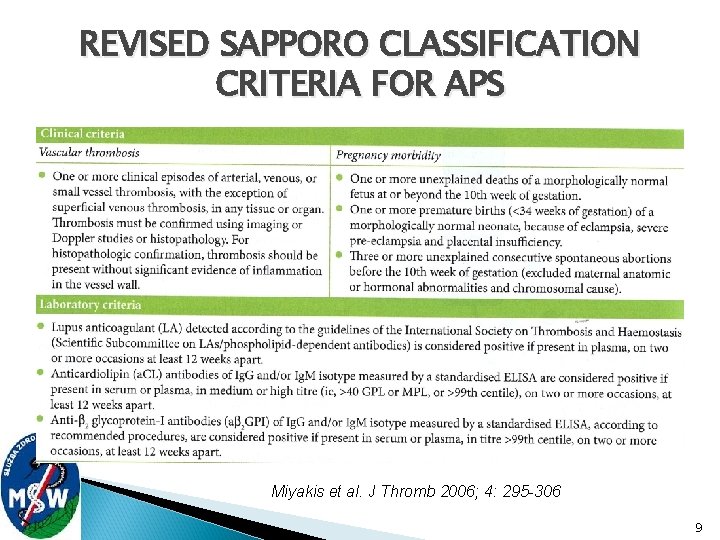
REVISED SAPPORO CLASSIFICATION CRITERIA FOR APS Miyakis et al. J Thromb 2006; 4: 295 -306 9
ANTIPHOSPHOLIPID ANTIBODIES Low-titer of antiphospholipid antibody (a. PL), usually transient, is found in up to 10% of normal blood donors and moderate-to high-titer anticardiolipin antibody or a positive lupus anticoagulant test in less than 1%. The prevalence of positive tests increases with age. 10
ANTIPHOSPHOLIPID ANTIBODIES The main antigen to which a. PLs binds is beta 2 GPI. Beta 2 GPI is a phospholipid-binding plasma protein present in serum at a concentration of 200 mg/m. L and is a member of the complement control protein family with a domain site that activates platelets. 11
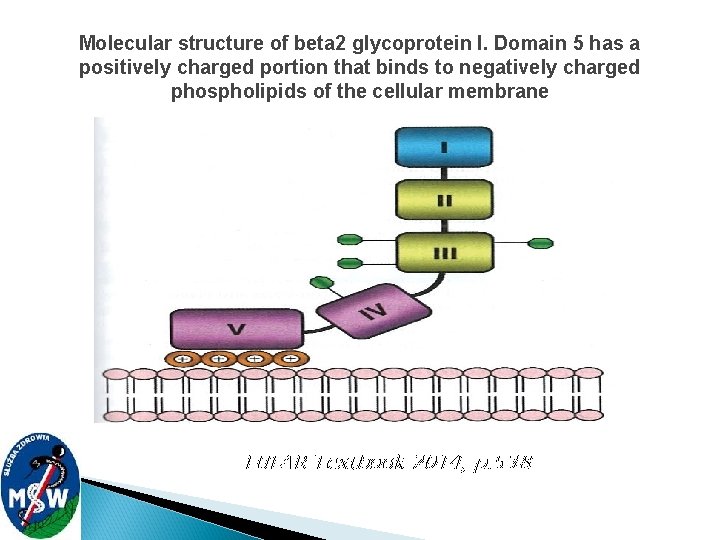
Molecular structure of beta 2 glycoprotein I. Domain 5 has a positively charged portion that binds to negatively charged phospholipids of the cellular membrane EULAR Textbook 2014, p. 538
ANTIPHOSPHOLIPID ANTIBODIES Beta 2 GPI binds to phosphatidylserine on activated or apoptotic cell membranes of trophoblasts, platelets, and endothelial cells. Under physiological conditions, beta 2 GPI may function in the elemination of apoptotic cells and as a natural anticoagulant. 13
ANTIPHOSPHOLIPID ANTIBODIES Other, less relevant antigens targeted by a. PLs are prothrombin, annexin V, protein C, protein S, kininogens, tissue plasminogen activator, factor VII, factor XII and complement component C 4. In experimental animal models, immunization with viral and bacterial peptides induces a. PLs Ab and clinical events associated with APS. 14
ANTIPHOSPHOLIPID ANTIBODY SYNDROME (APS) Pathogenesis 15
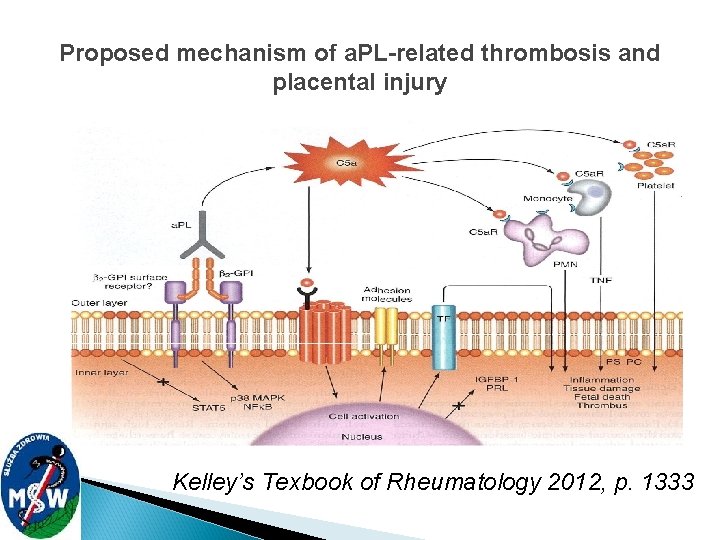
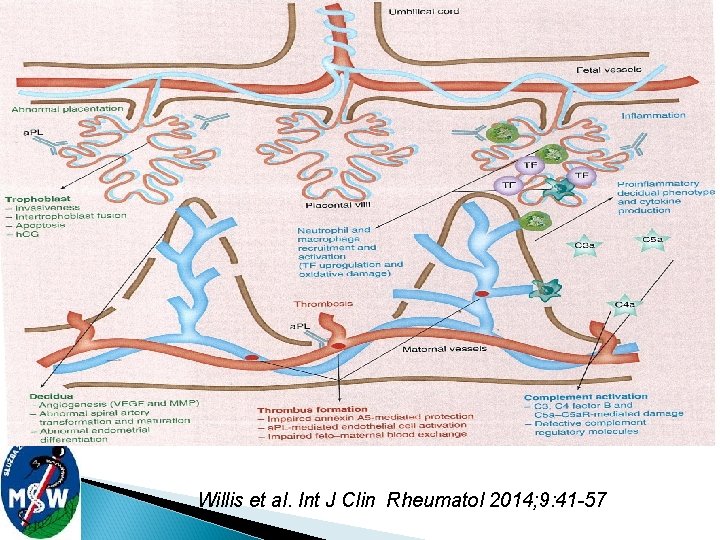
Proposed mechanism of a. PL-related thrombosis and placental injury Kelley’s Texbook of Rheumatology 2012, p. 1333
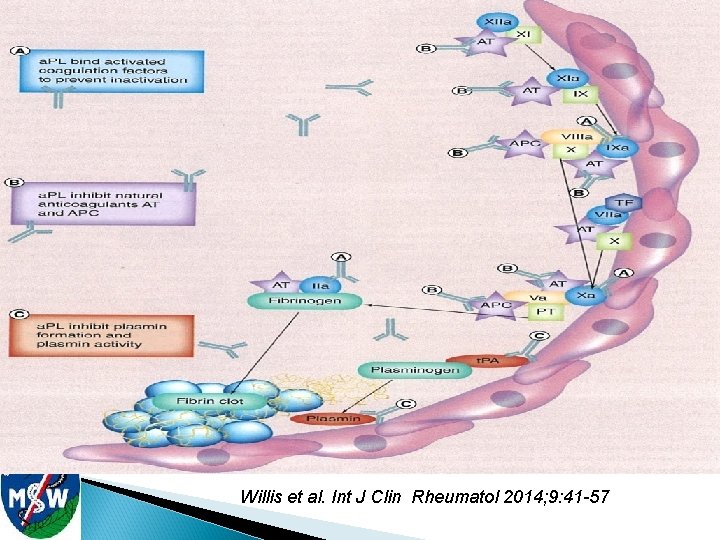
ANTIPHOSPHOLIPID ANTIBODY SYNDROME Proposed mechanism of thrombosis and placental injury. The process begins with activation or apoptosis of platelets, endothelial cells, or trophoblasts, during which the negatively charged phospholipid phosphatidylserine migrates from the inner to the outer cell membrane, which is normally electrically neutral. Circulating beta 2 GPI then binds to phosphatidylserine. APL then binds to a beta 2 GPIphosphatidylserine dimer. 17
Willis et al. Int J Clin Rheumatol 2014; 9: 41 -57
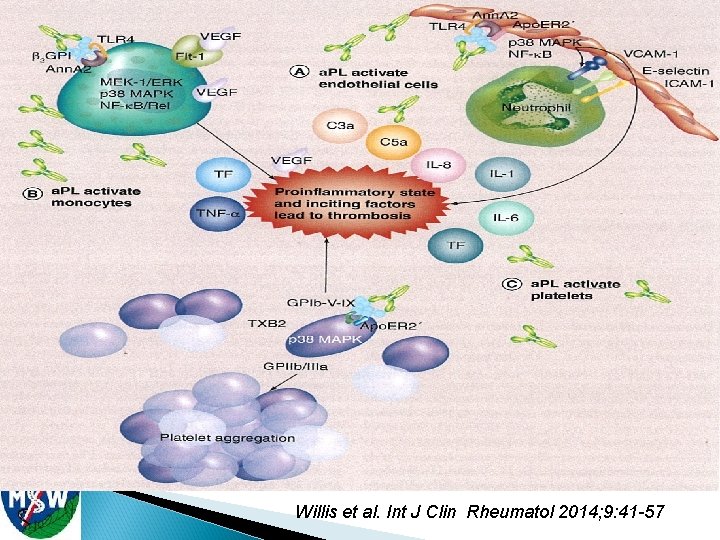
ANTIPHOSPHOLIPID ANTIBODY SYNDROME Proposed mechanism of thrombosis and placental injury. Antiphospholipid antibody-beta 2 GPI dimer binding activates the extracellular complement cascade; initiates an intracellular signaling cascade, and recruits and activates inflammatory effector cells. These include monocytes, neutrophils and platelets, and leads to the release of proinflammatory products (TNF, oxidans, proteases) and the induction of a prothrombotic phenotype. 19
Willis et al. Int J Clin Rheumatol 2014; 9: 41 -57
ANTIPHOSPHOLIPID ANTIBODY SYNDROME Proposed mechanism of thrombosis and placental injury. In addition, through downregulation of signal transducer and activator of transcription 5 (Stat 5) a. PLs inhibit the production of placental prolactin, insulin growth factor binding protein-1, and adversely affect formation of a trophoblast syncytium, placental apoptosis, and trophoblast invasion. 21
Willis et al. Int J Clin Rheumatol 2014; 9: 41 -57
ANTIPHOSPHOLIPID ANTIBODY SYNDROME Proposed mechanism of thrombosis and placental injury. Other possible contributory mechanisms of a. PL – mediated thrombosis include activation of circulating procoagulant proteins, inhibition of protein C and S activation, induction of tissue factor expression on monocytes and reduction of fibrynolysis. 23
ANTIPHOSPHOLIPID ANTIBODY SYNDROME (APS) Clinical manifestation 24
ANTIPHOSPHOLIPID ANTIBODY SYNDROME Clinical manifestations of APS range from asymptomatic a. PL serological positivity (no history of vascular or pregnancy events) to catastrophic APS (multiple thromboses occuring over days). 25
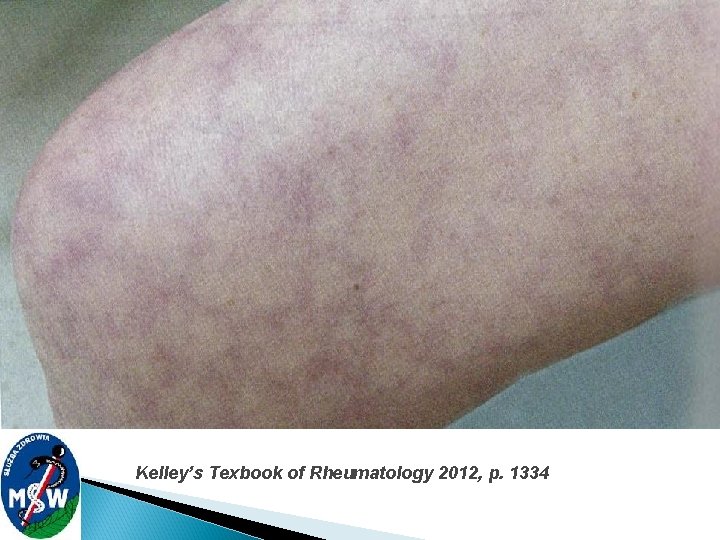
ANTIPHOSPHOLIPID ANTIBODY SYNDROME APS occurs as a multisystemic disease affecting all organ systems. Its principal manifestations are recurrent venous or arterial thromboses, recurrent pregnancy loss, and catastrophic vascular occlusion Many patients have livedo reticularis. Except for its severity, the young age of affected patients and unusual anatomic locations (Budd. Chiari syndrome and upper extremity thromboses), thromboses in APS do not clinically differ from thromboses attributable to other causes. 26
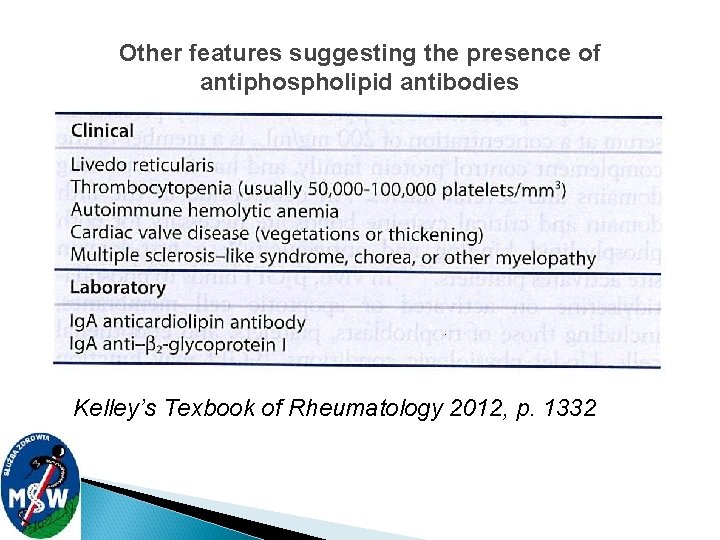
Other features suggesting the presence of antiphospholipid antibodies Kelley’s Texbook of Rheumatology 2012, p. 1332
Kelley’s Texbook of Rheumatology 2012, p. 1334
ANTIPHOSPHOLIPID ANTIBODY SYNDROME (APS) Treatment 29
ANTIPHOSPHOLIPID ANTIBODY SYNDROME Deep vein thrombosis and stroke are the most common clinical manifestations of APS. Treatment is anticoagulation with heparin or warfarin. 30
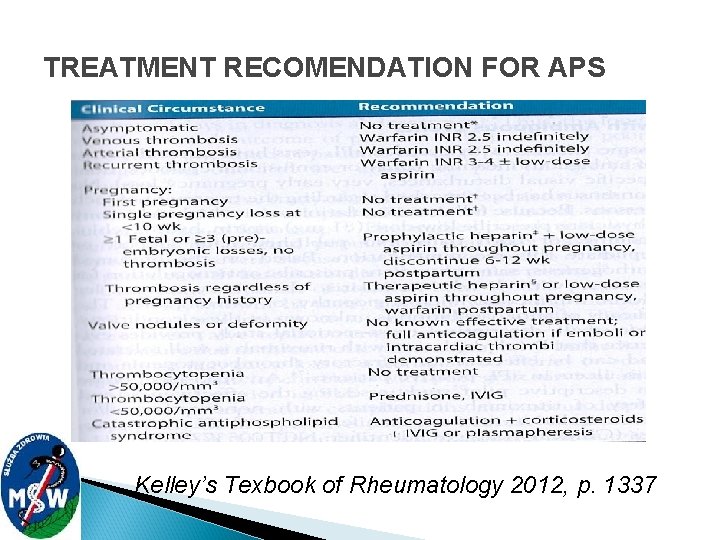
TREATMENT RECOMENDATION FOR APS Kelley’s Texbook of Rheumatology 2012, p. 1337
ANTIPHOSPHOLIPID ANTIBODY SYNDROME Immunomodulatory agents such as hydroxychloroquine and complement inhibitors have been found to reduce a. PL-mediated thrombosis in in vivo animal models, while there have been promising human pilot studies showing the benefit of statins and rituximab in treating APS patients. 32
ANTIPHOSPHOLIPID ANTIBODY SYNDROME Rivaroxaban a direct factor Xa inhibitor was tested as a treatment of the APS in RAPS trial. It has few drug and dietery interactions due to its mode of action. Frequent monitoring of its anticoagulant effect is not necessary. 33
ANTIPHOSPHOLIPID ANTIBODY SYNDROME Another approach to the reduction of a. PL activity in APS patients is the inhibition of the target cell receptors responsible for cell activation such as cellsurface receptors Apo. ER 2’, TLR 4, Ann. A 2 and GPIIb/IIIa in a. PL-induced activation of Ecs, monocytes and platelets in APS. 34
ANTIPHOSPHOLIPID ANTIBODY SYNDROME Complement inhibition The preclinical data shows the role of complement activation in the progression of thrombotic and obstetric complications in APS. The inhibition of the complement components C 3 and C 5 (eculizumab) in in vivo murine models have shown to limit the effects of a. PL in both thrombotic and obstretic complications. 35
ANTIPHOSPHOLIPID ANTIBODY SYNDROME (APS) Own experience 36
ANTIPHOSPHOLIPID ANTIBODY SYNDROME In our clinic we assessed the prevalence of SAPS in SLE patients hospitalized within the last 6 months and their quality of life. The study group consisted of 101 people of mean age 54. 9± 12. 6 years, the age of the youngest being 22 and the oldest 76 years. 96. 5% of the patients were women. The average disease duration was 7 years, varied from one to 50 years. Rheumatology and Internal Diseases Clinic Central Clinical Hospital in Warsaw, 137 Wołoska St. , 02 -507 POLAND Prof. Małgorzata Wisłowska MD, Ph. D 37
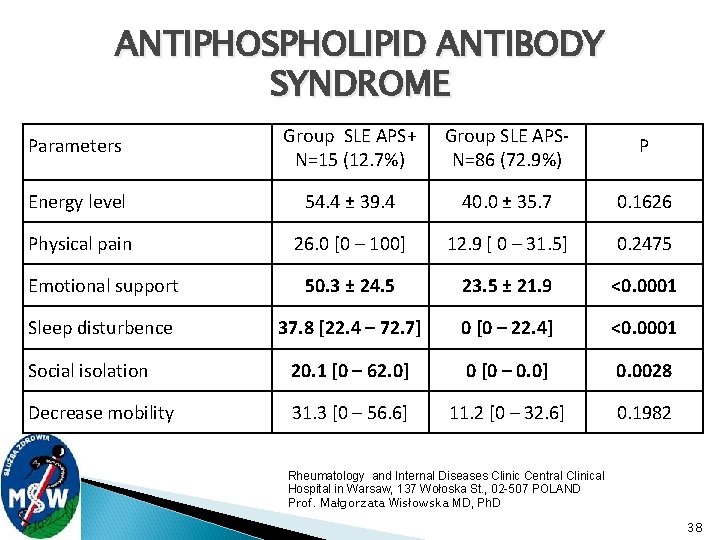
ANTIPHOSPHOLIPID ANTIBODY SYNDROME Parameters Group SLE APS+ N=15 (12. 7%) Group SLE APSN=86 (72. 9%) P Energy level 54. 4 ± 39. 4 40. 0 ± 35. 7 0. 1626 Physical pain 26. 0 [0 – 100] 12. 9 [ 0 – 31. 5] 0. 2475 Emotional support 50. 3 ± 24. 5 23. 5 ± 21. 9 <0. 0001 Sleep disturbence 37. 8 [22. 4 – 72. 7] 0 [0 – 22. 4] <0. 0001 Social isolation 20. 1 [0 – 62. 0] 0 [0 – 0. 0] 0. 0028 Decrease mobility 31. 3 [0 – 56. 6] 11. 2 [0 – 32. 6] 0. 1982 Rheumatology and Internal Diseases Clinic Central Clinical Hospital in Warsaw, 137 Wołoska St. , 02 -507 POLAND Prof. Małgorzata Wisłowska MD, Ph. D 38
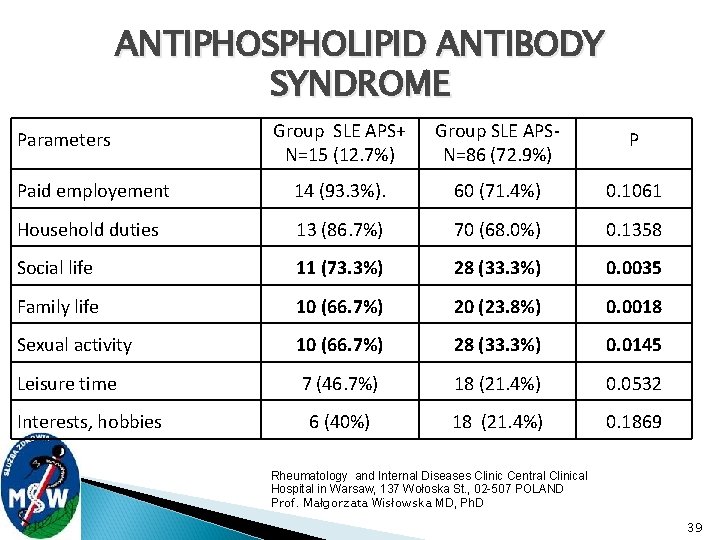
ANTIPHOSPHOLIPID ANTIBODY SYNDROME Group SLE APS+ N=15 (12. 7%) Group SLE APSN=86 (72. 9%) P Paid employement 14 (93. 3%). 60 (71. 4%) 0. 1061 Household duties 13 (86. 7%) 70 (68. 0%) 0. 1358 Social life 11 (73. 3%) 28 (33. 3%) 0. 0035 Family life 10 (66. 7%) 20 (23. 8%) 0. 0018 Sexual activity 10 (66. 7%) 28 (33. 3%) 0. 0145 Leisure time 7 (46. 7%) 18 (21. 4%) 0. 0532 6 (40%) 18 (21. 4%) 0. 1869 Parameters Interests, hobbies Rheumatology and Internal Diseases Clinic Central Clinical Hospital in Warsaw, 137 Wołoska St. , 02 -507 POLAND Prof. Małgorzata Wisłowska MD, Ph. D 39
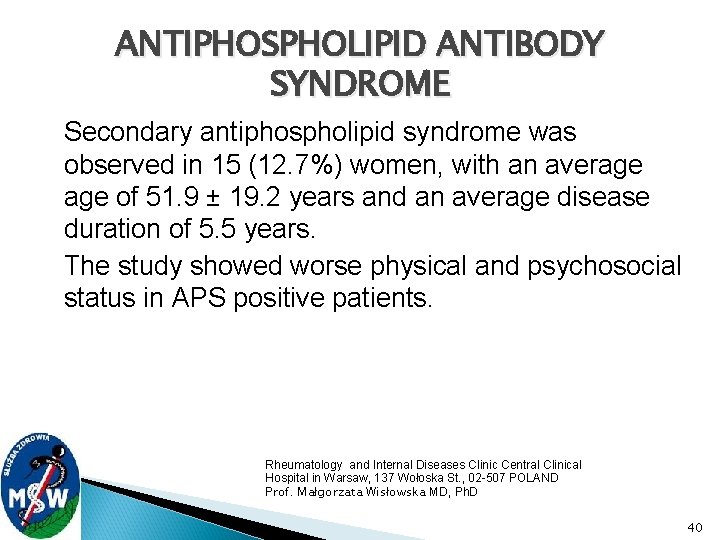
ANTIPHOSPHOLIPID ANTIBODY SYNDROME Secondary antiphospholipid syndrome was observed in 15 (12. 7%) women, with an average of 51. 9 ± 19. 2 years and an average disease duration of 5. 5 years. The study showed worse physical and psychosocial status in APS positive patients. Rheumatology and Internal Diseases Clinic Central Clinical Hospital in Warsaw, 137 Wołoska St. , 02 -507 POLAND Prof. Małgorzata Wisłowska MD, Ph. D 40
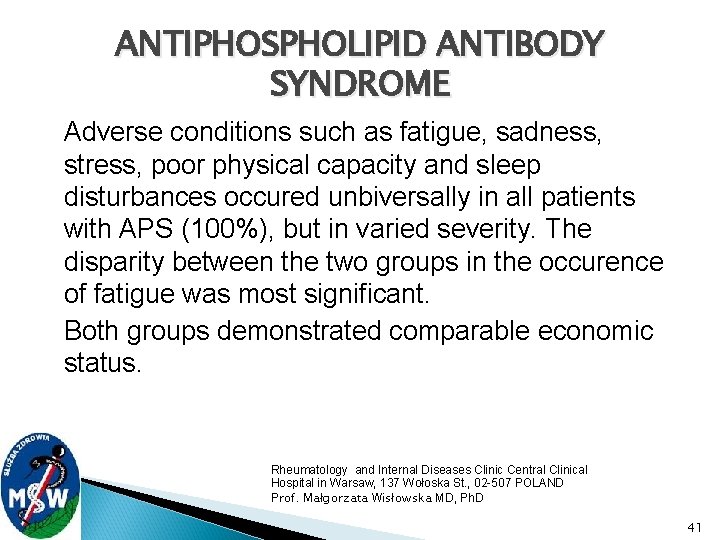
ANTIPHOSPHOLIPID ANTIBODY SYNDROME Adverse conditions such as fatigue, sadness, stress, poor physical capacity and sleep disturbances occured unbiversally in all patients with APS (100%), but in varied severity. The disparity between the two groups in the occurence of fatigue was most significant. Both groups demonstrated comparable economic status. Rheumatology and Internal Diseases Clinic Central Clinical Hospital in Warsaw, 137 Wołoska St. , 02 -507 POLAND Prof. Małgorzata Wisłowska MD, Ph. D 41
ANTIPHOSPHOLIPID ANTIBODY SYNDROME (APS) CAPS 42
CATASTROPHIC ANTIPHOSPHOLIPID ANTIBODY SYNDROME The catastrophic variant is the most severe form of the APS syndrome. Patients with this variant present the following characteristics: clinical evidence of multiple organ involvement that develops over a very short period of time (usually less than a week); histopathological features of small vessel occlusions; and laboratory confirmation of the presence of antiphospholipid antibodies. 43
CATASTROPHIC ANTIPHOSPHOLIPID ANTIBODY SYNDROME Described by Ronald Asherson in 1992, this subset is now reffered to as Asherson’s syndrome. Although less than 1% of patients with APS develop this catastrophic variant, its high mortality (30%) emphasizes its importance in clinical medicine today. The majority of patients with this condition end up in intensive care units with multiorgan failure. 44
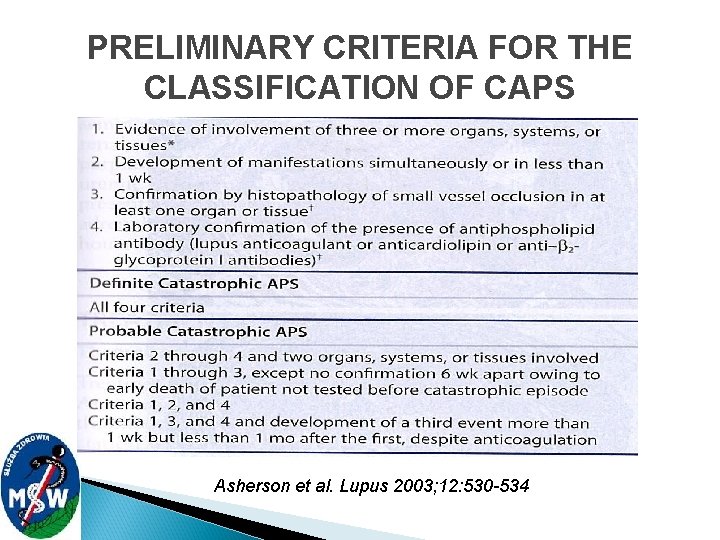
PRELIMINARY CRITERIA FOR THE CLASSIFICATION OF CAPS Asherson et al. Lupus 2003; 12: 530 -534
CATASTROPHIC ANTIPHOSPHOLIPID ANTIBODY SYNDROME From a histopathological point of view, catastrophic APS is a thrombotic microangiopathic condition. The CAPS should be treated with the combination of anticoagulants and intravenous glucocorticoids in high doses. Attemps at achieving a prompt reduction of a. PL titer (i. e. plasma exchange and/or intravenous immunoglobulins) should be taken. CAPS secondary to SLE is also treated with cyclophosphomide. 46
CATASTROPHIC ANTIPHOSPHOLIPID ANTIBODY SYNDROME Since CAPS is so rare, collecting a sufficient patient number for epidemiological and clinical research is difficult. Because of this cooperation between clinical centrers is necessary. The international registry for patients with CAPS https: //ontocrf. costaisa. com/en/web/caps. Consulting avaible: www. med. ub. es/MIMMUN/FORUM/CAPS. HTM. . We also had a patient with this syndrome. 47
ANTIPHOSPHOLIPID ANTIBODY SYNDROME (APS) CAPS own experience 48
CATASTROPHIC ANTIPHOSPHOLIPID ANTIBODY SYNDROME In our hospital we observed a case of a 26 -year-old women in her 25 th week of pregnancy with CAPS and SLE. In the 20 th week of pregnancy she rapidly developed left and right sural thrombophlebitis appeared, microembolic pulmonary disease, nephrotic syndrome with 12. 0 g proteinuria per day, skin ulcers on her nose and cheeks, and disorientation and hallucinations. She tested positive both ANA and a. CL. Rheumatology and Internal Diseases Clinic Central Clinical Hospital in Warsaw, 137 Wołoska St. , 02 -507 POLAND Prof. Małgorzata Wisłowska MD, Ph. D 49
CATASTROPHIC ANTIPHOSPHOLIPID ANTIBODY SYNDROME Patient was treated with pulses of Solu-Medrol, Fraxiparine and Cyclophosphomide. We observed miscarriage but the patient recovered. Rheumatology and Internal Diseases Clinic Central Clinical Hospital in Warsaw, 137 Wołoska St. , 02 -507 POLAND Prof. Małgorzata Wisłowska MD, Ph. D 50
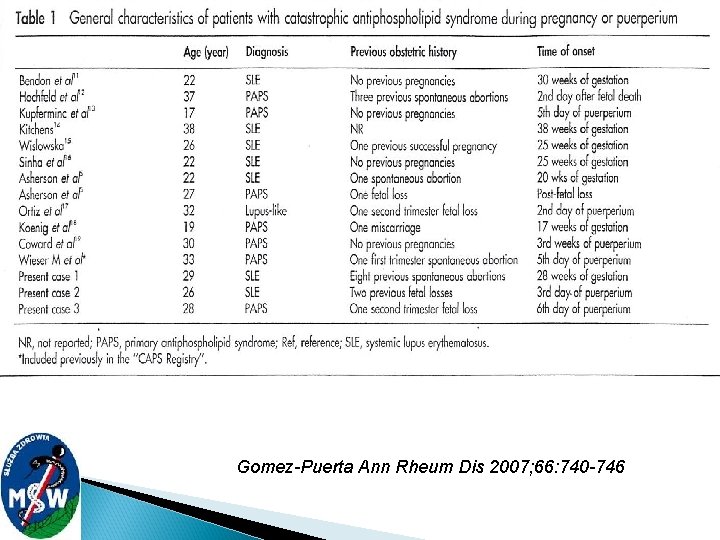
Gomez-Puerta Ann Rheum Dis 2007; 66: 740 -746
- Slides: 51