
AntiMllerian Hormone Deficiency in Females with Inherited Bone
Anti-Müllerian Hormone Deficiency in Females with Inherited Bone Marrow Failure Syndromes Martha Sklavos, Ph. D, PMP HPV Immunology Lab Leidos Biomedical Research, Inc. Frederick National Laboratory For Cancer Research
Outline • Background – Fanconi Anemia (FA) – Dyskeratosis Congenita (DC) – Diamon-Blackfan Anemia (DBA) • Females with Fanconi Anemia • Primary Ovarian Insufficiency (POI) & Anti-Müllerian Hormone (AMH) – What are they and how are they related – Can AMH serve as marker of POI in FA? • Females with FA are deficient in AMH, what about DC and DBA?
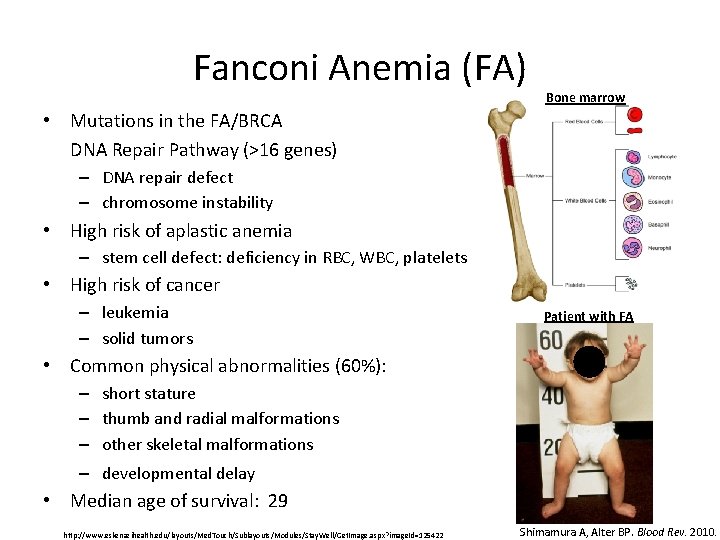
Fanconi Anemia (FA) Bone marrow • Mutations in the FA/BRCA DNA Repair Pathway (>16 genes) – DNA repair defect – chromosome instability • High risk of aplastic anemia – stem cell defect: deficiency in RBC, WBC, platelets • High risk of cancer – leukemia – solid tumors Patient with FA • Common physical abnormalities (60%): – short stature – thumb and radial malformations – other skeletal malformations – developmental delay • Median age of survival: 29 http: //www. eskenazihealth. edu/layouts/Med. Touch/Sublayouts/Modules/Stay. Well/Get. Image. aspx? image. Id=125422 Shimamura A, Alter BP. Blood Rev. 2010.
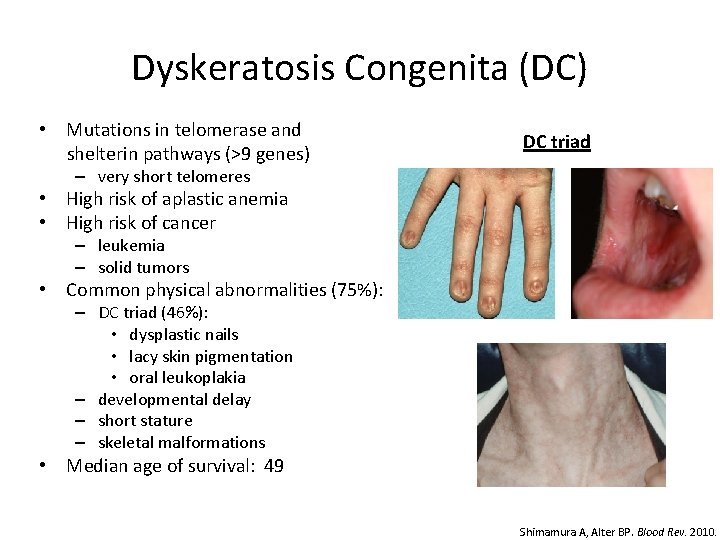
Dyskeratosis Congenita (DC) • Mutations in telomerase and shelterin pathways (>9 genes) DC triad – very short telomeres • High risk of aplastic anemia • High risk of cancer – leukemia – solid tumors • Common physical abnormalities (75%): – DC triad (46%): • dysplastic nails • lacy skin pigmentation • oral leukoplakia – developmental delay – short stature – skeletal malformations • Median age of survival: 49 Shimamura A, Alter BP. Blood Rev. 2010.
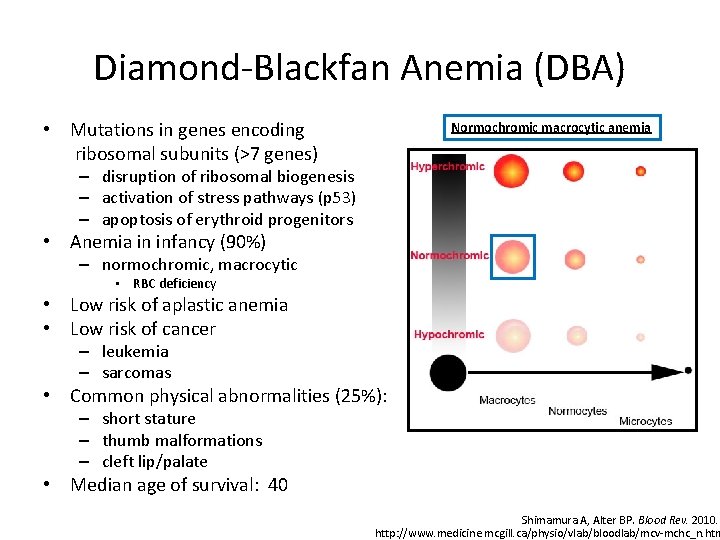
Diamond-Blackfan Anemia (DBA) • Mutations in genes encoding ribosomal subunits (>7 genes) Normochromic macrocytic anemia – disruption of ribosomal biogenesis – activation of stress pathways (p 53) – apoptosis of erythroid progenitors • Anemia in infancy (90%) – normochromic, macrocytic • RBC deficiency • Low risk of aplastic anemia • Low risk of cancer – leukemia – sarcomas • Common physical abnormalities (25%): – short stature – thumb malformations – cleft lip/palate • Median age of survival: 40 Shimamura A, Alter BP. Blood Rev. 2010. http: //www. medicine. mcgill. ca/physio/vlab/bloodlab/mcv-mchc_n. htm
Focus on Fanconi Anemia (FA) • FA is the most severe IBMFS – earliest age of onset of aplastic anemia – youngest median age for cancer-free survival: 29 » most common FA cancers (relative risk): • acute myelogenous leukemia (AML) (600 -fold) • head and neck (SCC) (500 -fold) • cervical and vulvar SCC (3, 000 -fold) • Compared to other IBMFS, females with FA had: – – – a higher rate of irregular menses a higher rate of infertility lower rates of pregnancy a higher rate of gynecological neoplasia a higher rate of primary ovarian insufficiency (POI) Stratton P, Giri N, Alter BP. Society for Gynecologic Investigation Meeting, March 2010 Shimamura A, Alter BP. Blood Rev. 2010. SEER data
Primary Ovarian Insufficiency (POI) • Definition of POI When at least one of the following occurs prior to age 40 – establishment of a suboptimal follicular pool – follicular dysfunction – accelerated depletion of the follicular pool • Diagnosis of POI – 2 elevated measures of follicle-stimulating hormone (FSH) – amenorrhea for more than 4 months • Marker of POI Anti-Müllerian hormone (AMH) has been shown to be a better marker of diminished ovarian reserve/POI compared with FSH Welt CK. Clin Endocrinol (Oxf). 2008 Nelson LM. N Engl J Med. 2009 Kunt C, et. al. Arch Gynecol Obstet. 2011
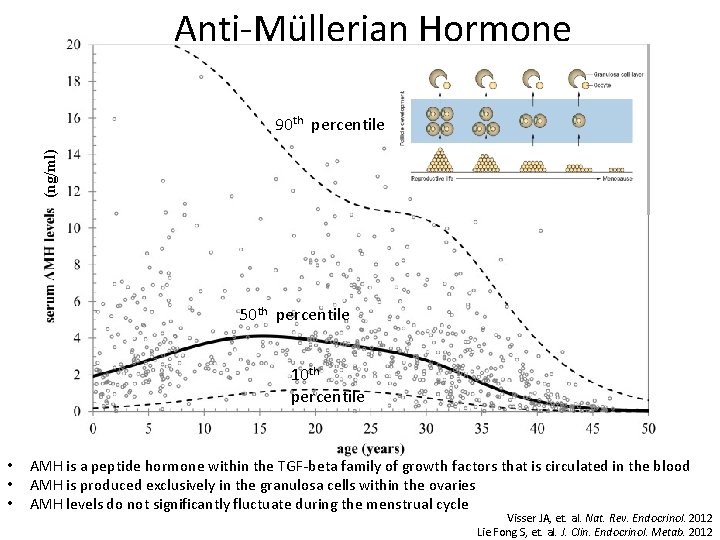
Anti-Müllerian Hormone Puber (ng/ml) 90 th percentile 50 th percentile 10 th percentile • • • AMH is a peptide hormone within the TGF-beta family of growth factors that is circulated in the blood AMH is produced exclusively in the granulosa cells within the ovaries AMH levels do not significantly fluctuate during the menstrual cycle Visser JA, et. al. Nat. Rev. Endocrinol. 2012 Lie Fong S, et. al. J. Clin. Endocrinol. Metab. 2012
Can AMH serve as a cycle‐ independent marker of POI in female FA patients?
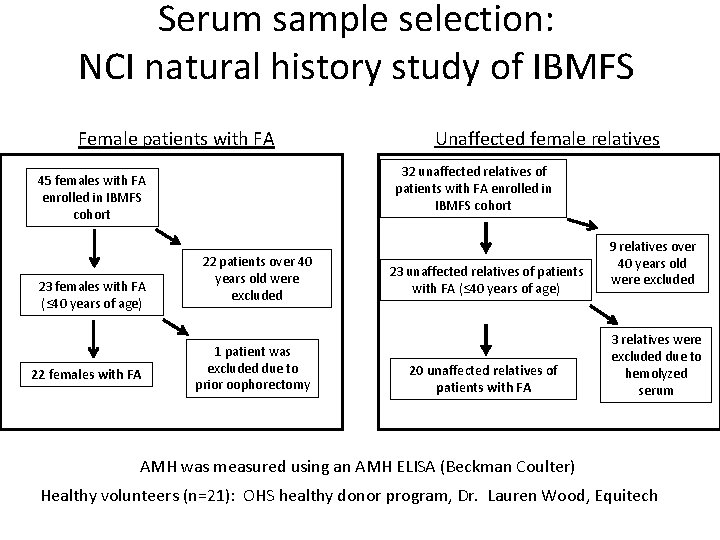
Serum sample selection: NCI natural history study of IBMFS Unaffected female relatives Female patients with FA 32 unaffected relatives of patients with FA enrolled in IBMFS cohort 45 females with FA enrolled in IBMFS cohort 23 females with FA (≤ 40 years of age) 22 females with FA 22 patients over 40 years old were excluded 1 patient was excluded due to prior oophorectomy 23 unaffected relatives of patients with FA (≤ 40 years of age) 20 unaffected relatives of patients with FA 9 relatives over 40 years old were excluded 3 relatives were excluded due to hemolyzed serum AMH was measured using an AMH ELISA (Beckman Coulter) Healthy volunteers (n=21): OHS healthy donor program, Dr. Lauren Wood, Equitech
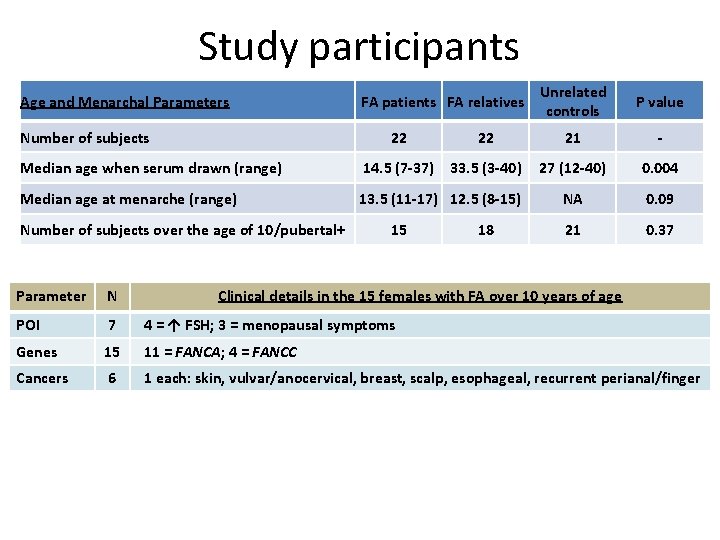
Study participants Age and Menarchal Parameters Number of subjects FA patients FA relatives 22 22 Unrelated controls P value 21 ‐ Median age when serum drawn (range) 14. 5 (7‐ 37) 33. 5 (3‐ 40) 27 (12‐ 40) 0. 004 Median age at menarche (range) 13. 5 (11‐ 17) 12. 5 (8‐ 15) NA 0. 09 21 0. 37 Number of subjects over the age of 10/pubertal+ 15 18 Parameter N Clinical details in the 15 females with FA over 10 years of age POI 7 4 = ↑ FSH; 3 = menopausal symptoms Genes 15 11 = FANCA; 4 = FANCC Cancers 6 1 each: skin, vulvar/anocervical, breast, scalp, esophageal, recurrent perianal/finger

FA patients have significantly lower levels of AMH when compared to unaffected relatives and healthy volunteers * * Sklavos MM, Giri N, Stratton P, Alter BP, Pinto LA. J Clin Endocrinol Metab. 2014 Jan 17: jc 20133559. *Mann Whitney Test
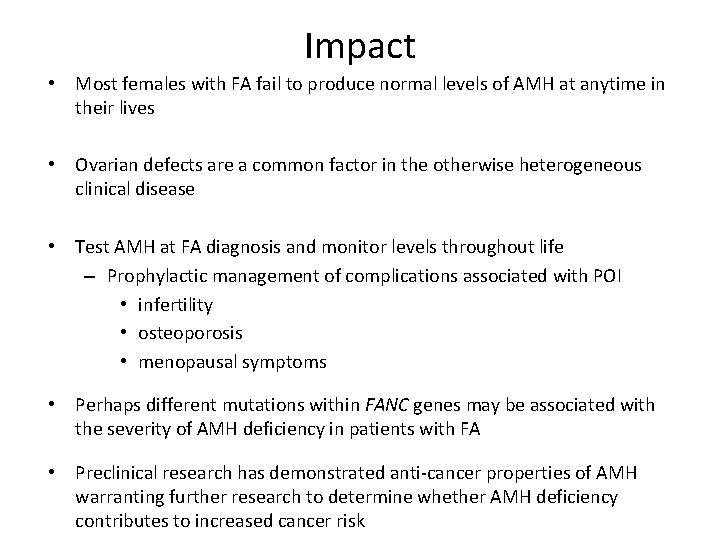
Impact • Most females with FA fail to produce normal levels of AMH at anytime in their lives • Ovarian defects are a common factor in the otherwise heterogeneous clinical disease • Test AMH at FA diagnosis and monitor levels throughout life – Prophylactic management of complications associated with POI • infertility • osteoporosis • menopausal symptoms • Perhaps different mutations within FANC genes may be associated with the severity of AMH deficiency in patients with FA • Preclinical research has demonstrated anti-cancer properties of AMH warranting further research to determine whether AMH deficiency contributes to increased cancer risk
What about AMH levels in DC and DBA?
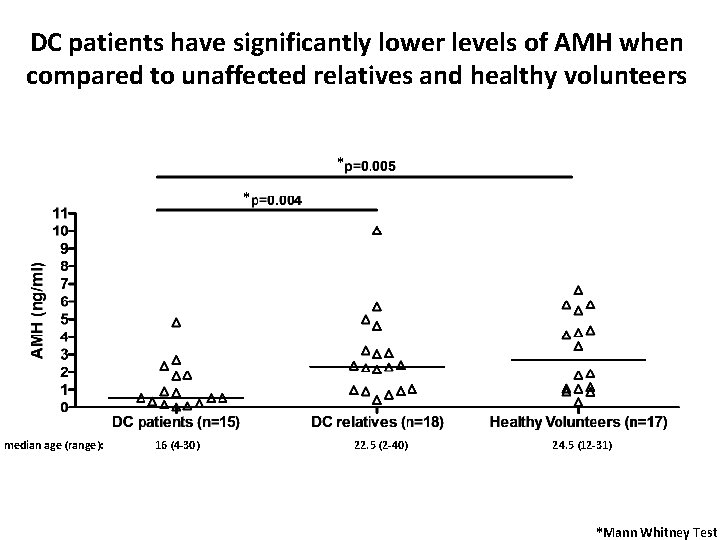
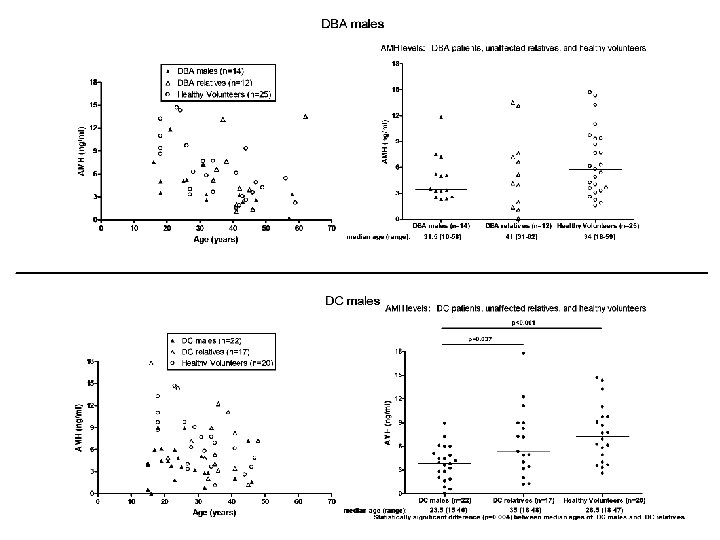
DC patients have significantly lower levels of AMH when compared to unaffected relatives and healthy volunteers * * median age (range): 16 (4‐ 30) 22. 5 (2‐ 40) 24. 5 (12‐ 31) *Mann Whitney Test
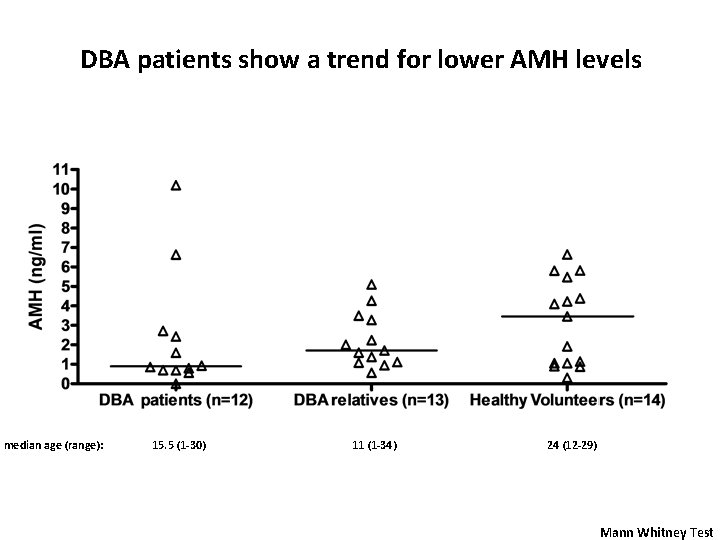
DBA patients show a trend for lower AMH levels median age (range): 15. 5 (1‐ 30) 11 (1‐ 34) 24 (12‐ 29) Mann Whitney Test
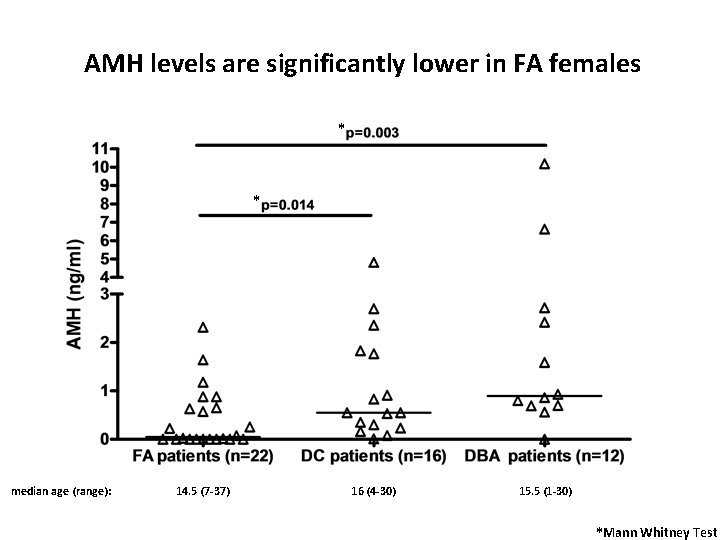
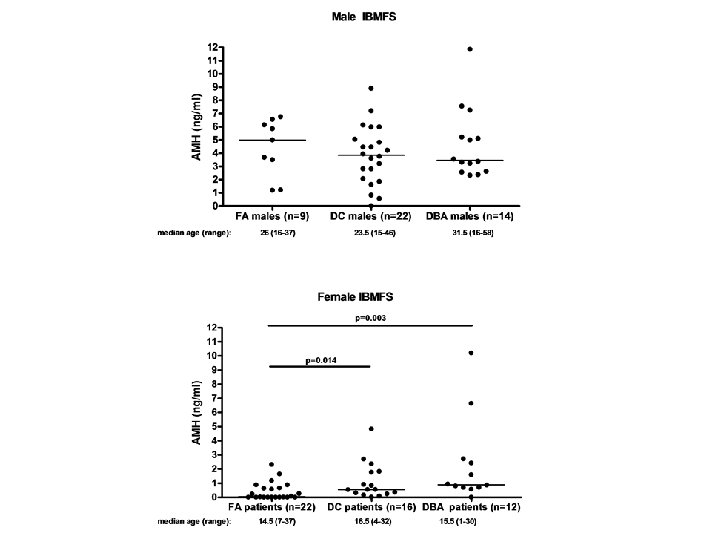
AMH levels are significantly lower in FA females * * median age (range): 14. 5 (7‐ 37) 16 (4‐ 30) 15. 5 (1‐ 30) *Mann Whitney Test
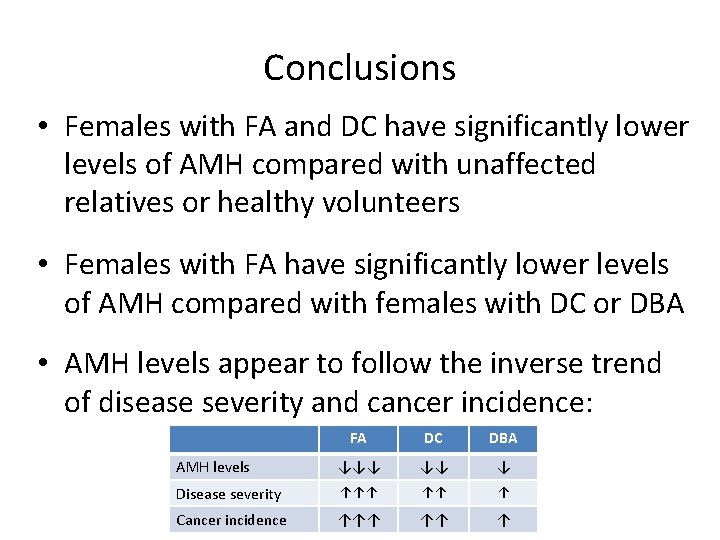
Conclusions • Females with FA and DC have significantly lower levels of AMH compared with unaffected relatives or healthy volunteers • Females with FA have significantly lower levels of AMH compared with females with DC or DBA • AMH levels appear to follow the inverse trend of disease severity and cancer incidence: FA DC DBA AMH levels ↓↓↓ ↓↓ ↓ Disease severity ↑↑↑ ↑↑ ↑ Cancer incidence ↑↑↑ ↑↑ ↑
What’s Next? • On-going AMH studies – AMH levels in males with IBMFS – AMH and cervical cancer risk (Nico Wentzensen, SUCCEED) – AMH levels in relation to other hormone measures in 1890 year old healthy males (Britton Trabert & Katherine Mc. Glynn, NHANES)
Acknowledgements • • • Ligia Pinto, Ph. D Blanche Alter, MD, MPH Neelam Giri, MD Pamela Stratton, MD Sharon Savage, MD • The Pinto Lab – – – Troy Kemp, Ph. D Ken Matsui, Ph. D David Pan Gloriana Shelton Marcus Williams • Allan Hildesheim, Ph. D • The patients and families participating in the NCI IBMFS Cohort • • • NCI-Frederick Occupational Health and Safety Staff Healthy volunteers from the NCI-Frederick Healthy Donor Program Lauren Wood, MD Mark Greene, MD Lisa Leathwood Maureen Risch
Inherited Bone Marrow Failure Syndromes: • Fanconi Anemia (FA) – mutations in the FA/BRCA DNA Repair Pathway – high risk of aplastic anemia and cancer – median age of survival: 29 • Dyskeratosis Congenita (DC) – mutations in genes involved in telomere maintenance – high risk of aplastic anemia and cancer (later onset vs. FA) – median age of survival: 49 • Diamond-Blackfan Anemia (DBA) – mutations in genes encoding ribosomal subunits – low risk of aplastic anemia and cancer; anemic at birth or shortly thereafter – median age of survival: 40 • Causes of death a result of complications from: – bone marrow failure – bone marrow transplant – cancer Shimamura A, Alter BP. Blood Rev. 2010.

AMH and cancer • AMH has been shown to inhibit cell growth and metastasis in human breast, ovarian, endometrial, and cervical cancer cell lines and tumor development in mouse models of ovarian cancer • Genetic mutations and inactivation within the FA/BRCA DNA repair pathway in the general population also result in increased risks of cancers of the cervix, head and neck, ovary, and breast • Studies have demonstrated that female patients with Hodgkin and non. Hodgkin lymphoma (HL, NHL) and female patients with HL and other forms of childhood cancer (ALL, AML, etc) have significantly decreased AMH levels compared to healthy controls Mac. Laughlin DT, Donahoe PK. Future Oncol. 2010. Titus S, et. al. Sci Transl Med. 2013. Lawrenz B, et. al. Fertil Steril. 2012. van Dorp W, et. al. Hum Reprod. 2013.
To compare the gynecologic natural history in women with IBMFS • Women with FA were compared with those with DC and DBA in the NCI natural history study of IBMFS • All women >age 10 were included and were evaluated at similar median ages • 61 women: – 32 with FA – 15 with DC – 14 with DBA Stratton P, Giri N, and Alter BP. Society for Gynecologic Investigation, Orlando Florida, March 2010.


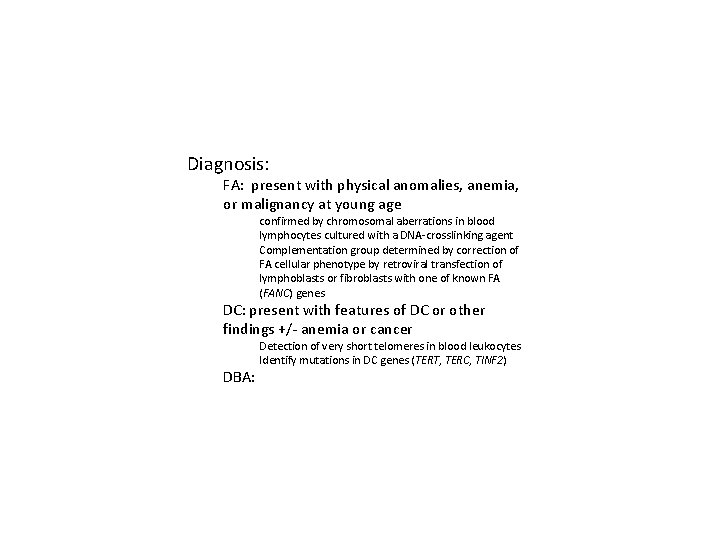
Diagnosis: FA: present with physical anomalies, anemia, or malignancy at young age confirmed by chromosomal aberrations in blood lymphocytes cultured with a DNA-crosslinking agent Complementation group determined by correction of FA cellular phenotype by retroviral transfection of lymphoblasts or fibroblasts with one of known FA (FANC) genes DC: present with features of DC or other findings +/- anemia or cancer Detection of very short telomeres in blood leukocytes Identify mutations in DC genes (TERT, TERC, TINF 2) DBA:
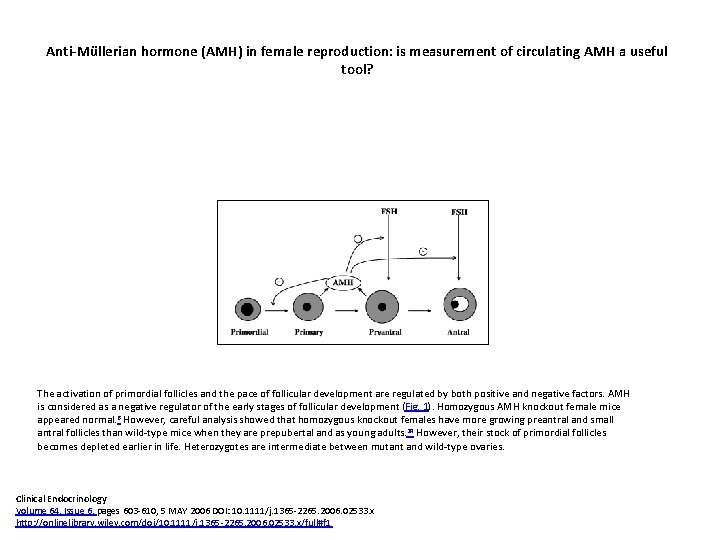
Anti‐Müllerian hormone (AMH) in female reproduction: is measurement of circulating AMH a useful tool? The activation of primordial follicles and the pace of follicular development are regulated by both positive and negative factors. AMH is considered as a negative regulator of the early stages of follicular development (Fig. 1). Homozygous AMH knockout female mice appeared normal. 6 However, careful analysis showed that homozygous knockout females have more growing preantral and small antral follicles than wild-type mice when they are prepubertal and as young adults. 24 However, their stock of primordial follicles becomes depleted earlier in life. Heterozygotes are intermediate between mutant and wild-type ovaries. Clinical Endocrinology Volume 64, Issue 6, pages 603 -610, 5 MAY 2006 DOI: 10. 1111/j. 1365 -2265. 2006. 02533. x http: //onlinelibrary. wiley. com/doi/10. 1111/j. 1365 -2265. 2006. 02533. x/full#f 1
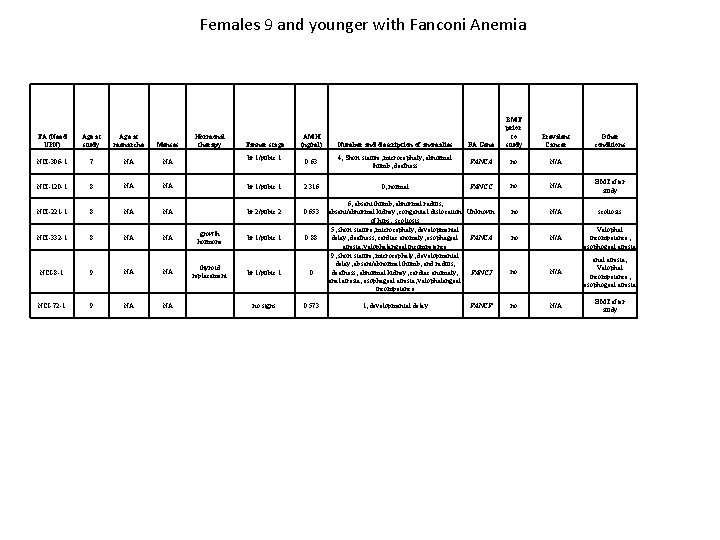
Females 9 and younger with Fanconi Anemia TA (Need UPN) Age at study Age at menarche Menses NCI-306 -1 7 NA NA NCI-120 -1 8 NA NA NCI-221 -1 8 NA NA NCI-332 -1 8 NA NA NCI-8 -1 9 NA NA NCI-72 -1 9 NA NA Number and d escription of anomalies FA Gene BMT prior to study 0. 63 4, Short stature, microcephaly, abnormal thumb, deafness FANCA no N/A br 1/pubic 1 2. 316 0, normal FANCC no N/A BMT after study br 2/pubic 2 0. 653 no N/A scoliosis growth hormone br 1/pubic 1 0. 88 no N/A Valophal incompetence, esophogeal atresia thyroid replacement br 1/pubic 1 0 no N/A anal atresia, Valophal incompetence, esophogeal atresia no signs 0. 573 no N/A BMT after study Hormonal therapy Tanner stage br 1/pubic 1 AMH (ng/ml) 6, absent thumb, abnormal radius, absent/abnormal kidney, congenital dislocation Unknown of hips, scoliosis 5, short stature, microcephaly, developmental delay, deafness, cardiac anomaly, esophageal FANCA atresia, valophalangeal incompetence 9, short stature, microcephaly, developmental delay, absent/abnormal thumb, and radius, FANCJ deafness, abnormal kidney, cardiac anomaly, anal atresia, esophageal atresia, valophalangeal incompetence 1, developmental delay FANCF Prevalent Cancer Other conditions
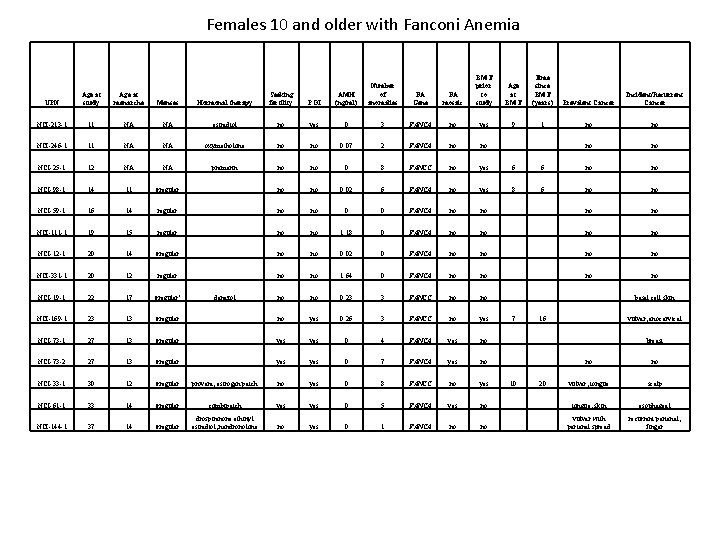
Females 10 and older with Fanconi Anemia FA mosaic BMT prior to study Age at BMT Time since BMT (years) Prevalent Cancer Incident/Recurrent Cancer UPN Age at study Age at menarche Menses Hormonal therapy Seeking fertility POI AMH (ng/ml) Number of anomalies NCI-213 -1 11 NA NA estradiol no yes 0 3 FANCA no yes 9 1 no no NCI-246 -1 11 NA NA oxymetholone no no 0. 07 2 FANCA no no NCI-25 -1 12 NA NA premarin no no 0 8 FANCC no yes 6 6 no no NCI-98 -1 14 11 irregular no no 0. 02 6 FANCA no yes 8 6 no no NCI-59 -1 16 14 regular no no 0 0 FANCA no no NCI-111 -1 19 15 regular no no 1. 18 0 FANCA no no NCI-12 -1 20 14 irregular no no 0. 02 0 FANCA no no NCI-331 -1 20 12 regular no no 1. 64 0 FANCA no no NCI-19 -1 22 17 irregular a danazol no no 0. 23 3 FANCC no no basal cell skin NCI-169 -1 23 13 irregular no yes 0. 26 3 FANCC no yes 7 16 vulvar, anocervical NCI-73 -1 27 13 irregular yes 0 4 FANCA yes no breast NCI-73 -2 27 13 irregular yes 0 7 FANCA yes no no NCI-33 -1 30 12 irregular provera, estrogen patch no yes 0 8 FANCC no yes 10 20 vulvar, tongue scalp NCI-61 -1 33 14 irregular combipatch yes 0 5 FANCA yes no tongue, skin esophageal NCI-144 -1 37 14 irregular drospirenone ethinyl estradiol, nandronolone no yes 0 1 FANCA no no vulvar with perianal spread recurrent perianal, finger FA Gene
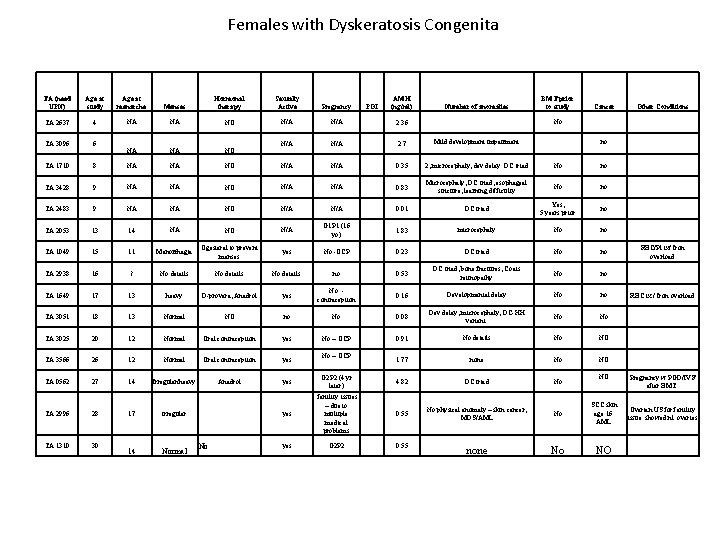
Females with Dyskeratosis Congenita TA (need UPN) Age at study Age at menarche Menses Hormonal therapy Sexually Active Pregnancy TA 2637 4 NA NA NO N/A 2. 36 TA 3096 6 NA NO N/A 2. 7 Mild development impairment NA TA 1710 8 NA NA NO N/A 0. 35 2, microcephaly, dev delay. DC triad No no TA 3428 9 NA NA NO N/A 0. 83 Microcephaly, DC triad, esophageal stricture, learning difficulty No no TA 2483 9 NA NA NO N/A 0. 01 DC triad Yes, 5 years prior no TA 2053 13 14 NA NO N/A G 1 P 1 (16 yo) 1. 83 microcephaly No no TA 1049 15 11 Menorrhagia Ogesteral to prevent menses yes No -OCP 0. 23 DC triad No no RBC/Pl tx/ Iron overload TA 2938 16 ? No details no 0. 53 DC triad, bone fractures, Coats retinopathy No no TA 1649 17 13 heavy D-provera, Anadrol yes No contraception 0. 16 Developmental delay No no RBC tx / Iron overload TA 3051 18 13 Normal NO no No 0. 08 Dev delay, microcephaly, DC-HH variant. No No TA 3025 20 12 Normal Oral contraception yes No – OCP 0. 91 No details No NO TA 3566 26 12 Normal Oral contraception yes 1. 77 none No NO TA 0562 27 14 Irregular/heavy Anadrol yes G 2 P 2 (4 yr later) 4. 82 DC triad No NO Pregnancy w PGD/IVF after BMT yes fertility issues – due to multiple medical problems 0. 55 No physical anomaly – skin cancer, MDS/AML No SCC skin age 16. AML. yes G 2 P 2 0. 55 none No NO TA 2996 28 TA 1310 30 17 irregular 14 Normal No No – OCP POI AMH (ng/ml) Number of anomalies BMT prior to study Cancer Other Conditions No no Ovarian US for fertility issue showed nl ovaries
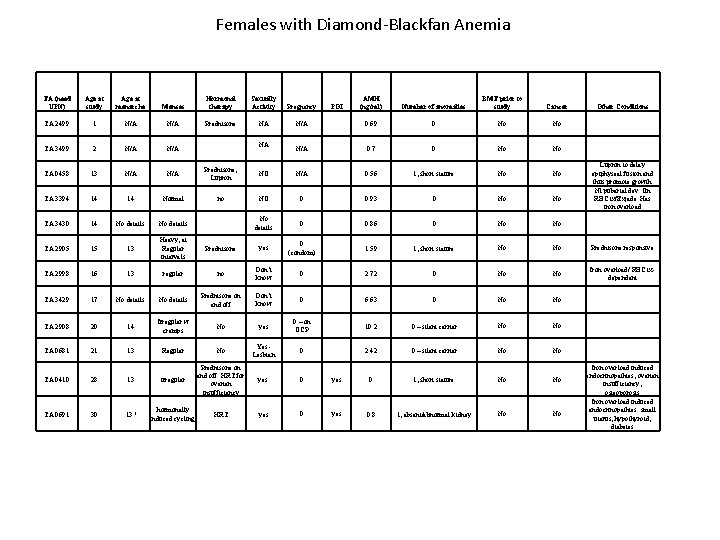
Females with Diamond-Blackfan Anemia TA (need UPN) Age at study Age at menarche Menses Hormonal therapy Sexually Activity Pregnancy AMH (ng/ml) Number of anomalies BMT prior to study Cancer TA 2499 1 N/A Prednisone NA N/A 0. 69 0 No No TA 3499 2 N/A N/A 0. 7 0 No No TA 0458 13 N/A Prednisone; Lupron NO N/A 0. 56 1, short stature No No TA 3394 14 14 Normal no NO 0 0. 93 0 No No TA 3430 14 No details 0 0. 86 0 No No TA 2905 15 13 Heavy, at Regular intervals Prednisone yes 0 (condom) 1. 59 1, short stature No No Prednisone responsive TA 2998 16 13 regular no Don’t know 0 2. 72 0 No No Iron overload/ RBC txdependent TA 3429 17 No details Prednisone on and off Don’t know 0 6. 63 0 No No TA 2908 20 14 Irregular w cramps No yes 0 – on OCP 10. 2 0 – silent carrier No No TA 0681 21 13 Regular No Yes - Lesbian 0 2. 42 0 – silent carrier No No TA 0410 28 13 irregular Prednisone on and off. HRT for ovarian insufficiency yes 0 yes 0 1, short stature No No TA 0691 30 13* hormonally induced cycling. HRT yes 0. 8 1, absent/abnormal kidney No No NA POI Other Conditions Lupron to delay epiphyseal fusion and thus promote growth Nl pubertal dev. On RBC tx/Exjade. Has iron overload Iron overload induced endocrinopathies, ovarian insufficiency, osteoporosis Iron overload induced endocrinopathies. small uterus, hypothyroid, diabetes
- Slides: 34