
Antimicrobials in Septic Shock Nothing Else Matters Anand

Antimicrobials in Septic Shock: Nothing Else Matters ` Anand Kumar MD, FRCPC, FCCP, FCCM Professor of Medicine University of Manitoba Health Sciences Centre St. Boniface Hospital Winnipeg, Manitoba For available slides: Search “anand kumar” “medicine” “manitoba” Email: akumar 61@yahoo. com 1

2
Untreated, septic shock is usually fatal within 24 -36 hrs 3
Novel Anti-Sepsis Therapies Since 2000 • Glycemic control • Physiologic corticosteroid therapy • Activated protein C (drotrecogin-alfa) • Goal-directed resuscitation
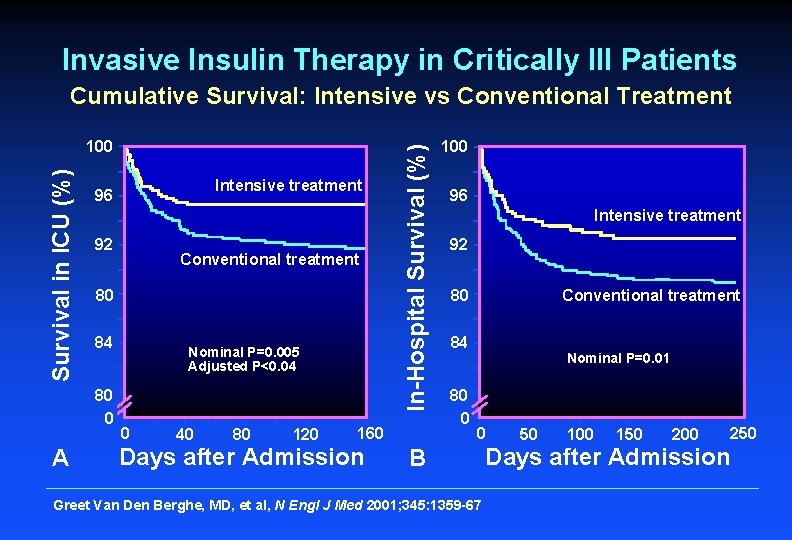
Invasive Insulin Therapy in Critically Ill Patients Survival in ICU (%) 100 92 Conventional treatment 80 84 80 0 A Intensive treatment 96 Nominal P=0. 005 Adjusted P<0. 04 0 40 80 120 In-Hospital Survival (%) Cumulative Survival: Intensive vs Conventional Treatment 160 Days after Admission 100 96 Intensive treatment 92 Conventional treatment 80 84 80 0 Nominal P=0. 01 0 B Greet Van Den Berghe, MD, et al, N Engl J Med 2001; 345: 1359 -67 50 100 150 200 250 Days after Admission
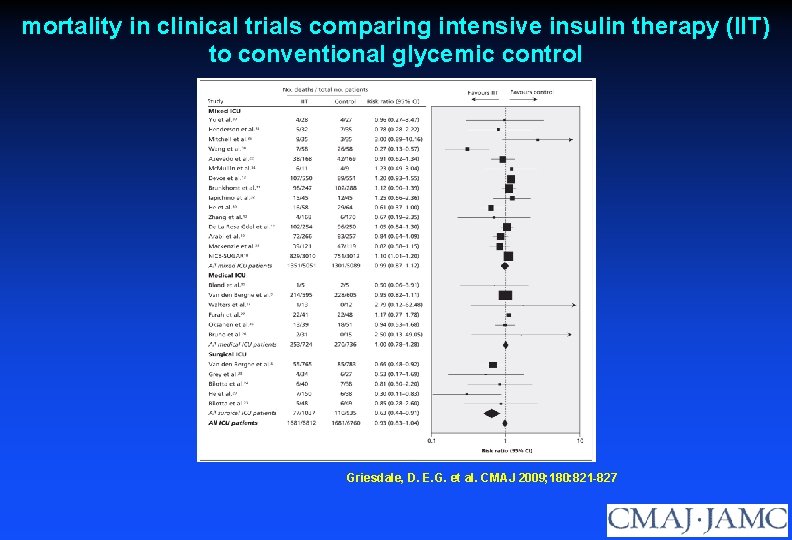
mortality in clinical trials comparing intensive insulin therapy (IIT) to conventional glycemic control Griesdale, D. E. G. et al. CMAJ 2009; 180: 821 -827
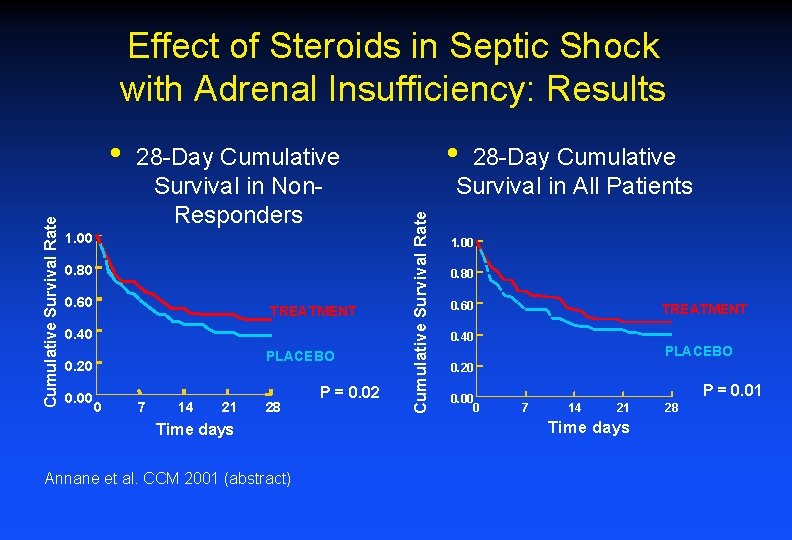
Effect of Steroids in Septic Shock with Adrenal Insufficiency: Results 28 -Day Cumulative Survival in Non. Responders 1. 00 0. 80 0. 60 TREATMENT 0. 40 PLACEBO 0. 20 0. 00 0 7 14 21 28 Time days Annane et al. CCM 2001 (abstract) P = 0. 02 • 28 -Day Cumulative Survival in All Patients Cumulative Survival Rate • 1. 00 0. 80 0. 60 TREATMENT 0. 40 PLACEBO 0. 20 0. 00 0 P = 0. 01 7 14 21 Time days 28
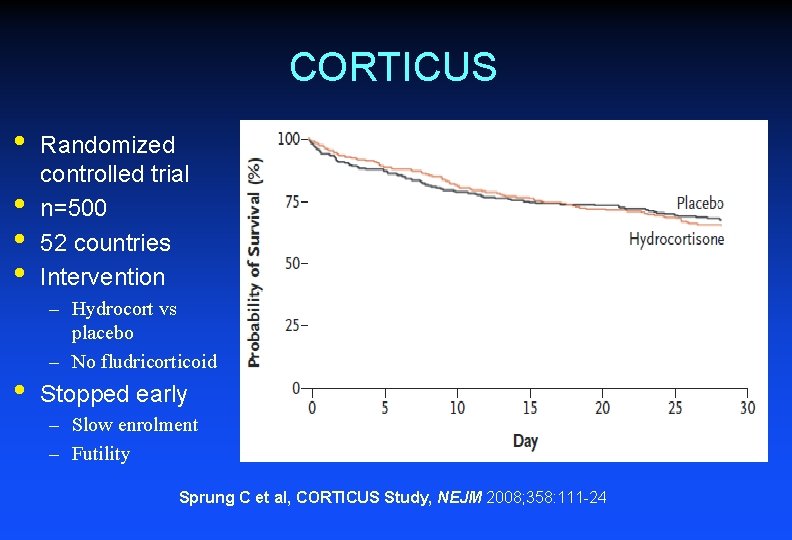
CORTICUS • • • Randomized controlled trial n=500 52 countries Intervention – Hydrocort vs placebo – No fludricorticoid Stopped early – Slow enrolment – Futility Sprung C et al, CORTICUS Study, NEJM 2008; 358: 111 -24
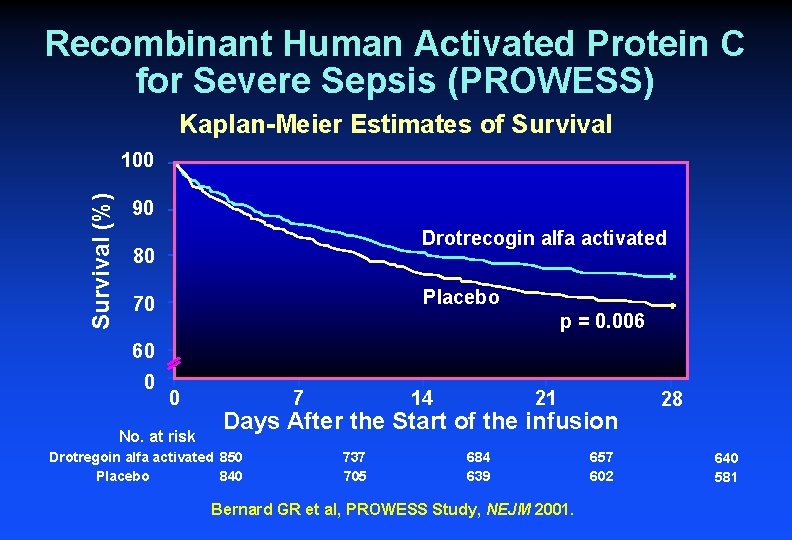
Recombinant Human Activated Protein C for Severe Sepsis (PROWESS) Kaplan-Meier Estimates of Survival (%) 100 90 Drotrecogin alfa activated 80 Placebo 70 p = 0. 006 60 0 0 No. at risk 7 14 21 Days After the Start of the infusion Drotregoin alfa activated 850 Placebo 840 737 705 684 639 Bernard GR et al, PROWESS Study, NEJM 2001. 657 602 28 640 581
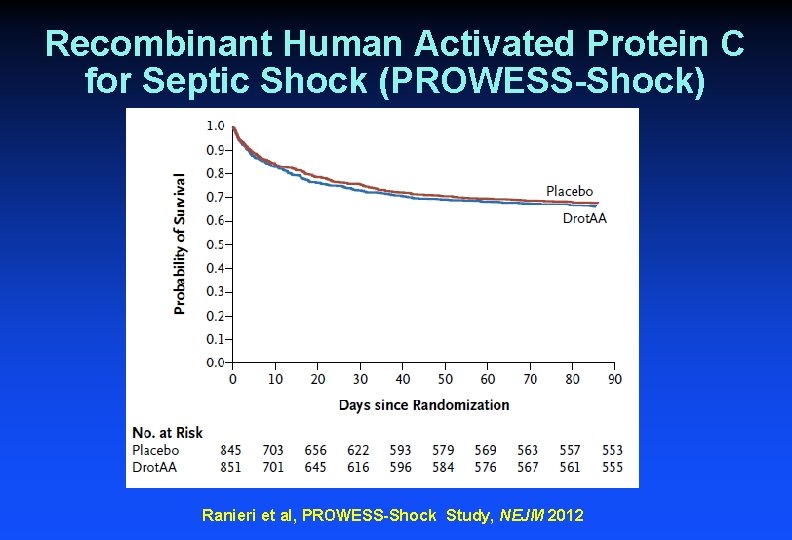
Recombinant Human Activated Protein C for Septic Shock (PROWESS-Shock) Ranieri et al, PROWESS-Shock Study, NEJM 2012
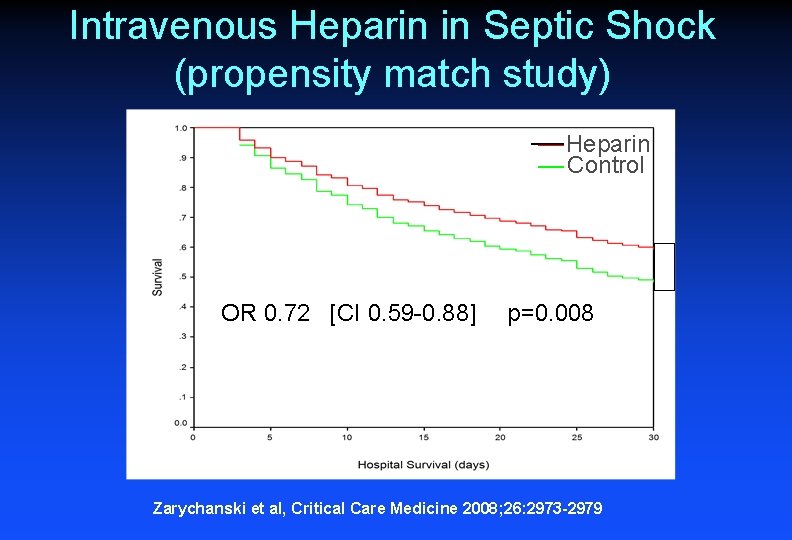
Intravenous Heparin in Septic Shock (propensity match study) Heparin Control OR 0. 72 [CI 0. 59 -0. 88] p=0. 008 Zarychanski et al, Critical Care Medicine 2008; 26: 2973 -2979
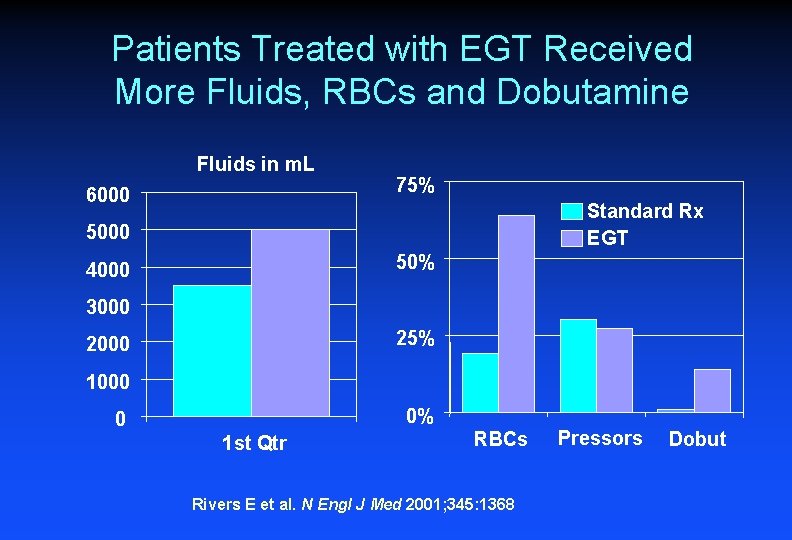
Patients Treated with EGT Received More Fluids, RBCs and Dobutamine Fluids in m. L 6000 75% Standard Rx EGT 5000 50% 4000 3000 25% 2000 1000 0% 0 1 st Qtr RBCs Rivers E et al. N Engl J Med 2001; 345: 1368 Pressors Dobut
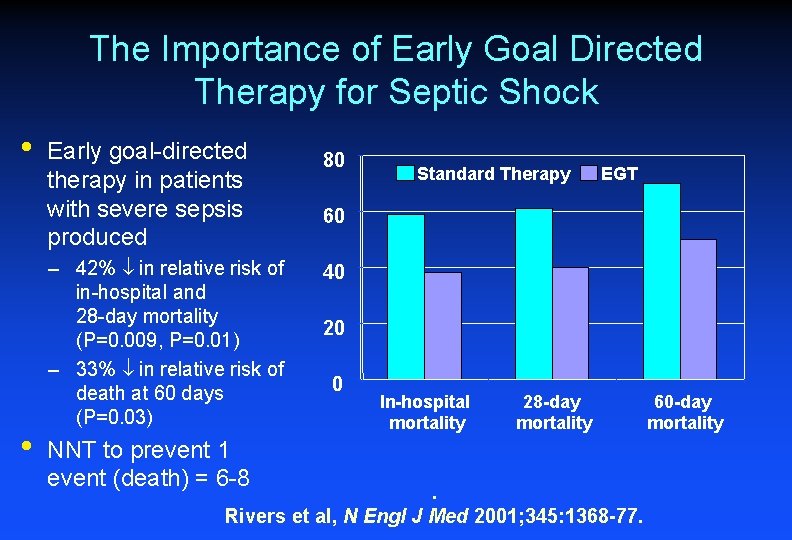
The Importance of Early Goal Directed Therapy for Septic Shock • • Early goal-directed therapy in patients with severe sepsis produced – 42% in relative risk of in-hospital and 28 -day mortality (P=0. 009, P=0. 01) – 33% in relative risk of death at 60 days (P=0. 03) NNT to prevent 1 event (death) = 6 -8 80 Standard Therapy EGT 60 40 20 0 In-hospital mortality 28 -day mortality . Rivers et al, N Engl J Med 2001; 345: 1368 -77. 60 -day mortality
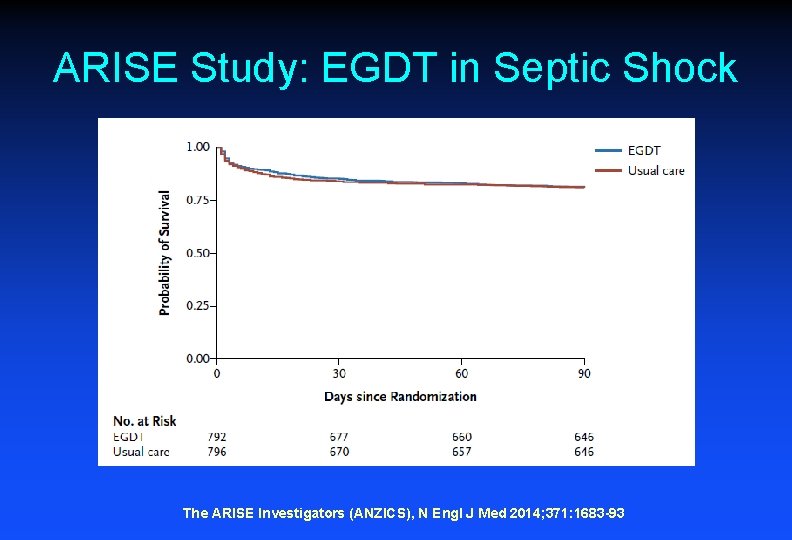
ARISE Study: EGDT in Septic Shock The ARISE Investigators (ANZICS), N Engl J Med 2014; 371: 1683 -93
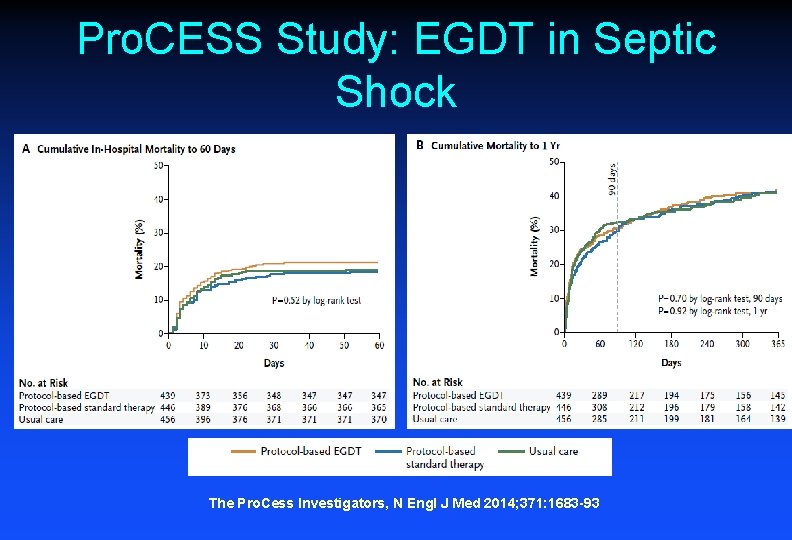
Pro. CESS Study: EGDT in Septic Shock The Pro. Cess Investigators, N Engl J Med 2014; 371: 1683 -93
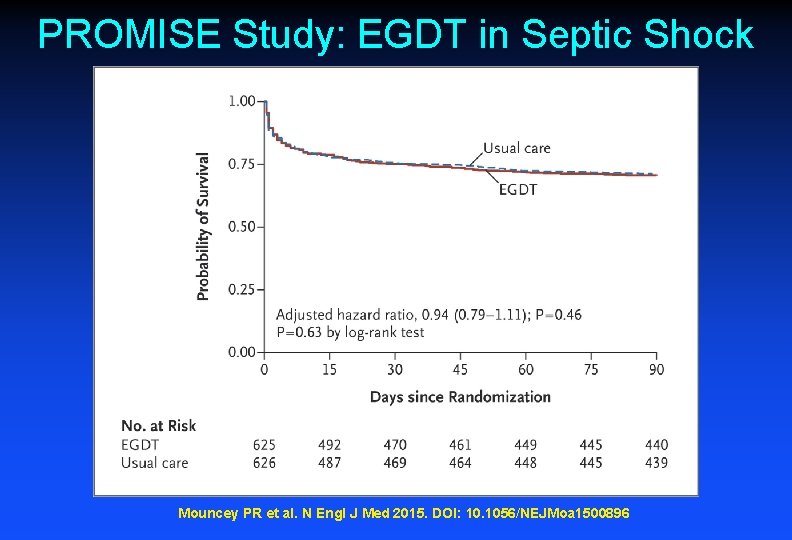
PROMISE Study: EGDT in Septic Shock Mouncey PR et al. N Engl J Med 2015. DOI: 10. 1056/NEJMoa 1500896
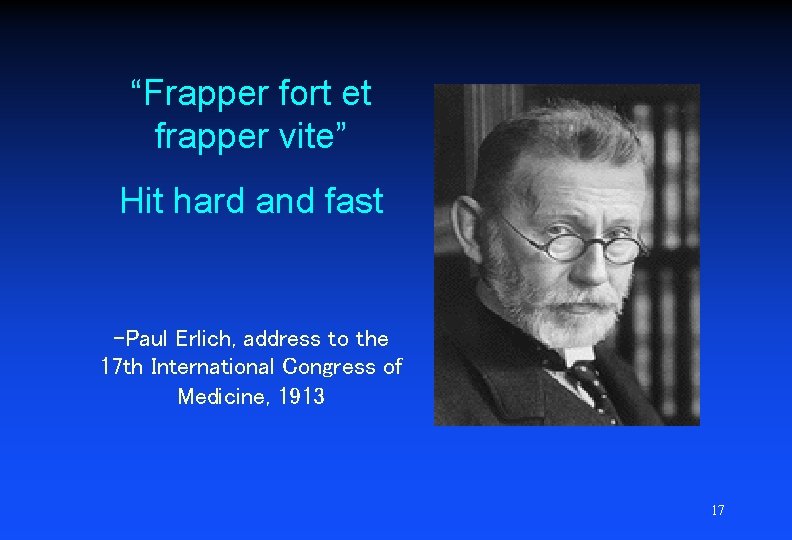
“Frapper fort et frapper vite” Hit hard and fast -Paul Erlich, address to the 17 th International Congress of Medicine, 1913 17
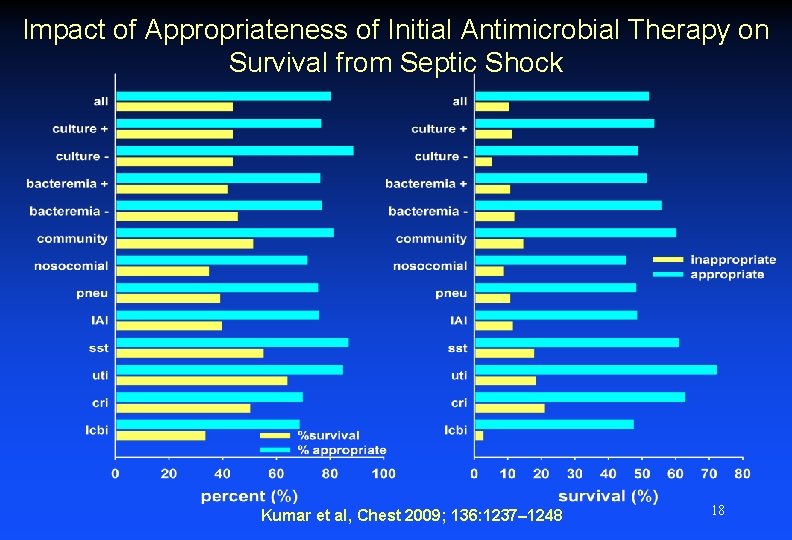
Impact of Appropriateness of Initial Antimicrobial Therapy on Survival from Septic Shock Kumar et al, Chest 2009; 136: 1237– 1248 18
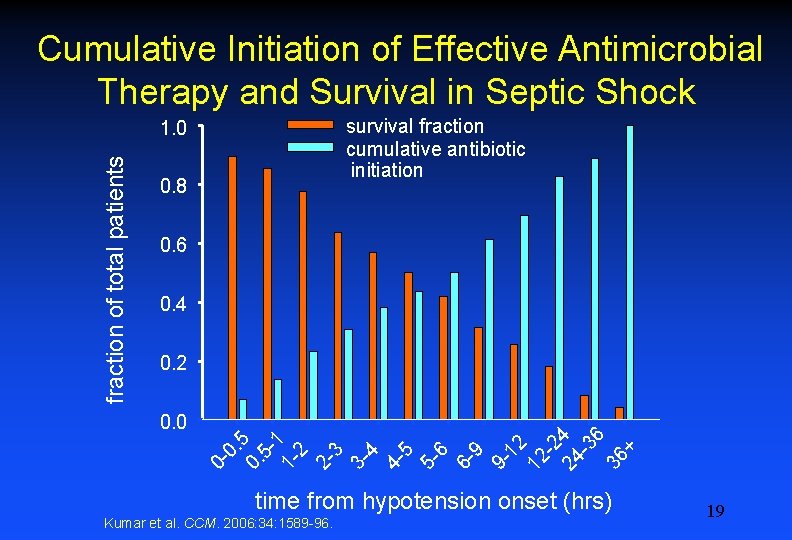
Cumulative Initiation of Effective Antimicrobial Therapy and Survival in Septic Shock survival fraction cumulative antibiotic initiation fraction of total patients 1. 0 0. 8 0. 6 0. 4 0. 2 0 - 0. 51 12 23 34 45 56 69 912 12 -2 24 4 -3 6 36 + 0. 0 time from hypotension onset (hrs) Kumar et al. CCM. 2006: 34: 1589 -96. 19
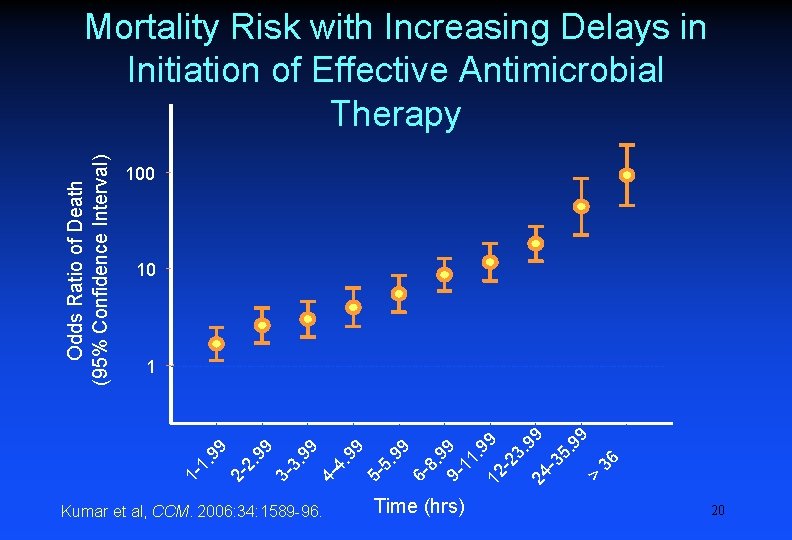
100 10 Kumar et al, CCM. 2006: 34: 1589 -96. . 9 9 - 9 11. 9 12 9 -2 3. 99 24 -3 5. 99 > 36 68 . 9 9 55 . 9 9 44 . 9 9 33 22 11 . 9 9 Odds Ratio of Death (95% Confidence Interval) Mortality Risk with Increasing Delays in Initiation of Effective Antimicrobial Therapy Time (hrs) 20
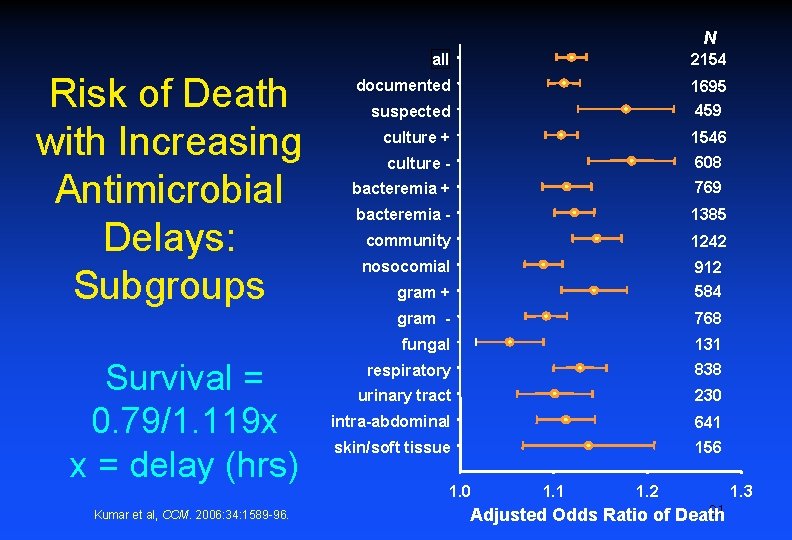
N Risk of Death with Increasing Antimicrobial Delays: Subgroups Survival = 0. 79/1. 119 x x = delay (hrs) Kumar et al, CCM. 2006: 34: 1589 -96. all 2154 documented 1695 suspected 459 culture + 1546 culture - 608 bacteremia + 769 bacteremia - 1385 community 1242 nosocomial 912 gram + 584 gram - 768 fungal 131 respiratory 838 urinary tract 230 intra-abdominal 641 skin/soft tissue 156 1. 0 1. 1 1. 2 21 Adjusted Odds Ratio of Death 1. 3
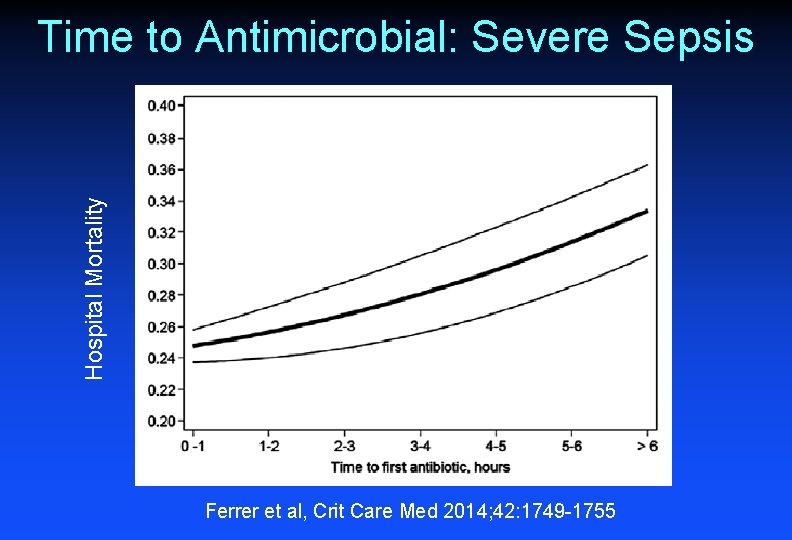
Hospital Mortality Time to Antimicrobial: Severe Sepsis Ferrer et al, Crit Care Med 2014; 42: 1749 -1755
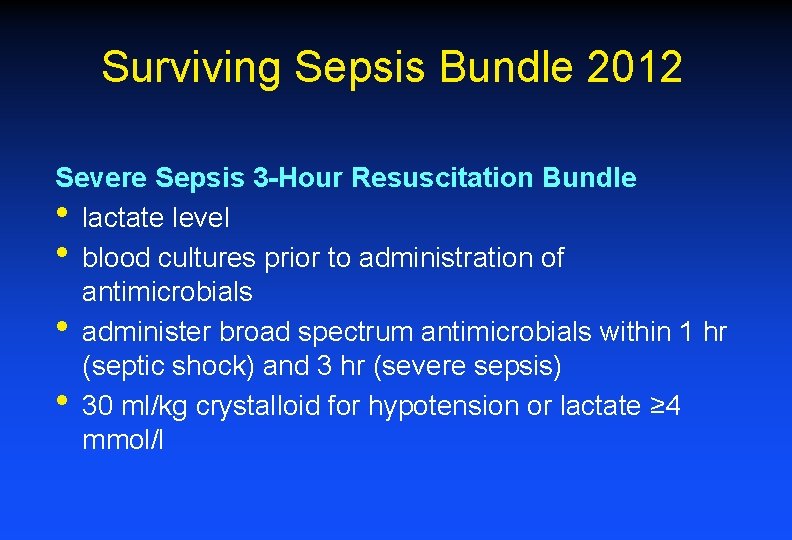
Surviving Sepsis Bundle 2012 Severe Sepsis 3 -Hour Resuscitation Bundle • lactate level • blood cultures prior to administration of antimicrobials • administer broad spectrum antimicrobials within 1 hr (septic shock) and 3 hr (severe sepsis) • 30 ml/kg crystalloid for hypotension or lactate ≥ 4 mmol/l
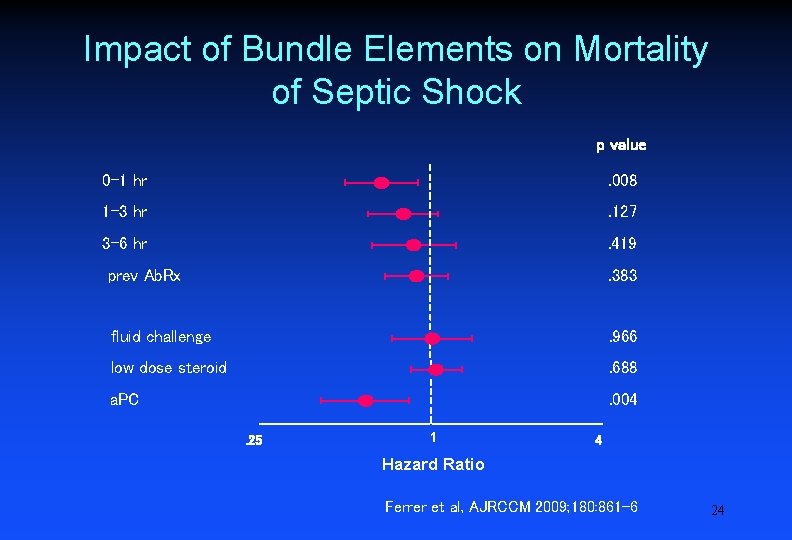
Impact of Bundle Elements on Mortality of Septic Shock p value 0 -1 hr . 008 1 -3 hr . 127 3 -6 hr . 419 prev Ab. Rx . 383 fluid challenge . 966 low dose steroid . 688 a. PC . 004. 25 1 4 Hazard Ratio Ferrer et al, AJRCCM 2009; 180: 861 -6 24
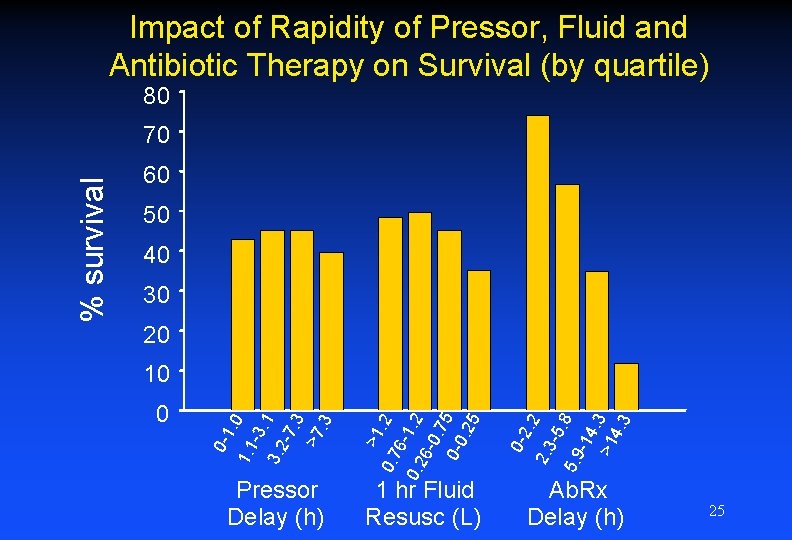
Impact of Rapidity of Pressor, Fluid and Antibiotic Therapy on Survival (by quartile) 80 60 50 40 30 20 1 hr Fluid Resusc (L) -5. 5. 9 8 -14. >1 3 4. 3 . 2 2. 3 0 -2 0. 7. 2 6 -1. 2 0. 2 6 -0. 7 0 -0 5. 25 Pressor Delay (h) >1 0 . 1. 1 0 -3. 3. 2 1 -7. 3 >7. 3 10 0 -1 % survival 70 Ab. Rx Delay (h) 25
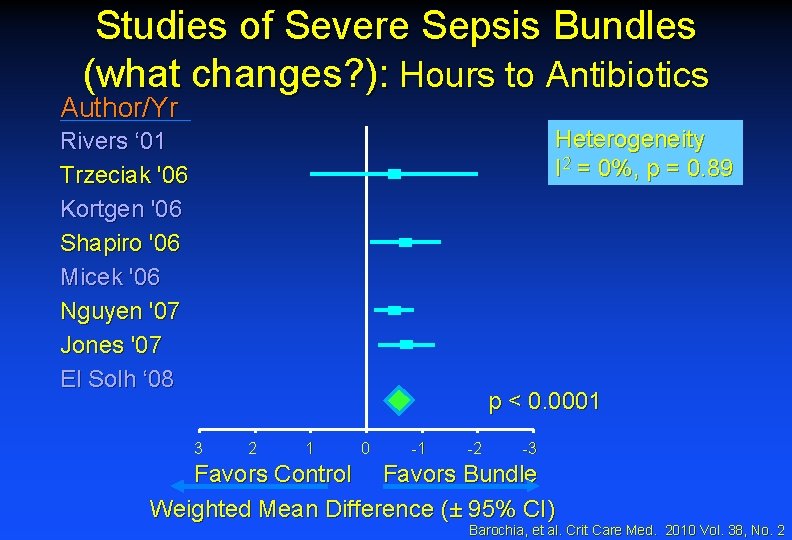
Studies of Severe Sepsis Bundles (what changes? ): Hours to Antibiotics Author/Yr Heterogeneity I 2 = 0%, p = 0. 89 Rivers ‘ 01 Trzeciak '06 Kortgen '06 Shapiro '06 Micek '06 Nguyen '07 Jones '07 El Solh ‘ 08 p < 0. 0001 3 2 1 0 -1 -2 -3 Favors Control Favors Bundle Weighted Mean Difference (± 95% CI) Barochia, et al. Crit Care Med. 2010 Vol. 38, No. 2
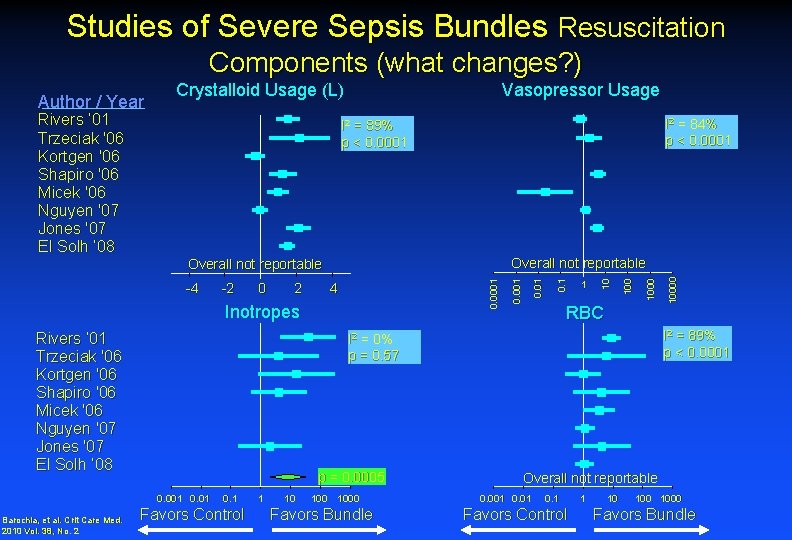
Studies of Severe Sepsis Bundles Resuscitation Components (what changes? ) Crystalloid Usage (L) Rivers ‘ 01 Trzeciak '06 Kortgen '06 Shapiro '06 Micek '06 Nguyen '07 Jones '07 El Solh ‘ 08 Vasopressor Usage I 2 = 84% p < 0. 0001 I 2 = 89% p < 0. 0001 Inotropes Rivers ‘ 01 Trzeciak '06 Kortgen '06 Shapiro '06 Micek '06 Nguyen '07 Jones '07 El Solh ‘ 08 1000 RBC I 2 = 89% p < 0. 0001 I 2 = 0% p = 0. 57 p = 0. 0005 0. 001 0. 01 Barochia, et al. Crit Care Med. 2010 Vol. 38, No. 2 1 100 4 10 2 0. 1 0 0. 01 -2 0. 0001 -4 0. 001 Overall not reportable 0. 1 Favors Control 1 10 1000 Favors Bundle 10000 Author / Year Overall not reportable 0. 001 0. 1 Favors Control 1 10 1000 Favors Bundle
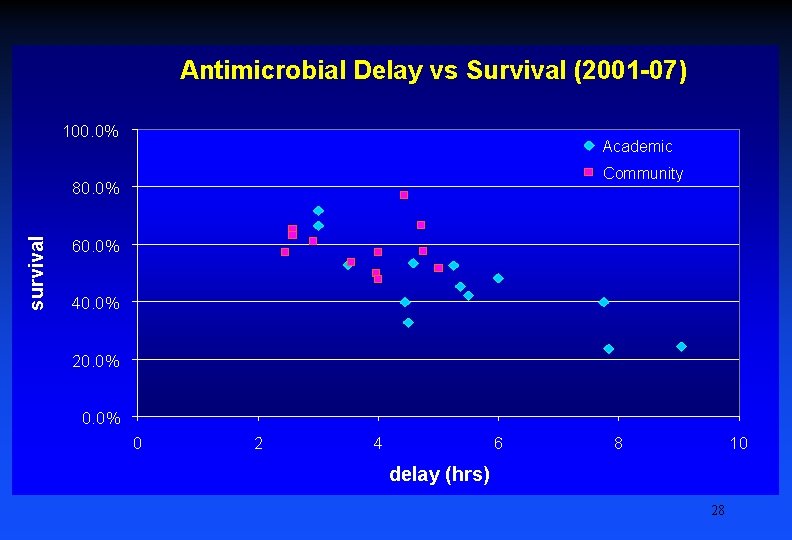
Antimicrobial Delay vs Survival (2001 -07) 100. 0% Academic Community survival 80. 0% 60. 0% 40. 0% 20. 0% 0 2 4 6 8 10 delay (hrs) 28
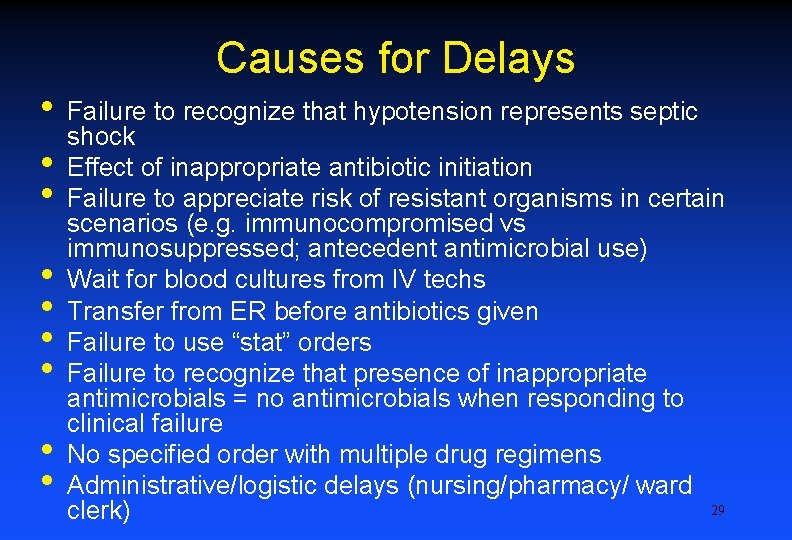
Causes for Delays • • • Failure to recognize that hypotension represents septic shock Effect of inappropriate antibiotic initiation Failure to appreciate risk of resistant organisms in certain scenarios (e. g. immunocompromised vs immunosuppressed; antecedent antimicrobial use) Wait for blood cultures from IV techs Transfer from ER before antibiotics given Failure to use “stat” orders Failure to recognize that presence of inappropriate antimicrobials = no antimicrobials when responding to clinical failure No specified order with multiple drug regimens Administrative/logistic delays (nursing/pharmacy/ ward 29 clerk)
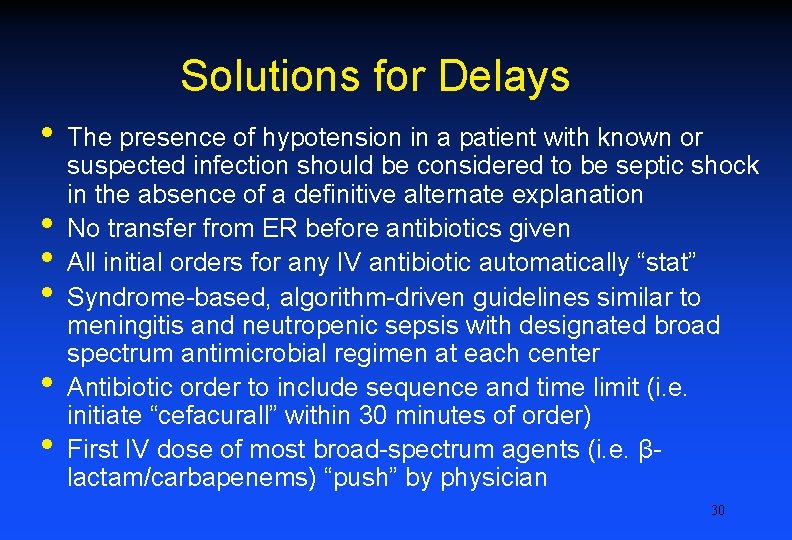
Solutions for Delays • • • The presence of hypotension in a patient with known or suspected infection should be considered to be septic shock in the absence of a definitive alternate explanation No transfer from ER before antibiotics given All initial orders for any IV antibiotic automatically “stat” Syndrome-based, algorithm-driven guidelines similar to meningitis and neutropenic sepsis with designated broad spectrum antimicrobial regimen at each center Antibiotic order to include sequence and time limit (i. e. initiate “cefacurall” within 30 minutes of order) First IV dose of most broad-spectrum agents (i. e. βlactam/carbapenems) “push” by physician 30
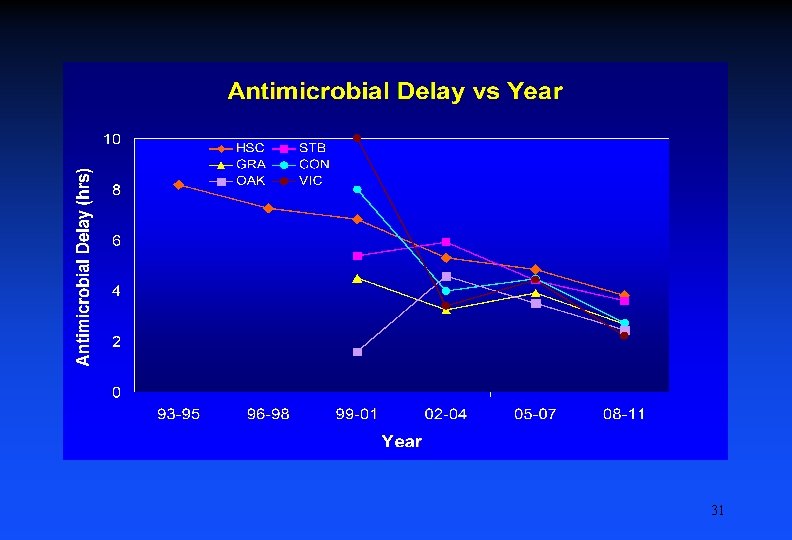
31
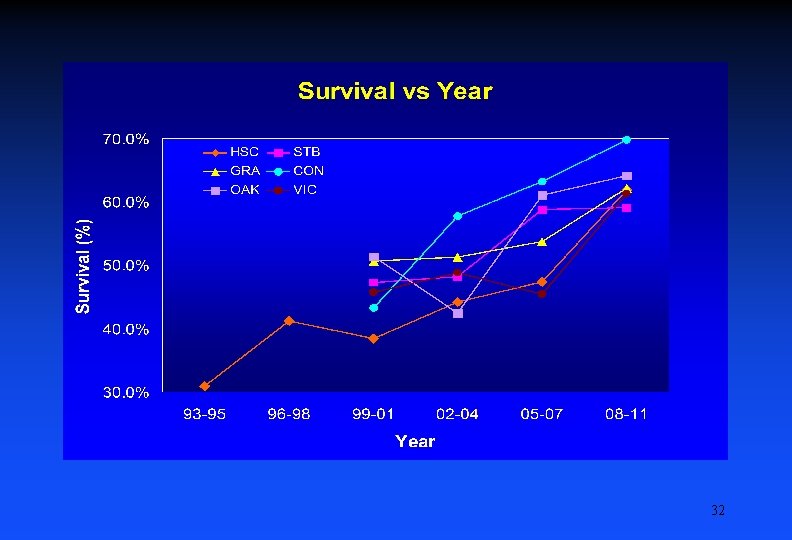
32
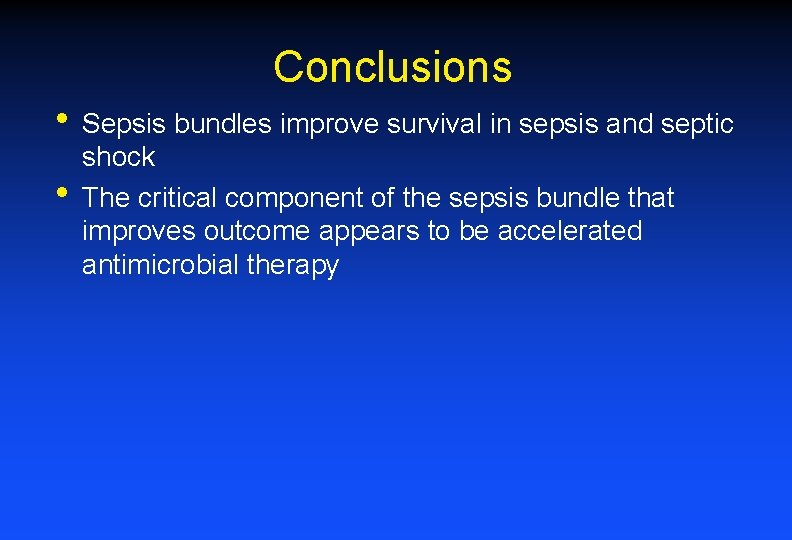
Conclusions • Sepsis bundles improve survival in sepsis and septic • shock The critical component of the sepsis bundle that improves outcome appears to be accelerated antimicrobial therapy
Speed is Life
- Slides: 34