
ANTIMICROBIAL THERAPY CHAPTER 13 1 Chemotherapeutic Agents n
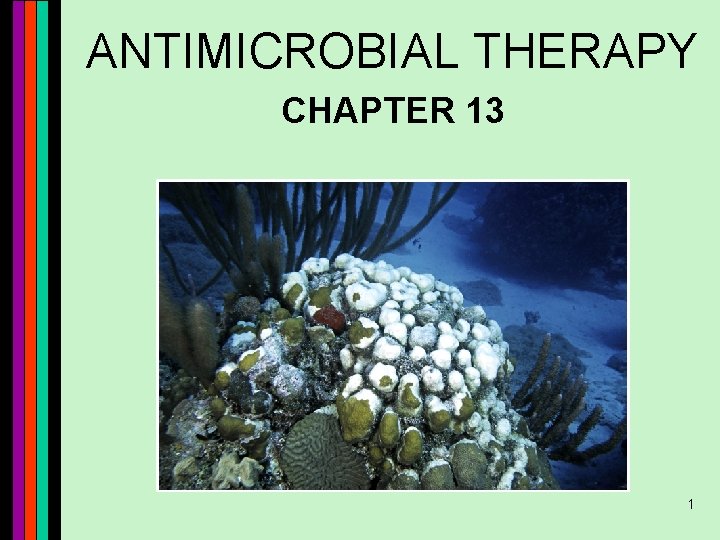
ANTIMICROBIAL THERAPY CHAPTER 13 1
Chemotherapeutic Agents n Antibiotics: bacteriocidal vs bacteriostatic n Synthetic Drugs vs natural product 2
History n Ancient remedies n Ehrlich n Domagk n Fleming 3
Properties of Antimicrobial Agents n Selective Toxicity n Spectrum of Activity – Narrow – Broad 4

Spectrum of Activity 5
Drug Mechanisms of Action n Inhibition of Cell Wall Synthesis n Disruption of Cell Membrane Function 6
Drug Mechanisms of Action n Inhibition of Protein Synthesis n Inhibition of Nucleic Acid Synthesis n Antimetabolites 7
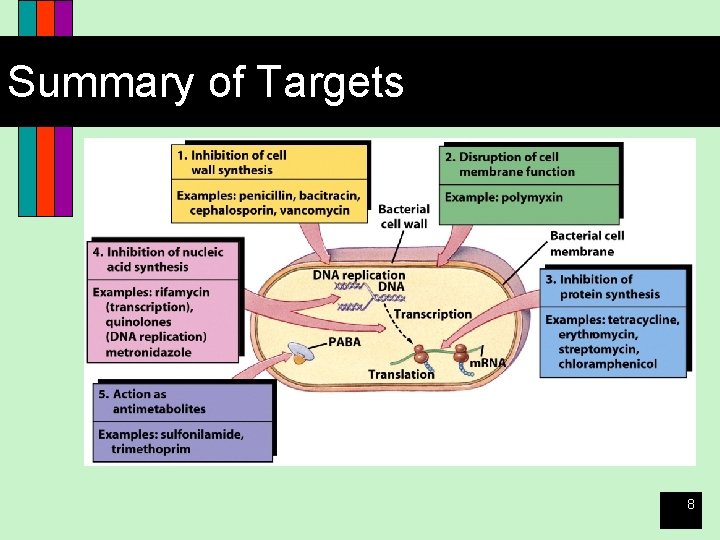
Summary of Targets 8
Side Effects n Toxicity n Allergy n Disruption of Microflora 9
Classes of antibiotics n n n n n Aminoglycosides Tetracyclines Sulfonamides Quinolones Polypeptides B-lactams Macrolides Glycopeptides Cephalosporins 10
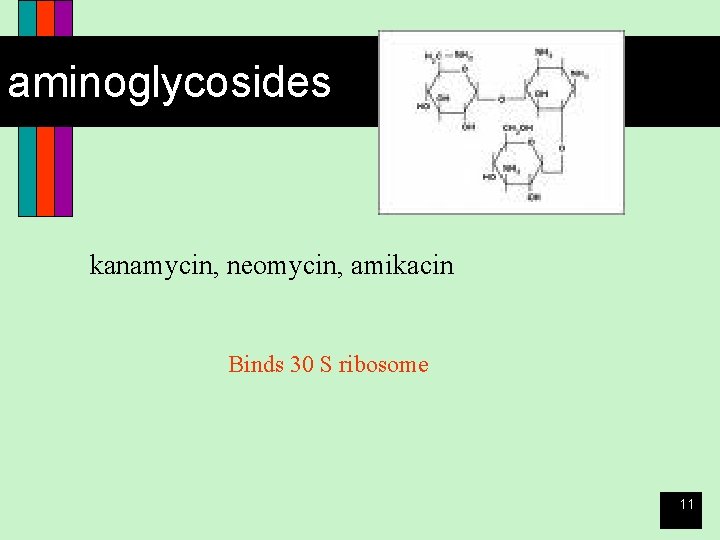
aminoglycosides kanamycin, neomycin, amikacin Binds 30 S ribosome 11
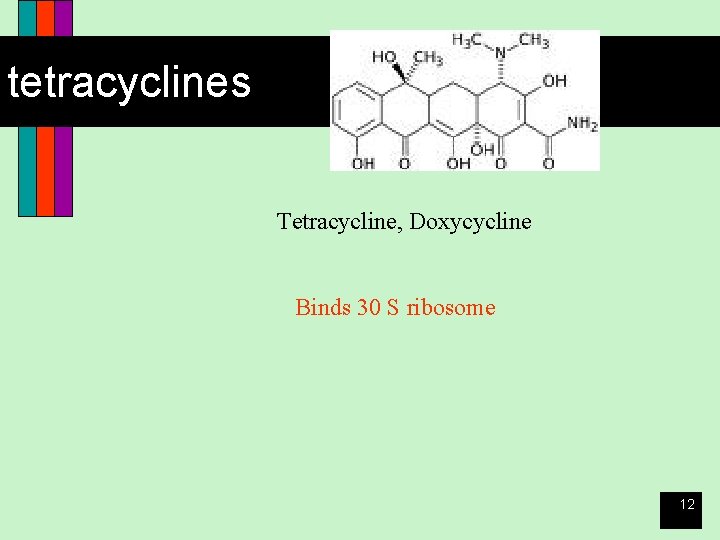
tetracyclines Tetracycline, Doxycycline Binds 30 S ribosome 12
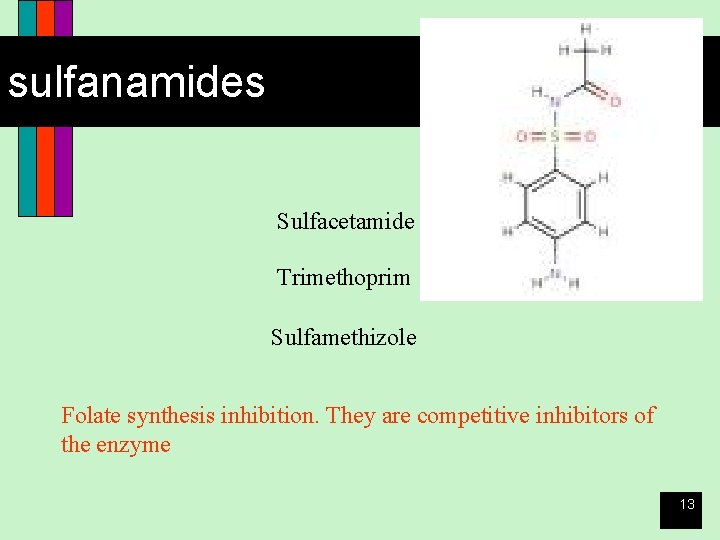
sulfanamides Sulfacetamide Trimethoprim Sulfamethizole Folate synthesis inhibition. They are competitive inhibitors of the enzyme 13
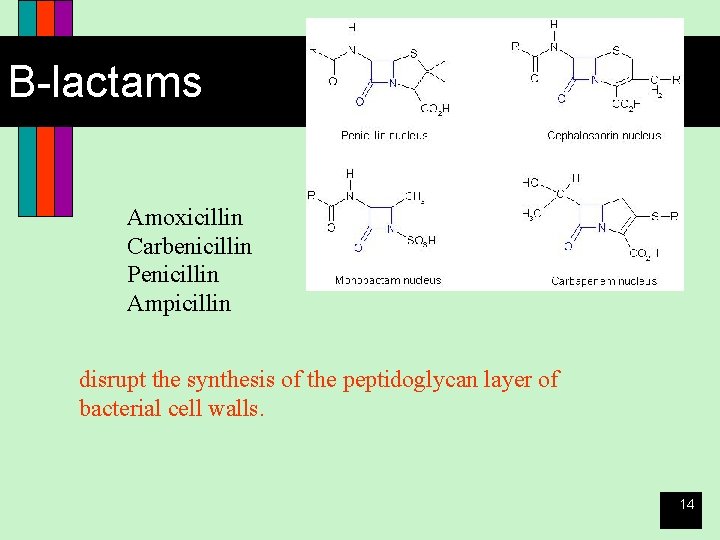
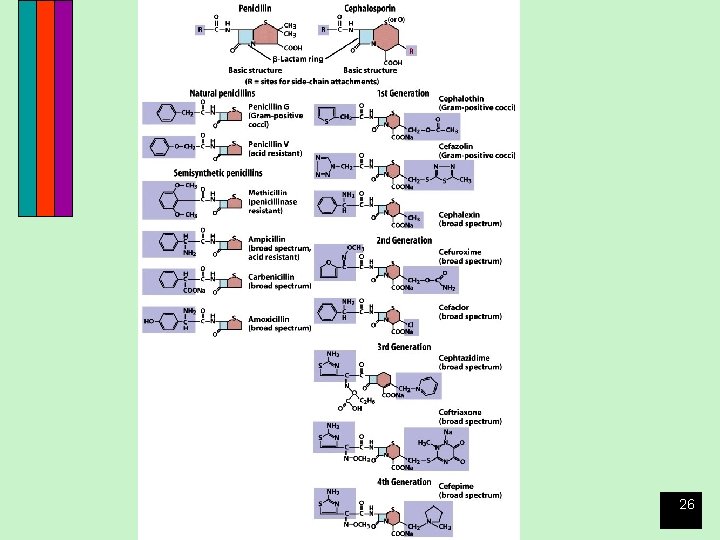
B-lactams Amoxicillin Carbenicillin Penicillin Ampicillin disrupt the synthesis of the peptidoglycan layer of bacterial cell walls. 14
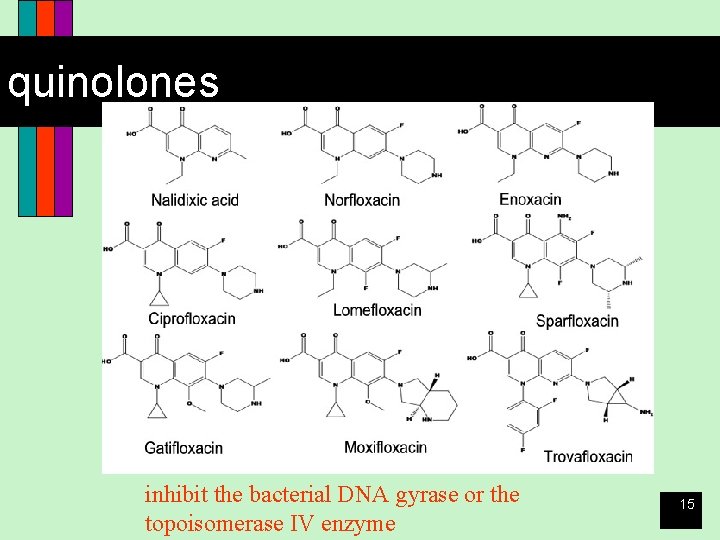
quinolones inhibit the bacterial DNA gyrase or the topoisomerase IV enzyme 15
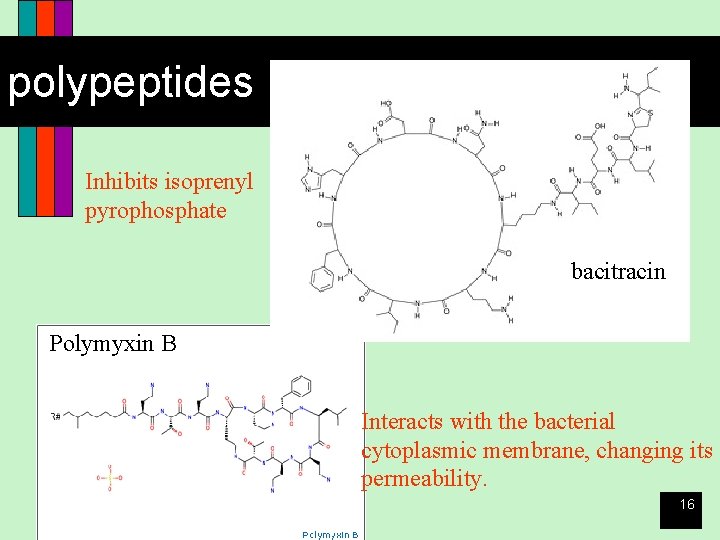
polypeptides Inhibits isoprenyl pyrophosphate bacitracin Polymyxin B Interacts with the bacterial cytoplasmic membrane, changing its permeability. 16
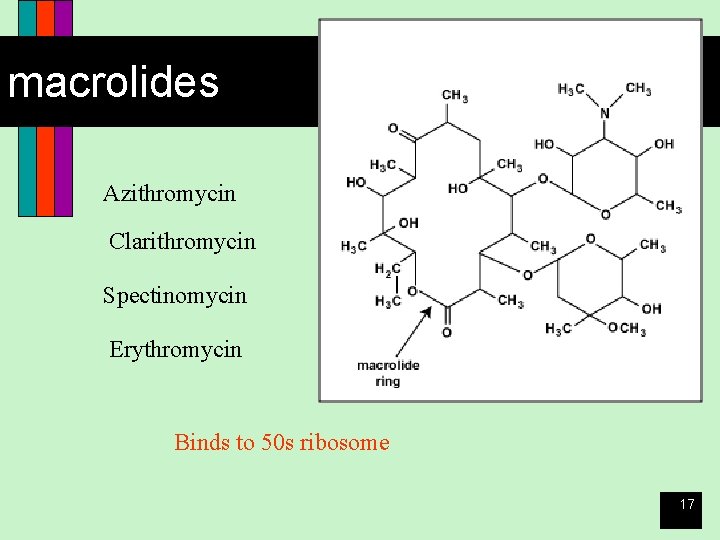
macrolides Azithromycin Clarithromycin Spectinomycin Erythromycin Binds to 50 s ribosome 17
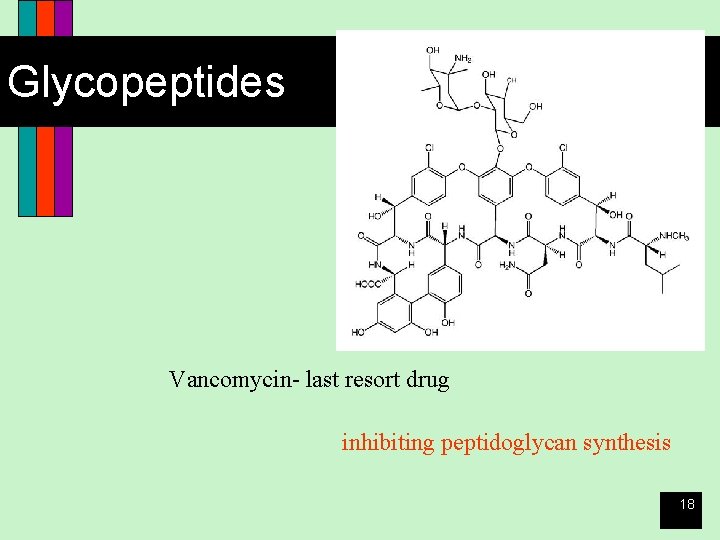
Glycopeptides Vancomycin- last resort drug inhibiting peptidoglycan synthesis 18
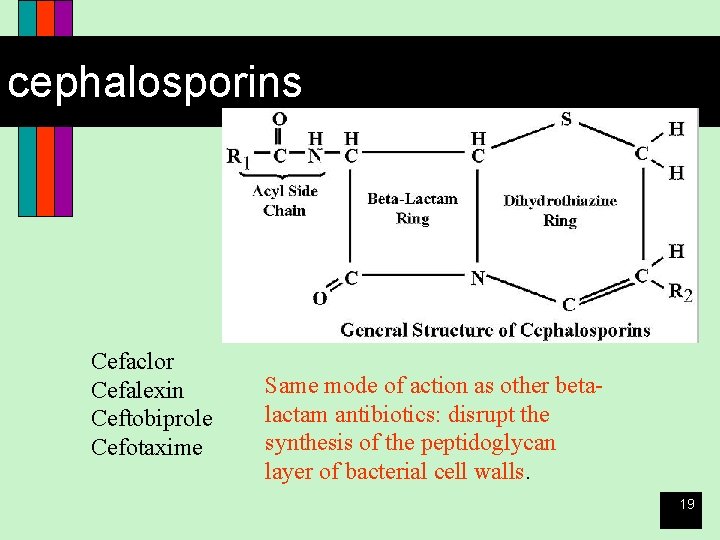
cephalosporins Cefaclor Cefalexin Ceftobiprole Cefotaxime Same mode of action as other betalactam antibiotics: disrupt the synthesis of the peptidoglycan layer of bacterial cell walls. 19
Resistance to Drugs n Chromosomal - Klebsiella B lactamases n Plasmid borne - ribosomal protein mutations 20
Mechanisms of Drug Resistance n Mutations in Target molecules n Alterations in membrane permeability n Enzyme development 21
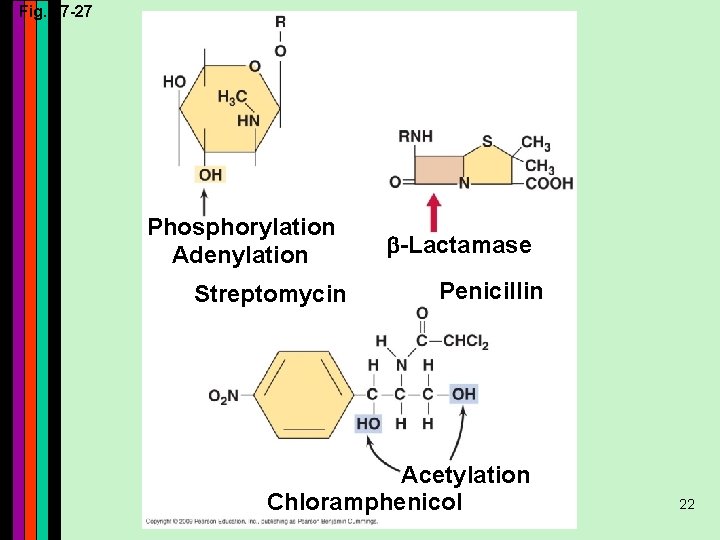
Fig. 27 -27 Phosphorylation Adenylation Streptomycin -Lactamase Penicillin Acetylation Chloramphenicol 22
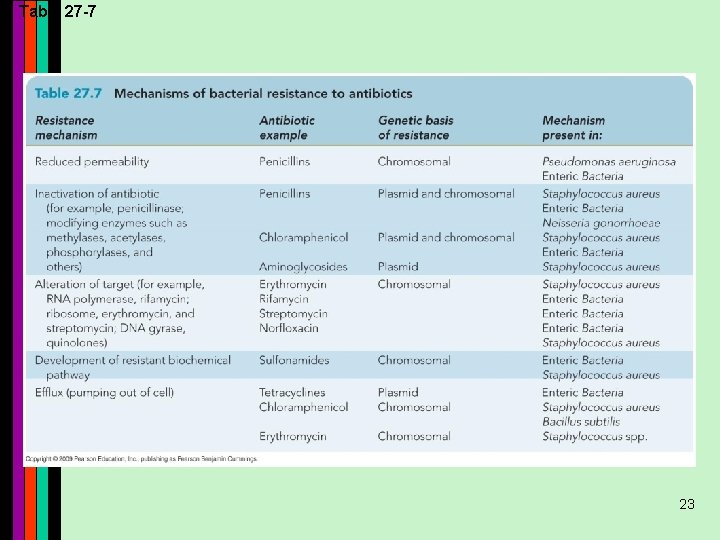
Table 27 -7 23
Mechanisms of Drug Resistance n Enzyme Activity Changes n Alterations in Anabolic Pathways 24
Generations of Drugs n First/Second/Third Line Drugs n Cross Resistance 25
26
Limiting Drug Resistance n Effective Drug Concentrations n Simultaneous Drug Administration • Synergism - clavulanic acid • Antagonism - n Restricting Drug Prescriptions 27
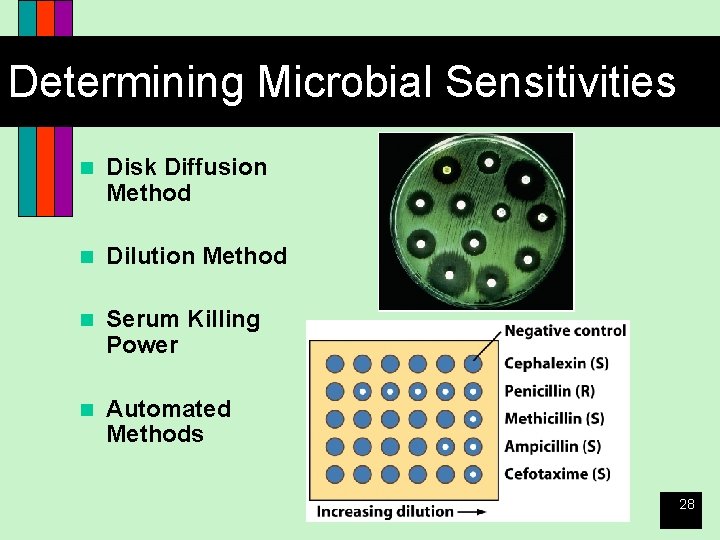
Determining Microbial Sensitivities n Disk Diffusion Method n Dilution Method n Serum Killing Power n Automated Methods 28
Ideal Antimicrobial Attributes n Solubility n Tissue stability n Selective toxicity n Resistance Acquisition n Stable toxicity level n Shelf Life n Allergenicity n Cost 29
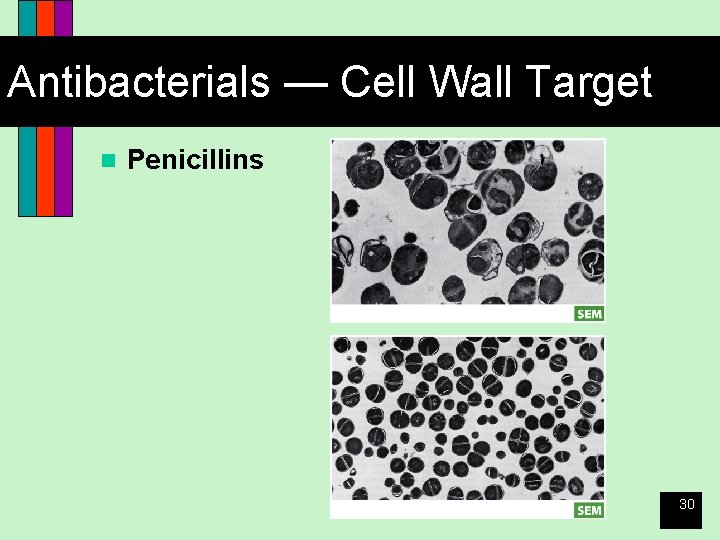
Antibacterials — Cell Wall Target n Penicillins 30
Antibacterials — Cell Wall Target n Cephalosporins n Carbapenems 31
Antibacterials — Cell Membrane Target n Polymyxins 32
Antibacterials — Protein Synthesis Inhibition n Aminoglycosides n Tetracyclines Insert Fig. 13 n Chloramphenicol n Macrolides 33
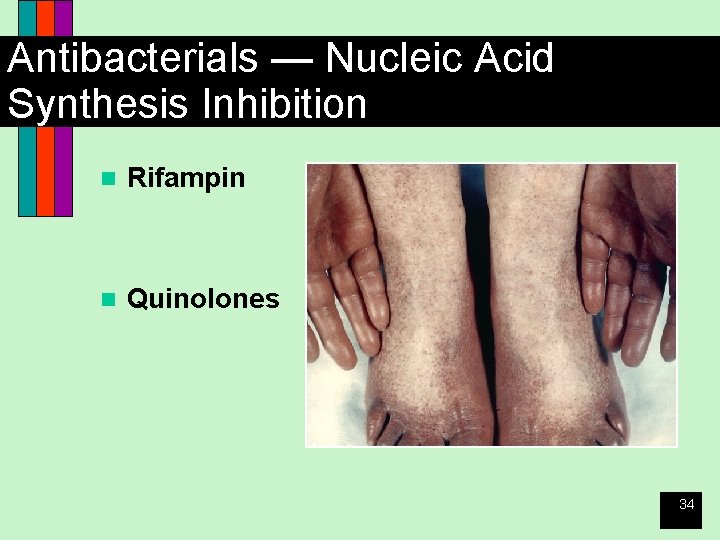
Antibacterials — Nucleic Acid Synthesis Inhibition n Rifampin n Quinolones 34
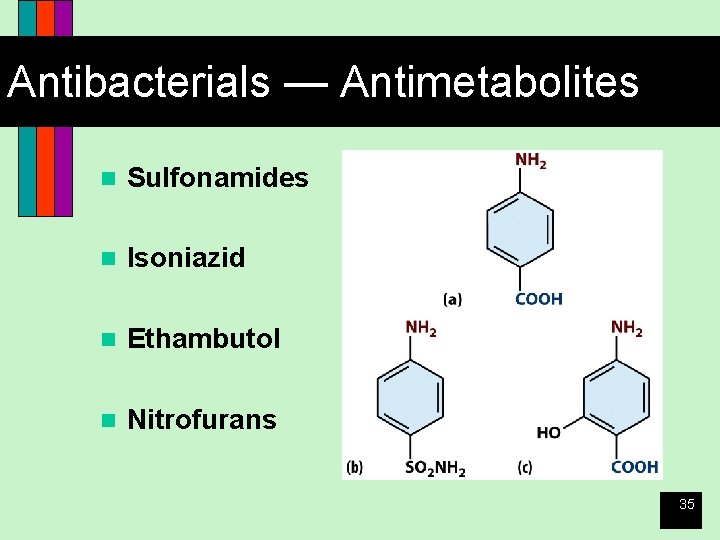
Antibacterials — Antimetabolites n Sulfonamides n Isoniazid n Ethambutol n Nitrofurans 35
Antifungals n Imidazoles n Polyenes n Griseofulvin 36
Antifungals n Flucytosine n Tolnaftate n Terbinafine 37
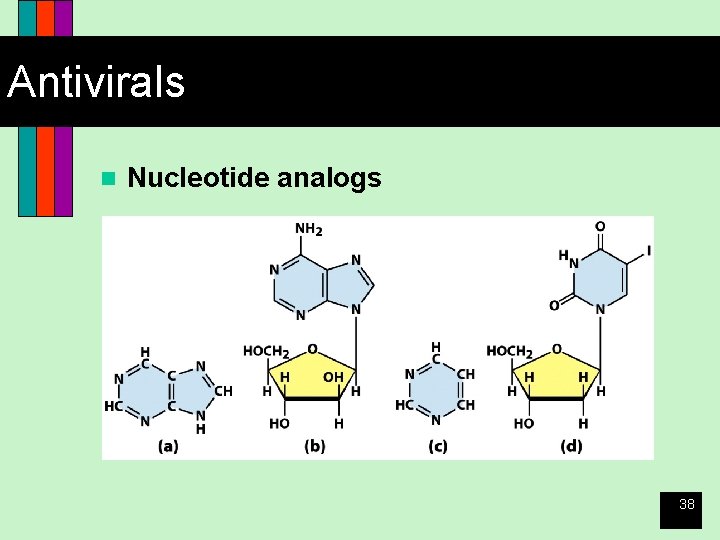
Antivirals n Nucleotide analogs 38
Antivirals n Amantidine/Rimantidine n Interferons/Immunoenhancers 39
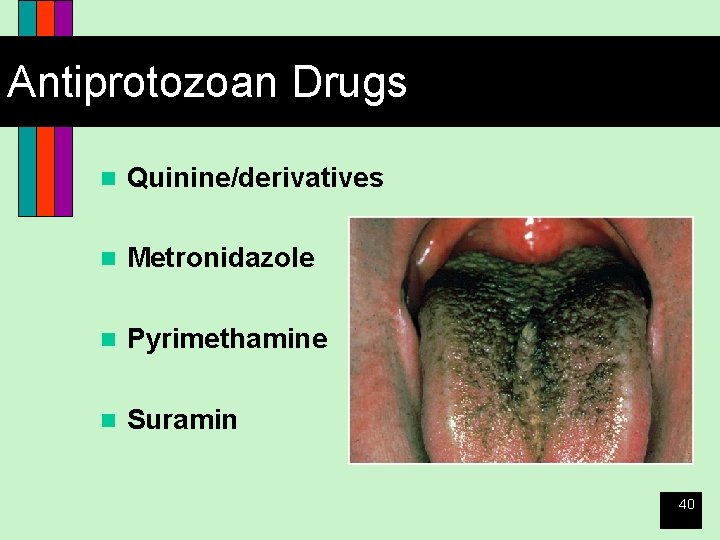
Antiprotozoan Drugs n Quinine/derivatives n Metronidazole n Pyrimethamine n Suramin 40
Antihelminthic Drugs n Niclosamide n Mebendazole n Ivermectin 41
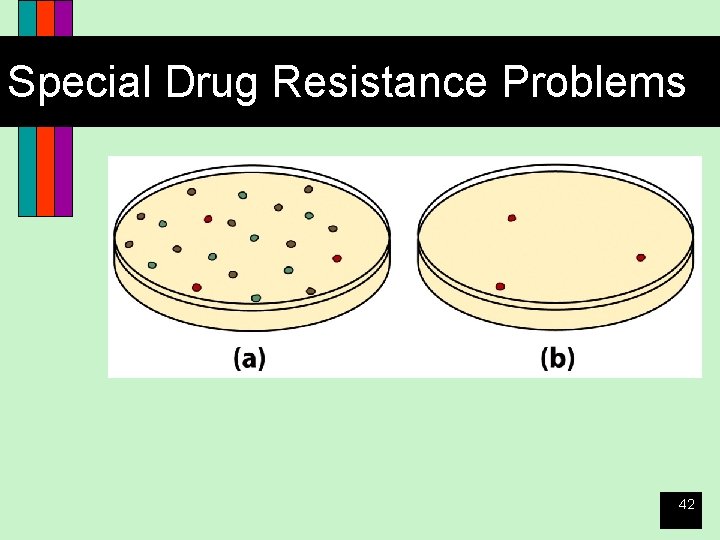
Special Drug Resistance Problems 42
- Slides: 42