
Antimicrobial resistance AMR a pharmaceutical industry perspective 17
Antimicrobial resistance (AMR) – a pharmaceutical industry perspective 17 th November 2018 Dr Bryan Deane Dept of Research, Medical & Innovation
Contents Introduction – the ABPI; the biopharmaceutical industry AMR: the issue AMR initiatives and recent progress Looking ahead 2

Association of the British Pharmaceutical Industry (ABPI) The ABPI represents innovative research-based biopharmaceutical companies, We represent large, medium or small companies who… …research and develop the majority of the current medicines pipeline …supply more than 80% of all branded medicines used by the NHS …bring life-saving and life-enhancing medicines to patients. Recognised by government as the industry body negotiating on behalf of the branded pharmaceutical industry for statutory consultation requirements e. g. UK pricing scheme for medicines
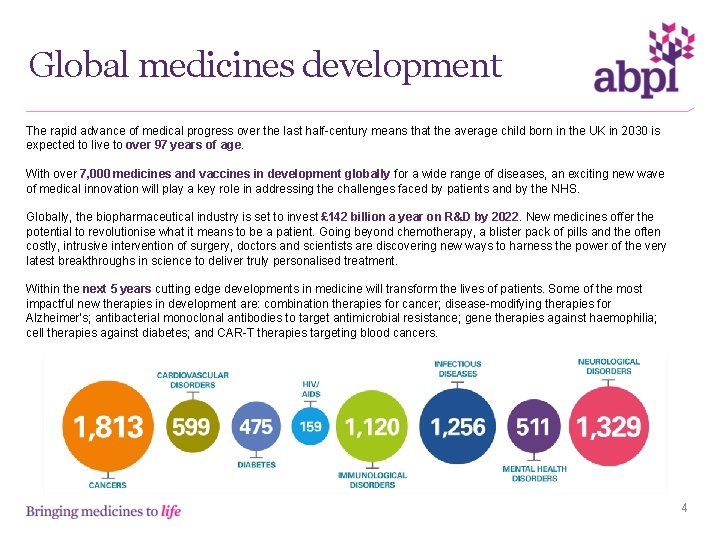
Global medicines development The rapid advance of medical progress over the last half-century means that the average child born in the UK in 2030 is expected to live to over 97 years of age. With over 7, 000 medicines and vaccines in development globally for a wide range of diseases, an exciting new wave of medical innovation will play a key role in addressing the challenges faced by patients and by the NHS. Globally, the biopharmaceutical industry is set to invest £ 142 billion a year on R&D by 2022. New medicines offer the potential to revolutionise what it means to be a patient. Going beyond chemotherapy, a blister pack of pills and the often costly, intrusive intervention of surgery, doctors and scientists are discovering new ways to harness the power of the very latest breakthroughs in science to deliver truly personalised treatment. Within the next 5 years cutting edge developments in medicine will transform the lives of patients. Some of the most impactful new therapies in development are: combination therapies for cancer; disease-modifying therapies for Alzheimer’s; antibacterial monoclonal antibodies to target antimicrobial resistance; gene therapies against haemophilia; cell therapies against diabetes; and CAR-T therapies targeting blood cancers. 4
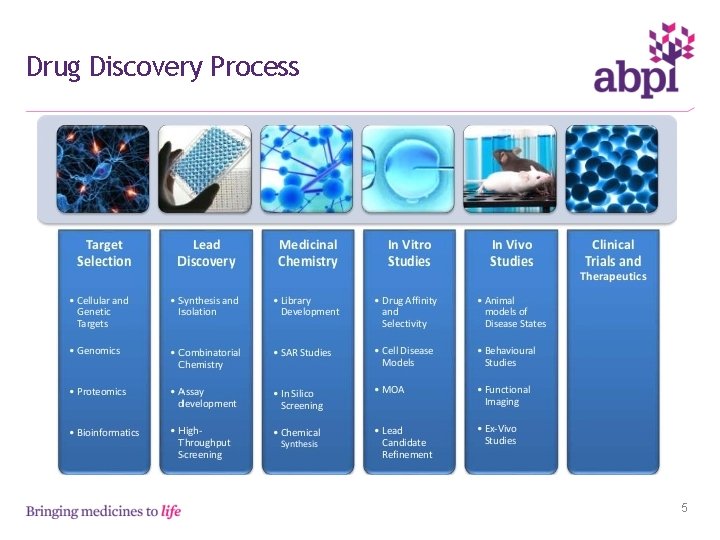
Drug Discovery Process 5

Developing a new medicine Average global cost of development: £ 1. 2 Billion per approved new medicine UK R&D investment is over £ 5 bn per annum – 15% of sales UK industry employs 61, 000 people (2016) 6

New medicine Life Cycle Investment / profit over the life cycle of a medicine (illustrative) 600 net profit (£ 000 s) 400 200 0 -10 -9 -8 -7 -6 -5 -4 -3 -2 -1 0 1 2 3 4 5 6 7 8 9 10 11 12 -200 -400 -600 year (0 = launch) preclinical phase III trials phase I & II trials launch registration Sales growth Patent expiry 7
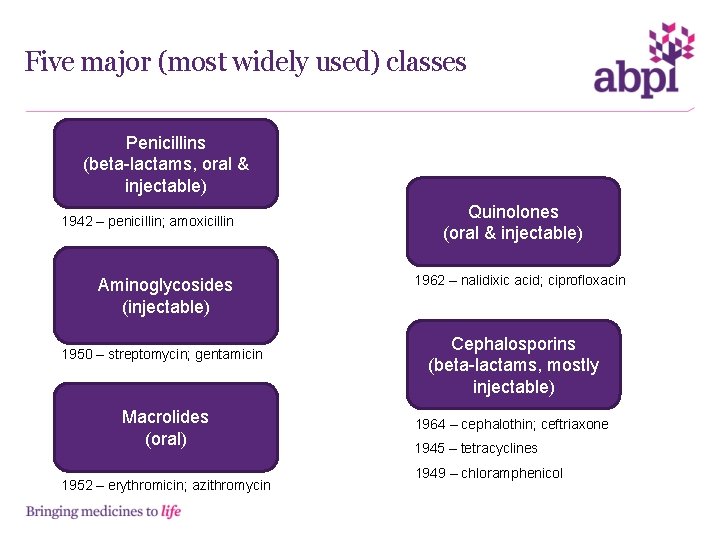
Five major (most widely used) classes Penicillins (beta-lactams, oral & injectable) 1942 – penicillin; amoxicillin Aminoglycosides (injectable) 1950 – streptomycin; gentamicin Macrolides (oral) 1952 – erythromicin; azithromycin Quinolones (oral & injectable) 1962 – nalidixic acid; ciprofloxacin Cephalosporins (beta-lactams, mostly injectable) 1964 – cephalothin; ceftriaxone 1945 – tetracyclines 1949 – chloramphenicol
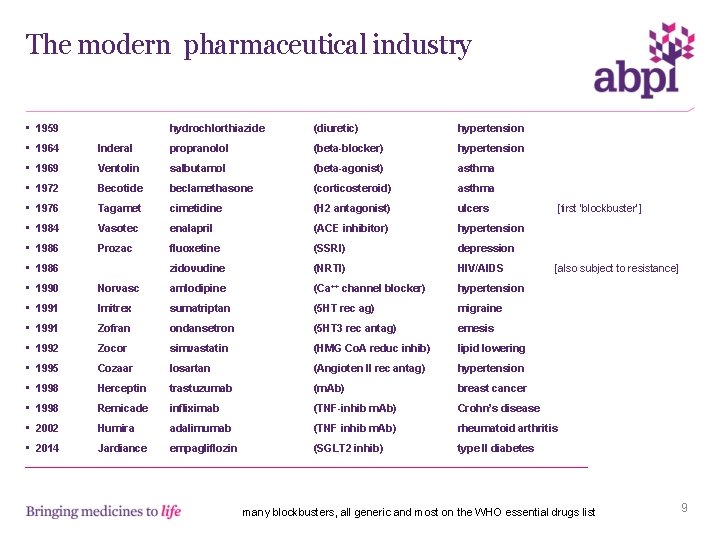
The modern pharmaceutical industry • 1959 hydrochlorthiazide (diuretic) hypertension • 1964 Inderal propranolol (beta-blocker) hypertension • 1969 Ventolin salbutamol (beta-agonist) asthma • 1972 Becotide beclamethasone (corticosteroid) asthma • 1976 Tagamet cimetidine (H 2 antagonist) ulcers • 1984 Vasotec enalapril (ACE inhibitor) hypertension • 1986 Prozac fluoxetine (SSRI) depression zidovudine (NRTI) HIV/AIDS • 1986 [first ‘blockbuster’] [also subject to resistance] • 1990 Norvasc amlodipine (Ca++ channel blocker) hypertension • 1991 Imitrex sumatriptan (5 HT rec ag) migraine • 1991 Zofran ondansetron (5 HT 3 rec antag) emesis • 1992 Zocor simvastatin (HMG Co. A reduc inhib) lipid lowering • 1995 Cozaar losartan (Angioten II rec antag) hypertension • 1998 Herceptin trastuzumab (m. Ab) breast cancer • 1998 Remicade infliximab (TNF-inhib m. Ab) Crohn’s disease • 2002 Humira adalimumab (TNF inhib m. Ab) rheumatoid arthritis • 2014 Jardiance empagliflozin (SGLT 2 inhib) type II diabetes many blockbusters, all generic and most on the WHO essential drugs list 9
Contents Introduction – the ABPI; the biopharmaceutical industry AMR: the issue AMR initiatives and recent progress Looking ahead
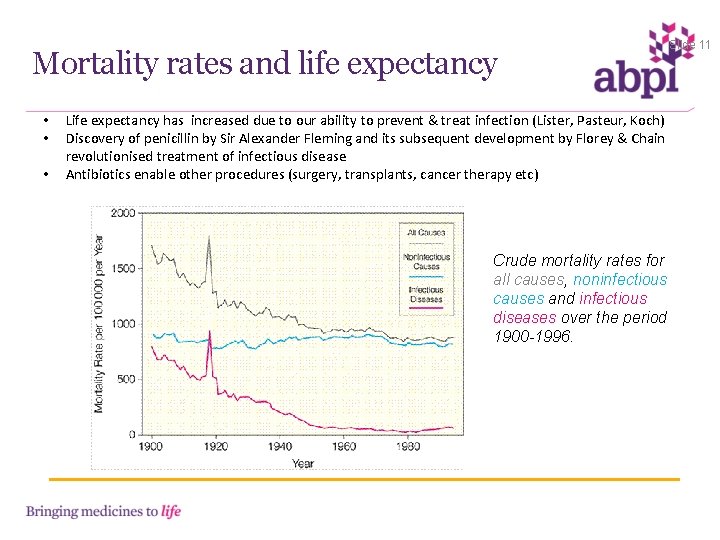
Mortality rates and life expectancy • • • Life expectancy has increased due to our ability to prevent & treat infection (Lister, Pasteur, Koch) Discovery of penicillin by Sir Alexander Fleming and its subsequent development by Florey & Chain revolutionised treatment of infectious disease Antibiotics enable other procedures (surgery, transplants, cancer therapy etc) Crude mortality rates for all causes, noninfectious causes and infectious diseases over the period 1900 -1996. Slide 11
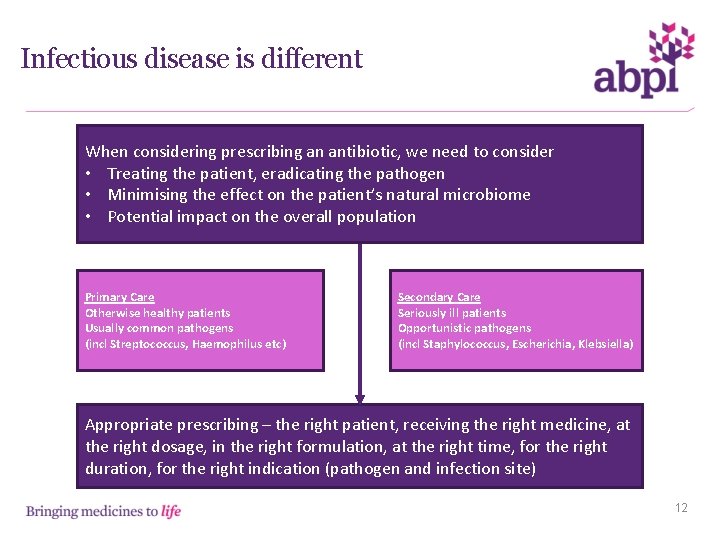
Infectious disease is different When considering prescribing an antibiotic, we need to consider • Treating the patient, eradicating the pathogen • Minimising the effect on the patient’s natural microbiome • Potential impact on the overall population Primary Care Otherwise healthy patients Usually common pathogens (incl Streptococcus, Haemophilus etc) Secondary Care Seriously ill patients Opportunistic pathogens (incl Staphylococcus, Escherichia, Klebsiella) Appropriate prescribing – the right patient, receiving the right medicine, at the right dosage, in the right formulation, at the right time, for the right duration, for the right indication (pathogen and infection site) 12
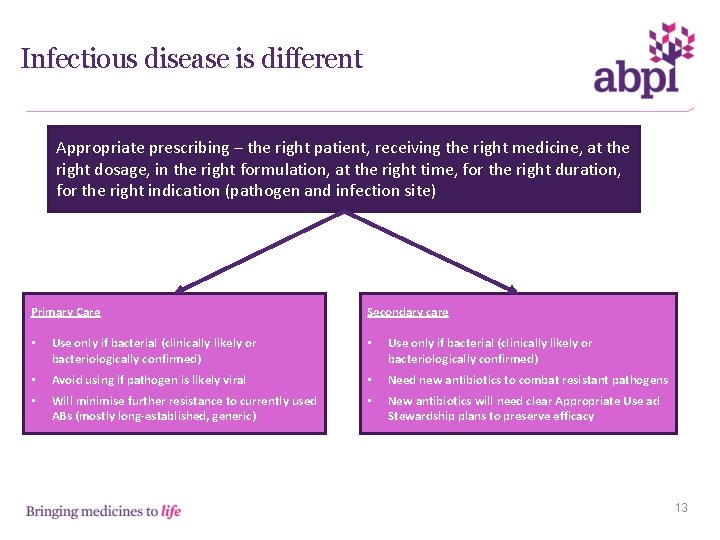
Infectious disease is different Appropriate prescribing – the right patient, receiving the right medicine, at the right dosage, in the right formulation, at the right time, for the right duration, for the right indication (pathogen and infection site) Primary Care Secondary care • Use only if bacterial (clinically likely or bacteriologically confirmed) • Avoid using if pathogen is likely viral • Need new antibiotics to combat resistant pathogens • Will minimise further resistance to currently used ABs (mostly long-established, generic) • New antibiotics will need clear Appropriate Use ad Stewardship plans to preserve efficacy 13

Gram – positive or negative? Gram +ve Staphylococcus Streptococcus Clostridium Enterococcus Gram -ve Acinetobacter Enterobacter Escherichia Haemophilus Klebsiella Moraxella Neisseria Pseudomonas Salmonella

Antibiotic Classes
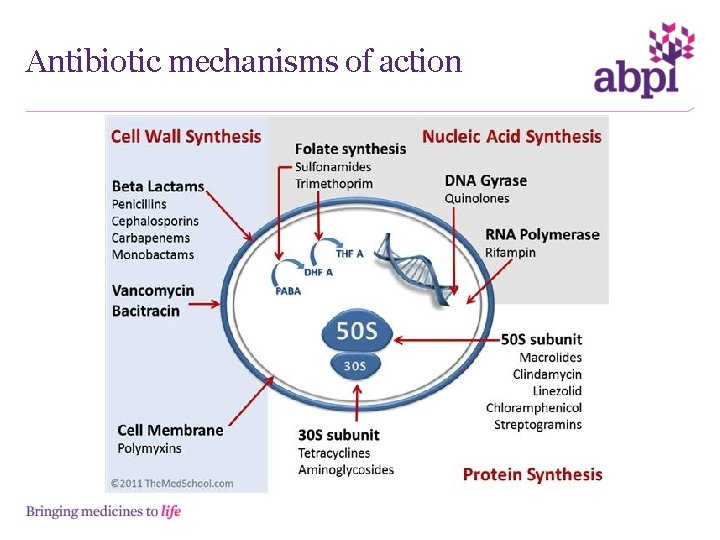
Antibiotic mechanisms of action
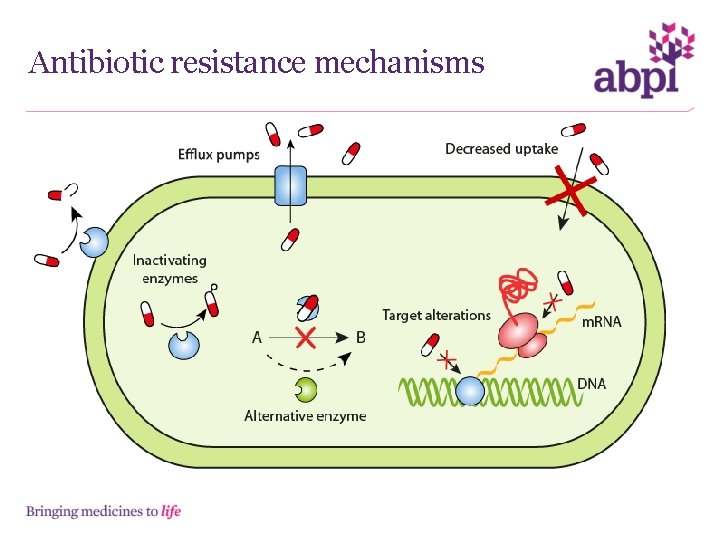
Antibiotic resistance mechanisms
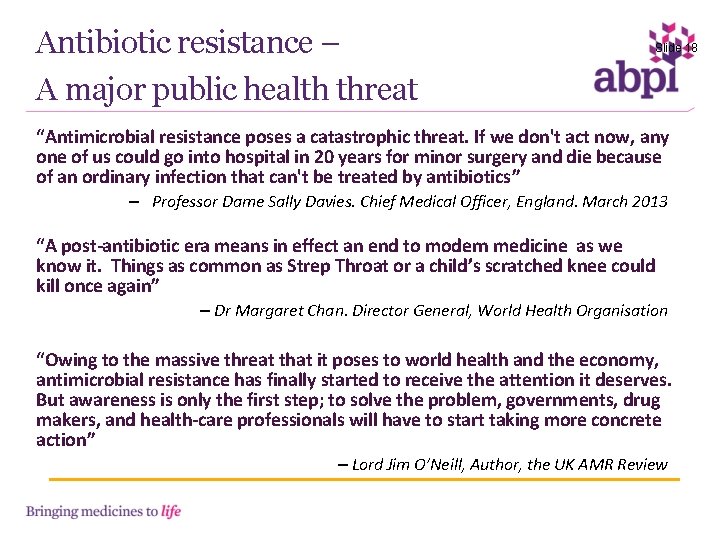
Antibiotic resistance – A major public health threat Slide 18 18 “Antimicrobial resistance poses a catastrophic threat. If we don't act now, any one of us could go into hospital in 20 years for minor surgery and die because of an ordinary infection that can't be treated by antibiotics” – Professor Dame Sally Davies. Chief Medical Officer, England. March 2013 “A post-antibiotic era means in effect an end to modern medicine as we know it. Things as common as Strep Throat or a child’s scratched knee could kill once again” – Dr Margaret Chan. Director General, World Health Organisation “Owing to the massive threat that it poses to world health and the economy, antimicrobial resistance has finally started to receive the attention it deserves. But awareness is only the first step; to solve the problem, governments, drug makers, and health-care professionals will have to start taking more concrete action” – Lord Jim O’Neill, Author, the UK AMR Review
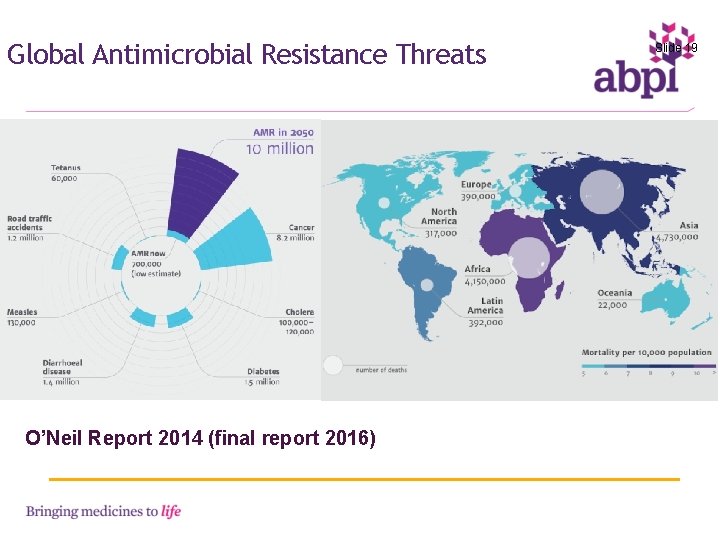
Global Antimicrobial Resistance Threats O’Neil Report 2014 (final report 2016) Slide 19 19

Impact of AMR on World Economy Slide 20 20 $20 billion in excess direct healthcare costs, with additional costs to society for lost productivity as high as $35 billion a year” US estimate AMR Impact on World GDP In trillions of USD – O’Neill 2014

New antibiotic targets (WHO 2017)*: priority resistant pathogens Priority 1: CRITICAL • Acinetobacter baumannii, carbapenem-resistant • Pseudomonas aeruginosa, carbapenem-resistant • Enterobacteriaceae, carbapenem-resistant, ESBL-producing Priority 2: HIGH • Enterococcus faecium, vancomycin-resistant • Staphylococcus aureus, methicillin-resistant, vancomycin-intermediate and resistant • Helicobacter pylori, clarithromycin-resistant • Campylobacter spp. , fluoroquinolone-resistant • Salmonellae, fluoroquinolone-resistant • Neisseria gonorrhoeae, cephalosporin-resistant, fluoroquinolone-resistant Priority 3: MEDIUM • Streptococcus pneumoniae, penicillin-non-susceptible • Haemophilus influenzae, ampicillin-resistant • Shigella spp. , fluoroquinolone-resistant *CDC (USA) has 18 targets in its Feb 2018 list 21
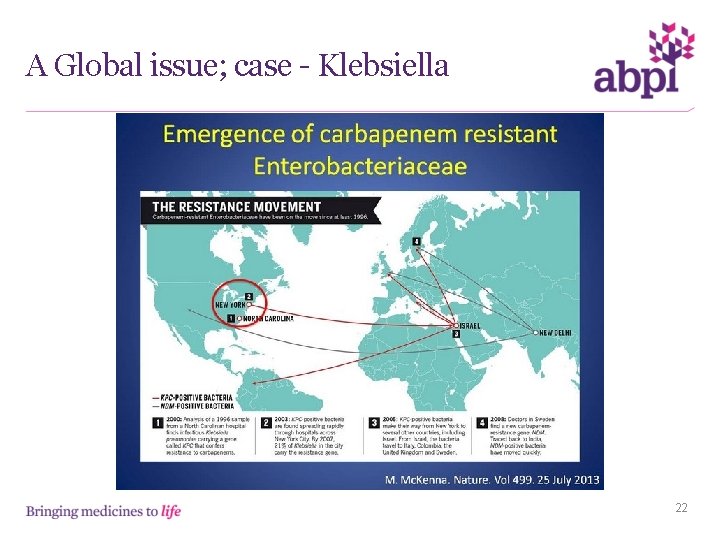
A Global issue; case - Klebsiella 22
Contents Introduction – the ABPI; the biopharmaceutical industry AMR: the issue AMR initiatives and recent progress Looking ahead
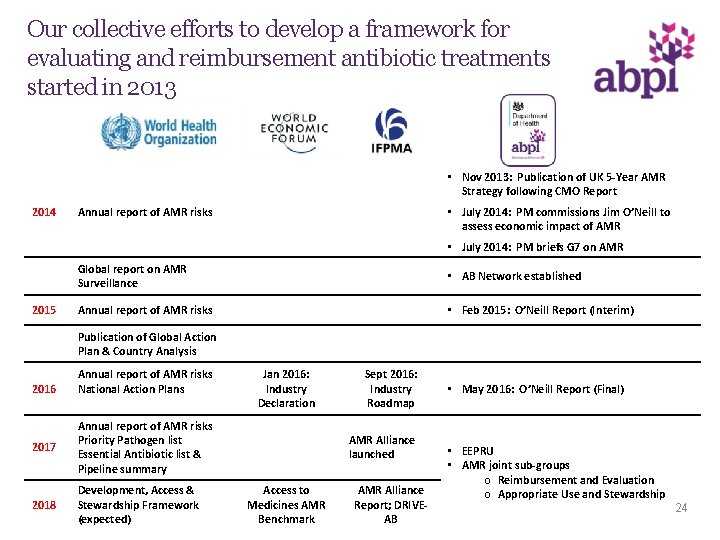
Our collective efforts to develop a framework for evaluating and reimbursement antibiotic treatments started in 2013 • Nov 2013: Publication of UK 5 -Year AMR Strategy following CMO Report 2014 Annual report of AMR risks • July 2014: PM commissions Jim O’Neill to assess economic impact of AMR • July 2014: PM briefs G 7 on AMR 2015 Global report on AMR Surveillance • AB Network established Annual report of AMR risks • Feb 2015: O’Neill Report (Interim) Publication of Global Action Plan & Country Analysis 2016 Annual report of AMR risks National Action Plans 2017 Annual report of AMR risks Priority Pathogen list Essential Antibiotic list & Pipeline summary 2018 Development, Access & Stewardship Framework (expected) Jan 2016: Industry Declaration Sept 2016: Industry Roadmap AMR Alliance launched Access to Medicines AMR Benchmark AMR Alliance Report; DRIVEAB • May 2016: O’Neill Report (Final) • EEPRU • AMR joint sub-groups o Reimbursement and Evaluation o Appropriate Use and Stewardship 24

UK Five Year AMR Strategy, 2013 -2018 refresh 25

UK Five Year Antimicrobial Resistance Strategy 2013 to 2018 The 7 Key Areas for Future Action Key area 1*: improving infection prevention and control practices Key area 2*♯: optimising prescribing practice Key area 3*: improving professional education, training and public engagement Key area 4♯: developing new drugs, treatments and diagnostics Key area 5*: better access to and use of surveillance data Key area 6: better identification and prioritisation of AMR research needs Key area 7: strengthened international collaboration *Appropriate Use workstream ♯ Reimbursement workstream 26
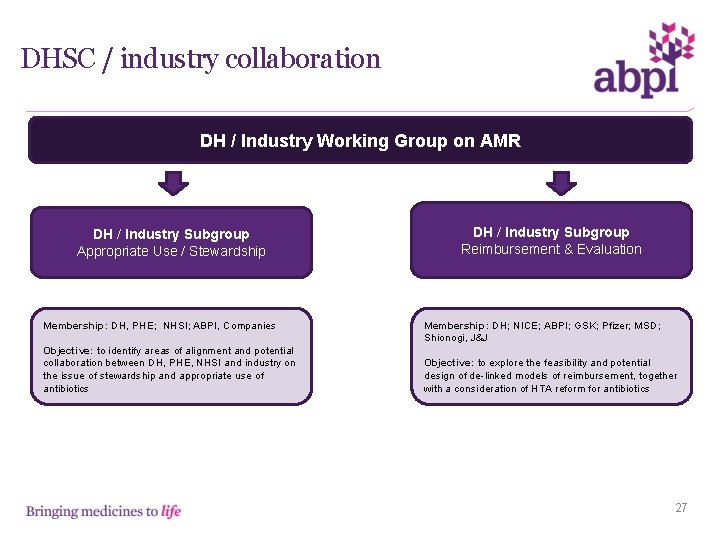
DHSC / industry collaboration DH / Industry Working Group on AMR DH / Industry Subgroup Appropriate Use / Stewardship Membership: DH, PHE; NHSI; ABPI, Companies Objective: to identify areas of alignment and potential collaboration between DH, PHE, NHSI and industry on the issue of stewardship and appropriate use of antibiotics DH / Industry Subgroup Reimbursement & Evaluation Membership: DH; NICE; ABPI; GSK; Pfizer; MSD; Shionogi, J&J Objective: to explore the feasibility and potential design of de-linked models of reimbursement, together with a consideration of HTA reform for antibiotics 27
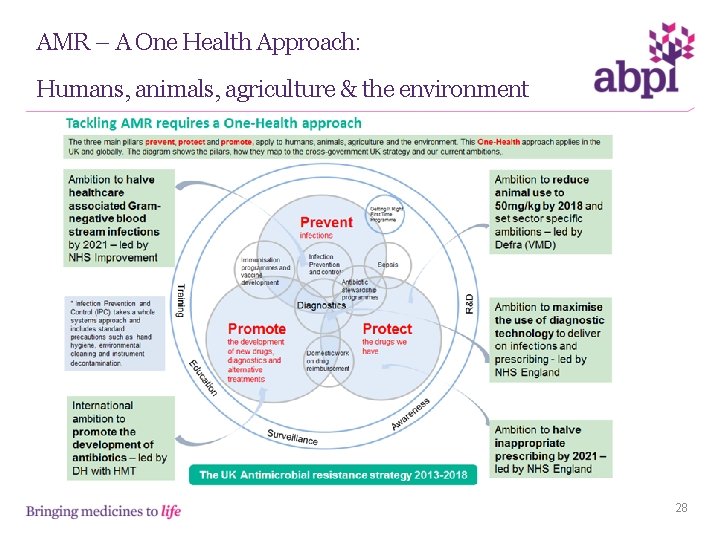
AMR – A One Health Approach: Humans, animals, agriculture & the environment 28
2018 Update • The commercial reality: By 1990, the diminishing return on investment was leading to a decline in investment in R&D • In 1990, 18 major companies were committed to AB R&D; by 2013 this had dropped to 4 • However; some activity has been stimulated since 2013 • UK has had a leading voice in the global community (David Cameron, Sally Davies, Jim O’Neill) • AMR is a global issue, and many of our members are UK affiliates of global companies 29
2018 Update Most recently, input to: • Health & Social Care Select Committee inquiry • 5 year AMR strategy refresh • NHS 10 -year plan • We work with and through other Industry associations – IFPMA, EFPIA, Ph. RMA, JPMA 30
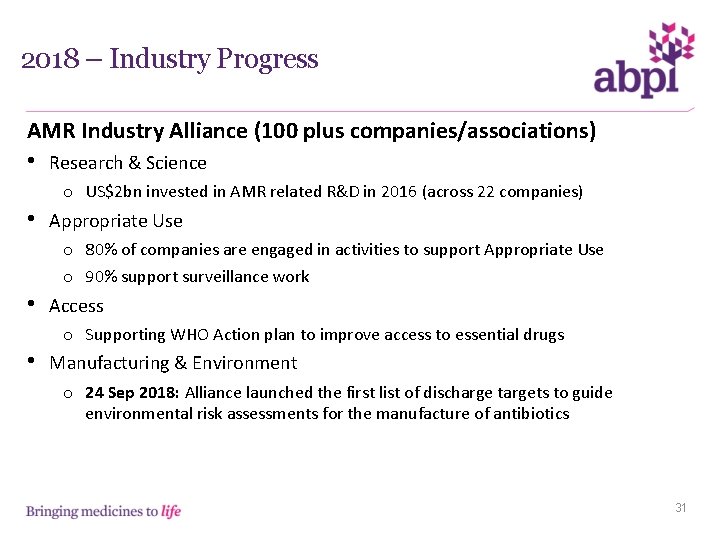
2018 – Industry Progress AMR Industry Alliance (100 plus companies/associations) • Research & Science o US$2 bn invested in AMR related R&D in 2016 (across 22 companies) • Appropriate Use o 80% of companies are engaged in activities to support Appropriate Use o 90% support surveillance work • Access o Supporting WHO Action plan to improve access to essential drugs • Manufacturing & Environment o 24 Sep 2018: Alliance launched the first list of discharge targets to guide environmental risk assessments for the manufacture of antibiotics 31
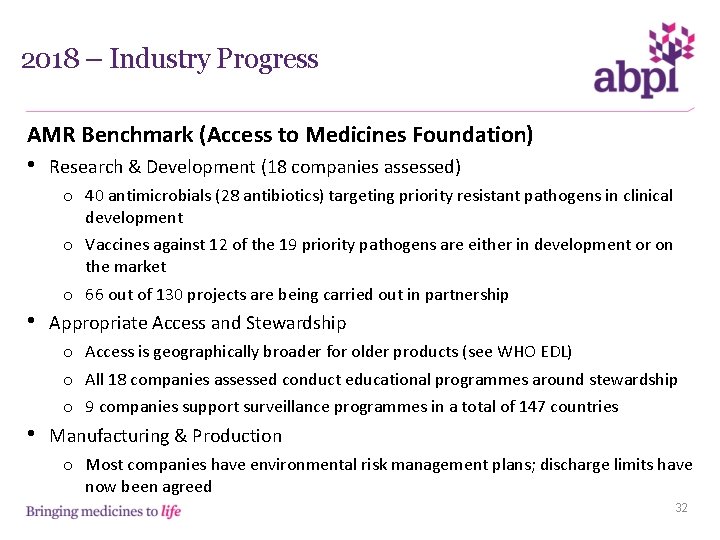
2018 – Industry Progress AMR Benchmark (Access to Medicines Foundation) • Research & Development (18 companies assessed) o 40 antimicrobials (28 antibiotics) targeting priority resistant pathogens in clinical development o Vaccines against 12 of the 19 priority pathogens are either in development or on the market o 66 out of 130 projects are being carried out in partnership • Appropriate Access and Stewardship o Access is geographically broader for older products (see WHO EDL) o All 18 companies assessed conduct educational programmes around stewardship o 9 companies support surveillance programmes in a total of 147 countries • Manufacturing & Production o Most companies have environmental risk management plans; discharge limits have now been agreed 32
Contents Introduction – the ABPI; the biopharmaceutical industry AMR: the issue AMR initiatives and recent progress Looking ahead
What would you expect from Industry? • • • Discover new medicines (new mechanisms/classes)? Develop new medicines, through clinical trials, formulation and manufacture, to regulatory approval? Champion Appropriate Use and stewardship – support education to help make the most of what we have? Support surveillance? Investigate new/different approaches – vaccines, phage therapy, oligonucleotides, microbiome ‘transplant’? Commercial reality (to do all this with diminishing returns? ) o Need to create an economic environment in which investment in antibiotic R&D is sustainable 34
What is a good antibacterial target? • The target should be present in a required spectrum of organism. • It should be absent in humans. • It should be essential for bacterial growth. • It should be expressed and relevant to be infection process. • Some thing about the function of target should be known. • Bypass resistance mechanisms? • Completely new approaches? 35
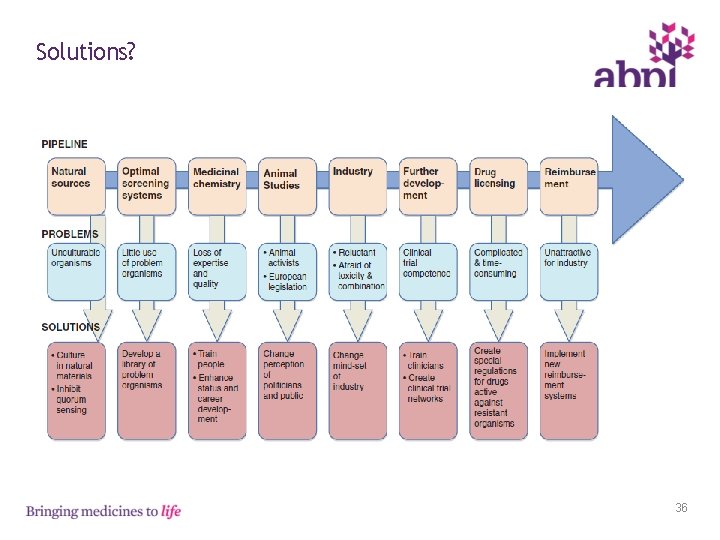
Solutions? 36
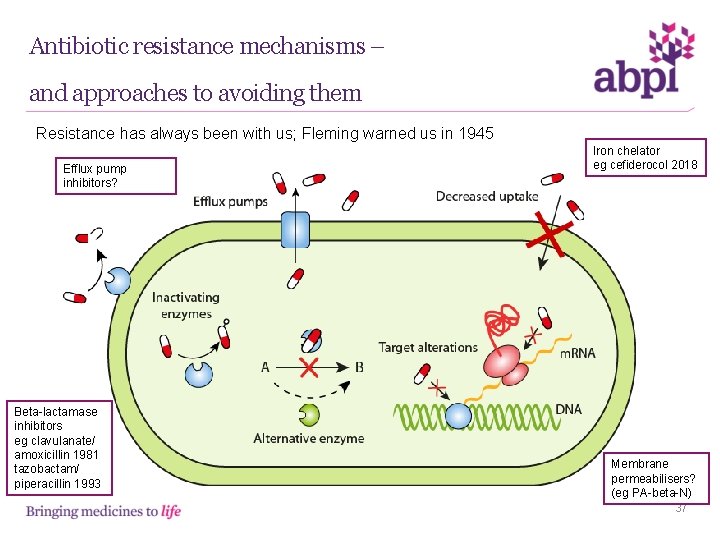
Antibiotic resistance mechanisms – and approaches to avoiding them Resistance has always been with us; Fleming warned us in 1945 Efflux pump inhibitors? Beta-lactamase inhibitors eg clavulanate/ amoxicillin 1981 tazobactam/ piperacillin 1993 Iron chelator eg cefiderocol 2018 Membrane permeabilisers? (eg PA-beta-N) 37
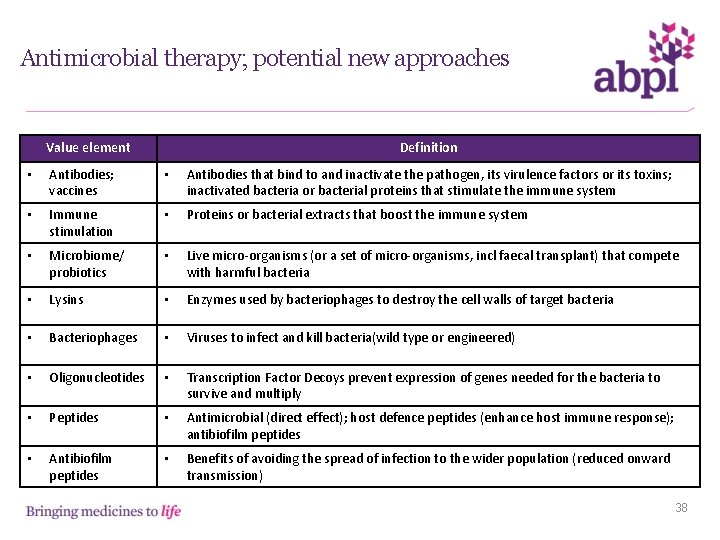
Antimicrobial therapy; potential new approaches Value element Definition • Antibodies; vaccines • Antibodies that bind to and inactivate the pathogen, its virulence factors or its toxins; inactivated bacteria or bacterial proteins that stimulate the immune system • Immune stimulation • Proteins or bacterial extracts that boost the immune system • Microbiome/ probiotics • Live micro-organisms (or a set of micro-organisms, incl faecal transplant) that compete with harmful bacteria • Lysins • Enzymes used by bacteriophages to destroy the cell walls of target bacteria • Bacteriophages • Viruses to infect and kill bacteria(wild type or engineered) • Oligonucleotides • Transcription Factor Decoys prevent expression of genes needed for the bacteria to survive and multiply • Peptides • Antimicrobial (direct effect); host defence peptides (enhance host immune response); antibiofilm peptides • Antibiofilm peptides • Benefits of avoiding the spread of infection to the wider population (reduced onward transmission) 38
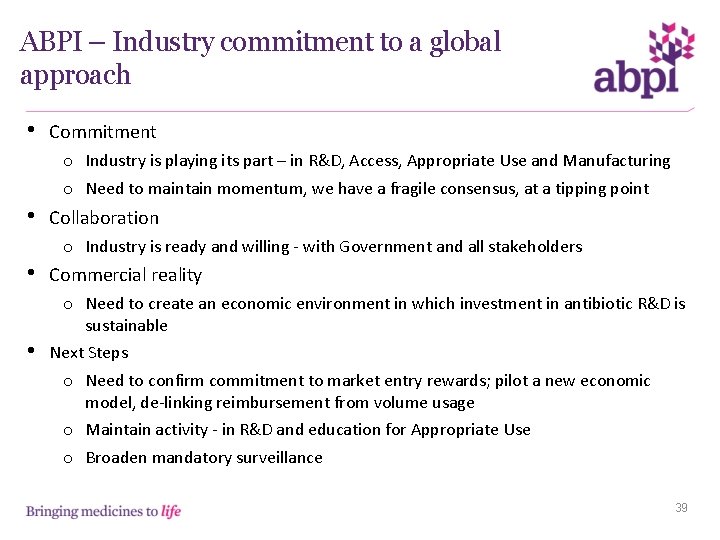
ABPI – Industry commitment to a global approach • Commitment o Industry is playing its part – in R&D, Access, Appropriate Use and Manufacturing o Need to maintain momentum, we have a fragile consensus, at a tipping point • Collaboration o Industry is ready and willing - with Government and all stakeholders • • Commercial reality o Need to create an economic environment in which investment in antibiotic R&D is sustainable Next Steps o Need to confirm commitment to market entry rewards; pilot a new economic model, de-linking reimbursement from volume usage o Maintain activity - in R&D and education for Appropriate Use o Broaden mandatory surveillance 39

Close
- Slides: 40