
Antimicrobial Agents Sulfonamides and Quinolones Prof R K
Antimicrobial Agents (Sulfonamides and Quinolones) Prof. R. K. Dixit Pharmacology and Therapeutics K. G. M. U. Lucknow dixitkumarrakesh@gmail. com
Objectives After completion of this lecture you will be able to – Know about sulphonamides • • • Types (Classification) MOA Combination with Trimethoprim or Pyrimethamine Uses ADRs, DDI, and Contraindications Special points – Know about Quinolones • • • Types (Classification) MOA Uses ADRs, DDI, and Contraindications Special points
Suphonamides (Sulfonamides) [F=USA, Ph=UK] First antimicrobial agents effective against bacteria Prontosil Red (sulfonamide chrysoidine dye) – by- Domagk – for – streptococcal infection. Broken down in body – into- Sulfanilamide (Active against bacteria) Use increased –Overuse- Development– Resistance Rarely used (alone) today due to ◦ Availability of safer and effective antibiotics ◦ Resistant
Sulfonamides today used as combination Ø Trimethoprim (Cotrimoxazole) as anti. Bacterial ØPyrimethamine (Cotrimazine) as anti-Malarial. TB in PM
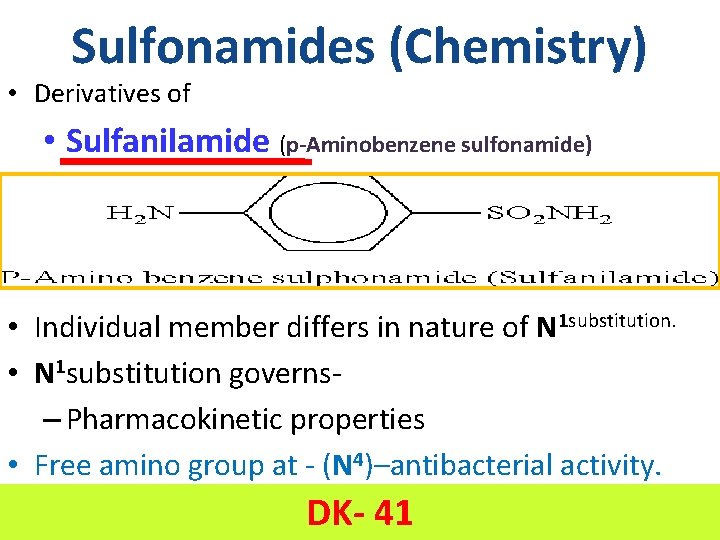
Sulfonamides (Chemistry) • Derivatives of • Sulfanilamide (p-Aminobenzene sulfonamide) • Individual member differs in nature of N 1 substitution. • N 1 substitution governs– Pharmacokinetic properties • Free amino group at - (N 4)–antibacterial activity. DK- 41
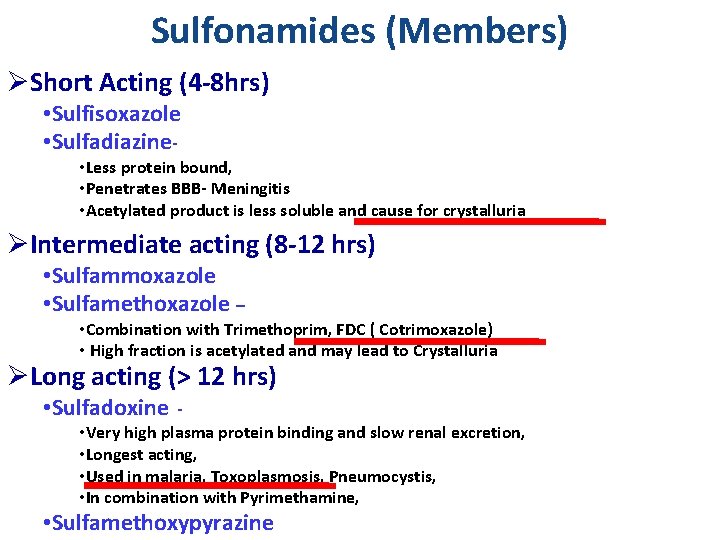
Sulfonamides (Members) ØShort Acting (4 -8 hrs) • Sulfisoxazole • Sulfadiazine- • Less protein bound, • Penetrates BBB- Meningitis • Acetylated product is less soluble and cause for crystalluria ØIntermediate acting (8 -12 hrs) • Sulfammoxazole • Sulfamethoxazole – • Combination with Trimethoprim, FDC ( Cotrimoxazole) • High fraction is acetylated and may lead to Crystalluria ØLong acting (> 12 hrs) • Sulfadoxine - • Very high plasma protein binding and slow renal excretion, • Longest acting, • Used in malaria, Toxoplasmosis, Pneumocystis, • In combination with Pyrimethamine, • Sulfamethoxypyrazine
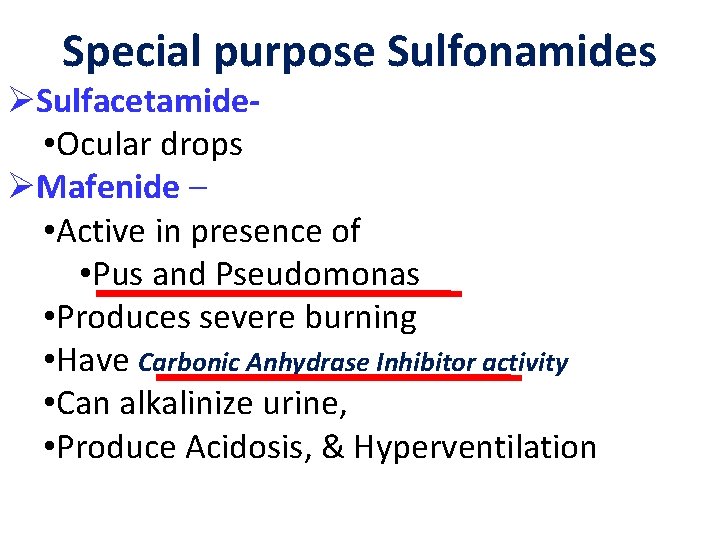
Special purpose Sulfonamides ØSulfacetamide- • Ocular drops ØMafenide – • Active in presence of • Pus and Pseudomonas • Produces severe burning • Have Carbonic Anhydrase Inhibitor activity • Can alkalinize urine, • Produce Acidosis, & Hyperventilation
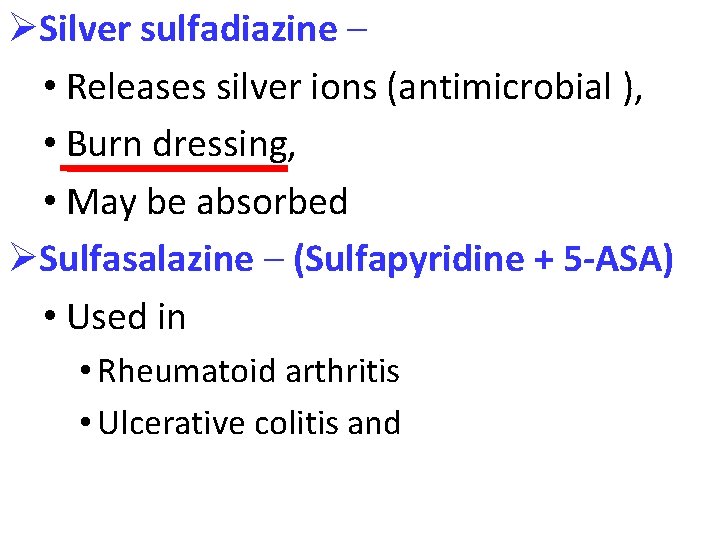
ØSilver sulfadiazine – • Releases silver ions (antimicrobial ), • Burn dressing, • May be absorbed ØSulfasalazine – (Sulfapyridine + 5 -ASA) • Used in • Rheumatoid arthritis • Ulcerative colitis and
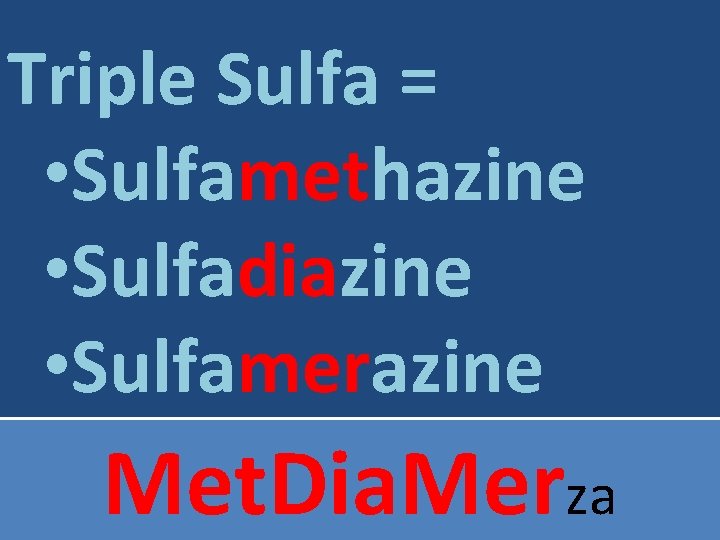
Triple Sulfa = • Sulfamethazine • Sulfadiazine • Sulfamerazine Met. Dia. Merza
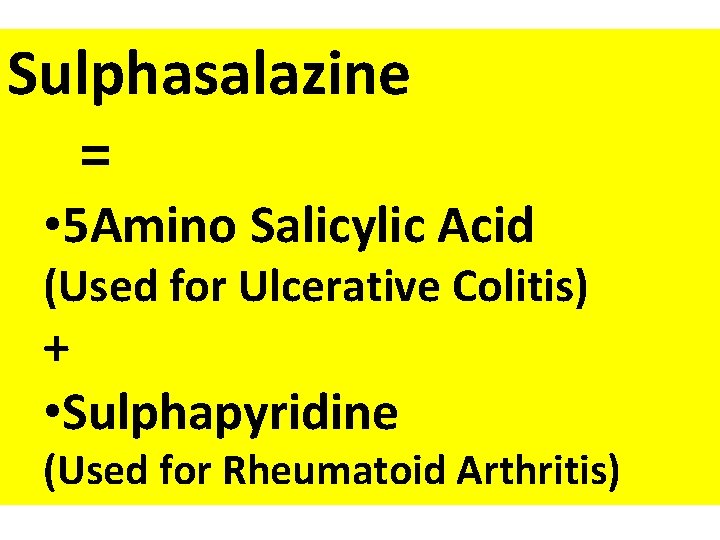
Sulphasalazine = • 5 Amino Salicylic Acid (Used for Ulcerative Colitis) + • Sulphapyridine (Used for Rheumatoid Arthritis)
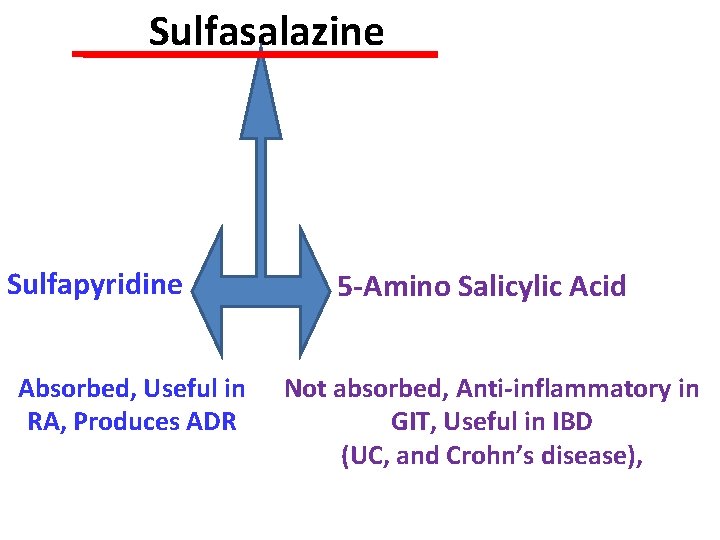
Sulfasalazine Sulfapyridine Absorbed, Useful in RA, Produces ADR 5 -Amino Salicylic Acid Not absorbed, Anti-inflammatory in GIT, Useful in IBD (UC, and Crohn’s disease),
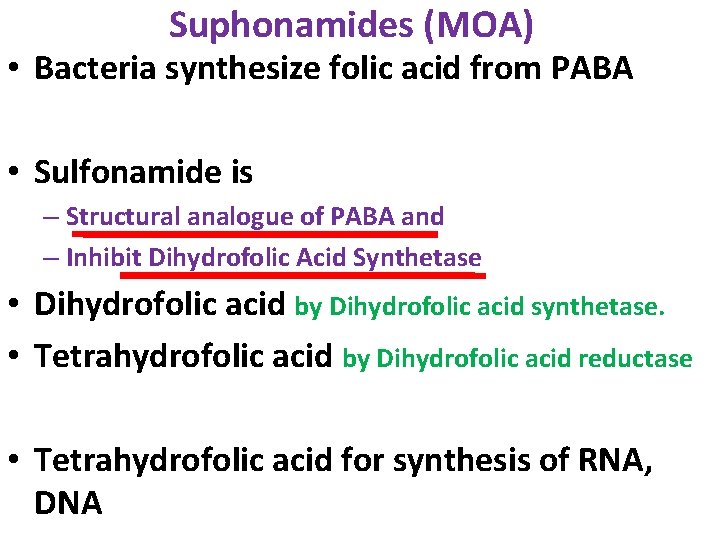
Suphonamides (MOA) • Bacteria synthesize folic acid from PABA • Sulfonamide is – Structural analogue of PABA and – Inhibit Dihydrofolic Acid Synthetase • Dihydrofolic acid by Dihydrofolic acid synthetase. • Tetrahydrofolic acid by Dihydrofolic acid reductase • Tetrahydrofolic acid for synthesis of RNA, DNA
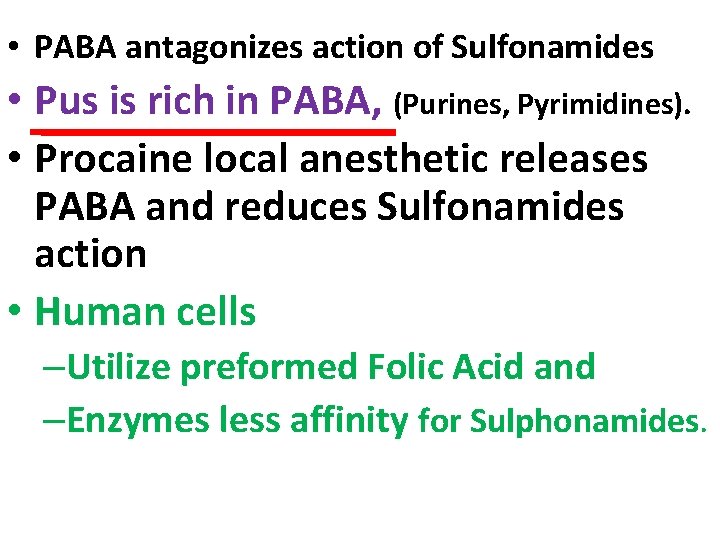
• PABA antagonizes action of Sulfonamides • Pus is rich in PABA, (Purines, Pyrimidines). • Procaine local anesthetic releases PABA and reduces Sulfonamides action • Human cells –Utilize preformed Folic Acid and –Enzymes less affinity for Sulphonamides.
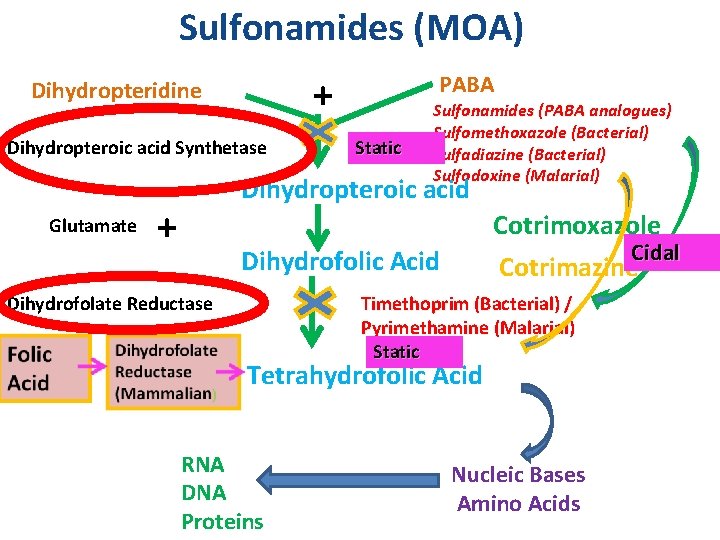
Sulfonamides (MOA) + Dihydropteridine Dihydropteroic acid Synthetase Glutamate PABA Static Sulfonamides (PABA analogues) Sulfomethoxazole (Bacterial) Sulfadiazine (Bacterial) Sulfodoxine (Malarial) Dihydropteroic acid + Cotrimoxazole Cidal Cotrimazine Dihydrofolic Acid Dihydrofolate Reductase Timethoprim (Bacterial) / Pyrimethamine (Malarial) Static Tetrahydrofolic Acid RNA DNA Proteins Nucleic Bases Amino Acids
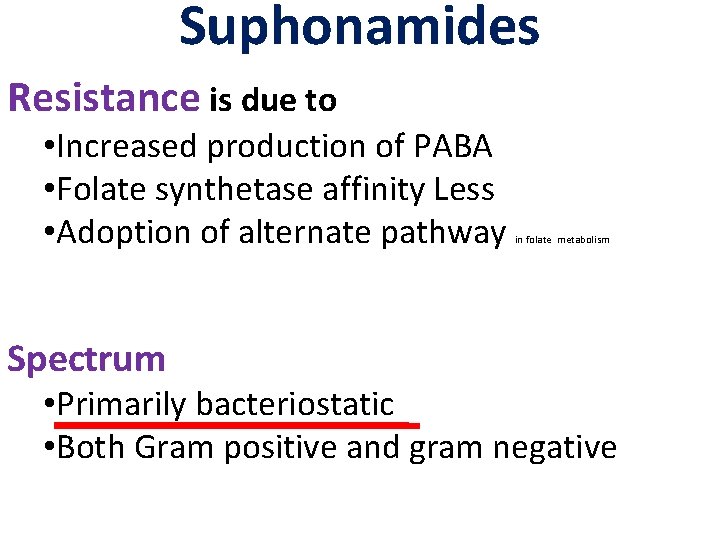
Suphonamides Resistance is due to • Increased production of PABA • Folate synthetase affinity Less • Adoption of alternate pathway Spectrum in folate metabolism • Primarily bacteriostatic • Both Gram positive and gram negative
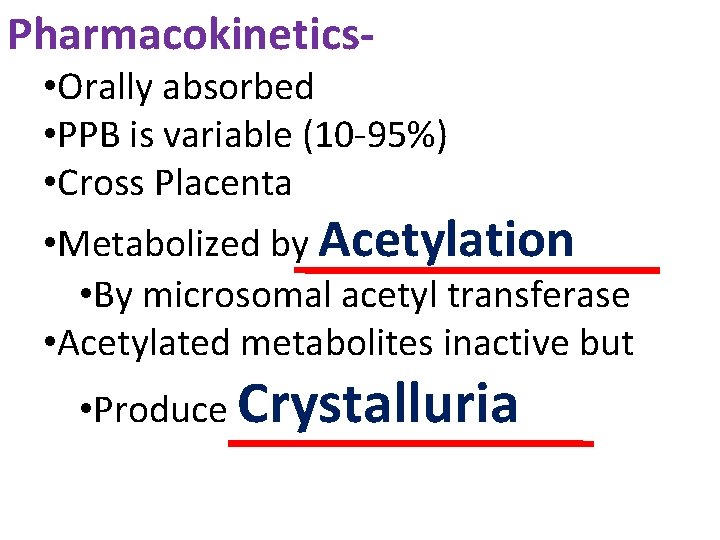
Pharmacokinetics- • Orally absorbed • PPB is variable (10 -95%) • Cross Placenta • Metabolized by Acetylation • By microsomal acetyl transferase • Acetylated metabolites inactive but • Produce Crystalluria
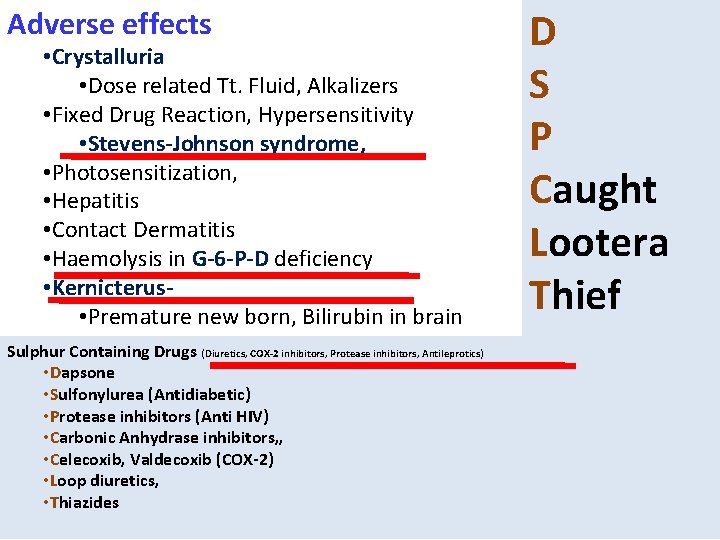
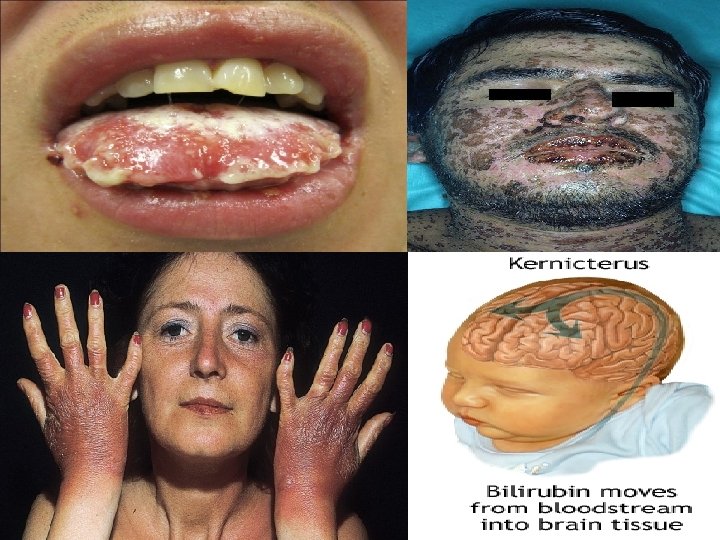
Adverse effects • Crystalluria • Dose related Tt. Fluid, Alkalizers • Fixed Drug Reaction, Hypersensitivity • Stevens-Johnson syndrome, • Photosensitization, • Hepatitis • Contact Dermatitis • Haemolysis in G-6 -P-D deficiency • Kernicterus- • Premature new born, Bilirubin in brain Sulphur Containing Drugs (Diuretics, COX-2 inhibitors, Protease inhibitors, Antileprotics) • Dapsone • Sulfonylurea (Antidiabetic) • Protease inhibitors (Anti HIV) • Carbonic Anhydrase inhibitors, , • Celecoxib, Valdecoxib (COX-2) • Loop diuretics, • Thiazides D S P Caught Lootera Thief
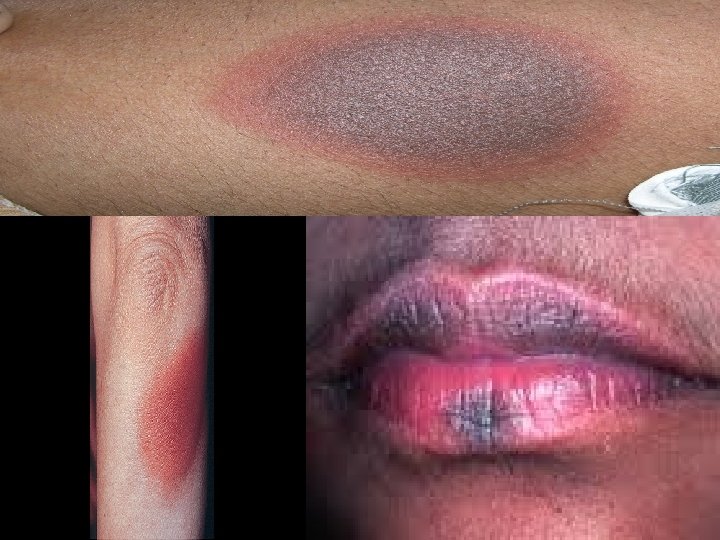
Fixed Drug Reactions • Fixed drug reactions are so named because they recur at the same site with each exposure • Drugs causing fixed drug eruptions: – Trimethoprim, Sulfonamides , Cotrimoxazole – Fluconazole, Ciprofloxacin, Doxycycline, Clarithromycin, NSAIDs, Phenytoin, Cetirizine, Pseudoephedrine
Fixed Drug Reactions • Usually develop within 30 minutes to 8 hours of taking the drug. • They are sometimes solitary at first, but with repeated attacks new lesions may appear and existing ones may increase in size. • Involves limbs, around mouth, eyes, genitalia and perianal areas • As healing occurs, crusting and scaling followed by brown colour at the site.
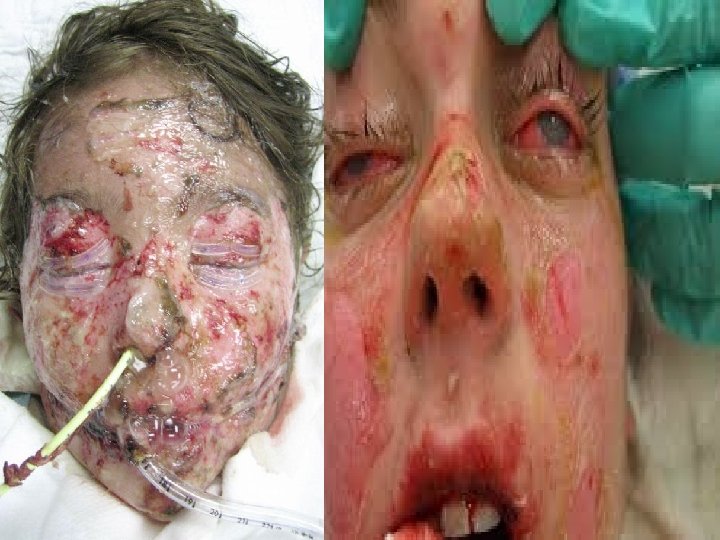
Stevens–Johnson syndrome, • A form of toxic epidermal necrolysis (TEN) • Life-threatening skin condition, • Cell death causes the epidermis to separate from the dermis. • The syndrome is thought to be a hypersensitivity complex that affects the skin and the mucous membranes. • Begins with fever, sore throat, and fatigue, and commonly misdiagnosed • Ulcers and other lesions begin to appear in the mucous membranes, almost always in the mouth and lips, but also in the genital and anal regions. • Conjunctivitis of the eyes occurs in about 30%
• Characterized by confluent epidermal necrosis with minimal associated inflammation. • An idiosyncratic, delayed-hypersensitivity reaction. • Slow acetylators, Immunocompromised, and patients with brain tumors undergoing radiotherapy with concomitant antiepileptics are among those at most risk. • Patients with sulfonamide-induced toxic epidermal necrolysis have been shown to have a slow acetylator genotype that results in increased production of sulfonamide hydroxylamine. • These drug metabolites may have direct toxic effects or may act as haptens that interact with host tissues, rendering them antigenic.
• Causes • • • Disorder of the immune system. The immune reaction can be triggered by drugs or infections. Genetic factors are associated with a predisposition to SJS The cause of SJS is unknown in one-quarter to one-half of cases. May be after viral infections, malignancies, medications. No reliable test to establish a link between a particular drug and SJS • A leading cause sulfa drugs. • Other drugs – Allopurinol, Barbiturates, Carbazepine, Valproate, Ethosuximide, Valdecoxib, Phenytoin, Lamotrigine, – Levofloxacin, Diclofenac, , Isotretinoin, Fluconazole, , sitagliptin, , Vancomycin, Pyrimethamine, Cefixime,
Drug Interactions • Inhibit Metabolism & • Displace from protein binding site Increased Concentration of Other Drugs (Phenytoin, Tolbutamide, Warfarin, Methotrexate etc. ) Uses • Rarely used alone • Some times for chronic UTI • Topical for conjunctivitis, Burn
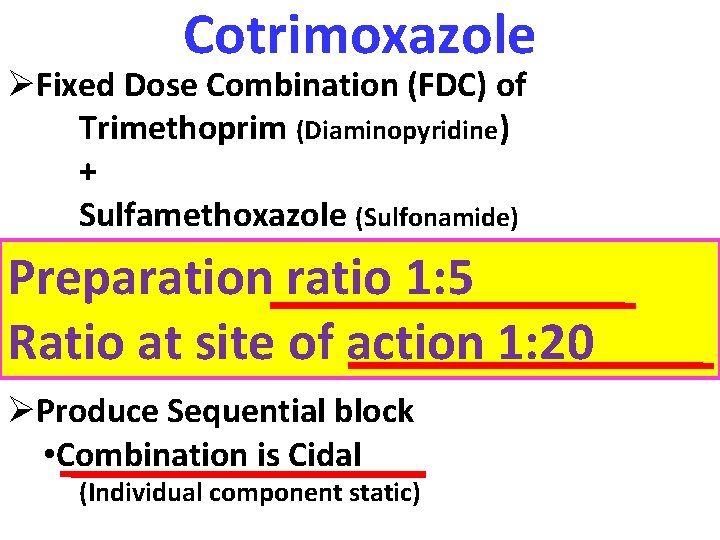
Cotrimoxazole ØFixed Dose Combination (FDC) of Trimethoprim (Diaminopyridine) + Sulfamethoxazole (Sulfonamide) Preparation ratio 1: 5 Ratio at site of action 1: 20 ØProduce Sequential block • Combination is Cidal (Individual component static)
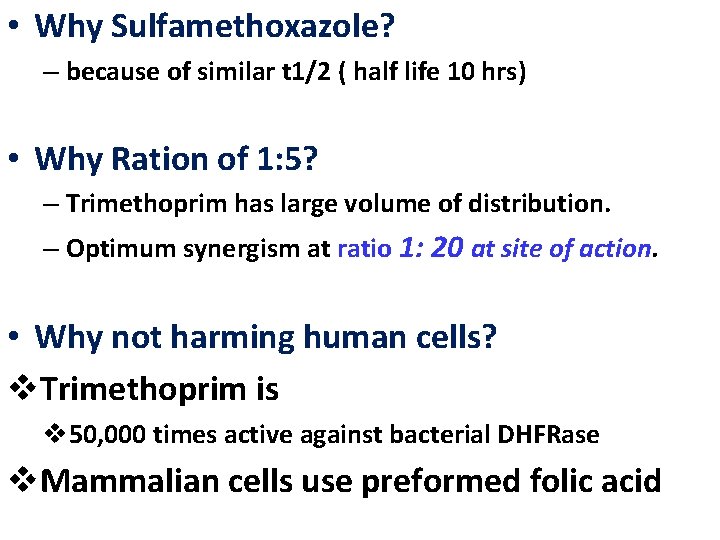
• Why Sulfamethoxazole? – because of similar t 1/2 ( half life 10 hrs) • Why Ration of 1: 5? – Trimethoprim has large volume of distribution. – Optimum synergism at ratio 1: 20 at site of action. • Why not harming human cells? v. Trimethoprim is v 50, 000 times active against bacterial DHFRase v. Mammalian cells use preformed folic acid
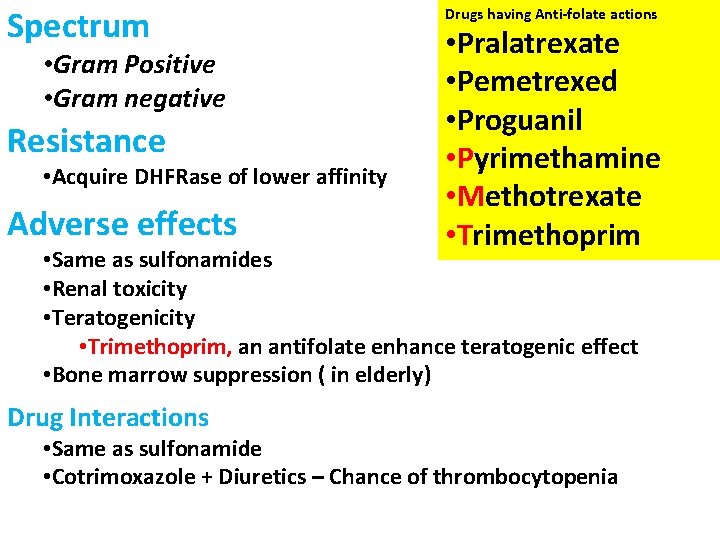
Spectrum • Gram Positive • Gram negative Resistance • Acquire DHFRase of lower affinity Adverse effects Drugs having Anti-folate actions • Pralatrexate • Pemetrexed • Proguanil • Pyrimethamine • Methotrexate • Trimethoprim • Same as sulfonamides • Renal toxicity • Teratogenicity • Trimethoprim, an antifolate enhance teratogenic effect • Bone marrow suppression ( in elderly) Drug Interactions • Same as sulfonamide • Cotrimoxazole + Diuretics – Chance of thrombocytopenia
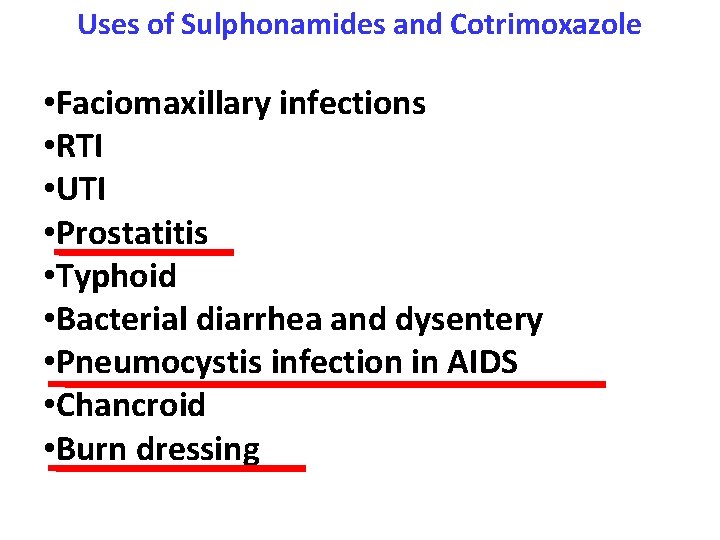
Uses of Sulphonamides and Cotrimoxazole • Faciomaxillary infections • RTI • UTI • Prostatitis • Typhoid • Bacterial diarrhea and dysentery • Pneumocystis infection in AIDS • Chancroid • Burn dressing
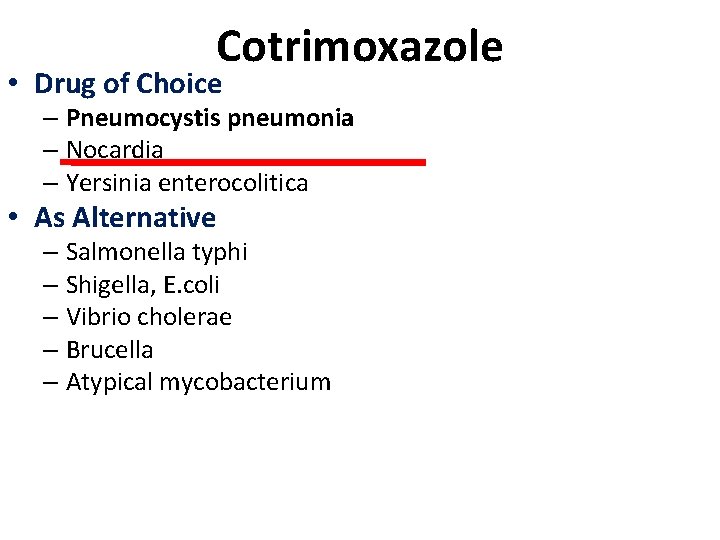
Cotrimoxazole • Drug of Choice – Pneumocystis pneumonia – Nocardia – Yersinia enterocolitica • As Alternative – Salmonella typhi – Shigella, E. coli – Vibrio cholerae – Brucella – Atypical mycobacterium

Thanks
- Slides: 32