
AntiIschaemic Medications Blockers and Nitrates by Mimoza Meholli
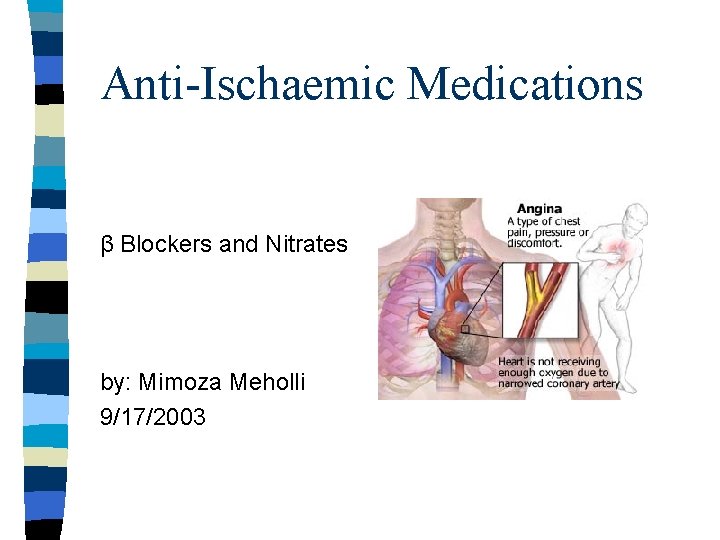
Anti-Ischaemic Medications β Blockers and Nitrates by: Mimoza Meholli 9/17/2003
Case 1 A 62 yr old male with a history of chronic Stable Angina since 1998 complains of chest pain radiating to the neck, left arm and back, occurring at rest. n Patient has DM-2, HTN, Duodenal ulcer and Hypothyroidism. n EKG shows evidence of previous inferior wall MI. n
Pharmacological Intervention in Ischaemic Heart Disease AIMS: 1. Increase coronary blood flow. 2. Reduce myocardial energy requirements. 3. To stop or reverse coronary artery occlusion in order to avoid or minimize myocardial cell death.
β -Blockers n n Competitively antagonize the action of catecholamines at β -adrenergic receptors. Decrease heart rate, stroke volume, and cardiac output. Normal sympathetic control of bp is maintained in HTN due to unopposed vasoconstriction by ά-receptors, thus avoiding orthostatic hypotension. Carvediolol sensitizes down regulated βreceptors in CHF, making mayocytes responsive to catecholamines and improves ventricular function.
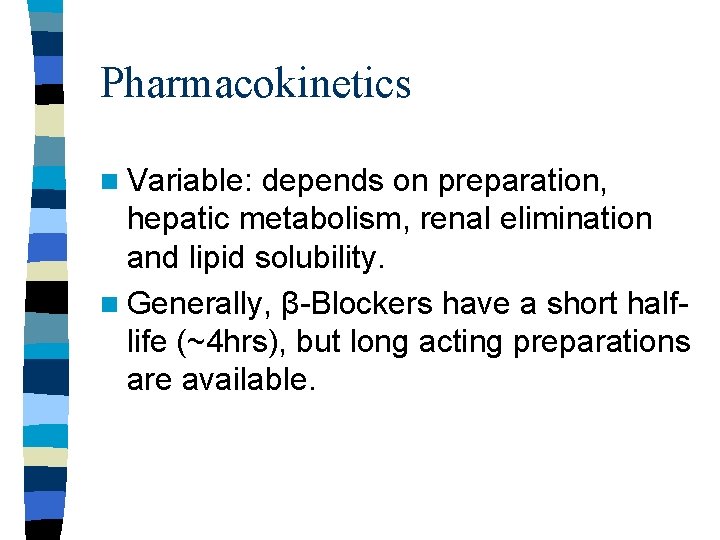
Pharmacokinetics n Variable: depends on preparation, hepatic metabolism, renal elimination and lipid solubility. n Generally, β-Blockers have a short halflife (~4 hrs), but long acting preparations are available.
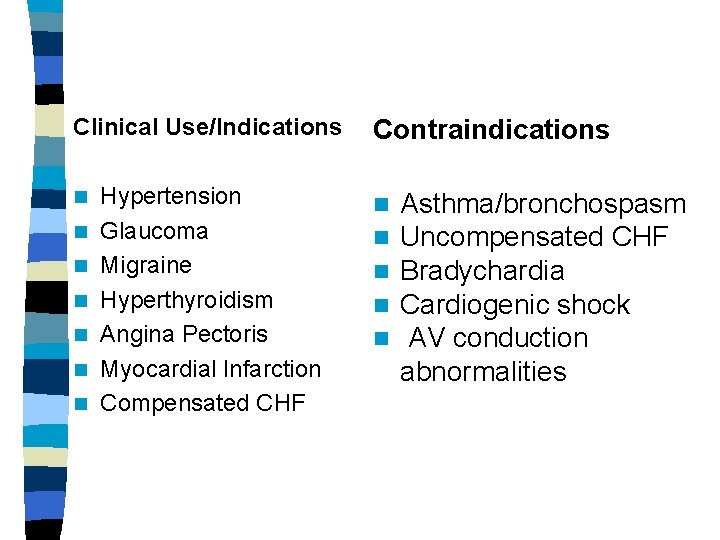
Clinical Use/Indications n n n n Hypertension Glaucoma Migraine Hyperthyroidism Angina Pectoris Myocardial Infarction Compensated CHF Contraindications n n n Asthma/bronchospasm Uncompensated CHF Bradychardia Cardiogenic shock AV conduction abnormalities
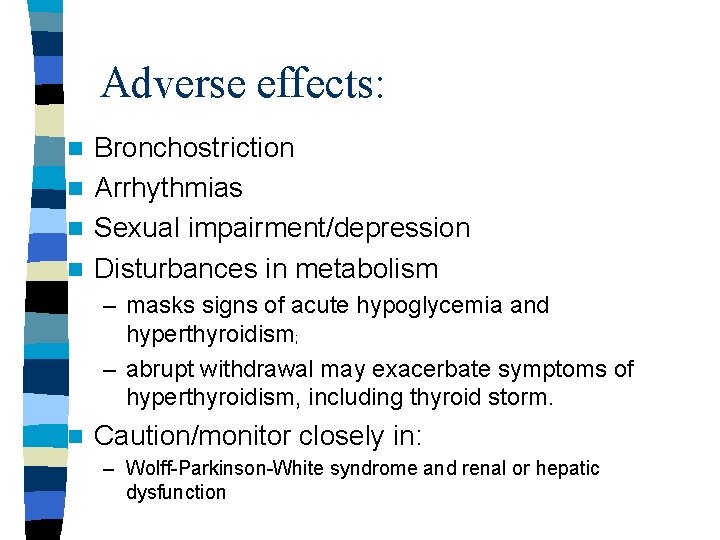
Adverse effects: Bronchostriction n Arrhythmias n Sexual impairment/depression n Disturbances in metabolism n – masks signs of acute hypoglycemia and hyperthyroidism; – abrupt withdrawal may exacerbate symptoms of hyperthyroidism, including thyroid storm. n Caution/monitor closely in: – Wolff-Parkinson-White syndrome and renal or hepatic dysfunction
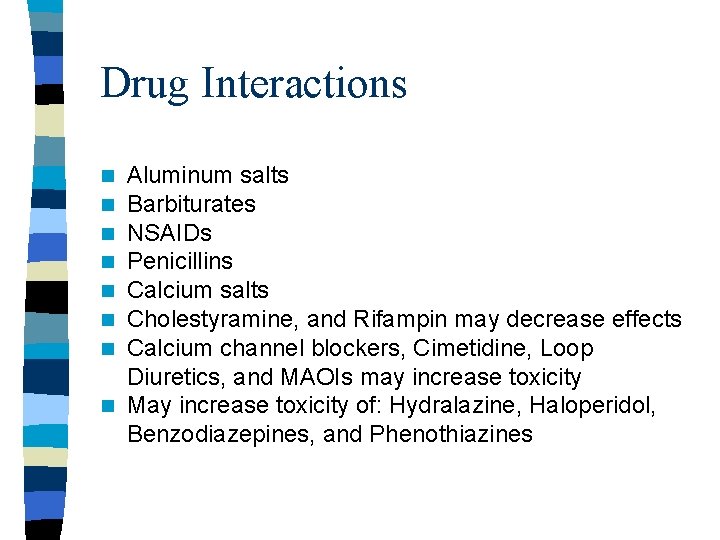
Drug Interactions Aluminum salts Barbiturates NSAIDs Penicillins Calcium salts Cholestyramine, and Rifampin may decrease effects Calcium channel blockers, Cimetidine, Loop Diuretics, and MAOIs may increase toxicity n May increase toxicity of: Hydralazine, Haloperidol, Benzodiazepines, and Phenothiazines n n n n
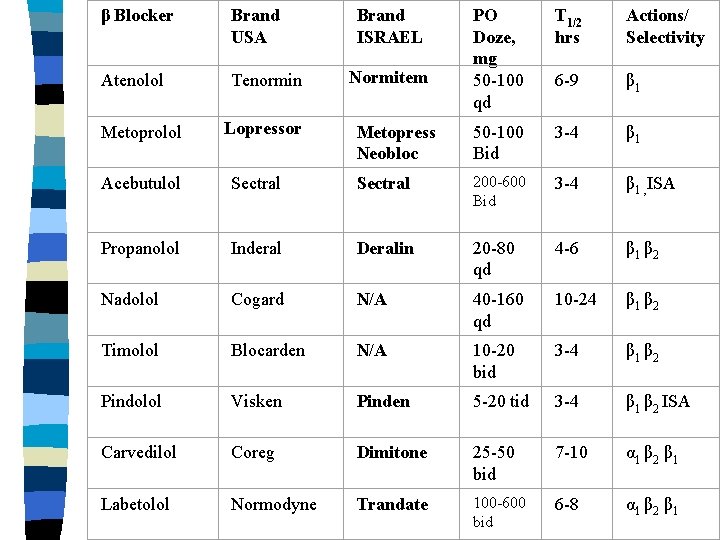
β Blocker Brand USA Atenolol Tenormin Metoprolol Lopressor Brand ISRAEL PO Doze, mg 50 -100 qd T 1/2 hrs Actions/ Selectivity 6 -9 β 1 Metopress Neobloc 50 -100 Bid 3 -4 β 1 Normitem Acebutulol Sectral 200 -600 Bid 3 -4 β 1 , ISA Propanolol Inderal Deralin 20 -80 qd 4 -6 β 1 β 2 Nadolol Cogard N/A 40 -160 qd 10 -24 β 1 β 2 Timolol Blocarden N/A 10 -20 bid 3 -4 β 1 β 2 Pindolol Visken Pinden 5 -20 tid 3 -4 β 1 β 2 ISA Carvedilol Coreg Dimitone 25 -50 bid 7 -10 α 1 β 2 β 1 Labetolol Normodyne Trandate 100 -600 bid 6 -8 α 1 β 2 β 1
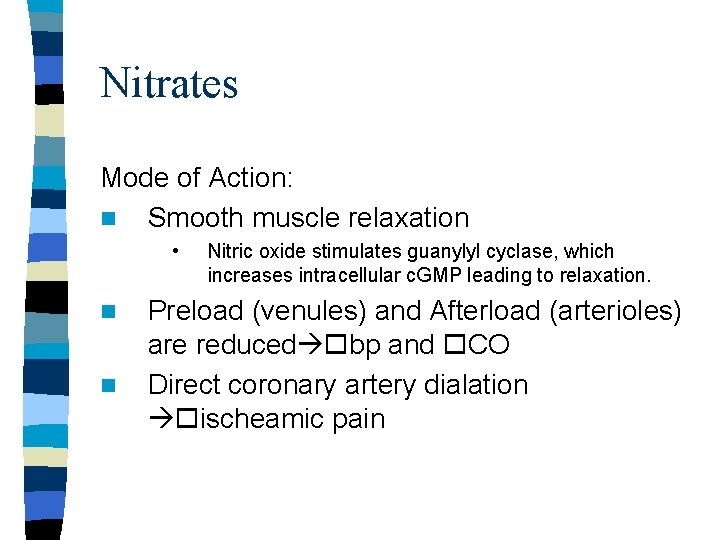
Nitrates Mode of Action: n Smooth muscle relaxation • n n Nitric oxide stimulates guanylyl cyclase, which increases intracellular c. GMP leading to relaxation. Preload (venules) and Afterload (arterioles) are reduced bp and CO Direct coronary artery dialation ischeamic pain
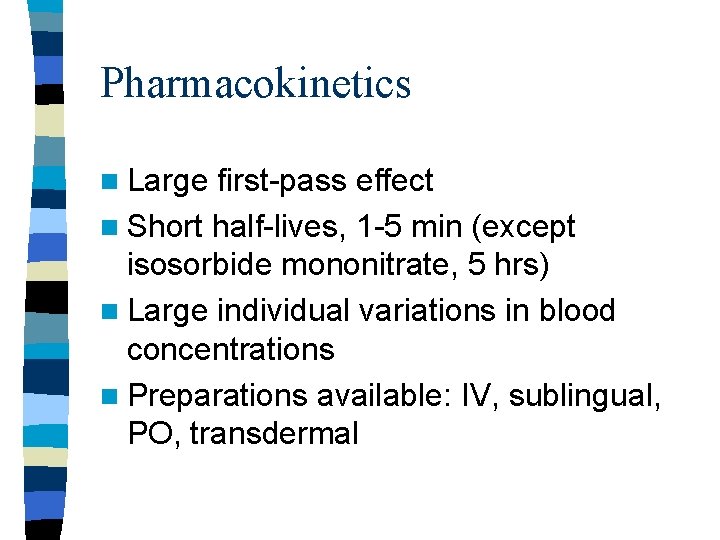
Pharmacokinetics n Large first-pass effect n Short half-lives, 1 -5 min (except isosorbide mononitrate, 5 hrs) n Large individual variations in blood concentrations n Preparations available: IV, sublingual, PO, transdermal
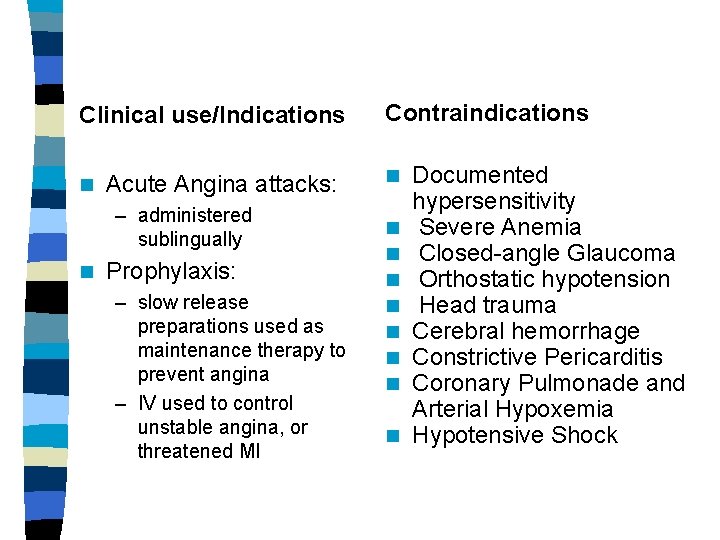
Clinical use/Indications n Acute Angina attacks: – administered sublingually n Prophylaxis: – slow release preparations used as maintenance therapy to prevent angina – IV used to control unstable angina, or threatened MI Contraindications n n n n n Documented hypersensitivity Severe Anemia Closed-angle Glaucoma Orthostatic hypotension Head trauma Cerebral hemorrhage Constrictive Pericarditis Coronary Pulmonade and Arterial Hypoxemia Hypotensive Shock
Adverse Effects n Doze related: – Orthostatic Hypotension – Flushing – Headache n Precautions: – Tolerance to vascular and antianginal effects of nitrates may develop • minimize tolerance by using smallest effective dose or pulse therapy (intermittent dosing), or by alternating with other coronary vasodilators – Caution when administering to patients with glaucoma
Drug Interactions Alcohol may cause severe hypotension and cardiovascular collapse n Aspirin may increase serum concentrations and actions n Calcium channel blockers may increase symptomatic orthostatic hypotension (adjust dose of either agent) n May decrease effects of Heparin n
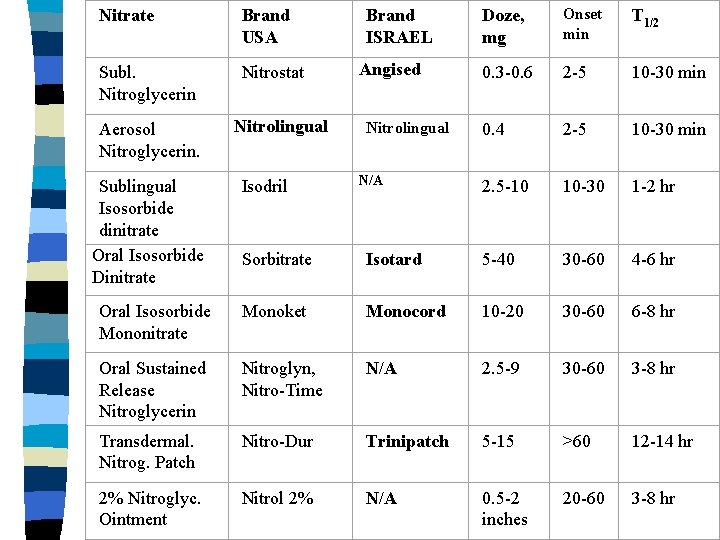
Nitrate Brand USA Subl. Nitroglycerin Aerosol Nitroglycerin. Sublingual Isosorbide dinitrate Oral Isosorbide Dinitrate Nitrostat Nitrolingual Isodril Brand ISRAEL Angised Nitrolingual N/A Doze, mg Onset min T 1/2 0. 3 -0. 6 2 -5 10 -30 min 0. 4 2 -5 10 -30 min 2. 5 -10 10 -30 1 -2 hr Sorbitrate Isotard 5 -40 30 -60 4 -6 hr Oral Isosorbide Mononitrate Monoket Monocord 10 -20 30 -60 6 -8 hr Oral Sustained Release Nitroglycerin Nitroglyn, Nitro-Time N/A 2. 5 -9 30 -60 3 -8 hr Transdermal. Nitrog. Patch Nitro-Dur Trinipatch 5 -15 >60 12 -14 hr 2% Nitroglyc. Ointment Nitrol 2% N/A 0. 5 -2 inches 20 -60 3 -8 hr
References The Washington Manual of Medical Therapeutics, 30 th ed. n Lippincott’s Review of Pharmacology, 2000. n Gibbson R, et al. Guidelines for the Management of Patients with Chronic Stable Angina: Treatment. Ann. Intern. Med. 2001; 135: 616 -632. n
- Slides: 16