
Antihistaminic agents Histamine is an important chemical messenger



- Slides: 41
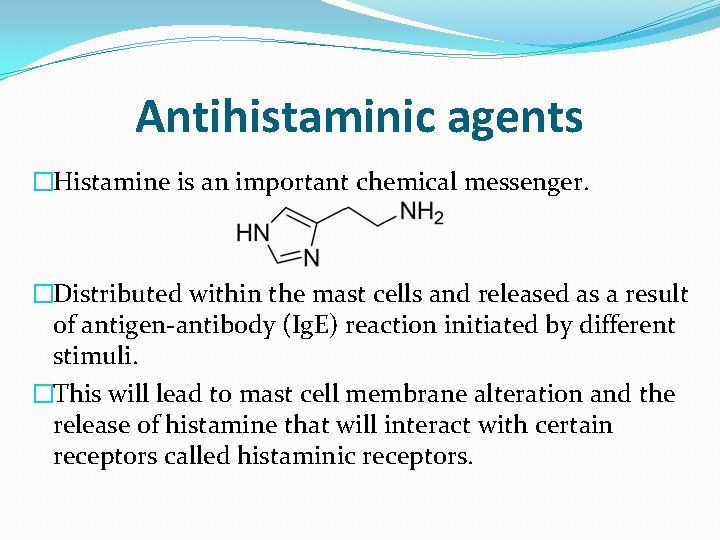
Antihistaminic agents �Histamine is an important chemical messenger. �Distributed within the mast cells and released as a result of antigen-antibody (Ig. E) reaction initiated by different stimuli. �This will lead to mast cell membrane alteration and the release of histamine that will interact with certain receptors called histaminic receptors.
Histamine �Plays an important role as a stimulant of gastric secretion from the parietal cells, Allergy and inflammation, and neurotransmission in part of the brain �Has neurotransmission role in the CNS responsible for: �Alertness. �Hormone release. �Feeding and drinking. �Sexual behavior. �Analgesia.
Histamine �It presents in almost all tissues in complex with natural macromolecules such as heparin �Found in significant amount in: �Lungs �Skin �Blood vessels �GIT �Also is a component of venoms and secretions of many types of snakes and insects
Histamine Biosynthesis �Synthesized then stored in mast cells in granules �If not stored, Histidine will be rapidly deactivated by enzyme amino oxidase
Histaminic Receptors �Of Four types: H 1 to H 4. �H 1 -activation: � Smooth muscle contraction in GIT, uterus and bronchi. � Relaxation of capillaries…. . Increase permeability… results in edema. � Can enhance secretion of proinflammatory mediators such as cytokines � Mediates many pathological conditions such as � Allergic rhinitis � Atopic dermatitis � Conjunctivitis � Asthma � Anaphylaxis
Histaminic receptors �H 2 -activation: �Gastric secretion through stimulation of parietal cells �Hypotension due to vascular dilatation. �H 3 -activation: �Most important in CNS: regulates histamine in the body especially in CNS, GIT, lung and heart, by inhibiting further synthesis of histamine. � H 4 -activation: �regulates the levels of white blood cell release from bone marrow.
Histamine �It has two basic centers and one slightly acidic group �At acidic p. H it forms the di-cation compound �At physiological p. H it presents as monocation.
H 1 Receptor antagonists (Anti-allergic agents) �Allergy: is the physiological response to a foreign chemical or physical condition… cause symptoms such as hay fever, pruritus, dermatitis, rashes, and anaphylactic shock (systemic allergic reaction that may lead to death). �Anti-allergic agents block some of the action of histamine.
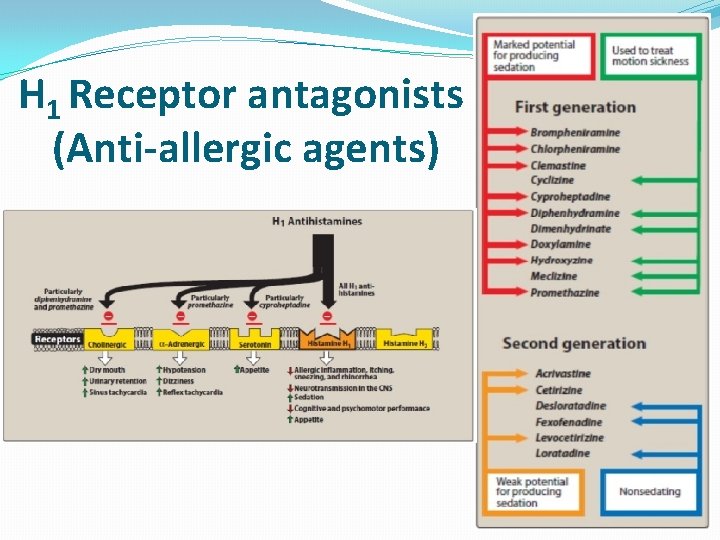
H 1 Receptor antagonists (Anti-allergic agents)
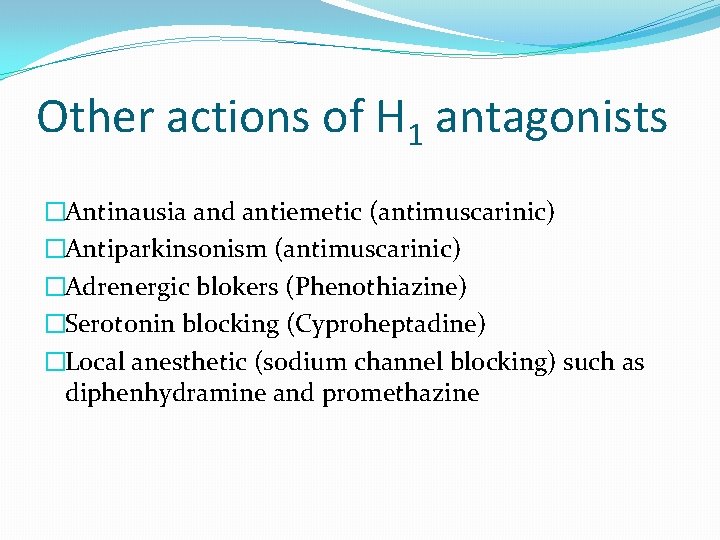
Other actions of H 1 antagonists �Antinausia and antiemetic (antimuscarinic) �Antiparkinsonism (antimuscarinic) �Adrenergic blokers (Phenothiazine) �Serotonin blocking (Cyproheptadine) �Local anesthetic (sodium channel blocking) such as diphenhydramine and promethazine
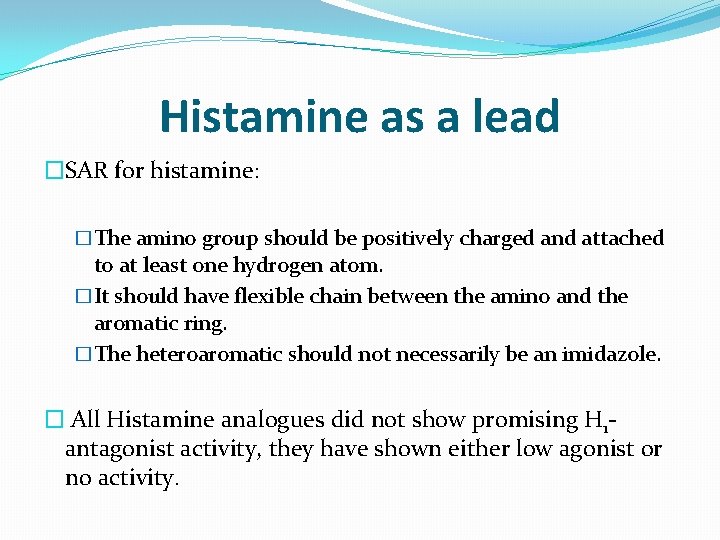
Histamine as a lead �SAR for histamine: �The amino group should be positively charged and attached to at least one hydrogen atom. �It should have flexible chain between the amino and the aromatic ring. �The heteroaromatic should not necessarily be an imidazole. � All Histamine analogues did not show promising H 1 antagonist activity, they have shown either low agonist or no activity.
First generation H 1 -antagonists: �Ethylenediamines �Ethanolamines �Piperazines �Alkylamines
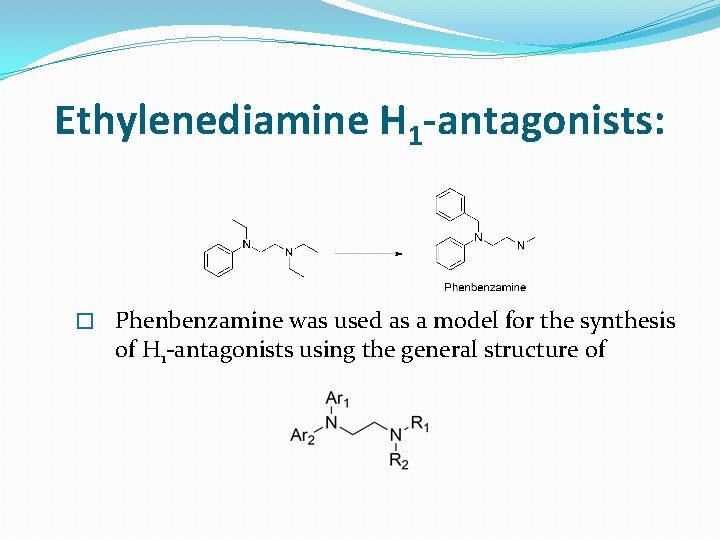
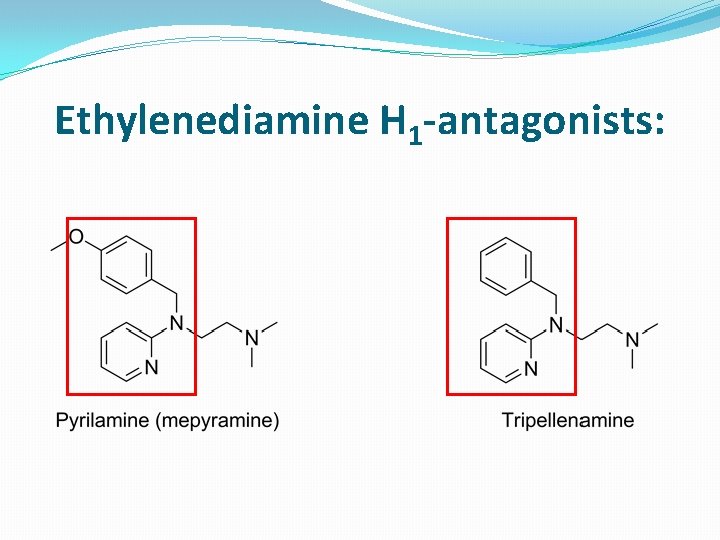
Ethylenediamine H 1 -antagonists: � Phenbenzamine was used as a model for the synthesis of H 1 -antagonists using the general structure of
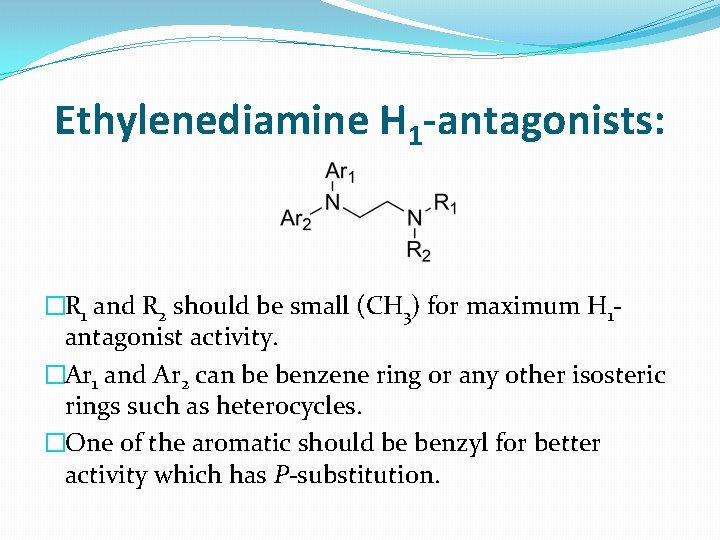
Ethylenediamine H 1 -antagonists: �R 1 and R 2 should be small (CH 3) for maximum H 1 antagonist activity. �Ar 1 and Ar 2 can be benzene ring or any other isosteric rings such as heterocycles. �One of the aromatic should be benzyl for better activity which has P-substitution.
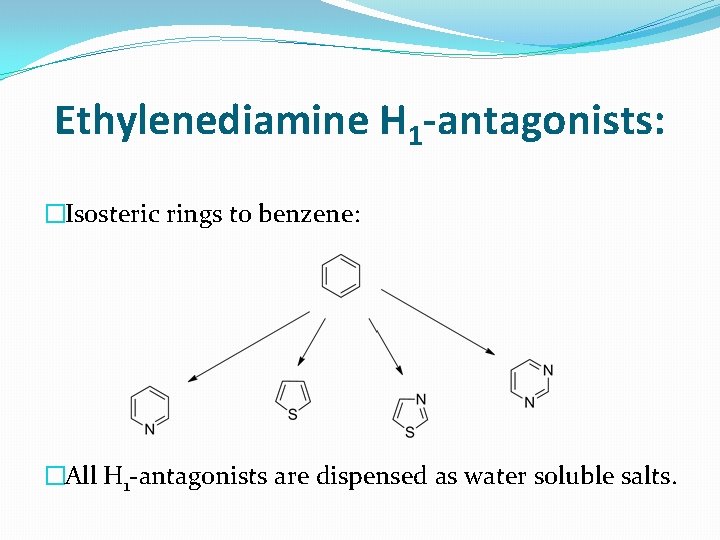
Ethylenediamine H 1 -antagonists: �Isosteric rings to benzene: �All H 1 -antagonists are dispensed as water soluble salts.
Bioisosterism �Bioisosteres are groups with similar physical and chemical properties which produce almost the same biological and pharmacological response or effect. �The aim of using such groups are: �Minimizing the possible side effects. �Prolong the duration of action. �Produce potent agents. �Increase physical and biological stability of drugs
Ethylenediamine H 1 -antagonists:
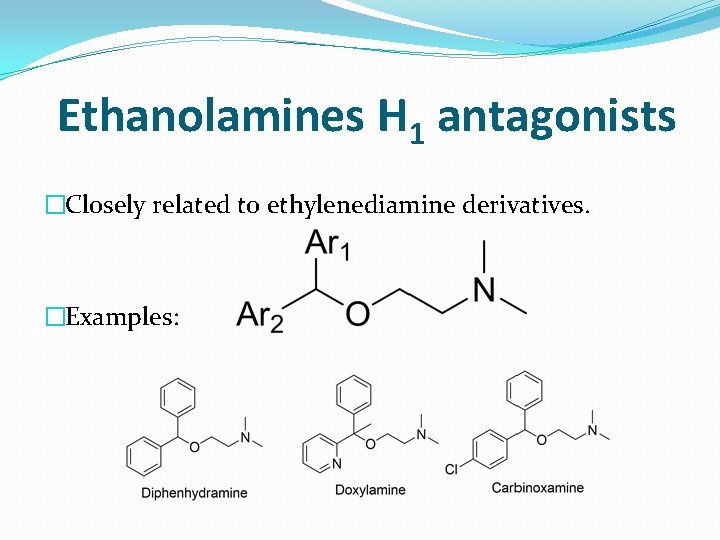
Ethanolamines H 1 antagonists �Closely related to ethylenediamine derivatives. �Examples:
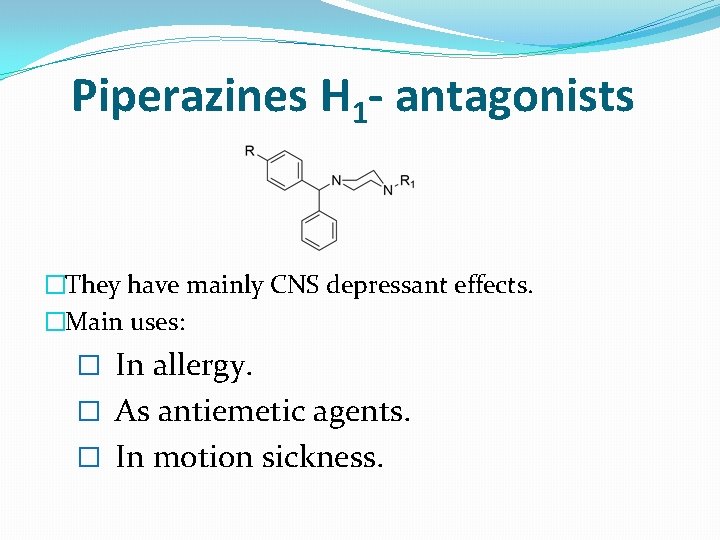
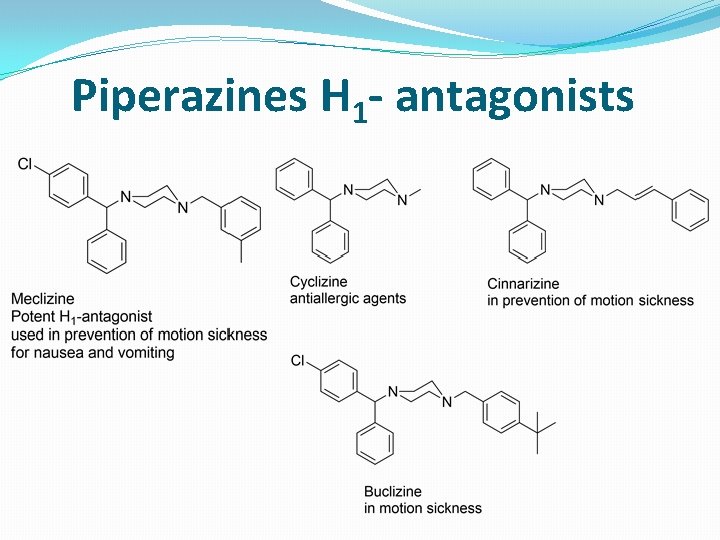
Piperazines H 1 - antagonists �They have mainly CNS depressant effects. �Main uses: � In allergy. � As antiemetic agents. � In motion sickness.
Piperazines H 1 - antagonists
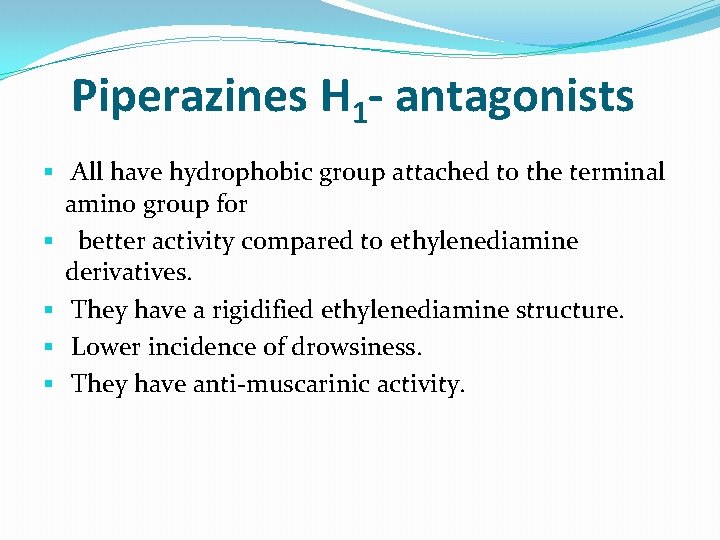
Piperazines H 1 - antagonists § All have hydrophobic group attached to the terminal amino group for § better activity compared to ethylenediamine derivatives. § They have a rigidified ethylenediamine structure. § Lower incidence of drowsiness. § They have anti-muscarinic activity.
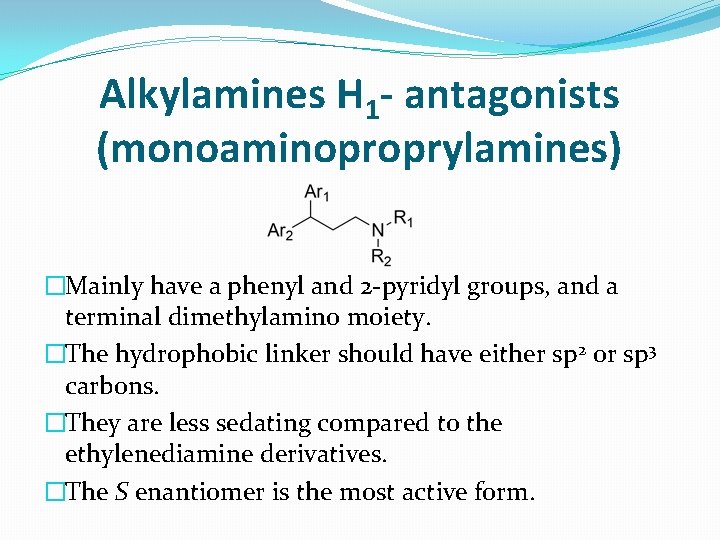
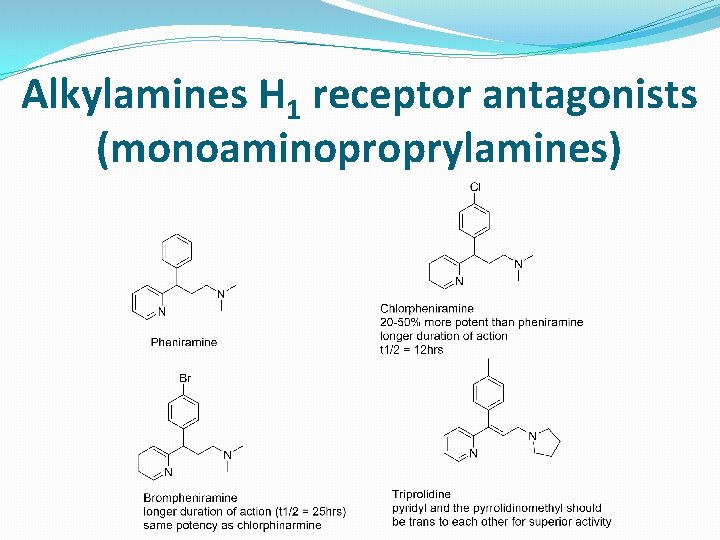
Alkylamines H 1 - antagonists (monoaminoproprylamines) �Mainly have a phenyl and 2 -pyridyl groups, and a terminal dimethylamino moiety. �The hydrophobic linker should have either sp 2 or sp 3 carbons. �They are less sedating compared to the ethylenediamine derivatives. �The S enantiomer is the most active form.
Alkylamines H 1 receptor antagonists (monoaminoproprylamines)
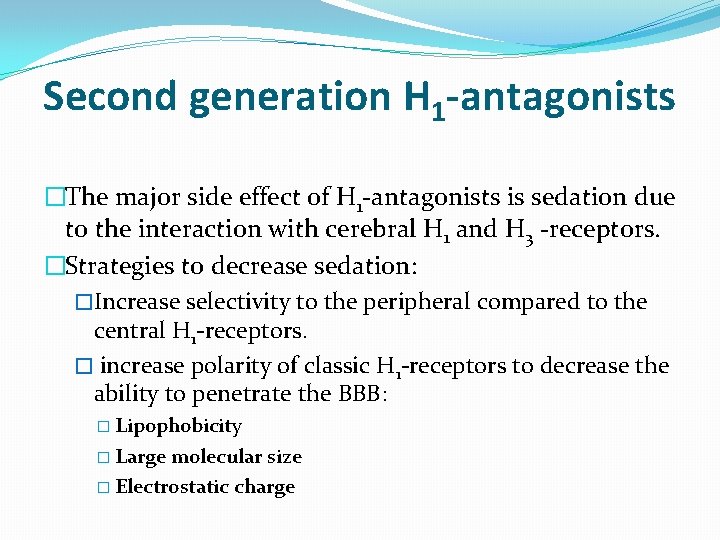
Second generation H 1 -antagonists �The major side effect of H 1 -antagonists is sedation due to the interaction with cerebral H 1 and H 3 -receptors. �Strategies to decrease sedation: �Increase selectivity to the peripheral compared to the central H 1 -receptors. � increase polarity of classic H 1 -receptors to decrease the ability to penetrate the BBB: � Lipophobicity � Large molecular size � Electrostatic charge
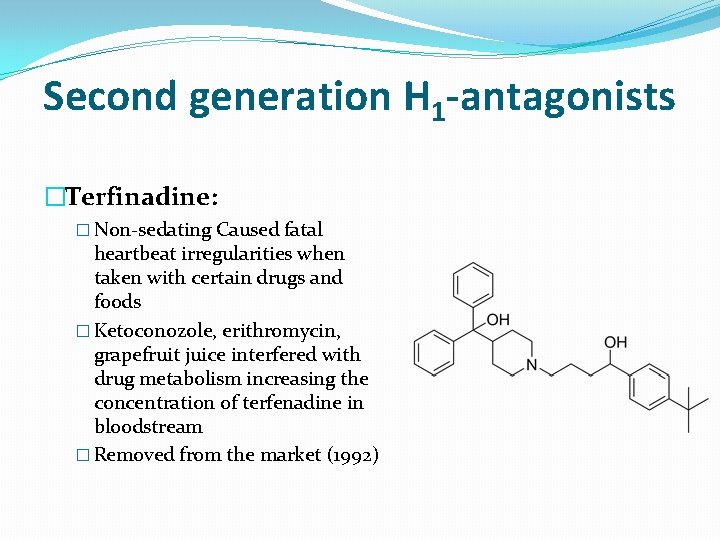
Second generation H 1 -antagonists �Terfinadine: � Non-sedating Caused fatal heartbeat irregularities when taken with certain drugs and foods � Ketoconozole, erithromycin, grapefruit juice interfered with drug metabolism increasing the concentration of terfenadine in bloodstream � Removed from the market (1992)
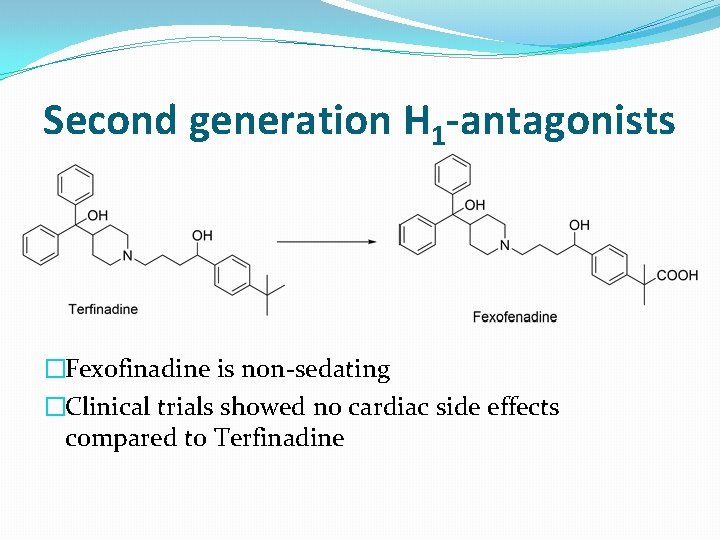
Second generation H 1 -antagonists �Fexofinadine is non-sedating �Clinical trials showed no cardiac side effects compared to Terfinadine
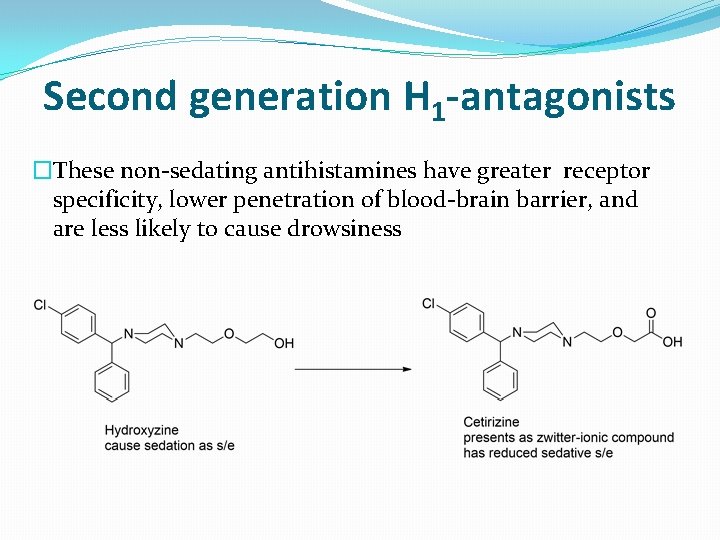
Second generation H 1 -antagonists �These non-sedating antihistamines have greater receptor specificity, lower penetration of blood-brain barrier, and are less likely to cause drowsiness
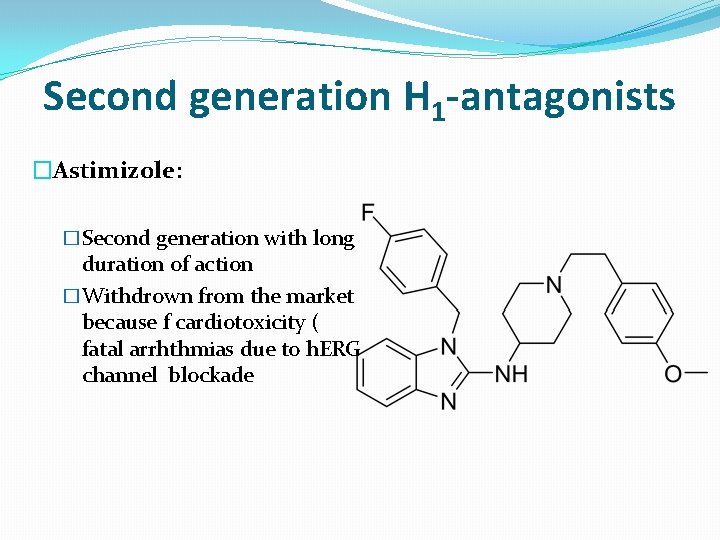
Second generation H 1 -antagonists �Astimizole: �Second generation with long duration of action �Withdrown from the market because f cardiotoxicity ( fatal arrhthmias due to h. ERG channel blockade
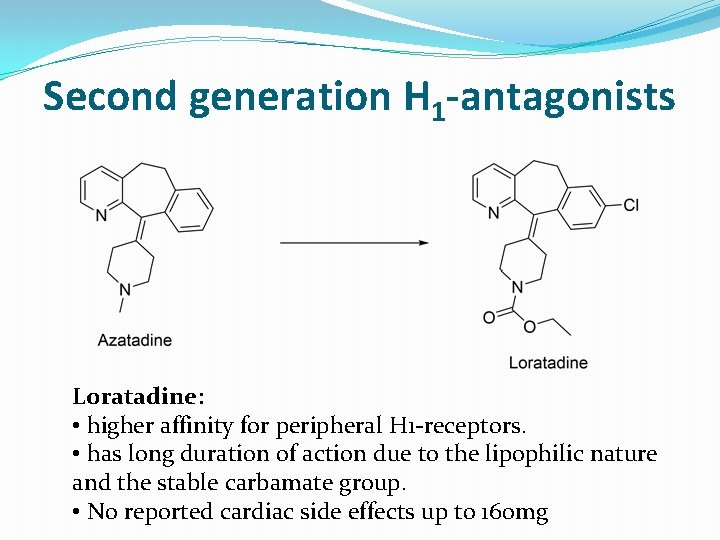
Second generation H 1 -antagonists Loratadine: • higher affinity for peripheral H 1 -receptors. • has long duration of action due to the lipophilic nature and the stable carbamate group. • No reported cardiac side effects up to 160 mg
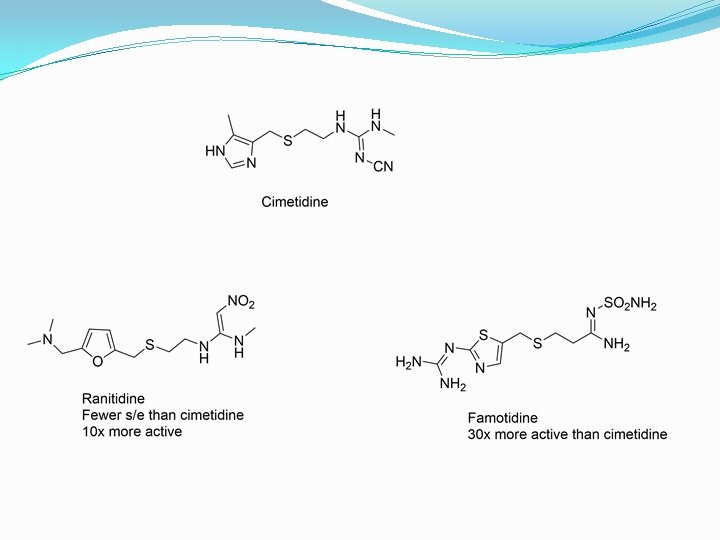
H 2 -antagonists: Anti-ulcer agents �Competitive inhibitors for H 2 receptors �Inhibits secretary function �Reduces gastric acid volume and concentration of pepsin �Common side effects: �Diarrhea �Dizziness �Rash �Vomiting �CNS effects: confusion, delirium, slurred speech
H 2 -antagonists: Anti-ulcer agents �Main uses: �Duodenal ulcer �Gastric ulcer �Zollinger-Ellison syndrome (a pathological hypersecretory state resulting in excessive gastric pepsin & HCl) � Gastroesophageal reflux disease � Used prior to surgery in patients with GI obstruction to elevate gastric p. H �Reflux esophagitis �Antacid
H 2 -antagonists: Anti-ulcer agents
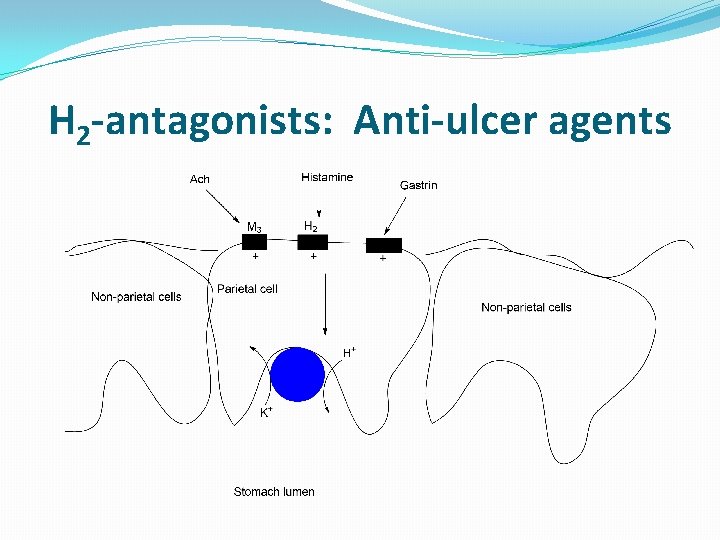
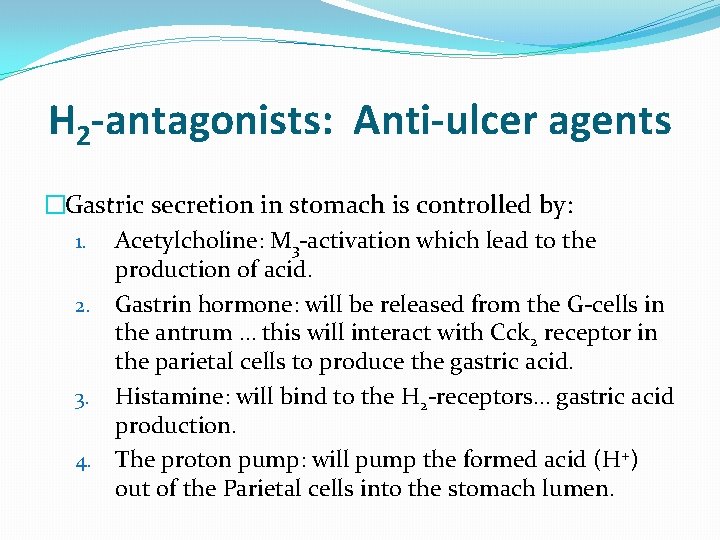
H 2 -antagonists: Anti-ulcer agents �Gastric secretion in stomach is controlled by: 1. Acetylcholine: M 3 -activation which lead to the production of acid. 2. Gastrin hormone: will be released from the G-cells in the antrum … this will interact with Cck 2 receptor in the parietal cells to produce the gastric acid. 3. Histamine: will bind to the H 2 -receptors… gastric acid production. 4. The proton pump: will pump the formed acid (H+) out of the Parietal cells into the stomach lumen.
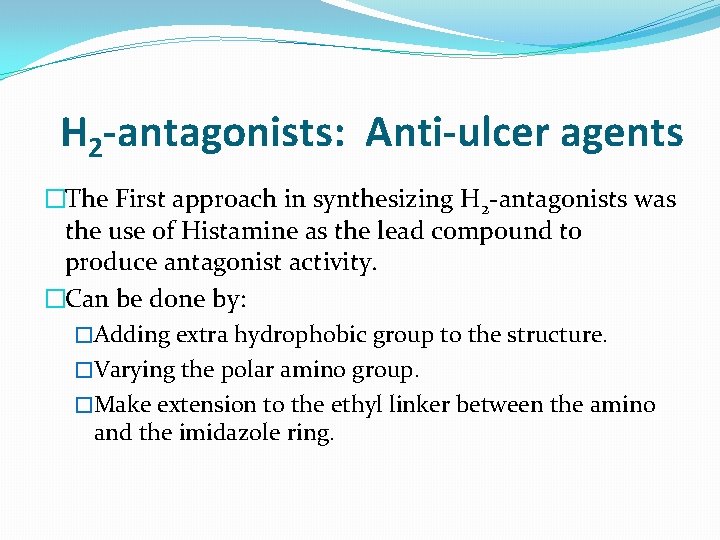
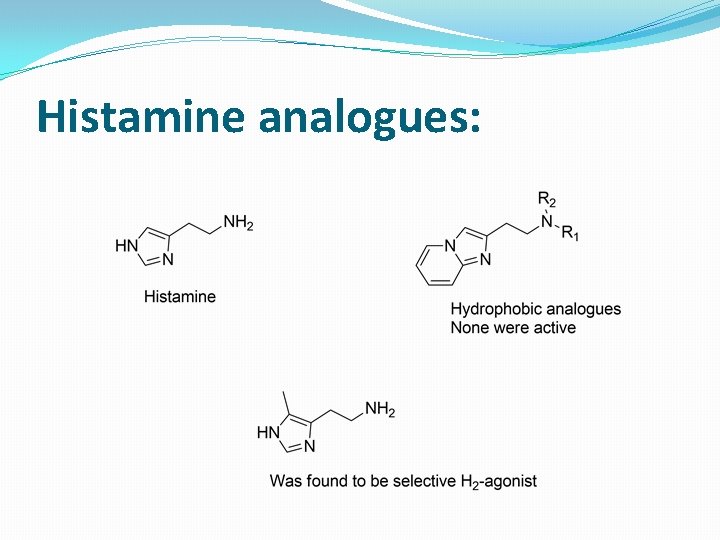
H 2 -antagonists: Anti-ulcer agents �The First approach in synthesizing H 2 -antagonists was the use of Histamine as the lead compound to produce antagonist activity. �Can be done by: �Adding extra hydrophobic group to the structure. �Varying the polar amino group. �Make extension to the ethyl linker between the amino and the imidazole ring.
Histamine analogues:
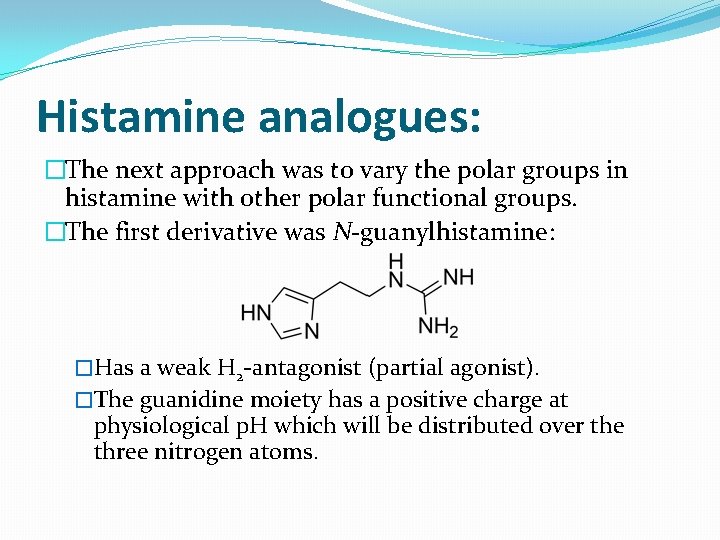
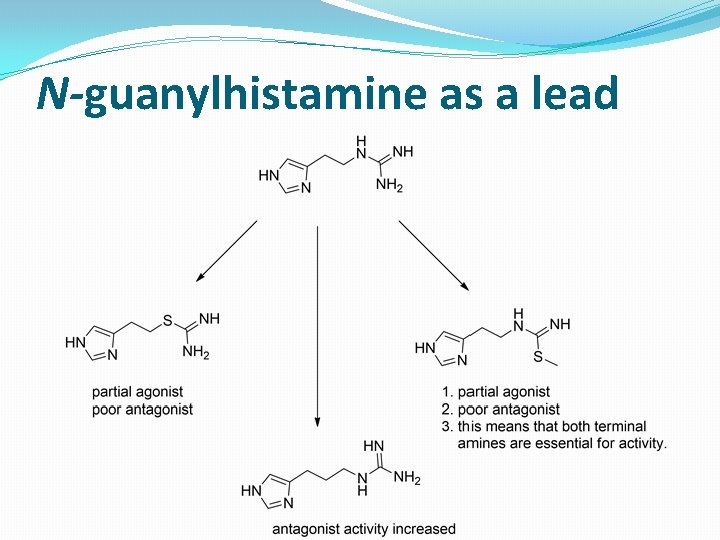
Histamine analogues: �The next approach was to vary the polar groups in histamine with other polar functional groups. �The first derivative was N-guanylhistamine: �Has a weak H 2 -antagonist (partial agonist). �The guanidine moiety has a positive charge at physiological p. H which will be distributed over the three nitrogen atoms.
N-guanylhistamine as a lead
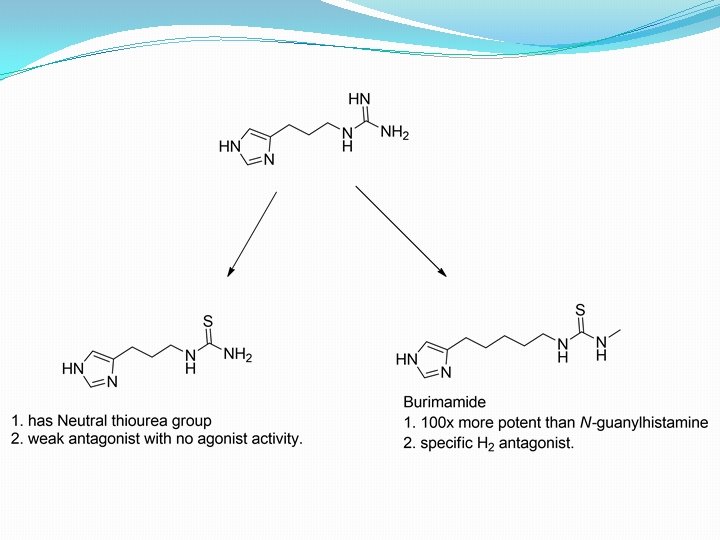
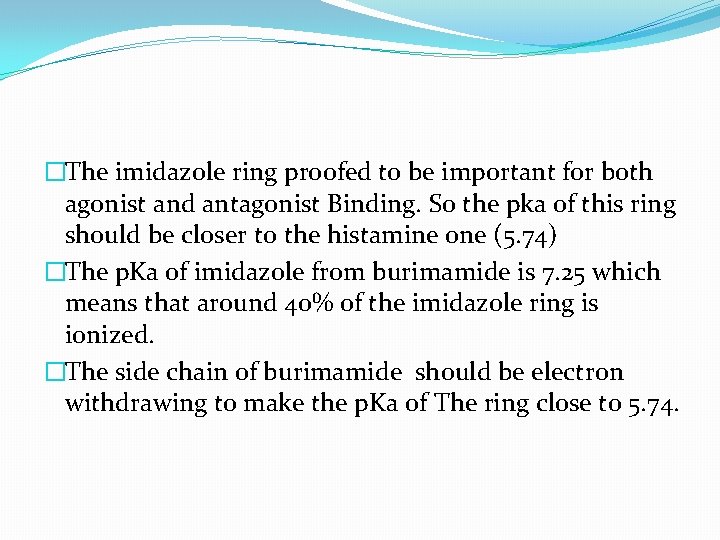
�The imidazole ring proofed to be important for both agonist and antagonist Binding. So the pka of this ring should be closer to the histamine one (5. 74) �The p. Ka of imidazole from burimamide is 7. 25 which means that around 40% of the imidazole ring is ionized. �The side chain of burimamide should be electron withdrawing to make the p. Ka of The ring close to 5. 74.
H 2 -antagonists drug interactions �Cimetidine: increased activity of drugs that are metabolized through cytochrome P 450 pathway such as : �warfarin, phenytoin, propanolol, metoprolol, quinidine, caffeine, lidocaine, theophylline, benzodiazepines, ethanol, tricyclic antidepressants, and calcium channel blockers. �All H 2 blockers except famotidine increase the bioavailability of ethanol. �Agents that inhibit gastric secretion alter the bioavailability and rate of absorption of many other drugs