
AntiHelicopter Digital Proximity Target Detection Device Authors Martin

- Slides: 14
Anti-Helicopter Digital Proximity Target Detection Device Authors: Martin Tanenhaus, Tim Geis, Michael Tanenhaus System Excelerator Inc. Missiles and Rockets Conference 15 April, 2004 2131 Defense Highway • Crofton, MD 21114 • 410. 721. 6893 1
Outline n n n n Description of Digital TDD Operational Scenarios Algorithm Approach Differences Performance Examples TDD Features Future Directions Progress/Status 2
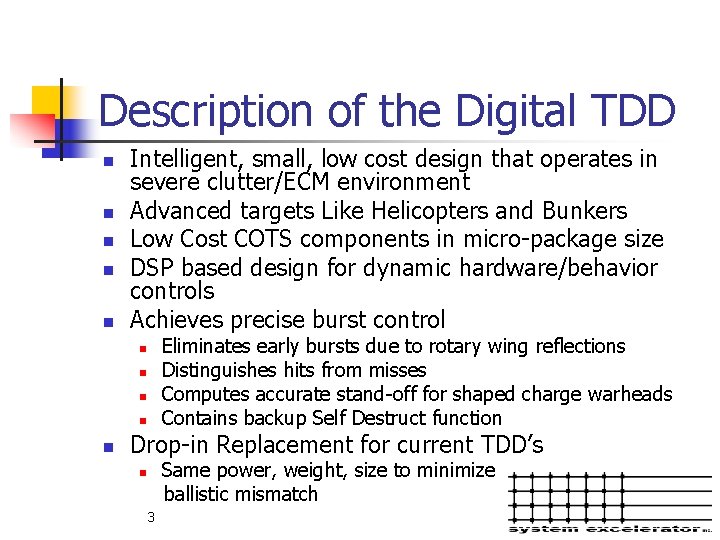
Description of the Digital TDD n n n Intelligent, small, low cost design that operates in severe clutter/ECM environment Advanced targets Like Helicopters and Bunkers Low Cost COTS components in micro-package size DSP based design for dynamic hardware/behavior controls Achieves precise burst control n n n Eliminates early bursts due to rotary wing reflections Distinguishes hits from misses Computes accurate stand-off for shaped charge warheads Contains backup Self Destruct function Drop-in Replacement for current TDD’s n 3 Same power, weight, size to minimize ballistic mismatch
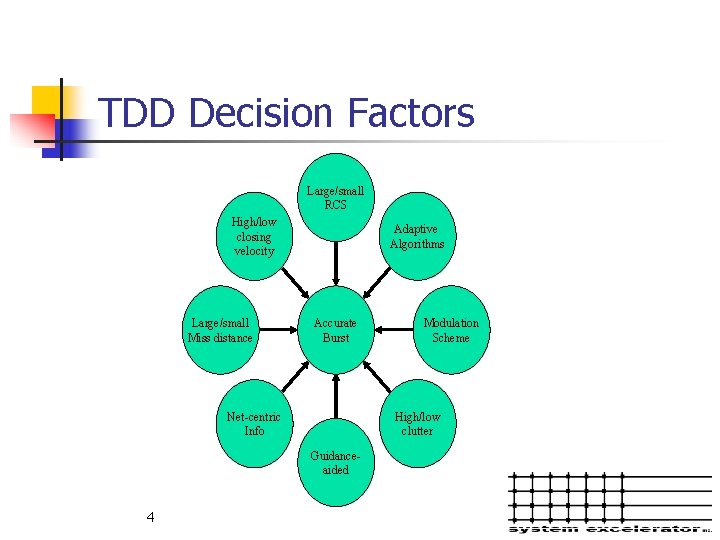
TDD Decision Factors Large/small RCS High/low closing velocity Large/small Miss distance Adaptive Algorithms Accurate Burst High/low clutter Net-centric Info Guidanceaided 4 Modulation Scheme
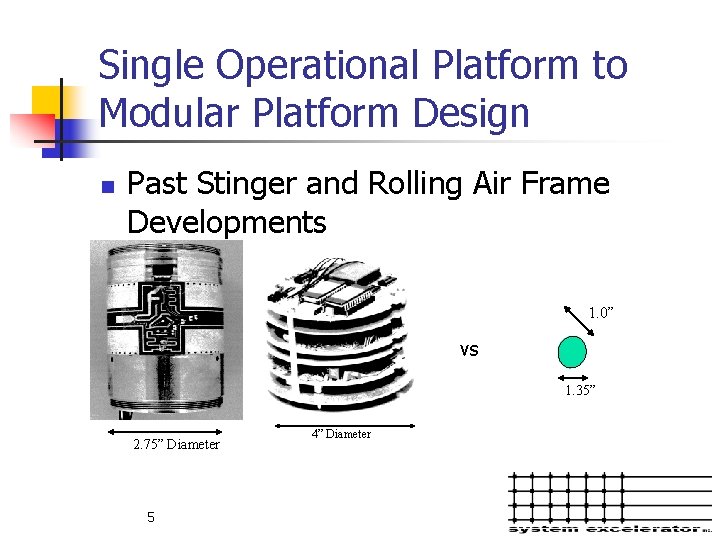
Single Operational Platform to Modular Platform Design n Past Stinger and Rolling Air Frame Developments 1. 0” vs 1. 35” 2. 75” Diameter 5 4” Diameter
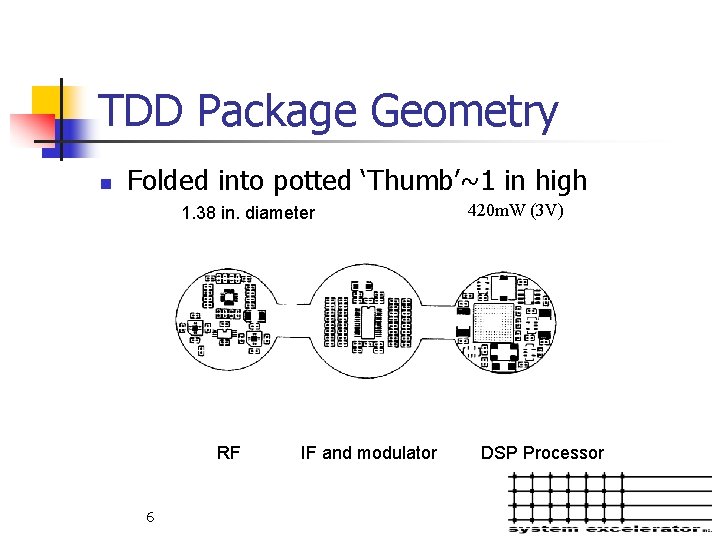
TDD Package Geometry n Folded into potted ‘Thumb’~1 in high 1. 38 in. diameter RF 6 IF and modulator 420 m. W (3 V) DSP Processor
Operational Scenarios n Ground to Air, Air to Air n n n Anti-Helicopter Operations –Rotary Wing Detection Low RCS targets Air to Ground n n 7 Precision stand-off for maximum lethality Penetration and Surface Detonation Modes (Bunker Buster)
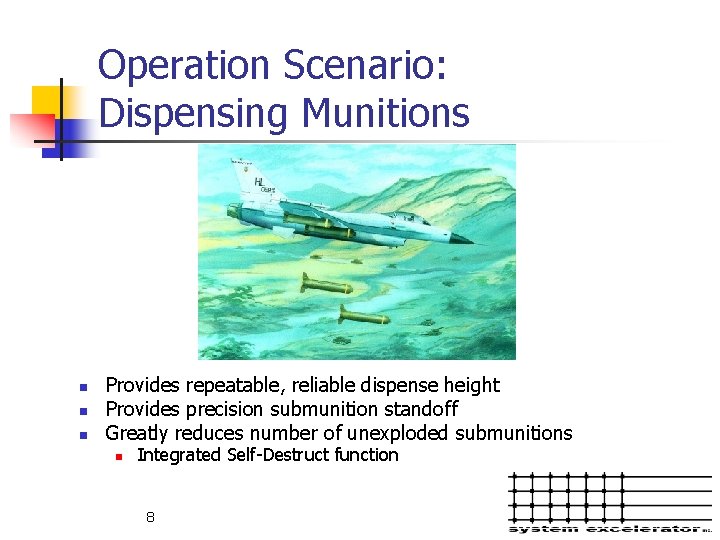
Operation Scenario: Dispensing Munitions n n n Provides repeatable, reliable dispense height Provides precision submunition standoff Greatly reduces number of unexploded submunitions n Integrated Self-Destruct function 8
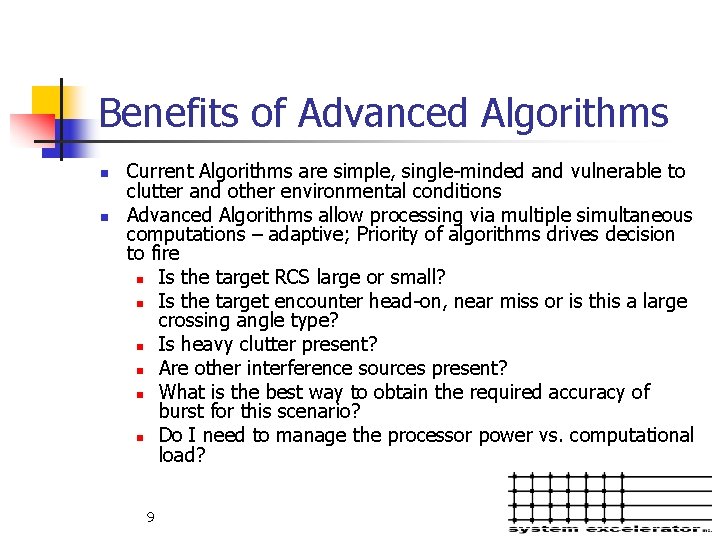
Benefits of Advanced Algorithms n n Current Algorithms are simple, single-minded and vulnerable to clutter and other environmental conditions Advanced Algorithms allow processing via multiple simultaneous computations – adaptive; Priority of algorithms drives decision to fire n Is the target RCS large or small? n Is the target encounter head-on, near miss or is this a large crossing angle type? n Is heavy clutter present? n Are other interference sources present? n What is the best way to obtain the required accuracy of burst for this scenario? n Do I need to manage the processor power vs. computational load? 9
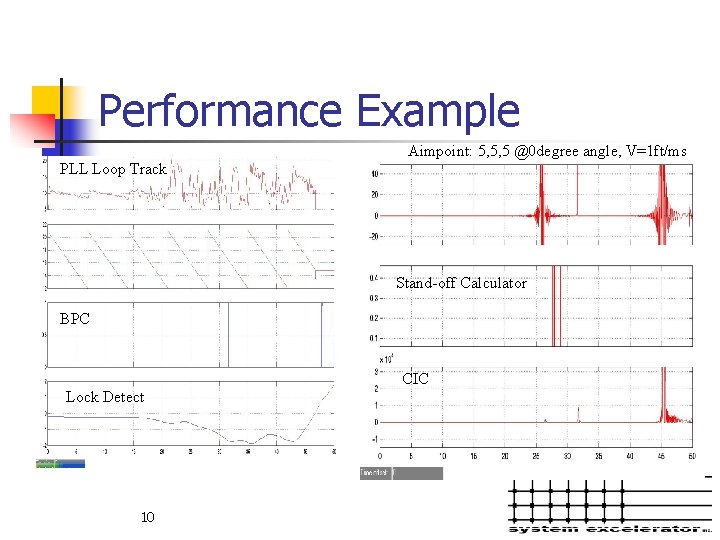
Performance Example Aimpoint: 5, 5, 5 @0 degree angle, V=1 ft/ms PLL Loop Track Stand-off Calculator BPC CIC Lock Detect 10
Summarization of TDD n n n Modular, COTS based all Digital TDD for use in existing and future platforms Low Cost – Low Power Supports wide variety of Missions Reprogrammable for incremental improvements COTS Development Environment for Low Cost Algorithm Development and Evaluation (MATLAB/Simulink and DSP board) 11
All Digital TDD Status n Ready for hardware fabrication and test n n Finalize schematic and layout Weapon Specific Tasks n n 12 Tailor algorithm performance for specific weapon RF Selection Criteria Antenna and Power Source Selection Meet Form/Fit Requirements
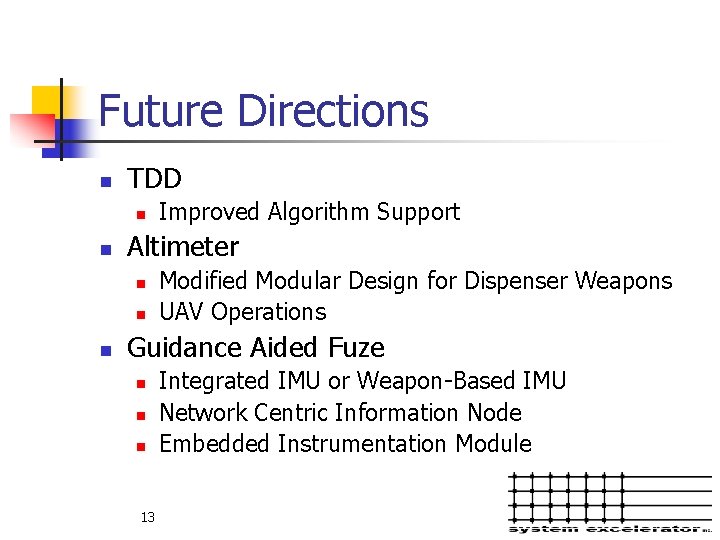
Future Directions n TDD n n Altimeter n n n Improved Algorithm Support Modified Modular Design for Dispenser Weapons UAV Operations Guidance Aided Fuze n n n 13 Integrated IMU or Weapon-Based IMU Network Centric Information Node Embedded Instrumentation Module
SEI Business Information To discuss business partnerships or marketing relationships contact: Martin Tanenhaus/CTO (Martin. T@systemexcelerator. com) Direct 407. 228 -2226, Fax 407. 228 -2166 Larry Olmo/President, CEO (Larry. O@systemexcelerator. com) Direct 410. 721. 6893, Fax 410. 721. 6894 14