
Antigone Greek Theatre TraitsStages of a Tragic Hero

- Slides: 10
Antigone Greek Theatre & Traits/Stages of a Tragic Hero
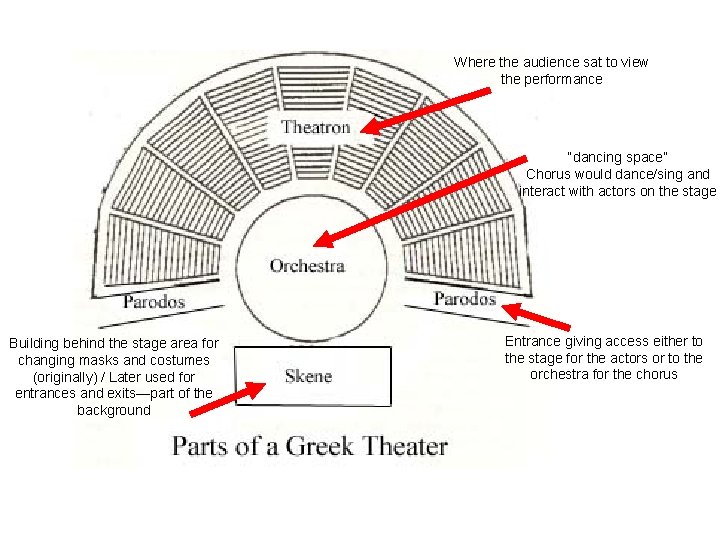
Where the audience sat to view the performance “dancing space” Chorus would dance/sing and interact with actors on the stage Building behind the stage area for changing masks and costumes (originally) / Later used for entrances and exits—part of the background Entrance giving access either to the stage for the actors or to the orchestra for the chorus
Traits of a Tragic Hero Greek Tragic Heroes have several characteristics or traits in common. These traits determine or follow a pattern that manifests in the plot or progression of the story. In summary the Tragic Hero starts at the “mountain top” and falls to the depths of misery. • Noble or wealthy birth (Their nobility and essential "goodness" serves to lift them high and makes their fall greater and more tragic to the audience. ) • Major flaw that interferes with making good choices (see next slide) • Audience can relate with him/her and they feel pity
Hamartia (ha-mar-sha) means "missing the mark", "ignorance, " or in this case a tragic "fatal flaw. ” A major flaw that causes an error in judgement: • Obsession • Temper • Low confidence • Impulsiveness • Pride (see next slide)
Hubris One of the most common flaws in tragic heroes is hubris. This is excessive arrogance/pride or stubbornness. (This can be excessive pride in him/herself, his/her actions, or a defiance of the gods. _
Stages of a Tragic Hero Stage 1: The Mistake After meeting the hero and learning some back-story, things get started with a mistake. This is where the character's hamartia is revealed, and his/her destruction begins.
Stages of a Tragic Hero Stage 2: Anagnorisis (an-nag-NOR-i-sis) “Recognition” At this phase, the hero becomes aware of his/her mistake and may attempt to correct it. a critical discovery made by the hero
Stages of a Tragic Hero Stage 3: Peripeteia (per-uh-pi-TEA-a) “Reversal” A sudden reversal of fortunes, a surprising event that is unexpected by the audience, the turning point toward tragedy in the protagonist’s fortune. irreversible and a turning point in the plot
Stages of a Tragic Hero Stage 4: Nemesis and Catastrophe “Retribution” or “Payback” This is the most intense point on the hero's tragic journey. The reversal reaches its horrible conclusion, a catastrophe. inescapable downfall, usually death
Stages of a Tragic Hero Final Stage: Catharsis “Renewal" or “Purification It's intended more for the audience than the characters. Because the audience just witnessed a lot of tragic events, the play ends with a moment of calm. While certainly not a "happy ending, " the catharsis shows the characters learning from their mistakes or moving on from the tragedy. felt by the audience--process of releasing strong or repressed emotions and feeling relief