
AntigenAntibody Reactions AntigenAntibody Reactions Invitro chemical interaction between
Antigen-Antibody Reactions
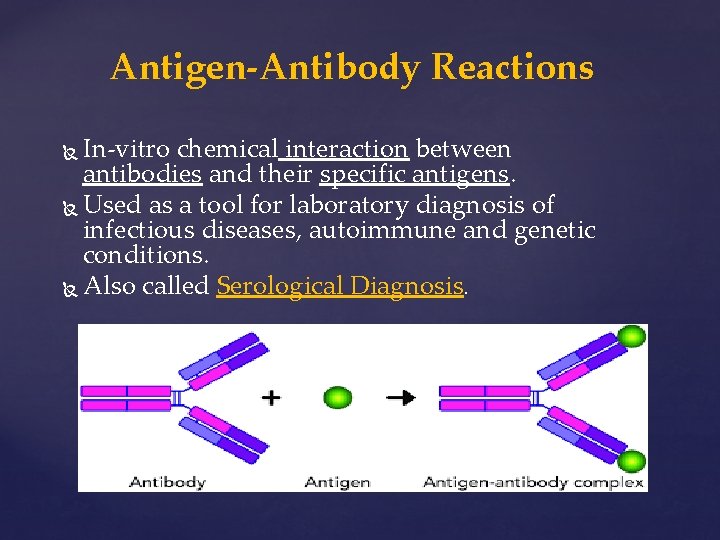
Antigen-Antibody Reactions In-vitro chemical interaction between antibodies and their specific antigens. Used as a tool for laboratory diagnosis of infectious diseases, autoimmune and genetic conditions. Also called Serological Diagnosis.
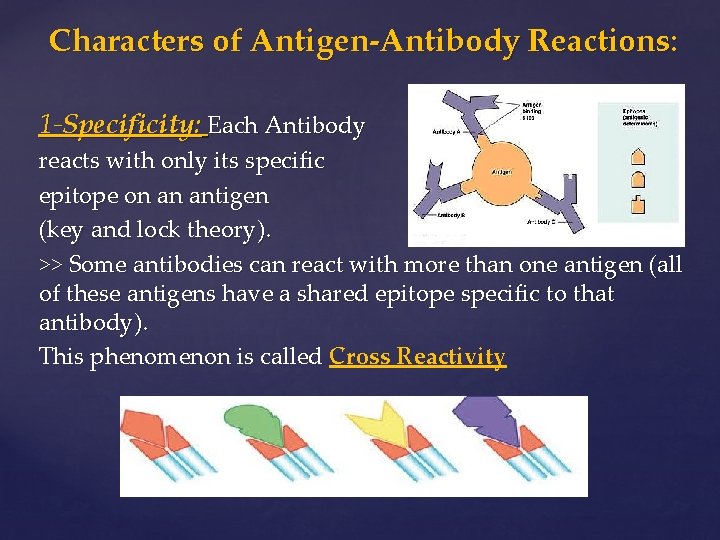
Characters of Antigen-Antibody Reactions: 1 -Specificity: Each Antibody reacts with only its specific epitope on an antigen (key and lock theory). >> Some antibodies can react with more than one antigen (all of these antigens have a shared epitope specific to that antibody). This phenomenon is called Cross Reactivity
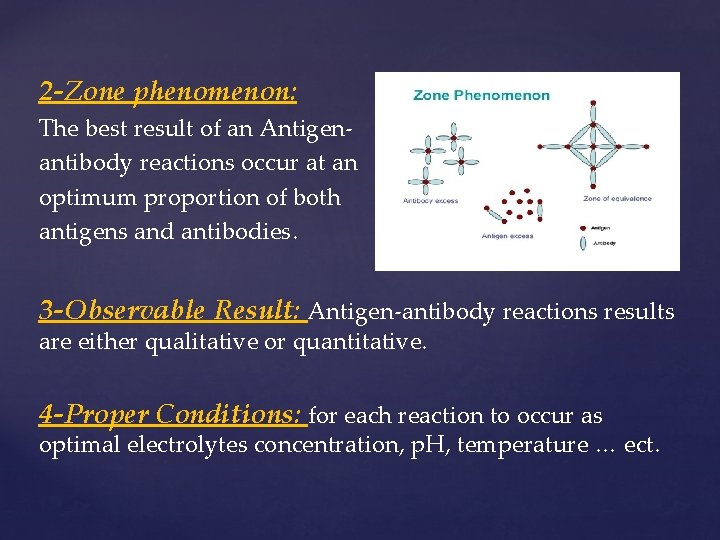
2 -Zone phenomenon: The best result of an Antigenantibody reactions occur at an optimum proportion of both antigens and antibodies. 3 -Observable Result: Antigen-antibody reactions results are either qualitative or quantitative. 4 -Proper Conditions: for each reaction to occur as optimal electrolytes concentration, p. H, temperature … ect.
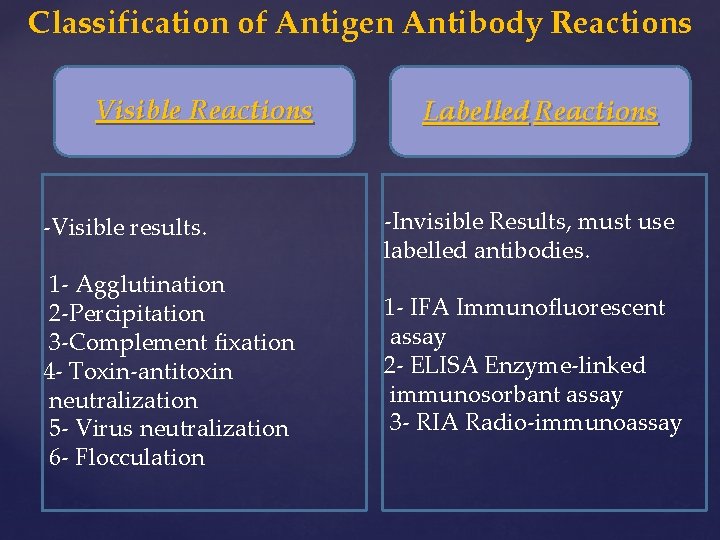
Classification of Antigen Antibody Reactions Visible Reactions Labelled Reactions -Visible results. -Invisible Results, must use labelled antibodies. 1 - Agglutination 2 -Percipitation 3 -Complement fixation 4 - Toxin-antitoxin neutralization 5 - Virus neutralization 6 - Flocculation 1 - IFA Immunofluorescent assay 2 - ELISA Enzyme-linked immunosorbant assay 3 - RIA Radio-immunoassay
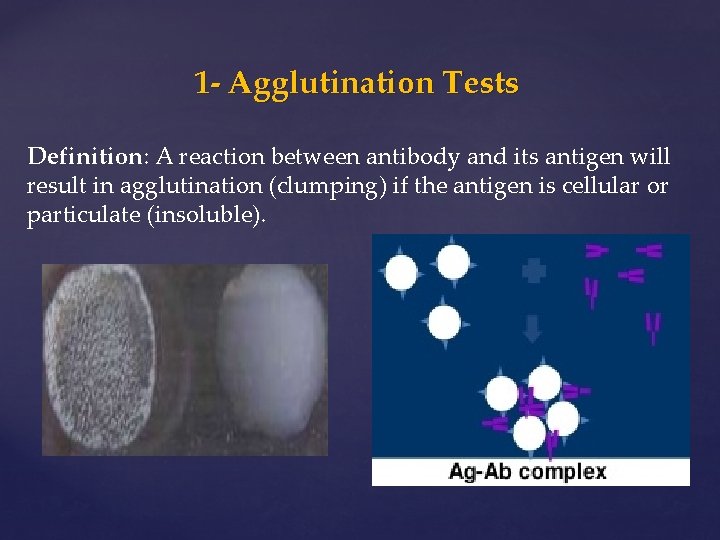
1 - Agglutination Tests Definition: A reaction between antibody and its antigen will result in agglutination (clumping) if the antigen is cellular or particulate (insoluble).
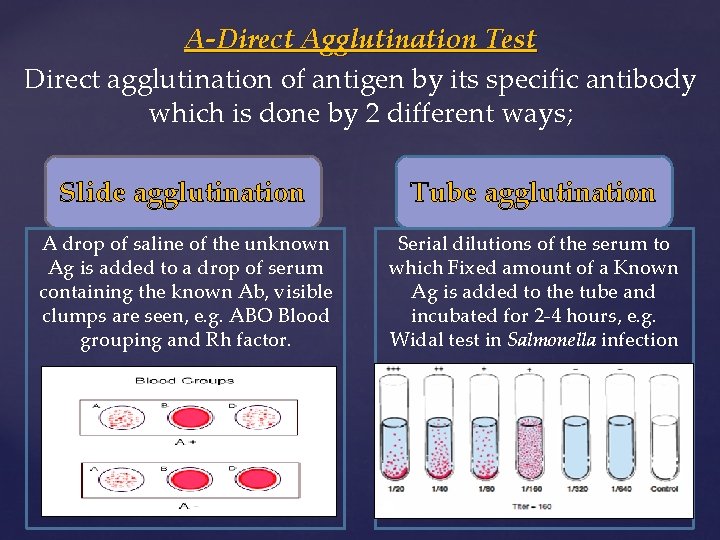
A-Direct Agglutination Test Direct agglutination of antigen by its specific antibody which is done by 2 different ways; Slide agglutination Tube agglutination A drop of saline of the unknown Ag is added to a drop of serum containing the known Ab, visible clumps are seen, e. g. ABO Blood grouping and Rh factor. Serial dilutions of the serum to which Fixed amount of a Known Ag is added to the tube and incubated for 2 -4 hours, e. g. Widal test in Salmonella infection
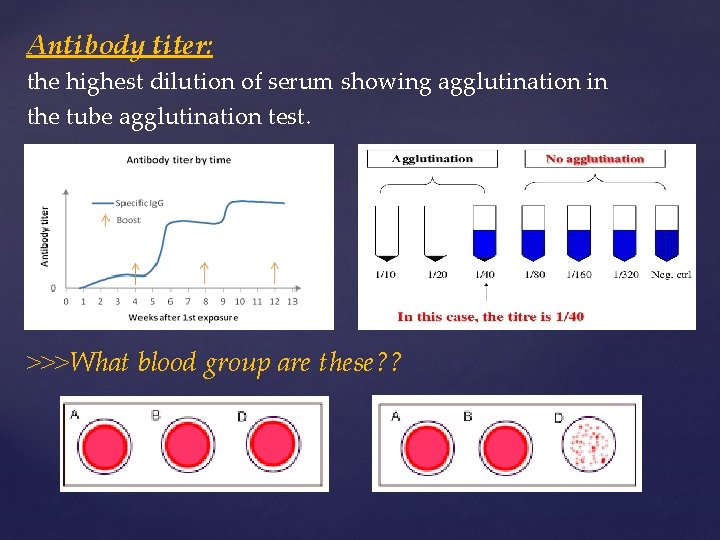
Antibody titer: the highest dilution of serum showing agglutination in the tube agglutination test. >>>What blood group are these? ?
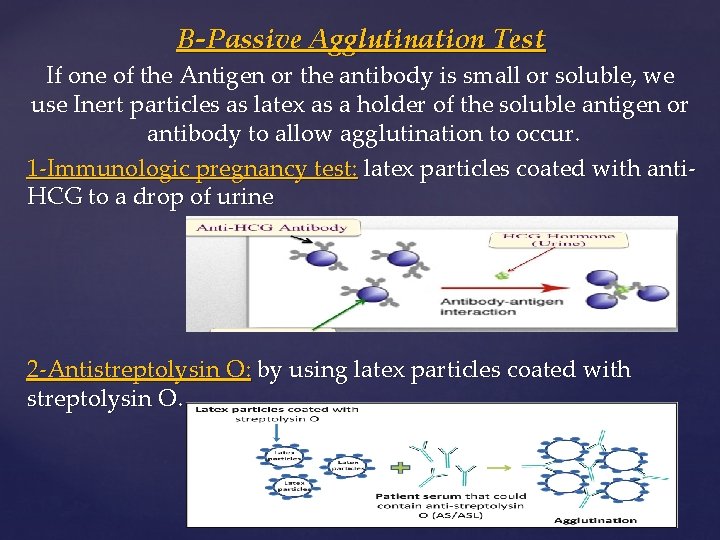
B-Passive Agglutination Test If one of the Antigen or the antibody is small or soluble, we use Inert particles as latex as a holder of the soluble antigen or antibody to allow agglutination to occur. 1 -Immunologic pregnancy test: latex particles coated with anti. HCG to a drop of urine 2 -Antistreptolysin O: by using latex particles coated with streptolysin O.
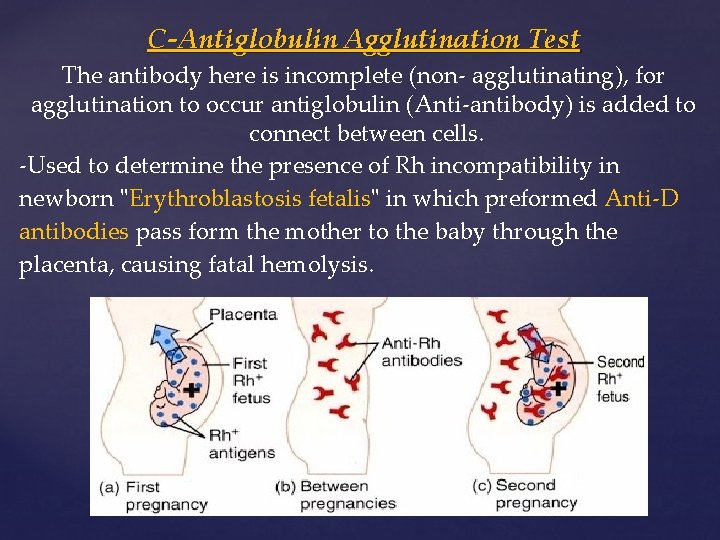
C-Antiglobulin Agglutination Test The antibody here is incomplete (non- agglutinating), for agglutination to occur antiglobulin (Anti-antibody) is added to connect between cells. -Used to determine the presence of Rh incompatibility in newborn "Erythroblastosis fetalis" in which preformed Anti-D antibodies pass form the mother to the baby through the placenta, causing fatal hemolysis.
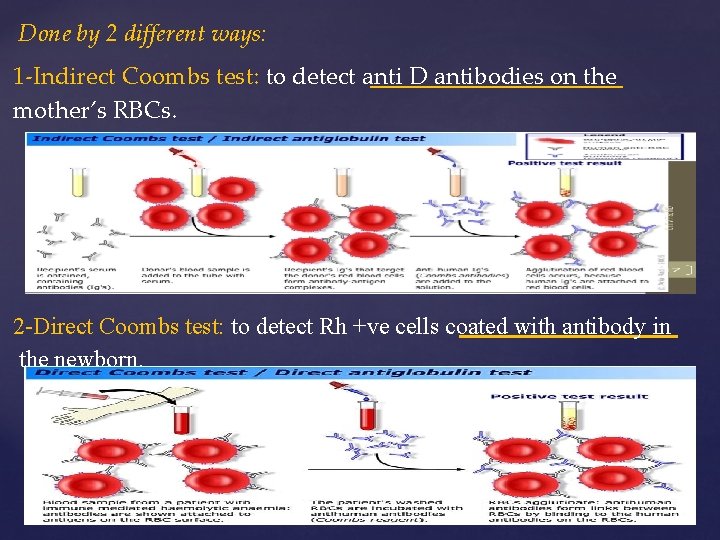
Done by 2 different ways: 1 -Indirect Coombs test: to detect anti D antibodies on the mother’s RBCs. 2 -Direct Coombs test: to detect Rh +ve cells coated with antibody in the newborn.
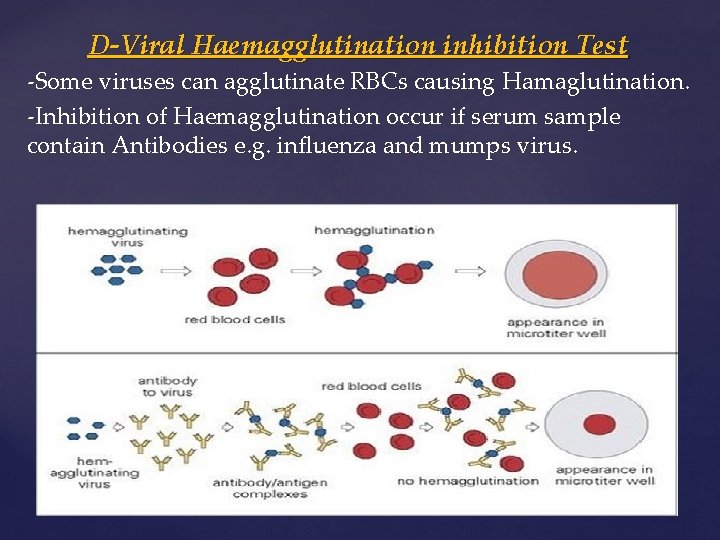
D-Viral Haemagglutination inhibition Test -Some viruses can agglutinate RBCs causing Hamaglutination. -Inhibition of Haemagglutination occur if serum sample contain Antibodies e. g. influenza and mumps virus.
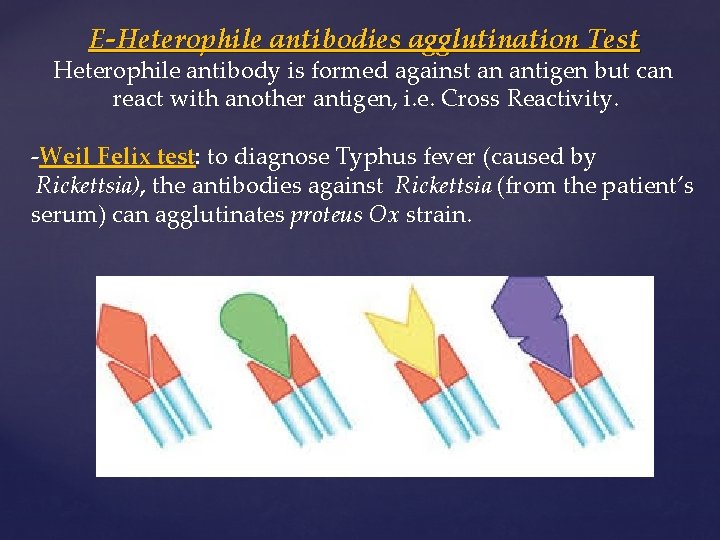
E-Heterophile antibodies agglutination Test Heterophile antibody is formed against an antigen but can react with another antigen, i. e. Cross Reactivity. -Weil Felix test: to diagnose Typhus fever (caused by Rickettsia), the antibodies against Rickettsia (from the patient’s serum) can agglutinates proteus Ox strain.
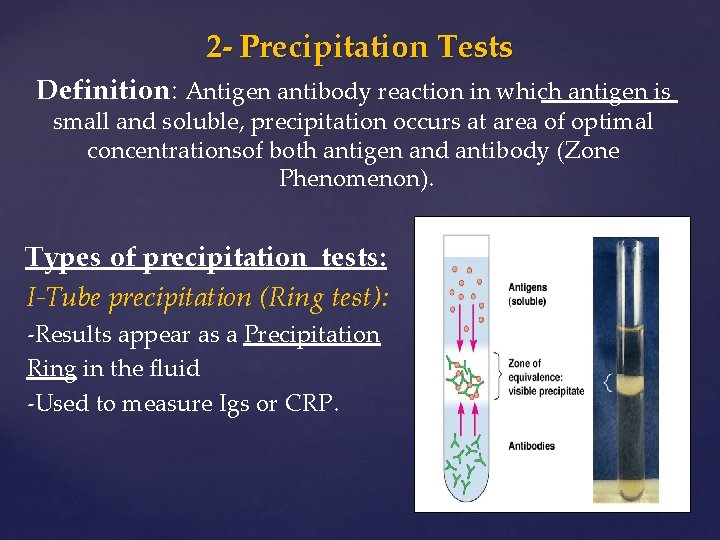
2 - Precipitation Tests Definition: Antigen antibody reaction in which antigen is small and soluble, precipitation occurs at area of optimal concentrationsof both antigen and antibody (Zone Phenomenon). Types of precipitation tests: I-Tube precipitation (Ring test): -Results appear as a Precipitation Ring in the fluid -Used to measure Igs or CRP.
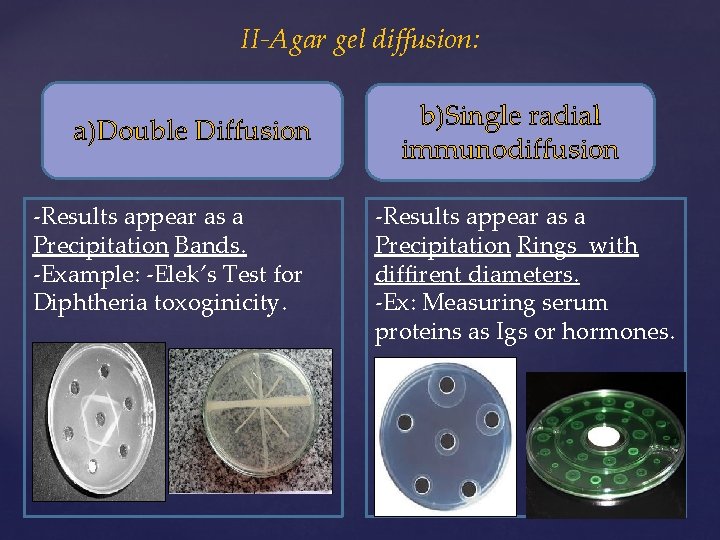
II-Agar gel diffusion: a)Double Diffusion -Results appear as a Precipitation Bands. -Example: -Elek’s Test for Diphtheria toxoginicity. b)Single radial immunodiffusion -Results appear as a Precipitation Rings with diffirent diameters. -Ex: Measuring serum proteins as Igs or hormones.
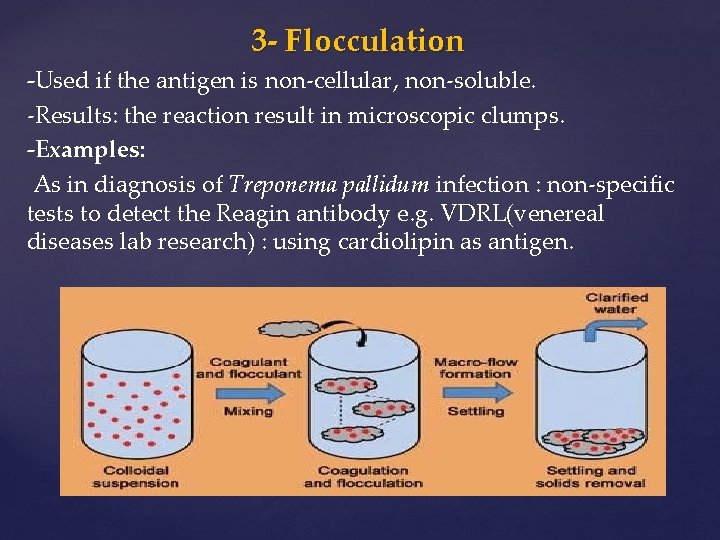
3 - Flocculation -Used if the antigen is non-cellular, non-soluble. -Results: the reaction result in microscopic clumps. -Examples: As in diagnosis of Treponema pallidum infection : non-specific tests to detect the Reagin antibody e. g. VDRL(venereal diseases lab research) : using cardiolipin as antigen.
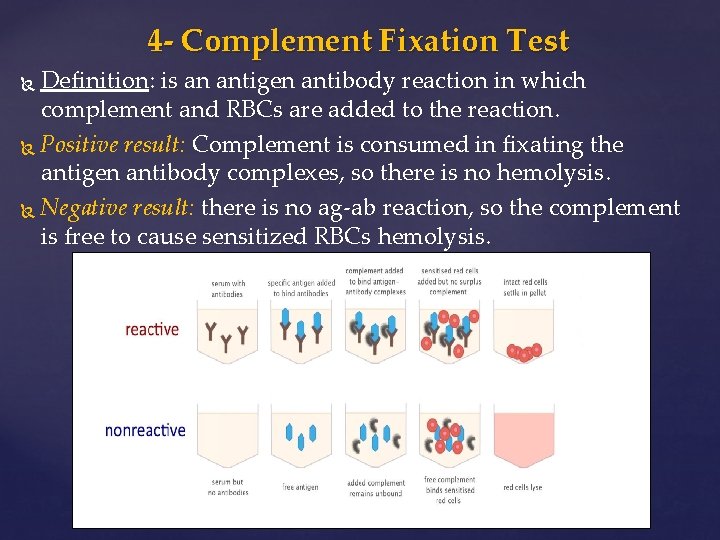
4 - Complement Fixation Test Definition: is an antigen antibody reaction in which complement and RBCs are added to the reaction. Positive result: Complement is consumed in fixating the antigen antibody complexes, so there is no hemolysis. Negative result: there is no ag-ab reaction, so the complement is free to cause sensitized RBCs hemolysis.
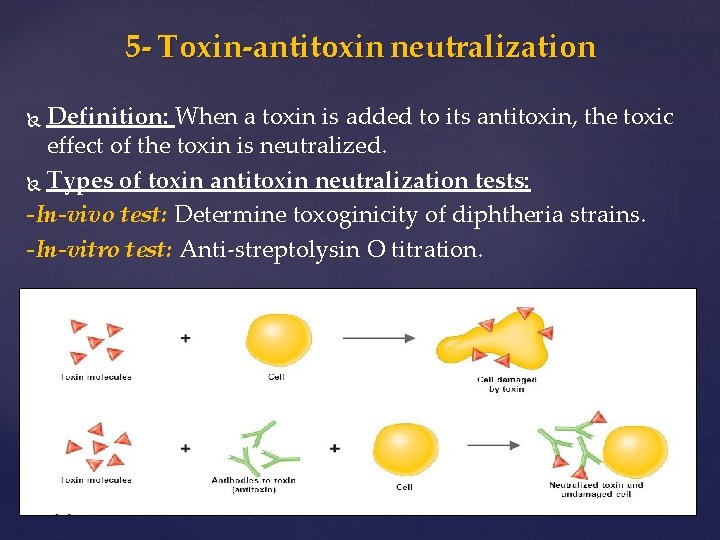
5 - Toxin-antitoxin neutralization Definition: When a toxin is added to its antitoxin, the toxic effect of the toxin is neutralized. Types of toxin antitoxin neutralization tests: -In-vivo test: Determine toxoginicity of diphtheria strains. -In-vitro test: Anti-streptolysin O titration.
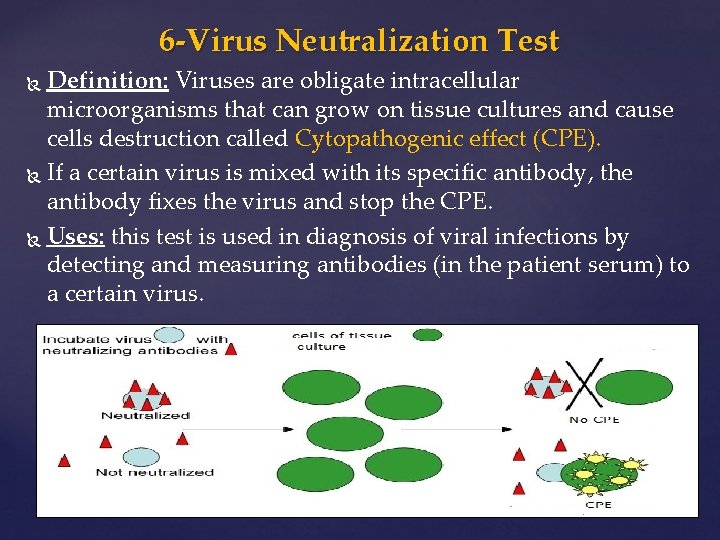
6 -Virus Neutralization Test Definition: Viruses are obligate intracellular microorganisms that can grow on tissue cultures and cause cells destruction called Cytopathogenic effect (CPE). If a certain virus is mixed with its specific antibody, the antibody fixes the virus and stop the CPE. Uses: this test is used in diagnosis of viral infections by detecting and measuring antibodies (in the patient serum) to a certain virus.
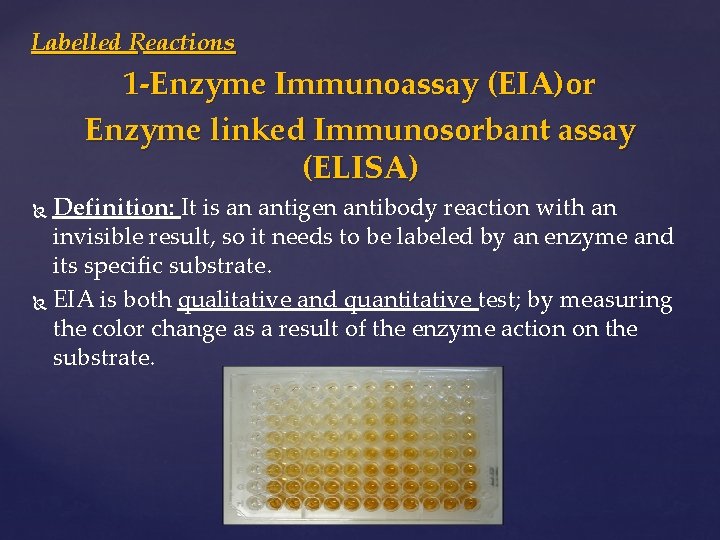
Labelled Reactions 1 -Enzyme Immunoassay (EIA)or Enzyme linked Immunosorbant assay (ELISA) Definition: It is an antigen antibody reaction with an invisible result, so it needs to be labeled by an enzyme and its specific substrate. EIA is both qualitative and quantitative test; by measuring the color change as a result of the enzyme action on the substrate.
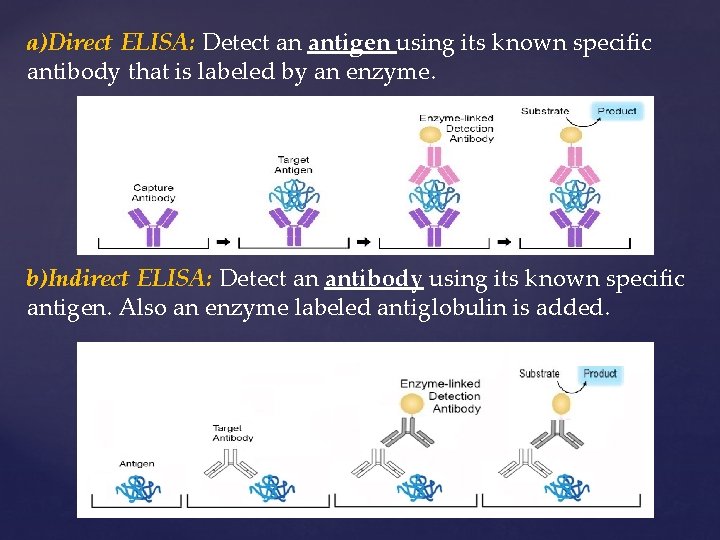
a)Direct ELISA: Detect an antigen using its known specific antibody that is labeled by an enzyme. b)Indirect ELISA: Detect an antibody using its known specific antigen. Also an enzyme labeled antiglobulin is added.
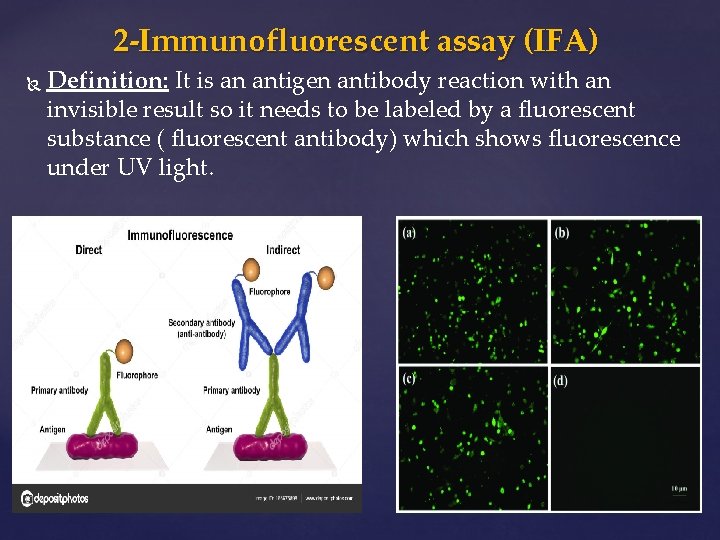
2 -Immunofluorescent assay (IFA) Definition: It is an antigen antibody reaction with an invisible result so it needs to be labeled by a fluorescent substance ( fluorescent antibody) which shows fluorescence under UV light.
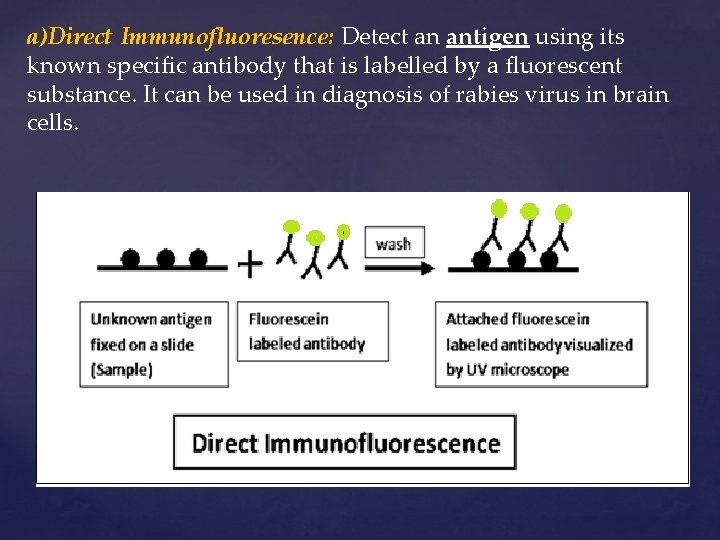
a)Direct Immunofluoresence: Detect an antigen using its known specific antibody that is labelled by a fluorescent substance. It can be used in diagnosis of rabies virus in brain cells.
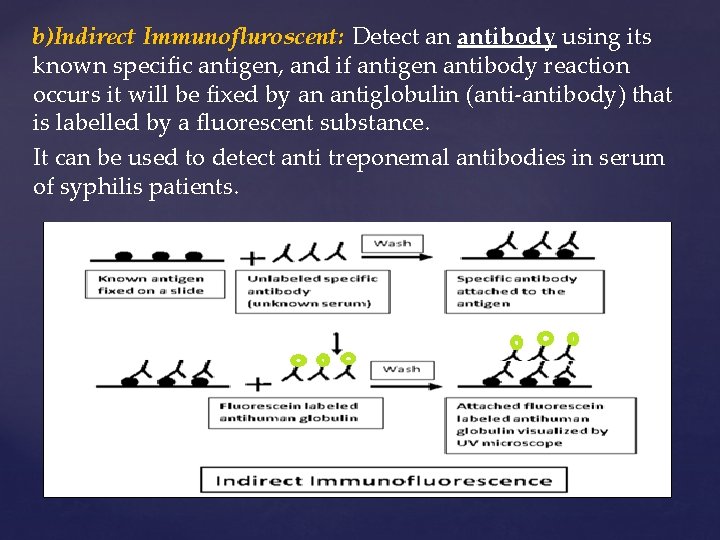
b)Indirect Immunofluroscent: Detect an antibody using its known specific antigen, and if antigen antibody reaction occurs it will be fixed by an antiglobulin (anti-antibody) that is labelled by a fluorescent substance. It can be used to detect anti treponemal antibodies in serum of syphilis patients.
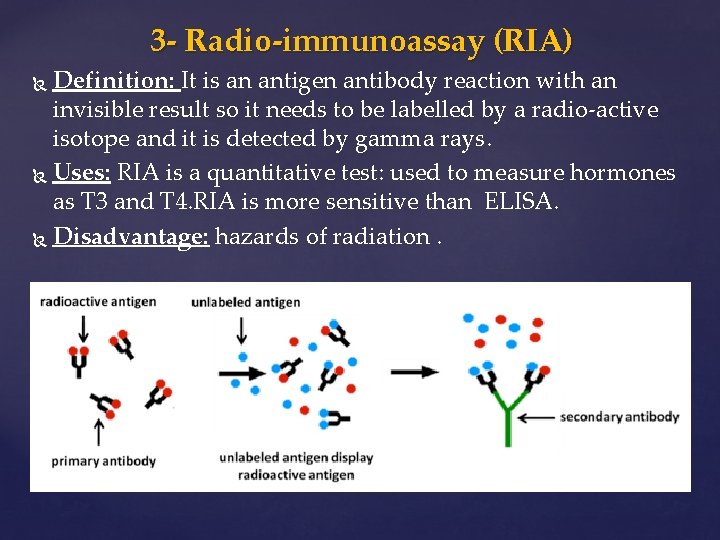
3 - Radio-immunoassay (RIA) Definition: It is an antigen antibody reaction with an invisible result so it needs to be labelled by a radio-active isotope and it is detected by gamma rays. Uses: RIA is a quantitative test: used to measure hormones as T 3 and T 4. RIA is more sensitive than ELISA. Disadvantage: hazards of radiation.

- Slides: 26