
Antigen Presentation Cells Signals and Resulting Immune Responses
- Slides: 26
Antigen Presentation: Cells, Signals, and Resulting Immune Responses Michael Podolsky
Lecture overview • Objective: To understand the mechanisms by which naïve T cells are specifically activated, and the resulting phenotypes of antigen presentation. • Outline: I. Background information on APCs and T Cells II. Processing of antigens by APCs III. Priming of naïve T cells by pathogen-activated dendritic cells IV. Properties of effector T cells 2
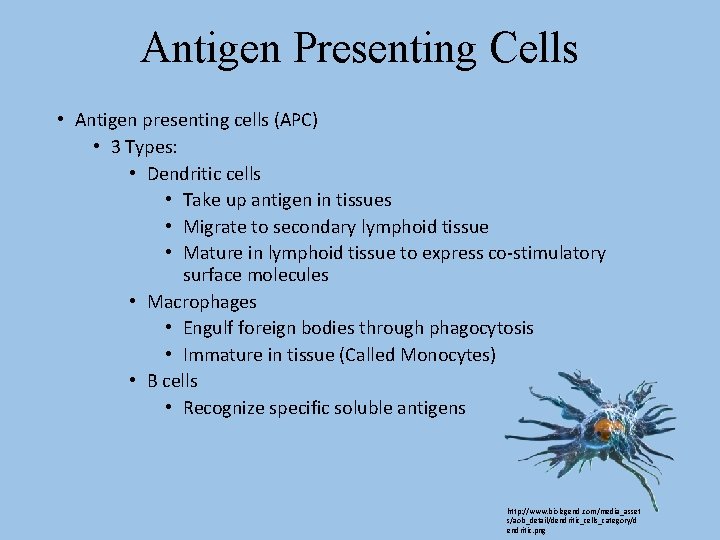
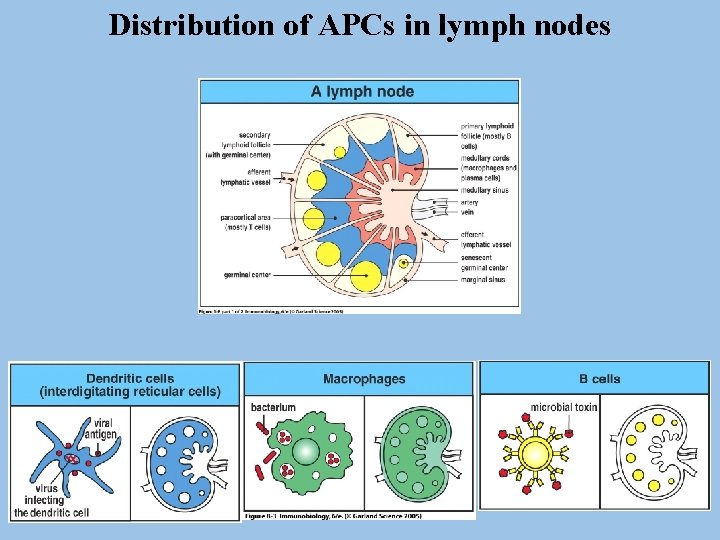
Antigen Presenting Cells • Antigen presenting cells (APC) • 3 Types: • Dendritic cells • Take up antigen in tissues • Migrate to secondary lymphoid tissue • Mature in lymphoid tissue to express co-stimulatory surface molecules • Macrophages • Engulf foreign bodies through phagocytosis • Immature in tissue (Called Monocytes) • B cells • Recognize specific soluble antigens http: //www. biolegend. com/media_asset s/aob_detail/dendritic_cells_category/d endritic. png
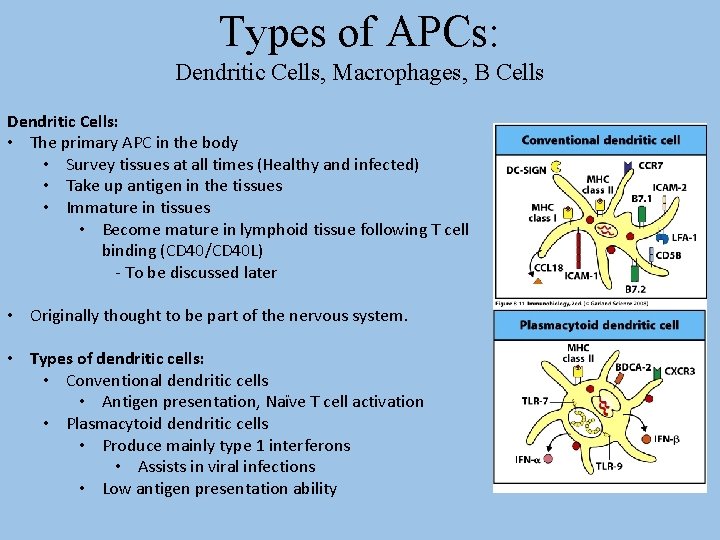
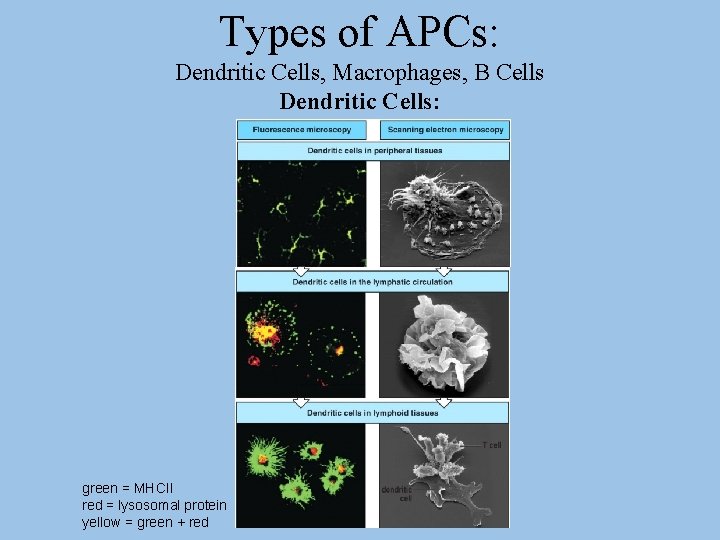
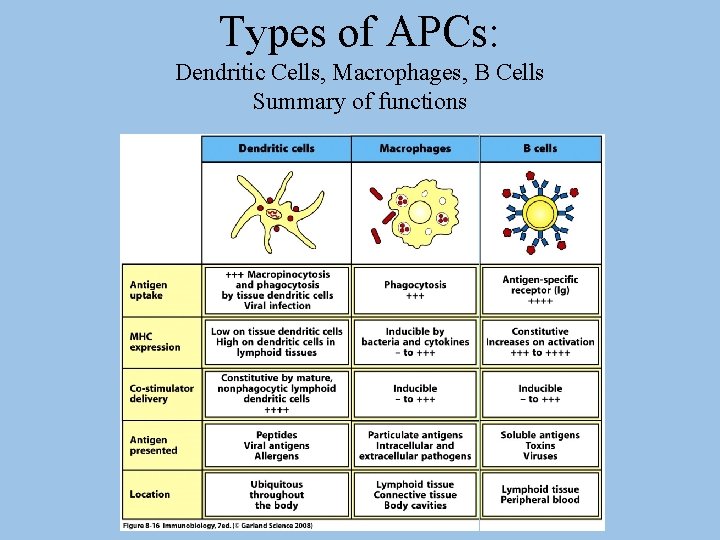
Types of APCs: Dendritic Cells, Macrophages, B Cells Dendritic Cells: • The primary APC in the body • Survey tissues at all times (Healthy and infected) • Take up antigen in the tissues • Immature in tissues • Become mature in lymphoid tissue following T cell binding (CD 40/CD 40 L) - To be discussed later • Originally thought to be part of the nervous system. • Types of dendritic cells: • Conventional dendritic cells • Antigen presentation, Naïve T cell activation • Plasmacytoid dendritic cells • Produce mainly type 1 interferons • Assists in viral infections • Low antigen presentation ability
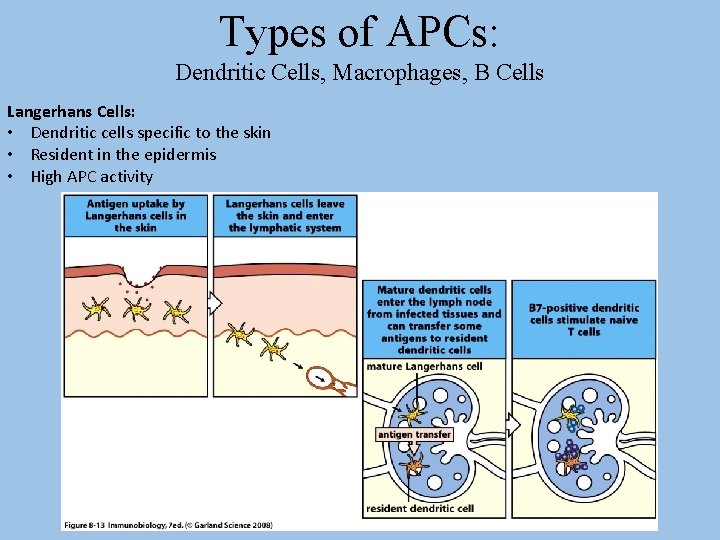
Types of APCs: Dendritic Cells, Macrophages, B Cells Langerhans Cells: • Dendritic cells specific to the skin • Resident in the epidermis • High APC activity
Types of APCs: Dendritic Cells, Macrophages, B Cells Dendritic Cells: green = MHCII red = lysosomal protein yellow = green + red
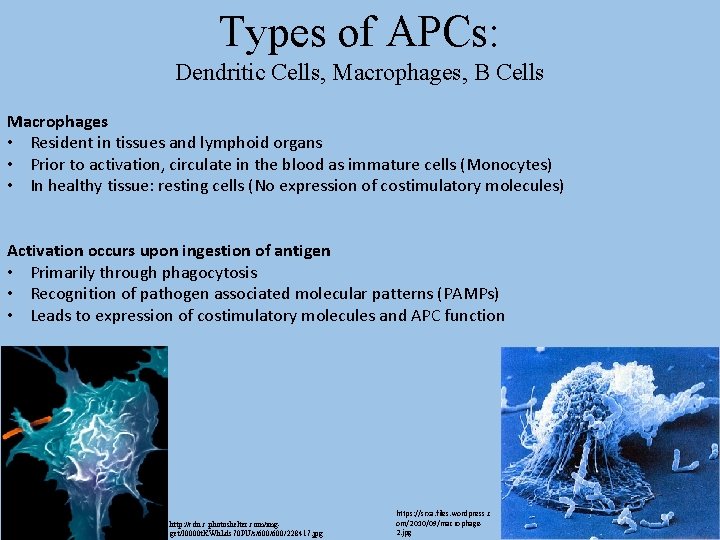
Types of APCs: Dendritic Cells, Macrophages, B Cells Macrophages • Resident in tissues and lymphoid organs • Prior to activation, circulate in the blood as immature cells (Monocytes) • In healthy tissue: resting cells (No expression of costimulatory molecules) Activation occurs upon ingestion of antigen • Primarily through phagocytosis • Recognition of pathogen associated molecular patterns (PAMPs) • Leads to expression of costimulatory molecules and APC function http: //cdn. c. photoshelter. com/imgget/I 0000 t. KWh. Lds 70 PU/s/600/228417. jpg https: //srxa. files. wordpress. c om/2010/09/macrophage 2. jpg
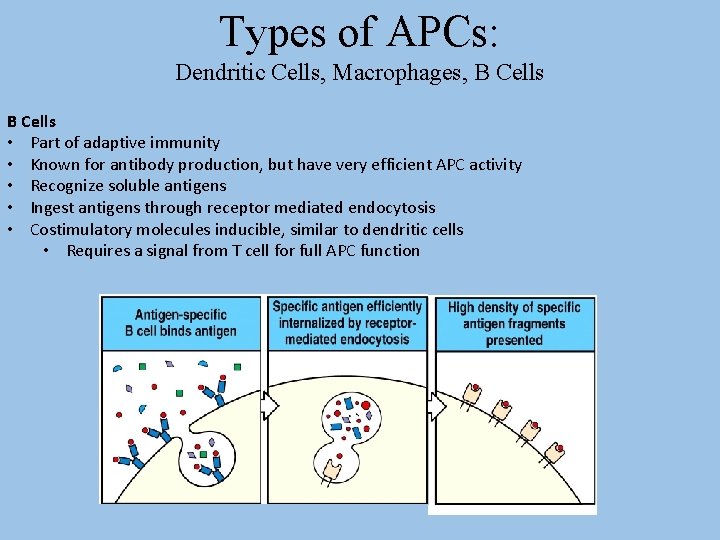
Types of APCs: Dendritic Cells, Macrophages, B Cells • Part of adaptive immunity • Known for antibody production, but have very efficient APC activity • Recognize soluble antigens • Ingest antigens through receptor mediated endocytosis • Costimulatory molecules inducible, similar to dendritic cells • Requires a signal from T cell for full APC function
Distribution of APCs in lymph nodes
Types of APCs: Dendritic Cells, Macrophages, B Cells Summary of functions
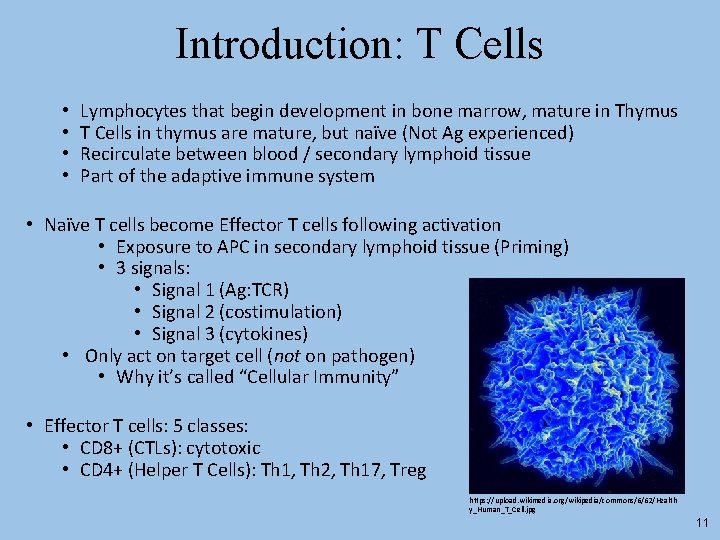
Introduction: T Cells • • Lymphocytes that begin development in bone marrow, mature in Thymus T Cells in thymus are mature, but naïve (Not Ag experienced) Recirculate between blood / secondary lymphoid tissue Part of the adaptive immune system • Naïve T cells become Effector T cells following activation • Exposure to APC in secondary lymphoid tissue (Priming) • 3 signals: • Signal 1 (Ag: TCR) • Signal 2 (costimulation) • Signal 3 (cytokines) • Only act on target cell (not on pathogen) • Why it’s called “Cellular Immunity” • Effector T cells: 5 classes: • CD 8+ (CTLs): cytotoxic • CD 4+ (Helper T Cells): Th 1, Th 2, Th 17, Treg https: //upload. wikimedia. org/wikipedia/commons/6/62/Health y_Human_T_Cell. jpg 11
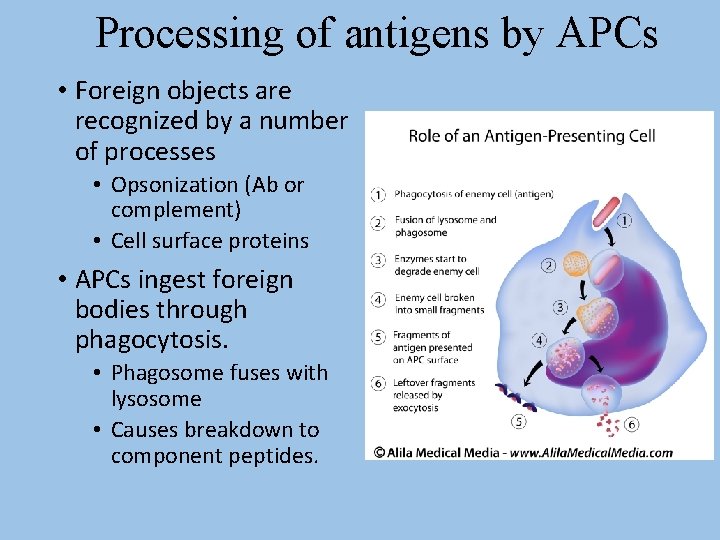
Processing of antigens by APCs • Foreign objects are recognized by a number of processes • Opsonization (Ab or complement) • Cell surface proteins • APCs ingest foreign bodies through phagocytosis. • Phagosome fuses with lysosome • Causes breakdown to component peptides.
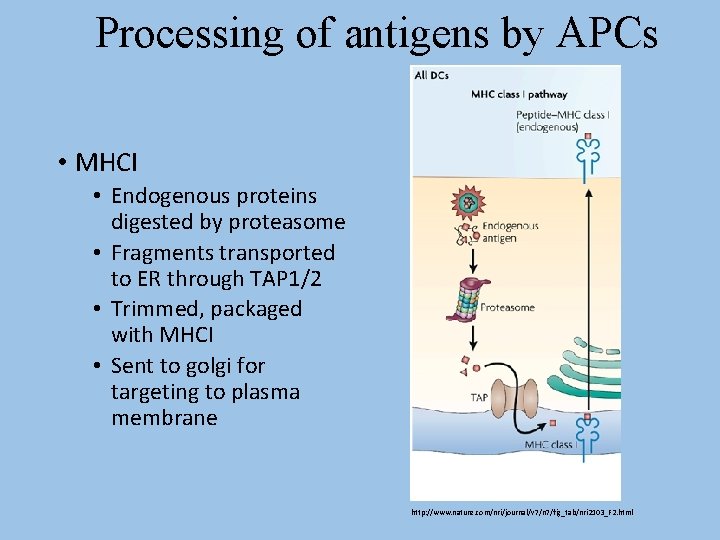
Processing of antigens by APCs • MHCI • Endogenous proteins digested by proteasome • Fragments transported to ER through TAP 1/2 • Trimmed, packaged with MHCI • Sent to golgi for targeting to plasma membrane http: //www. nature. com/nri/journal/v 7/n 7/fig_tab/nri 2103_F 2. html
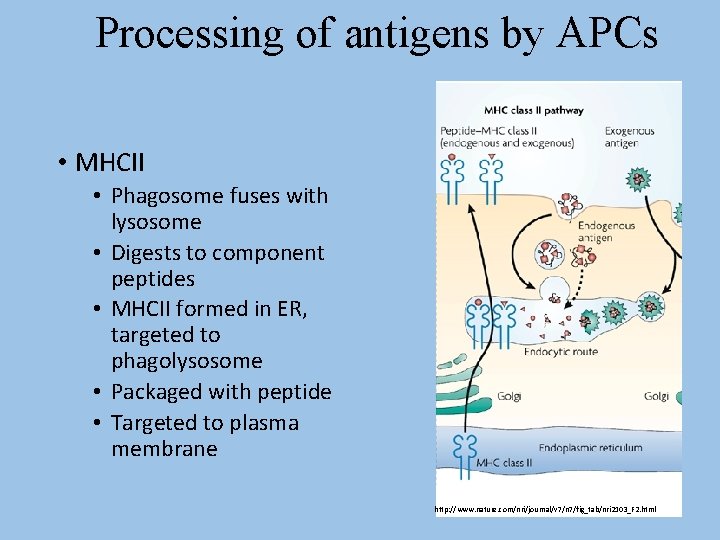
Processing of antigens by APCs • MHCII • Phagosome fuses with lysosome • Digests to component peptides • MHCII formed in ER, targeted to phagolysosome • Packaged with peptide • Targeted to plasma membrane http: //www. nature. com/nri/journal/v 7/n 7/fig_tab/nri 2103_F 2. html
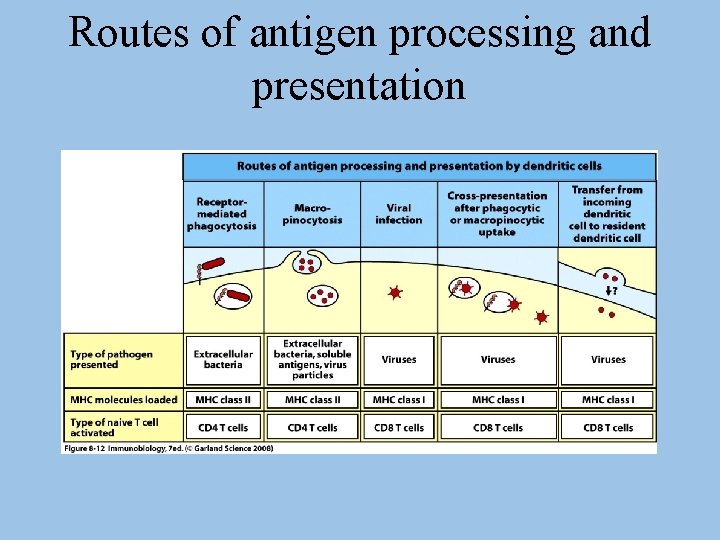
Routes of antigen processing and presentation
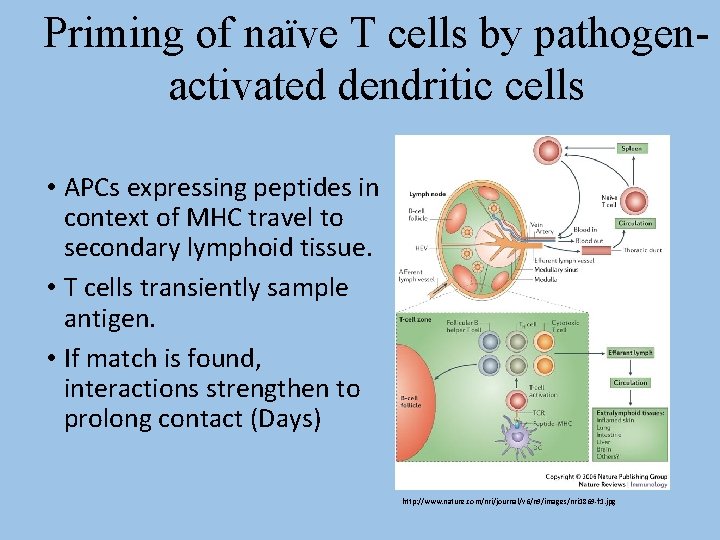
Priming of naïve T cells by pathogenactivated dendritic cells • APCs expressing peptides in context of MHC travel to secondary lymphoid tissue. • T cells transiently sample antigen. • If match is found, interactions strengthen to prolong contact (Days) http: //www. nature. com/nri/journal/v 6/n 9/images/nri 1869 -f 1. jpg
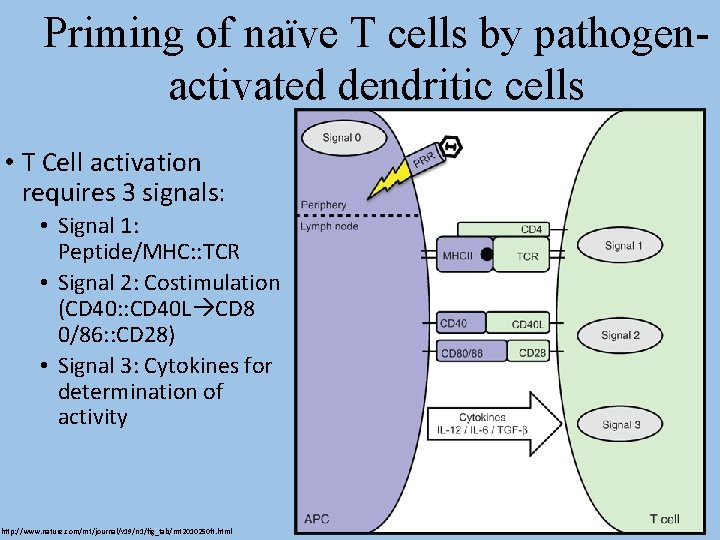
Priming of naïve T cells by pathogenactivated dendritic cells • T Cell activation requires 3 signals: • Signal 1: Peptide/MHC: : TCR • Signal 2: Costimulation (CD 40: : CD 40 L CD 8 0/86: : CD 28) • Signal 3: Cytokines for determination of activity http: //www. nature. com/mt/journal/v 19/n 1/fig_tab/mt 2010250 ft. html
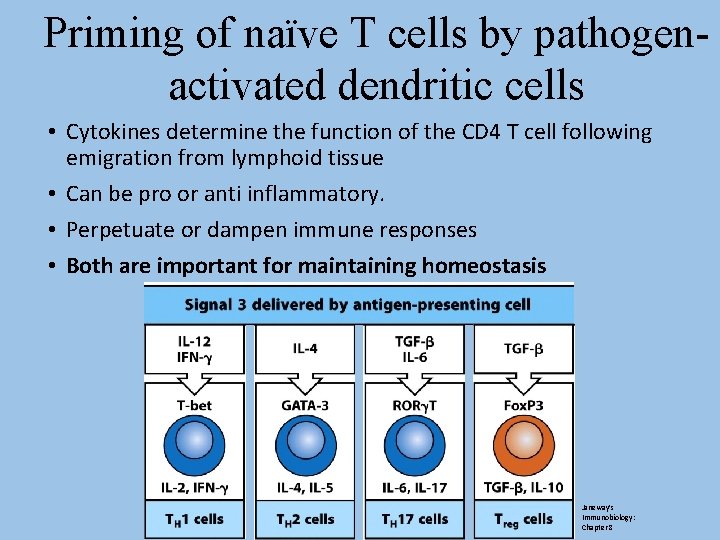
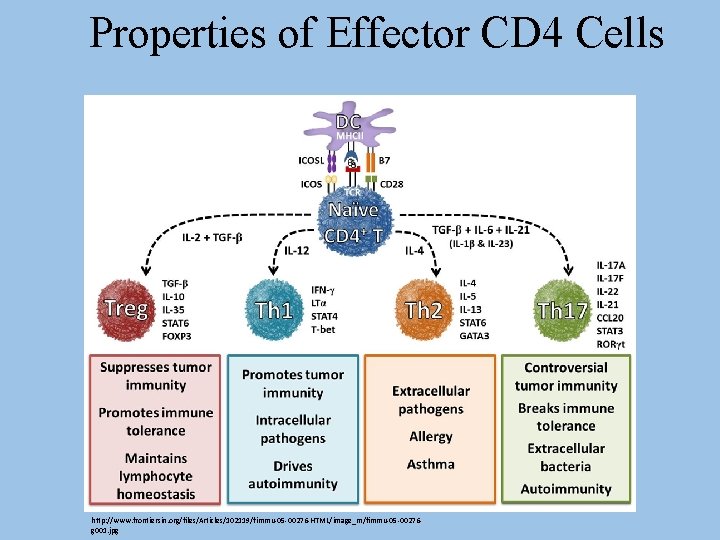
Priming of naïve T cells by pathogenactivated dendritic cells • Cytokines determine the function of the CD 4 T cell following emigration from lymphoid tissue • Can be pro or anti inflammatory. • Perpetuate or dampen immune responses • Both are important for maintaining homeostasis Janeway’s Immunobiology: Chapter 8
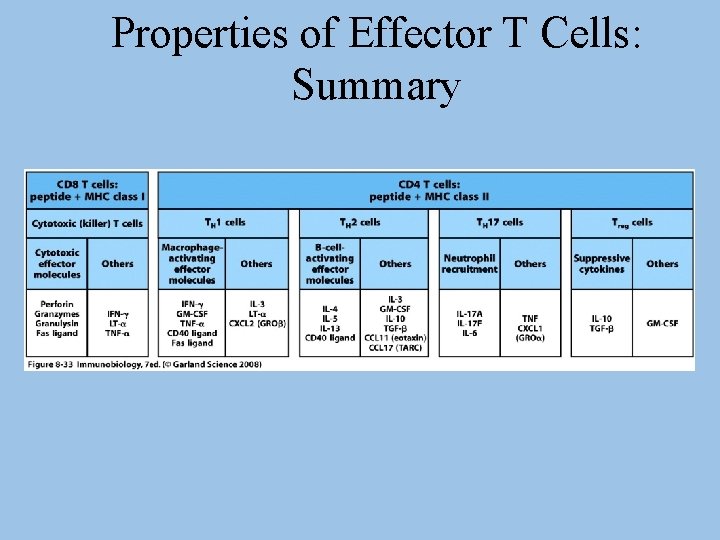
Properties of Effector T Cells: Th 1 • Effectors against intracellular bacteria and protozoa. • Activate Macrophages and CD 8 T cells • Primarily secrete IFNγ • Overactivation leads to Type 4 delayed-type hypersensitivity (More in later lectures)
Properties of Effector T Cells: Th 2 • Immunity against extracellular parasites: helminths • Activate B cells and stimulate them to become plasma cells (Antibody secretion) • Indirectly stimulate mast cells to secrete histamine • Secrete IL-4, IL-5, IL-9, IL-13 • Overactivation causes Type 1 Ig. E-mediated hypersensitivity.
Properties of Effector T Cells: Th 17 • Maintain immunity in mucosal barriers (Gut, nasal passages) • Recently discovered, still much to learn. • Implicated in autoimmune and inflammatory disorders. • Secrete IL-17
Properties of Effector T Cells: TReg • Anti-inflammatory • Dampen immune responses to prevent tissue damage • Secrete IL-10, TGFβ • Especially important in gut, prevent damaging immune overactivation to innocuous antigens from microbiome. • Loss of function results in autoimmunity
Properties of Effector CD 4 Cells http: //www. frontiersin. org/files/Articles/102119/fimmu-05 -00276 -HTML/image_m/fimmu-05 -00276 g 001. jpg
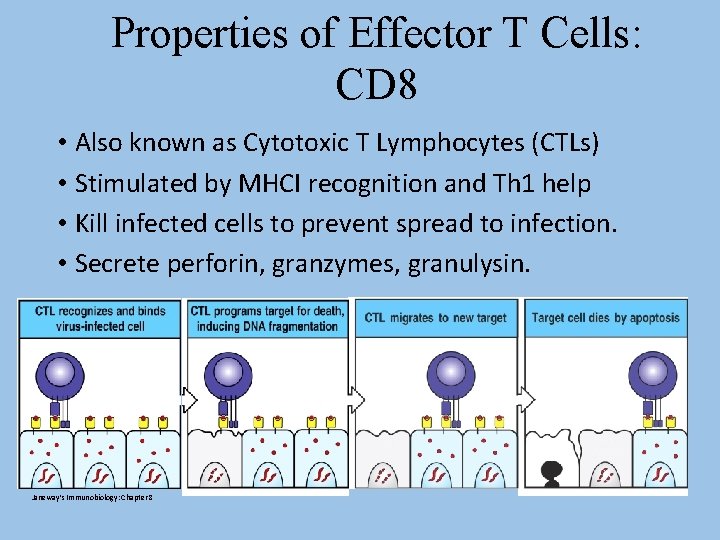
Properties of Effector T Cells: CD 8 • Also known as Cytotoxic T Lymphocytes (CTLs) • Stimulated by MHCI recognition and Th 1 help • Kill infected cells to prevent spread to infection. • Secrete perforin, granzymes, granulysin. Janeway’s Immunobiology: Chapter 8
Properties of Effector T Cells: Summary
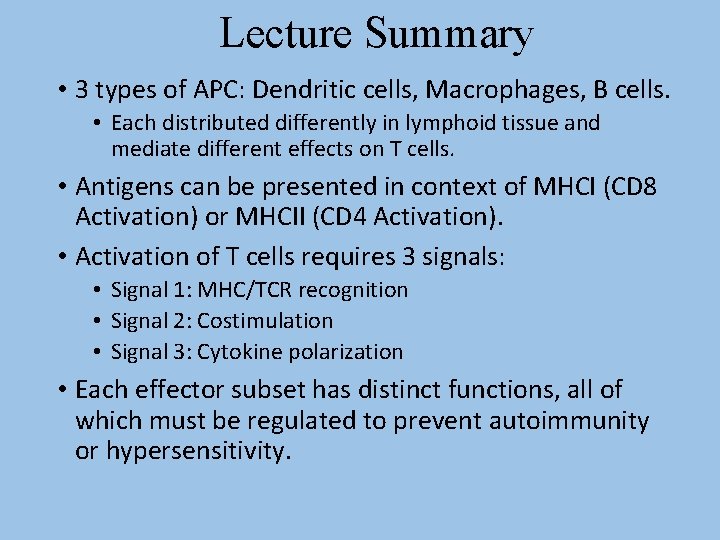
Lecture Summary • 3 types of APC: Dendritic cells, Macrophages, B cells. • Each distributed differently in lymphoid tissue and mediate different effects on T cells. • Antigens can be presented in context of MHCI (CD 8 Activation) or MHCII (CD 4 Activation). • Activation of T cells requires 3 signals: • Signal 1: MHC/TCR recognition • Signal 2: Costimulation • Signal 3: Cytokine polarization • Each effector subset has distinct functions, all of which must be regulated to prevent autoimmunity or hypersensitivity.