
Antifungals and AntiTuberculosis Agents Christine Kubin Pharm D
Antifungals and Anti-Tuberculosis Agents Christine Kubin, Pharm. D. , BCPS Clinical Pharmacist, Infectious Diseases New York-Presbyterian Hospital Columbia University Medical Center November 12, 2004
Antifungal Agents
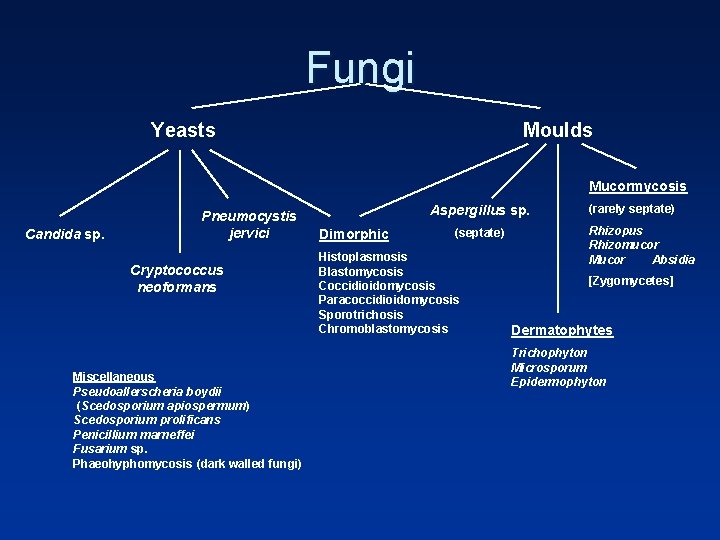
Fungi Yeasts Moulds Mucormycosis Candida sp. Pneumocystis jervici Cryptococcus neoformans Miscellaneous Pseudoallerscheria boydii (Scedosporium apiospermum) Scedosporium prolificans Penicillium marneffei Fusarium sp. Phaeohyphomycosis (dark walled fungi) Aspergillus sp. Dimorphic (septate) Histoplasmosis Blastomycosis Coccidioidomycosis Paracoccidioidomycosis Sporotrichosis Chromoblastomycosis (rarely septate) Rhizopus Rhizomucor Mucor Absidia [Zygomycetes] Dermatophytes Trichophyton Microsporum Epidermophyton
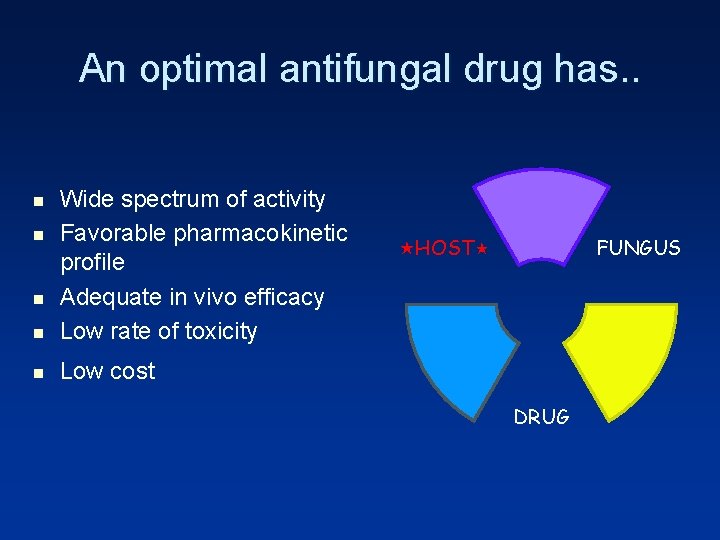
An optimal antifungal drug has. . n Wide spectrum of activity Favorable pharmacokinetic profile Adequate in vivo efficacy Low rate of toxicity n Low cost n n n FUNGUS HOST DRUG
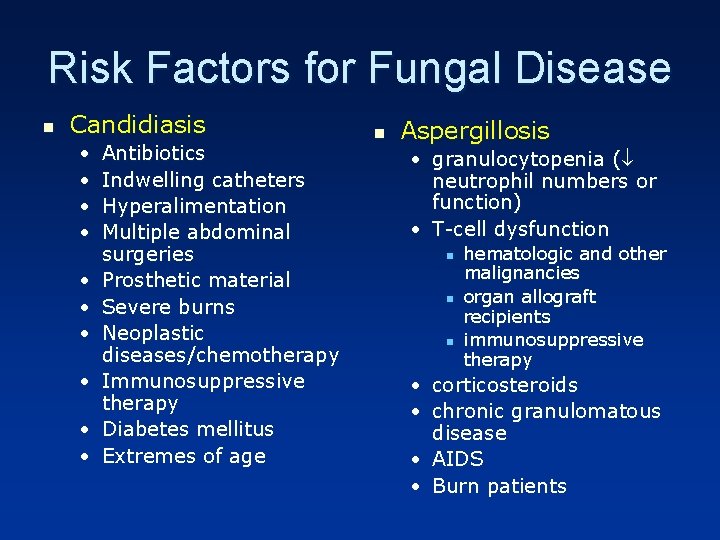
Risk Factors for Fungal Disease n Candidiasis • • • Antibiotics Indwelling catheters Hyperalimentation Multiple abdominal surgeries Prosthetic material Severe burns Neoplastic diseases/chemotherapy Immunosuppressive therapy Diabetes mellitus Extremes of age n Aspergillosis • granulocytopenia ( neutrophil numbers or function) • T-cell dysfunction n hematologic and other malignancies organ allograft recipients immunosuppressive therapy • corticosteroids • chronic granulomatous disease • AIDS • Burn patients
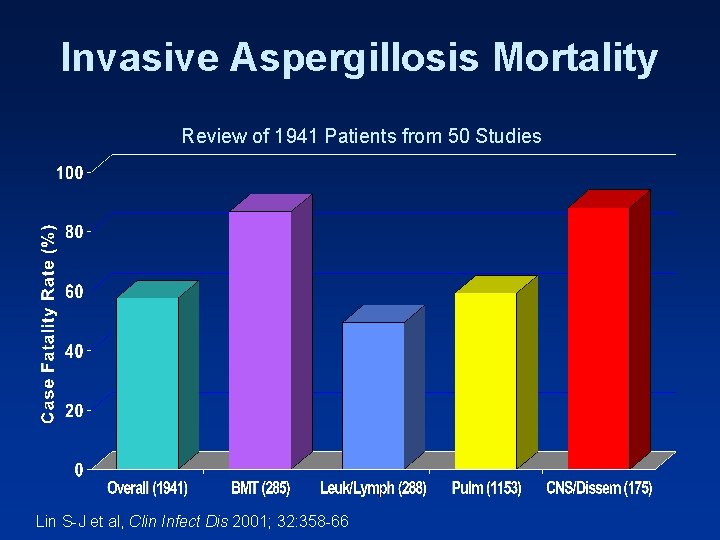
Invasive Aspergillosis Mortality Review of 1941 Patients from 50 Studies Lin S-J et al, Clin Infect Dis 2001; 32: 358 -66
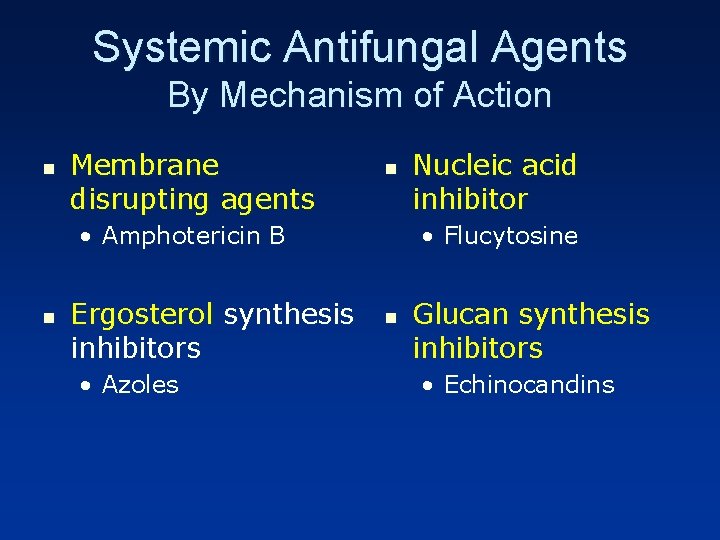
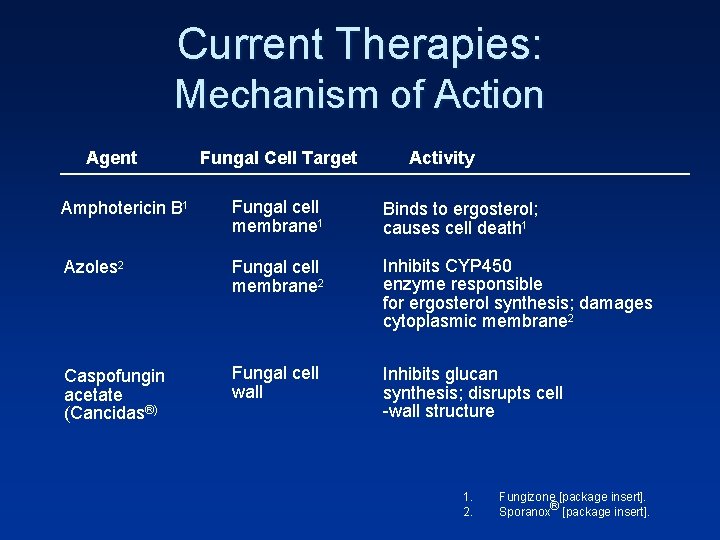
Systemic Antifungal Agents By Mechanism of Action n Membrane disrupting agents n • Amphotericin B n Ergosterol synthesis inhibitors • Azoles Nucleic acid inhibitor • Flucytosine n Glucan synthesis inhibitors • Echinocandins
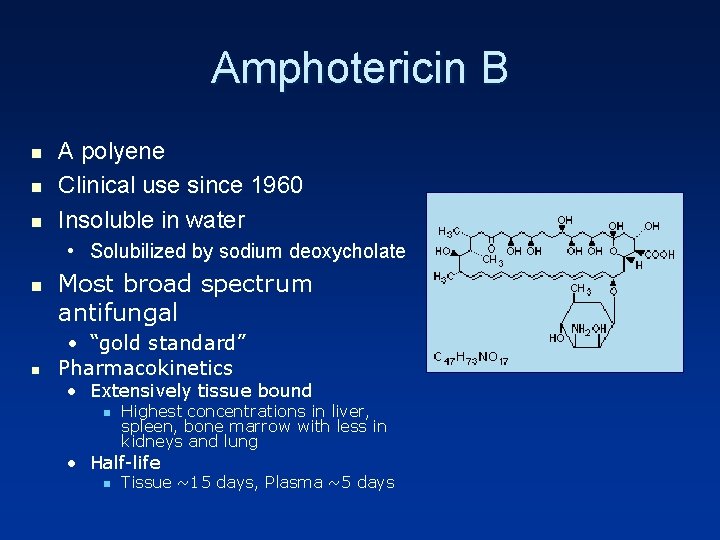
Amphotericin B n n n A polyene Clinical use since 1960 Insoluble in water • Solubilized by sodium deoxycholate n n Most broad spectrum antifungal • “gold standard” Pharmacokinetics • Extensively tissue bound n Highest concentrations in liver, spleen, bone marrow with less in kidneys and lung • Half-life n Tissue ~15 days, Plasma ~5 days
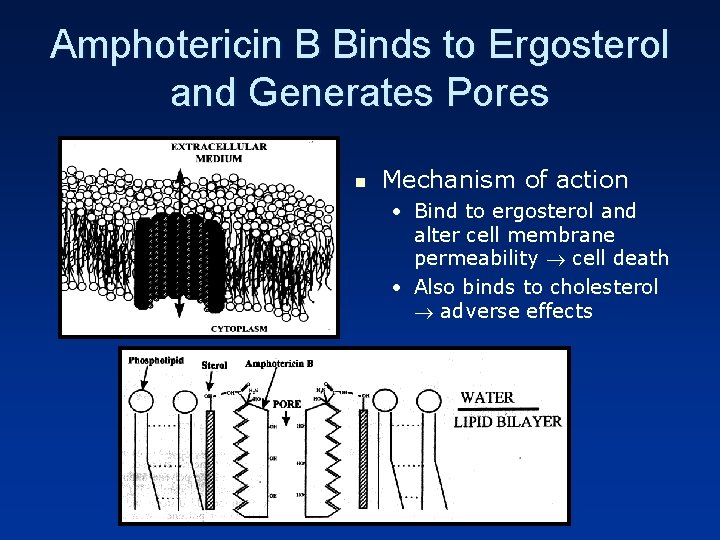
Amphotericin B Binds to Ergosterol and Generates Pores n Mechanism of action • Bind to ergosterol and alter cell membrane permeability cell death • Also binds to cholesterol adverse effects
Amphotericin B Spectrum of Activity n Clinical activity • Candida sp. n • • • Cryptococcus neoformans Blastomycosis Histoplasmosis Aspergillus sp. Zygomycetes n n C. lusitaniae often resistant Rhizopus sp. , Mucor sp. , etc. Little to no activity • Aspergillus terreus, Fusarium sp. , Pseudoallescheria boydii, Scedosporium prolificans, Trichosporon beigelii
“Ampho-Terrible” n Nephrotoxicity • Risk factors n n n Cumulative dose Concomitant nephrotoxic agents Hypotension Intravascular volume depletion Pre-existing renal disease BMT patients • Hydration and sodium loading may lessen effects n Infusion Related Reactions (IRRs) • Very common • Most severe with first few doses n Electrolyte Abnormalities • K+, Mg+2, PO 4 n Other • Thrombophlebitis (try to avoid peripheral lines) • Anemia
Amphotericin B Lipid Formulations n n Amphotericin B Colloidal Dispersion (ABCD) (Amphotec®) Amphotericin B Lipid Complex (ABLC) (Abelcet®) Liposomal amphotericin B (Am. B) (Ambisome®) Advantages • Less nephrotoxicity (still cause nephrotoxicity) n Lower levels in kidney compared to conventional ampho • Ambisome less IRRs n Disadvantages • Cost n No difference in efficacy compared to conventional ampho and between lipid products • Allow delivery of higher doses of amphotericin, but higher doses required for equivalent antifungal efficacy • Tolerance differences define the upper dose that can be administered
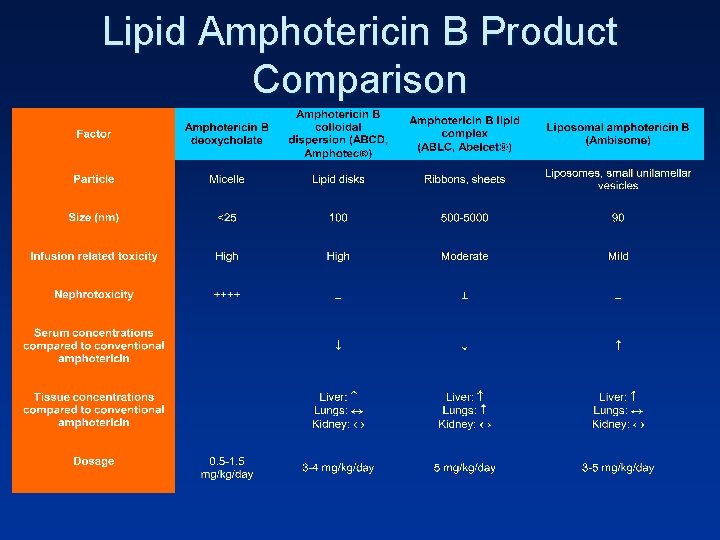
Lipid Amphotericin B Product Comparison
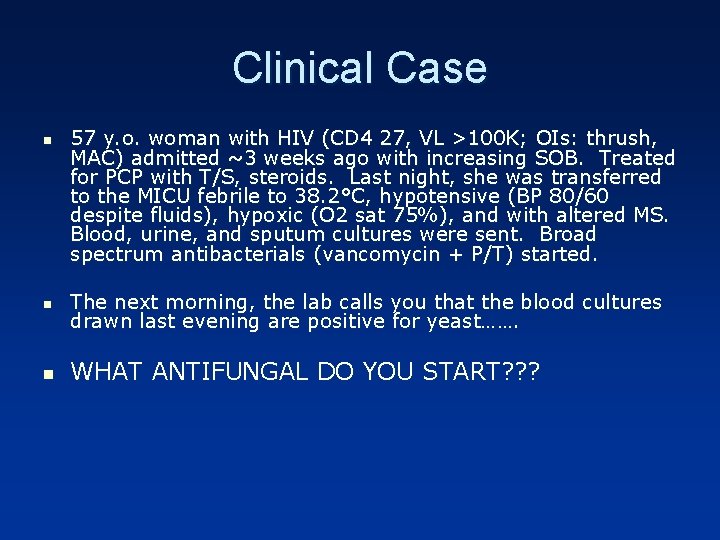
Clinical Case n 57 y. o. woman with HIV (CD 4 27, VL >100 K; OIs: thrush, MAC) admitted ~3 weeks ago with increasing SOB. Treated for PCP with T/S, steroids. Last night, she was transferred to the MICU febrile to 38. 2°C, hypotensive (BP 80/60 despite fluids), hypoxic (O 2 sat 75%), and with altered MS. Blood, urine, and sputum cultures were sent. Broad spectrum antibacterials (vancomycin + P/T) started. n The next morning, the lab calls you that the blood cultures drawn last evening are positive for yeast……. n WHAT ANTIFUNGAL DO YOU START? ? ?
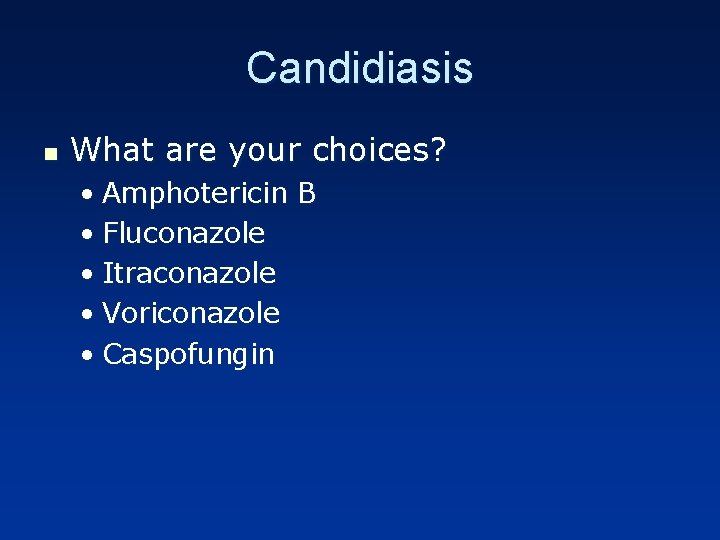
Candidiasis n What are your choices? • Amphotericin B • Fluconazole • Itraconazole • Voriconazole • Caspofungin
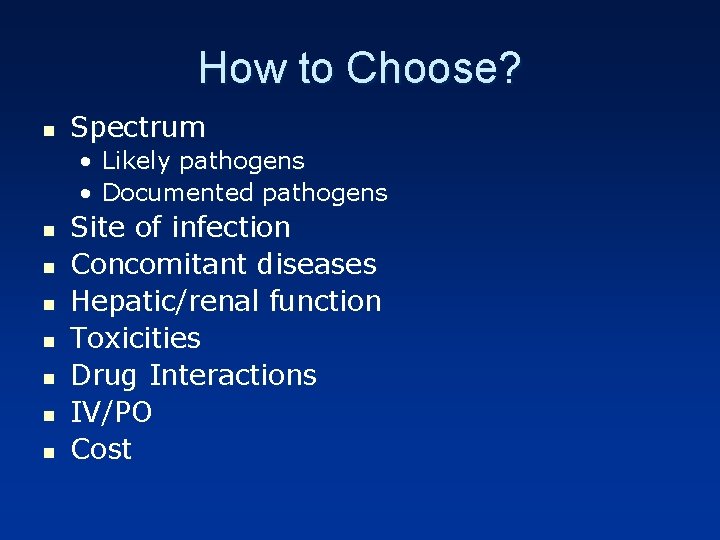
How to Choose? n Spectrum • Likely pathogens • Documented pathogens n n n n Site of infection Concomitant diseases Hepatic/renal function Toxicities Drug Interactions IV/PO Cost
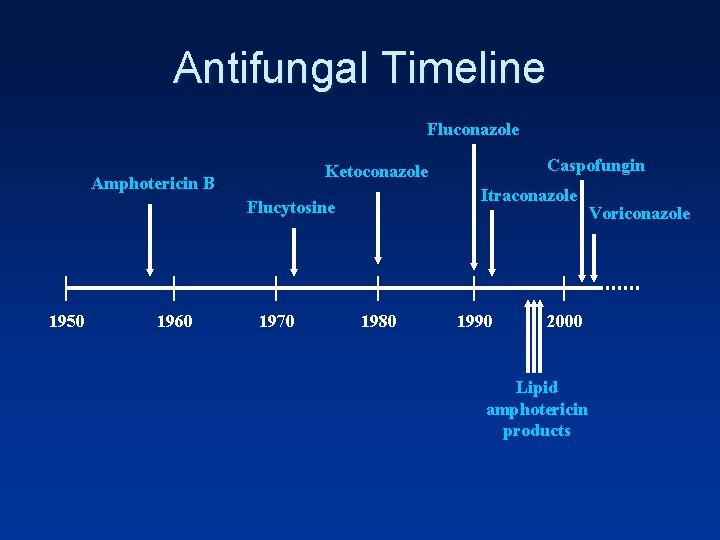
Antifungal Timeline Fluconazole Amphotericin B Itraconazole Flucytosine 1950 1960 Caspofungin Ketoconazole 1970 1980 1990 2000 Lipid amphotericin products Voriconazole
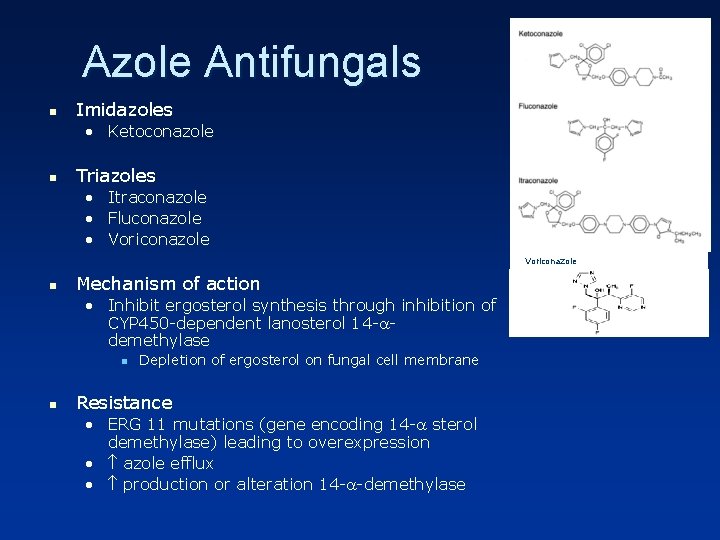
Azole Antifungals n Imidazoles • Ketoconazole n Triazoles • Itraconazole • Fluconazole • Voriconazole n Mechanism of action • Inhibit ergosterol synthesis through inhibition of CYP 450 -dependent lanosterol 14 - demethylase n n Depletion of ergosterol on fungal cell membrane Resistance • ERG 11 mutations (gene encoding 14 - sterol demethylase) leading to overexpression • azole efflux • production or alteration 14 - -demethylase
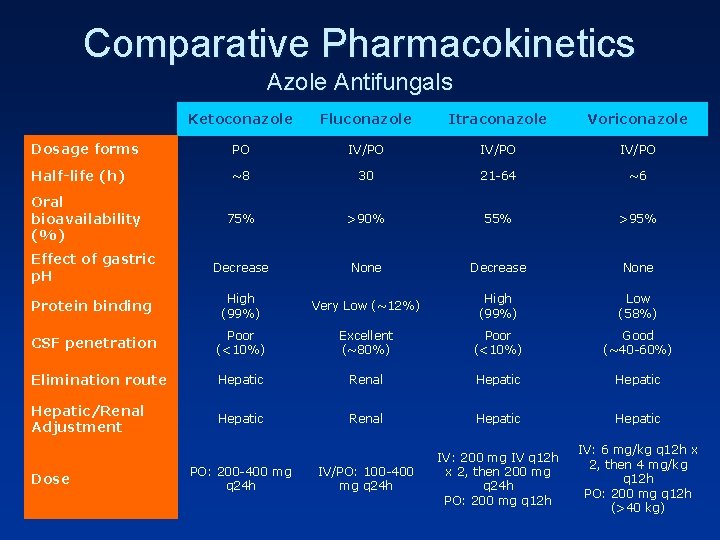
Comparative Pharmacokinetics Azole Antifungals Ketoconazole Fluconazole Itraconazole Voriconazole Dosage forms PO IV/PO Half-life (h) ~8 30 21 -64 ~6 75% >90% 55% >95% Effect of gastric p. H Decrease None Protein binding High (99%) Very Low (~12%) High (99%) Low (58%) CSF penetration Poor (<10%) Excellent (~80%) Poor (<10%) Good (~40 -60%) Elimination route Hepatic Renal Hepatic/Renal Adjustment Hepatic Renal Hepatic IV/PO: 100 -400 mg q 24 h IV: 200 mg IV q 12 h x 2, then 200 mg q 24 h PO: 200 mg q 12 h IV: 6 mg/kg q 12 h x 2, then 4 mg/kg q 12 h PO: 200 mg q 12 h (>40 kg) Oral bioavailability (%) Dose PO: 200 -400 mg q 24 h
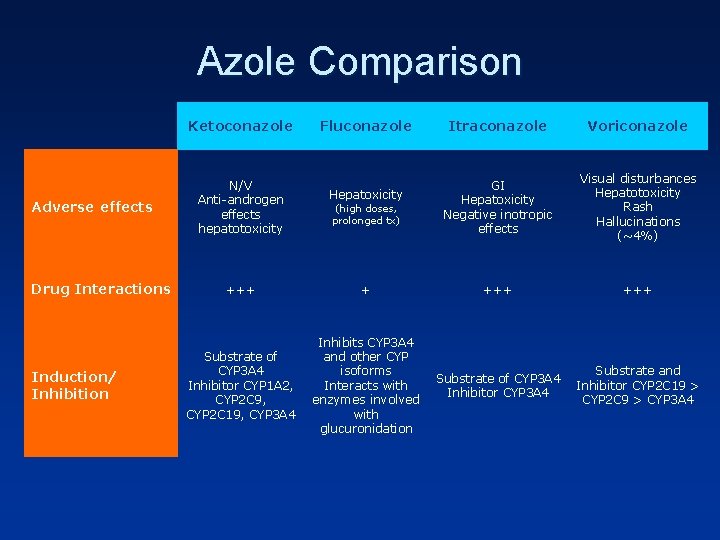
Azole Comparison Ketoconazole Adverse effects Drug Interactions Induction/ Inhibition N/V Anti-androgen effects hepatotoxicity Fluconazole Hepatoxicity (high doses, prolonged tx) Itraconazole Voriconazole GI Hepatoxicity Negative inotropic effects Visual disturbances Hepatotoxicity Rash Hallucinations (~4%) +++ +++ Substrate of CYP 3 A 4 Inhibitor CYP 1 A 2, CYP 2 C 9, CYP 2 C 19, CYP 3 A 4 Inhibits CYP 3 A 4 and other CYP isoforms Interacts with enzymes involved with glucuronidation Substrate of CYP 3 A 4 Inhibitor CYP 3 A 4 Substrate and Inhibitor CYP 2 C 19 > CYP 2 C 9 > CYP 3 A 4
Fluconazole n Favorable pharmacokinetic and toxicity profile • Low mw and high water solubility rapid absorption and bioavailability n • • >90% bioavailability (IV and PO interchangeable) No dependence on low gastric p. H Effectively penetrates CSF (50 -90% plasma levels) n Brain and eye too! • >90% renal excretion n Adverse effects • Very well tolerated n Even up to 1600 mg/day • GI, reversible transaminase elevations n Dose • 100 -800 mg/d (max 1600 mg/d) n n 6 mg/kg/d for susceptible strains (400 mg/d) 12 mg/kg/d for S-DD strains (800 mg/d) • IV and oral interchangeable (>90% bioavailability)
Itraconazole LIMITATIONS n Pharmacokinetics • Only ionized at low p. H wide interpatient variability in plasma concentrations • Nonlinear serum PK • Extensively liver metabolized n Adverse effects • Transient GI upset, dizziness, headache • Hepatotoxicity (~5%) • Negative inotrope n Drug Interactions • Propensity and extent greater than fluconazole • Substrate of CYP 3 A 4 and inhibitor of CYP 3 A 4 n n n Rifampin, phenytoin, phenobarbital CYA Spectrum • Paraccoccidiodomycosis, blastomycosis, histoplasmosis and sporotrichosis, cutaneous and mucosal candidiasis, Aspergillosis n Dose • 200 -400 mg/d (following a load) • Target troughs >0. 5 mcg/m. L
IV Itraconazole n Formulated in hydroxypropyl- -cyclodextrin • Increases solubility of itraconazole • Some cyclodextrins are nephrotoxic (? lacking with this compound) n Dosing • 200 mg IV q 12 h x 4 doses, then 200 mg IV q 24 h followed by 200 mg PO q 12 h oral solution • Renal dysfunction n T 1/2 of itraconazole does not differ A 6 -fold cyclodextrin clearance in pts with Cr. CL<20 ml/min (therefore not recommended in pts with Cr. CL<30 ml/min) Indications • Pulmonary and extrapulmonary blastomycosis • Histoplasmosis, including chronic cavitary pulmonary disease and disseminated, nonmeningeal histoplasmosis • Pulmonary and extrapulmonary aspergillosis in patients who are intolerant of or who are refractory to ampho B • Empiric antifungal therapy in neutropenic patients
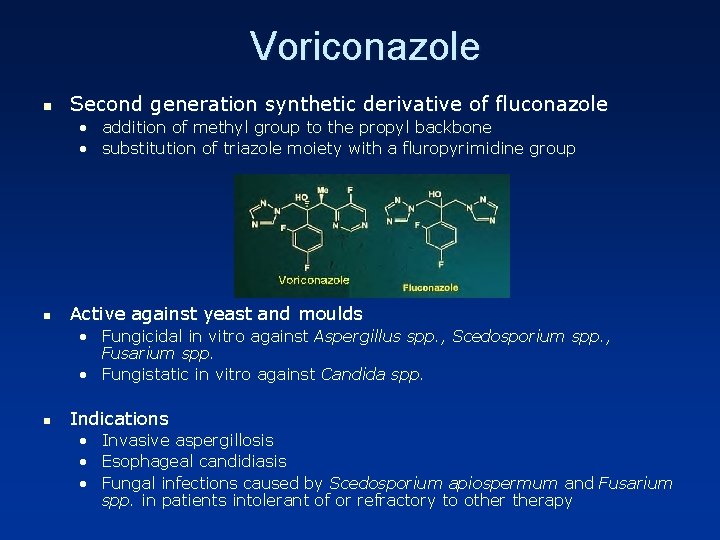
Voriconazole n Second generation synthetic derivative of fluconazole • addition of methyl group to the propyl backbone • substitution of triazole moiety with a fluropyrimidine group n Active against yeast and moulds • Fungicidal in vitro against Aspergillus spp. , Scedosporium spp. , Fusarium spp. • Fungistatic in vitro against Candida spp. n Indications • • • Invasive aspergillosis Esophageal candidiasis Fungal infections caused by Scedosporium apiospermum and Fusarium spp. in patients intolerant of or refractory to otherapy
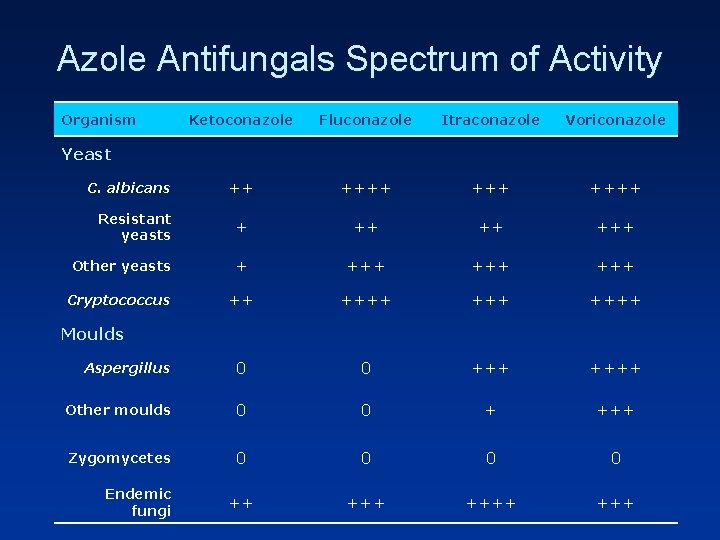
Azole Antifungals Spectrum of Activity Organism Ketoconazole Fluconazole Itraconazole Voriconazole ++ +++ ++++ Resistant yeasts + ++ ++ +++ Other yeasts + +++ +++ Cryptococcus ++ +++ ++++ Aspergillus 0 0 ++++ Other moulds 0 0 + +++ Zygomycetes 0 0 ++ ++++ Yeast C. albicans Moulds Endemic fungi
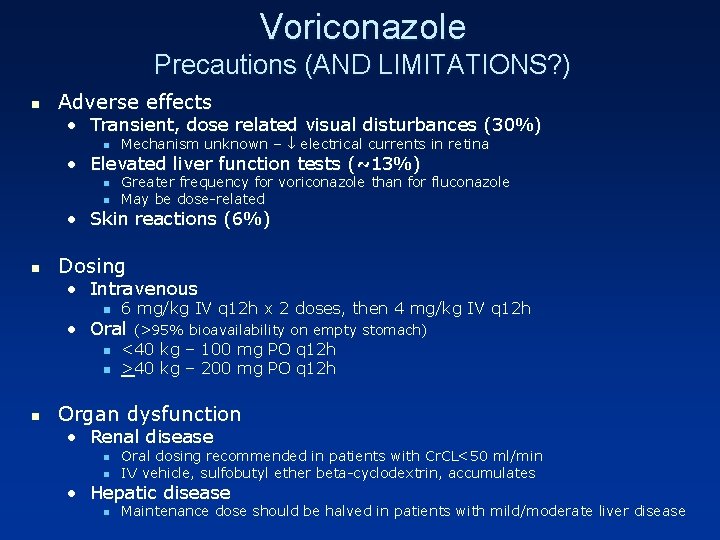
Voriconazole Precautions (AND LIMITATIONS? ) n Adverse effects • Transient, dose related visual disturbances (30%) n Mechanism unknown – electrical currents in retina • Elevated liver function tests (~13%) n n Greater frequency for voriconazole than for fluconazole May be dose-related • Skin reactions (6%) n Dosing • Intravenous n 6 mg/kg IV q 12 h x 2 doses, then 4 mg/kg IV q 12 h • Oral n n n (>95% bioavailability on empty stomach) <40 kg – 100 mg PO q 12 h >40 kg – 200 mg PO q 12 h Organ dysfunction • Renal disease n n Oral dosing recommended in patients with Cr. CL<50 ml/min IV vehicle, sulfobutyl ether beta-cyclodextrin, accumulates • Hepatic disease n Maintenance dose should be halved in patients with mild/moderate liver disease
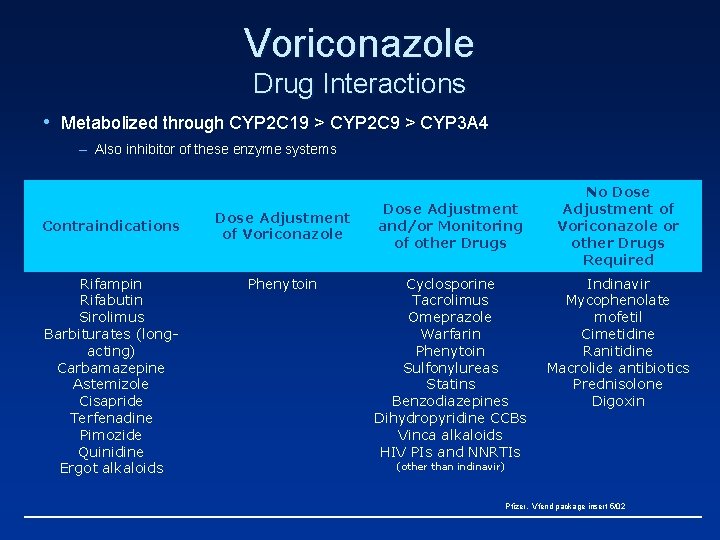
Voriconazole Drug Interactions • Metabolized through CYP 2 C 19 > CYP 2 C 9 > CYP 3 A 4 – Also inhibitor of these enzyme systems Contraindications Rifampin Rifabutin Sirolimus Barbiturates (longacting) Carbamazepine Astemizole Cisapride Terfenadine Pimozide Quinidine Ergot alkaloids Dose Adjustment of Voriconazole Phenytoin Dose Adjustment and/or Monitoring of other Drugs Cyclosporine Tacrolimus Omeprazole Warfarin Phenytoin Sulfonylureas Statins Benzodiazepines Dihydropyridine CCBs Vinca alkaloids HIV PIs and NNRTIs No Dose Adjustment of Voriconazole or other Drugs Required Indinavir Mycophenolate mofetil Cimetidine Ranitidine Macrolide antibiotics Prednisolone Digoxin (other than indinavir) Pfizer. Vfend package insert 5/02
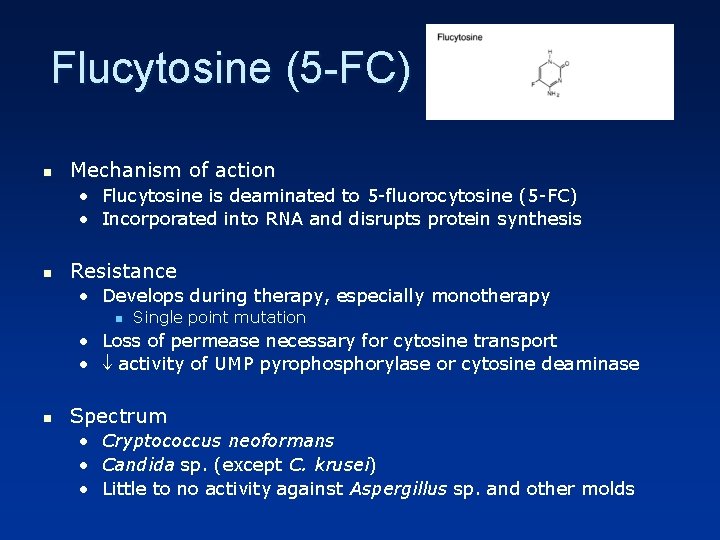
Flucytosine (5 -FC) n Mechanism of action • Flucytosine is deaminated to 5 -fluorocytosine (5 -FC) • Incorporated into RNA and disrupts protein synthesis n Resistance • Develops during therapy, especially monotherapy n Single point mutation • Loss of permease necessary for cytosine transport • activity of UMP pyrophosphorylase or cytosine deaminase n Spectrum • Cryptococcus neoformans • Candida sp. (except C. krusei) • Little to no activity against Aspergillus sp. and other molds
Flucytosine n Pharmacokinetics • Oral only • Distribution n CSF levels ~75% of serum levels • Elimination n n 90% excreted via glomerular filtration Half-life ~3 -6 hours • Renal/hepatic disease n n Dose adjust in renal dysfunction Adverse effects • Dose-dependent bone marrow suppression ( WBC, platelets) • GI (nausea/vomiting/diarrhea) n Clinical uses • Cryptococcal meningitis, hepatosplenic candidiasis, Candida endophthalmitis • Used in combination ONLY (usually with amphotericin) n n Minimizes development of resistance Amphotericin potentiates uptake
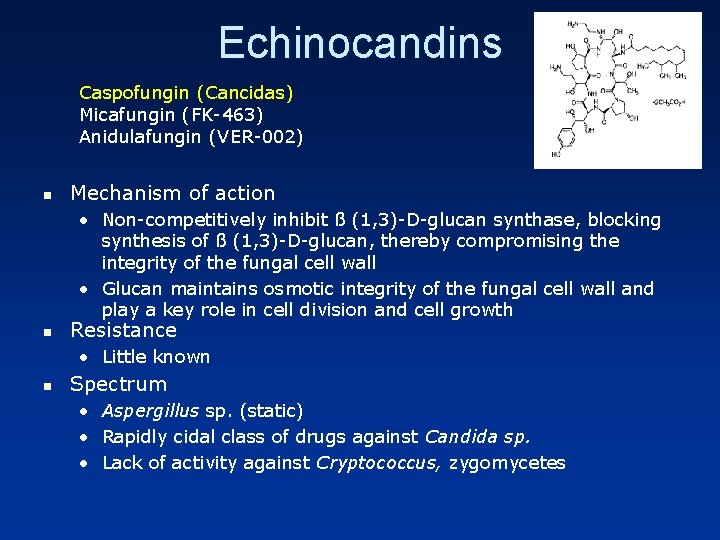
Echinocandins Caspofungin (Cancidas) Micafungin (FK-463) Anidulafungin (VER-002) n Mechanism of action • Non-competitively inhibit ß (1, 3)-D-glucan synthase, blocking synthesis of ß (1, 3)-D-glucan, thereby compromising the integrity of the fungal cell wall • Glucan maintains osmotic integrity of the fungal cell wall and play a key role in cell division and cell growth n Resistance • Little known n Spectrum • Aspergillus sp. (static) • Rapidly cidal class of drugs against Candida sp. • Lack of activity against Cryptococcus, zygomycetes
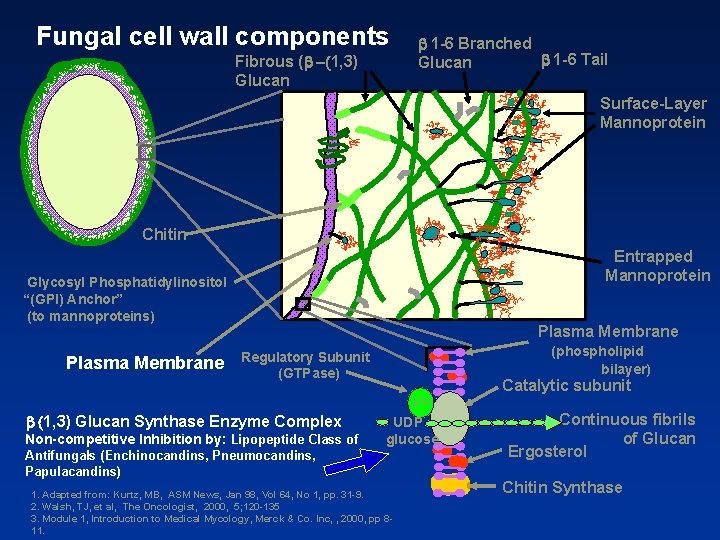
Fungal cell wall components Fibrous (b -(1, 3) Glucan b 1 -6 Branched b 1 -6 Tail Glucan Surface-Layer Mannoprotein Chitin Entrapped Mannoprotein Glycosyl Phosphatidylinositol “(GPI) Anchor” (to mannoproteins) Plasma Membrane (phospholipid bilayer) Regulatory Subunit (GTPase) Catalytic subunit GTP b (1, 3) Glucan Synthase Enzyme Complex Non-competitive Inhibition by: Lipopeptide Class of UDP glucose Antifungals (Enchinocandins, Pneumocandins, Papulacandins) 1. Adapted from: Kurtz, MB, ASM News, Jan 98, Vol 64, No 1, pp. 31 -9. 2. Walsh, TJ, et al, The Oncologist, 2000, 5; 120 -135 3. Module 1, Introduction to Medical Mycology, Merck & Co. Inc, , 2000, pp 811. Continuous fibrils of Glucan Ergosterol Chitin Synthase
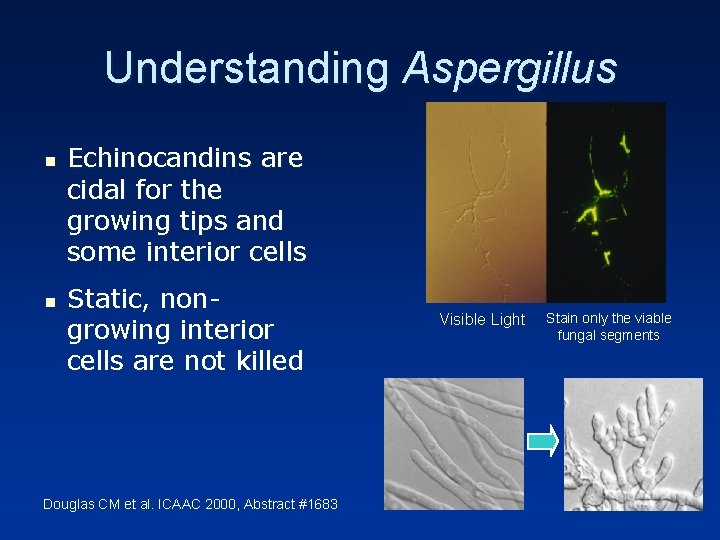
Understanding Aspergillus n n Echinocandins are cidal for the growing tips and some interior cells Static, nongrowing interior cells are not killed Douglas CM et al. ICAAC 2000, Abstract #1683 Visible Light Stain only the viable fungal segments
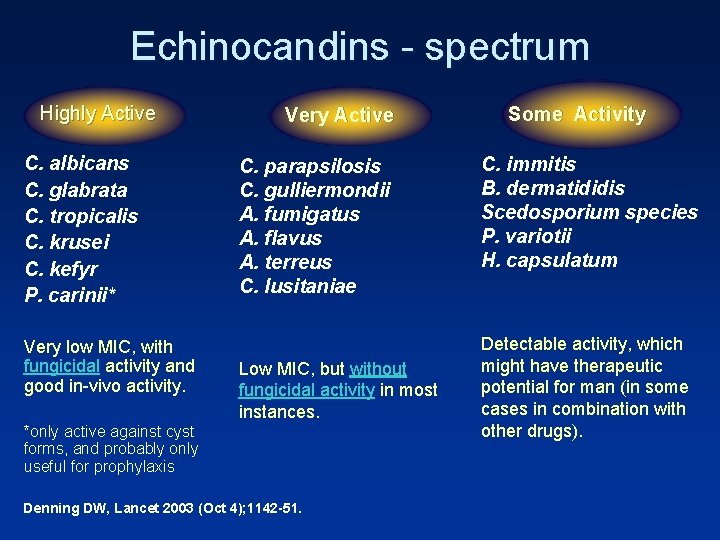
Echinocandins - spectrum Highly Active C. albicans C. glabrata C. tropicalis C. krusei C. kefyr P. carinii* Very low MIC, with fungicidal activity and good in-vivo activity. Very Active C. parapsilosis C. gulliermondii A. fumigatus A. flavus A. terreus C. lusitaniae Low MIC, but without fungicidal activity in most instances. *only active against cyst forms, and probably only useful for prophylaxis Denning DW, Lancet 2003 (Oct 4); 1142 -51. Some Activity C. immitis B. dermatididis Scedosporium species P. variotii H. capsulatum Detectable activity, which might have therapeutic potential for man (in some cases in combination with other drugs).
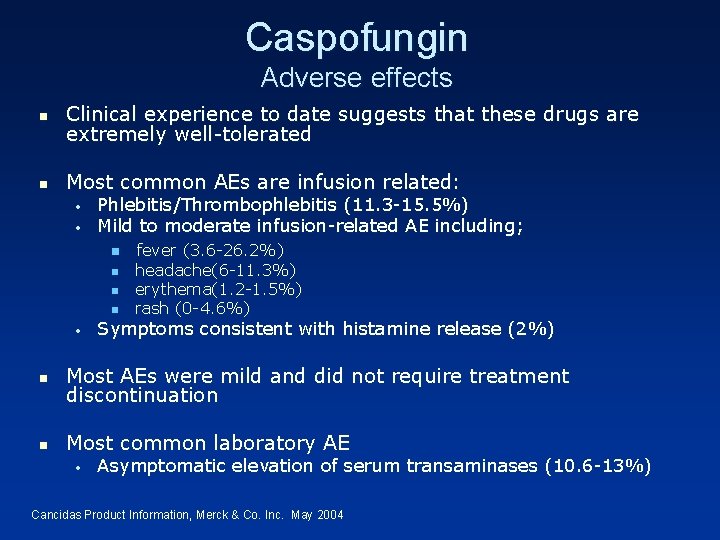
Caspofungin Adverse effects n Clinical experience to date suggests that these drugs are extremely well-tolerated n Most common AEs are infusion related: • • Phlebitis/Thrombophlebitis (11. 3 -15. 5%) Mild to moderate infusion-related AE including; n n • fever (3. 6 -26. 2%) headache(6 -11. 3%) erythema(1. 2 -1. 5%) rash (0 -4. 6%) Symptoms consistent with histamine release (2%) n Most AEs were mild and did not require treatment discontinuation n Most common laboratory AE • Asymptomatic elevation of serum transaminases (10. 6 -13%) Cancidas Product Information, Merck & Co. Inc. May 2004
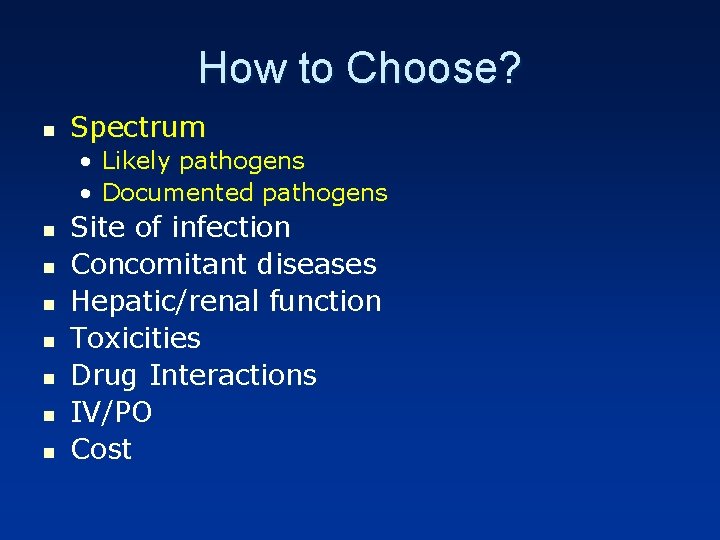
How to Choose? n Spectrum • Likely pathogens • Documented pathogens n n n n Site of infection Concomitant diseases Hepatic/renal function Toxicities Drug Interactions IV/PO Cost
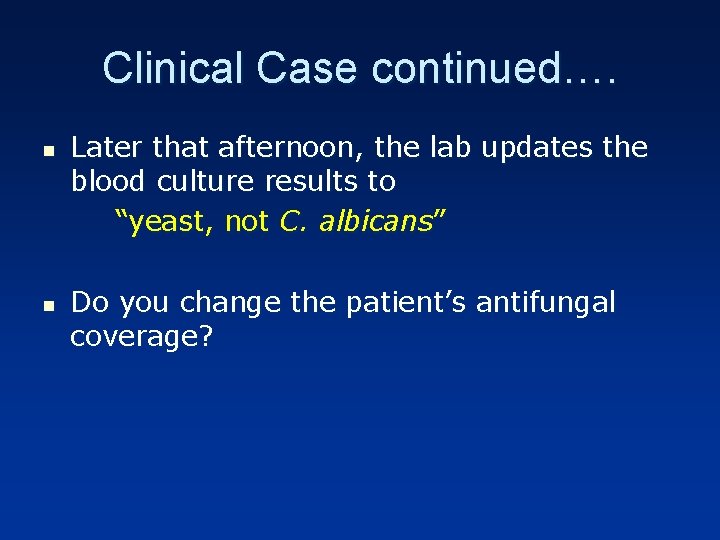
Clinical Case continued…. n n Later that afternoon, the lab updates the blood culture results to “yeast, not C. albicans” Do you change the patient’s antifungal coverage?
Is “yeast, not C. albicans” the same as fluconazole-resistant yeast? ? ? Sometimes, but not always…!
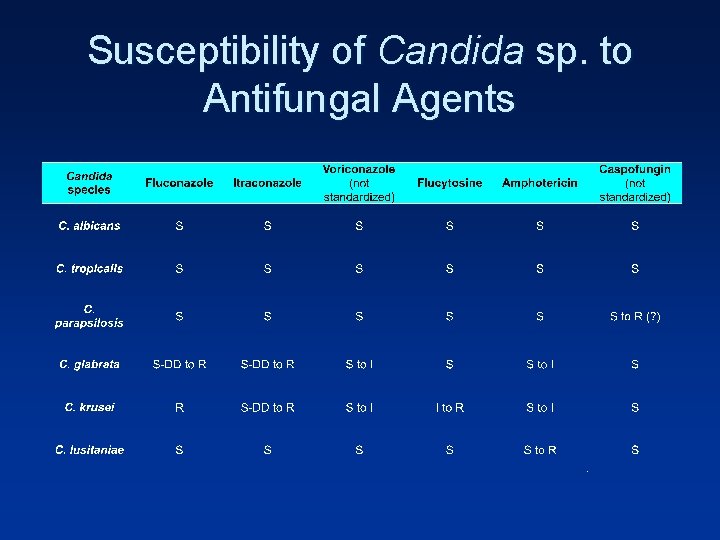
Susceptibility of Candida sp. to Antifungal Agents
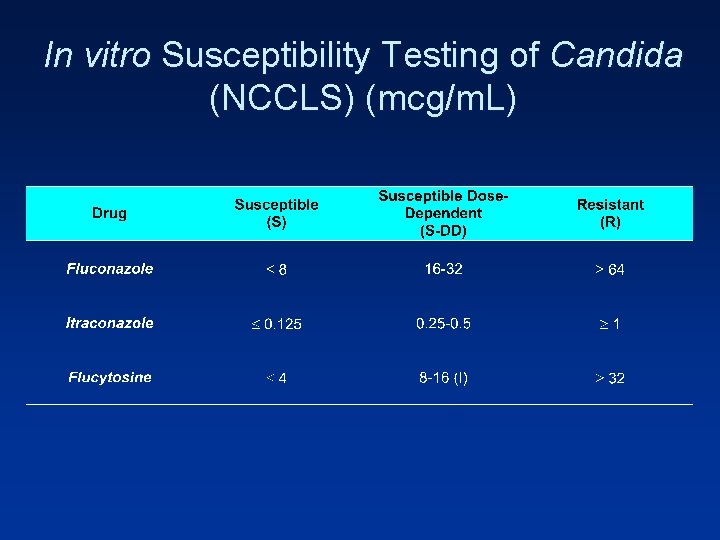
In vitro Susceptibility Testing of Candida (NCCLS) (mcg/m. L)
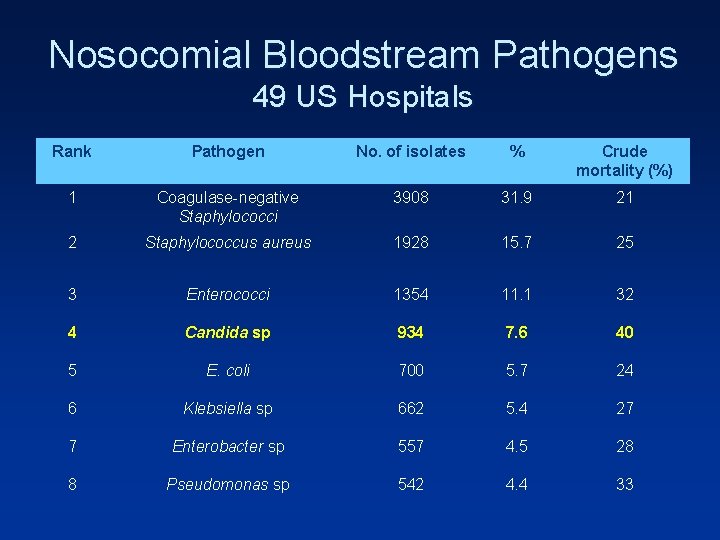
Nosocomial Bloodstream Pathogens 49 US Hospitals Rank Pathogen No. of isolates % Crude mortality (%) 1 Coagulase-negative Staphylococci 3908 31. 9 21 2 Staphylococcus aureus 1928 15. 7 25 3 Enterococci 1354 11. 1 32 4 Candida sp 934 7. 6 40 5 E. coli 700 5. 7 24 6 Klebsiella sp 662 5. 4 27 7 Enterobacter sp 557 4. 5 28 8 Pseudomonas sp 542 4. 4 33
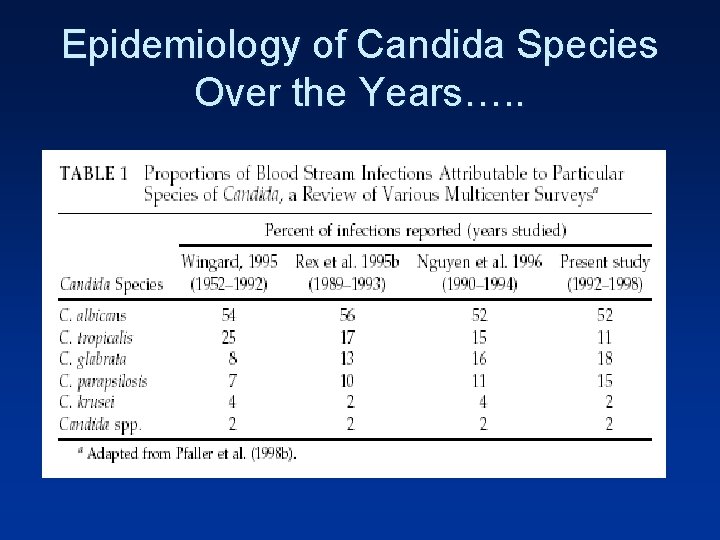
Epidemiology of Candida Species Over the Years…. .
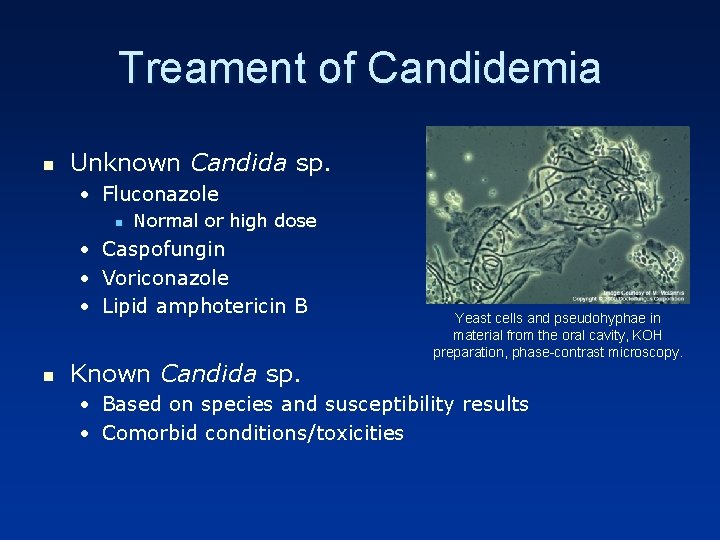
Treament of Candidemia n Unknown Candida sp. • Fluconazole n • • • n Normal or high dose Caspofungin Voriconazole Lipid amphotericin B Known Candida sp. Yeast cells and pseudohyphae in material from the oral cavity, KOH preparation, phase-contrast microscopy. • Based on species and susceptibility results • Comorbid conditions/toxicities
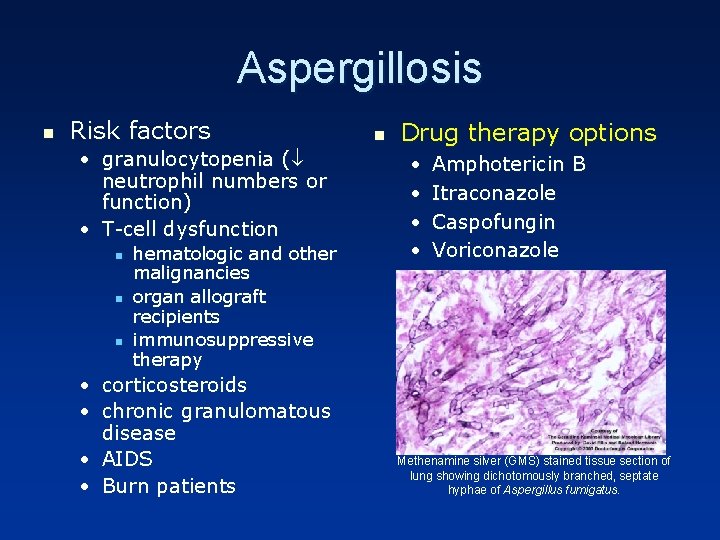
Aspergillosis n Risk factors • granulocytopenia ( neutrophil numbers or function) • T-cell dysfunction n hematologic and other malignancies organ allograft recipients immunosuppressive therapy • corticosteroids • chronic granulomatous disease • AIDS • Burn patients n Drug therapy options • • Amphotericin B Itraconazole Caspofungin Voriconazole Methenamine silver (GMS) stained tissue section of lung showing dichotomously branched, septate hyphae of Aspergillus fumigatus.
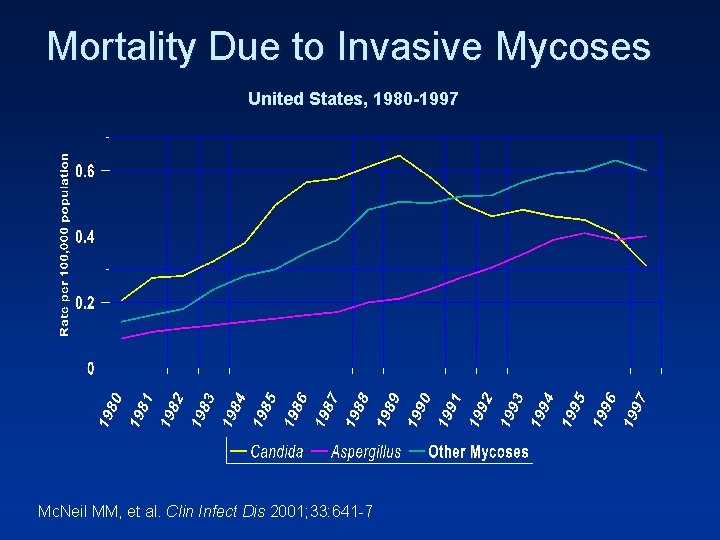
Mortality Due to Invasive Mycoses United States, 1980 -1997 Mc. Neil MM, et al. Clin Infect Dis 2001; 33: 641 -7
Combination therapy? ? ? ………
Current Therapies: Mechanism of Action Agent Fungal Cell Target Activity Amphotericin B 1 Fungal cell membrane 1 Binds to ergosterol; causes cell death 1 Azoles 2 Fungal cell membrane 2 Inhibits CYP 450 enzyme responsible for ergosterol synthesis; damages cytoplasmic membrane 2 Caspofungin acetate (Cancidas®) Fungal cell wall Inhibits glucan synthesis; disrupts cell -wall structure 1. 2. Fungizone [package insert]. Sporanox® [package insert].
Combination Antifungal Therapy n Fungi more difficulty to diagnose, less amenable to treatment, and associated with highest attributable mortality compared to bacterial pathogens • Often consider combination therapy in refractory mycoses n Benefits • • n Improved clinical and microbiologic outcome Decreased toxicity Decreased likelihood of resistance Broader spectrum in empiric therapy Little objective clinical data

Estimated Antifungal Costs Drug Dose Route Cost per day Fluconazole 400 mg q 24 h PO IV $22 $124 Itraconazole 200 mg q 12 h 200 mg q 24 h IV $340 $170 70 mg q 24 h IV $7 Abelcet 350 mg q 24 h IV $330 Ambisome 350 mg q 24 h IV $570 70 mg x 1 50 mg q 24 h IV $400 $310 420 mg q 12 h 280 mg q 12 h 200 mg q 12 h IV IV PO $490 $290 $60 Conv amphotericin B Caspofungin (Cancidas) Voriconazole (Vfend)
How to Choose? n Spectrum • Likely pathogens • Documented pathogens n n n n Site of infection Concomitant diseases Hepatic/renal function Toxicities Drug Interactions IV/PO Cost
Conclusions n Fungal infections in immunocompromised hosts associated with high mortality • Treatment options AND the host are less than ideal n n Current and future antifungal agents associated with advantages and disadvantages Optimize therapy to improve outcome • Every clinical situation is different

Anti-Tuberculosis Agents
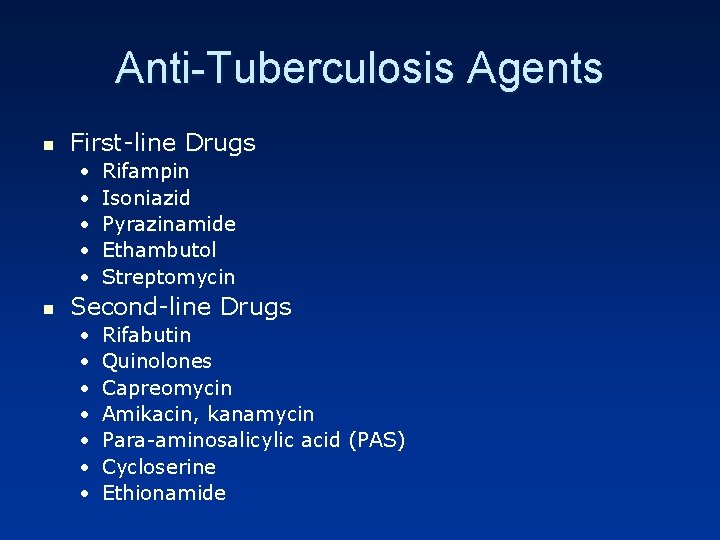
Anti-Tuberculosis Agents n First-line Drugs • • • n Rifampin Isoniazid Pyrazinamide Ethambutol Streptomycin Second-line Drugs • • Rifabutin Quinolones Capreomycin Amikacin, kanamycin Para-aminosalicylic acid (PAS) Cycloserine Ethionamide
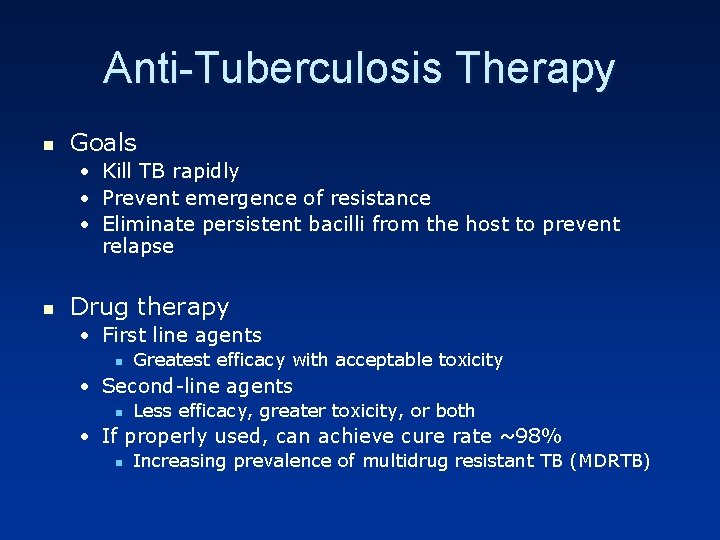
Anti-Tuberculosis Therapy n Goals • Kill TB rapidly • Prevent emergence of resistance • Eliminate persistent bacilli from the host to prevent relapse n Drug therapy • First line agents n Greatest efficacy with acceptable toxicity • Second-line agents n Less efficacy, greater toxicity, or both • If properly used, can achieve cure rate ~98% n Increasing prevalence of multidrug resistant TB (MDRTB)
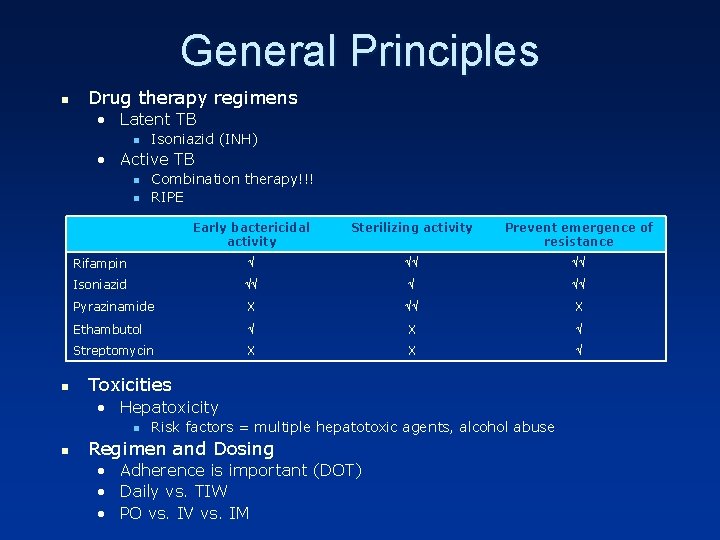
General Principles n Drug therapy regimens • Latent TB n Isoniazid (INH) • Active TB n n n Combination therapy!!! RIPE Early bactericidal activity Sterilizing activity Prevent emergence of resistance Rifampin Isoniazid Pyrazinamide X X Ethambutol X Streptomycin X X Toxicities • Hepatoxicity n n Risk factors = multiple hepatotoxic agents, alcohol abuse Regimen and Dosing • Adherence is important (DOT) • Daily vs. TIW • PO vs. IV vs. IM
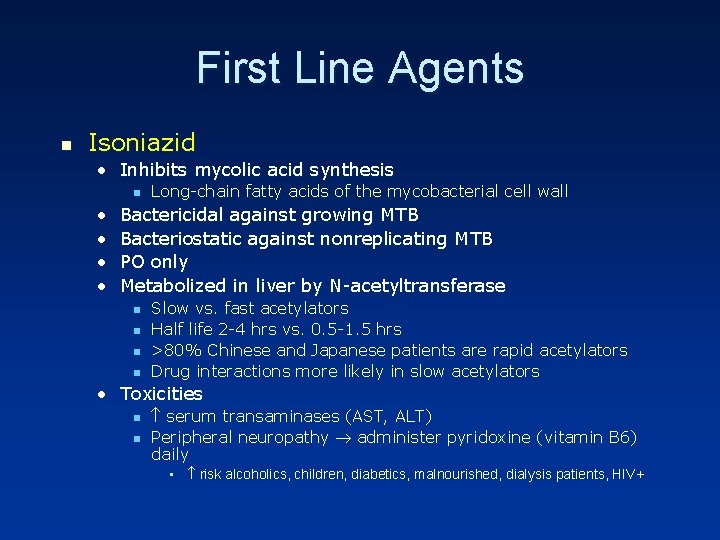
First Line Agents n Isoniazid • Inhibits mycolic acid synthesis n • • Long-chain fatty acids of the mycobacterial cell wall Bactericidal against growing MTB Bacteriostatic against nonreplicating MTB PO only Metabolized in liver by N-acetyltransferase n n Slow vs. fast acetylators Half life 2 -4 hrs vs. 0. 5 -1. 5 hrs >80% Chinese and Japanese patients are rapid acetylators Drug interactions more likely in slow acetylators • Toxicities n n serum transaminases (AST, ALT) Peripheral neuropathy administer pyridoxine (vitamin B 6) daily • risk alcoholics, children, diabetics, malnourished, dialysis patients, HIV+
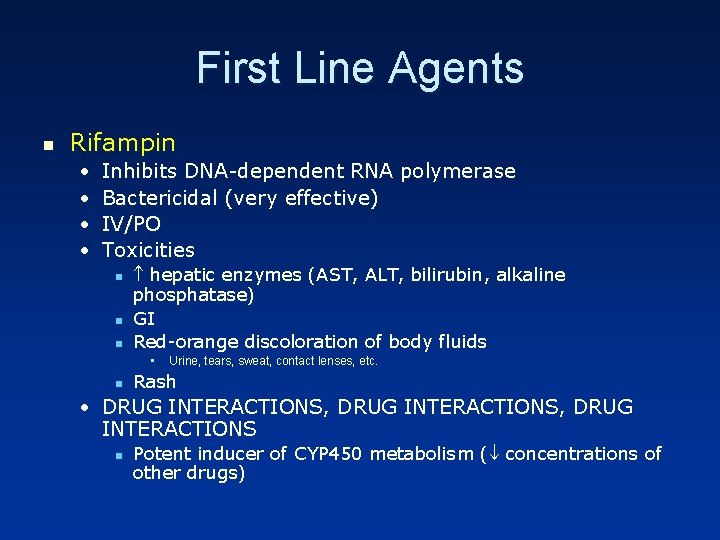
First Line Agents n Rifampin • • Inhibits DNA-dependent RNA polymerase Bactericidal (very effective) IV/PO Toxicities n n n hepatic enzymes (AST, ALT, bilirubin, alkaline phosphatase) GI Red-orange discoloration of body fluids • n Urine, tears, sweat, contact lenses, etc. Rash • DRUG INTERACTIONS, DRUG INTERACTIONS n Potent inducer of CYP 450 metabolism ( concentrations of other drugs)
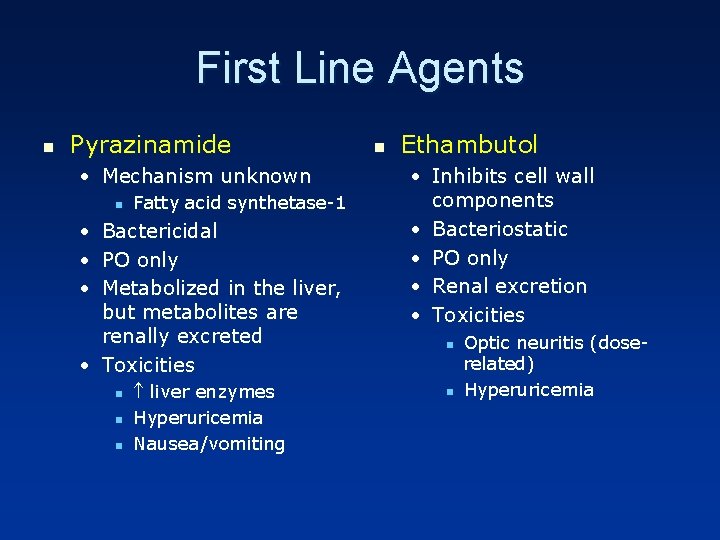
First Line Agents n Pyrazinamide • Mechanism unknown n Fatty acid synthetase-1 • • • Bactericidal PO only Metabolized in the liver, but metabolites are renally excreted • Toxicities n n n liver enzymes Hyperuricemia Nausea/vomiting n Ethambutol • Inhibits cell wall components • Bacteriostatic • PO only • Renal excretion • Toxicities n n Optic neuritis (doserelated) Hyperuricemia
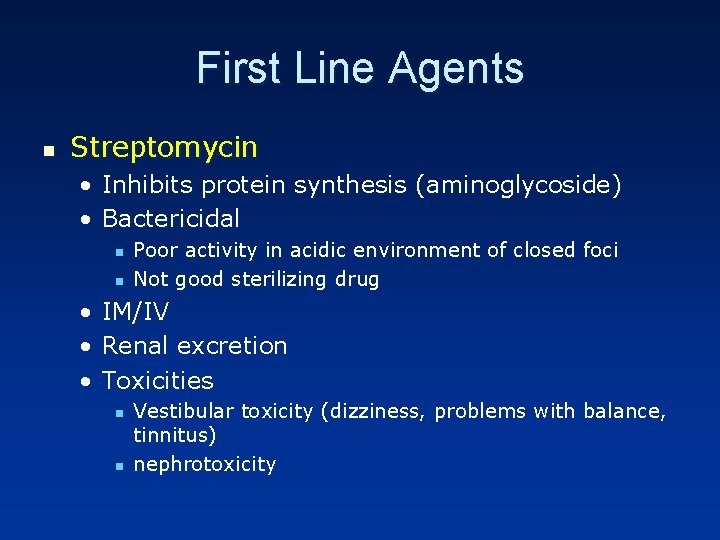
First Line Agents n Streptomycin • Inhibits protein synthesis (aminoglycoside) • Bactericidal n n • • • Poor activity in acidic environment of closed foci Not good sterilizing drug IM/IV Renal excretion Toxicities n n Vestibular toxicity (dizziness, problems with balance, tinnitus) nephrotoxicity
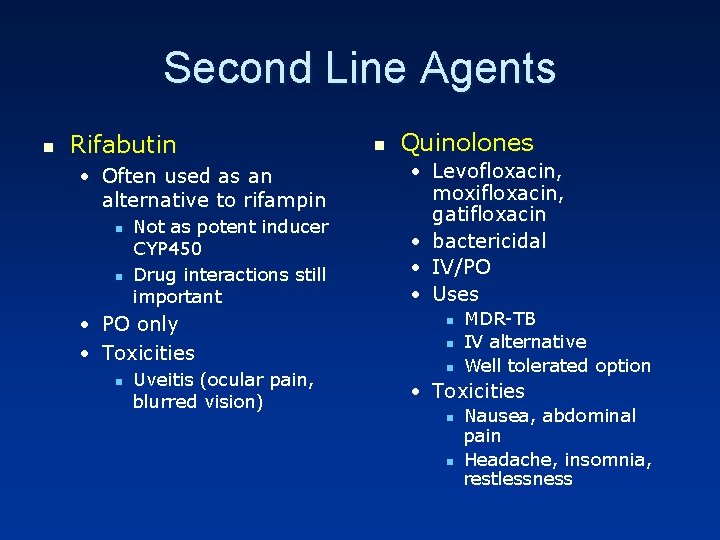
Second Line Agents n Rifabutin • Often used as an alternative to rifampin n n Not as potent inducer CYP 450 Drug interactions still important • PO only • Toxicities n Uveitis (ocular pain, blurred vision) n Quinolones • Levofloxacin, moxifloxacin, gatifloxacin • bactericidal • IV/PO • Uses n n n MDR-TB IV alternative Well tolerated option • Toxicities n n Nausea, abdominal pain Headache, insomnia, restlessness
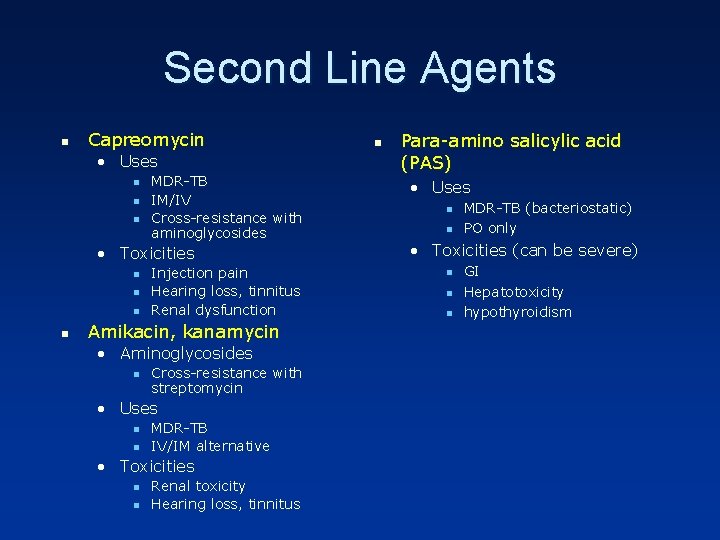
Second Line Agents n Capreomycin • Uses n n n MDR-TB IM/IV Cross-resistance with aminoglycosides • Toxicities n n Injection pain Hearing loss, tinnitus Renal dysfunction Amikacin, kanamycin • Aminoglycosides n Cross-resistance with streptomycin • Uses n n MDR-TB IV/IM alternative • Toxicities n n Renal toxicity Hearing loss, tinnitus n Para-amino salicylic acid (PAS) • Uses n n MDR-TB (bacteriostatic) PO only • Toxicities (can be severe) n n n GI Hepatotoxicity hypothyroidism
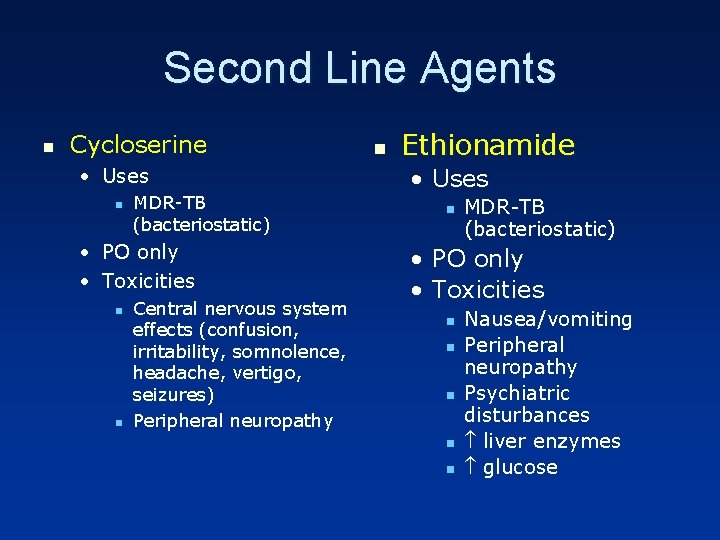
Second Line Agents n Cycloserine • Uses n MDR-TB (bacteriostatic) • PO only • Toxicities n n Central nervous system effects (confusion, irritability, somnolence, headache, vertigo, seizures) Peripheral neuropathy n Ethionamide • Uses n MDR-TB (bacteriostatic) • PO only • Toxicities n n n Nausea/vomiting Peripheral neuropathy Psychiatric disturbances liver enzymes glucose
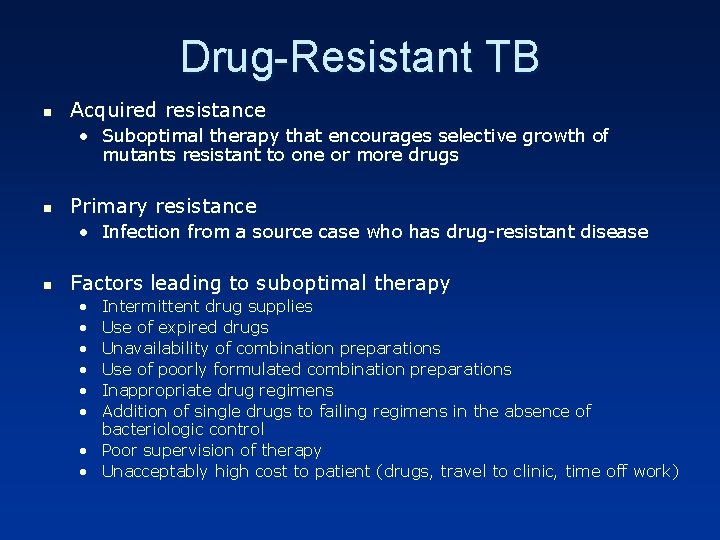
Drug-Resistant TB n Acquired resistance • Suboptimal therapy that encourages selective growth of mutants resistant to one or more drugs n Primary resistance • Infection from a source case who has drug-resistant disease n Factors leading to suboptimal therapy • • • Intermittent drug supplies Use of expired drugs Unavailability of combination preparations Use of poorly formulated combination preparations Inappropriate drug regimens Addition of single drugs to failing regimens in the absence of bacteriologic control • Poor supervision of therapy • Unacceptably high cost to patient (drugs, travel to clinic, time off work)
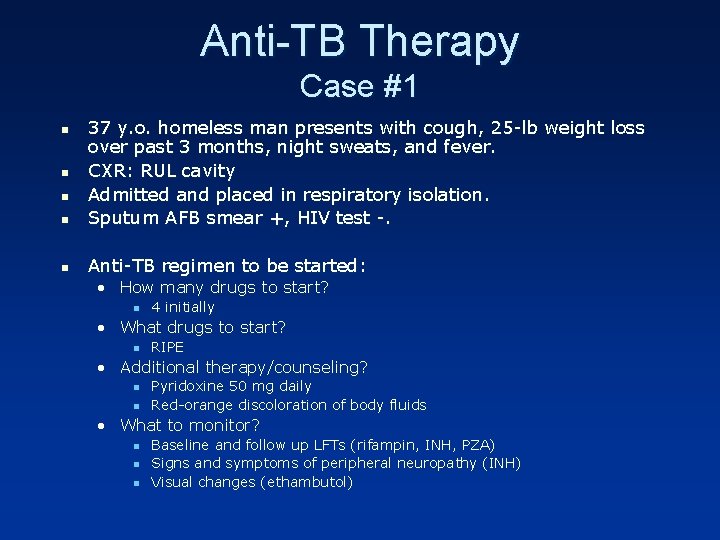
Anti-TB Therapy Case #1 n 37 y. o. homeless man presents with cough, 25 -lb weight loss over past 3 months, night sweats, and fever. CXR: RUL cavity Admitted and placed in respiratory isolation. Sputum AFB smear +, HIV test -. n Anti-TB regimen to be started: n n n • How many drugs to start? n 4 initially • What drugs to start? n RIPE • Additional therapy/counseling? n n Pyridoxine 50 mg daily Red-orange discoloration of body fluids • What to monitor? n n n Baseline and follow up LFTs (rifampin, INH, PZA) Signs and symptoms of peripheral neuropathy (INH) Visual changes (ethambutol)
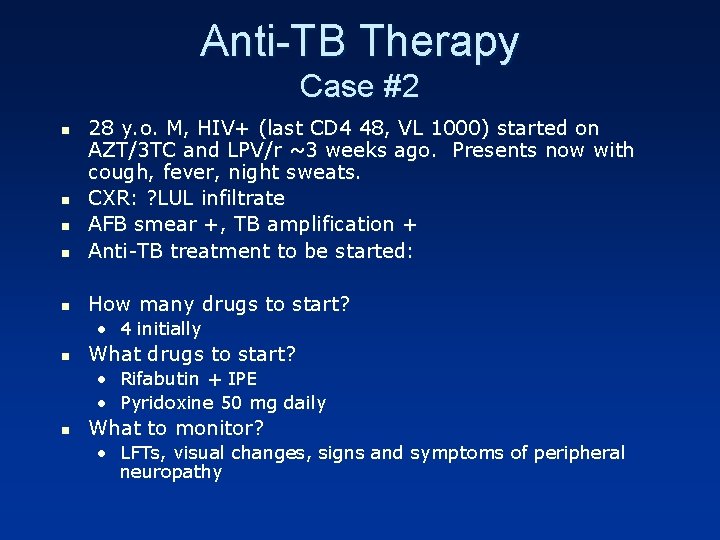
Anti-TB Therapy Case #2 n 28 y. o. M, HIV+ (last CD 4 48, VL 1000) started on AZT/3 TC and LPV/r ~3 weeks ago. Presents now with cough, fever, night sweats. CXR: ? LUL infiltrate AFB smear +, TB amplification + Anti-TB treatment to be started: n How many drugs to start? n n n • 4 initially n What drugs to start? • Rifabutin + IPE • Pyridoxine 50 mg daily n What to monitor? • LFTs, visual changes, signs and symptoms of peripheral neuropathy
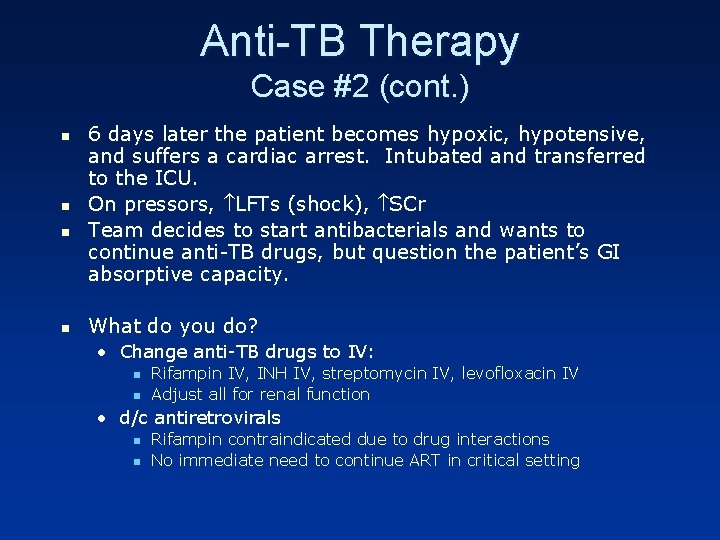
Anti-TB Therapy Case #2 (cont. ) n n 6 days later the patient becomes hypoxic, hypotensive, and suffers a cardiac arrest. Intubated and transferred to the ICU. On pressors, LFTs (shock), SCr Team decides to start antibacterials and wants to continue anti-TB drugs, but question the patient’s GI absorptive capacity. What do you do? • Change anti-TB drugs to IV: n n Rifampin IV, INH IV, streptomycin IV, levofloxacin IV Adjust all for renal function • d/c antiretrovirals n n Rifampin contraindicated due to drug interactions No immediate need to continue ART in critical setting

QUESTIONS?
- Slides: 66