
ANTIEPILEPTIC DRUGS Epilepsy It is a Chronic medical


- Slides: 63
ANTIEPILEPTIC DRUGS
Epilepsy • It is a Chronic medical condition produced by sudden changes in the electrical function of the brain. • It is a condition characterized by recurrent episodes of seizures.
• Seizure- a paroxysmal abnormal discharge at high frequency from neurons in cerebral cortex. • Convulsions- involuntary, violent, spasmodic contractions of skeletal muscles.
Etiology • Congenital defects, head injuries, trauma, hypoxia • Infection e. g. meningitis, brain abscess, viral encephalitis • Concussion, depressed skull, fractures • Brain tumors (including tuberculoma), vascular occlusion • Drug withdrawal, e. g. CNS depressants • Fever in children (febrile convulsion) • Hypoglycemia, hypocalcemia • Photo epilepsy
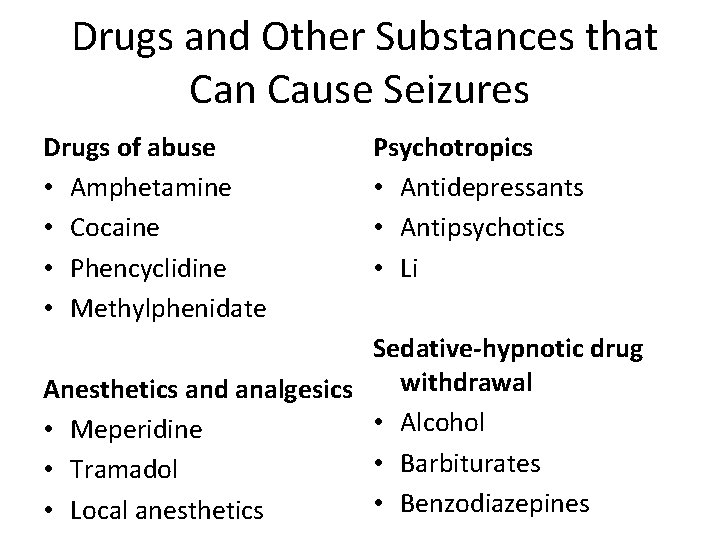
Drugs and Other Substances that Can Cause Seizures Drugs of abuse • Amphetamine • Cocaine • Phencyclidine • Methylphenidate Psychotropics • Antidepressants • Antipsychotics • Li Sedative-hypnotic drug withdrawal Anesthetics and analgesics • Alcohol • Meperidine • Barbiturates • Tramadol • Benzodiazepines • Local anesthetics
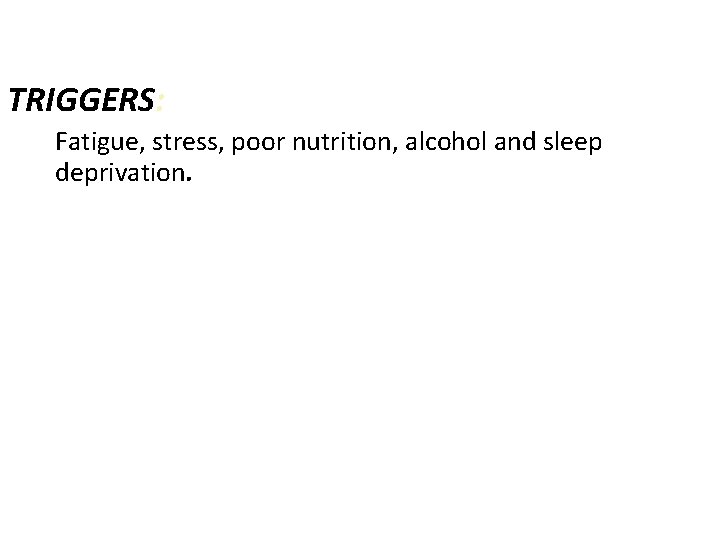
TRIGGERS: Fatigue, stress, poor nutrition, alcohol and sleep deprivation.
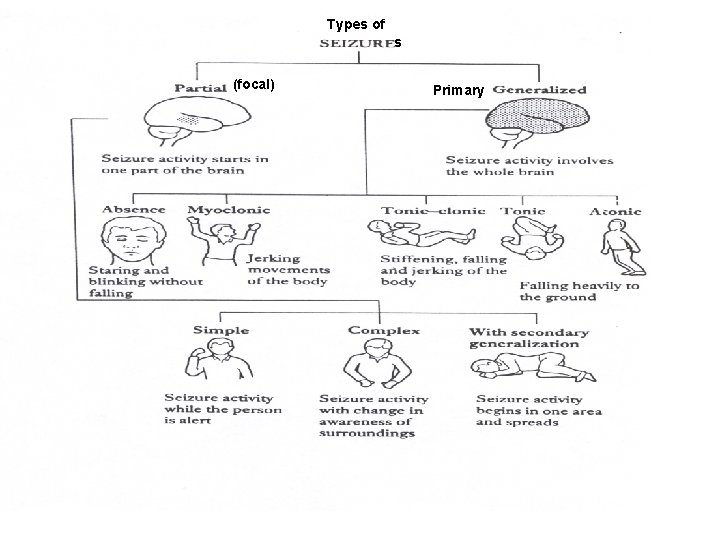
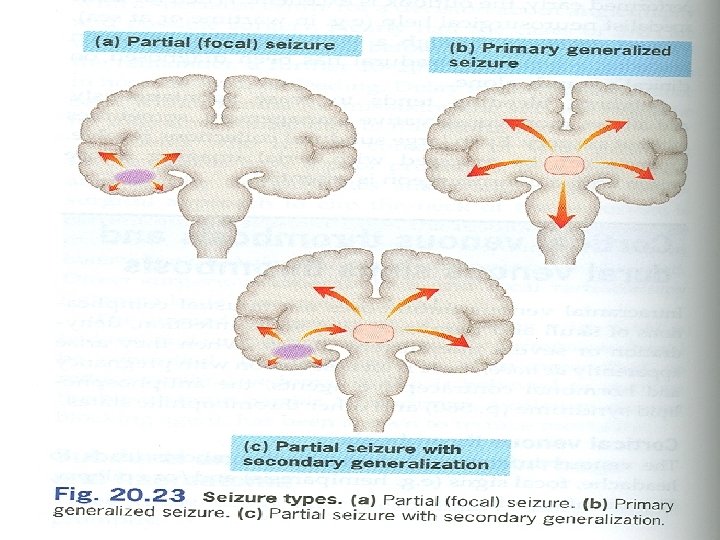
Types of s (focal) Primary
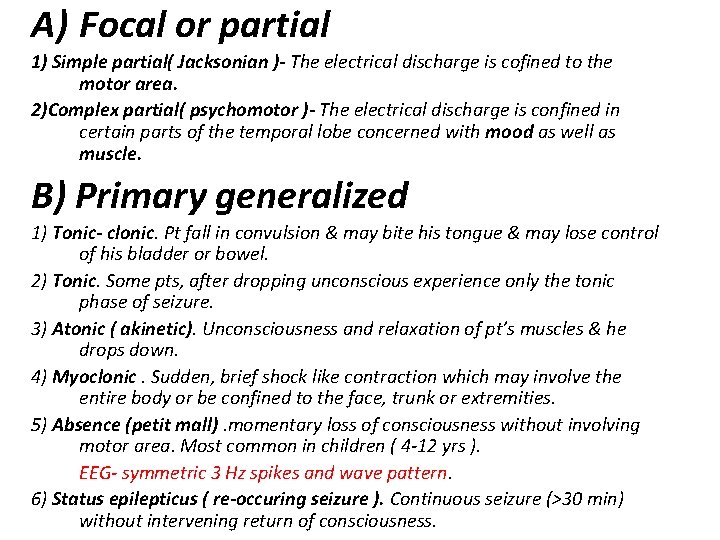
A) Focal or partial 1) Simple partial( Jacksonian )- The electrical discharge is cofined to the motor area. 2)Complex partial( psychomotor )- The electrical discharge is confined in certain parts of the temporal lobe concerned with mood as well as muscle. B) Primary generalized 1) Tonic- clonic. Pt fall in convulsion & may bite his tongue & may lose control of his bladder or bowel. 2) Tonic. Some pts, after dropping unconscious experience only the tonic phase of seizure. 3) Atonic ( akinetic). Unconsciousness and relaxation of pt’s muscles & he drops down. 4) Myoclonic. Sudden, brief shock like contraction which may involve the entire body or be confined to the face, trunk or extremities. 5) Absence (petit mall). momentary loss of consciousness without involving motor area. Most common in children ( 4 -12 yrs ). EEG- symmetric 3 Hz spikes and wave pattern. 6) Status epilepticus ( re-occuring seizure ). Continuous seizure (>30 min) without intervening return of consciousness.
• Lennox-Gastaut syndrome- occurs in children and is defined by the following triad: • (1) multiple seizure • (2) EEG showing slow (<3 Hz) spike-and-wave discharges • (3) impaired cognitive function, associated with CNS disease or dysfunction
Mesial temporal lobe epilepsy (MTLE) • characteristic hippocampal sclerosis • refractory to treatment with anticonvulsants but responds extremely well to surgical intervention.
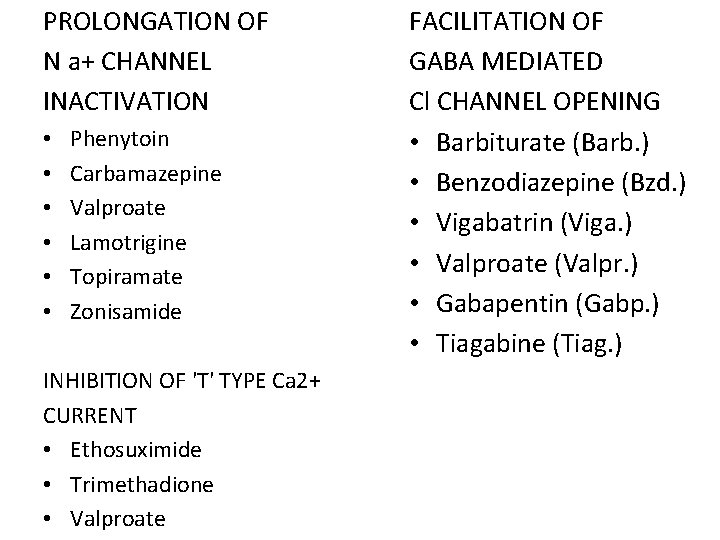
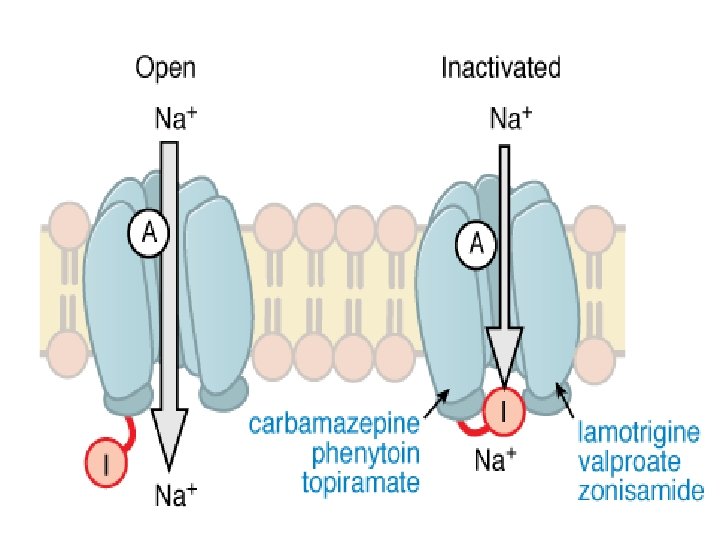
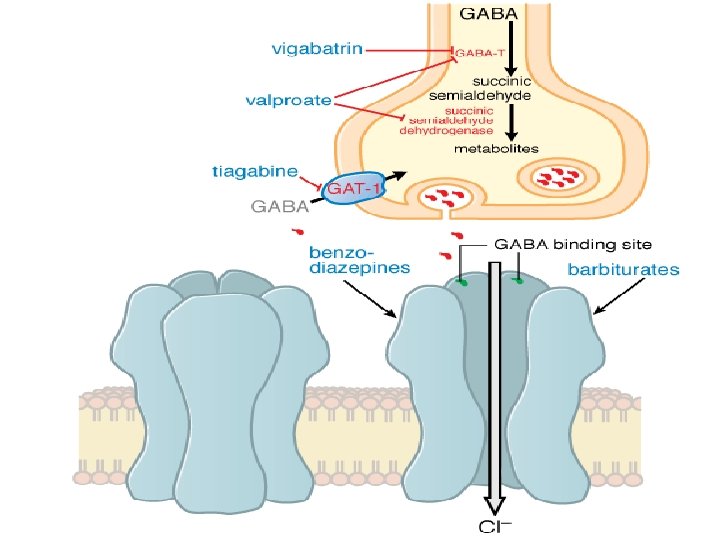
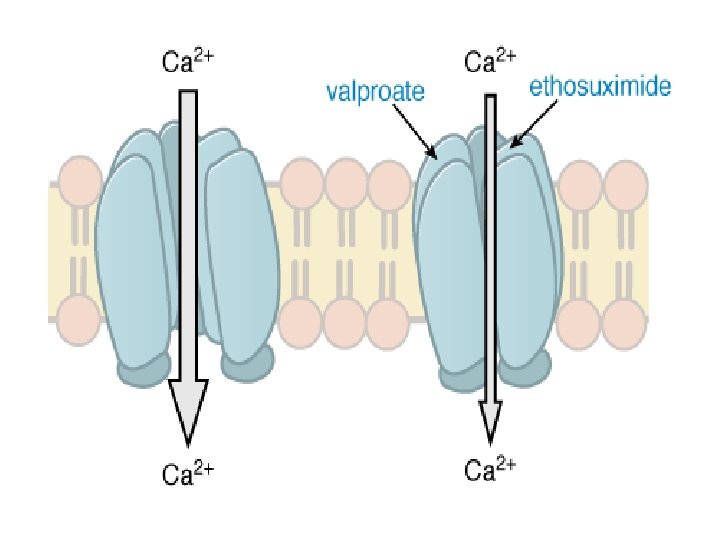
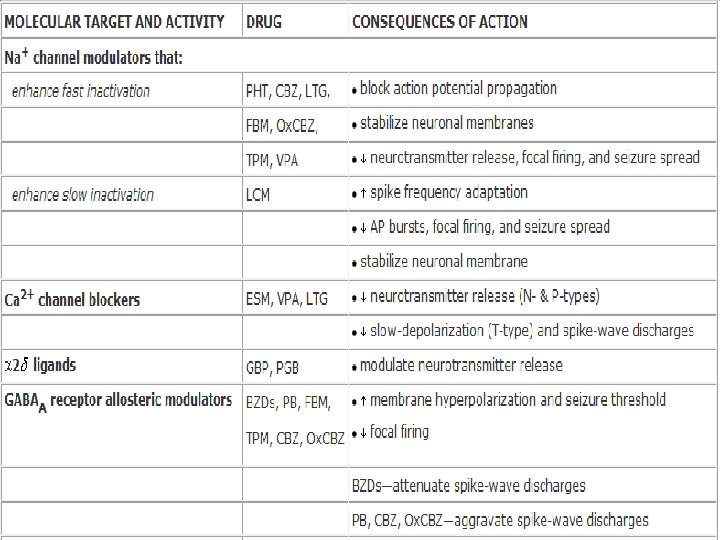
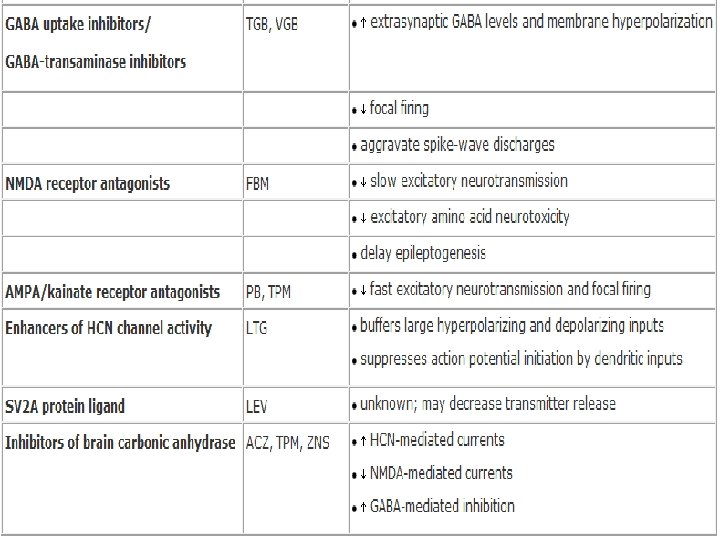
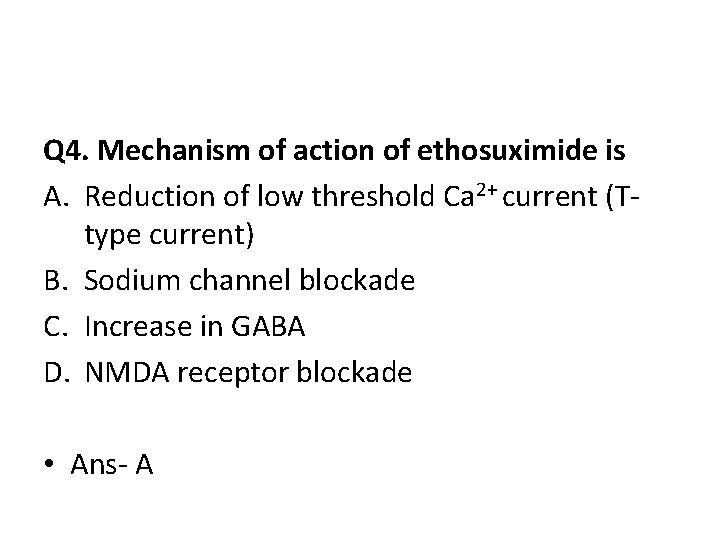
PROLONGATION OF N a+ CHANNEL INACTIVATION • • • Phenytoin Carbamazepine Valproate Lamotrigine Topiramate Zonisamide INHIBITION OF 'T' TYPE Ca 2+ CURRENT • Ethosuximide • Trimethadione • Valproate FACILITATION OF GABA MEDIATED Cl CHANNEL OPENING • Barbiturate (Barb. ) • Benzodiazepine (Bzd. ) • Vigabatrin (Viga. ) • Valproate (Valpr. ) • Gabapentin (Gabp. ) • Tiagabine (Tiag. )
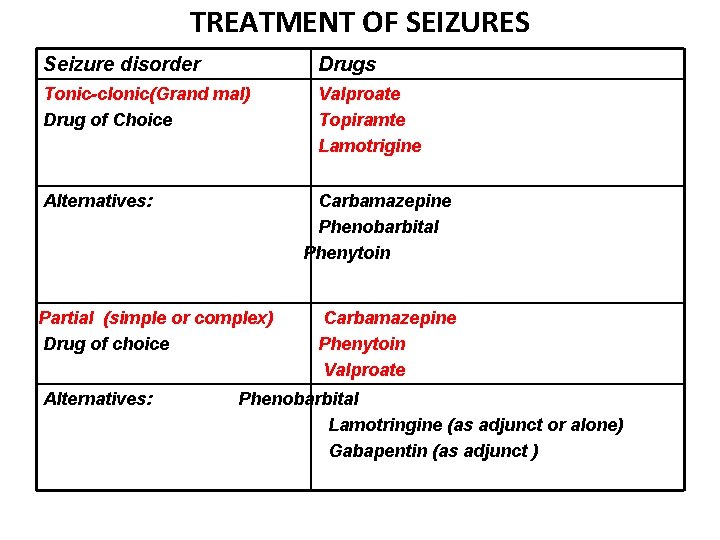
TREATMENT OF SEIZURES Seizure disorder Drugs Tonic-clonic(Grand mal) Drug of Choice Valproate Topiramte Lamotrigine Alternatives: Carbamazepine Phenobarbital Phenytoin Partial (simple or complex) Drug of choice Alternatives: Carbamazepine Phenytoin Valproate Phenobarbital Lamotringine (as adjunct or alone) Gabapentin (as adjunct )
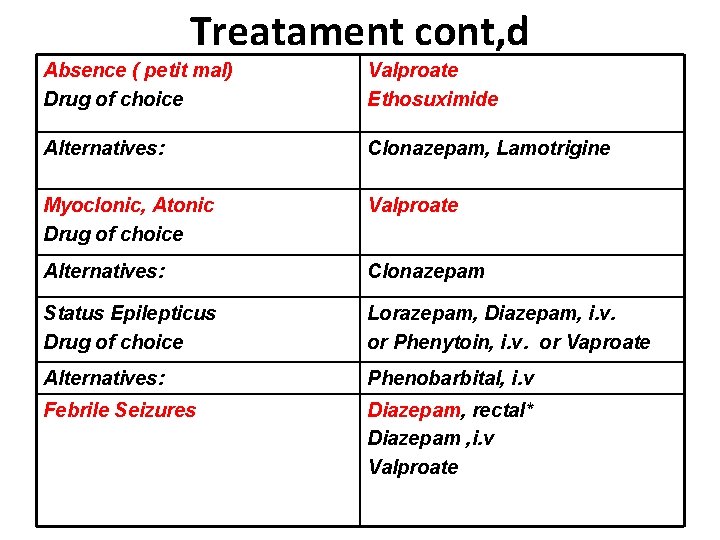
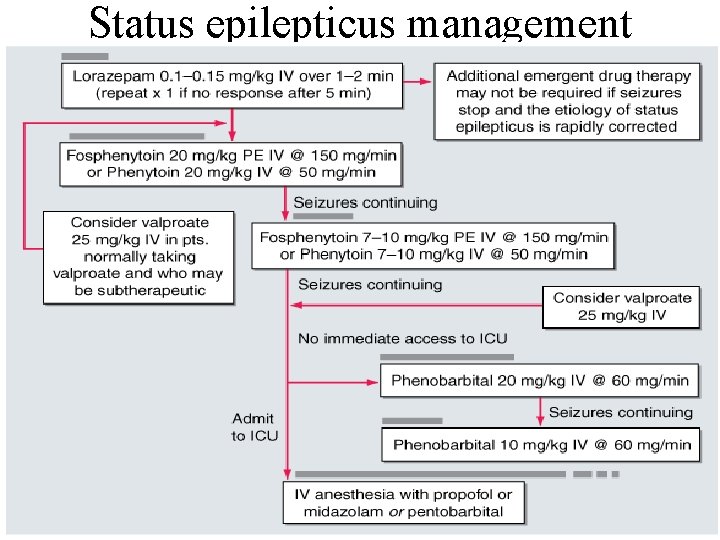
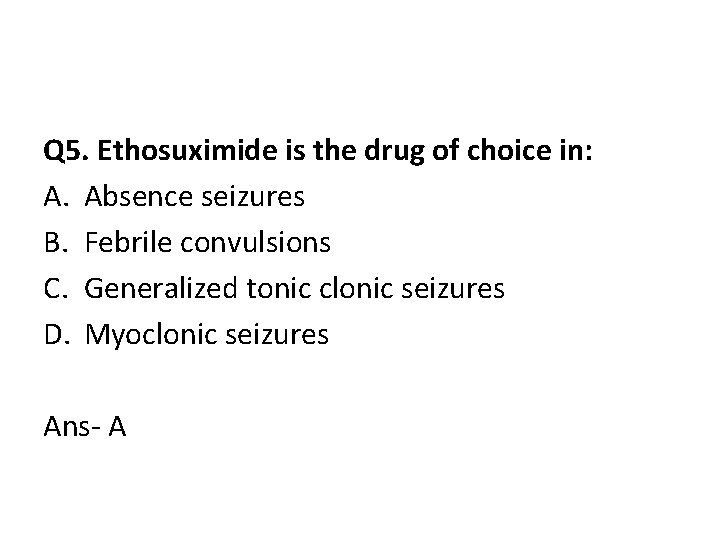
Treatament cont, d Absence ( petit mal) Drug of choice Valproate Ethosuximide Alternatives: Clonazepam, Lamotrigine Myoclonic, Atonic Drug of choice Valproate Alternatives: Clonazepam Status Epilepticus Drug of choice Lorazepam, Diazepam, i. v. or Phenytoin, i. v. or Vaproate Alternatives: Phenobarbital, i. v Febrile Seizures Diazepam, rectal* Diazepam , i. v Valproate
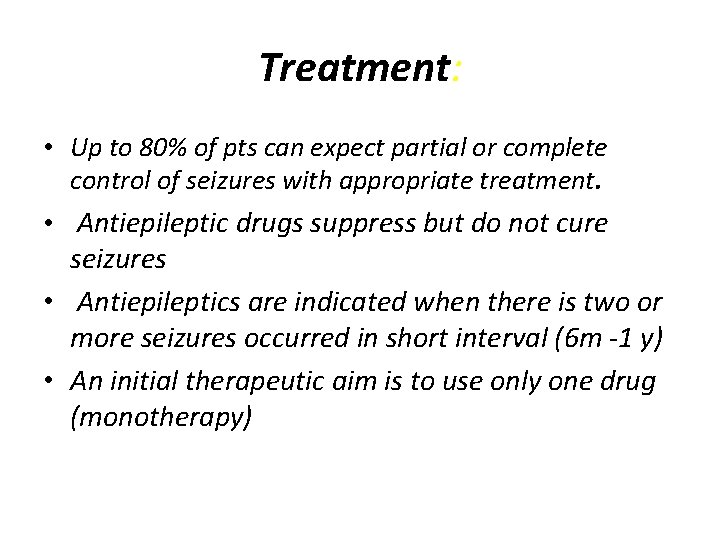
Treatment: • Up to 80% of pts can expect partial or complete control of seizures with appropriate treatment. • Antiepileptic drugs suppress but do not cure seizures • Antiepileptics are indicated when there is two or more seizures occurred in short interval (6 m -1 y) • An initial therapeutic aim is to use only one drug (monotherapy)
Treatment ( Cont. ) • Advantage of monotherapy: • fewer side effects, decreased drug-drug interactions, better compliance, lower costs • Addition of a second drug is likely to result in significant improvement in only approx. 10 % of patients.
Treatment ( Cont. ) • when a total daily dose is increased, sufficient time (about 5 t 1 l 2) should be allowed for the serum drug level to reach a new steady-state level. • The drugs are usually administered orally • The monitoring of plasma drug levels is very useful • Precipitating or aggravating factors can affect seizure control by drugs
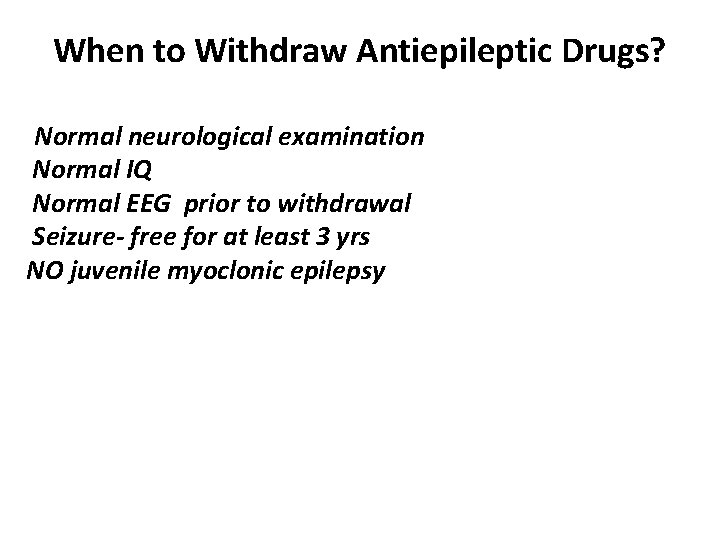
Treatment ( Cont. ) • The sudden withdrawal of drugs should be avoided withdrawal may be considered after seizure- free period of 2 -3 or more years • Relapse rate when antiepileptics are withdrawn is 20 40 %
During pregnancy Safer antiepileptics • Carbamazepine • Oxcarbamazepine • Lamotrigine • Ethosuximide Folic acid supplement
When to Withdraw Antiepileptic Drugs? Normal neurological examination Normal IQ Normal EEG prior to withdrawal Seizure- free for at least 3 yrs NO juvenile myoclonic epilepsy
Status epilepticus management
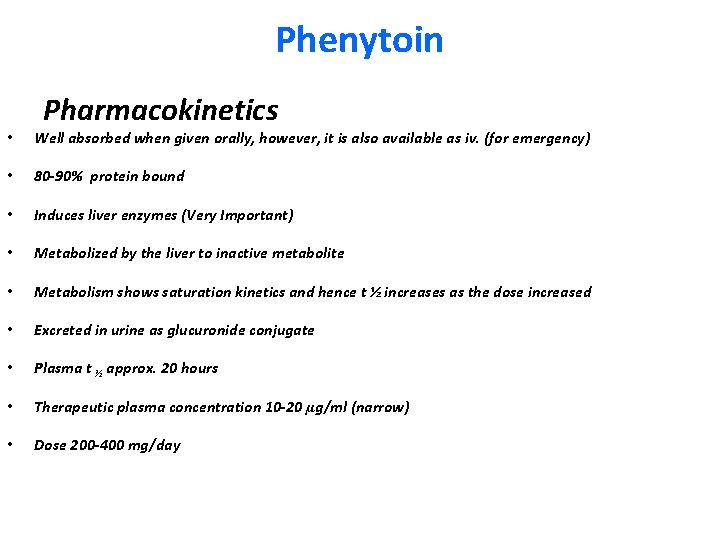
Phenytoin Pharmacokinetics • Well absorbed when given orally, however, it is also available as iv. (for emergency) • 80 -90% protein bound • Induces liver enzymes (Very Important) • Metabolized by the liver to inactive metabolite • Metabolism shows saturation kinetics and hence t ½ increases as the dose increased • Excreted in urine as glucuronide conjugate • Plasma t ½ approx. 20 hours • Therapeutic plasma concentration 10 -20 µg/ml (narrow) • Dose 200 -400 mg/day
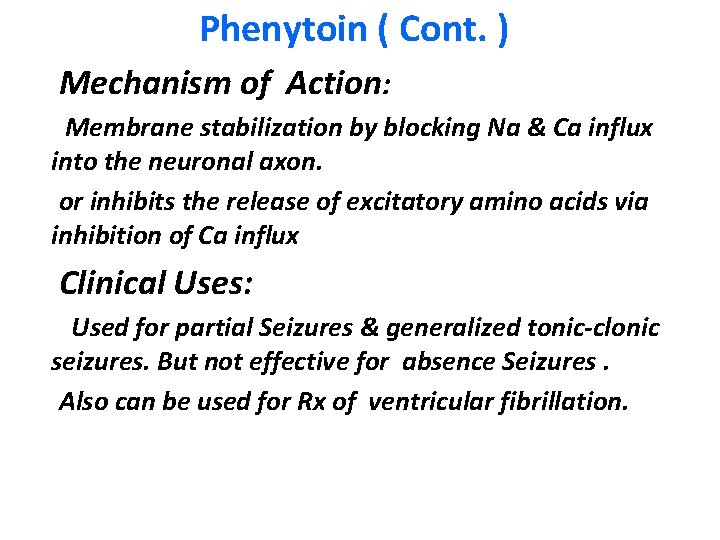
Phenytoin ( Cont. ) Mechanism of Action: Membrane stabilization by blocking Na & Ca influx into the neuronal axon. or inhibits the release of excitatory amino acids via inhibition of Ca influx Clinical Uses: Used for partial Seizures & generalized tonic-clonic seizures. But not effective for absence Seizures. Also can be used for Rx of ventricular fibrillation.
Side effects: Dose Related: • G. I. T upset • Neurological like headache, vertigo, ataxia, diplopia, nystagmus • Sedation • Intimal damage & thrombosis of vein. So rate of injection s/b < 50 mg/min
Side effects of Phenytoin ( Cont. ) Non-dose related: • Hyperplasia of Gingival • Hirsutism • Hypersensitivity reactions (mainly skin rashes and lesions, mouth ulcer) • Hepatitis –rare • Hydantoin syndrome- Fetal malformations- esp. cleft plate, hypoplastic phalanges, microcephaly) • Bleeding disorders (infants) • Osteomalacia due to abnormalities in vit D metabolism • Megaloblastic anaemia
• Side effects of phenytoin ( Cont. ) • Pharmacokinetic Interactions – Inhibitors of liver enzymes elevate its plasma levels e. g. Chloramphenicol, INH, etc. – Inducers of liver enzymes reduce its plasma levels e. g. Carbamazipine; Rifampicin.
CARBAMAZEPINE Its mechanism of action and clinical uses are similar to that of phenytoin. However, it is also commonly used for Rx of mania and trigeminal neuralgia. Pharmacokinetics available as an oral form only Well absorbed 80 % protein bound Strong inducing agent including its own (can lead to failure of other drugs e. g. oral contraceptives, warfarin, etc. Metabolized by the liver
Pharmacokinetics of CBZ( Cont. ) • Excreted in urine as glucuronide conjugate • Plasma t 1/2 approx. 30 hours • Therapeutic plasma concentration 6 -12 µg/ml (narrow). • Dose 200 -800 mg/day (given BID as sustained release form)
• Side Effects of Carbamazepine: G. I upset Drowziness, ataxia and headache; diplopia Hepatotoxicity- rare Congenital malformation (craniofacial anomalies & neural tube defects). • Hyponatraemia & water intoxication. • Late hypersensitivity reaction (erythematous skin rashes, mouth ulceration and lymphadenopathy. • Blood dyscrasias as fetal aplastic anemia (stop medication); mild leukopenia (decrease the dose) • •
Pharmacokinetic interactions of CBZ • Inducers of liver enzymes reduce its plasma level e. g. Phenytoin; Phenobarbital; Rifampicin • inhibitors of liver enzymes elevate its plasma levels e. g. erythromycin, INH , verapamil; Cimetidine
Phenobarbital Mechanism of Action: • Increases the inhibitory neurotransmitters (e. g: GABA ) and decreasing the excitatory transmission.
Sodium Valproate or Valproic Acid Pharmacokinetics : Available as capsule, Syrup, I. V Metabolized by the liver ( inactive ) High oral bioavailability Inhibits metabolism of several drugs such as Carbamazepine; phenytoin, Topiramate and phenobarbital. • Excreted in urine ( glucuronide ) • Plasma t 1/2 approx. 15 hrs • • •
Sodium valproate ( cont. ) Mode of action (by all possible methods) • Increase in GABA content of the brain (inhibits GABA – transaminase and succinic semialdehyde dehydrogenase)
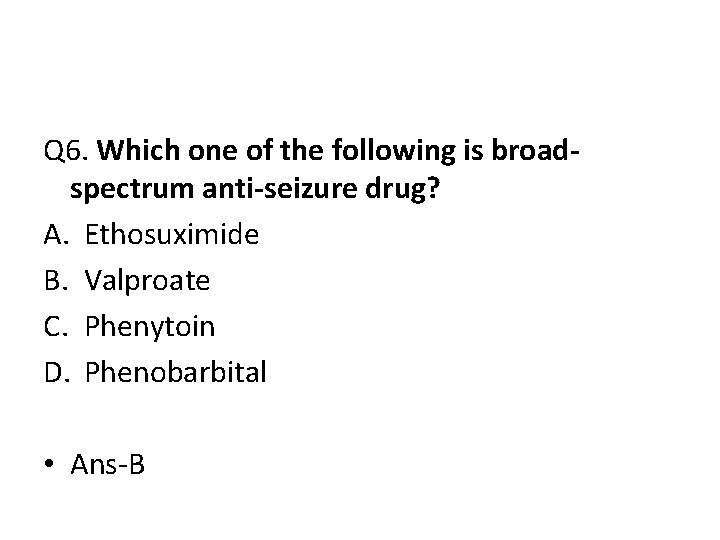
Sodium Valpraote ( cont. ) • Clinical Use: – Very effective against absence, myoclonic seizures. – Also, effective in gen. tonic-clonic siezures (primarly Gen) – Less effective as compared to carbamazepine for partial seizures – Like Carbamazepine also can be used for Rx of mania
• Side Effects of Sod. valproate: • Nausea, vomiting and GIT disturbances (Start with low doses) • Increased appetite & weight gain • Transient hair loss. • Hepatotoxicity • Thrombocytopenia • Neural Tube defect (e. g. Spina bifida) in the offspring of women. (contraindicated in pregnancy)
Newer Antiepileptic Drugs ( Second- Generation ) 1. 2. 3. 4. 5. 6. 7. Vigabatrin 1989 Gabapentin 1993** Lamotrigine 1994** Topiramate 1996** Tiagabine 1997 levetiracetam 1999 Oxcarbazepine 2000 (safety profile similar to CBZ). Hyponatremia is also problem, however it is less likely to cause rash than CBZ. 8. Zonisamide 2000
• NEWER AGENTS DIFFER FROM OLDER DRUGS BY Relatively lack of drug-drug interaction (simple pharmacokinetic profile) Improved tolerability HOWEVER THEY ARE Costly with limited clinical experience
Lamotrigine Pharmacological effects Resembles phenytoin in its pharmacological effects Well absorbed from GIT Metabolised primarily by glucuronidation Does not induce or inhibit C. P-450 isozymes ( its metabolism is inhibitted by valproate ) Plasma t 1/2 approx. 24 hrs. • Mechanism of Action: Inhibits excitatory amino acid release (glutamate & aspartate ) by blockade of Na channels. • Uses: As add-on therapy or as monotherapy • Side effects: • Skin rash, somnolence, blurred vision, diplopia, ataxia, headache, aggression, influenza – like syndrome
Gabapentin • Structural analogue of GABA. May increase the activity of GABA or inhibits re-uptake. Pharmacokinetics: Not bound to proteins Not metabolized and excreted unchanged in urine • Does not induce or inhibit hepatic enzymes (similar to lamotrigine) • Plasma t ½ 5 -7 hours
Gabapentin ( Cont. ) • Side effects: • Somnolence, dizziness, ataxia, fatigue and nystagmus. • Uses: • As an adjunct with other antiepileptics • Pain due to diabetic neuropathy, postherpetic neuralgia
Topiramate • • • Pharmacological Effects: Well absorbed orally ( 80 % ) Food has no effect on absorption Has no effect on microsomal enzymes 9 -17 % protein bound ( minimal ) Mostly excreted unchanged in urine Plasma t 1 l 2 18 -24 hrs Mechanism of Action: Blocks sodium channels (membrane stabilization) and also potentiates the inhibitory effect of GABA.
Topiramate (cont’d) Side effects: • • Psychological or cognitive dysfunction Weight loss Sedation Dizziness Fatigue Urolithiasis Paresthesias (abnormal sensation ) Teratogenecity (in animal but not in human)
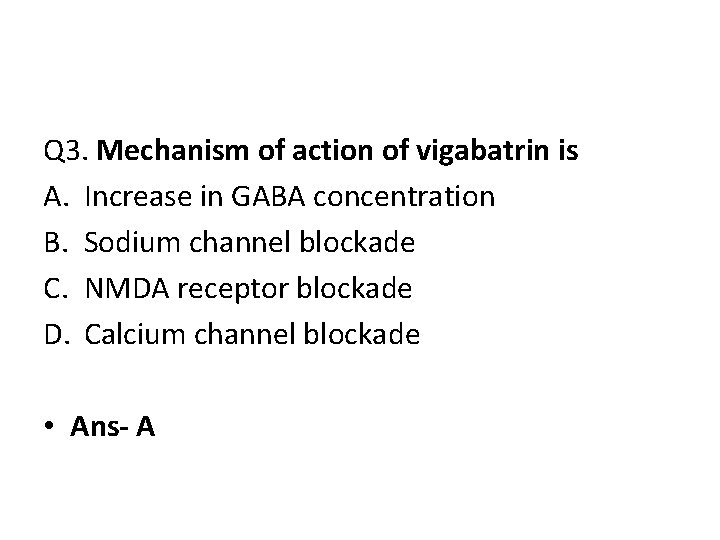
Vigabatrin (restricted) Pharmacological effects: Drug of choice for infantile spasms • Not bound to proteins , Not metabolized and excreted unchanged in urine • Plasma t 1/2 4 -7 hrs Mechanism of action : Inhibits GABA metabolising enzyme & increase GABA content in the brain( similar to valproate). Side effects: Visual field defects, psychosis and depression (limits use).
Zonisamide Pharmacokinetics: • • • Well absorbed from GIT (100 %) Protein binding 40% Extensively metabolized in the liver No effect on liver enzymes Plasma t ½ 50 -68 hrs Mech of action: Prolongation of sodium channel inactivation Clinical Uses: Add-on therapy for partial seizures Side Effects: Drowsiness, ataxia , headache, loss of appetite, nausea & vomiting, Somnolence.
Tiagabine • Adjunctive therapy in partial and generalized tonic-clonic seizures • Pharmacological effects • Bioavailability > 90 % • Highly protein bound ( 96% ) • Metabolized in the liver • Plasma t ½ 4 -7 hrs Mode of action: • • inhibits GABA uptake and increases its level
Tiagabine cont’d • • • Side effects: Asthenia Sedation Dizziness Mild memory impairment Abdominal pain
Clinical Advices for the Use of Drugs in the Treatment of Epilepsy. • General features: • It is essential to have an accurate and comprehensive diagnosis. • Must treat underlying causes e. g. hypoglycemia , infection and tumor • Diagnosis: Adequate description of symptoms both from patient and eye witness. • EEG( supportive)
Clinical Advices ( Cont. ) EEG should not be an indication for confirming epilepsy nor to stop treatment for seizure free patients. • 20% of pts admitted after positive recording with EEG did not have the disorder (Betts, 1983 ) •
Common Causes of Failure of Antiepileptics 1. 2. 3. 4. Improper diagnosis of the type of seizures Incorrrect choice of drug Inadequate or excessive dosage Poor compliance
Antiepeliptics and Pregnany: – Seizure very harmful for pregnant women. – Monotherapy usually better than drugs combination. – Folic acid is recommended to be given for every pregnant women with epilepsy – Phenytoin, sodium valproate are absolutely contraindicated and oxcarbamazepine is better than carbamazepine. – Experience with new anticonvulsants still not reliable to say that are better than old ones.
MCQs Q 1. Which one of the following antiepileptic drugs does NOT act by Na+channel modulation? A. Phenytoin B. Carbamazepine C. Lamotrigine D. Phenobarbitone • Ans D
Q 2. Which one of the following antiepileptic drugs can cause permanent vision loss? A. Lacosamide B. Vigabatrin C. Topiramate D. Levetiracetam • Ans - B
Q 3. Mechanism of action of vigabatrin is A. Increase in GABA concentration B. Sodium channel blockade C. NMDA receptor blockade D. Calcium channel blockade • Ans- A
Q 4. Mechanism of action of ethosuximide is A. Reduction of low threshold Ca 2+ current (Ttype current) B. Sodium channel blockade C. Increase in GABA D. NMDA receptor blockade • Ans- A
Q 5. Ethosuximide is the drug of choice in: A. Absence seizures B. Febrile convulsions C. Generalized tonic clonic seizures D. Myoclonic seizures Ans- A
Q 6. Which one of the following is broadspectrum anti-seizure drug? A. Ethosuximide B. Valproate C. Phenytoin D. Phenobarbital • Ans-B
Thank you
Bibliography • Essentials of Medical Pharmacology -7 th edition by KD Tripathi • Goodman & Gilman's the Pharmacological Basis of Therapeutics 12 th edition by Laurence Brunton (Editor) • Lippincott's Illustrated Reviews: Pharmacology - 6 th edition by Richard A. Harvey • Basic and Clinical pharmacology 11 th edition by Bertram G Katzung • Rang & Dale's Pharmacology -7 th edition by Humphrey P. Rang • Clinical Pharmacology 11 th edition By Bennett and Brown, Churchill Livingstone • Principles of Pharmacology 2 nd edition by HL Sharma and KK Sharma • Review of Pharmacology by Gobind Sparsh