
Antidiabetic drugs Notes for Pharmacology I Practicals This
Antidiabetic drugs Notes for Pharmacology I Practicals This study material is exclusively for students of general medicine and dentistry in Pharmacology I course. It contains only basic notes of discussed topics, which should be completed with more details and actual information during practical courses to make a complete material for test or exam studies. Thus, without your own notes from the lesson this presentation IS NOT SUFFICIENT for preparation for tests in practicals. This presentation alone can not serve as the only study material for the final exam.
Antidiabetic drugs • Insulins • Drugs used in T 2 DM
Diabetes mellitus chronic multifactorial endocrine and metabolic disease DM I. type (IDDM) absolute deficiency in insulin (10 - 15 %) - infections or toxic effect on pancreas - autoimmune DM II. type (INDDM) relative deficiency in insulin (85 - 90 %)
Diabetes Mellitus • = Chronic, metabolic, etiopathogenetically incompatible disease, the underlying feature of hyperglycemia • Due to the insufficient effect of insulin on its absolute or relative deficiency • The genetic predisposition of both forms of DM
Statistics Over the past 20 years, the number of diabetics has doubled in the Czech Republic Incidence - about 80. 000 / year, 7. 6 new cases per 1000 inhabitants Comprehensive treatment of patients with type 2 diabetes accounts for 5 -10% of healthcare expences
Types of diabetes Type 1 DM - absolute insulin deficiency (10 -15%) - peak in 13 -15 years A-autoimmune type - leads to destruction of Langerhans islets of beta cells - antibodies detected in the blood B-idiopathic type – Ab not detectable - genetic predisposition ?
Types of diabetes Type 2 DM (85 -90%) Relative insulin deficiency Impaired insulin secretion in pancreatic beta cells Resistance to insulin in target tissues Both deviations are mutually reinforcing, it is not clear which is the primary one Genetic and exogenous factors - obesity, stress, low physical activity, diet, toxins, changes in immune responses The peak occurrence between 45 -65 years, 60 -90% with obesity
Types of diabetes Secondary DM DM accompanying pancreatic disease (including tumors) DM induced drugs - glucocorticoids, thiazide diuretics toxins (streptozotocin) Gestational DM - Up to 17% of pregnant women develops in the 2 nd trimester (24 -28. t. t. ) - antiinzulinary action of placental hormones ? - risk for the fetus - diabetic fetopathy - large organs, post-partum hypoglycaemia, hyperbilirubinemia, hypokalaemia, weight over 4 kg -
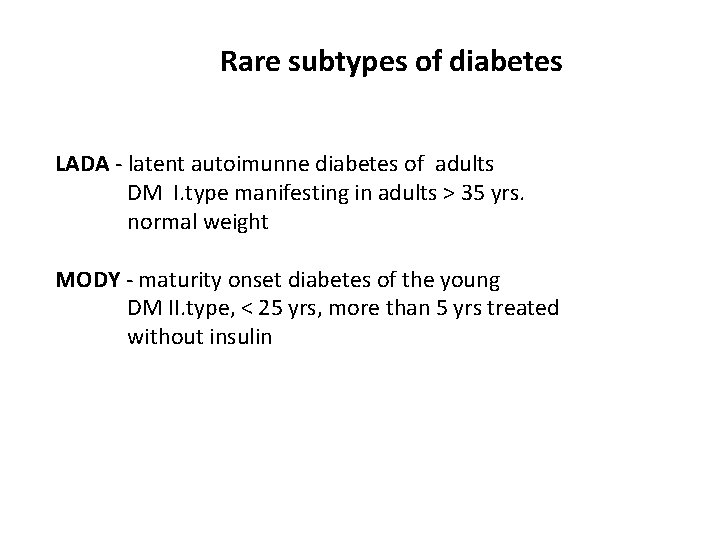
Rare subtypes of diabetes LADA - latent autoimunne diabetes of adults DM I. type manifesting in adults > 35 yrs. normal weight MODY - maturity onset diabetes of the young DM II. type, < 25 yrs, more than 5 yrs treated without insulin
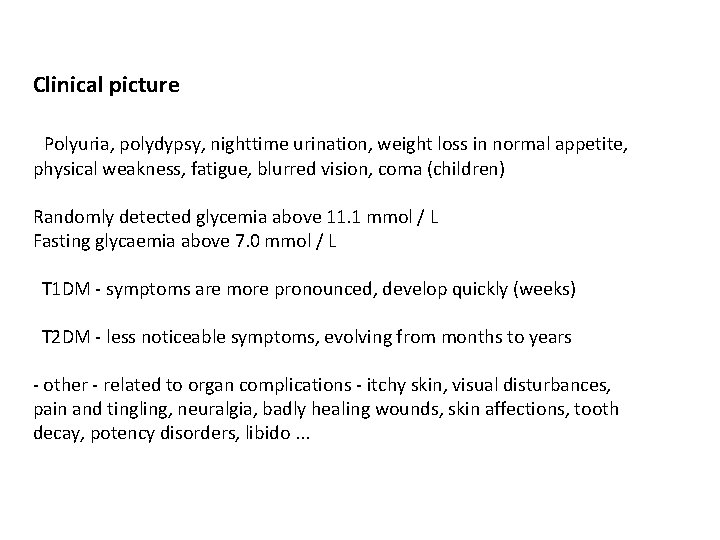
Clinical picture Polyuria, polydypsy, nighttime urination, weight loss in normal appetite, physical weakness, fatigue, blurred vision, coma (children) Randomly detected glycemia above 11. 1 mmol / L Fasting glycaemia above 7. 0 mmol / L T 1 DM - symptoms are more pronounced, develop quickly (weeks) T 2 DM - less noticeable symptoms, evolving from months to years - other - related to organ complications - itchy skin, visual disturbances, pain and tingling, neuralgia, badly healing wounds, skin affections, tooth decay, potency disorders, libido. . .
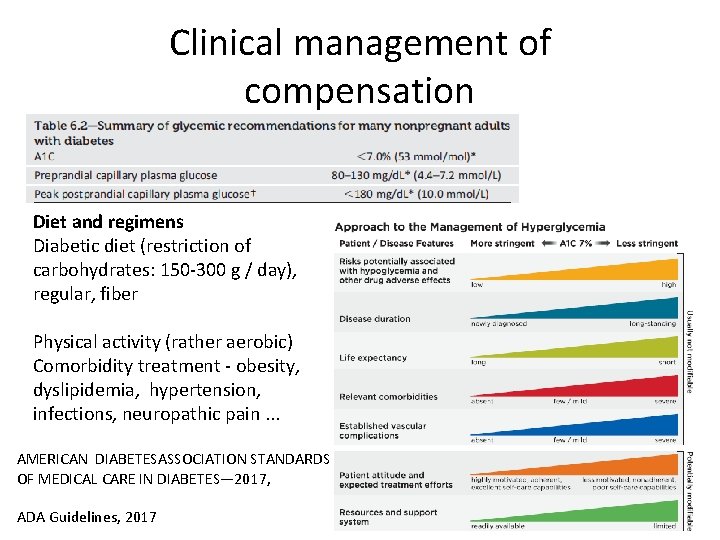
Clinical management of compensation Diet and regimens Diabetic diet (restriction of carbohydrates: 150 -300 g / day), regular, fiber Physical activity (rather aerobic) Comorbidity treatment - obesity, dyslipidemia, hypertension, infections, neuropathic pain. . . AMERICAN DIABETESASSOCIATION STANDARDS OF MEDICAL CARE IN DIABETES— 2017, ADA Guidelines, 2017
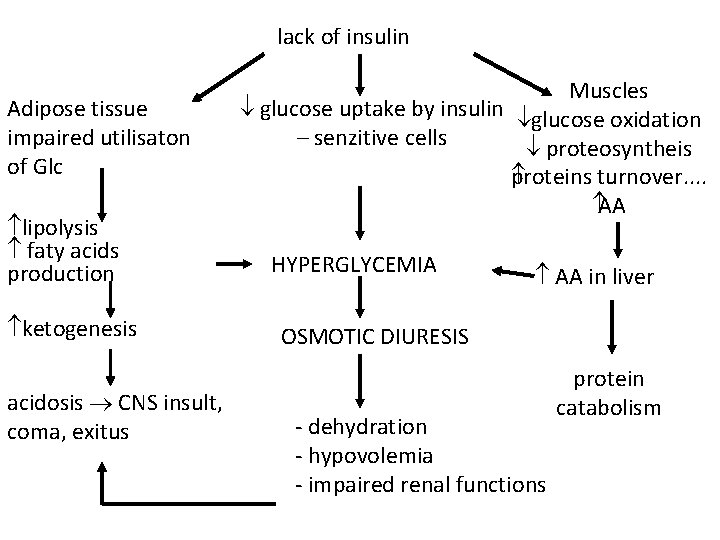
lack of insulin Adipose tissue impaired utilisaton of Glc lipolysis faty acids production ketogenesis acidosis CNS insult, coma, exitus Muscles glucose uptake by insulin glucose oxidation – senzitive cells proteosyntheis proteins turnover. . AA HYPERGLYCEMIA AA in liver OSMOTIC DIURESIS - dehydration - hypovolemia - impaired renal functions protein catabolism
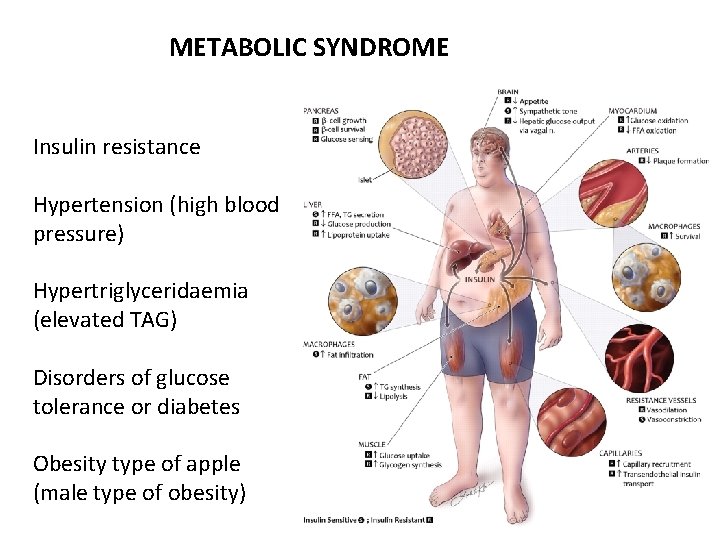
METABOLIC SYNDROME Insulin resistance Hypertension (high blood pressure) Hypertriglyceridaemia (elevated TAG) Disorders of glucose tolerance or diabetes Obesity type of apple (male type of obesity)
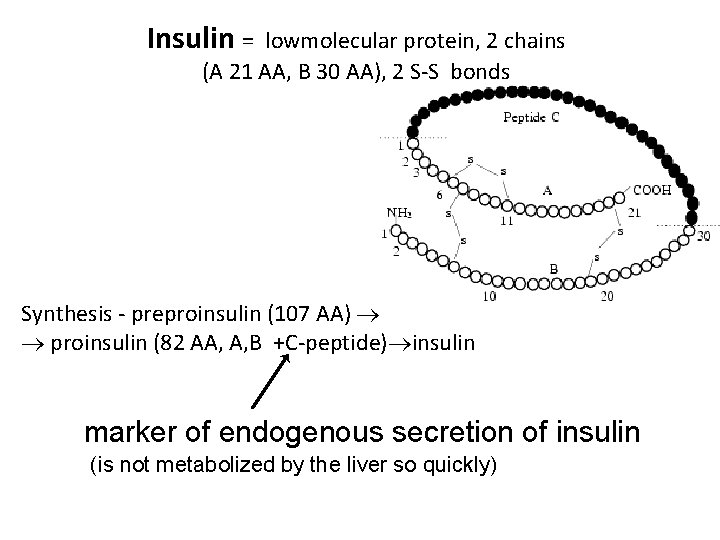
Insulin = lowmolecular protein, 2 chains (A 21 AA, B 30 AA), 2 S-S bonds Synthesis - preproinsulin (107 AA) proinsulin (82 AA, A, B +C-peptide) insulin marker of endogenous secretion of insulin (is not metabolized by the liver so quickly)
Pharmacokinetic parameters • Inter- and intra-individual variability in absorption (25 -50 % after s. c. , i. m. ) - appl. site, vascularity, temperature, massage, sunbathing, vasodilatators • T 1/2 7 -10 min.
Factors decreasing insulin secretion somatostatin insulin (negative feedback) - activation of sympathetic n. s. (adrenalin)
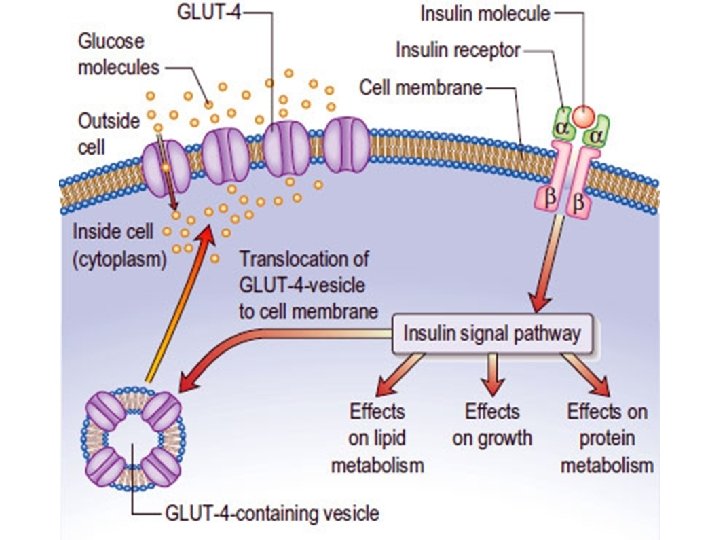
Insulin receptor Lincová a kol. 2002
Species of insulin A) Animal insulin - from pork or beef pancreas, highly pure, monocomponent, today only AUV, B) human insulin - produced biosynthetically (synthetically since the 1960 s, biosynthetically from 70 years, commercially since 1982) is called HM C) insulin analogues- biosynthetically prepared, spec. Properties - length of action (short, prolonged effect) - the production of antibodies to insulin depends on the purity
Terapeutical use of insulin - DM I. Type - ketosis, ketonuria or ketoacidosis - patients with serious infetion/gangrene - DM II where blood Glc. not normalized with POAD, diet - DM II patients, use corticosteroids, liver or kidney impairment
Principles of therapy with insulines • prevent fluctuation in Glc levels in plasma • tight glycemic control • control of glycated hemoglobin (Hb 1 Ac) -indicator of long-term and actual compensation
Insulin preparations solutions/suspensions of insulin suspesions of „zinc-insulin“ suspensions „protamin-zinc-insulin“ insulin as a mixture of mono-/di-/tetra-/hexamers + p. H, stability, isotonicity adjusted
Insulin preparations Short acting A) insulin analogues: insulin lispro, aspart, glulisine Can be administered intravenously Start of operation 0 -15 min. Maximum of efficacy 30 -45 min after admin. Effective for 2 - 5 hours. B) neutral aqueous solutions of insulins (Crystalline insulin, soluble insulin) Can be administered intravenously Start of action 30 min. Maximum 1 - 3 hours. Effective for 4 - 6 hours.
Intermediate acting NPH (Neutral Protamine Hagedorn) Protamine insulins or mixtures of amorphous and crystalline forms of insulin in a ratio of 30: 70 Start of operation 1 - 2. 5 hours Maximum 4 - 8 hours. Working time 12 - 24 hours. Almost no longer used
Long acting Crystalline suspensions of large crystals with very slow absorption Analogs and their conjugates (glargin, detemir, degludec) Onset of effect 2 - 3 hours Maximum 10 -18 h (not apparent in degludec) Effective for 24 - 36 hours. Steady state after 3 days (3 doses) Less hypoglycemia than NPH, less weight gain
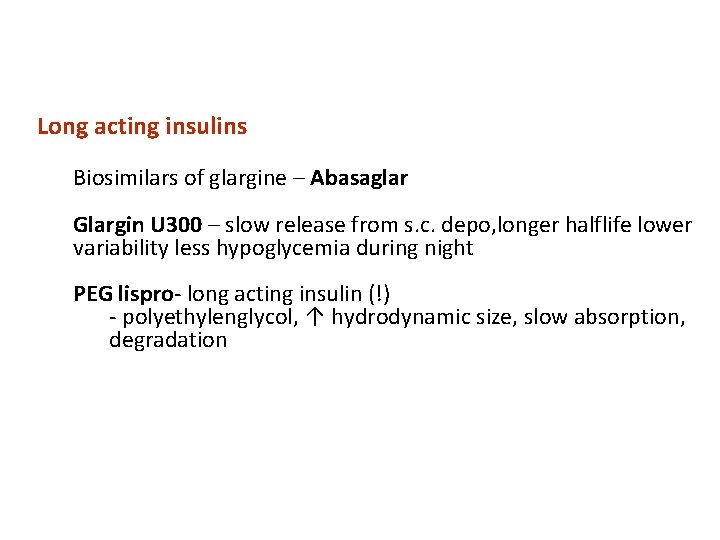
Long acting insulins Biosimilars of glargine – Abasaglar Glargin U 300 – slow release from s. c. depo, longer halflife lower variability less hypoglycemia during night PEG lispro- long acting insulin (!) - polyethylenglycol, ↑ hydrodynamic size, slow absorption, degradation
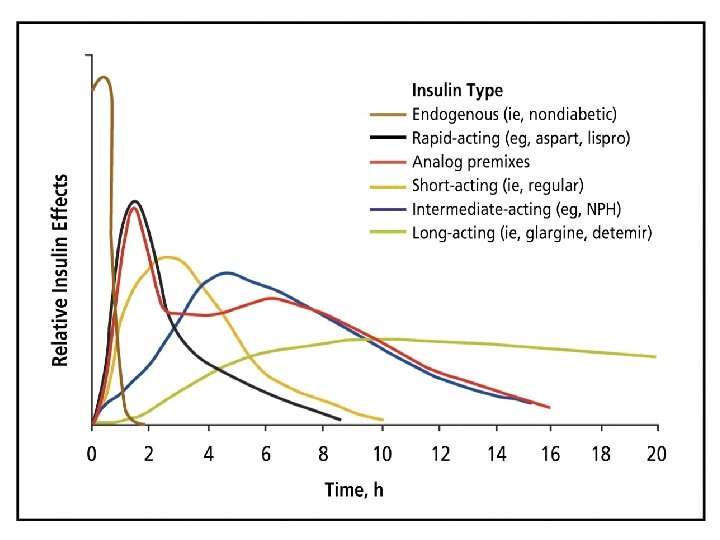
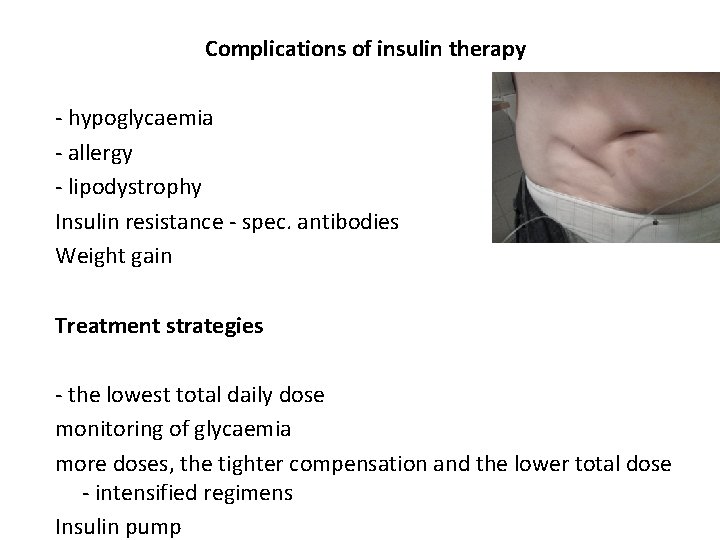
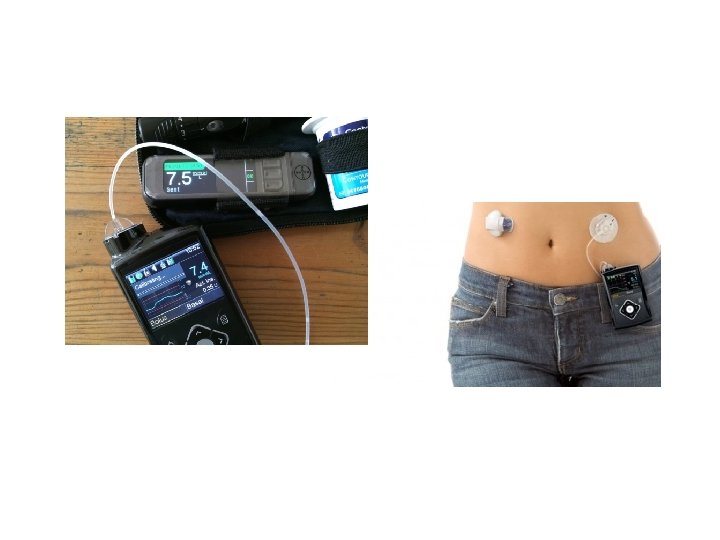
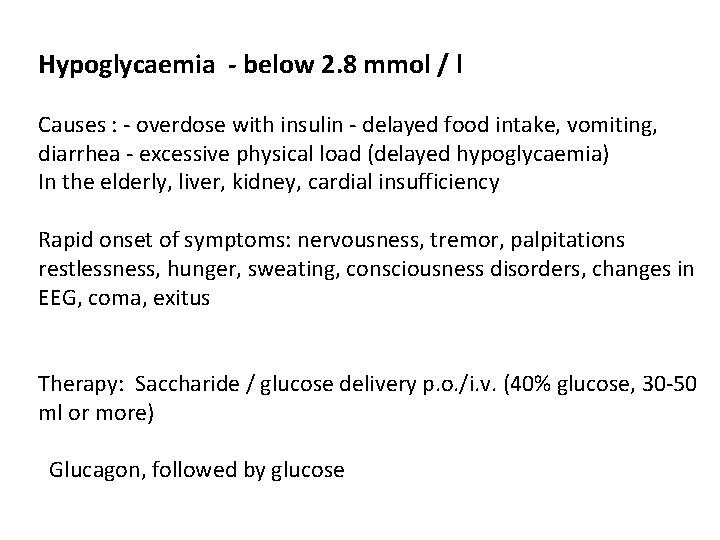
Complications of insulin therapy - hypoglycaemia - allergy - lipodystrophy Insulin resistance - spec. antibodies Weight gain Treatment strategies - the lowest total daily dose monitoring of glycaemia more doses, the tighter compensation and the lower total dose - intensified regimens Insulin pump

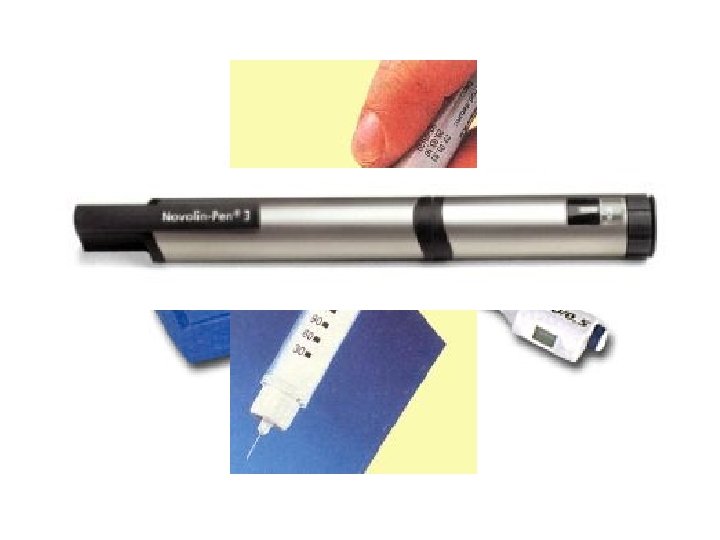
Delivery systems (self-administration) 1) Insulin pen - cartridge with extendable needle; In the form of a fountain pen 2)Insulin pumps - continuous infusion s. c. (better compensation, less infectious risk) 3)Insulin syringes - with a sealed needle, calibrated per unit 4) Inhalation (USA) / transnasal ?

Insulin administration sites preferred acceptable
Hypoglycaemia - below 2. 8 mmol / l Causes : - overdose with insulin - delayed food intake, vomiting, diarrhea - excessive physical load (delayed hypoglycaemia) In the elderly, liver, kidney, cardial insufficiency Rapid onset of symptoms: nervousness, tremor, palpitations restlessness, hunger, sweating, consciousness disorders, changes in EEG, coma, exitus Therapy: Saccharide / glucose delivery p. o. /i. v. (40% glucose, 30 -50 ml or more) Glucagon, followed by glucose
Glucagon effects - increases glycemia - positive inotropic (beta rcp. stimulation) - positive chronotropic effect decreases - gastric and panceratic secretion - smooth muscle relaxation (c. AMP) Clinical use - limited - severe hypoglycemia - endocrine dg - insulinoma, medullary carcinoma - beta adrenergic blocker - poisoning - reversal cardiac effect
Antidiabetics
Criteria for initiation of pharmacotherapy of DM II type and suitable selection of drug • OAD do not replace regimen (diet) • age, weight, blood insulin level • glycemia (fasting and postprandial) • comorbidities, metabolic syndrome
(Oral) antidiabetics The effect is linked to the ability of insulin secretion Most OAD are contraindicated in pregnancy (metformin may be used) - indication: - T 2 DM - if not properly compensated with diet - T 1 DM with a high insulin resistance, when insulin does not lead to a sufficient decrease in blood glucose
Antidiabetics • biguanides • sulfonylurea derivatives (SU) • thiazolidindiones • alpha-glucosidase inhibitors • meglitinides • GLP 1 analogues • Inhibitors of DPP IV • SGLT 2 (sodium-glucose cotransporter) inhibitors
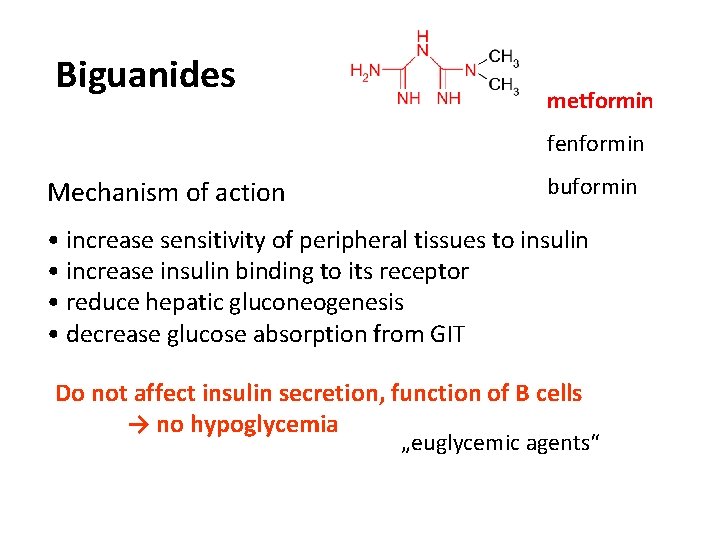
Biguanides metformin fenformin Mechanism of action buformin • increase sensitivity of peripheral tissues to insulin • increase insulin binding to its receptor • reduce hepatic gluconeogenesis • decrease glucose absorption from GIT Do not affect insulin secretion, function of B cells → no hypoglycemia „euglycemic agents“
Further benefits: Direct stimulation of glycolysis in the periphery Reduce hepatic gluconeogenesis Delay Glc absorption from GIT Decrease plasma glucagon levels Increase the proportion of HDL Chol. → improve lipid profile Improve rheological properties of blood Are not metabolized, low protein binding Side effects Lactic acidosis Nausea, GIT problems about 20% of people (diarrhea) Reduced absorption vit. B 12 Weight loose disulfiram effect
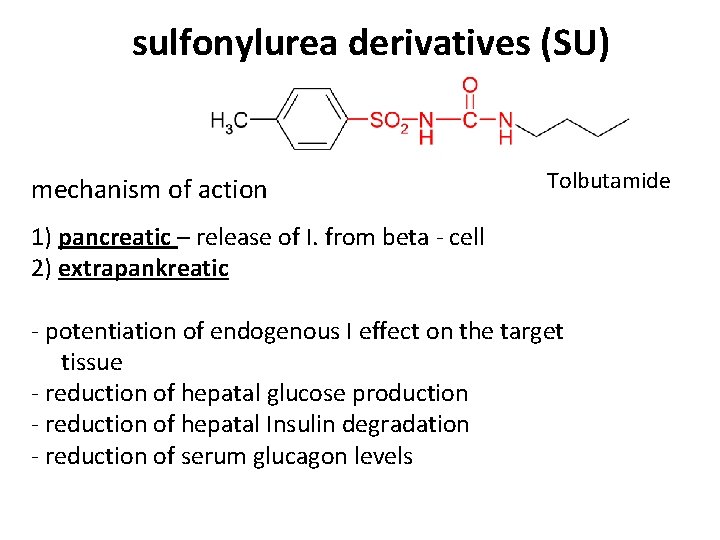
sulfonylurea derivatives (SU) mechanism of action Tolbutamide 1) pancreatic – release of I. from beta - cell 2) extrapankreatic - potentiation of endogenous I effect on the target tissue - reduction of hepatal glucose production - reduction of hepatal Insulin degradation - reduction of serum glucagon levels
SU derivatives I. Generation - chlorpropamide tolbutamide II. Generation - glibenclamide (gliburide) glipizide gliclazide gliquidone III. Generation - glimepiride Therapeutic use: not drugs of choice, 2 nd line treatment
Adverse effects • increased appetite • metal taste in mouth • Hypoglycemia • headaches, nausea (5 %) • fluids retention • allergy, fotosensitivity Contraindications DM Type 1 monotherapy, hypoglycemia, ketoacidosis, kidney or liver failure pregnancy, hypersensitivity
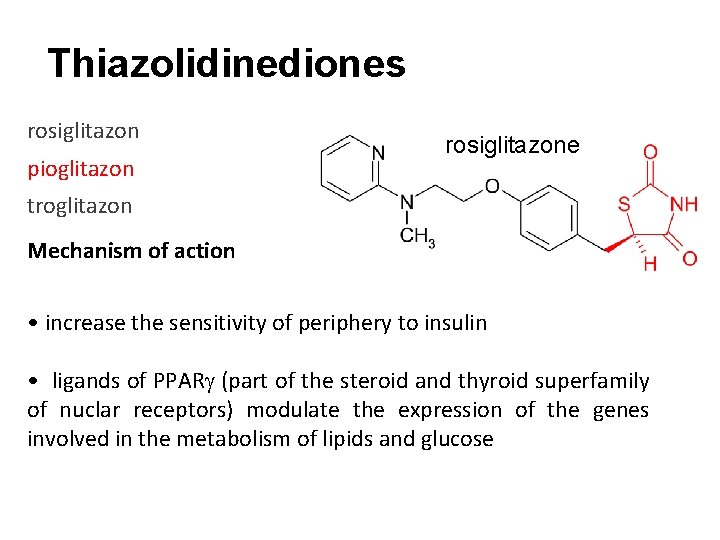
Thiazolidinediones rosiglitazon pioglitazon rosiglitazone troglitazon Mechanism of action • increase the sensitivity of periphery to insulin • ligands of PPAR (part of the steroid and thyroid superfamily of nuclar receptors) modulate the expression of the genes involved in the metabolism of lipids and glucose
Thiazolidindiones • Lowering blood glucose by the primary effect on insulin resistance - in diabetic and pre-diabetic patients • Does not cause hypoglycemia, scavengers • Increase glycogen synthesis and glycolysis in muscles • Stimulating glucose oxidation and lipogenesis in adipose tissue and reducing gluconeogenesis in the liver. . . optimal metabolic effects 2010 referral – rosiglitazone withdrawn from registration - CVS AE
Therapeutic use Sensitizers of insulin receptors The onset of effect in 4 weeks Side effects Hepatotoxicity Fluid retention Increase TAG Contraindications Hypersensitivity Predisposition to heart failure Liver damage Pregnancy, lactation
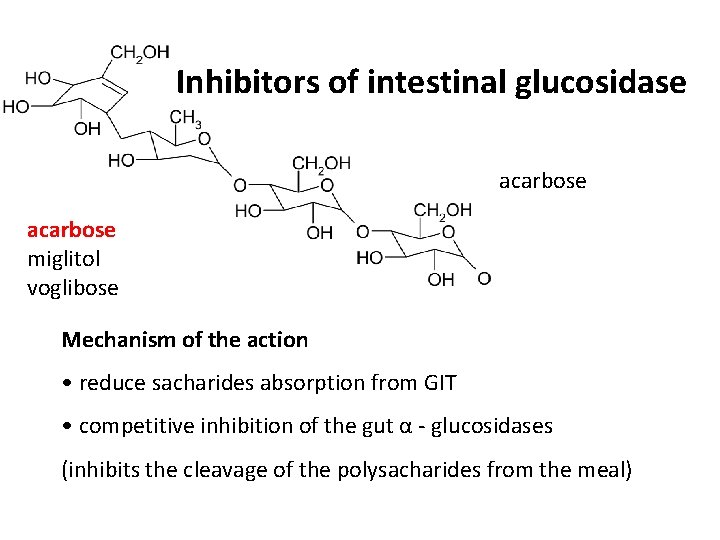
Inhibitors of intestinal glucosidase acarbose miglitol voglibose Mechanism of the action • reduce sacharides absorption from GIT • competitive inhibition of the gut α - glucosidases (inhibits the cleavage of the polysacharides from the meal)
Inhibitors of intestinal glucosidase • decrease postprandial glycemia • do not affect monosacharides absorption • acarbosis do not rech the systemic blood, miglitol does • „educative drugs“- consequences in bad compliance In hypoglycemia and the simultaneous treatment with other POADs can not be administered sucrose (monosacharide necessary - Glu, Fru) or Glucagon
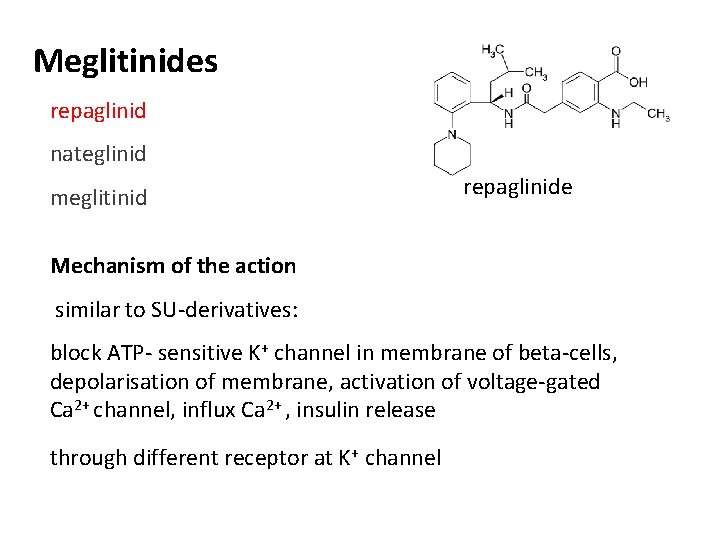
Meglitinides repaglinid nateglinid meglitinid repaglinide Mechanism of the action similar to SU-derivatives: block ATP- sensitive K+ channel in membrane of beta-cells, depolarisation of membrane, activation of voltage-gated Ca 2+ channel, influx Ca 2+ , insulin release through different receptor at K+ channel
Meglitinides repaglinid nateglinid meglitinide Pharmacokinetics: • good bioavailibility • extensive protein binding (up to 98 %) • metabolized - inactive compounds • excreted mainly in faeces
Clinical use • combined with metformin - esp. if patient not suffciently compensed • alternative of the SU medication in patients with renal impariment (excreted in bile) Contraindications: AE: • hypersensitivity Hypoglycemia Nausea, diarrhea, joint pain • DM I. type • diabetic ketoacidosis • pregnancy, lactation
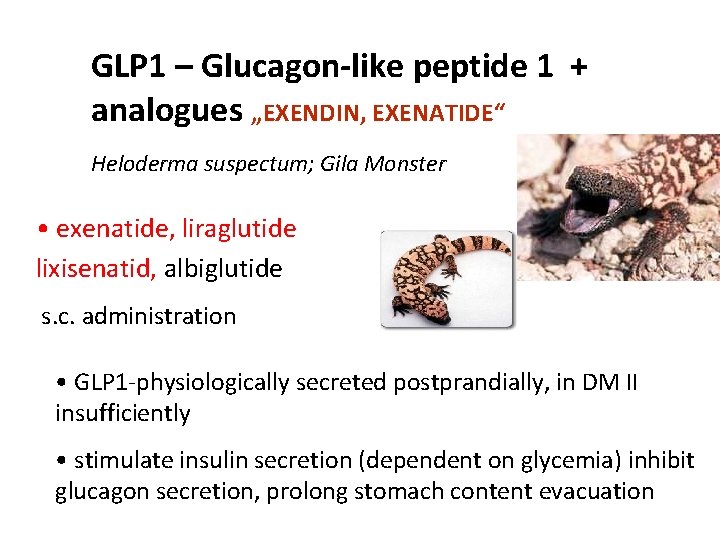
GLP 1 – Glucagon-like peptide 1 + analogues „EXENDIN, EXENATIDE“ Heloderma suspectum; Gila Monster • exenatide, liraglutide lixisenatid, albiglutide s. c. administration • GLP 1 -physiologically secreted postprandially, in DM II insufficiently • stimulate insulin secretion (dependent on glycemia) inhibit glucagon secretion, prolong stomach content evacuation
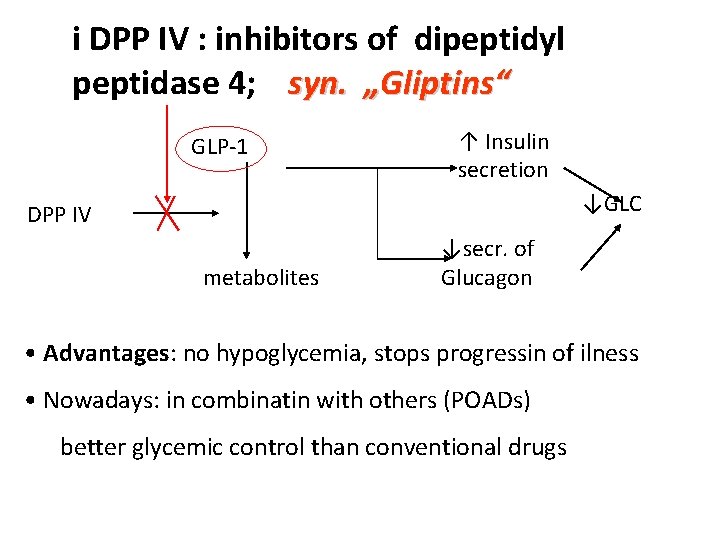
i DPP IV : inhibitors of dipeptidyl peptidase 4; syn. „Gliptins“ GLP-1 ↑ Insulin secretion ↓GLC DPP IV metabolites ↓secr. of Glucagon • Advantages: no hypoglycemia, stops progressin of ilness • Nowadays: in combinatin with others (POADs) better glycemic control than conventional drugs
i DPP IV : inhibitors of dipeptidyl peptidase 4; syn. „Gliptins“ • Sitagliptin Launched in the US in 2006, in the Czech Republic 2008 • 24 -hour effect - 2 -3 -fold increase in GLP-1 concentrations • Protects B cells • fixed combinations (eg with metformin) • Saxagliptin, linagliptin, vildagliptin, allogliptin, gemigliptin • For the treatment of T 2 DM fixed combination with metformin/SU glitazone/statin
SGLT 2 (sodium-glucose cotransporter) Inhibitors • Increased reabsorbtion in kidney in DM 2 • Inhibition SGLT 2 = controlled glucosuria • Dapagliflozin, kanagliflozin, empagliflozin • Hb 1 Ac decrease by 0. 8% • BMI decrease (negative energy Bilance) AE: thirst, hypoglycemia, genital infections CI: over 75 years, concurrent loop diuretics, pioglitazone
DM - Complications 1) hypoglycemia - (< 3, 5 mmol/l) consciousness - sweet (sacharide) drink, meal unconsciousness - i. v. Glu 20 -40% - u DM I. type i. v. glucagon
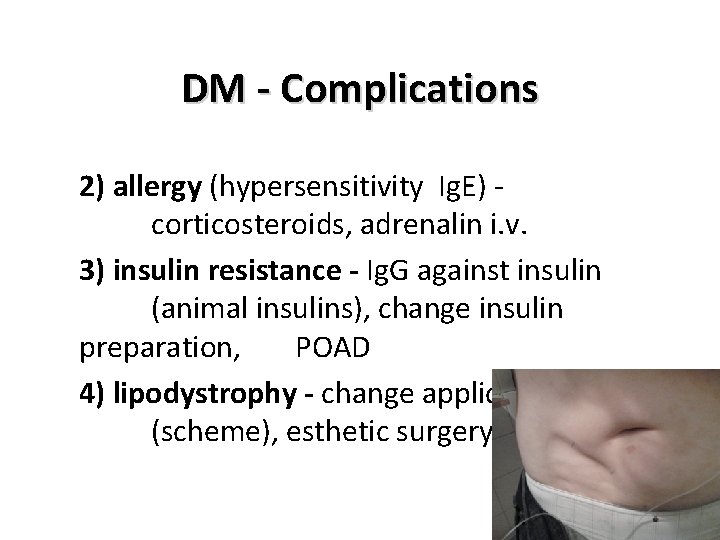
DM - Complications 2) allergy (hypersensitivity Ig. E) - corticosteroids, adrenalin i. v. 3) insulin resistance - Ig. G against insulin (animal insulins), change insulin preparation, POAD 4) lipodystrophy - change application sites (scheme), esthetic surgery
DM - Complications Diabetic nefropathy - hypertrophy, hyperfiltration; nefropathy, blood pressure (ACEi), microalbuminuria, insufficiency Diabetic neuropathy – gabapentin, pregabaline, carbamazepine, TCA, duloxetine Hyperlipoproteinemia - diet, statins, fibrates, probucol, nicotinic acid. .
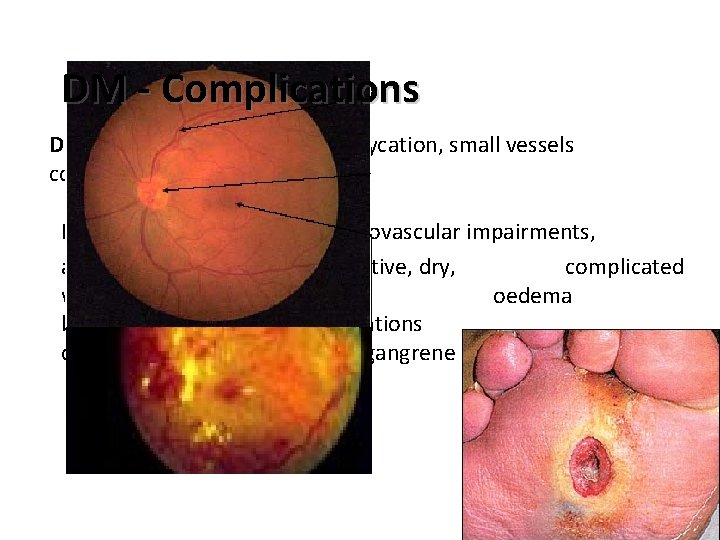
DM - Complications Diabetic retinopathy - protein glycation, small vessels collagenisation; microangiopathy Diabetic foot - micro- and macrovascular impairments, a) neuropatic - warm, non-sensitive, dry, complicated with neuropathic ulcer oedema b) ischemic - cold, without pulsations c) neuroischemic - ulcerations, gangrene
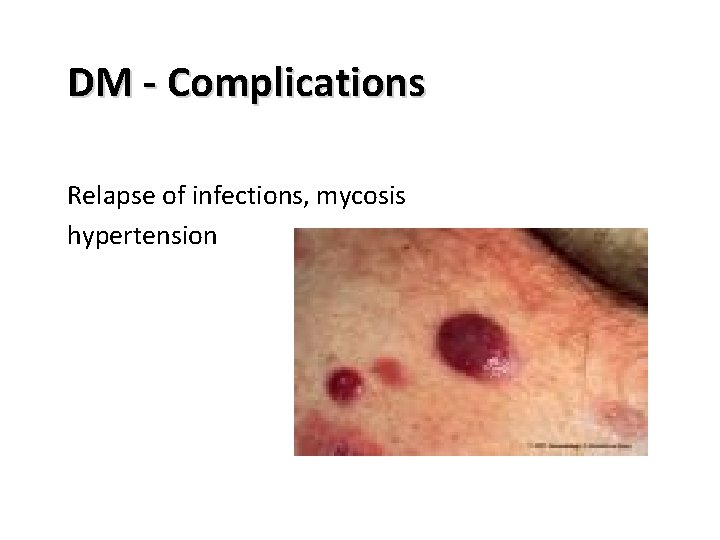
DM - Complications Relapse of infections, mycosis hypertension
- Slides: 59