
Antidepressants PRITE Review Samir Sabbag PGY3 Psychiatry August
Antidepressants PRITE Review Samir Sabbag PGY-3 Psychiatry August 24, 2009
Overview n Goal in Depresion ¨ n Achieve complete remission With Treatment ¨ Good News – if remission: lower relapse rate ¨ Bad News – remitters have frequent relapses Suicide rates higher at ages 18 -24 n All effective Antidepressants boost n ¨ DA, 5 HT and NE
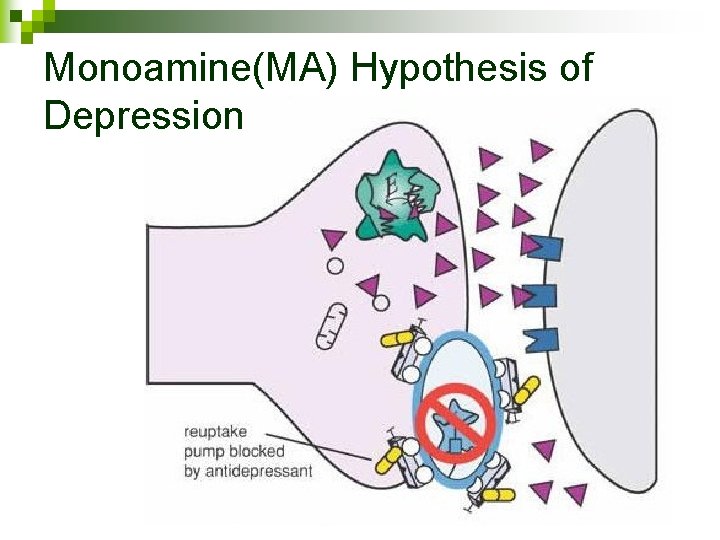
Monoamine(MA) Hypothesis of Depression
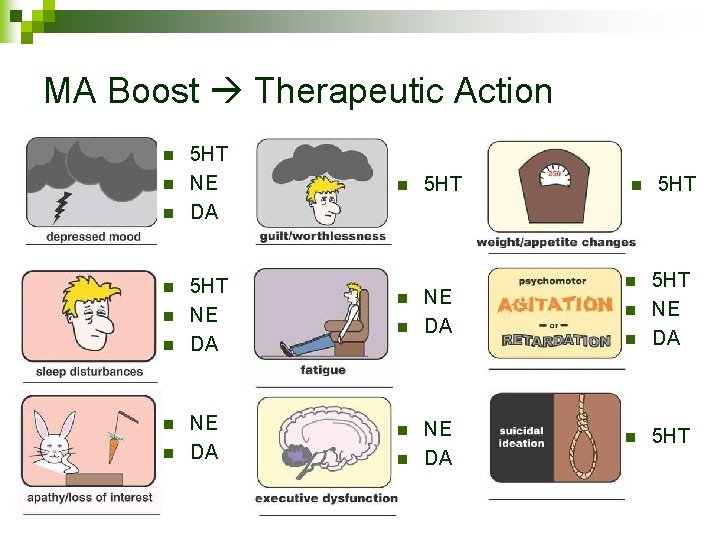
MA Boost Therapeutic Action n n n n 5 HT NE DA n n n 5 HT NE DA n 5 HT n n
Selective Serotonin Reuptake Inhibitors (SSRIs)
Available SSRIs Fluoxetine (Prozac) n Paroxetine (Paxil) n Sertraline (Zoloft) n Citalopram (Celexa) n Escitalopram (Lexapro) n Fluvoxamine ( Luvox) n
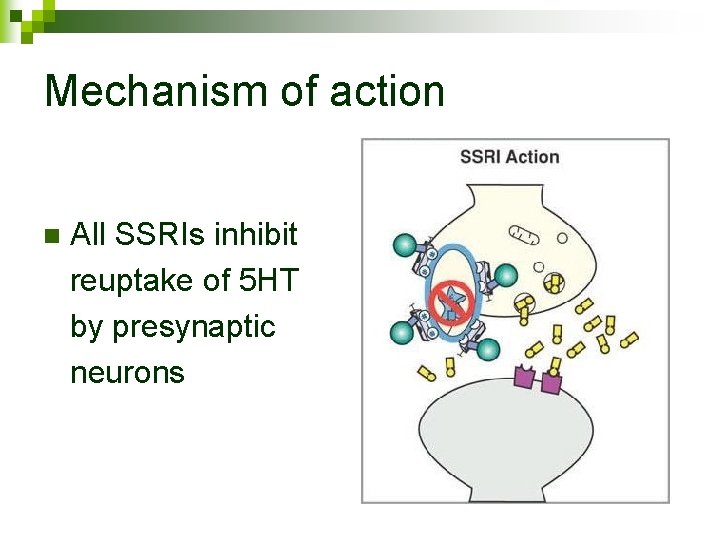
Mechanism of action n All SSRIs inhibit reuptake of 5 HT by presynaptic neurons
SSRI Therapeutic Indications n n n n Depression OCD (give higher doses) Panic Disorder PTSD (help with intrusive and avoidant sx) GAD Premenstrual Dysphoric disorder Social Anxiety disorder Eating disorders (Fluoxetine)
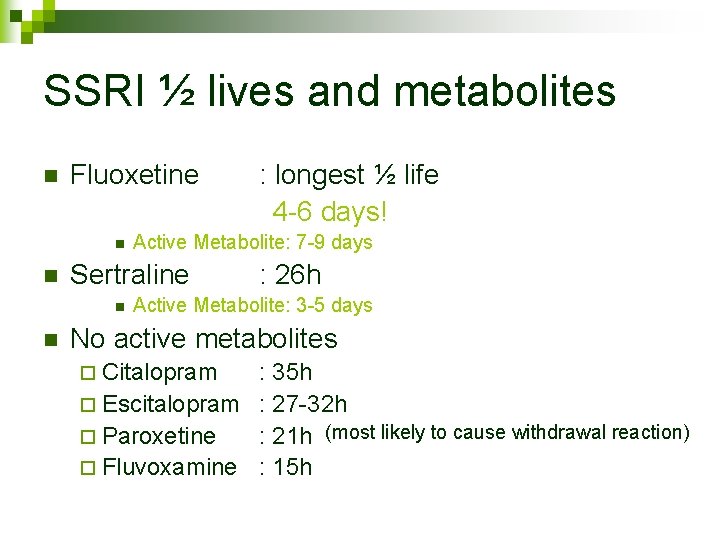
SSRI ½ lives and metabolites n Fluoxetine n n n Active Metabolite: 7 -9 days Sertraline n : longest ½ life 4 -6 days! : 26 h Active Metabolite: 3 -5 days No active metabolites ¨ Citalopram : 35 h ¨ Escitalopram : 27 -32 h ¨ Paroxetine : 21 h (most likely to cause withdrawal reaction) ¨ Fluvoxamine : 15 h
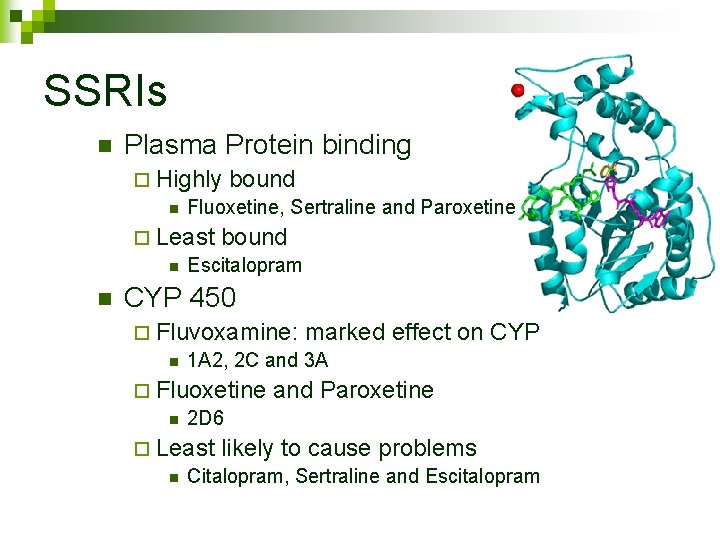
SSRIs n Plasma Protein binding ¨ Highly bound n Fluoxetine, Sertraline and Paroxetine ¨ Least bound n Escitalopram n CYP 450 ¨ Fluvoxamine: marked n 1 A 2, 2 C and 3 A ¨ Fluoxetine n 2 D 6 effect on CYP and Paroxetine ¨ Least likely to cause problems n Citalopram, Sertraline and Escitalopram
SSRIs - General Side Effects n n n Restlessness, psychomotor retardation, mild parkinsonism and dystonic movements (5 HT-2 A in basal ganglia) Myoclonus, sleep disturbance and nocturnal awakening (2 A in brainstem) Sexual dysfunction, apathy and decreased libido (2 A and 2 C in spinal cord) N/V (5 HT-3 in hypothalamus and brainstem) Increased bowel motility, GI cramps and diarrhea (5 HT 3 and 4 in GI tract) GI Sx Most common SE leading to discontinuation
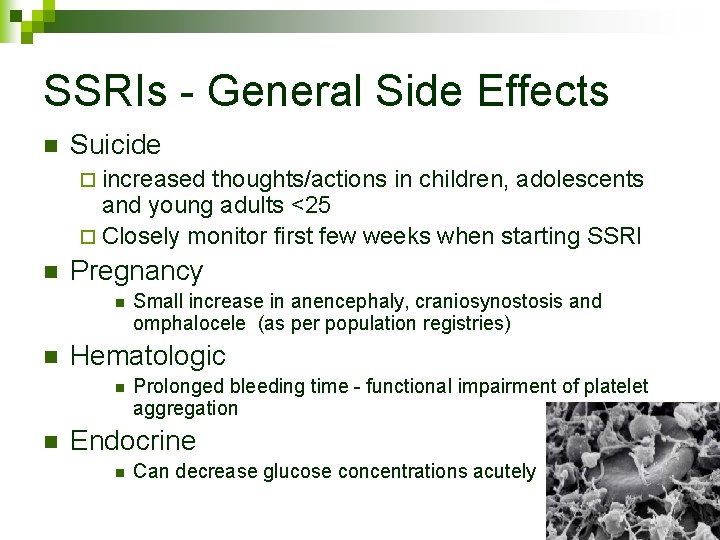
SSRIs - General Side Effects n Suicide ¨ increased thoughts/actions in children, adolescents and young adults <25 ¨ Closely monitor first few weeks when starting SSRI n Pregnancy n n Hematologic n n Small increase in anencephaly, craniosynostosis and omphalocele (as per population registries) Prolonged bleeding time - functional impairment of platelet aggregation Endocrine n Can decrease glucose concentrations acutely
SSRIs - General Side Effects n Most common SE associated with long term treatment: ¨ Sexual Dysfunction – continues as long as the drug is taken n Sleep disturbances ¨ Extremely vivid dreams or nightmares ¨ Bruxism, restless legs, nocturnal myoclonus n Yawning ¨ Not associated with fatigue – effect of SSRI on hypthalamus
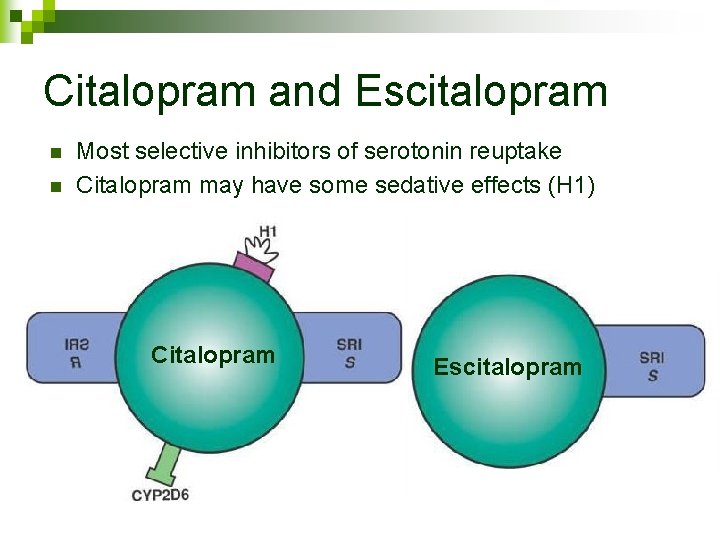
Citalopram and Escitalopram n n Most selective inhibitors of serotonin reuptake Citalopram may have some sedative effects (H 1) Citalopram Escitalopram
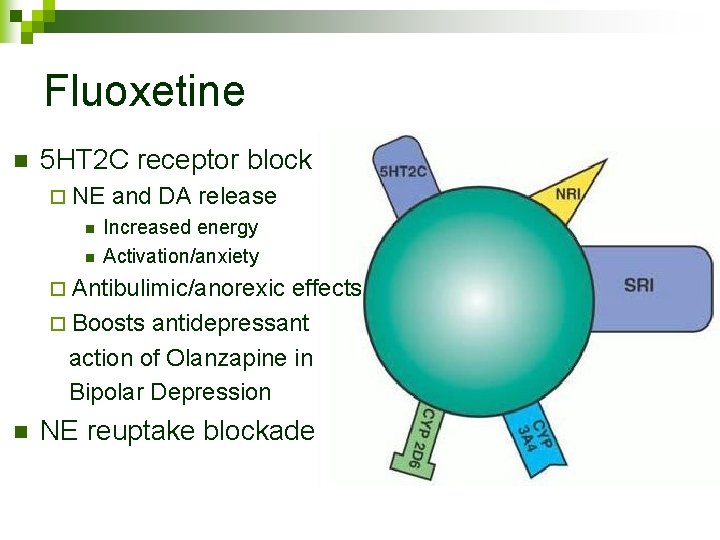
Fluoxetine n 5 HT 2 C receptor block ¨ NE n n and DA release Increased energy Activation/anxiety ¨ Antibulimic/anorexic effects ¨ Boosts antidepressant action of Olanzapine in Bipolar Depression n NE reuptake blockade
Fluoxetine Of the SSRIs, most likely to cause headaches n Can cause anxiety, specially during 1 st weeks of use on the long run decrease anxiety n SSRI most likely to cause insomnia n
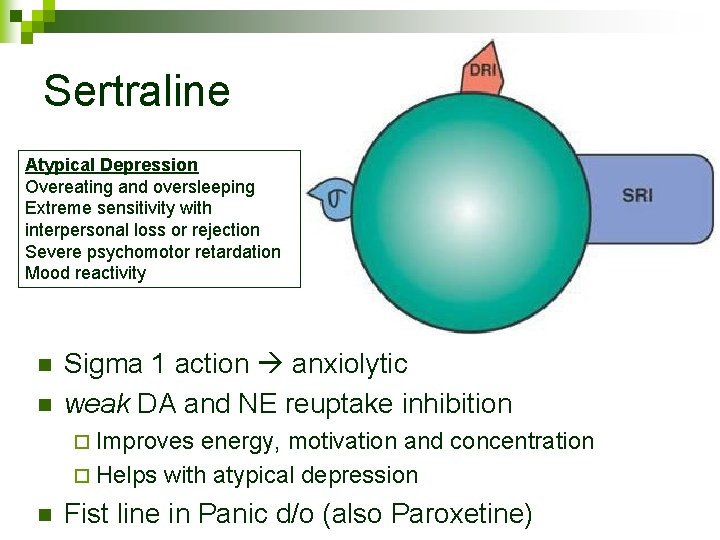
Sertraline Atypical Depression Overeating and oversleeping Extreme sensitivity with interpersonal loss or rejection Severe psychomotor retardation Mood reactivity n n Sigma 1 action anxiolytic weak DA and NE reuptake inhibition ¨ Improves energy, motivation and concentration ¨ Helps with atypical depression n Fist line in Panic d/o (also Paroxetine)
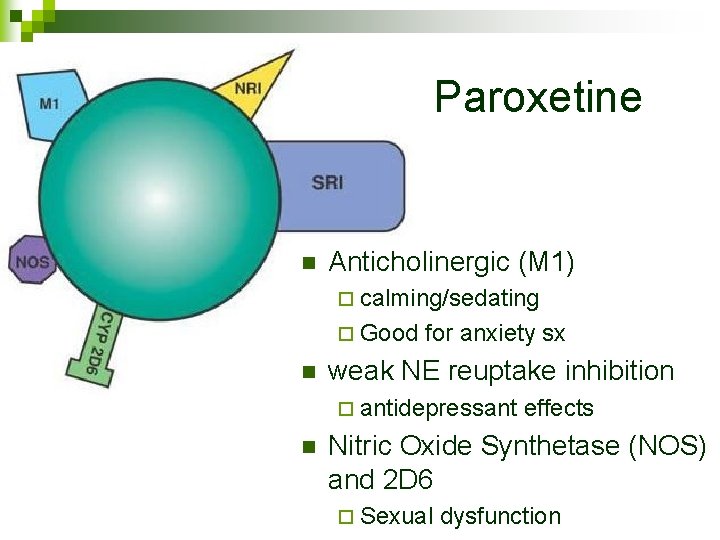
Paroxetine n Anticholinergic (M 1) ¨ calming/sedating ¨ Good n for anxiety sx weak NE reuptake inhibition ¨ antidepressant n effects Nitric Oxide Synthetase (NOS) and 2 D 6 ¨ Sexual dysfunction
Paroxetine n Withdrawal reaction with sudden d/c ¨ Anticholinergic rebound ¨ Substrate and inhibitor for 2 D 6 n Rapid decline in plasma when d/c First line in Panic disorder (also Zoloft) n Anticholinergic activity n n Dry mouth, constipation, sedation
Paroxetine n Fetal abnormalities ¨ Cardiac malformation (R Ventricular outflow obstruction) ¨ Pulmonary hypertension ¨ Seen with doses >25 mg in 1 st trimester n More frequent and pronounced weight gain than other SSRIs
Fluvoxamine Not normally used as antidepressant n Used for OCD, Panic d/o, PDD, Aggression in autism n SSRI with the most DDI of all n
Serotonin Syndrome n Constellation of sx composed, in order of appearance, by 1. 2. 3. 4. 5. 6. Diarrhea Restlessness Extreme agitation, hyperreflexia, autonomic instability with fluctuation of vital signs Myoclonus, seizure, hyperthermia, rigidity, shivering Delirium, coma, status epilepticus, cardiovascular collapse Death
Serotonin Syndrome n SSRI + MAOI, MAOB Inhibitors, L-Tryptophan, Lithium, SSRIs, SNRIs, TCAs, Buspirone, Meperidine, Nefazodone, Trazodone, Linezolid ¨ may n raise SSRI to toxic levels Treatment ¨ Remove offending agent ¨ Supportive care n nitroglycerine, methysergide, cooling blankets, chlorpromazide, dantrolene, benzodiazepines, anticonvulsants, mechanical ventilation, paralyzing agents
Serotonin Syndrome n May resemble NMS ¨ Serotonin Syndrome more likely to have Myoclonus n Hyperreflexia n GI symptoms n ¨ NMS n more likely to have Muscular rigidity
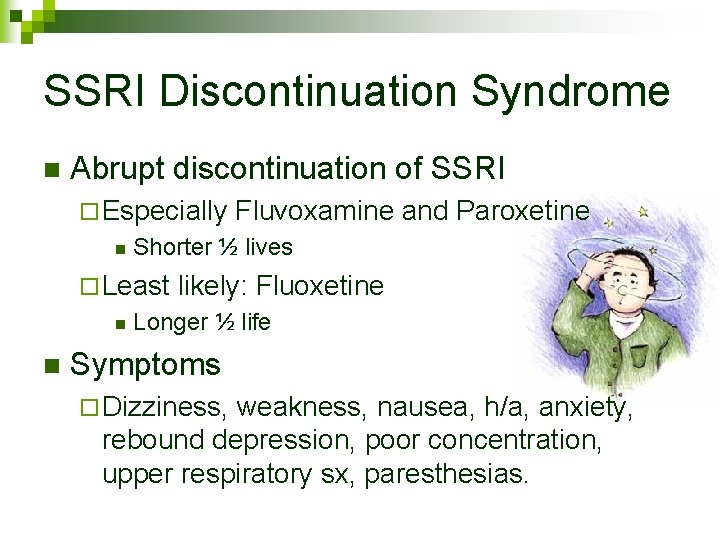
SSRI Discontinuation Syndrome n Abrupt discontinuation of SSRI ¨ Especially n Shorter ½ lives ¨ Least n n Fluvoxamine and Paroxetine likely: Fluoxetine Longer ½ life Symptoms ¨ Dizziness, weakness, nausea, h/a, anxiety, rebound depression, poor concentration, upper respiratory sx, paresthesias.
Tricyclic and Tetracyclic Antidepressants (TCAs)
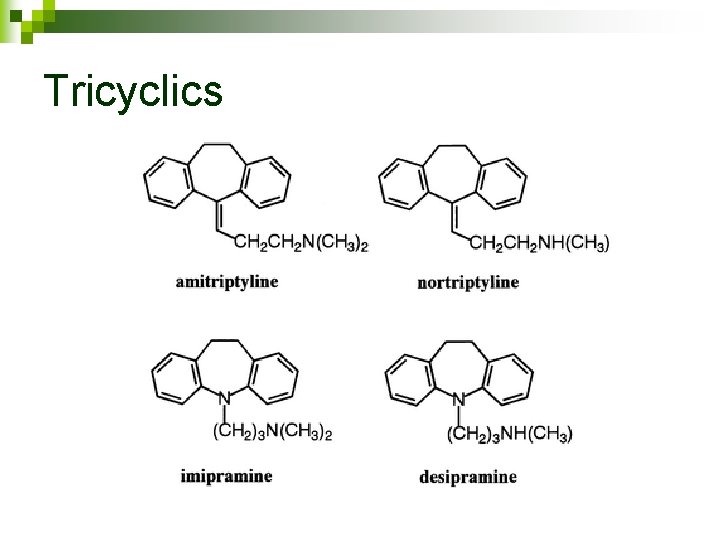
Tricyclics
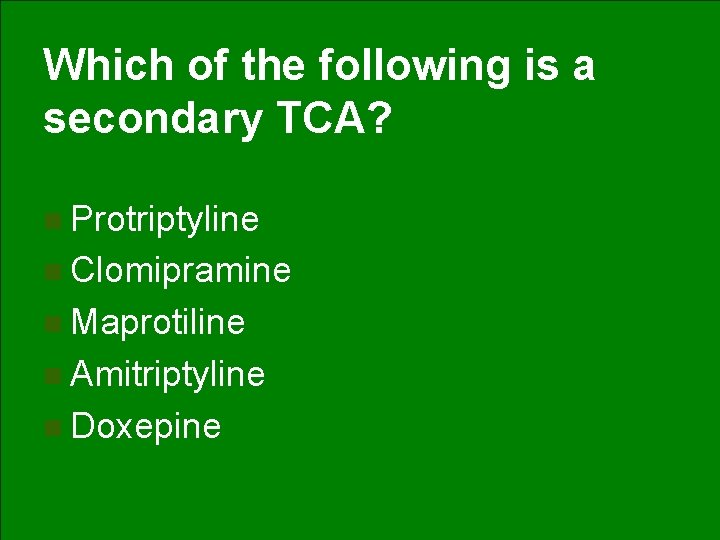
Which of the following is a secondary TCA? n Protriptyline n Clomipramine n Maprotiline n Amitriptyline n Doxepine
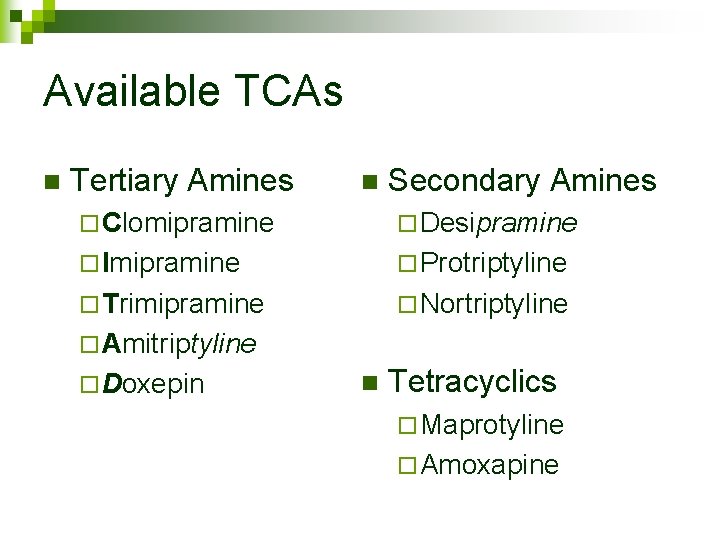
Available TCAs n Tertiary Amines n Secondary Amines ¨ Clomipramine ¨ Desipramine ¨ Imipramine ¨ Protriptyline ¨ Trimipramine ¨ Nortriptyline ¨ Amitriptyline ¨ Doxepin n Tetracyclics ¨ Maprotyline ¨ Amoxapine
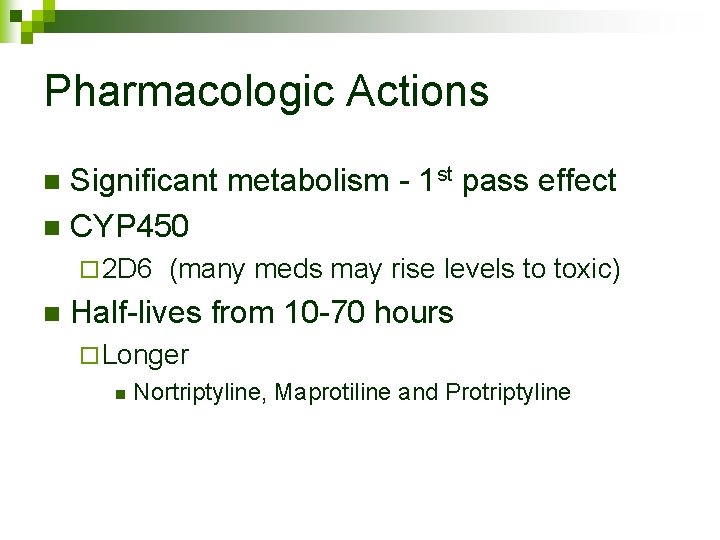
Pharmacologic Actions Significant metabolism - 1 st pass effect n CYP 450 n ¨ 2 D 6 n (many meds may rise levels to toxic) Half-lives from 10 -70 hours ¨ Longer n Nortriptyline, Maprotiline and Protriptyline
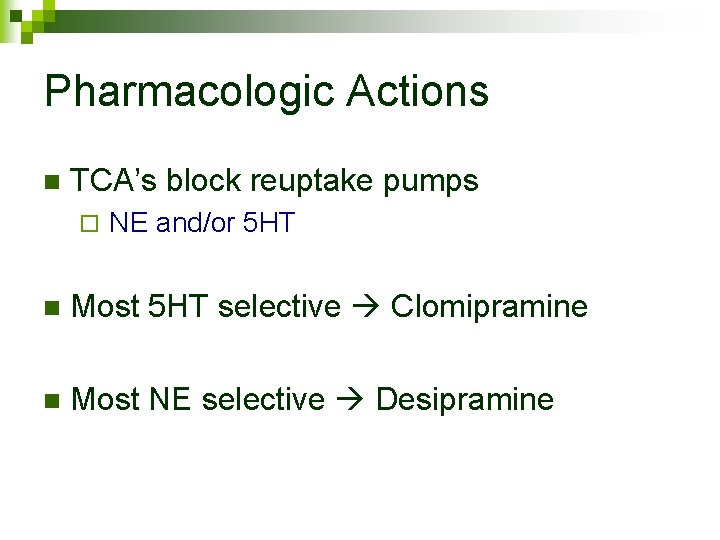
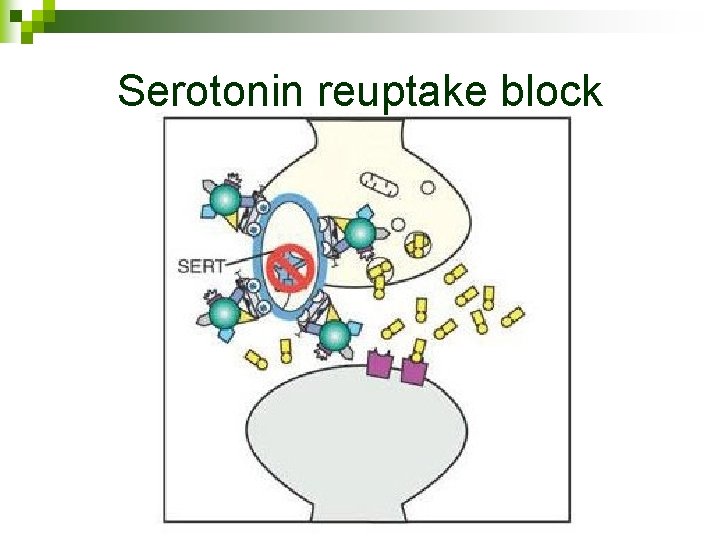
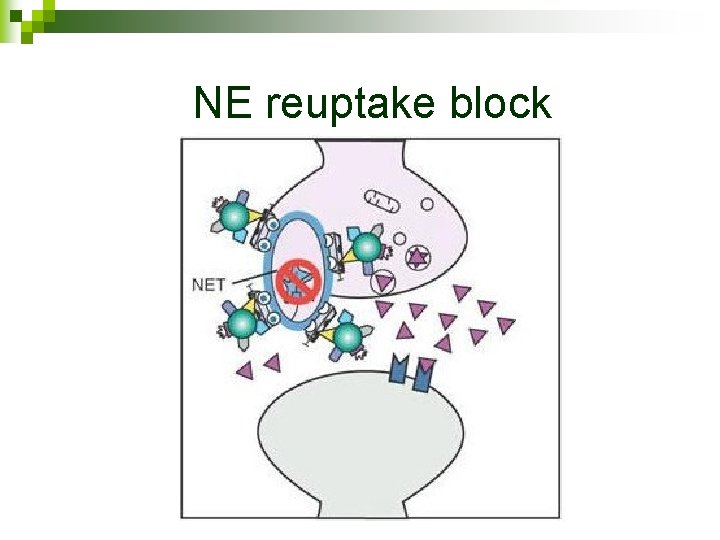
Pharmacologic Actions n TCA’s block reuptake pumps ¨ NE and/or 5 HT n Most 5 HT selective Clomipramine n Most NE selective Desipramine
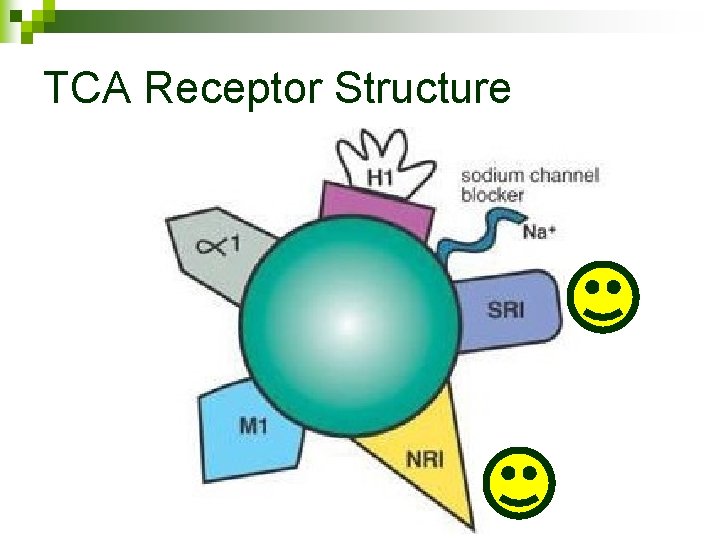
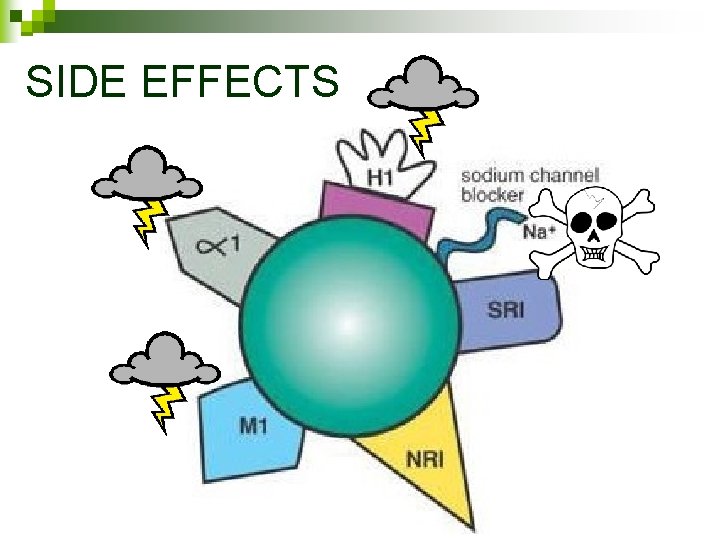
TCA Receptor Structure
Serotonin reuptake block
NE reuptake block
SIDE EFFECTS
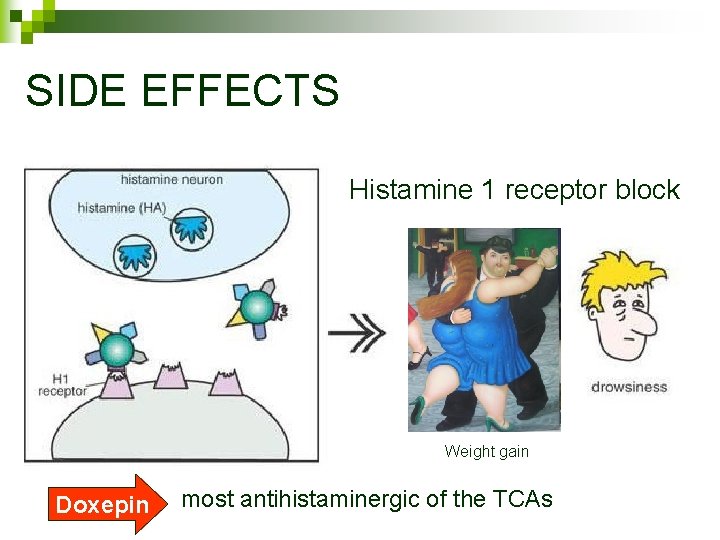
SIDE EFFECTS Histamine 1 receptor block Weight gain Doxepin most antihistaminergic of the TCAs
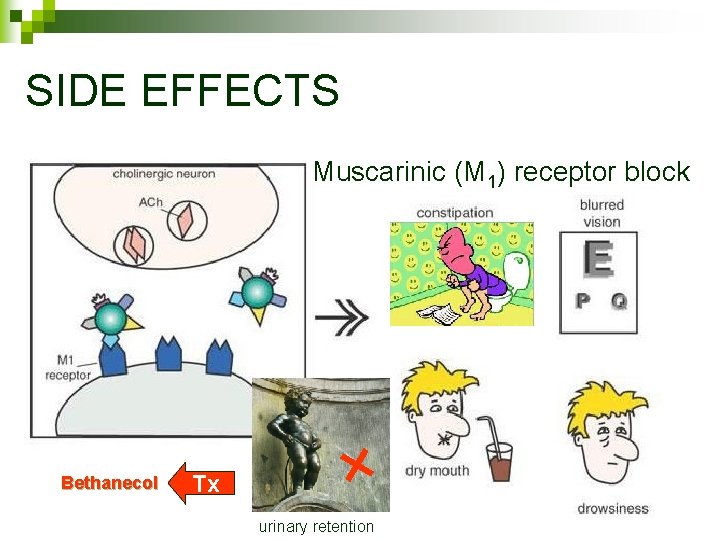
SIDE EFFECTS Muscarinic (M 1) receptor block Bethanecol Tx urinary retention
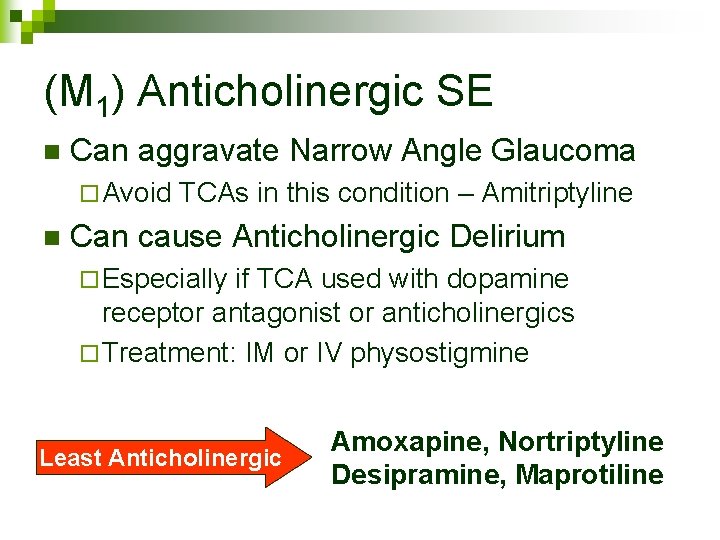
(M 1) Anticholinergic SE n Can aggravate Narrow Angle Glaucoma ¨ Avoid n TCAs in this condition – Amitriptyline Can cause Anticholinergic Delirium ¨ Especially if TCA used with dopamine receptor antagonist or anticholinergics ¨ Treatment: IM or IV physostigmine Least Anticholinergic Amoxapine, Nortriptyline Desipramine, Maprotiline
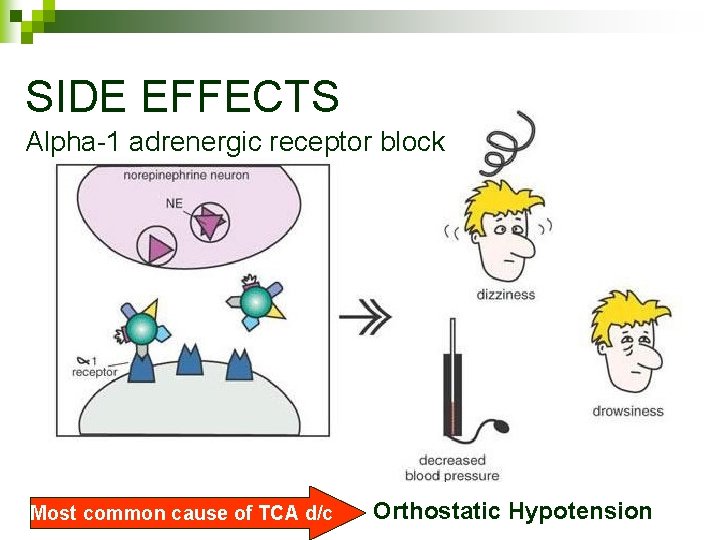
SIDE EFFECTS Alpha-1 adrenergic receptor block Most common cause of TCA d/c Orthostatic Hypotension
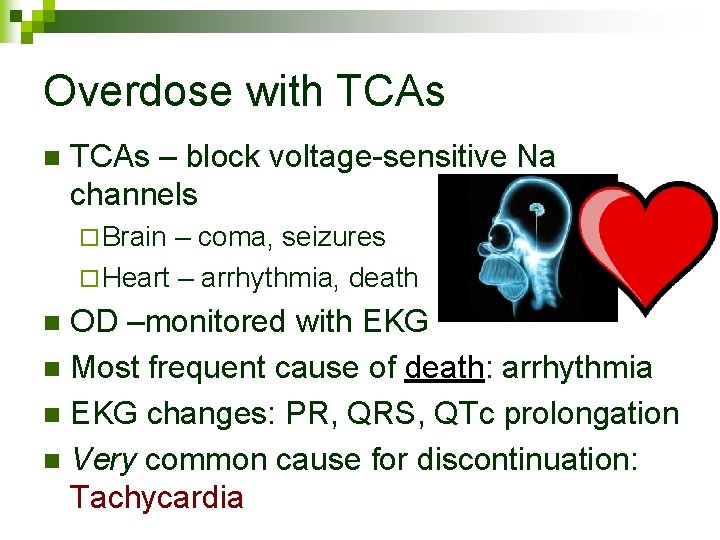
Overdose with TCAs n TCAs – block voltage-sensitive Na channels ¨ Brain – coma, seizures ¨ Heart – arrhythmia, death OD –monitored with EKG n Most frequent cause of death: arrhythmia n EKG changes: PR, QRS, QTc prolongation n Very common cause for discontinuation: Tachycardia n
Uses in Depression Melancholic Features Depressed mood Severe anhedonia Early morning awakening Weight loss Profound guilt Very effective n More likely to induce mania than bupropion or SSRIs n Better response n ¨ Melancholic features, prior major depressive episodes, family hx n In the US ¨ Clomipramine only approved for OCD
Other Uses n Panic disorder ¨ Imipramine n – FDA approved OCD ¨ Only n – most studied drug GAD ¨ Doxepin n Clomipramine – use first SSRIs Pain and Migraine prophylaxis ¨ Amitriptyline n TCAs have caused SUDDEN DEATH in children and adolescents! – used most often Childhood enuresis ¨ Imipramine
Special Considerations n Amoxapine May cause Parkinsonian sx ¨ Avoid in Parkinson’s Disease ¨ n Blood levels of 4 TCAs can be monitored n n n Nortriptyline, Desipramine, Clomipramine and Imipramine Nortriptyline: THERAPEUTIC WINDOW TCAs have low risk for inducing seizures ¨ Except for Maprotiline n ¨ May cause seizures when dose increased too fast or kept at hight doses Clomipramine and Amoxapine n May lower seizure threshold DO NOT give TCAs during ECT! serious cardiac effects
Special Considerations n Nortriptyline ¨ least n Desipramine and Protriptyline ¨ most n likely to cause orthostatic hypotention activating of the TCAs Relative contraindication for TCA use ¨ Bundle n branch block Cardiac disease or age >40 ¨ Do EKG prior to TCA use
Drug Interactions n CYP 1 A 2, 2 D 6 and 3 A 4 dirty drugs n Birth control pills and nicotine decrease TCA levels n Fluoxetine, Fluvoxamine and Paroxetine increase TCA levels x 4!! (CYP 2 D 6) ¨ n If used together use lower dose of TCA Antipsychotics and Methylphenidate increase TCA levels
Monoamine Oxidase Inhibitors (MAOIs)
Therapeutic Indications n Depression ¨ Atypical Depression n Panic Disorder n Bulimia PTSD Migraine ADD n n n
Available MAOIs n Irreversible n ¨ Phenelzine ¨ Tranylcypromine Reversible/Selective MAO-A (RIMA) ¨ Moclobemide ¨ Isocarboxazid (not in the US) n Selective MAO-B ¨ Selegiline (transdermal patch)
Pharmacokinetics n MAOIs inhibit MAO A and B ¨ Stops MAO from destroying n NE, 5 HT and DA n Increasing these neurotransmitters n Irreversible ¨ MAO enzyme synthesized again in 2 weeks ¨ Need for dietary restrictions ¨ Washout period needed when starting a new antidep. n Reversible ¨ MAO enz synthesized again in 24 -48 h ¨ Flexible dietary restrictions
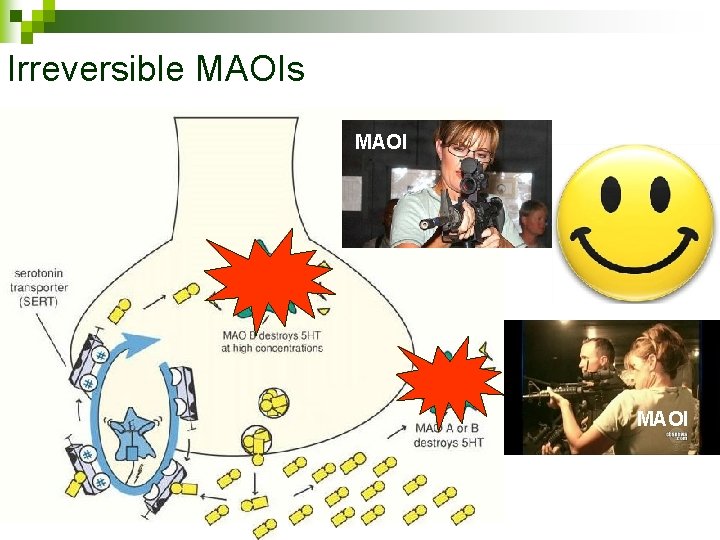
Irreversible MAOIs MAOI
Two things to know about MAOIs: n Serotonin Syndrome ¨ SSRIs ¨ SNRIs ¨ clomipramine ¨ meperidine n (Demerol) Hypertensive Crisis ¨ Mainly NE ¨ Tyramine ¨ fentanyl (Sublimaze) ¨ Lithium/Carbamazepine ¨ Tryptophan ¨ Other opioids (methadone, tramadol)
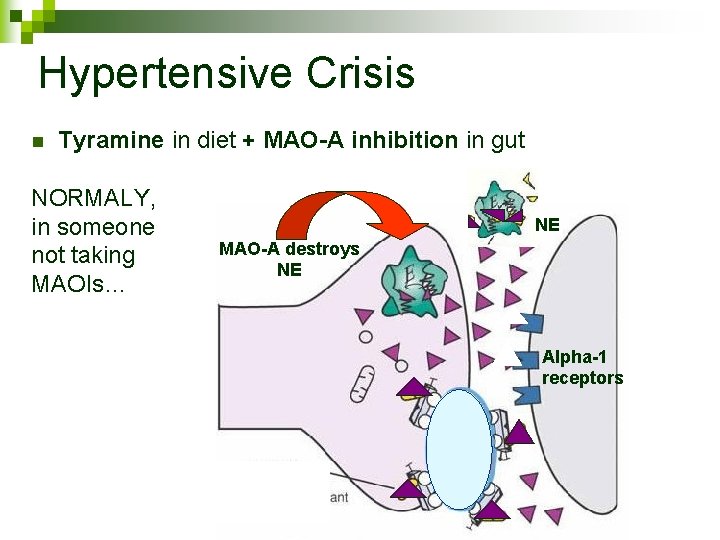
Hypertensive Crisis n Tyramine in diet + MAO-A inhibition in gut NORMALY, in someone not taking MAOIs… MAO-A destroys NE NE NE Alpha-1 receptors
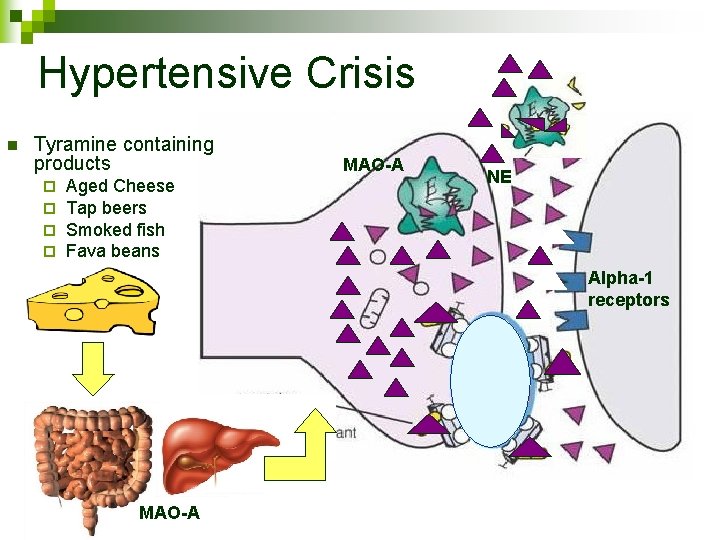
Hypertensive Crisis n Tyramine containing products ¨ ¨ Aged Cheese Tap beers Smoked fish Fava beans NE MAO-A NE Alpha-1 receptors MAO-A
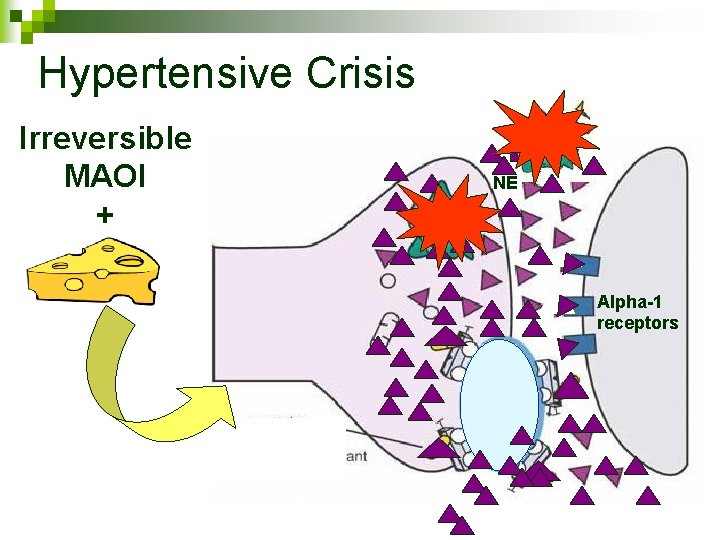
Hypertensive Crisis Irreversible MAOI + NE NE Alpha-1 receptors
Interesting facts n Selegiline ¨ Inhibits MAO-B n no destruction of MAO-A in the gut n not involved with intestinal tyramine reaction n no dietary restrictions n HTN crisis ¨ Can also be caused n pseudoephedrine by DDI
Side Effects n Most frequent side effect ¨ Orthostatic n Hypotension Other SE ¨ Insomnia ¨ Dizziness ¨ Weight ¨ Paresthesias gain ¨ Edema ¨ Sexual n dysfunction ¨ Switch to mania Contraindicated in pregnancy and nursing
Bupropion (Wellbutrin)
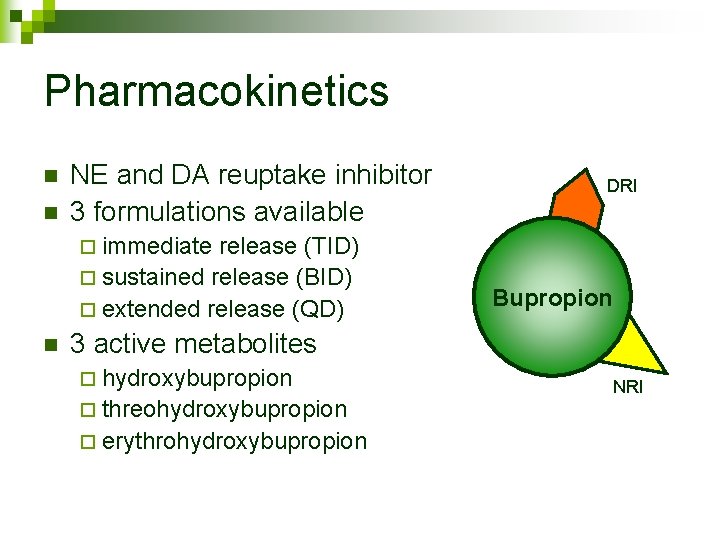
Pharmacokinetics n n NE and DA reuptake inhibitor 3 formulations available release (TID) ¨ sustained release (BID) ¨ extended release (QD) DRI ¨ immediate n Bupropion 3 active metabolites ¨ hydroxybupropion ¨ threohydroxybupropion ¨ erythrohydroxybupropion NRI
Therapeutic Indications n Depression ¨ n Seasonal Affective Disorder (SAD) ¨ ¨ n DA reward pathways ADHD ¨ ¨ n the only FDA approved antidepressant fist line treatment: phototherapy Smoking cessation ¨ n comparable efficacy to SSRIs second line agent appropiate for comorbid ADHD and depression Hypoactive sexual desire ¨ self or additive to other antidepressants (SSRIs)
The Good, the Bad and the Ugly n The GOOD ¨ No sexual dysfunction ¨ Safe in pregnancy (class B) ¨ No anticholinergic effects ¨ No weight gain ¨ No drowsiness ¨ No orthostatic hypotension/cardiovascular
Side Effects n The BAD ¨ Insomnia n but increases REM sleep ¨ Anxiety n Not good for panic d/o or anxiety ¨ GI distress (especially nausea) ¨ Restlessness/Agitation ¨ Hypertension ¨ Psychotic symptoms
Side Effects n The UGLY ¨ Seizures n Incidence is 0. 05% with 300 mg or less n Risk increases with doses >400 mg per day ¨ 0. 1%!! ¨ May cause death with OD n Uncontrollable seizures n Sinus bradycardia n Cardiac arrest
Selective Serotonin. Norepinephrine Reuptake Inhibitors (SNRIs)
SNRIs n Venlafaxine (Effexor) ¨ Depression ¨ GAD ¨ Social anxiety disorder Desvenlafaxine Succinate (DVS)(Pristiq) n Duloxetine (Cymbalta) n ¨ Depression ¨ GAD ¨ Diabetic Neuropathic Pain
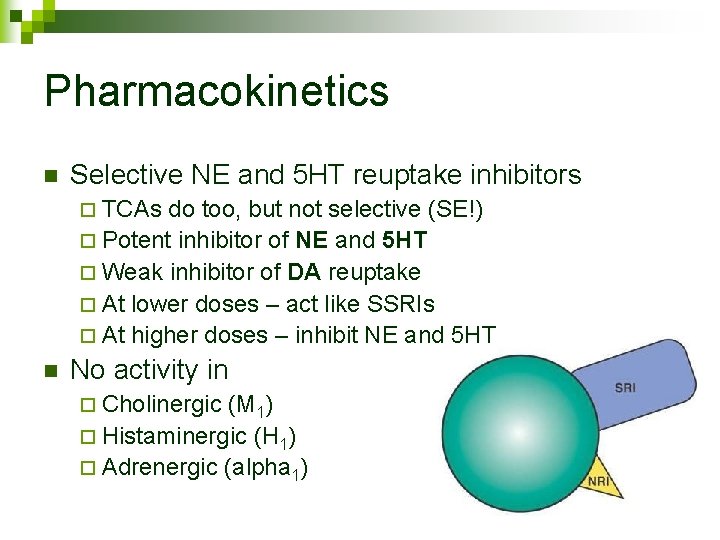
Pharmacokinetics n Selective NE and 5 HT reuptake inhibitors ¨ TCAs do too, but not selective (SE!) ¨ Potent inhibitor of NE and 5 HT ¨ Weak inhibitor of DA reuptake ¨ At lower doses – act like SSRIs ¨ At higher doses – inhibit NE and 5 HT n No activity in ¨ Cholinergic (M 1) ¨ Histaminergic (H 1) ¨ Adrenergic (alpha 1)
Pharmacokinetics n Half lives ¨ Venlafaxine – 3. 5 hours ¨ ODV – 9 hours ¨ Duloxetine – 12 hours n Discontinuation Syndrome! P 450 ¨ Venlafaxine – 2 D 6 n Active metabolite O-desmethylvenlafaxine (ODV) ¨ Duloxetine – 2 D 6 and 1 A 2
Side Effects n Venlafaxine ¨ Most common: nausea, sedation, dry mouth, dizziness, anxiety, nervousness, insomnia, weigh loss, constipation ¨ Sexual dysfunction ¨ HTN at higher doses ¨ Midryasis – monitor patients with acute narrow-angle glaucoma ¨ Platelet aggregation (serotonin-related impairment) ¨ In pts with liver disease – decreased clearance
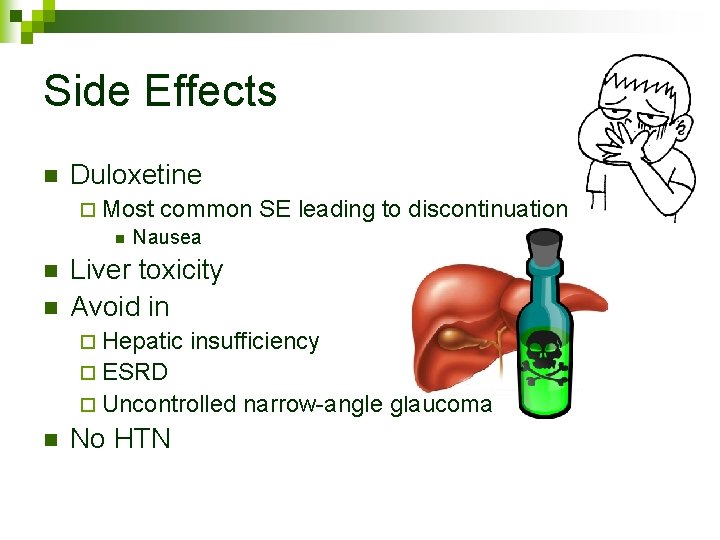
Side Effects n Duloxetine ¨ Most common n Nausea n n SE leading to discontinuation Liver toxicity Avoid in ¨ Hepatic insufficiency ¨ ESRD ¨ Uncontrolled n No HTN narrow-angle glaucoma
Mirtazapine (Remeron)
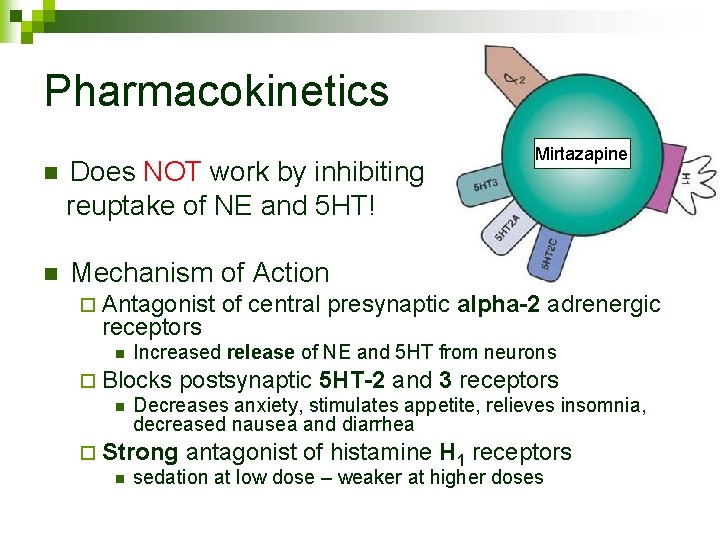
Pharmacokinetics n Does NOT work by inhibiting reuptake of NE and 5 HT! n Mechanism of Action ¨ Antagonist receptors n Mirtazapine of central presynaptic alpha-2 adrenergic Increased release of NE and 5 HT from neurons ¨ Blocks postsynaptic 5 HT-2 and 3 receptors n Decreases anxiety, stimulates appetite, relieves insomnia, decreased nausea and diarrhea ¨ Strong antagonist of histamine H 1 receptors n sedation at low dose – weaker at higher doses
Therapeutic Indications n Depression ¨ melancholic features ¨ elderly ¨ Augmentation with SSRIs or Venlafaxine n counteract nausea, agitation and insomnia n NO CYP 450 effects! n Cancer patients ¨ GI side effects of chemotherapy ¨ sedation and stimulation of appetite
Side Effects n n Weight gain and stimulation of appetite Somnolence ¨ in more than 50% of persons ¨ avoid alcohol and sedating OTC n potentiates sedative effects n n n medications ↑ cholesterol, triglycerides and ALT Dizziness In some orthostatic hypotension Agranulocytosis Low incidence of sexual SE
Nefazodone and Trazodone
Nefazodone n Shortest ½ life of all antidepressants ¨ 2 -3 n hours! Active metabolites ¨ hydroxynefazodone (principal) ¨ m. CPP (meta-chlorophenylpiperazine) n 5 HT effects – migraine, anxiety and weight loss
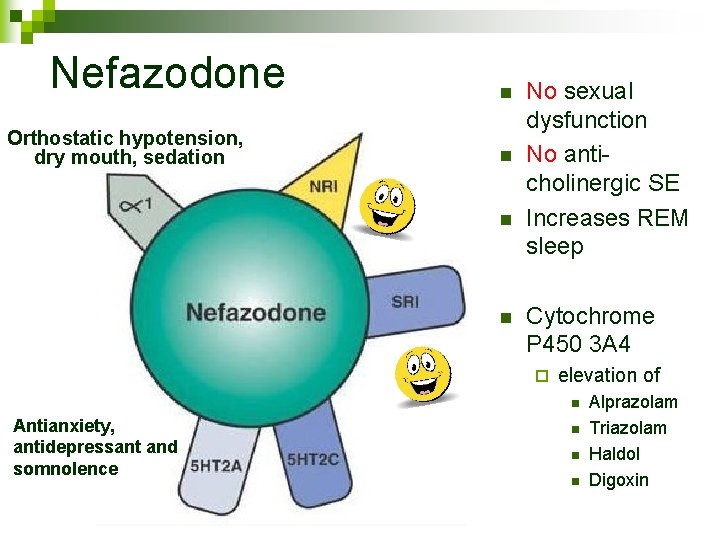
Nefazodone Orthostatic hypotension, dry mouth, sedation n n No sexual dysfunction No anticholinergic SE Increases REM sleep Cytochrome P 450 3 A 4 ¨ elevation of n Antianxiety, antidepressant and somnolence n n n Alprazolam Triazolam Haldol Digoxin
Therapeutic Indications Depression n Panic disorder n Premenstrual dysphoric disorder n GAD n Chronic pain n PTSD n Chronic fatigue syndrome n
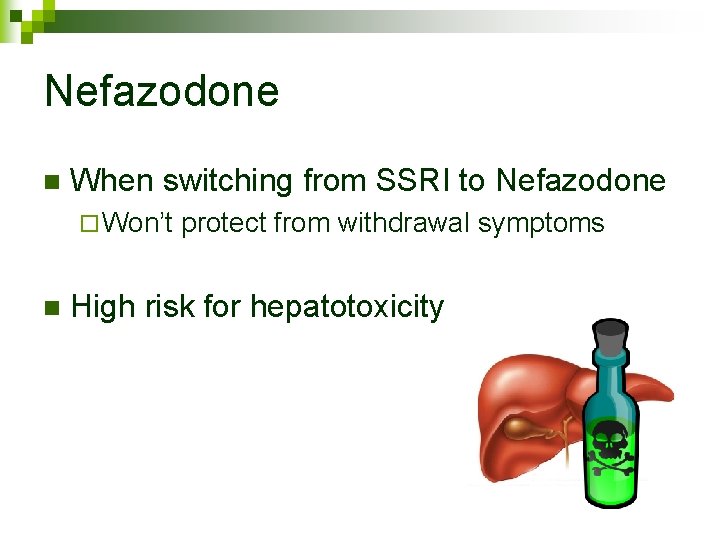
Nefazodone n When switching from SSRI to Nefazodone ¨ Won’t n protect from withdrawal symptoms High risk for hepatotoxicity
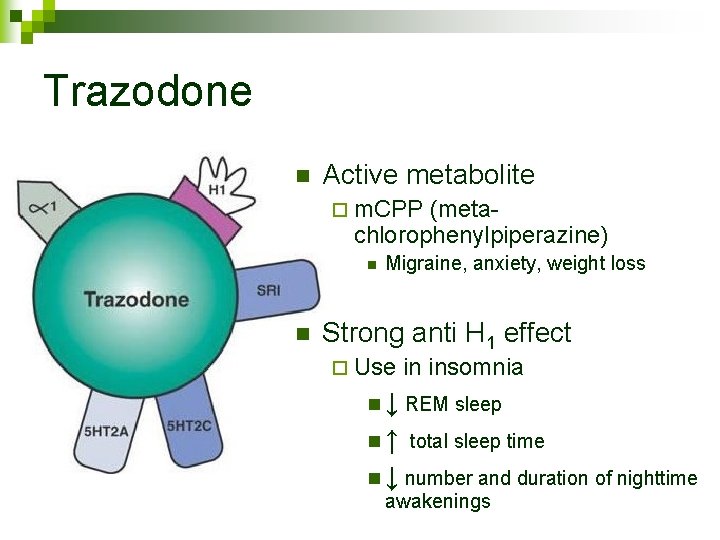
Trazodone n Active metabolite ¨ m. CPP (metachlorophenylpiperazine) n n Migraine, anxiety, weight loss Strong anti H 1 effect ¨ Use in insomnia n ↓ REM sleep n ↑ total sleep time n ↓ number and duration of nighttime awakenings
Trazodone More risk of orthostatic hypotension than Nefazodone (alpha 1) n ½ life n ¨ 5 -9 n hours Can cause priapism
- Slides: 79