
Antidepressants and Benzodiazepines February 2015 Classification of Antidepressants
Antidepressants and Benzodiazepines February 2015

Classification of Antidepressants Monoamine Reuptake Inhibitors (MARIs) Complex TCA SSRI NRI SNRI Na. SS A SA RI Amitriptyline Fluvoxamine Reboxetine Venlafaxine Mirtazapin e Trazodon e Imipramine Fluoxetine Duloxetine Clomipramine Paroxetine Dothiepin Sertraline Lofepramine Citalopram Es-citalopram (Atomoxetin e) Agomelatin e Vortioxetin e
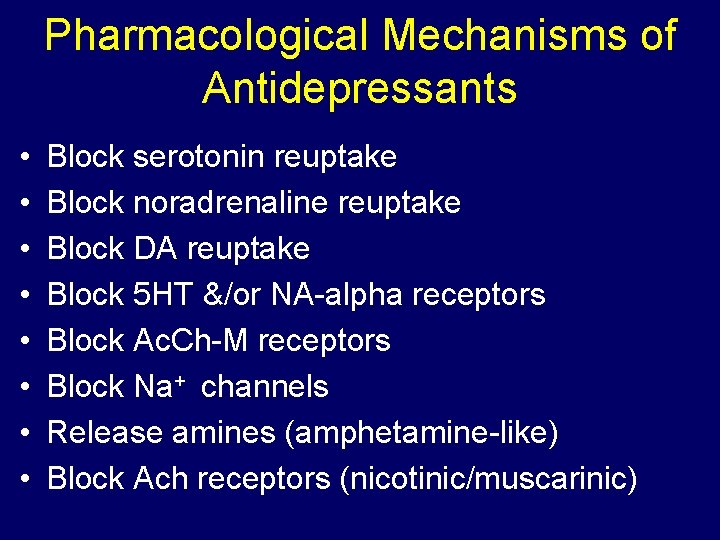
Pharmacological Mechanisms of Antidepressants • • Block serotonin reuptake Block noradrenaline reuptake Block DA reuptake Block 5 HT &/or NA-alpha receptors Block Ac. Ch-M receptors Block Na+ channels Release amines (amphetamine-like) Block Ach receptors (nicotinic/muscarinic)
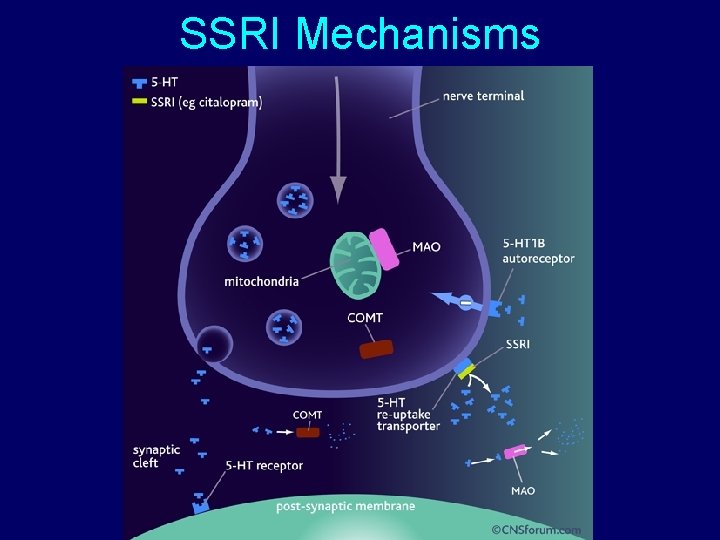
SSRI Mechanisms
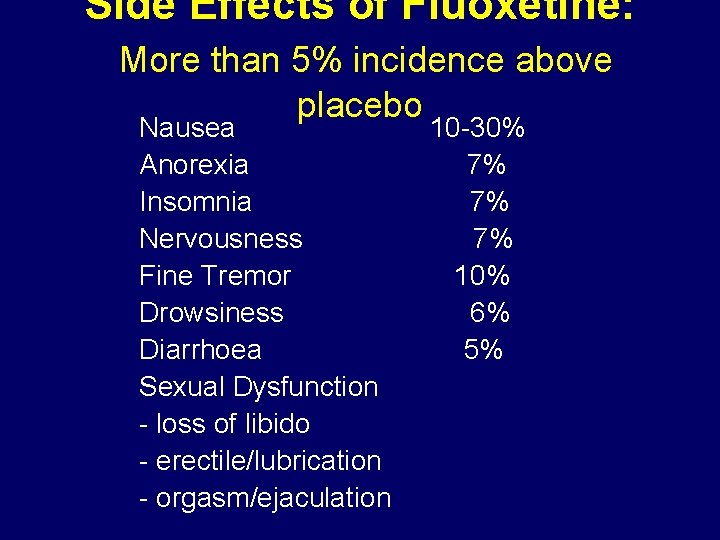
Side Effects of Fluoxetine: More than 5% incidence above placebo Nausea 10 -30% Anorexia 7% Insomnia 7% Nervousness 7% Fine Tremor 10% Drowsiness 6% Diarrhoea 5% Sexual Dysfunction - loss of libido - erectile/lubrication - orgasm/ejaculation
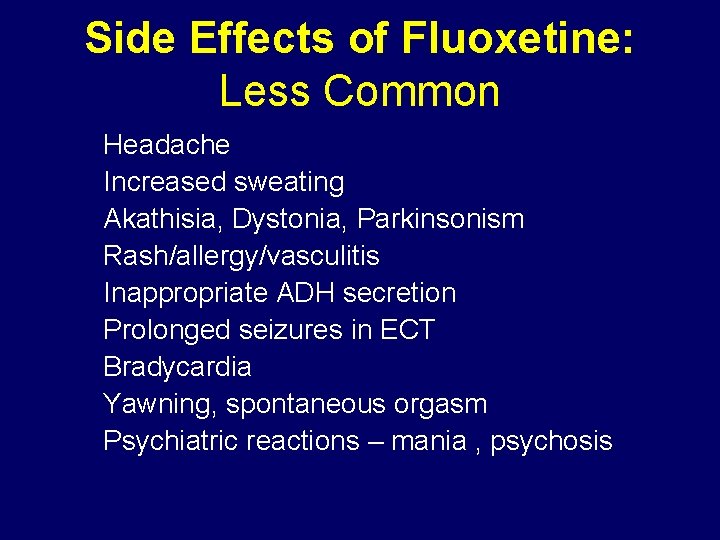
Side Effects of Fluoxetine: Less Common Headache Increased sweating Akathisia, Dystonia, Parkinsonism Rash/allergy/vasculitis Inappropriate ADH secretion Prolonged seizures in ECT Bradycardia Yawning, spontaneous orgasm Psychiatric reactions – mania , psychosis
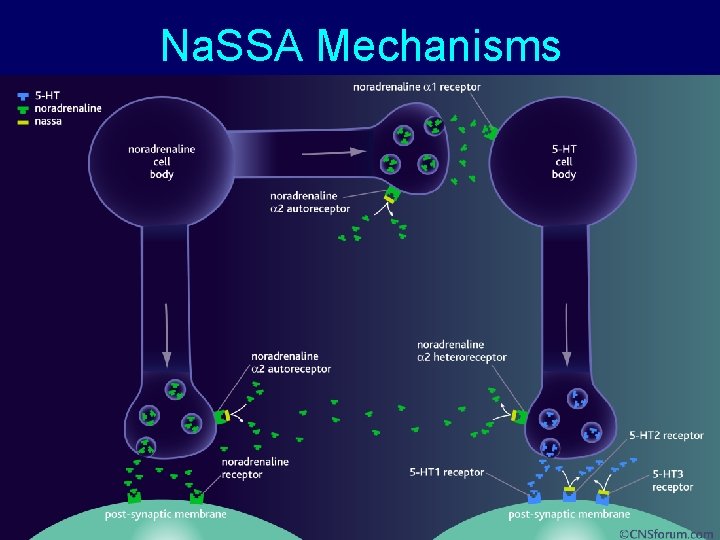
Na. SSA Mechanisms
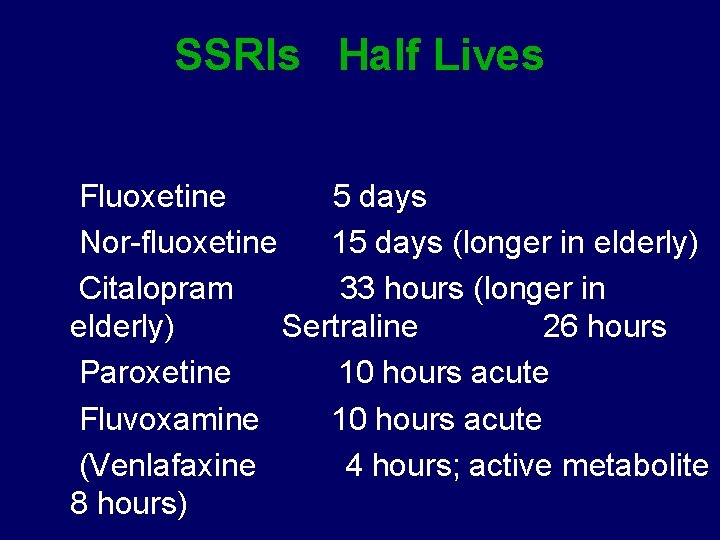
SSRIs Half Lives Fluoxetine 5 days Nor-fluoxetine 15 days (longer in elderly) Citalopram 33 hours (longer in elderly) Sertraline 26 hours Paroxetine 10 hours acute Fluvoxamine 10 hours acute (Venlafaxine 4 hours; active metabolite 8 hours)
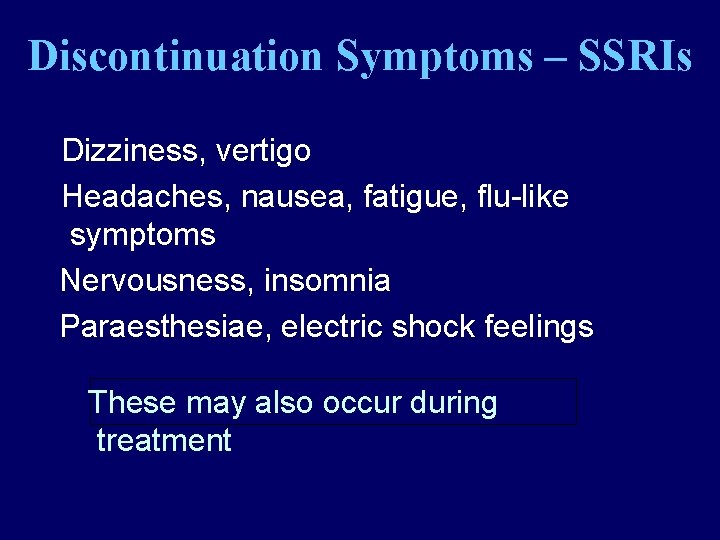
Discontinuation Symptoms – SSRIs Dizziness, vertigo Headaches, nausea, fatigue, flu-like symptoms Nervousness, insomnia Paraesthesiae, electric shock feelings These may also occur during treatment
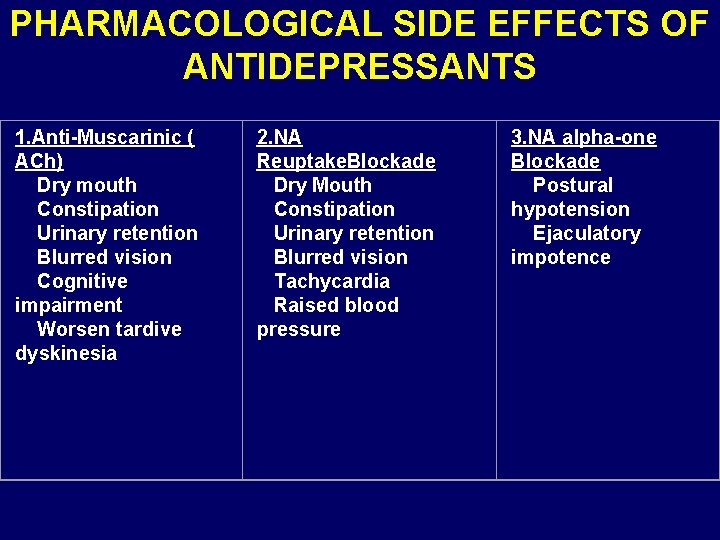
PHARMACOLOGICAL SIDE EFFECTS OF ANTIDEPRESSANTS 1. Anti-Muscarinic ( ACh) Dry mouth Constipation Urinary retention Blurred vision Cognitive impairment Worsen tardive dyskinesia 2. NA Reuptake. Blockade Dry Mouth Constipation Urinary retention Blurred vision Tachycardia Raised blood pressure 3. NA alpha-one Blockade Postural hypotension Ejaculatory impotence
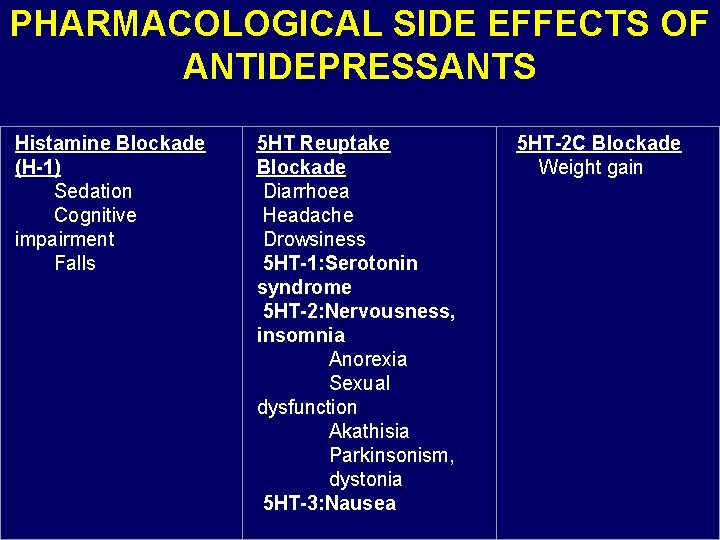
PHARMACOLOGICAL SIDE EFFECTS OF ANTIDEPRESSANTS Histamine Blockade 5 HT Reuptake (H-1) Blockade Sedation Diarrhoea Cognitive Headache impairment Drowsiness Falls 5 HT-1: Serotonin syndrome 5 HT-2: Nervousness, insomnia Anorexia Sexual dysfunction Akathisia Parkinsonism, dystonia 5 HT-3: Nausea 5 HT-2 C Blockade Weight gain
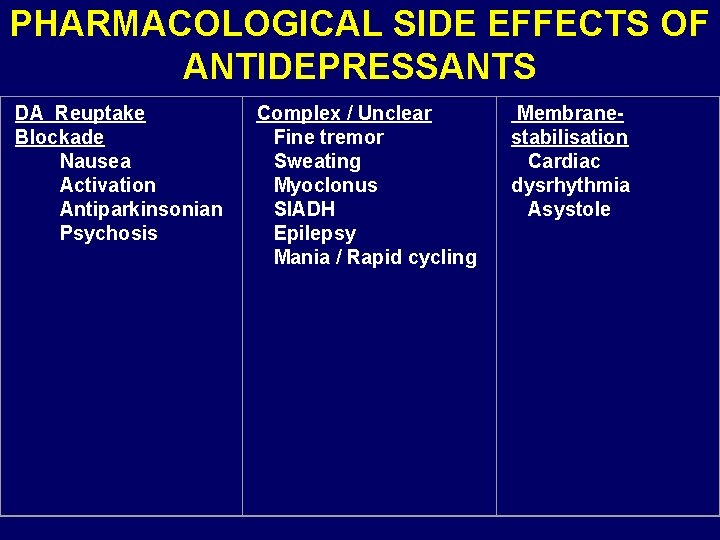
PHARMACOLOGICAL SIDE EFFECTS OF ANTIDEPRESSANTS DA Reuptake Complex / Unclear Membrane Blockade Nausea Activation Antiparkinsonian Psychosis Fine tremor Sweating Myoclonus SIADH Epilepsy Mania / Rapid cycling stabilisation Cardiac dysrhythmia Asystole
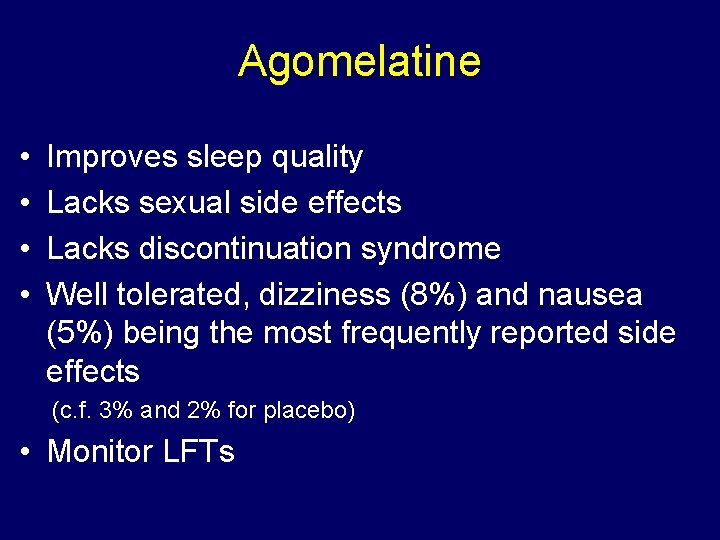
Agomelatine • • Improves sleep quality Lacks sexual side effects Lacks discontinuation syndrome Well tolerated, dizziness (8%) and nausea (5%) being the most frequently reported side effects (c. f. 3% and 2% for placebo) • Monitor LFTs
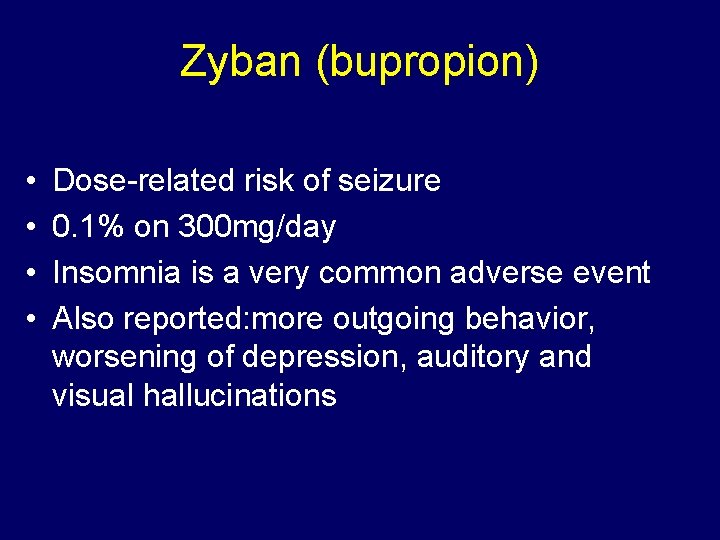
Zyban (bupropion) • • Dose-related risk of seizure 0. 1% on 300 mg/day Insomnia is a very common adverse event Also reported: more outgoing behavior, worsening of depression, auditory and visual hallucinations
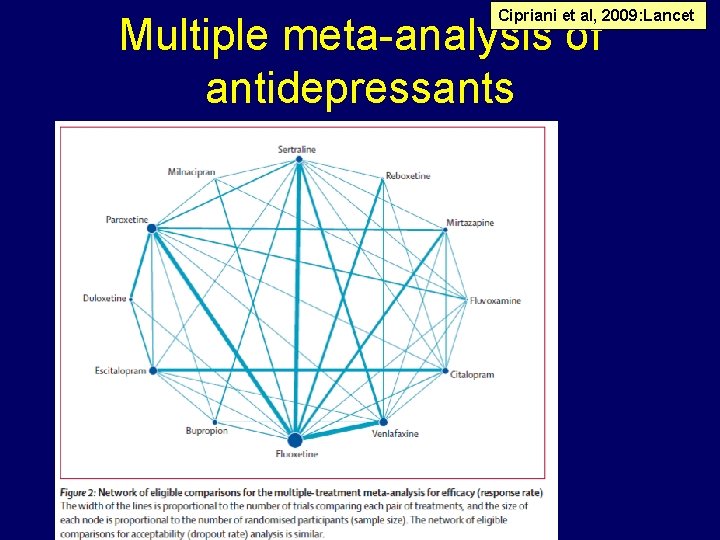
Cipriani et al, 2009: Lancet Multiple meta-analysis of antidepressants
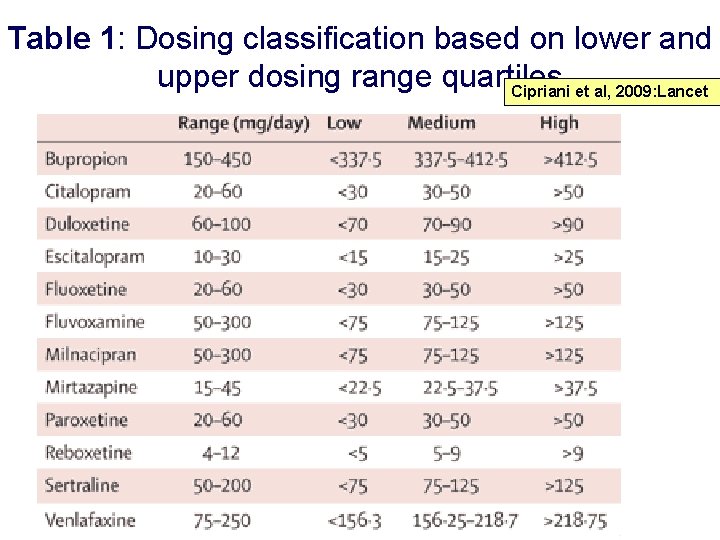
Table 1: Dosing classification based on lower and upper dosing range quartiles Cipriani et al, 2009: Lancet
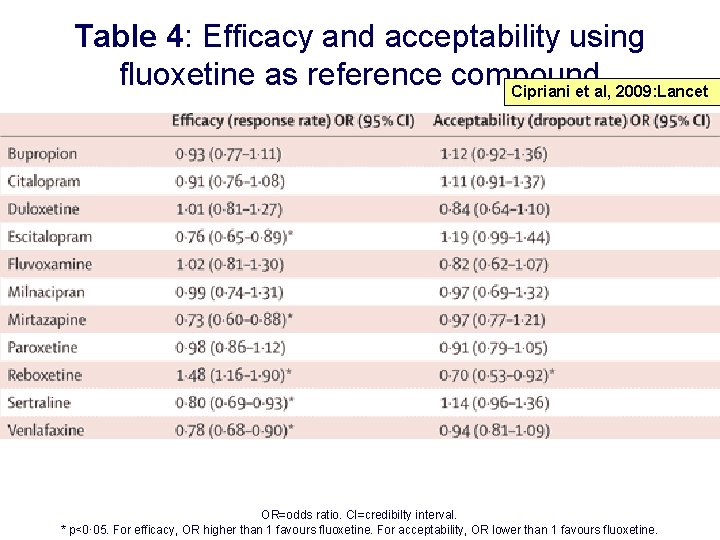
Table 4: Efficacy and acceptability using fluoxetine as reference compound Cipriani et al, 2009: Lancet OR=odds ratio. CI=credibilty interval. * p<0· 05. For efficacy, OR higher than 1 favours fluoxetine. For acceptability, OR lower than 1 favours fluoxetine.
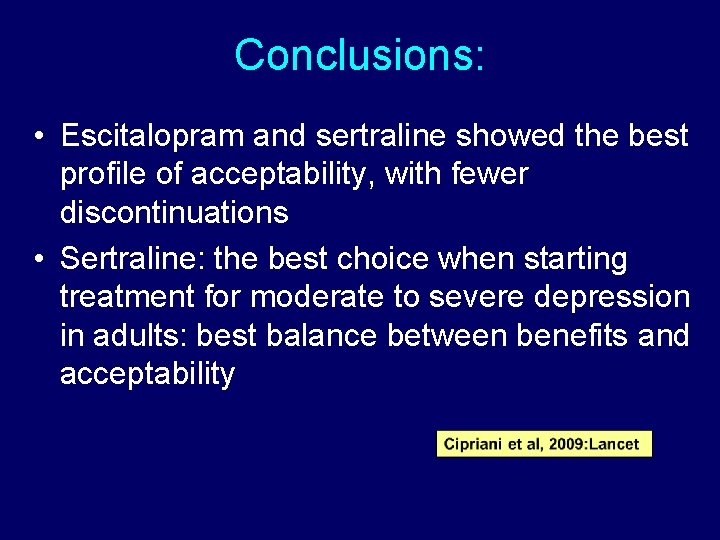
Conclusions: • Escitalopram and sertraline showed the best profile of acceptability, with fewer discontinuations • Sertraline: the best choice when starting treatment for moderate to severe depression in adults: best balance between benefits and acceptability
Treating Depression
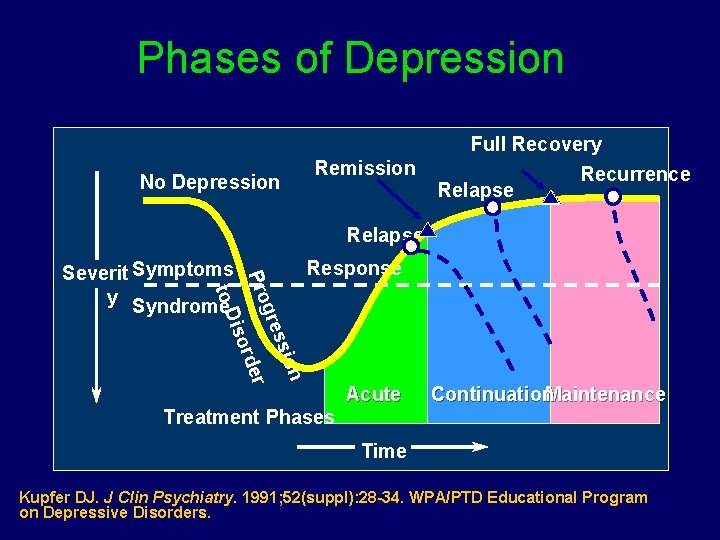
Phases of Depression No Depression Remission Full Recovery Recurrence Relapse X Response iso on ssi gre r rde Pro to D Severit Symptoms y Syndrome Treatment Phases Acute Continuation. Maintenance Time Kupfer DJ. J Clin Psychiatry. 1991; 52(suppl): 28 -34. WPA/PTD Educational Program on Depressive Disorders.
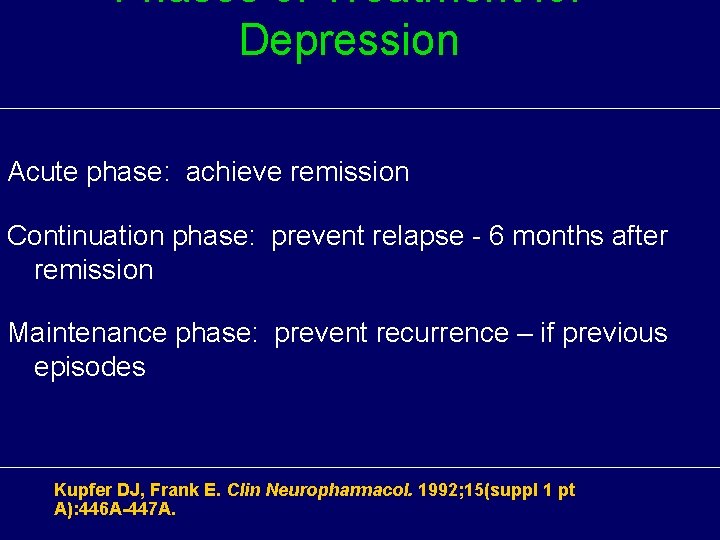
Phases of Treatment for Depression Acute phase: achieve remission Continuation phase: prevent relapse - 6 months after remission Maintenance phase: prevent recurrence – if previous episodes Kupfer DJ, Frank E. Clin Neuropharmacol. 1992; 15(suppl 1 pt A): 446 A-447 A.
Antidepressants and suicidality in young people
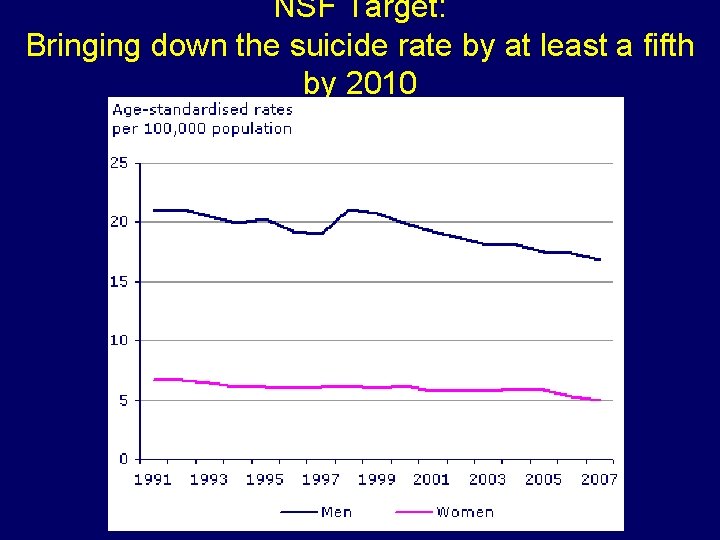
NSF Target: Bringing down the suicide rate by at least a fifth by 2010
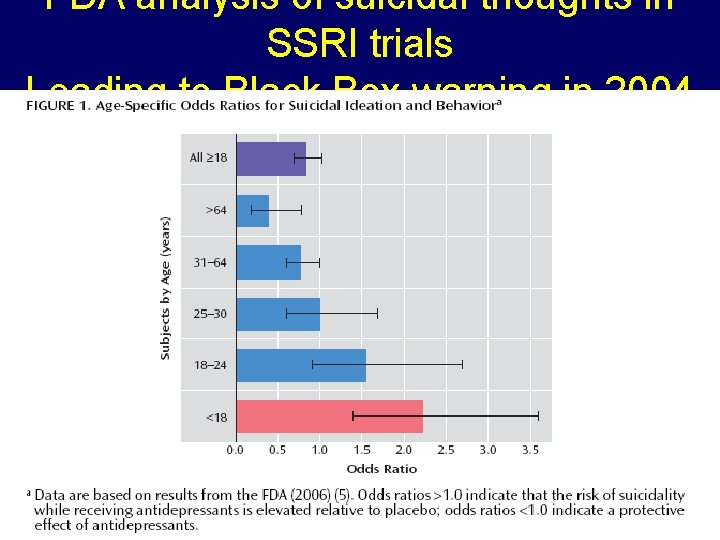
FDA analysis of suicidal thoughts in SSRI trials Leading to Black Box warning in 2004
FDA adviser 2007 “The black box warning is not meant to discourage the prescription of antidepressants…. Instead, it is meant to promote monitoring of patients who commence antidepressants. ”
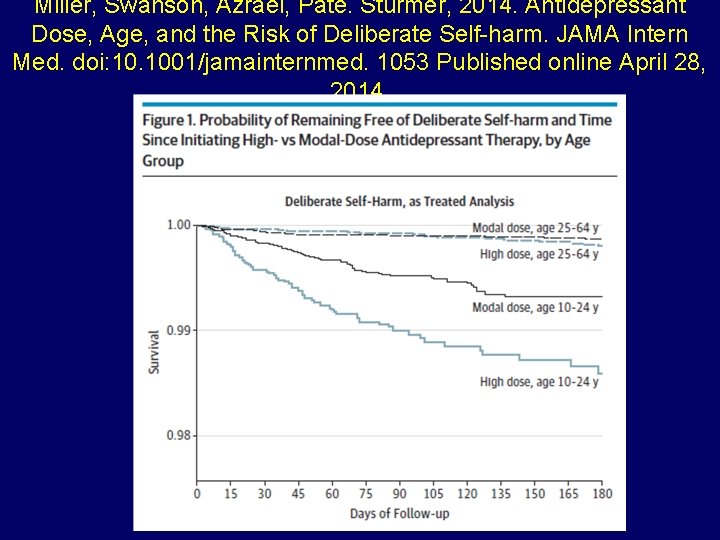
Miller, Swanson, Azrael, Pate. Stürmer, 2014. Antidepressant Dose, Age, and the Risk of Deliberate Self-harm. JAMA Intern Med. doi: 10. 1001/jamainternmed. 1053 Published online April 28, 2014.
Benzodiazepine: Side effects and interactions • Impairment of mental ability, amnesia, decreased psychomotor reactions and coordination • In some personalities they result in disinhibition and aggression • Avoid prescribing for personalities prone to dependency • Alcohol interacts with benzodiazepines, and they potentiate one another • Benzodiazepines can cause some respiratory depression, particularly in the elderly, and those with emphysema
Benzodiazepine Dependence • If treatment continues after dependence begins, therapeutic effects are partly lost • As each dose wears off the patient experiences “rebound” exacerbation of the pre-existing condition • Attacks of panic may occur when a shortacting drug such as lorazepam is wearing off
Benzodiazepine: Dependence Abrupt withdrawal, after high doses or long use: • disorientation and delirium, paranoid psychosis, convulsions • Rapid withdrawal from low dose: • insomnia, anxiety, tremor, sweating • Other symptoms • nausea, heightened sensitivity to light and sound, sense of imbalance as on a rocking boat, frightening sensory illusions, tinnitus, paraesthesia, • Depersonalisation, derealisation. Can last for weeks; full recovery may take two years Slow and phased withdrawal, with a self-help group • Reduce the dose by one tenth every two weeks in outpatients
- Slides: 29