
ANTICOAGULANTS Jill Gregory Medicinal Chemistry Dr Buynak 4
ANTICOAGULANTS Jill Gregory Medicinal Chemistry Dr. Buynak 4. 23. 09
Overview • Review Blood basics – composition – how blood clots • Note Instances where blood clotting is bad • Discuss Anticoagulants – Heparin – Warfarin – New Drugs • F Xa inhibitors • thrombin inhibitors • Show example Clinical Trial
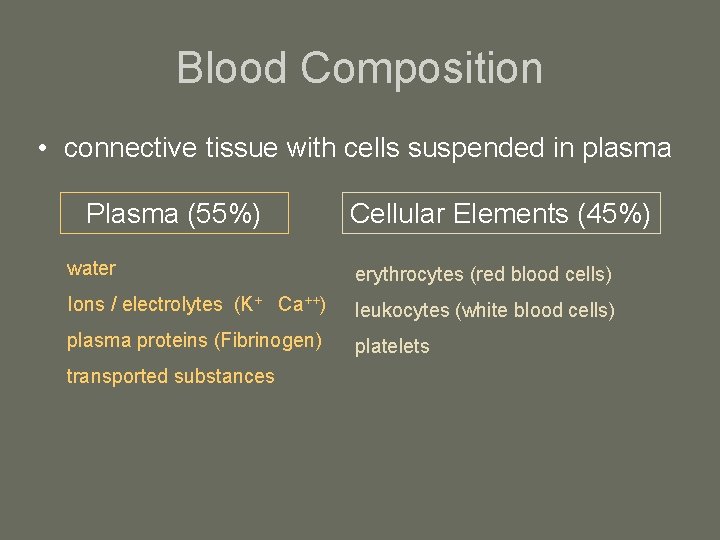
Blood Composition • connective tissue with cells suspended in plasma Plasma (55%) Cellular Elements (45%) water erythrocytes (red blood cells) Ions / electrolytes (K+ Ca++) leukocytes (white blood cells) plasma proteins (Fibrinogen) platelets transported substances
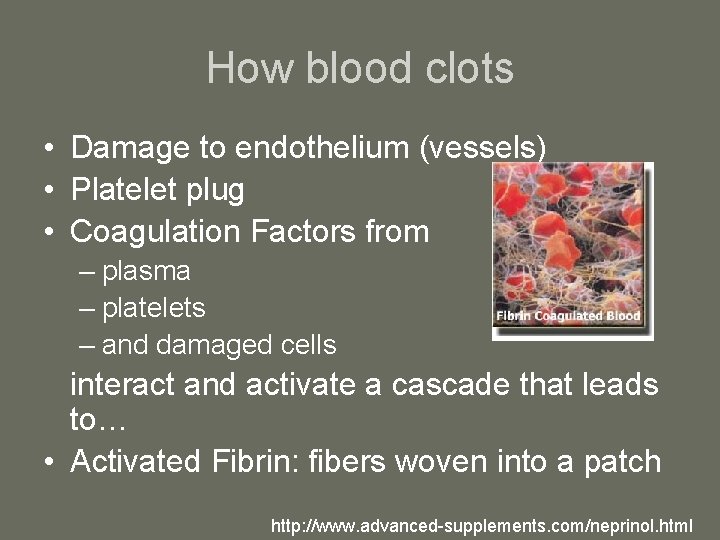
How blood clots • Damage to endothelium (vessels) • Platelet plug • Coagulation Factors from – plasma – platelets – and damaged cells interact and activate a cascade that leads to… • Activated Fibrin: fibers woven into a patch http: //www. advanced-supplements. com/neprinol. html
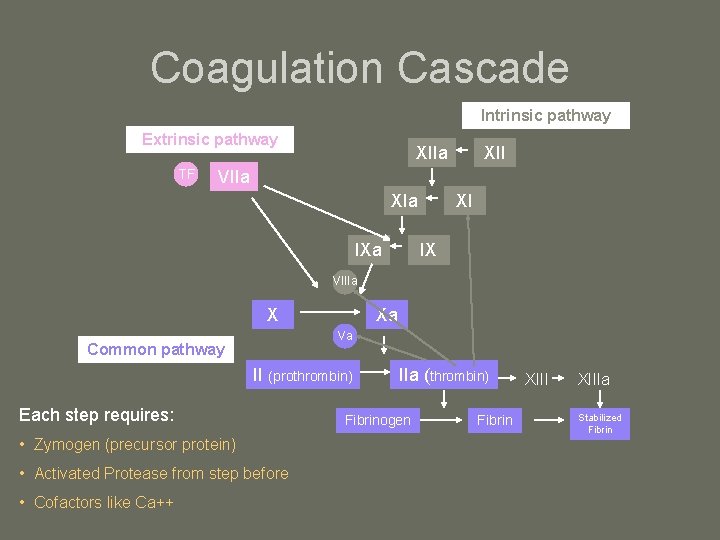
Coagulation Cascade Intrinsic pathway Extrinsic pathway TF XIIa XII VIIa XIa IXa XI IX VIIIa X Xa Va Common pathway II (prothrombin) Each step requires: • Zymogen (precursor protein) • Activated Protease from step before • Cofactors like Ca++ IIa (thrombin) Fibrinogen Fibrin XIIIa Stabilized Fibrin
When would we not want clots to form? ? • Clotting is good at sites of injury because it minimizes blood loss and prevents infectious agents from getting into our systems. • Clotting can be bad when occurs inappropriately in normal vessels [called thrombus] …clot can break free [called embolus] and lodge in heart, causing myocardial infarction, or in brain, causing stroke. • Thrombosis is caused by abnormalities in blood composition, vessel wall quality, and/or nature of the blood flow – Different types of thrombosis: • Venous [i. e. VTE = venous thromboembolism; DVT = Deep-vein thrombosis] • Arterial
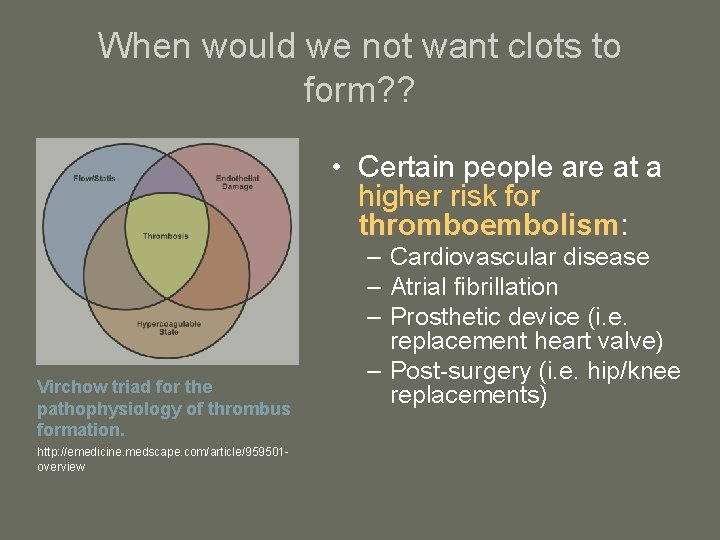
When would we not want clots to form? ? • Certain people are at a higher risk for thromboembolism: thromboembolism Virchow triad for the pathophysiology of thrombus formation. http: //emedicine. medscape. com/article/959501 overview – Cardiovascular disease – Atrial fibrillation – Prosthetic device (i. e. replacement heart valve) – Post-surgery (i. e. hip/knee replacements)
Thromboembolism in the U. S. • “Annually, more individuals may die from DVT complications than from the combination of AIDS, breast cancer, and motor vehicle accidents combined” – 900, 000 to 2, 000 VTE cases per year in U. S. VTE cases – Estimates of death rates per year vary from 50, 000 to 300, 000 death – 700, 000 Strokes per year Strokes • 15% of strokes are in people with Atrial Fibrillation – 1. 2 mil Heart Attacks per year Heart Attacks • Help prevent thromboembolism with the antiprevent thrombotic drugs: Anticoagulants, Antiplatelets, Thrombolytics
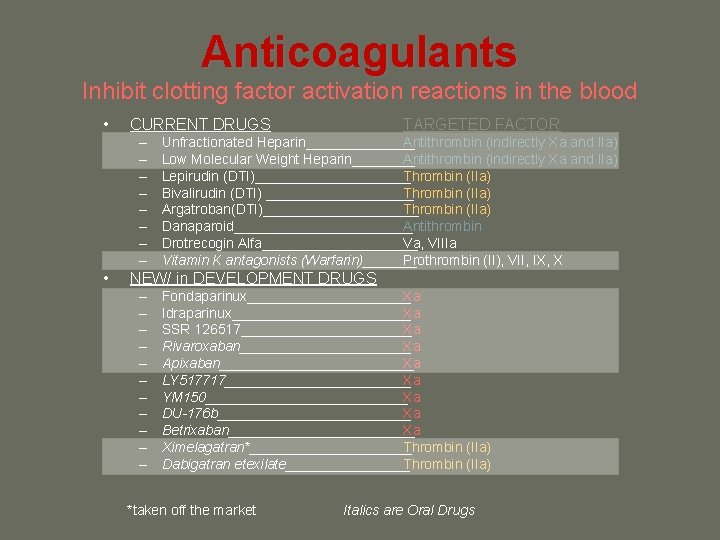
Anticoagulants Inhibit clotting factor activation reactions in the blood • CURRENT DRUGS – – – – • TARGETED FACTOR Unfractionated Heparin_______ Antithrombin (indirectly Xa and IIa) Low Molecular Weight Heparin____ Antithrombin (indirectly Xa and IIa) Lepirudin (DTI)__________ Thrombin (IIa) Bivalirudin (DTI) __________ Thrombin (IIa) Argatroban(DTI)__________ Thrombin (IIa) Danaparoid____________ Antithrombin Drotrecogin Alfa__________ Va, VIIIa Vitamin K antagonists (Warfarin)_______ Prothrombin (II), VII, IX, X NEW/ in DEVELOPMENT DRUGS – – – Fondaparinux___________ Xa Idraparinux____________ Xa SSR 126517___________ Xa Rivaroxaban___________ Xa Apixaban_____________ Xa LY 517717____________ Xa YM 150_____________Xa DU-176 b_____________ Xa Betrixaban____________ Xa Ximelagatran*___________ Thrombin (IIa) Dabigatran etexilate________ Thrombin (IIa) *taken off the market Italics are Oral Drugs
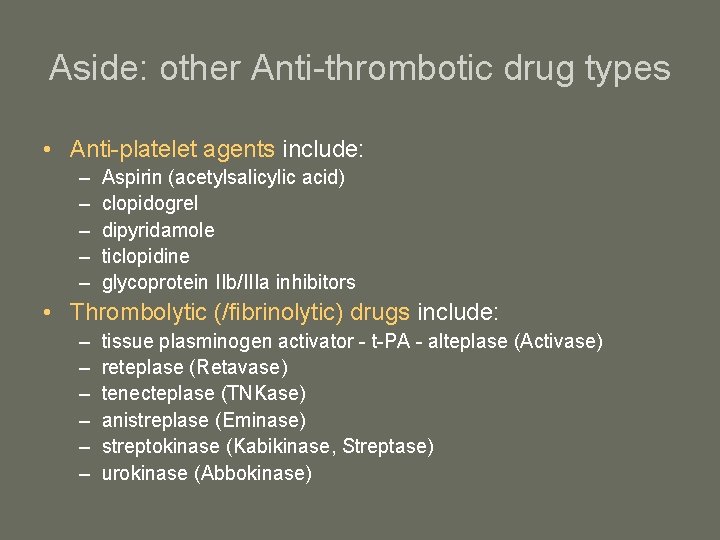
Aside: other Anti-thrombotic drug types • Anti-platelet agents include: – – – Aspirin (acetylsalicylic acid) clopidogrel dipyridamole ticlopidine glycoprotein IIb/IIIa inhibitors • Thrombolytic (/fibrinolytic) drugs include: – – – tissue plasminogen activator - t-PA - alteplase (Activase) reteplase (Retavase) tenecteplase (TNKase) anistreplase (Eminase) streptokinase (Kabikinase, Streptase) urokinase (Abbokinase)
Heparin And other current Parenteral Anticoagulants
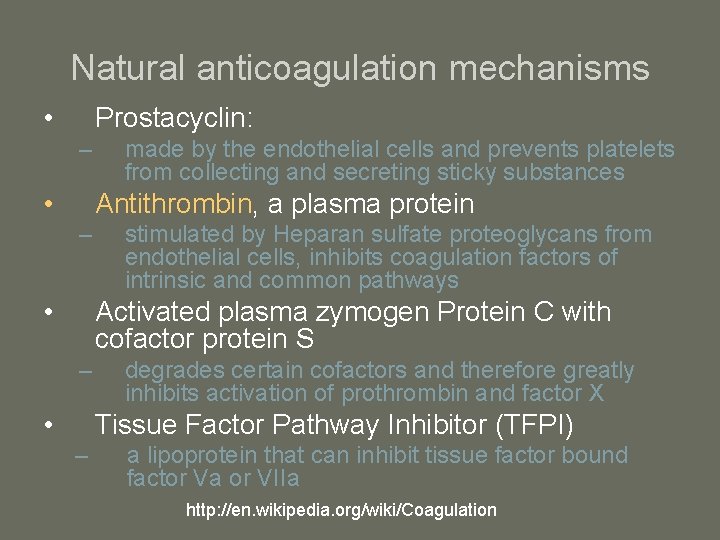
Natural anticoagulation mechanisms • Prostacyclin: – • made by the endothelial cells and prevents platelets from collecting and secreting sticky substances Antithrombin, a plasma protein – • stimulated by Heparan sulfate proteoglycans from endothelial cells, inhibits coagulation factors of intrinsic and common pathways Activated plasma zymogen Protein C with cofactor protein S – • degrades certain cofactors and therefore greatly inhibits activation of prothrombin and factor X Tissue Factor Pathway Inhibitor (TFPI) – a lipoprotein that can inhibit tissue factor bound factor Va or VIIa http: //en. wikipedia. org/wiki/Coagulation

Basics of Heparin • Derived from mucosal tissues of slaughtered meat animals. Also exists in your body and is secreted form mast cells at the site of tissue injury • Increases Antithrombin activity. (Indirect inhibition method of IIa & Xa) • Usually intravenous adminstration • Glycosaminoglycan chains attached to a protein core = proteoglycans (750 kilo. Daltons to 1000 kilo. Daltons) • Low molecular weight heparin: different composition; more Low molecular weight heparin predictable; subcutaneous injection twice daily; use preferred over unfractionated heparin
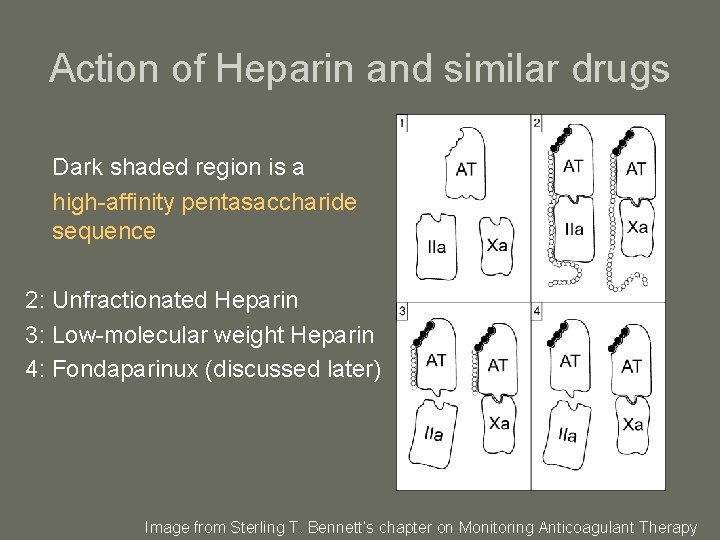
Action of Heparin and similar drugs Dark shaded region is a high-affinity pentasaccharide sequence 2: Unfractionated Heparin 3: Low-molecular weight Heparin 4: Fondaparinux (discussed later) Image from Sterling T. Bennett’s chapter on Monitoring Anticoagulant Therapy
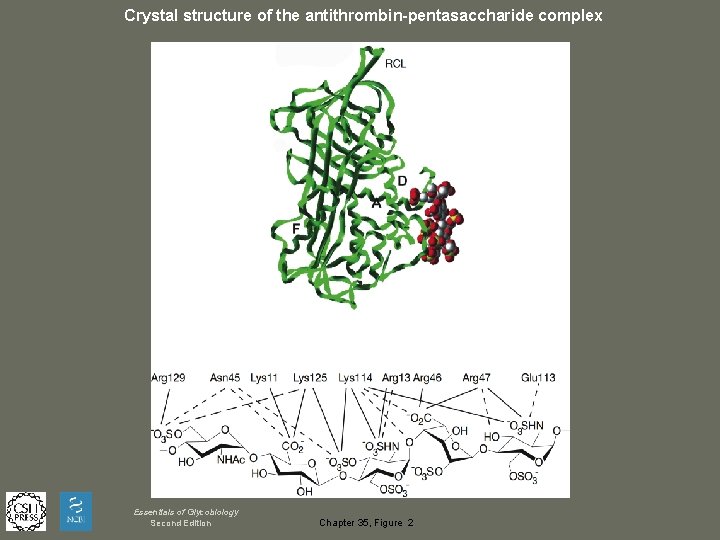
Crystal structure of the antithrombin-pentasaccharide complex Essentials of Glycobiology Second Edition Chapter 35, Figure 2
More about Heparin • Fast action intravenously or by injection (not absorbed through the stomach or intestinal wall) • peak after injection 2 - 4 hr • Complex metabolism (long chains broken up) • half life 1 - 5 hr; cleared by the reticuloendothelial system and some excreted in urine. • A few Drug-drug interactions • Toxicities: Bleeding & Heparin-Induced Thrombocytopenia
Other Parenteral Anticoagulants • • • Lepirudin (DTI) derived from hirudin from leech salivary glands Bivalirudin (DTI) approved for use during heparin-induced thrombocytopenia (HIT) & percutaneous coronary interventions Argatroban (DTI) can be used in patients with risk of (HIT) Danaparoid no longer available in the U. S. Drotrecogin Alfa used in patients with sepsis; recombinant form of activated protein C that inhibits f Va and f VIIIa
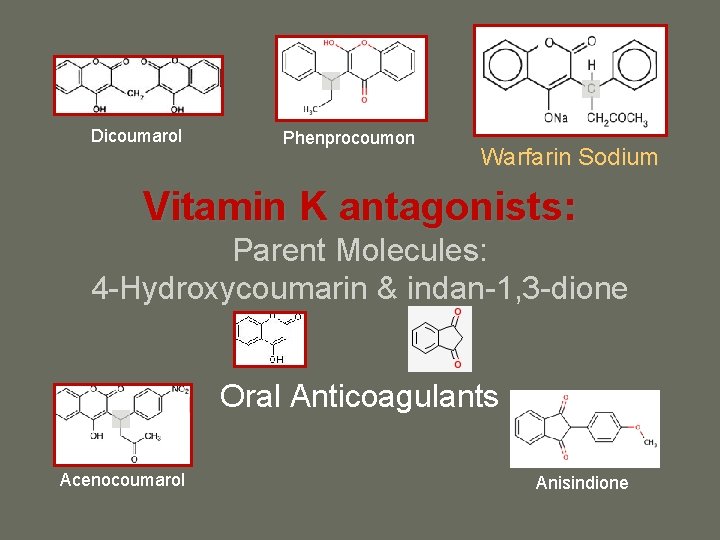
Dicoumarol Phenprocoumon Warfarin Sodium Vitamin K antagonists: Parent Molecules: 4 -Hydroxycoumarin & indan-1, 3 -dione Oral Anticoagulants Acenocoumarol Anisindione
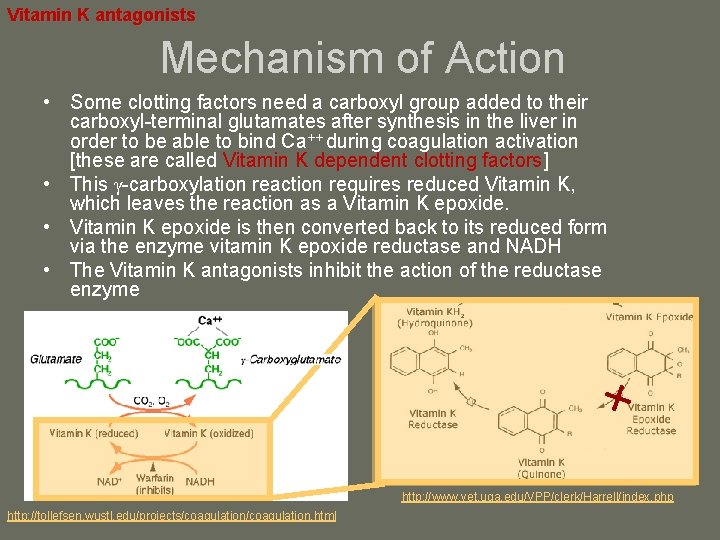
Vitamin K antagonists Mechanism of Action • Some clotting factors need a carboxyl group added to their carboxyl-terminal glutamates after synthesis in the liver in order to be able to bind Ca++ during coagulation activation [these are called Vitamin K dependent clotting factors] Vitamin K dependent clotting factors • This γ-carboxylation reaction requires reduced Vitamin K, which leaves the reaction as a Vitamin K epoxide. • Vitamin K epoxide is then converted back to its reduced form via the enzyme vitamin K epoxide reductase and NADH • The Vitamin K antagonists inhibit the action of the reductase enzyme http: //www. vet. uga. edu/VPP/clerk/Harrell/index. php http: //tollefsen. wustl. edu/projects/coagulation. html
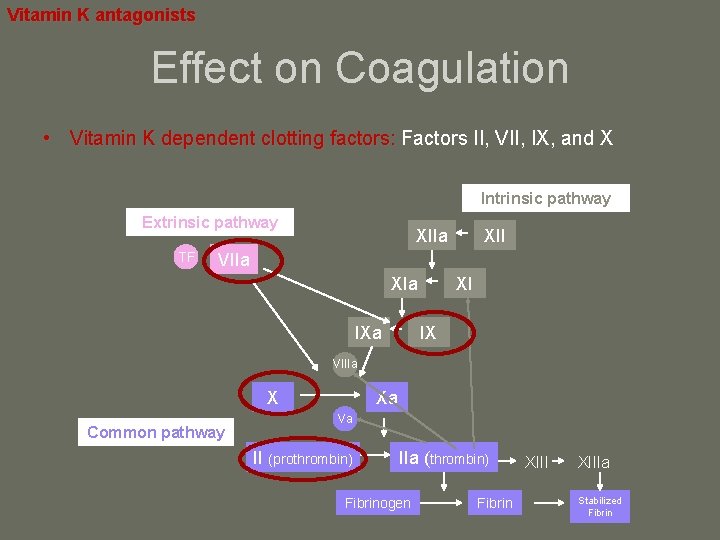
Vitamin K antagonists Effect on Coagulation • Vitamin K dependent clotting factors: Factors II, VII, IX, and X Intrinsic pathway Extrinsic pathway TF XIIa XII VIIa XIa IXa XI IX VIIIa X Common pathway Xa Va II (prothrombin) IIa (thrombin) Fibrinogen Fibrin XIIIa Stabilized Fibrin
Vitamin K antagonists History of Warfarin • 1930 s: cows hemorrhaging after eating spoiled sweet clover silage • 1939: bishydroxycoumarin (dicoumarol) identified • 1948: potent form as rodenticide – Called Warfarin (Wisconsin Alumni Research Foundation) Anticoagulant in humans? No, too toxic!? • 1951: Army inductee’s failed attempt at suicide with high dose of warfarin rodenticide • Clinical use for over 60 years
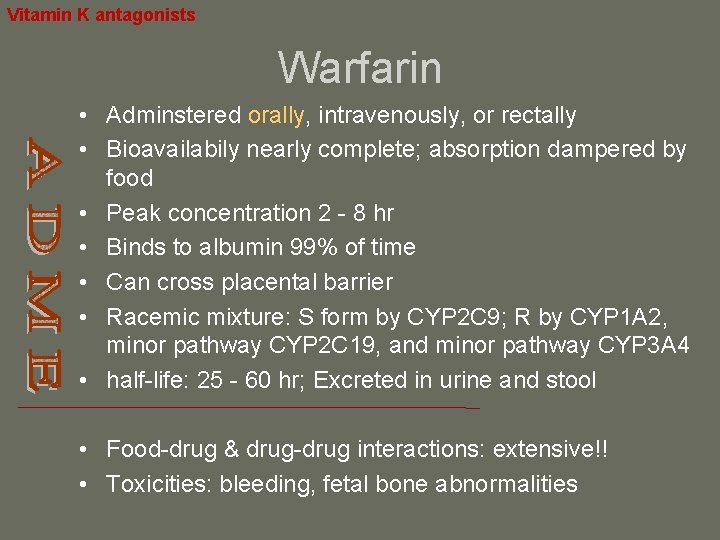
Vitamin K antagonists Warfarin • Adminstered orally, intravenously, or rectally • Bioavailabily nearly complete; absorption dampered by food • Peak concentration 2 - 8 hr • Binds to albumin 99% of time • Can cross placental barrier • Racemic mixture: S form by CYP 2 C 9; R by CYP 1 A 2, minor pathway CYP 2 C 19, and minor pathway CYP 3 A 4 • half-life: 25 - 60 hr; Excreted in urine and stool • Food-drug & drug-drug interactions: extensive!! • Toxicities: bleeding, fetal bone abnormalities
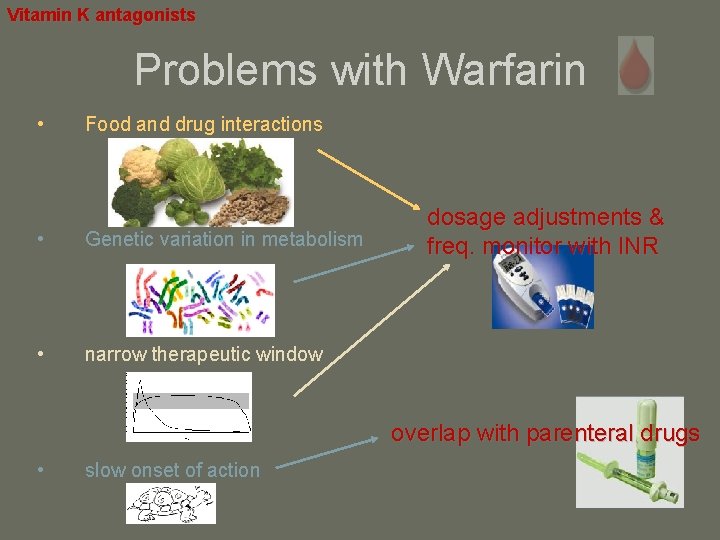
Vitamin K antagonists Problems with Warfarin • Food and drug interactions • Genetic variation in metabolism • narrow therapeutic window dosage adjustments & freq. monitor with INR overlap with parenteral drugs • slow onset of action
Newer Anticoagulants Targeting specific factors

Factor Xa Inhibitors • Parenteral or Oral • Direct or Indirect mech. of inhibition Intrinsic pathway Extrinsic pathway TF XIIa XII VIIa XIa IXa XI IX VIIIa X Common pathway Xa Va II (prothrombin) IIa (thrombin) Fibrinogen Fibrin XIIIa Stabilized Fibrin
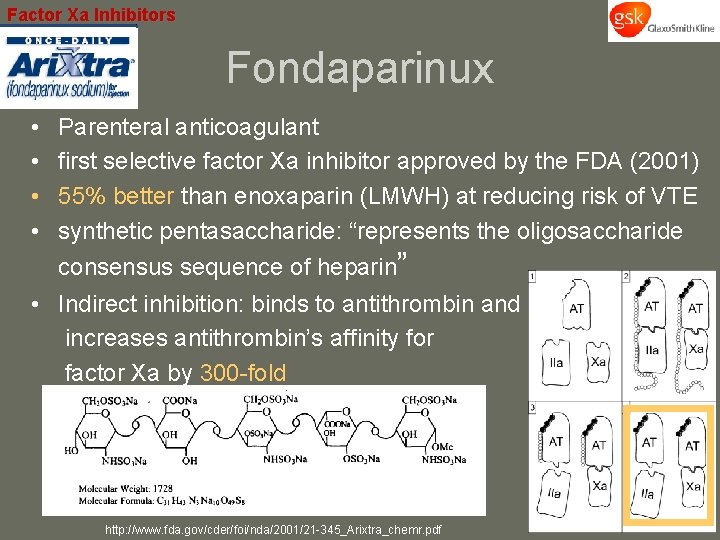
Factor Xa Inhibitors Fondaparinux • • Parenteral anticoagulant first selective factor Xa inhibitor approved by the FDA (2001) 55% better than enoxaparin (LMWH) at reducing risk of VTE synthetic pentasaccharide: “represents the oligosaccharide consensus sequence of heparin” • Indirect inhibition: binds to antithrombin and increases antithrombin’s affinity for factor Xa by 300 -fold http: //www. fda. gov/cder/foi/nda/2001/21 -345_Arixtra_chemr. pdf
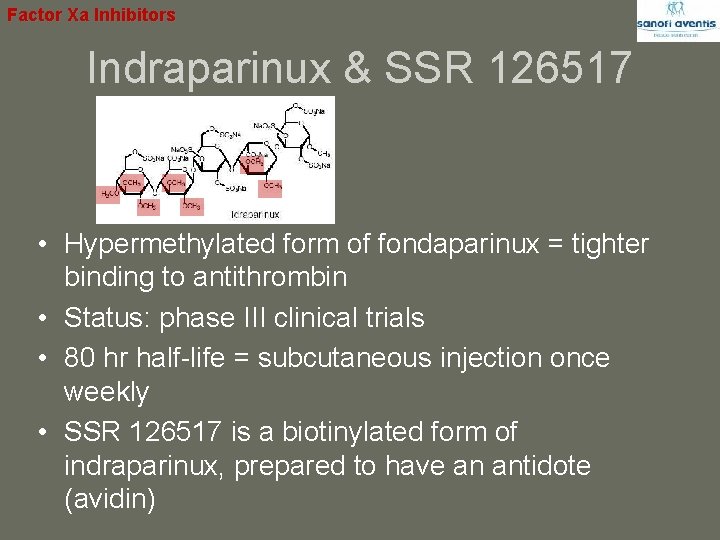
Factor Xa Inhibitors Indraparinux & SSR 126517 • Hypermethylated form of fondaparinux = tighter binding to antithrombin • Status: phase III clinical trials • 80 hr half-life = subcutaneous injection once weekly • SSR 126517 is a biotinylated form of indraparinux, prepared to have an antidote (avidin)

Factor Xa Inhibitors Oral factor Xa inhibitors • Developed off of success of fondaparinux • Can affect free factor Xa OR Xa bound to prothrombinase complex! • Many different drugs of this type being developed – Rivaroxaban – Apixaban – LY 517717, YM 150, DU-176 b, and betrixaban
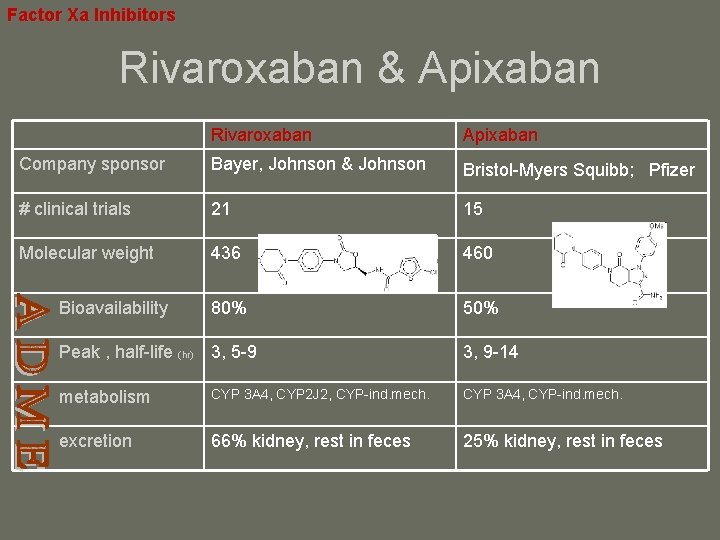
Factor Xa Inhibitors Rivaroxaban & Apixaban Rivaroxaban Apixaban Company sponsor Bayer, Johnson & Johnson Bristol-Myers Squibb; Pfizer # clinical trials 21 15 Molecular weight 436 460 Bioavailability 80% 50% Peak , half-life (hr) 3, 5 -9 3, 9 -14 metabolism CYP 3 A 4, CYP 2 J 2, CYP-ind. mech. CYP 3 A 4, CYP-ind. mech. excretion 66% kidney, rest in feces 25% kidney, rest in feces
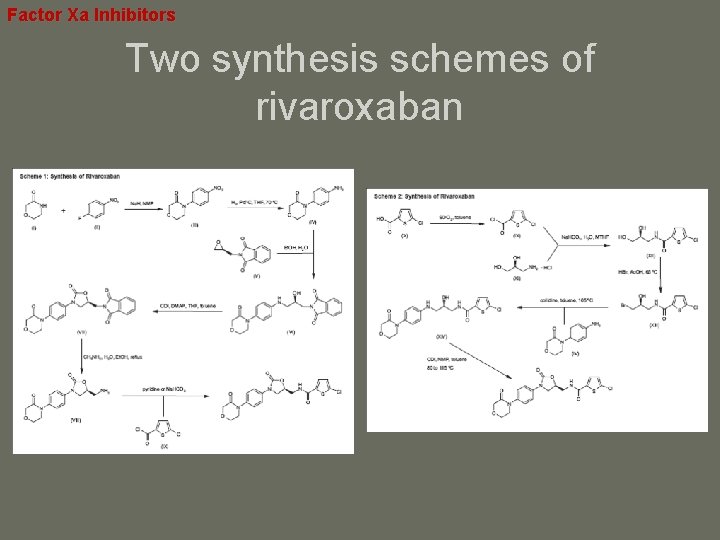
Factor Xa Inhibitors Two synthesis schemes of rivaroxaban
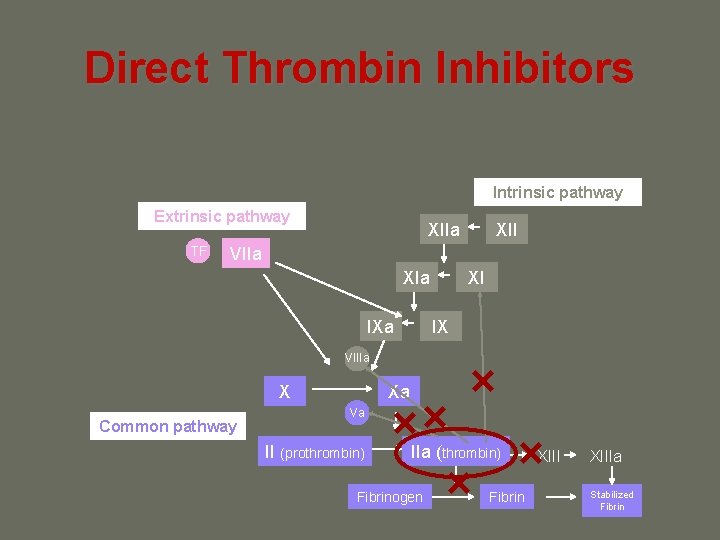
Direct Thrombin Inhibitors Intrinsic pathway Extrinsic pathway TF XIIa XII VIIa XIa IXa XI IX VIIIa X Common pathway Xa Va II (prothrombin) IIa (thrombin) Fibrinogen Fibrin XIIIa Stabilized Fibrin
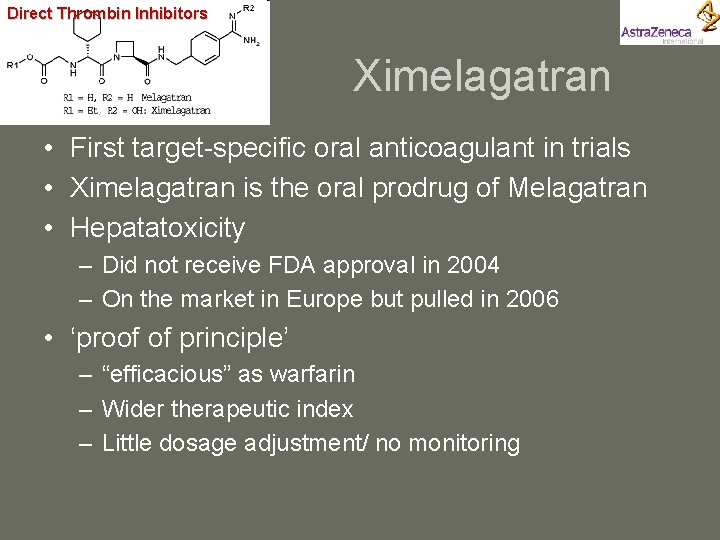
Direct Thrombin Inhibitors Ximelagatran • First target-specific oral anticoagulant in trials • Ximelagatran is the oral prodrug of Melagatran • Hepatatoxicity – Did not receive FDA approval in 2004 – On the market in Europe but pulled in 2006 • ‘proof of principle’ – “efficacious” as warfarin – Wider therapeutic index – Little dosage adjustment/ no monitoring
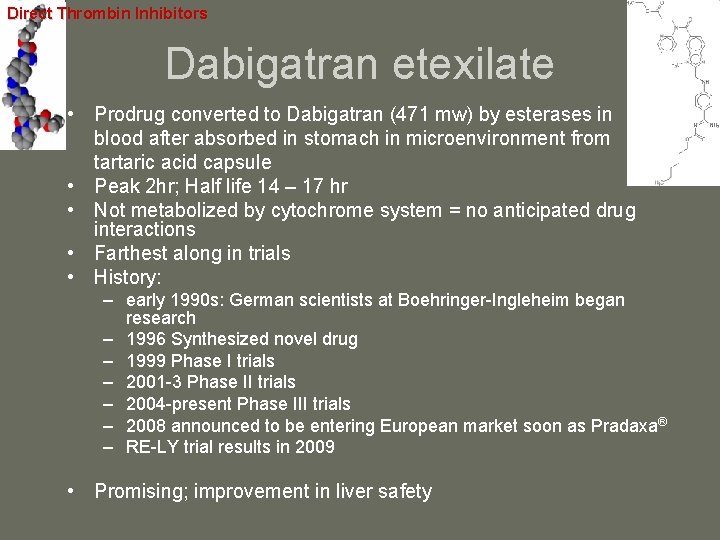
Direct Thrombin Inhibitors Dabigatran etexilate • Prodrug converted to Dabigatran (471 mw) by esterases in blood after absorbed in stomach in microenvironment from tartaric acid capsule • Peak 2 hr; Half life 14 – 17 hr • Not metabolized by cytochrome system = no anticipated drug interactions • Farthest along in trials • History: – early 1990 s: German scientists at Boehringer-Ingleheim began research – 1996 Synthesized novel drug – 1999 Phase I trials – 2001 -3 Phase II trials – 2004 -present Phase III trials – 2008 announced to be entering European market soon as Pradaxa® – RE-LY trial results in 2009 • Promising; improvement in liver safety
Direct Thrombin Inhibitors Dabigatran etexilate clinical trial example “RELY: Randomized Evaluation of Long term anticoagulant therapy (RE-LY) comparing the efficacy and safety of two blinded doses of dabigatran etexilate with open label warfarin for the prevention of stroke and systemic embolism in patients with non-valvular atrial fibrillation Study Design: Prospective, multi-centre, randomized, open label, controlled parallel group, non-inferiority trial. Study Objective: Demonstrate that the efficacy and safety of two blinded doses of dabigatran etexilate in patients with non-valvular atrial fibrillation are non-inferior to warfarin treatment for the prevention of stroke and systemic embolism. Scope: A total of 15, 000 patients will be randomized from approximately 1, 000 clinical sites within 44 countries. Patients will be randomized over a 2 -year period with a minimum 1 year follow-up, maximum of 3 years and mean of 1. 5 years of follow-up. ” https: //www. rely-trial. com/Rely. Web/resources/jsp/emergency/dabigatran_bg. jsp
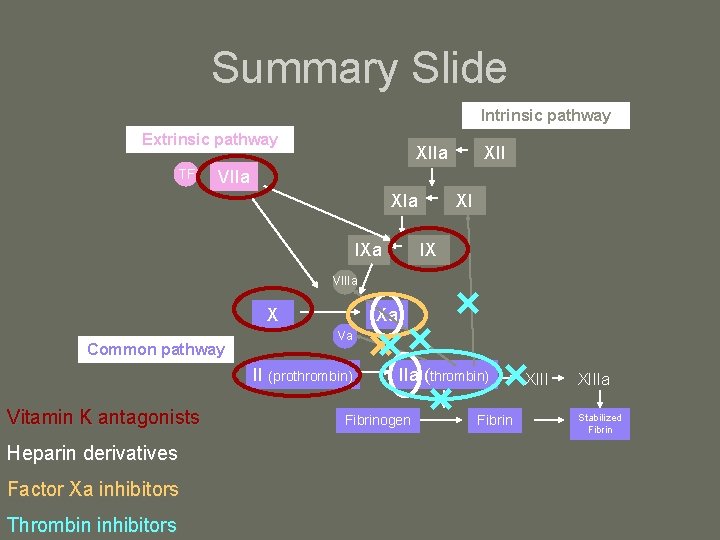
Summary Slide Intrinsic pathway Extrinsic pathway TF XIIa XII VIIa XIa IXa XI IX VIIIa X Common pathway Xa Va II (prothrombin) Vitamin K antagonists Heparin derivatives Factor Xa inhibitors Thrombin inhibitors IIa (thrombin) Fibrinogen Fibrin XIIIa Stabilized Fibrin
Future of Anticoagulants • Clinical trials of novel anticoagulants will continue • New drugs to be on the market soon but cost will determine how wide spread the use will be • Parallel development of f Xa inhibitors and direct thrombin inhibitors • Drugs with other targets (f VIIa - TF, f Va - VIIIa, f IXa) will go to trials • Utilize crystal structures/docking algorithms
References • http: //tollefsen. wustl. edu/projects/coagulation. html (Great on blood coagulation) • http: //www. accessdata. fda. gov/scripts/cder/drugsatfda/ (approved drugs) • • • http: //clinicaltrials. gov/ct 2/search (searchable database for clinical trials) http: //en. wikipedia. org/wiki/Coagulation http: //my. clevelandclinic. org/drugs/antiplatelet_drugs/hic_antiplatelet_drugs. aspx http: //www. vet. uga. edu/VPP/clerk/Harrell/index. php http: //en. wikipedia. org/wiki/Thrombolytic_drug http: //www. americanheart. org/presenter. jhtml? identifier=4451 http: //www. natfonline. org/frequency_te. php http: //emedicine. medscape. com/article/959501 -overview https: //www. rely-trial. com/Rely. Web/resources/jsp/emergency/dabigatran_bg. jsp Brunton, Lazo, Parker. Goodman & Gilman’s The Pharmacological Basis of Therapeutics, 11 th ed. Chapter 54: Blood Coagulation and Anticoagulant, Thrombolytic, and Antiplatelet Drugs” by Philip W. Majerus and Douglas M. Tollefsen. 1467 -1488. Bauer, Kenneth A. “New Anticoagulants. ” Current Opinion in Hematology 2008, 15: 509 -515. Turpie, Alexander. “New oral anticoagulants in atrial fibrillation. ” European Society of Cardiology, European Heart Journal 2007, 29: 155 -165. Esko, Jeffrey D and Robert J. Linhart. “Proteins that bind Sulfated Glycosaminoglycans. ” accessed online from Essentials of Glycobiology 2 nd edition. CSH Press 2009. <http: //www. ncbi. nlm. nih. gov/bookshelf/br. fcgi? book=glyco 2&part=ch 35> “Rivaroxaban. ” Prous Science. Drugs of the Future 2006, 31 (6): 484 -493. • •
- Slides: 37