
Anticipatory Governance in Phoenix Arnim Wiek Braden Kay
Anticipatory Governance in Phoenix Arnim Wiek, Braden Kay, Lauren Withycombe School of Sustainability, Arizona State University Tricia Gomes City of Phoenix, Planning Department Sustainable Cities Network Conference, October 20 th, 2010
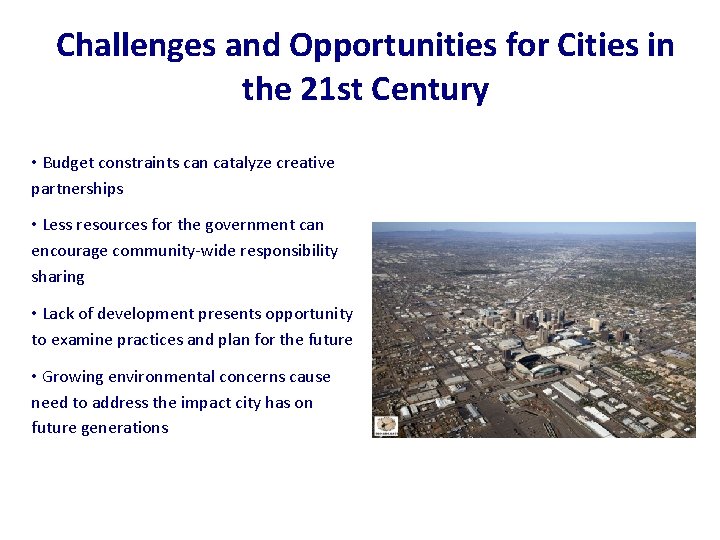
Challenges and Opportunities for Cities in the 21 st Century • Budget constraints can catalyze creative partnerships • Less resources for the government can encourage community-wide responsibility sharing • Lack of development presents opportunity to examine practices and plan for the future • Growing environmental concerns cause need to address the impact city has on future generations
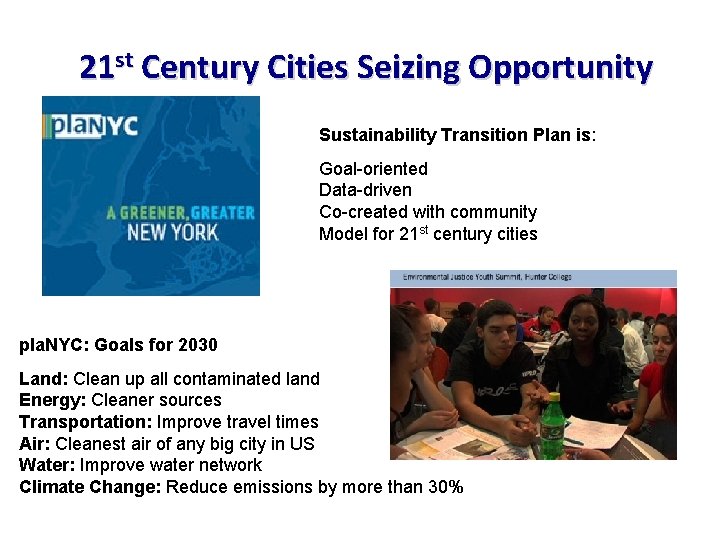
21 st Century Cities Seizing Opportunity Sustainability Transition Plan is: Goal-oriented Data-driven Co-created with community Model for 21 st century cities pla. NYC: Goals for 2030 Land: Clean up all contaminated land Energy: Cleaner sources Transportation: Improve travel times Air: Cleanest air of any big city in US Water: Improve water network Climate Change: Reduce emissions by more than 30%
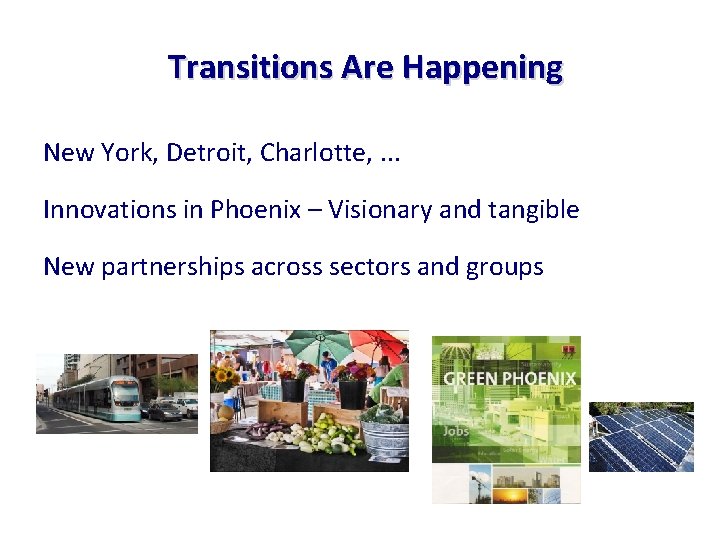
Transitions Are Happening New York, Detroit, Charlotte, . . . Innovations in Phoenix – Visionary and tangible New partnerships across sectors and groups
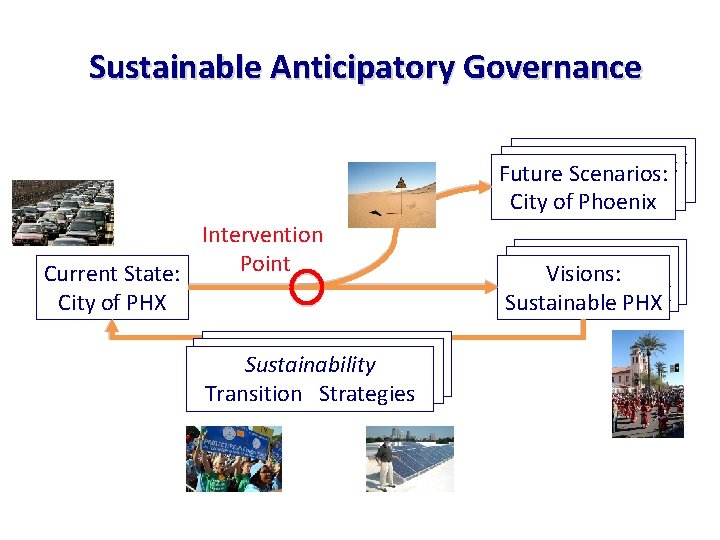
Sustainable Anticipatory Governance Future. Scenarios: Future Scenarios: Cityofof. PHX City of Phoenix Intervention Point Current State: City of PHX Sustainable Sustainability Development Strategies Transition Strategies Visions: Sustainable PHX
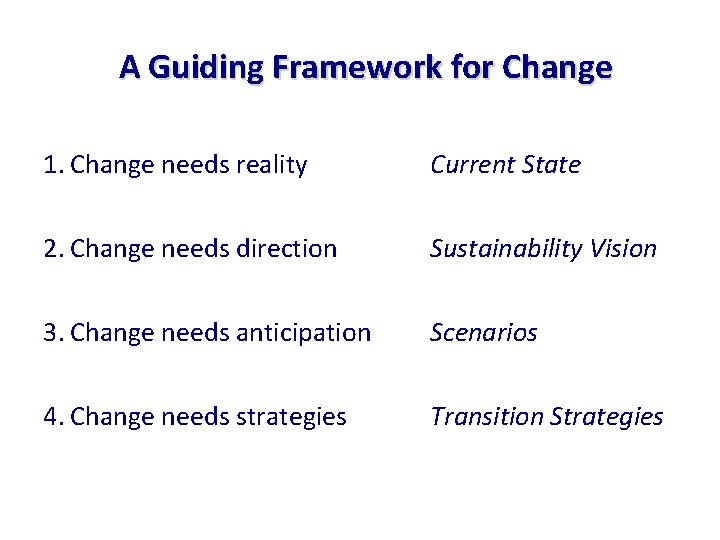
A Guiding Framework for Change 1. Change needs reality Current State 2. Change needs direction Sustainability Vision 3. Change needs anticipation Scenarios 4. Change needs strategies Transition Strategies
Stakeholder Engagement in Anticipatory Governance • From consultative/extractive to interactive public engagement • Different types and intensities of public engagement • Benefits include: § Increased ownership of issues and challenges § Public acceptance of policies negotiated beforehand • Barriers include: § cost of engagement, time, training

City of Phoenix’ Transition Pathway Community Engagement Sustainability Initiatives Tackling future challenges
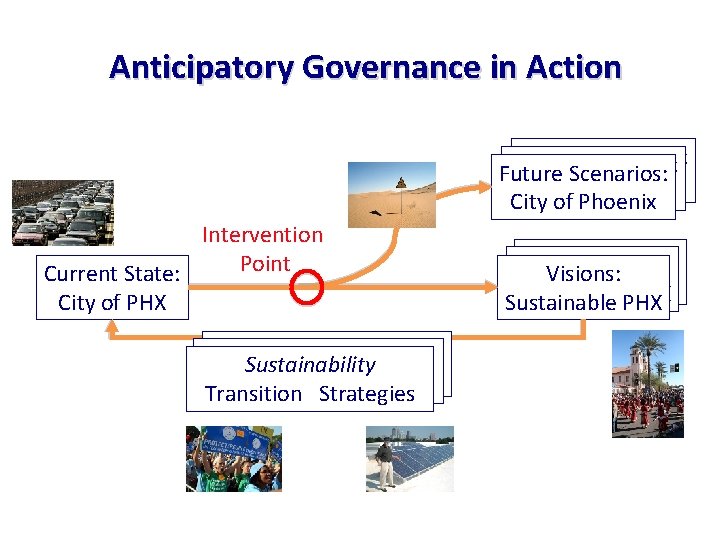
Anticipatory Governance in Action Future. Scenarios: Future Scenarios: Cityofof. PHX City of Phoenix Intervention Point Current State: City of PHX Sustainable Sustainability Development Strategies Transition Strategies Visions: Sustainable PHX
A Vision for a Sustainable Phoenix “When I get up in the morning I can check my blackberry to find out when the next train comes to take me to work. At work, I log into my zip car account to reserve my 3 pm meeting and return the car near my meeting. At 6 pm I take my car to the LRT to head downtown to meet my daughter and grandson for dinner and play at civic park. ” • Structured visioning approach § Conflicting values identified and resolved § Individual preferences negotiated § Environmental quality, social justice, and future generations considered • Based on more than 1000 vision statements • 3 hour event with 120 participants from across the City
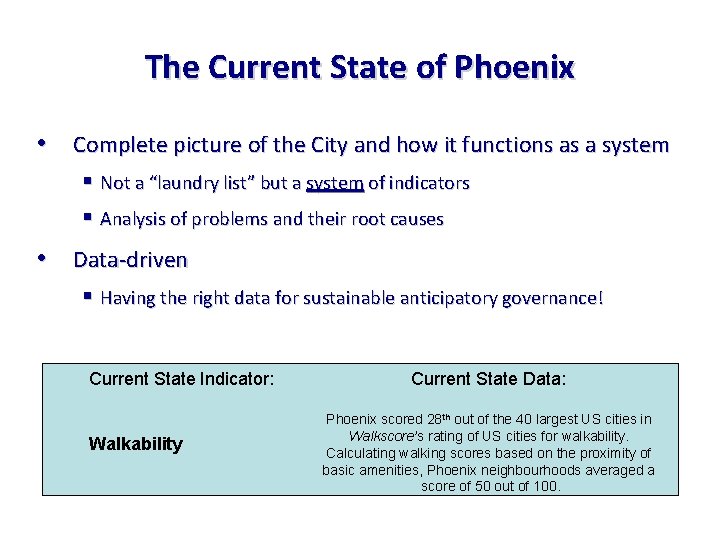
The Current State of Phoenix • Complete picture of the City and how it functions as a system § Not a “laundry list” but a system of indicators § Analysis of problems and their root causes • Data-driven § Having the right data for sustainable anticipatory governance! Current State Indicator: Walkability Current State Data: Phoenix scored 28 th out of the 40 largest US cities in Walkscore’s rating of US cities for walkability. Calculating walking scores based on the proximity of basic amenities, Phoenix neighbourhoods averaged a score of 50 out of 100.
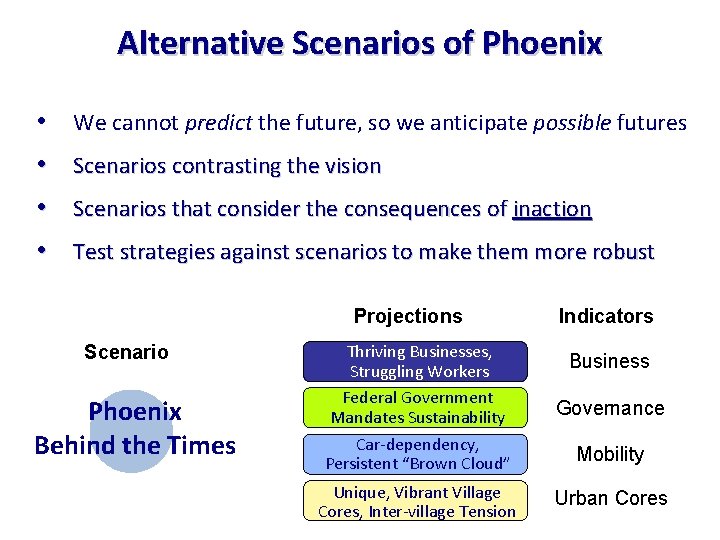
Alternative Scenarios of Phoenix • • We cannot predict the future, so we anticipate possible futures Scenarios contrasting the vision Scenarios that consider the consequences of inaction Test strategies against scenarios to make them more robust Projections Scenario Phoenix Behind the Times Indicators Thriving Businesses, Struggling Workers Federal Government Mandates Sustainability Governance Car-dependency, Persistent “Brown Cloud” Mobility Unique, Vibrant Village Cores, Inter-village Tension Urban Cores Business
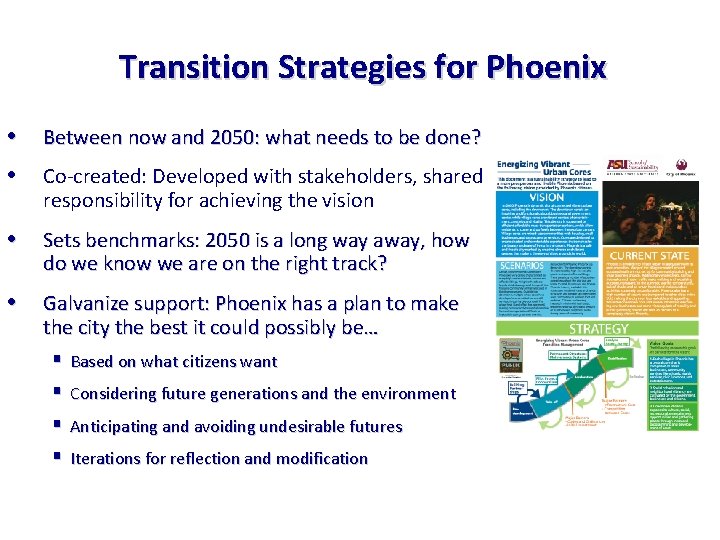
Transition Strategies for Phoenix • Between now and 2050: what needs to be done? • Co-created: Developed with stakeholders, shared responsibility for achieving the vision • Sets benchmarks: 2050 is a long way away, how do we know we are on the right track? • Galvanize support: Phoenix has a plan to make the city the best it could possibly be… § Based on what citizens want § Considering future generations and the environment § Anticipating and avoiding undesirable futures § Iterations for reflection and modification
Opportunities Offered by Anticipatory Governance • A shared framework § For interdepartmental or intergovernmental cooperation § That the public can understand be a part of • Future-orientation § Short-term planning explicitly linked to long-term goals • Addresses challenges § Grounding “big picture” goals in current policies and practices
- Slides: 14