
ANTICHOLINERGIC DRUGS Prof Hanan Hagar Pharmacology Unit Medical
- Slides: 39
ANTICHOLINERGIC DRUGS Prof. Hanan Hagar Pharmacology Unit Medical College King Saud University
What students should know: Student should be able to : • Identify the classification of anticholinergic drugs • Describe pharmacokinetics and dynamics of muscarinic antagonists • Identify the effects of atropine on the major organ systems. • list the clinical uses of muscarinic antagonists • know adverse effects & contraindications of anticholinergic drugs. • Identify at least one antimuscarinic agent for each of the following special uses: mydriasis, cyclopedia, peptic ulcer & parkinsonism.
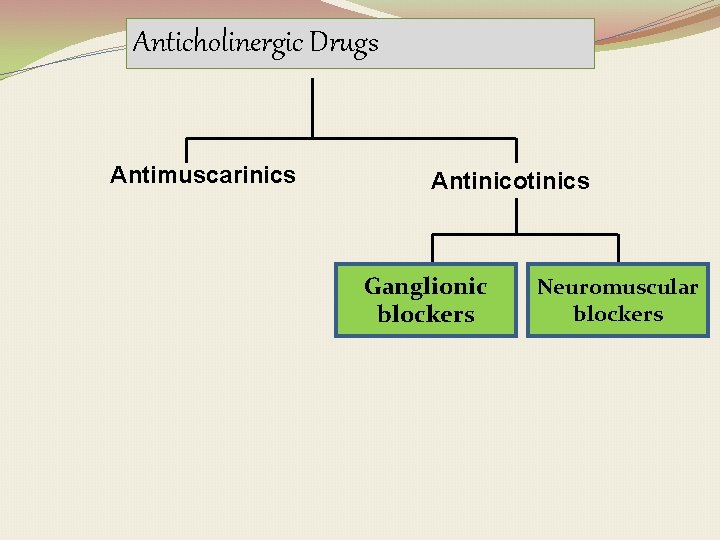
Anticholinergic Drugs Antimuscarinics Antinicotinics Ganglionic blockers Neuromuscular blockers
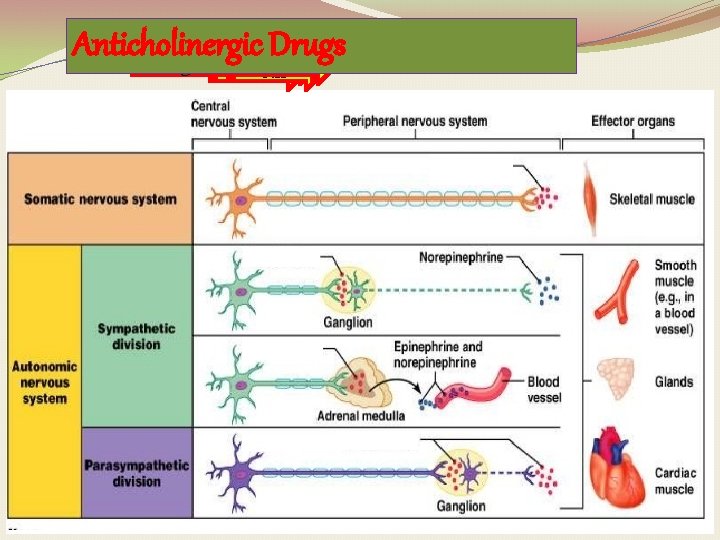
Anticholinergic Drugs Neuromuscular Ganglionic Muscarinic blockers Ach blocker Nn Ganglionic blockers Nm MAch Nn
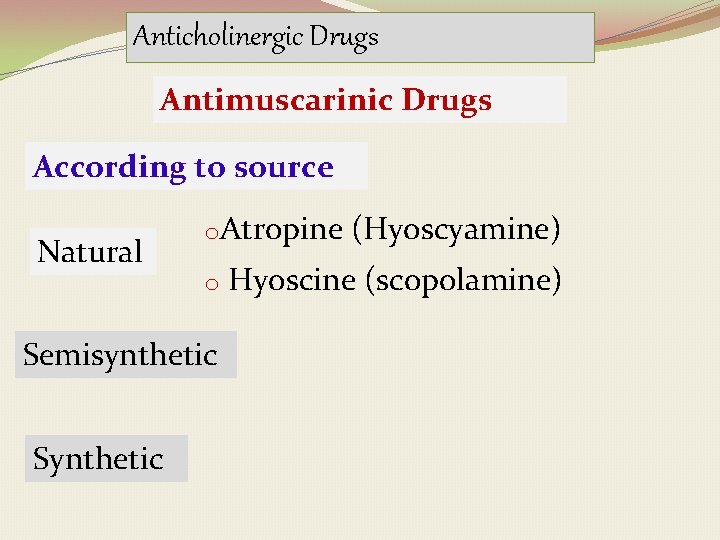
Anticholinergic Drugs Antimuscarinic Drugs According to source Natural o. Atropine o Semisynthetic Synthetic (Hyoscyamine) Hyoscine (scopolamine)
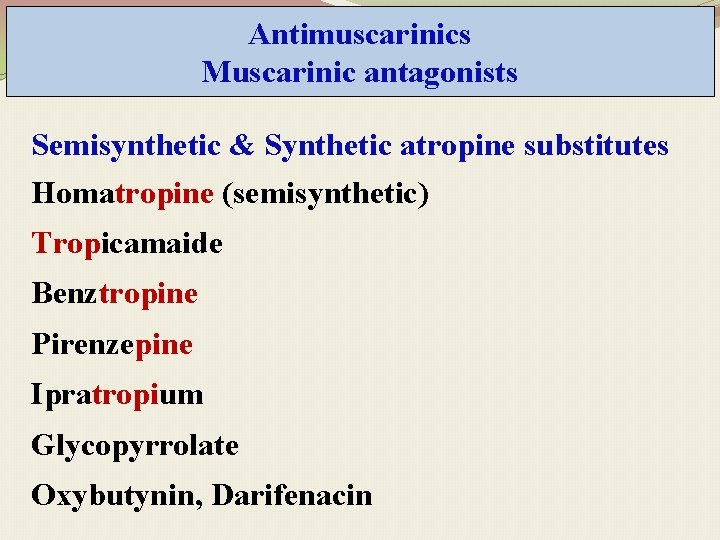
Antimuscarinics Muscarinic antagonists Semisynthetic & Synthetic atropine substitutes Homatropine (semisynthetic) Tropicamaide Benztropine Pirenzepine Ipratropium Glycopyrrolate Oxybutynin, Darifenacin
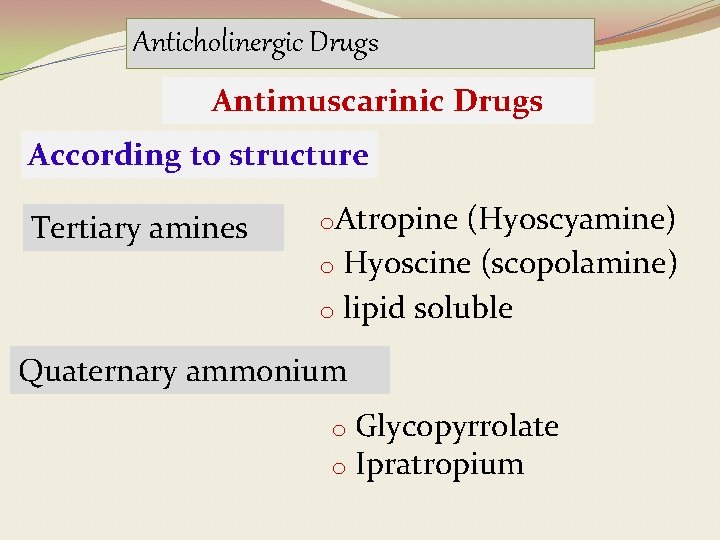
Anticholinergic Drugs Antimuscarinic Drugs According to structure Tertiary amines o. Atropine (Hyoscyamine) o Hyoscine (scopolamine) o lipid soluble Quaternary ammonium o o Glycopyrrolate Ipratropium
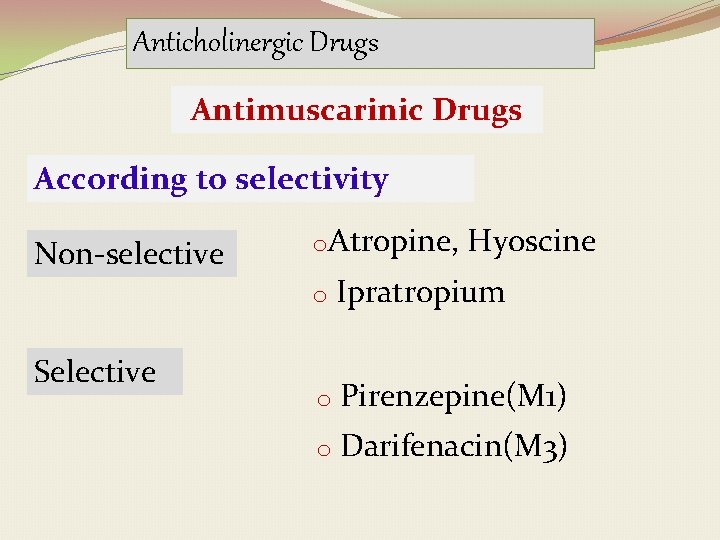
Anticholinergic Drugs Antimuscarinic Drugs According to selectivity Non-selective Selective o. Atropine, Hyoscine o Ipratropium o Pirenzepine(M 1) o Darifenacin(M 3)
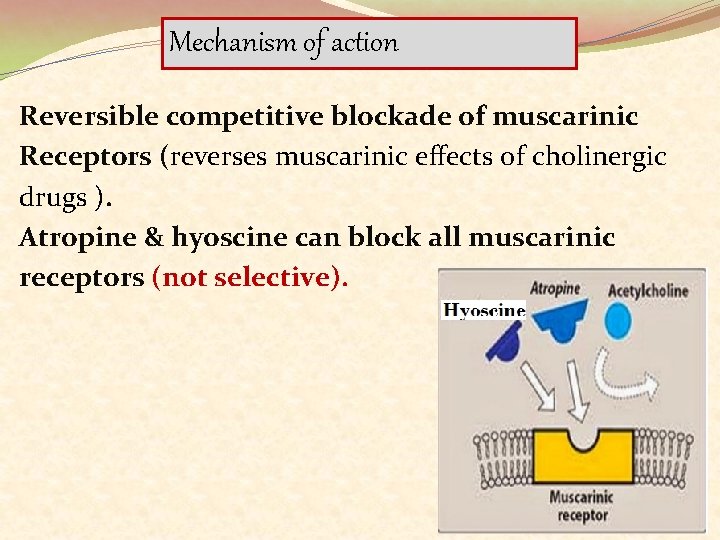
Mechanism of action Reversible competitive blockade of muscarinic Receptors (reverses muscarinic effects of cholinergic drugs ). Atropine & hyoscine can block all muscarinic receptors (not selective).
Pharmacokinetics Natural alkaloids o Atropine (Hyoscyamine) o Hyoscine (scopolamine) o Lipid soluble o Good oral absorption o Good distribution o Cross blood brain barrier (have CNS actions)
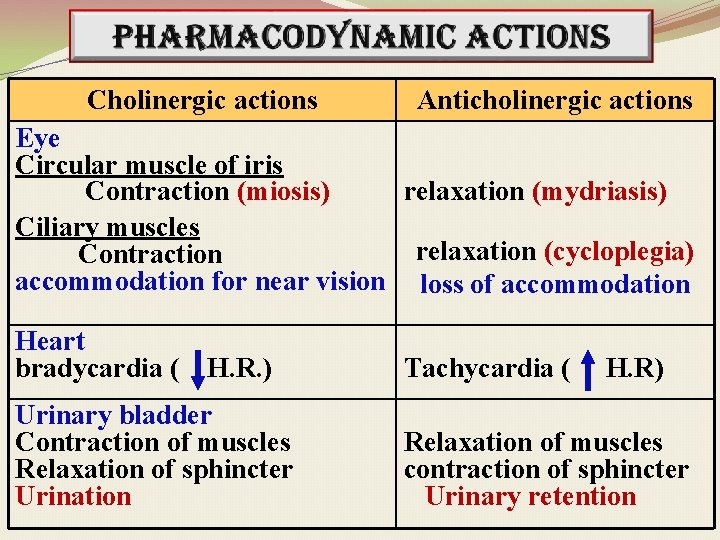
Cholinergic actions Anticholinergic actions Eye Circular muscle of iris Contraction (miosis) relaxation (mydriasis) Ciliary muscles relaxation (cycloplegia) Contraction accommodation for near vision loss of accommodation Heart bradycardia ( H. R. ) Urinary bladder Contraction of muscles Relaxation of sphincter Urination Tachycardia ( H. R) Relaxation of muscles contraction of sphincter Urinary retention
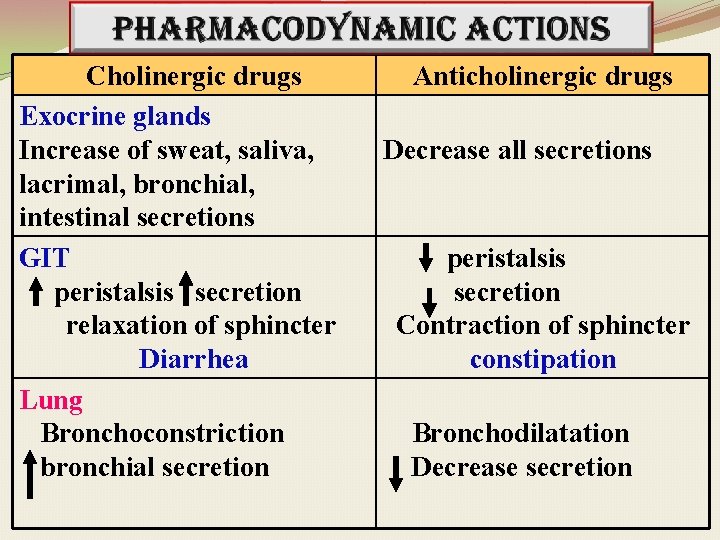
Cholinergic drugs Exocrine glands Increase of sweat, saliva, lacrimal, bronchial, intestinal secretions GIT peristalsis secretion relaxation of sphincter Diarrhea Lung Bronchoconstriction bronchial secretion Anticholinergic drugs Decrease all secretions peristalsis secretion Contraction of sphincter constipation Bronchodilatation Decrease secretion
Pharmacodynamic Actions CNS: o Atropine at clinical dose, initial stimulation followed by depression (sedative effect). o Hyoscine sedative effect o Antiemetic effect (block vomiting center). o Antiparkinsonian effect (block basal ganglia).
Pharmacodynamic Actions CNS: High doses of atropine cause cortical excitation, restlessness, disorientation, hallucinations, and delirium followed by respiratory depression and coma.
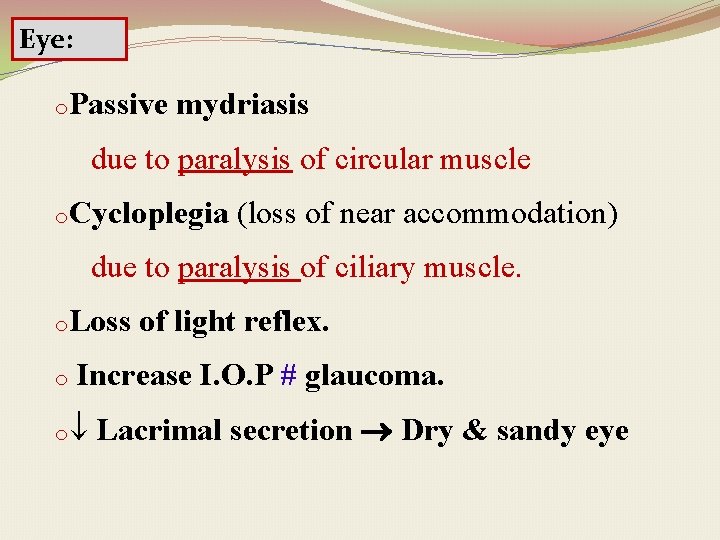
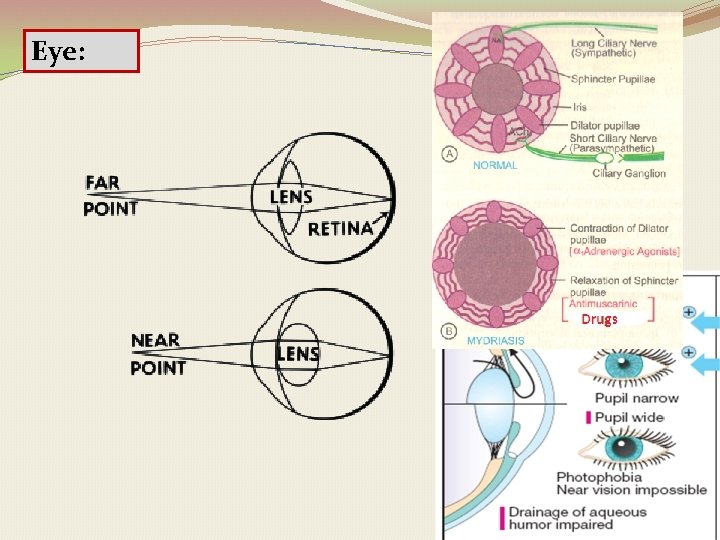
Eye: o. Passive mydriasis due to paralysis of circular muscle o. Cycloplegia (loss of near accommodation) due to paralysis of ciliary muscle. o. Loss o of light reflex. Increase I. O. P # glaucoma. o Lacrimal secretion Dry & sandy eye
Eye:
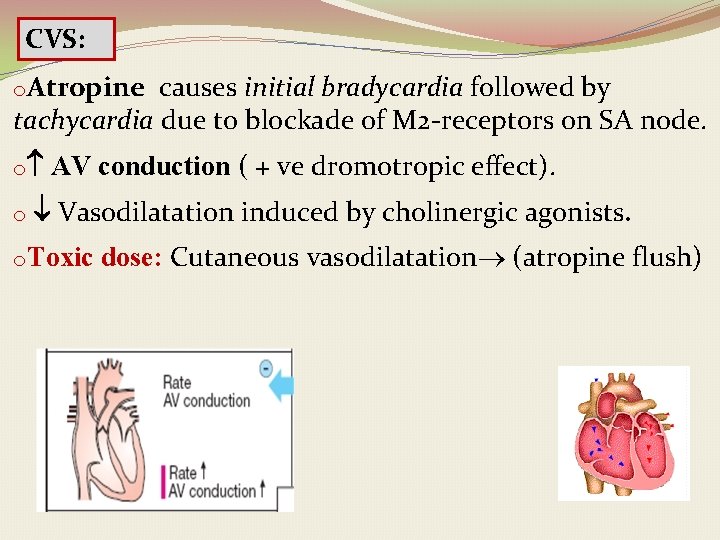
CVS: o. Atropine causes initial bradycardia followed by tachycardia due to blockade of M 2 -receptors on SA node. o o AV conduction ( + ve dromotropic effect). Vasodilatation induced by cholinergic agonists. o. Toxic dose: Cutaneous vasodilatation (atropine flush)
Respiratory system § Relaxation of bronchial muscles (bronchodilators) § Bronchial secretion viscosity
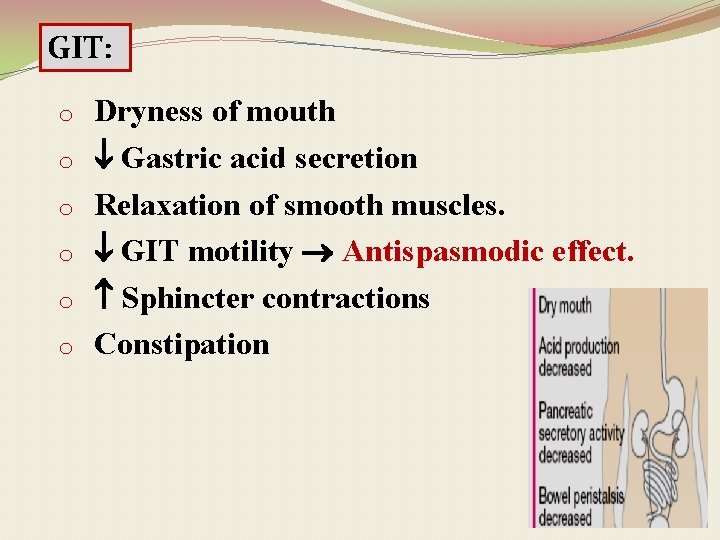
GIT: o o o Dryness of mouth Gastric acid secretion Relaxation of smooth muscles. GIT motility Antispasmodic effect. Sphincter contractions Constipation
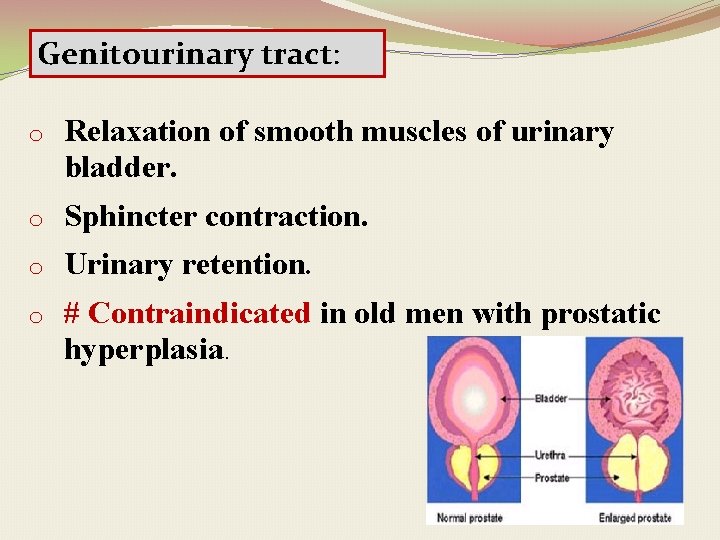
Genitourinary tract: o Relaxation of smooth muscles of urinary bladder. o Sphincter contraction. o Urinary retention. o # Contraindicated in old men with prostatic hyperplasia.
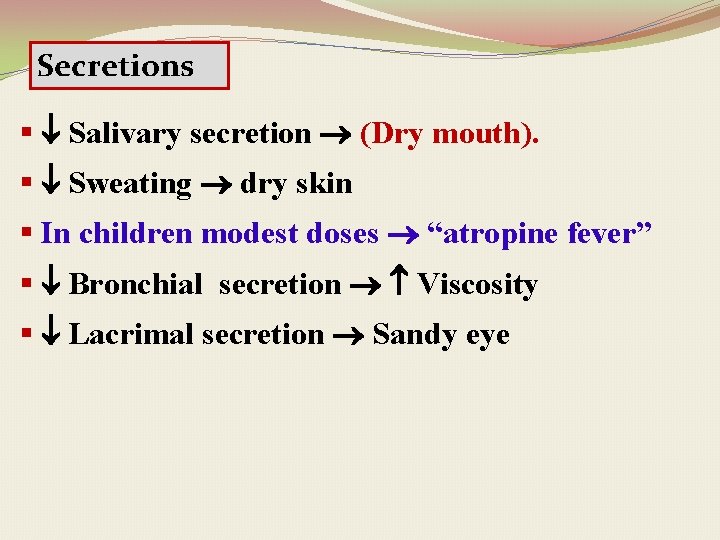
Secretions § Salivary secretion (Dry mouth). § Sweating dry skin § In children modest doses “atropine fever” § Bronchial secretion Viscosity § Lacrimal secretion Sandy eye
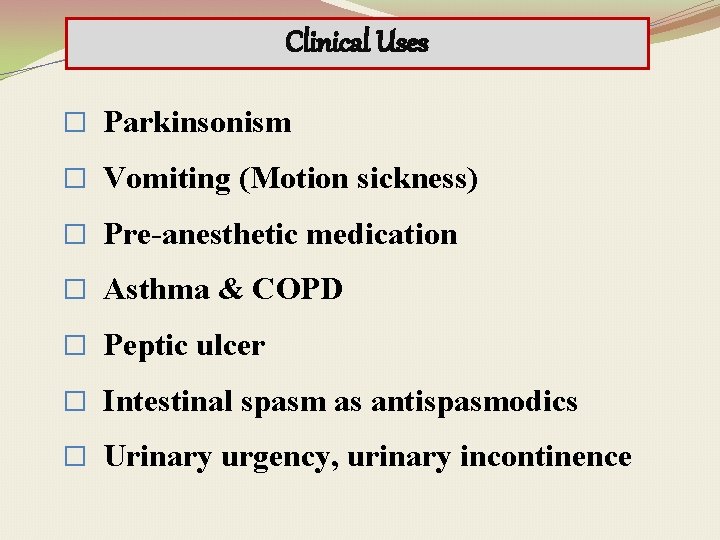
Clinical Uses � Parkinsonism � Vomiting (Motion sickness) � Pre-anesthetic medication � Asthma & COPD � Peptic ulcer � Intestinal spasm as antispasmodics � Urinary urgency, urinary incontinence
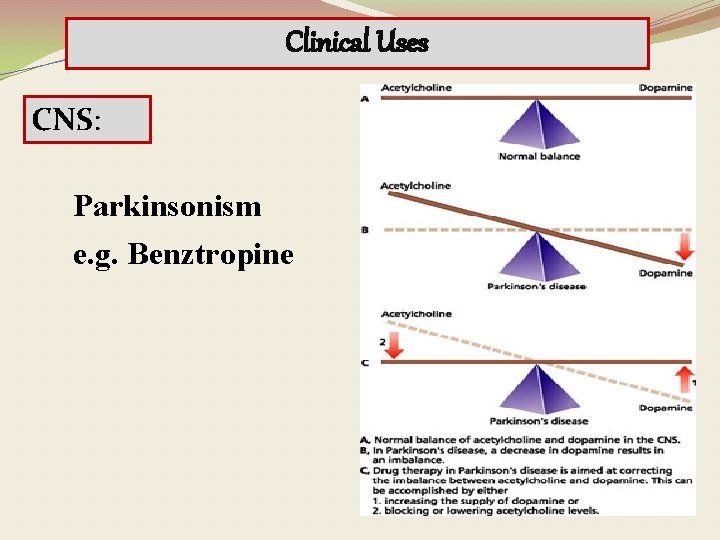
Clinical Uses CNS: Parkinsonism e. g. Benztropine
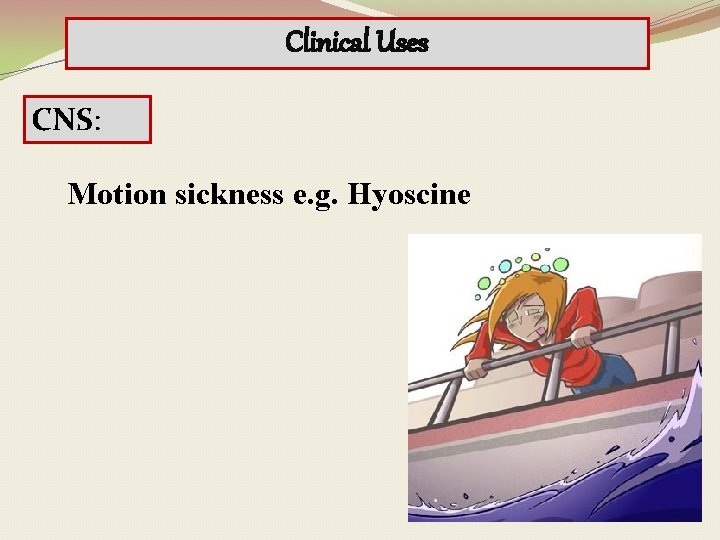
Clinical Uses CNS: Motion sickness e. g. Hyoscine
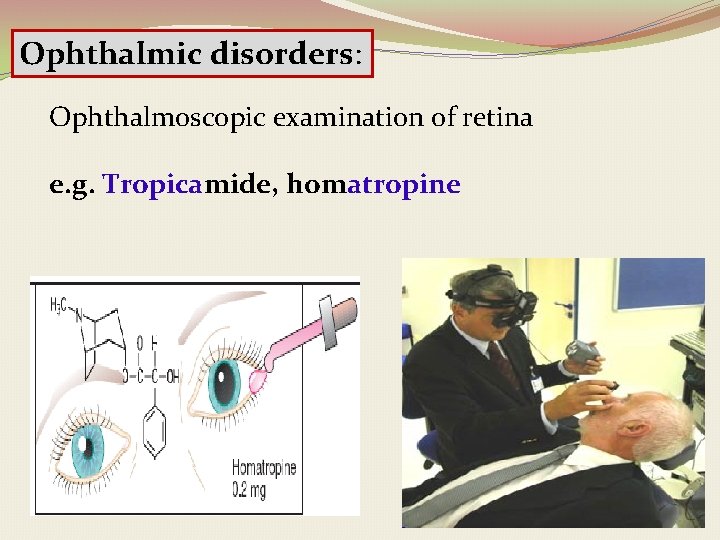
Ophthalmic disorders: Ophthalmoscopic examination of retina e. g. Tropicamide, homatropine
GIT: e. g. Glycopyrrolate, Hyocine butyl bromide. o Intestinal spasm o Biliary and renal colics. o. Irritable o bowel syndrome Atropine + diphenoxylate used for treatment of Traveler's diarrhea with opioid
GUT: Urinary incontinence & Urinary urgency caused by minor inflammatory bladder disorders e. g. Oxybutynin e. g. Darifenacin
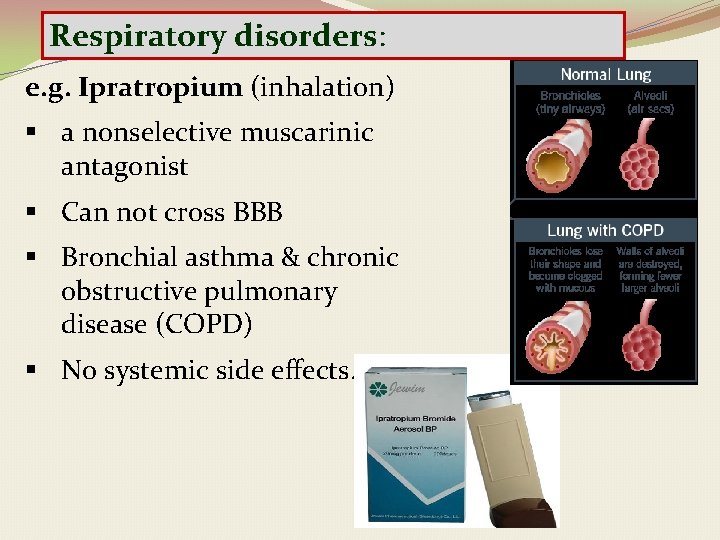
Respiratory disorders: e. g. Ipratropium (inhalation) § a nonselective muscarinic antagonist § Can not cross BBB § Bronchial asthma & chronic obstructive pulmonary disease (COPD) § No systemic side effects.
Cardiovascular uses: Sinus bradycardia atropine IV/IM Used to increase heart rate through vagolytic effects, causing increase in cardiac output.
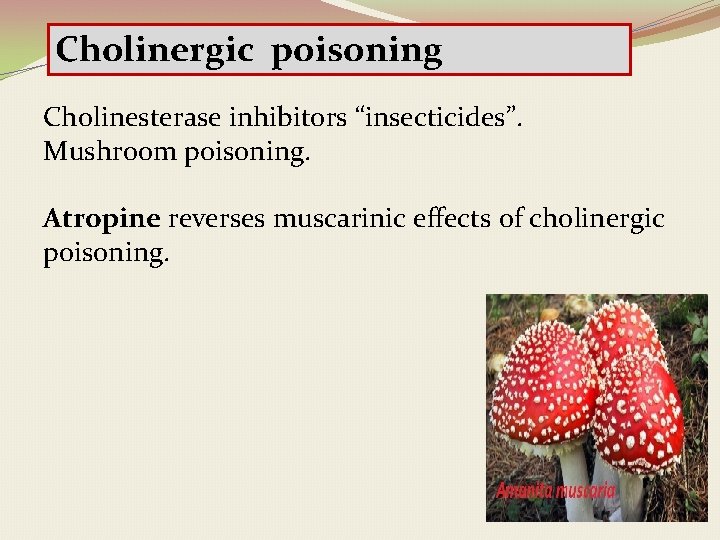
Cholinergic poisoning Cholinesterase inhibitors “insecticides”. Mushroom poisoning. Atropine reverses muscarinic effects of cholinergic poisoning.
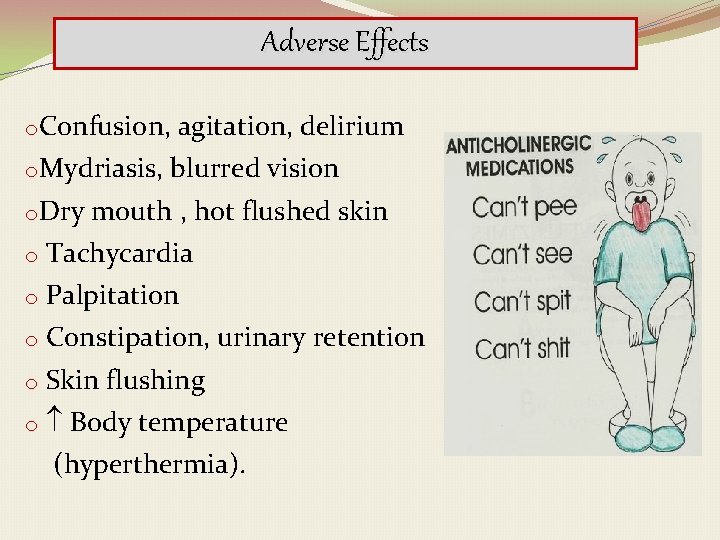
Adverse Effects o. Confusion, o. Mydriasis, o. Dry agitation, delirium blurred vision mouth , hot flushed skin o Tachycardia o Palpitation o Constipation, urinary retention o Skin flushing o Body temperature (hyperthermia).
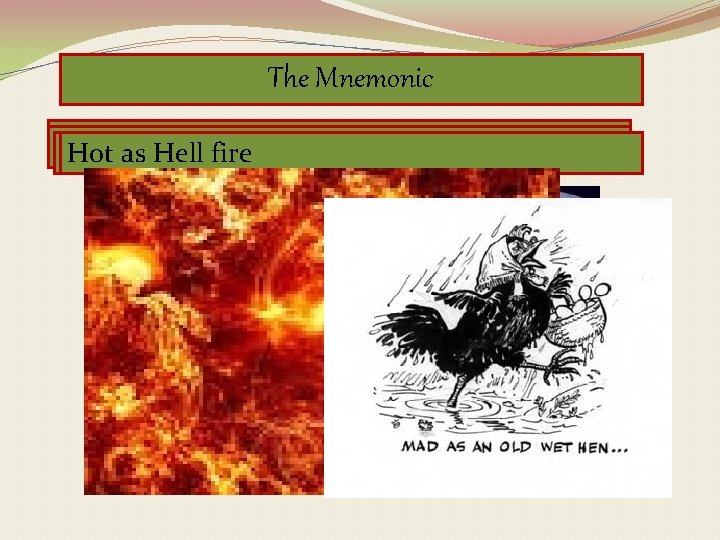
The Mnemonic Red as abone Mad as a. Hell hen Dry Full Blind Hot as asaas Flask abeet bat fire
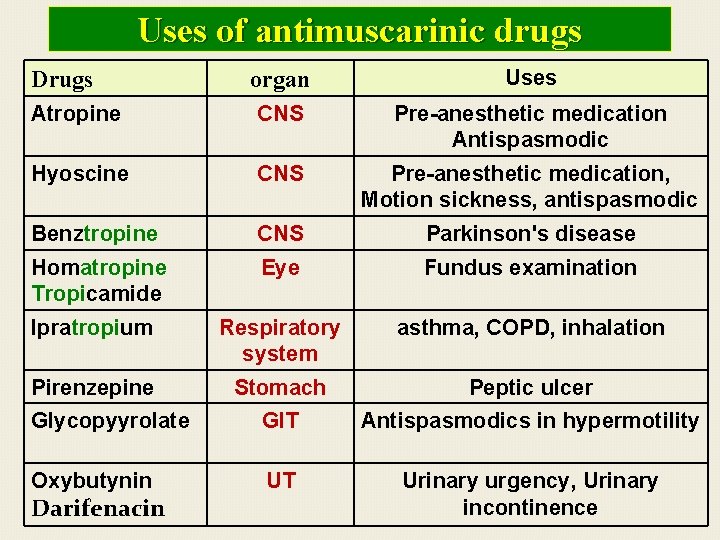
Uses of antimuscarinic drugs organ Uses Atropine CNS Pre-anesthetic medication Antispasmodic Hyoscine CNS Pre-anesthetic medication, Motion sickness, antispasmodic Benztropine CNS Parkinson's disease Homatropine Tropicamide Eye Fundus examination Ipratropium Respiratory system asthma, COPD, inhalation Pirenzepine Stomach Peptic ulcer Glycopyyrolate GIT Antispasmodics in hypermotility Oxybutynin UT Urinary urgency, Urinary incontinence Drugs Darifenacin
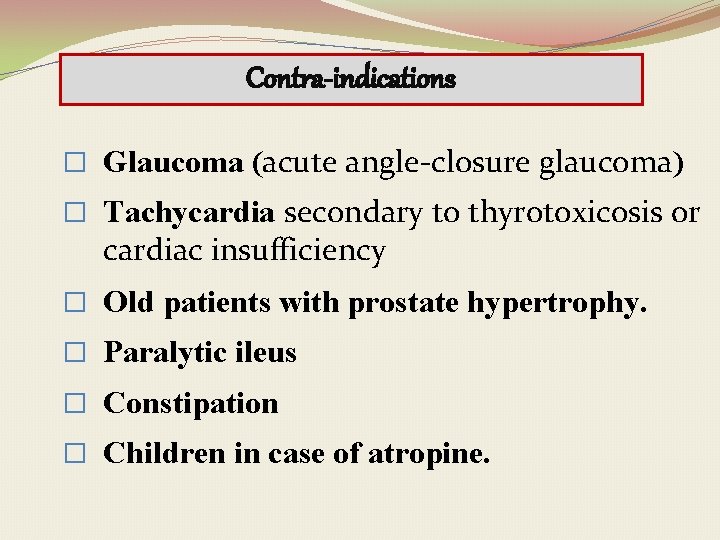
Contra-indications � Glaucoma (acute angle-closure glaucoma) � Tachycardia secondary to thyrotoxicosis or cardiac insufficiency � Old patients with prostate hypertrophy. � Paralytic ileus � Constipation � Children in case of atropine.
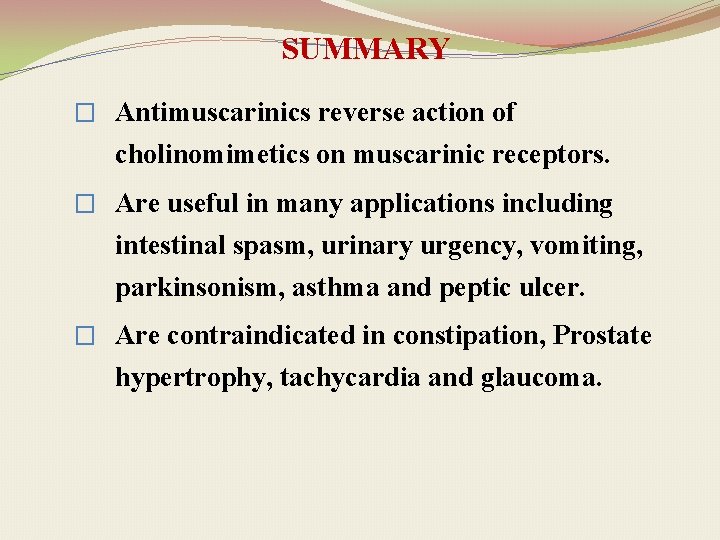
SUMMARY � Antimuscarinics reverse action of cholinomimetics on muscarinic receptors. � Are useful in many applications including intestinal spasm, urinary urgency, vomiting, parkinsonism, asthma and peptic ulcer. � Are contraindicated in constipation, Prostate hypertrophy, tachycardia and glaucoma.
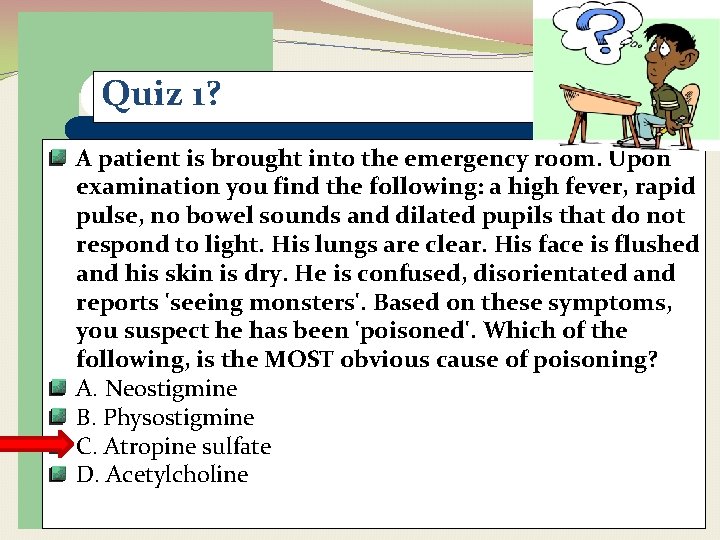
Quiz 1? A patient is brought into the emergency room. Upon examination you find the following: a high fever, rapid pulse, no bowel sounds and dilated pupils that do not respond to light. His lungs are clear. His face is flushed and his skin is dry. He is confused, disorientated and reports 'seeing monsters'. Based on these symptoms, you suspect he has been 'poisoned'. Which of the following, is the MOST obvious cause of poisoning? A. Neostigmine B. Physostigmine C. Atropine sulfate D. Acetylcholine
Quiz 2? You are working in the post anesthesia care unit of a hospital. You have just received a patient back from surgery and you are monitoring his status. Knowing that the patient has received atropine, which of the following statements/observations is UNEXPECTED? A. The patient is complaining of extreme thirst. B. The patient complains he is unable to clearly see the clock located just across from him. C. The patient's heart rate is elevated. D. The patient reports he has cramping and diarrhea.
Can antimuscarinic drugs reverse the Action of neostigmine on skeletal muscles? What is the antidote that can be used in atropine toxicity?
Thank you Questions ?