
Antibody Detection Relevance of c IISpecific Antibody Andrea
Antibody Detection Relevance of c. IISpecific Antibody Andrea A. Zachary, Ph. D. www. hopkinsmedicine. org/hla/
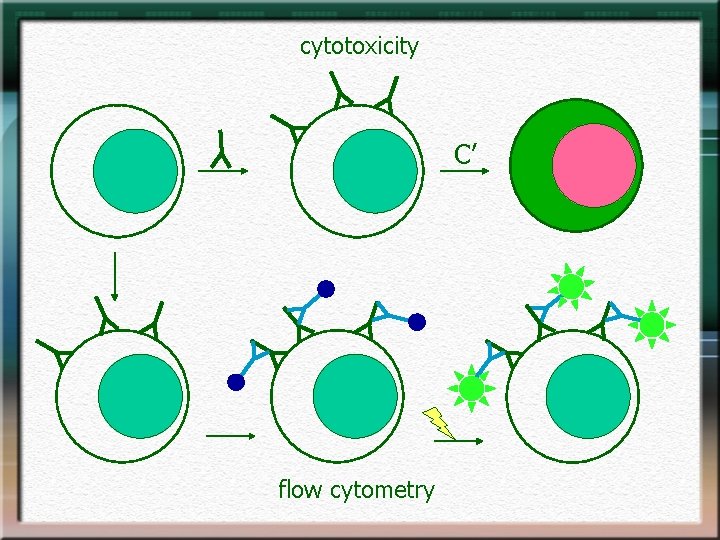
cytotoxicity C’ flow cytometry
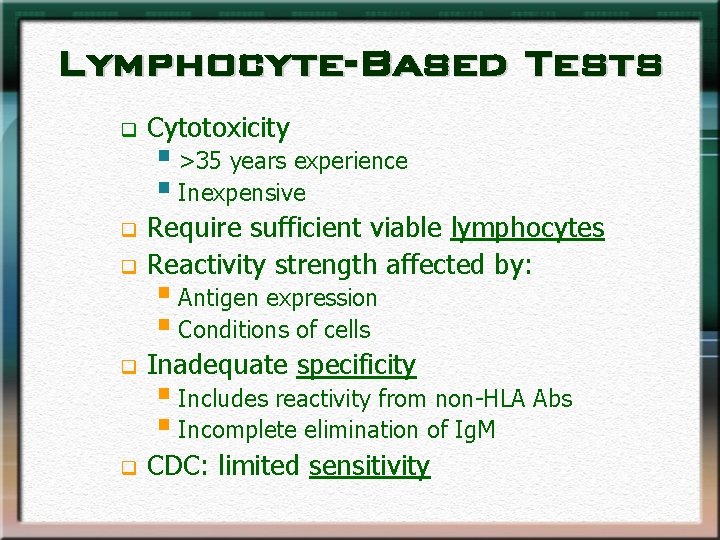
Lymphocyte-Based Tests q Cytotoxicity q q Require sufficient viable lymphocytes Reactivity strength affected by: q Inadequate specificity q CDC: limited sensitivity § >35 years experience § Inexpensive § Antigen expression § Conditions of cells § Includes reactivity from non-HLA Abs § Incomplete elimination of Ig. M
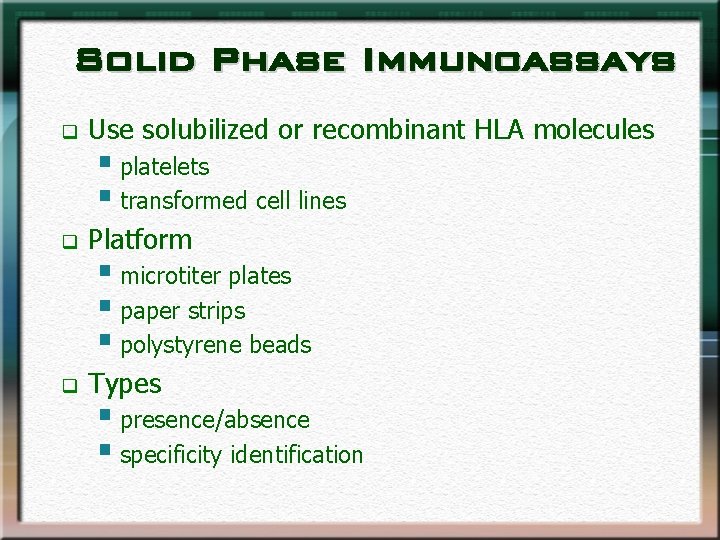
Solid Phase Immunoassays q Use solubilized or recombinant HLA molecules q Platform q Types § platelets § transformed cell lines § microtiter plates § paper strips § polystyrene beads § presence/absence § specificity identification
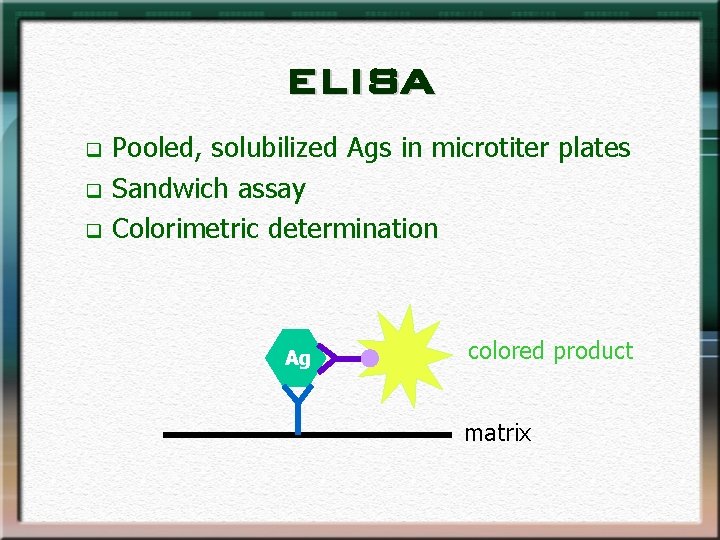
ELISA q q q Pooled, solubilized Ags in microtiter plates Sandwich assay Colorimetric determination Ag colored product matrix
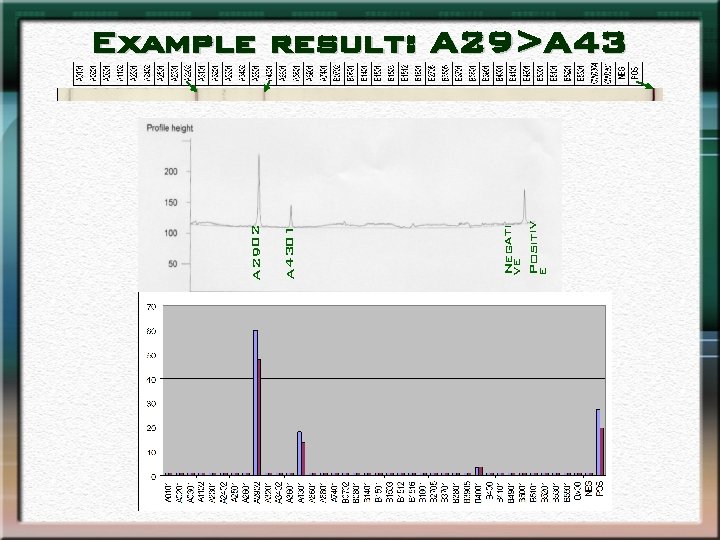
Negati ve Positiv e A 4301 A 2902 Example result: A 29>A 43
Bead Assays q Flow PRA § bead system tested in a standard flow cytometer
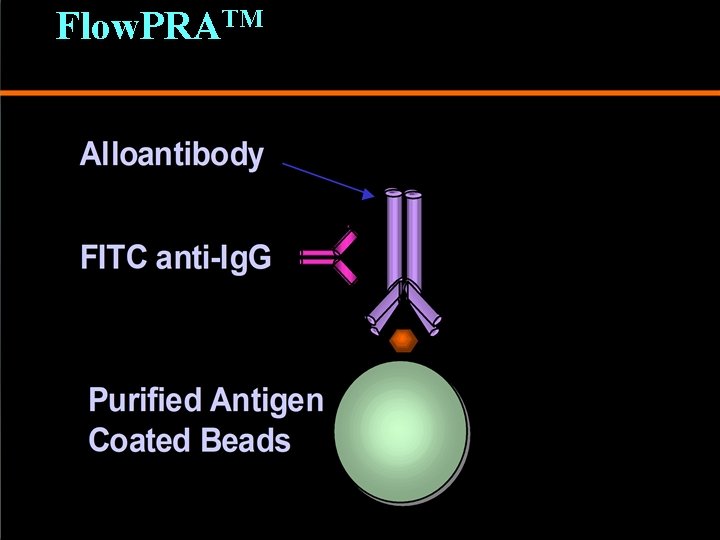
Flow. PRATM
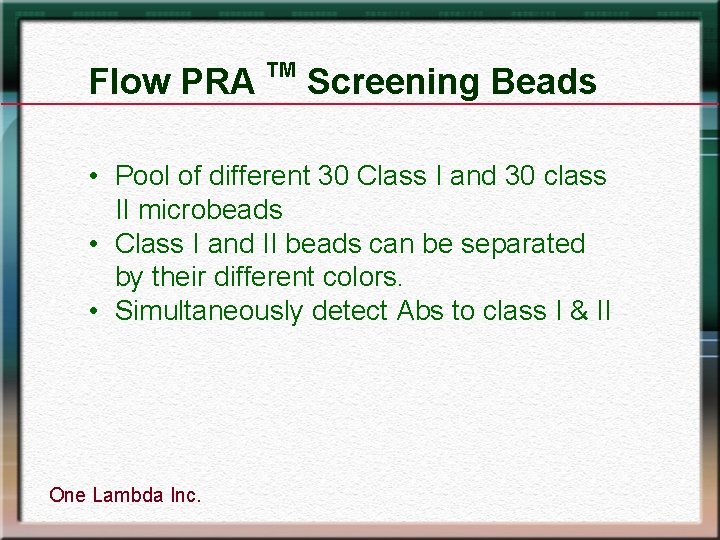
Flow PRA TM Screening Beads • Pool of different 30 Class I and 30 class II microbeads • Class I and II beads can be separated by their different colors. • Simultaneously detect Abs to class I & II One Lambda Inc.
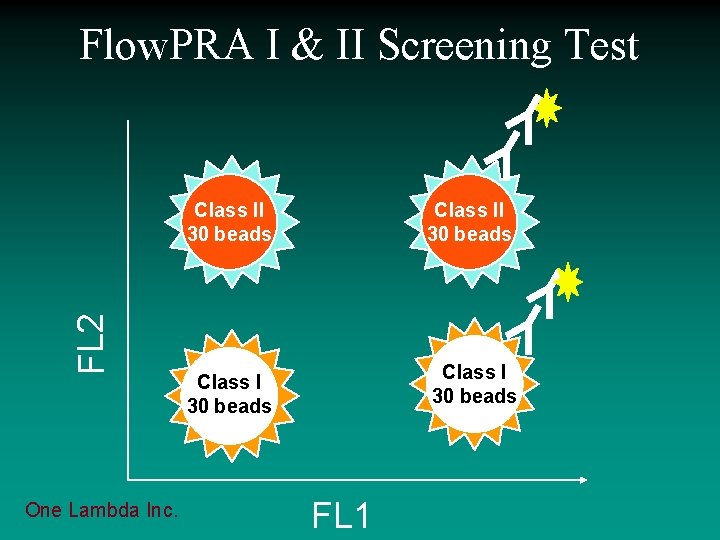
FL 2 Flow. PRA I & II Screening Test One Lambda Inc. Class II 30 beads Class I 30 beads FL 1
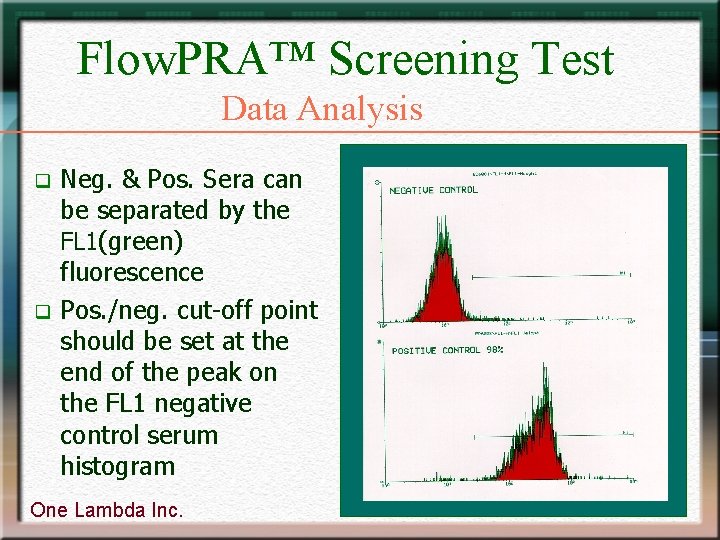
Flow. PRA™ Screening Test Data Analysis q q Neg. & Pos. Sera can be separated by the FL 1(green) fluorescence Pos. /neg. cut-off point should be set at the end of the peak on the FL 1 negative control serum histogram One Lambda Inc.

Flow. PRA™ Screening Test Data Analysis % PRA is represented by the percentage of events shifted to the right of the cut-off point One Lambda Inc.
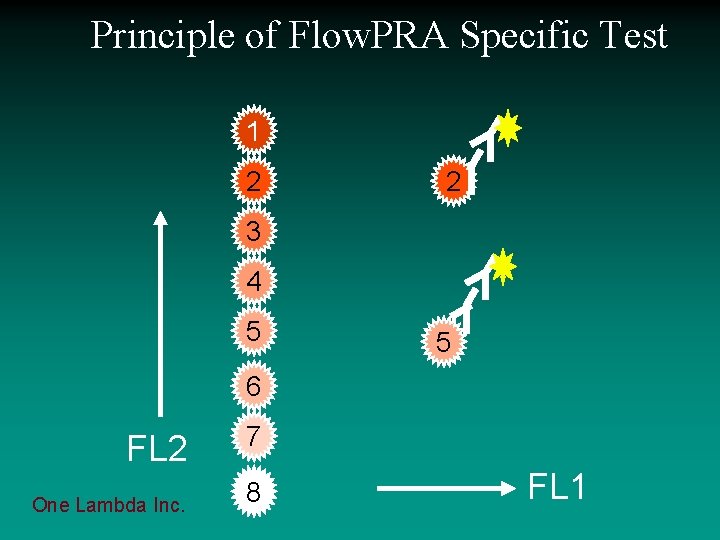
Principle of Flow. PRA Specific Test 1 2 2 3 4 5 5 6 FL 2 One Lambda Inc. 7 8 FL 1
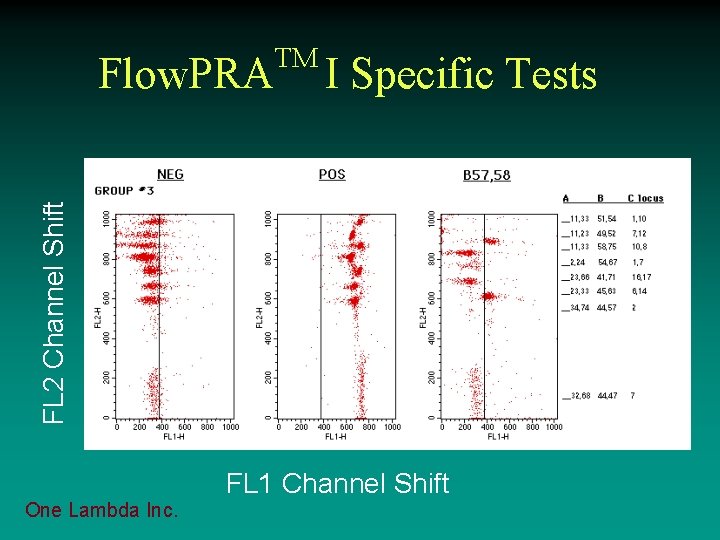
I Specific Tests FL 2 Channel Shift Flow. PRA TM One Lambda Inc. FL 1 Channel Shift
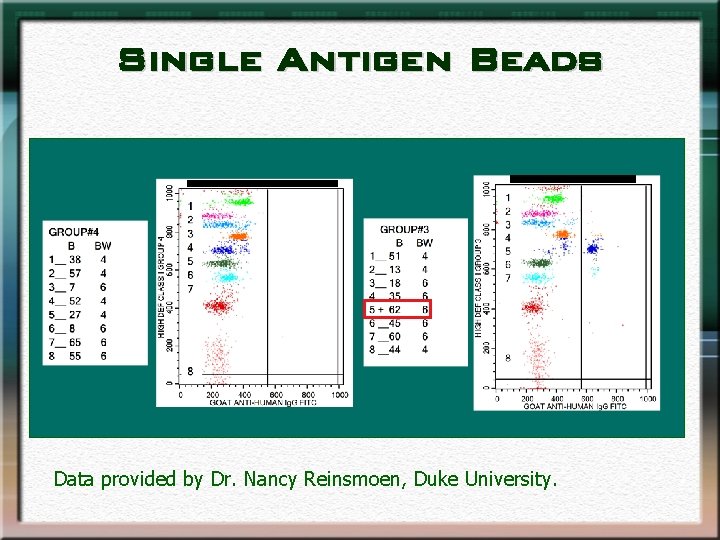
Single Antigen Beads Data provided by Dr. Nancy Reinsmoen, Duke University.
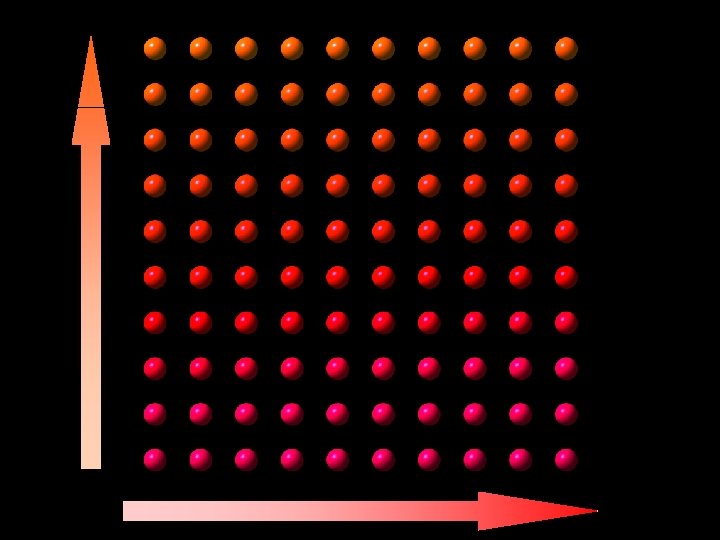
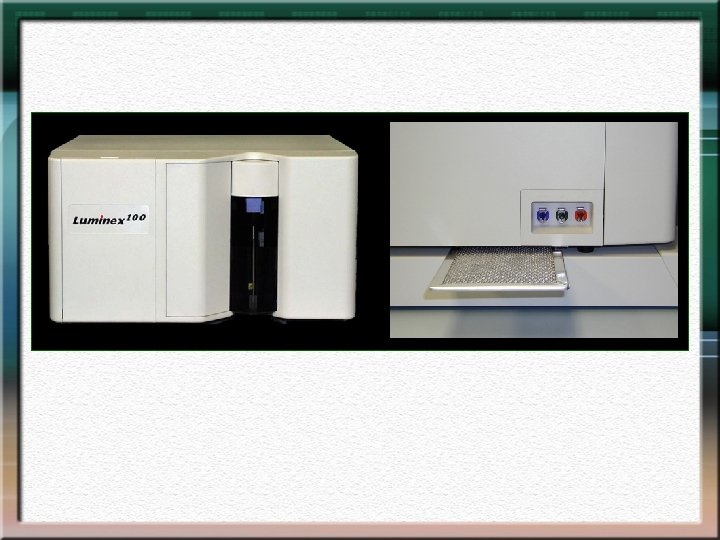
Bead Assays q Luminex system § beads impregnated with varying proportions of two dyes to permit differentiation of up to 100 beads § fluorochrome labeled antiglobulin reagent for detection of bound antibody § laser excitation of fluorochrome § multiplex - can run up to 100 assays in a single tube § uses very small amounts of serum
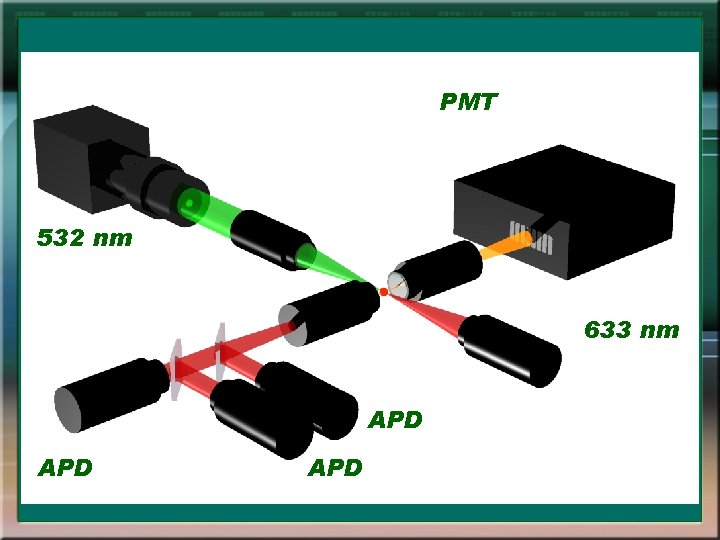
PMT 532 nm 633 nm APD APD
Solid Phase Immunoassays q q Increased sensitivity Increased specificity Quantifiable reactions Semi-automated: fast, high throughput § CDC: 2 -4 weeks plus panel preparation time § ELISA – 111 yes/no, 1 class, 4 hours – 1 characterization - 4 hours § Luminex – 96 yes/no, c. I and c. II, 4 hours - 45% time saving – 96 characterizations - 4 hours -
Solid Phase Immunoassays q q q q Conformational changes in molecules bound to solid phase Loss of gene expression Non-uniform detection of antibodies Panel constraints Less robust because of sensitivity Non-specific binding Increased sensitivity - clinical interpretation
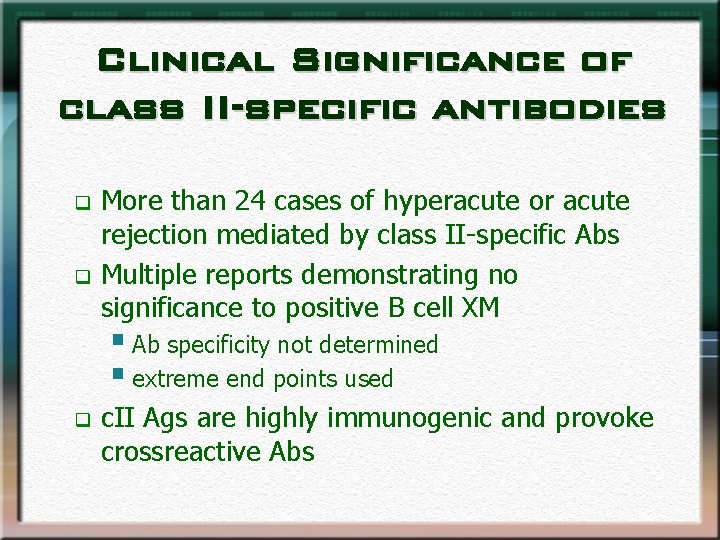
Clinical Significance of class II-specific antibodies q q More than 24 cases of hyperacute or acute rejection mediated by class II-specific Abs Multiple reports demonstrating no significance to positive B cell XM § Ab specificity not determined § extreme end points used q c. II Ags are highly immunogenic and provoke crossreactive Abs
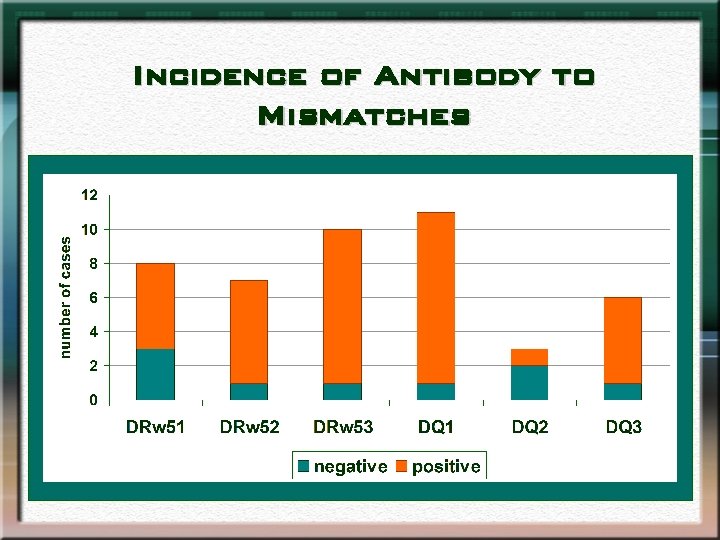
Incidence of Antibody to Mismatches
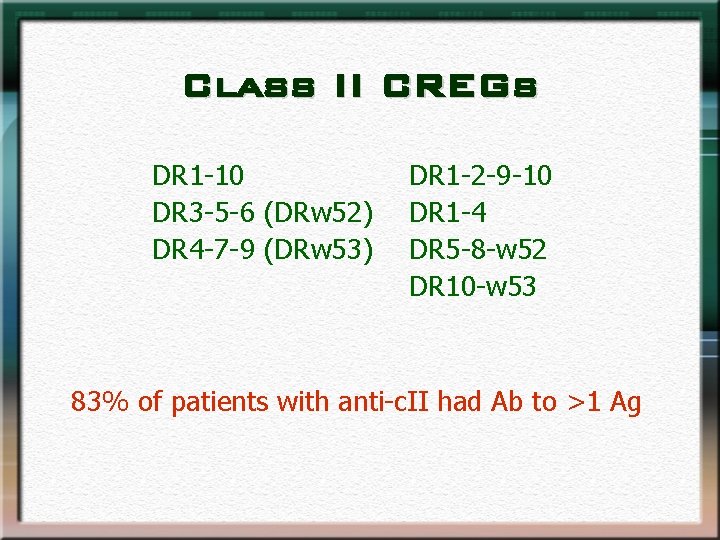
Class II CREGs DR 1 -10 DR 3 -5 -6 (DRw 52) DR 4 -7 -9 (DRw 53) DR 1 -2 -9 -10 DR 1 -4 DR 5 -8 -w 52 DR 10 -w 53 83% of patients with anti-c. II had Ab to >1 Ag
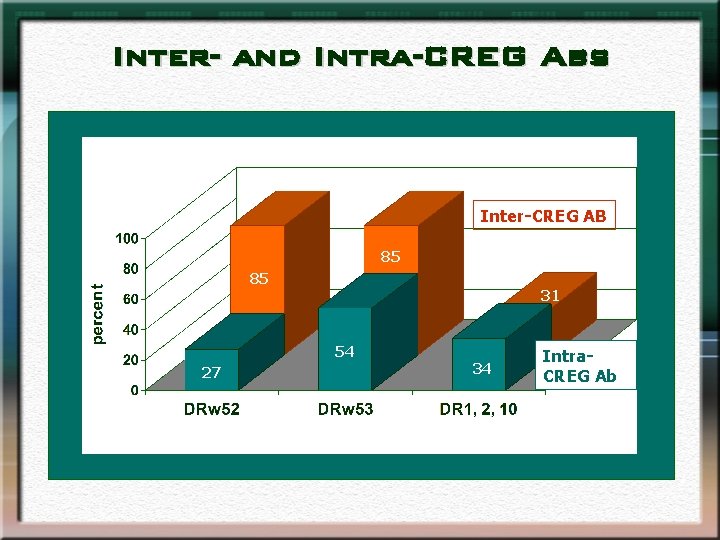
Inter- and Intra-CREG Abs Inter-CREG AB 85 85 31 54 27 27 34 Intra. CREG Ab
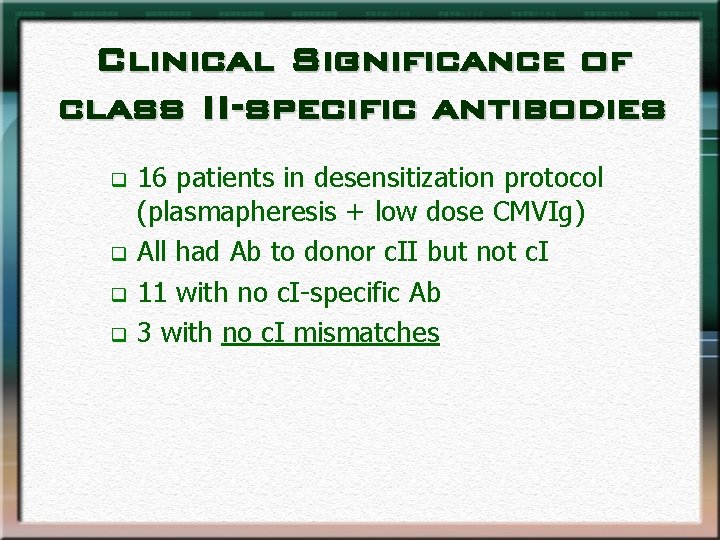
Clinical Significance of class II-specific antibodies q q 16 patients in desensitization protocol (plasmapheresis + low dose CMVIg) All had Ab to donor c. II but not c. I 11 with no c. I-specific Ab 3 with no c. I mismatches
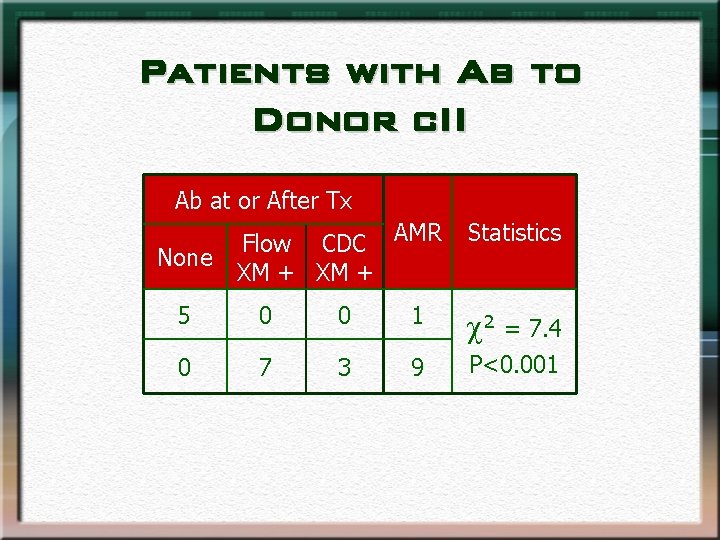
Patients with Ab to Donor c. II Ab at or After Tx None Flow CDC AMR XM + Statistics 5 0 0 1 2 0 7 3 9 P<0. 001 = 7. 4
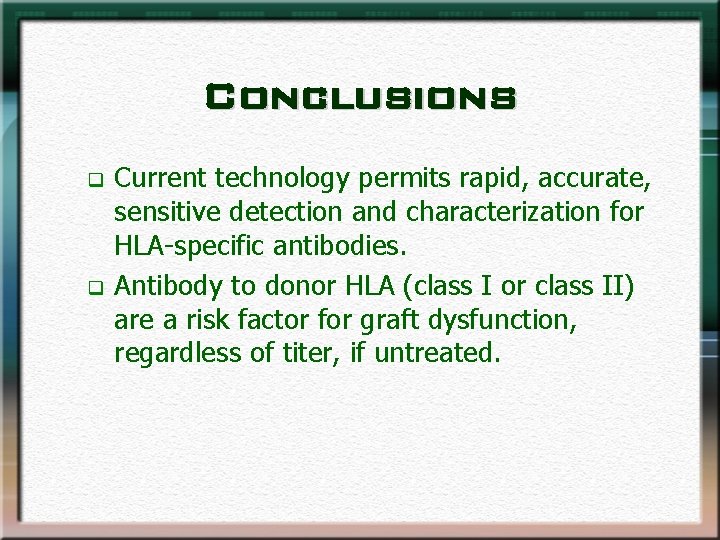
Conclusions q q Current technology permits rapid, accurate, sensitive detection and characterization for HLA-specific antibodies. Antibody to donor HLA (class I or class II) are a risk factor for graft dysfunction, regardless of titer, if untreated.
- Slides: 28