
Antibodies Introduction Definition Immunoglobulins represent animal proteins which
Antibodies
Introduction Definition: Immunoglobulins represent animal proteins, which possess antibody activity and other proteins with related chemical structure and antigenic specificity. (according WHO)
Antibodies Structure
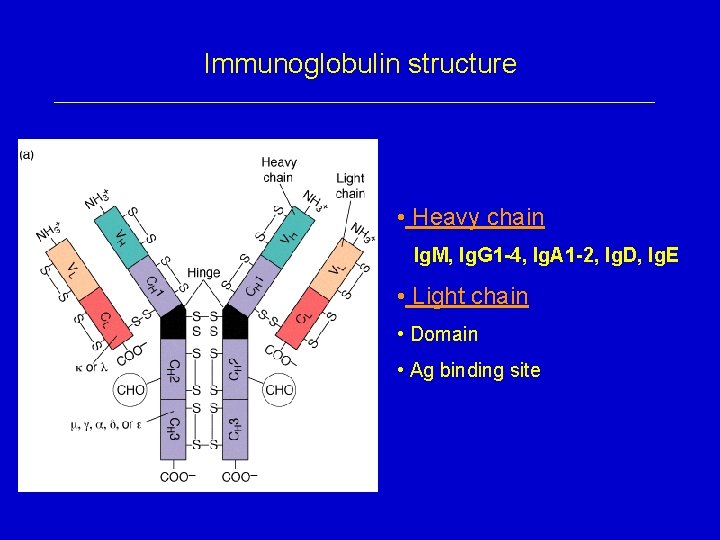
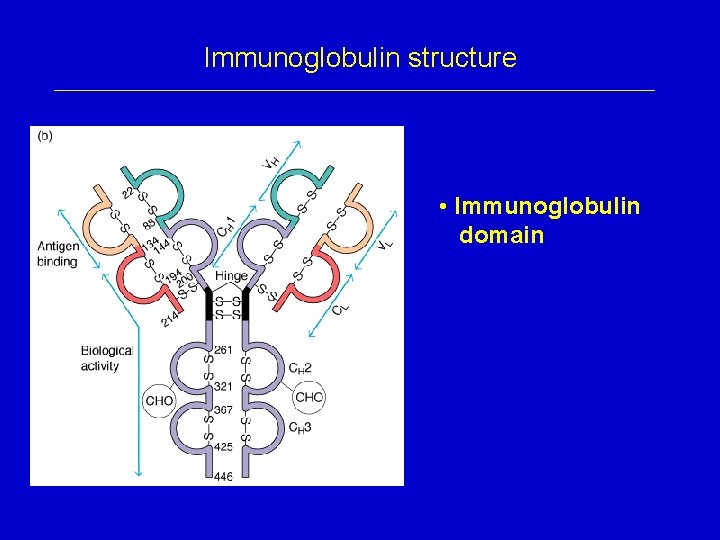
Immunoglobulin structure • Heavy chain Ig. M, Ig. G 1 -4, Ig. A 1 -2, Ig. D, Ig. E • Light chain • Domain • Ag binding site
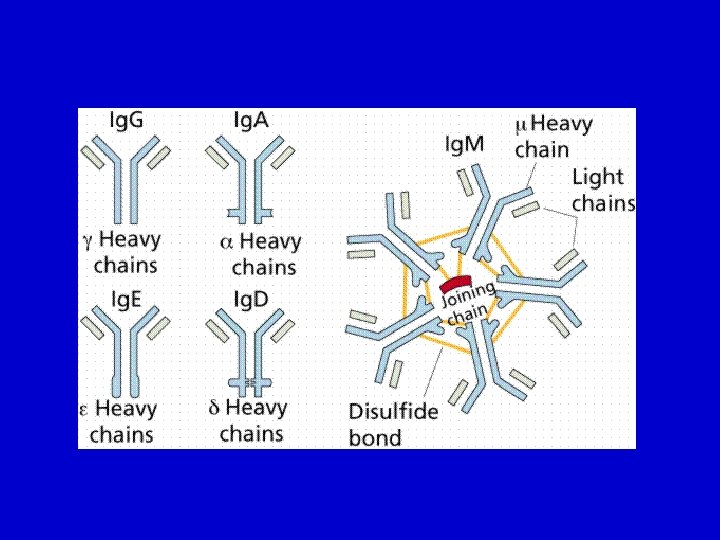

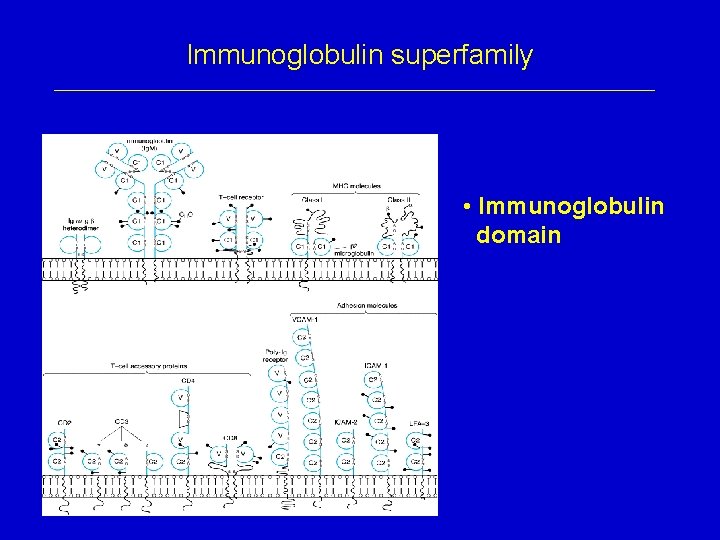
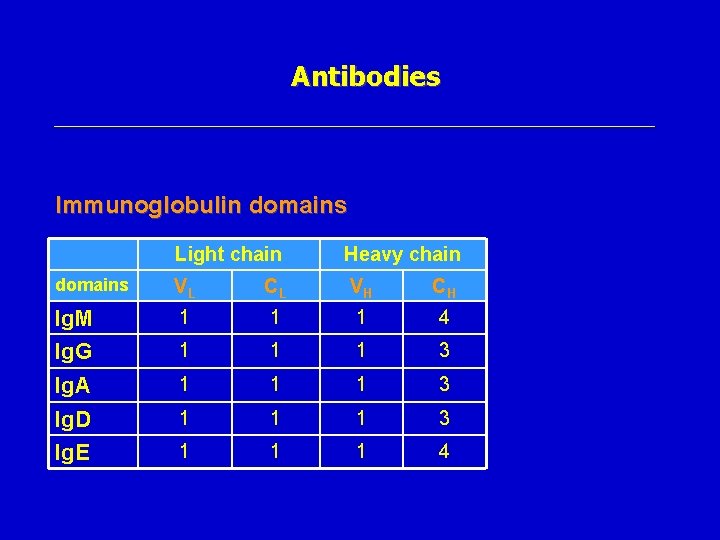
Immunoglobulin structure Immunoglobulin domains -Variable: VH, VL -Constant: CH, CL
![Complementarity-determining regions [CDR] hypervariable loops](http://slidetodoc.com/presentation_image_h2/a77462b94953eb56a1e22049ad4d35e8/image-7.jpg "Complementarity-determining regions [CDR] hypervariable loops")
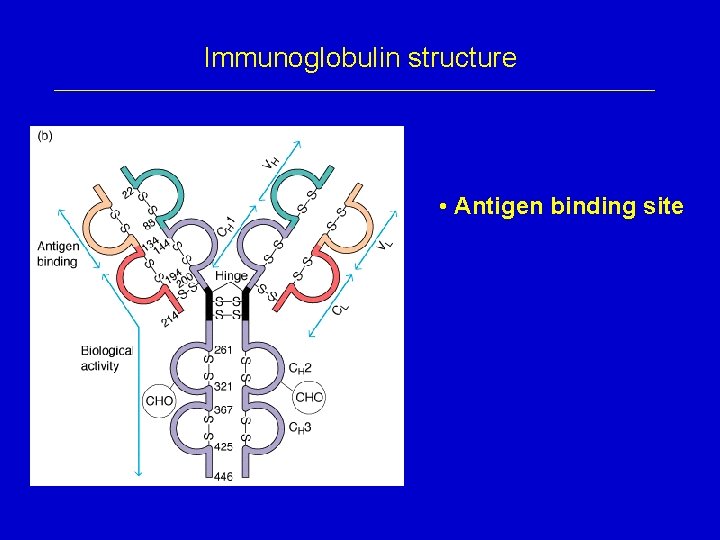
Complementarity-determining regions [CDR] hypervariable loops
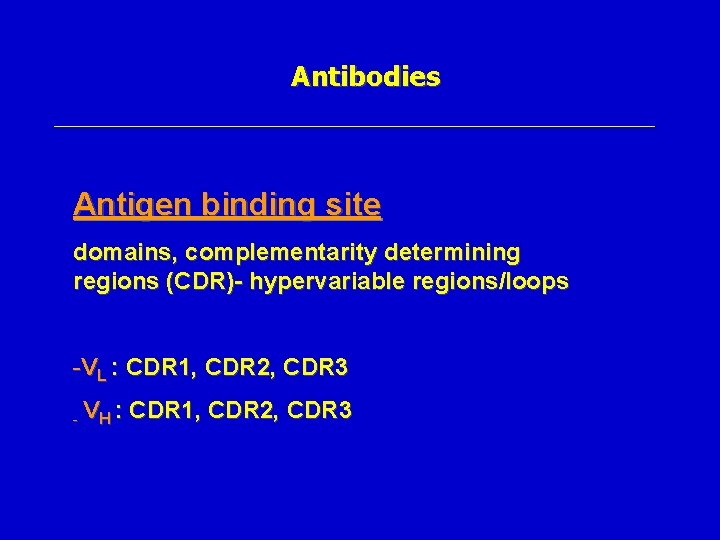
Antibodies Antigen binding site domains, complementarity determining regions (CDR)- hypervariable regions/loops -VL : CDR 1, CDR 2, CDR 3 - VH : CDR 1, CDR 2, CDR 3

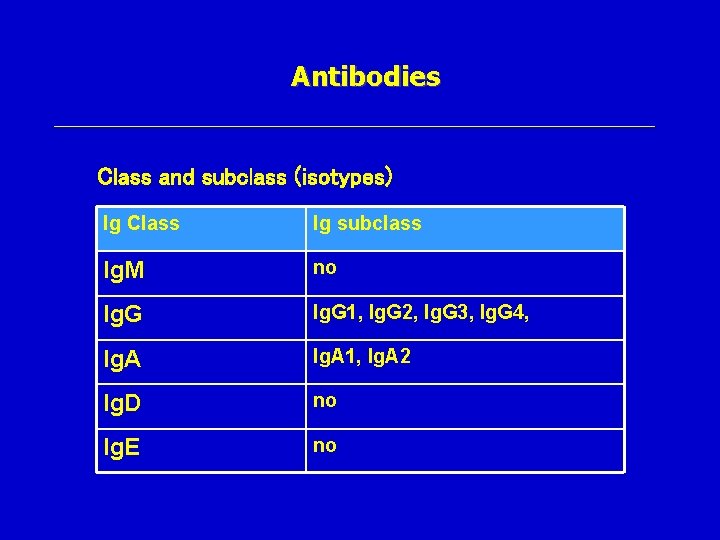
Antibodies Class and subclass (isotypes) Ig Class Ig subclass Ig. M no Ig. G 1, Ig. G 2, Ig. G 3, Ig. G 4, Ig. A 1, Ig. A 2 Ig. D no Ig. E no
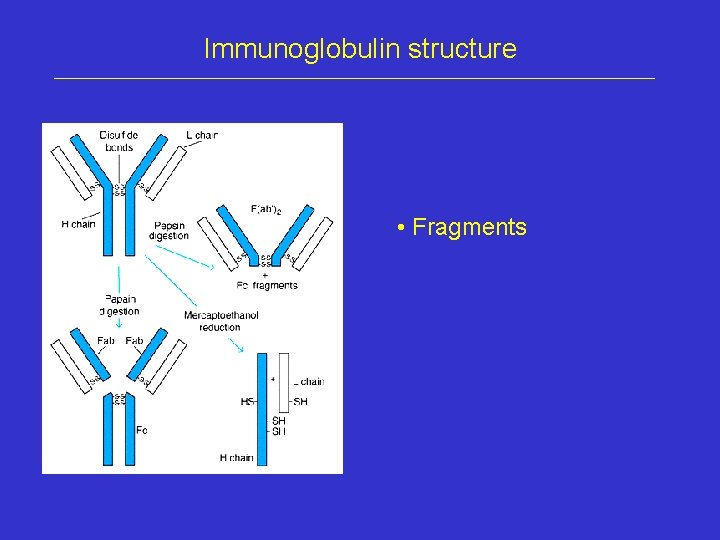
Immunoglobulin structure • Fragments
Immunoglobulin structure • Immunoglobulin domain
Immunoglobulin superfamily • Immunoglobulin domain
Immunoglobulin structure • Antigen binding site
Antibodies Immunoglobulin domains Light chain Heavy chain domains VL CL VH CH Ig. M 1 1 1 4 Ig. G 1 1 1 3 Ig. A 1 1 1 3 Ig. D 1 1 1 3 Ig. E 1 1 1 4
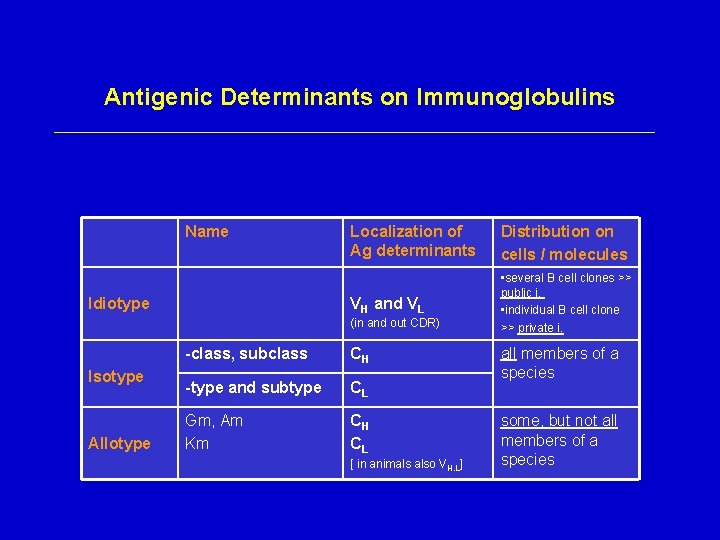
Antigenic Determinants on Immunoglobulins Name Idiotype Localization of Ag determinants Distribution on cells / molecules VH and VL • several B cell clones >> public i. • individual B cell clone >> private i. (in and out CDR) Isotype Allotype -class, subclass CH -type and subtype CL Gm, Am Km CH CL [ in animals also VH, L] all members of a species some, but not all members of a species
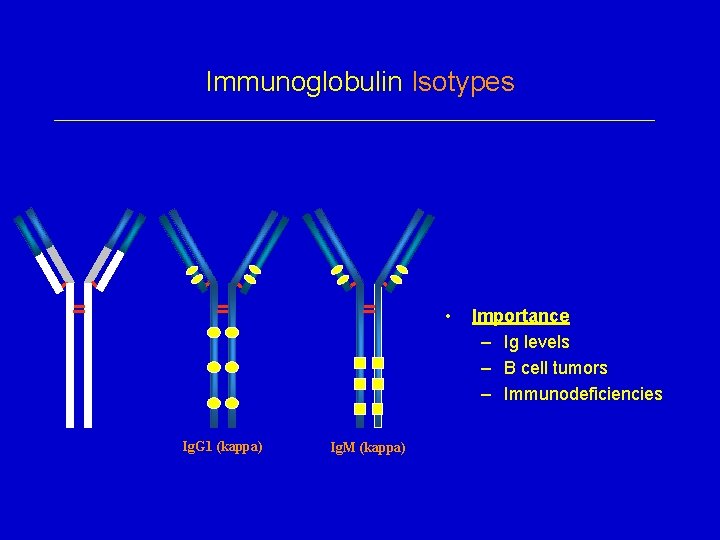
Immunoglobulin Isotypes • Ig. G 1 (kappa) Ig. M (kappa) Importance – Ig levels – B cell tumors – Immunodeficiencies
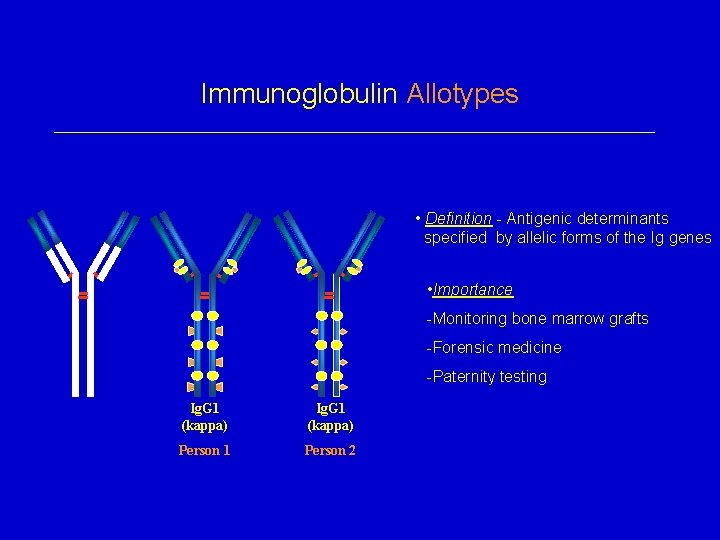
Immunoglobulin Allotypes • Definition - Antigenic determinants specified by allelic forms of the Ig genes • Importance -Monitoring bone marrow grafts -Forensic medicine -Paternity testing Ig. G 1 (kappa) Person 1 Person 2
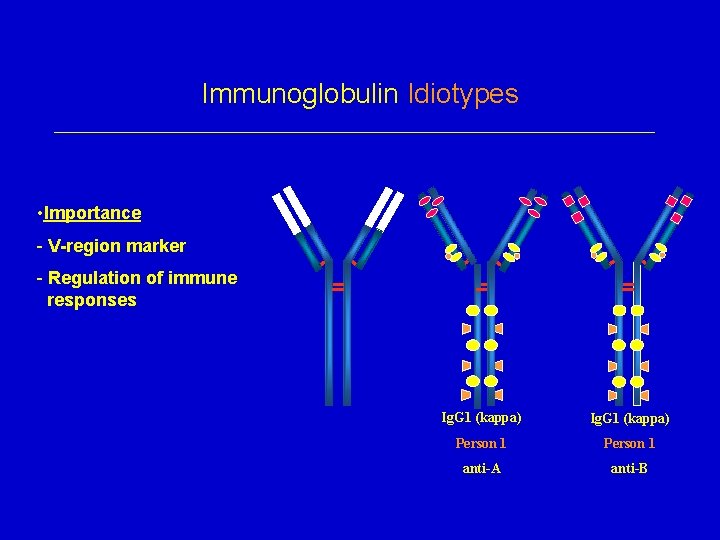
Immunoglobulin Idiotypes • Importance - V-region marker - Regulation of immune responses Ig. G 1 (kappa) Person 1 anti-A anti-B
Antibodies Function
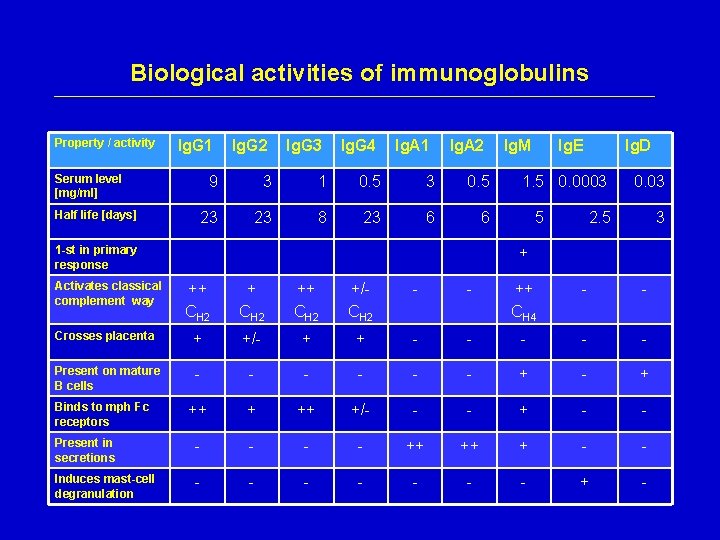
Biological activities of immunoglobulins Property / activity Ig. G 1 Ig. G 2 Ig. G 3 Ig. G 4 9 3 1 0. 5 3 0. 5 23 23 8 23 6 6 Serum level [mg/ml] Half life [days] Ig. A 1 Ig. A 2 1 -st in primary response Activates classical complement way Ig. M Ig. E Ig. D 1. 5 0. 0003 5 0. 03 2. 5 3 + ++ CH 2 +/CH 2 - - ++ CH 4 - - Crosses placenta + +/- + + - - - Present on mature B cells - - - + - + ++ +/- - - + - - Present in secretions - - ++ ++ + - - Induces mast-cell degranulation - - - - + - Binds to mph Fc receptors
Antibodies Ig genes
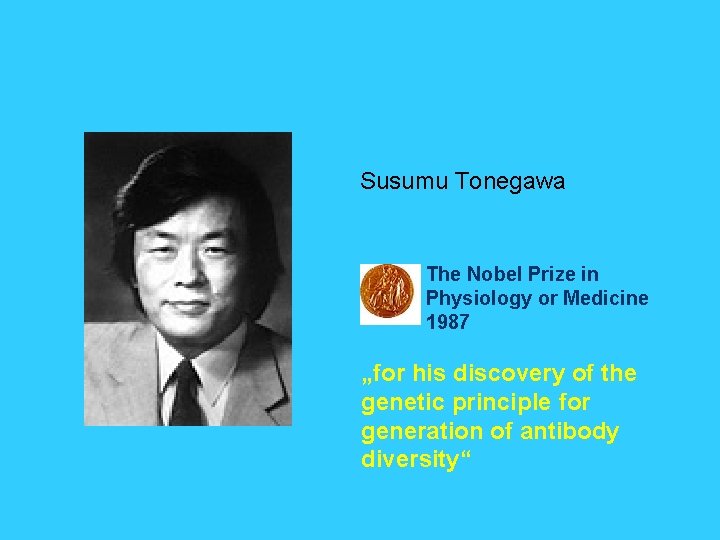
Susumu Tonegawa The Nobel Prize in Physiology or Medicine 1987 „for his discovery of the genetic principle for generation of antibody diversity“
Antibodies Antibody response Cellular lever
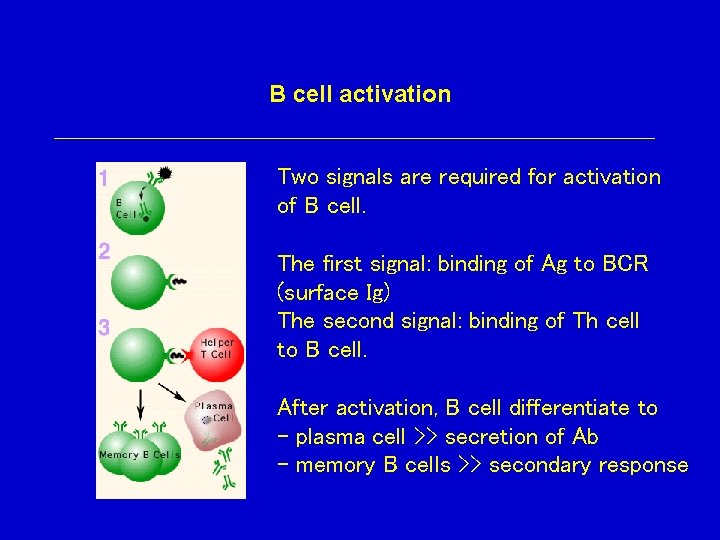
B cell activation Two signals are required for activation of B cell. The first signal: binding of Ag to BCR (surface Ig) The second signal: binding of Th cell to B cell. After activation, B cell differentiate to - plasma cell >> secretion of Ab - memory B cells >> secondary response
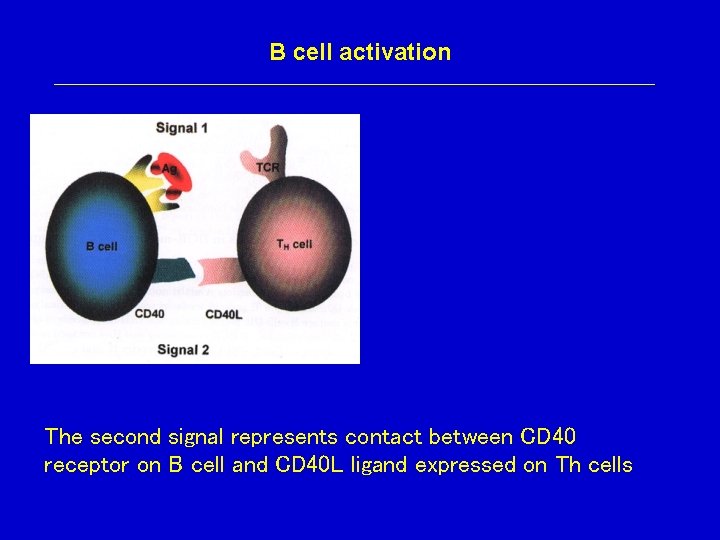
B cell activation The second signal represents contact between CD 40 receptor on B cell and CD 40 L ligand expressed on Th cells
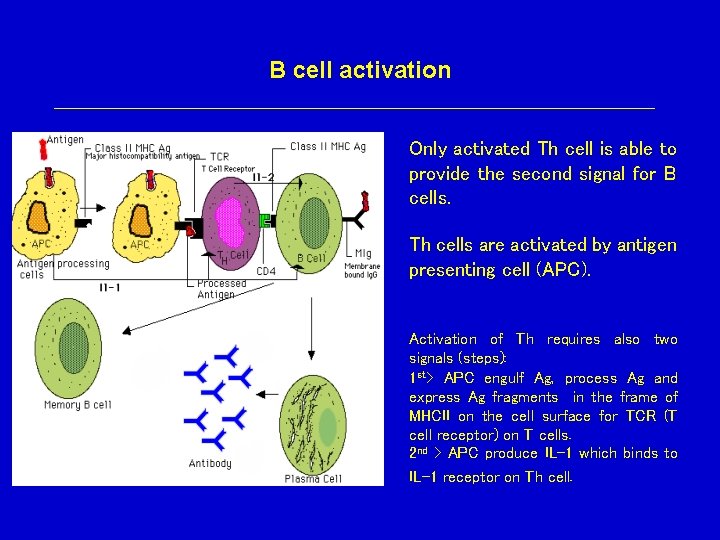
B cell activation Only activated Th cell is able to provide the second signal for B cells. Th cells are activated by antigen presenting cell (APC). Activation of Th requires also two signals (steps): 1 st> APC engulf Ag, process Ag and express Ag fragments in the frame of MHCII on the cell surface for TCR (T cell receptor) on T cells. 2 nd > APC produce IL-1 which binds to IL-1 receptor on Th cell.
Antibodies Antibody production Primary and Secondary Responce
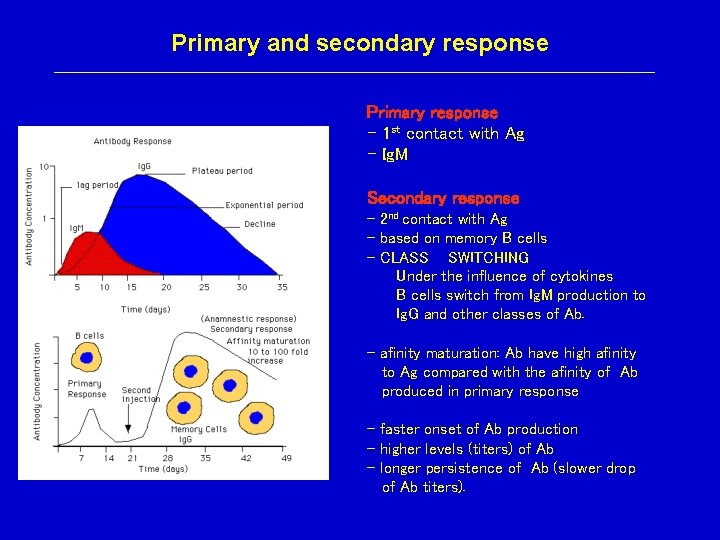
Primary and secondary response Primary response - 1 st contact with Ag - Ig. M Secondary response - 2 nd contact with Ag - based on memory B cells - CLASS SWITCHING Under the influence of cytokines B cells switch from Ig. M production to Ig. G and other classes of Ab. - afinity maturation: Ab have high afinity to Ag compared with the afinity of Ab produced in primary response - faster onset of Ab production - higher levels (titers) of Ab - longer persistence of Ab (slower drop of Ab titers).
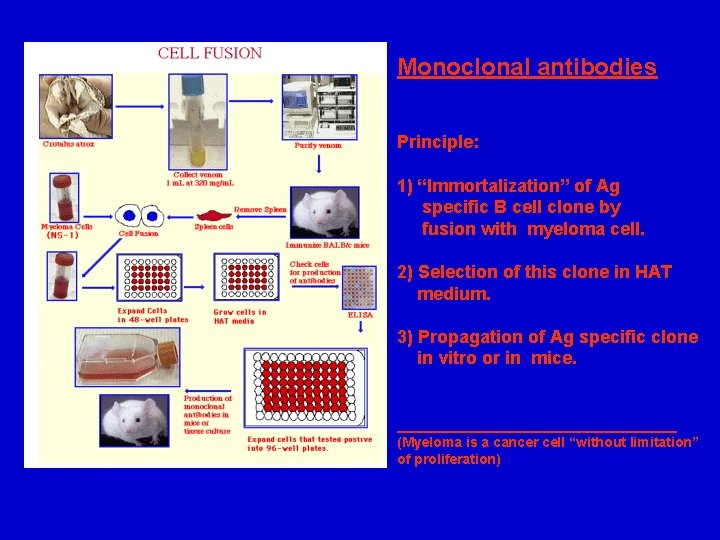
Monoclonal antibodies Principle: 1) “Immortalization” of Ag specific B cell clone by fusion with myeloma cell. 2) Selection of this clone in HAT medium. 3) Propagation of Ag specific clone in vitro or in mice. ______________ (Myeloma is a cancer cell “without limitation” of proliferation)
- Slides: 30