
Antibodies 18 February 2021 Learners should be able
Antibodies 18 February 2021 Learners should be able to demonstrate and apply their knowledge and understanding of: • the structure and general functions of antibodies To include the general structure of an antibody molecule. • an outline of the action of opsonins, agglutinins and anti -toxins
Starter: What came first? The T cell The B cell The T killer cell
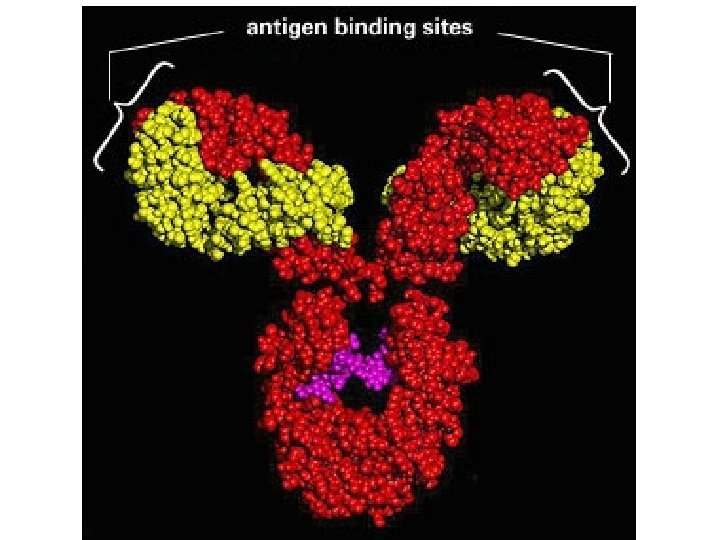
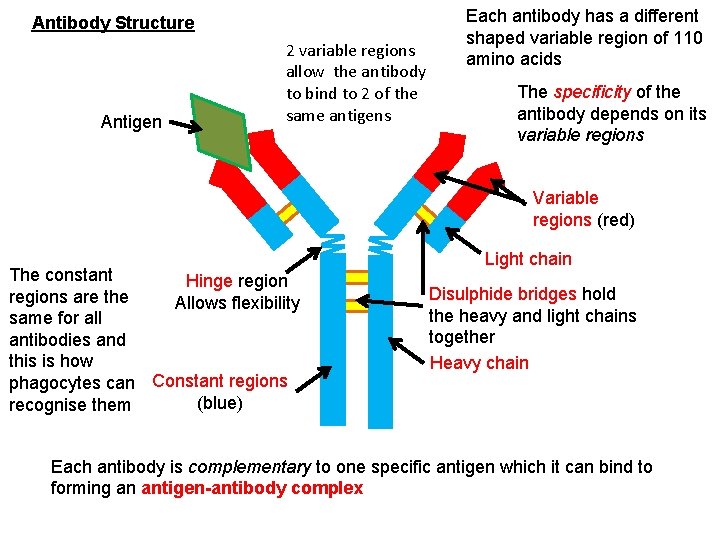
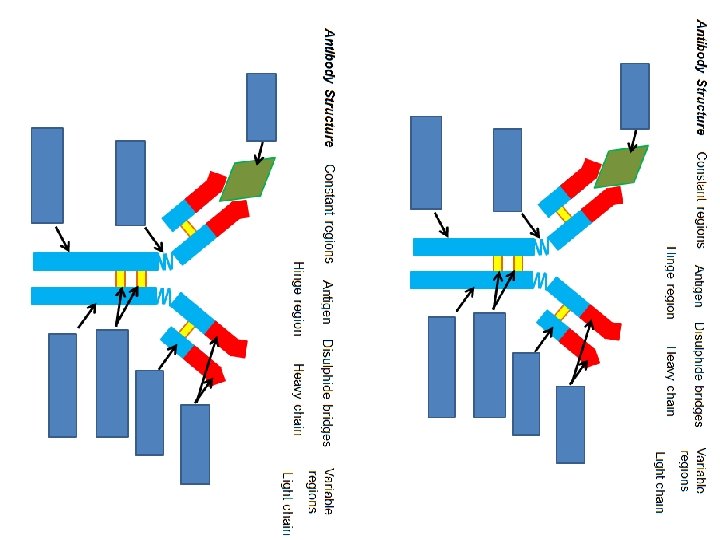
Antibody Structure Antigen 2 variable regions allow the antibody to bind to 2 of the same antigens Each antibody has a different shaped variable region of 110 amino acids The specificity of the antibody depends on its variable regions Variable regions (red) The constant Hinge regions are the Allows flexibility same for all antibodies and this is how phagocytes can Constant regions (blue) recognise them Light chain Disulphide bridges hold the heavy and light chains together Heavy chain Each antibody is complementary to one specific antigen which it can bind to forming an antigen-antibody complex
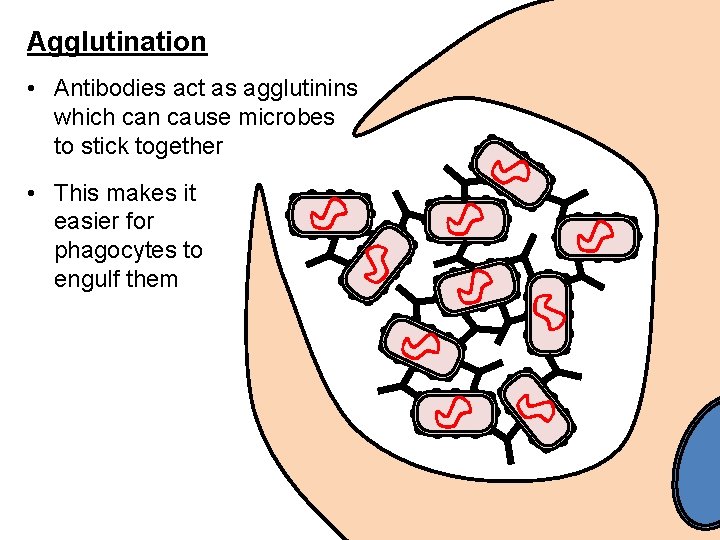
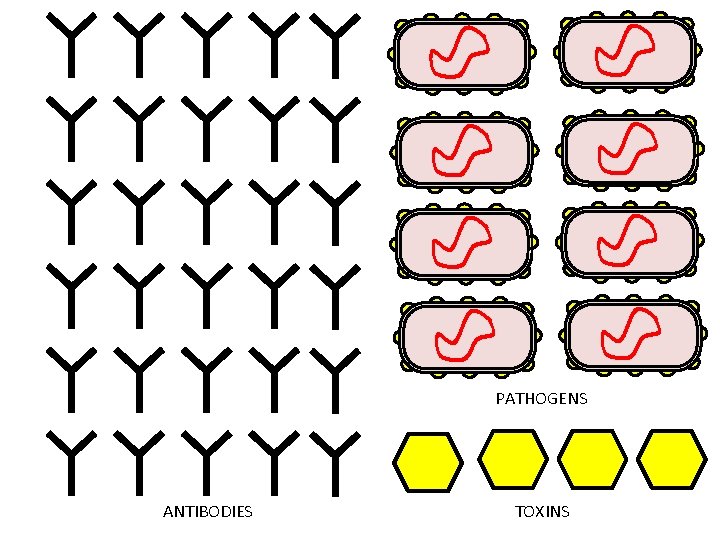
Agglutination • Antibodies act as agglutinins which can cause microbes to stick together • This makes it easier for phagocytes to engulf them
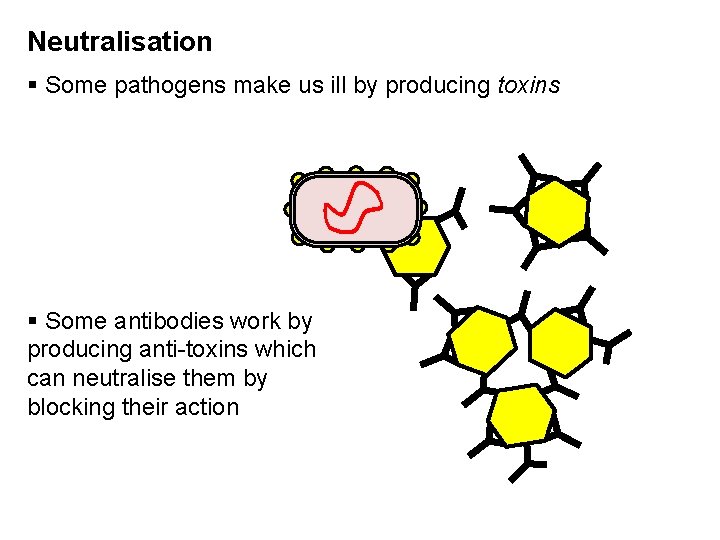
Neutralisation § Some pathogens make us ill by producing toxins § Some antibodies work by producing anti-toxins which can neutralise them by blocking their action
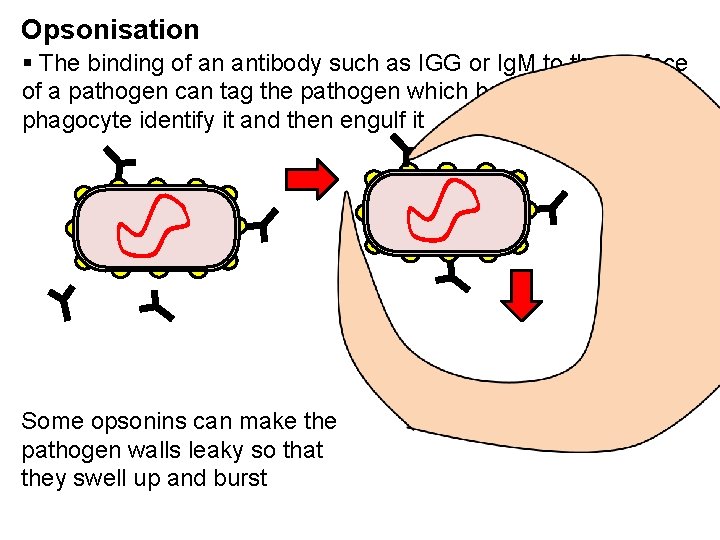
Opsonisation § The binding of an antibody such as IGG or Ig. M to the surface of a pathogen can tag the pathogen which helps the phagocyte identify it and then engulf it Some opsonins can make the pathogen walls leaky so that they swell up and burst
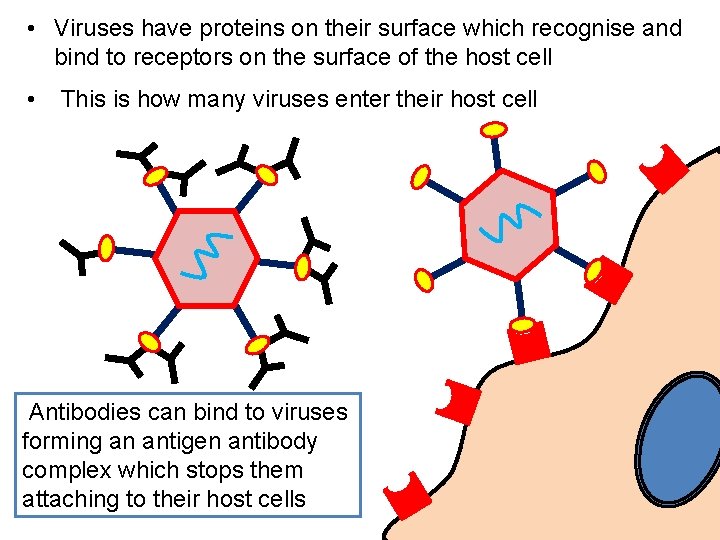
• Viruses have proteins on their surface which recognise and bind to receptors on the surface of the host cell • This is how many viruses enter their host cell Antibodies can bind to viruses forming an antigen antibody complex which stops them attaching to their host cells
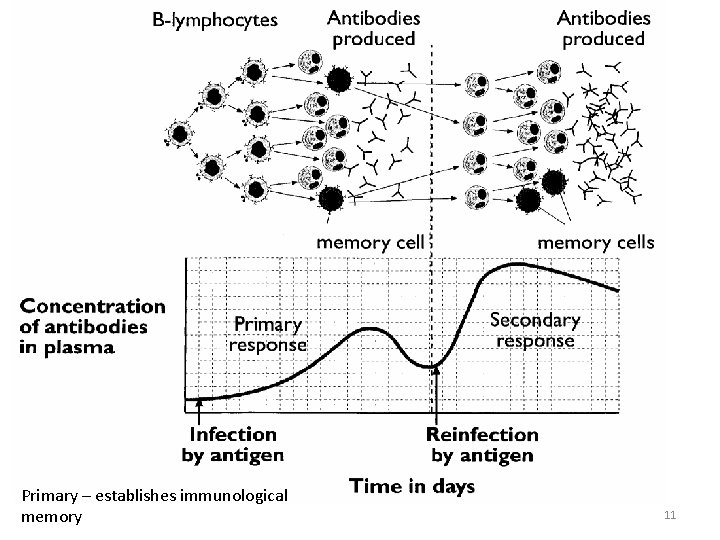
Primary – establishes immunological memory 11
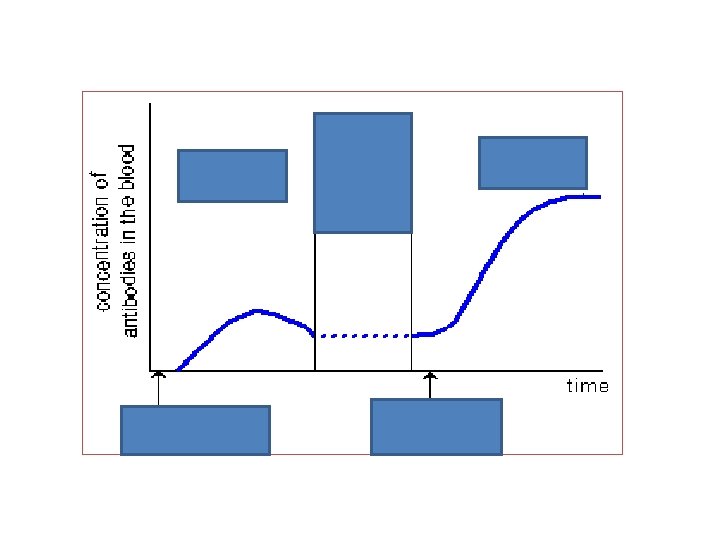
Primary and secondary responses Annotate your graph of the primary and secondary responses by adding the following labels: Clonal selection Clonal expansion (more plasma cells and Killer T etc) Mitosis Development of memory cells Questions: 1) Compare the primary and secondary responses in terms of time taken, decline of antibodies and antibodies produced. 2) Memory cells are produced in the primary response, how else could these be produced without the person being infected? Extra challenge: What causes the secondary response to occur more rapidly?
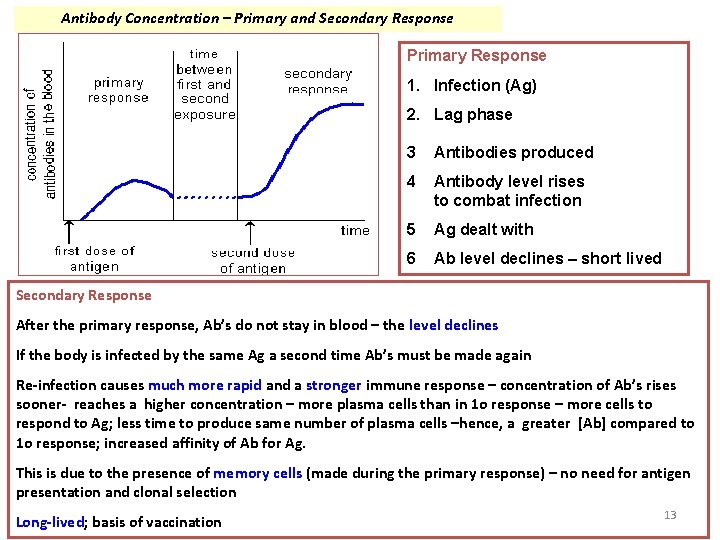
Antibody Concentration – Primary and Secondary Response Primary Response 1. Infection (Ag) 2. Lag phase 3 Antibodies produced 4 Antibody level rises to combat infection 5 Ag dealt with 6 Ab level declines – short lived Secondary Response After the primary response, Ab’s do not stay in blood – the level declines If the body is infected by the same Ag a second time Ab’s must be made again Re-infection causes much more rapid and a stronger immune response – concentration of Ab’s rises sooner- reaches a higher concentration – more plasma cells than in 1 o response – more cells to respond to Ag; less time to produce same number of plasma cells –hence, a greater [Ab] compared to 1 o response; increased affinity of Ab for Ag. This is due to the presence of memory cells (made during the primary response) – no need for antigen presentation and clonal selection Long-lived; basis of vaccination 13
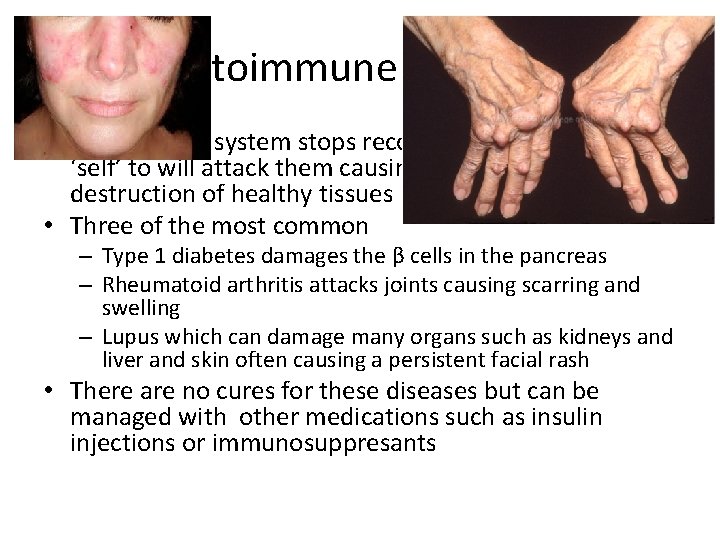
Autoimmune diseases • The immune system stops recognising some cells as ‘self’ to will attack them causing inflammation and destruction of healthy tissues • Three of the most common – Type 1 diabetes damages the β cells in the pancreas – Rheumatoid arthritis attacks joints causing scarring and swelling – Lupus which can damage many organs such as kidneys and liver and skin often causing a persistent facial rash • There are no cures for these diseases but can be managed with other medications such as insulin injections or immunosuppresants
Plenary: True or False? 1) Antibodies have a variable region specific to a pathogens antigens. 2) Antibodies contain a sulphide bridge. 3) A antigen-antibody complex is formed when an antibody binds to a pathogen’s antigens. 4) Agglutination makes it easier for phagocytes to engulf pathogens. 5) Neutralisation only occurs with viruses. 6) Opsonisation causes phagocytes to swell and burst. 7) Antibodies can stop viruses entering host cells. 8) The primary immune response produces memory cells. 9) The secondary immune response is caused by vaccination. 10) The secondary immune response is quicker.

Resources
PATHOGENS ANTIBODIES TOXINS
- Slides: 17