
ANTIBIOTICS Principles of rational antibiotic therapy l l
ANTIBIOTICS
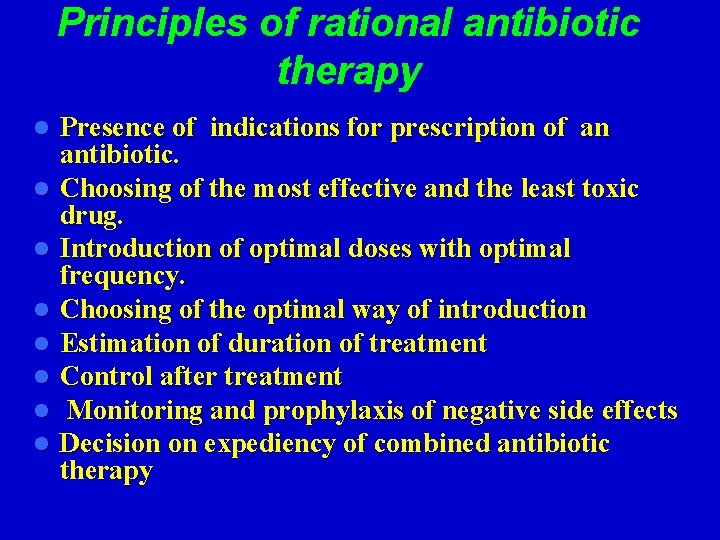
Principles of rational antibiotic therapy l l l l Presence of indications for prescription of an antibiotic. Choosing of the most effective and the least toxic drug. Introduction of optimal doses with optimal frequency. Choosing of the optimal way of introduction Estimation of duration of treatment Control after treatment Monitoring and prophylaxis of negative side effects Decision on expediency of combined antibiotic therapy
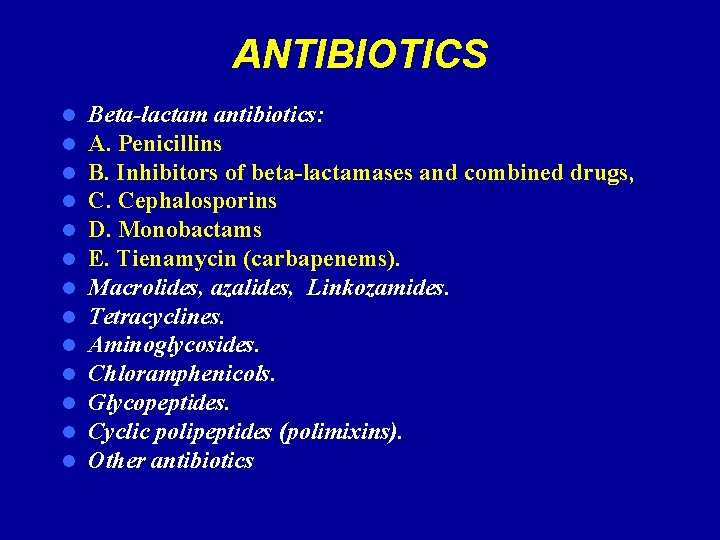
ANTIBIOTICS l l l l Beta-lactam antibiotics: А. Penicillins B. Inhibitors of beta-lactamases and combined drugs, C. Cephalosporins D. Monobactams E. Tienamycin (carbapenems). Macrolides, azalides, Linkozamides. Tetracyclines. Aminoglycosides. Chloramphenicols. Glycopeptides. Cyclic polipeptides (polimixins). Other antibiotics
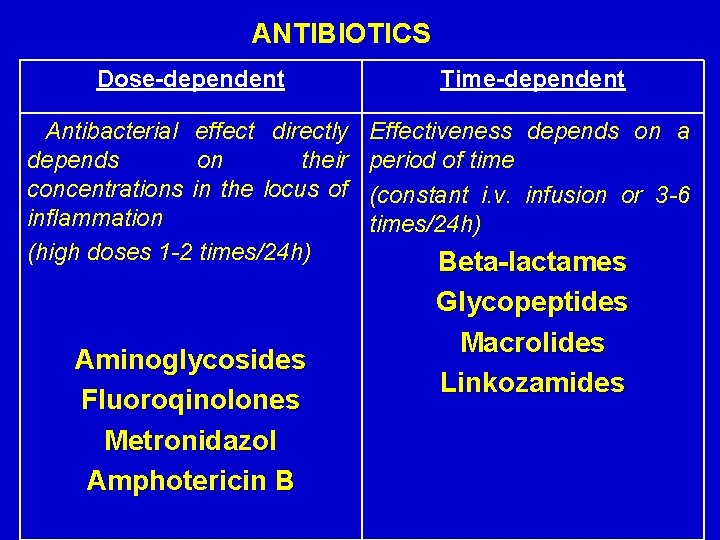
ANTIBIOTICS Dose-dependent Time-dependent Antibacterial effect directly depends on their concentrations in the locus of inflammation (high doses 1 -2 times/24 h) Effectiveness depends on a period of time (constant i. v. infusion or 3 -6 times/24 h) Aminoglycosides Fluoroqinolones Metronidazol Amphotericin B Beta-lactames Glycopeptides Macrolides Linkozamides
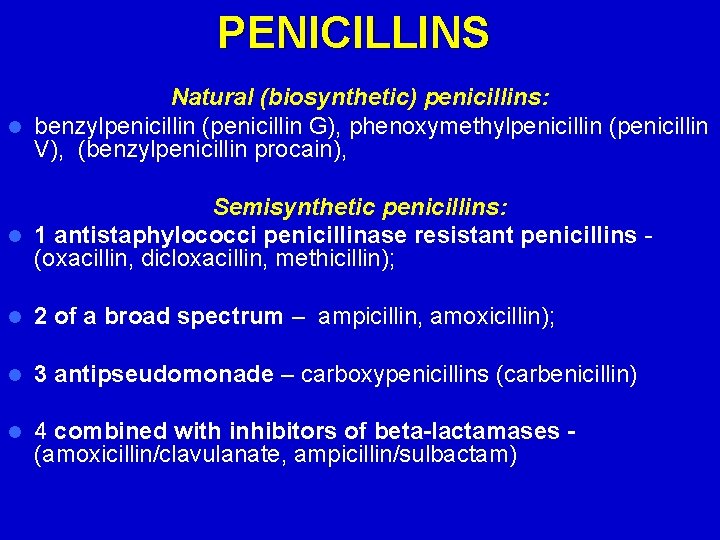
PENICILLINS Natural (biosynthetic) penicillins: l benzylpenicillin (penicillin G), phenoxymethylpenicillin (penicillin V), (benzylpenicillin procain), Semisynthetic penicillins: l 1 antistaphylococci penicillinase resistant penicillins (oxacillin, dicloxacillin, methicillin); l 2 of a broad spectrum – ampicillin, amoxicillin); l 3 antipseudomonade – carboxypenicillins (carbenicillin) l 4 combined with inhibitors of beta-lactamases (amoxicillin/clavulanate, ampicillin/sulbactam)
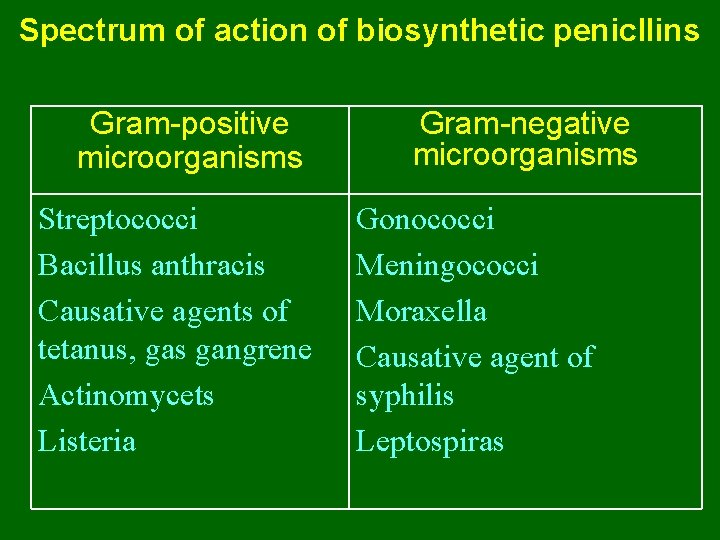
Spectrum of action of biosynthetic penicllins Gram-positive microorganisms Streptococci Bacillus anthracis Causative agents of tetanus, gas gangrene Actinomycets Listeria Gram-negative microorganisms Gonococci Meningococci Moraxella Causative agent of syphilis Leptospiras
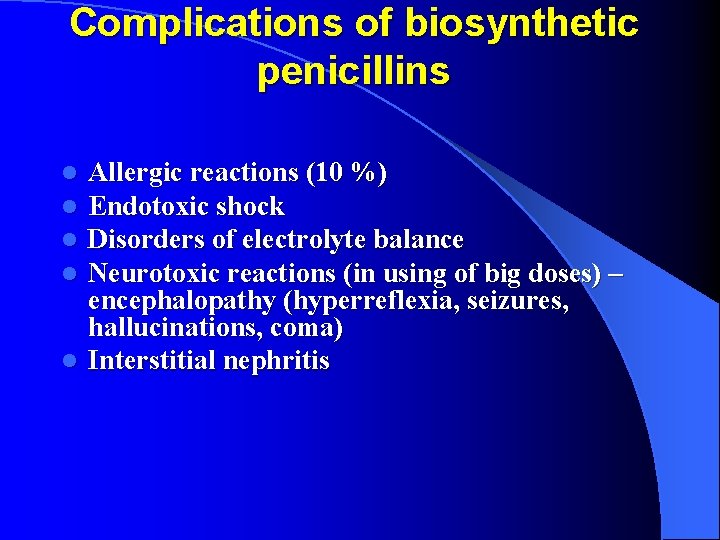
Complications of biosynthetic penicillins Allergic reactions (10 %) Endotoxic shock Disorders of electrolyte balance Neurotoxic reactions (in using of big doses) – encephalopathy (hyperreflexia, seizures, hallucinations, coma) l Interstitial nephritis l l

Oxacillin Antistaphylococci penicillinase-resistant semisynthetic penicillin Administration: intramuscular, intravenously, orally (4 -6 times of injections)
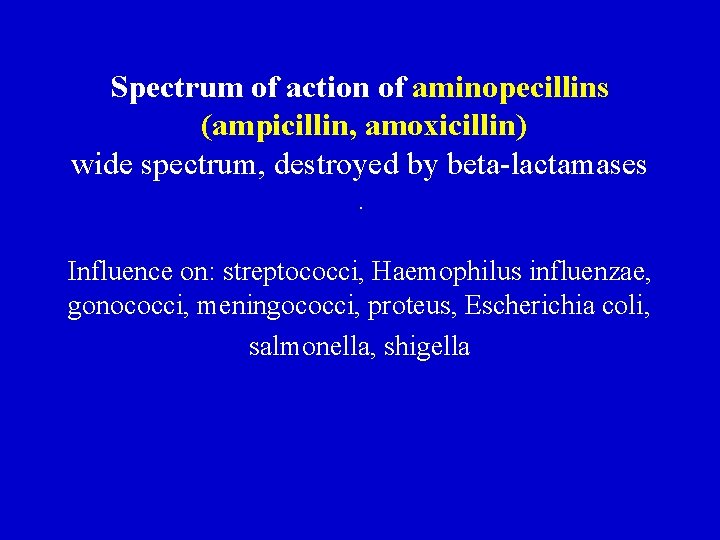
Spectrum of action of aminopecillins (ampicillin, amoxicillin) wide spectrum, destroyed by beta-lactamases. Influence on: streptococci, Haemophilus influenzae, gonococci, meningococci, proteus, Escherichia coli, salmonella, shigella

Ampicillin
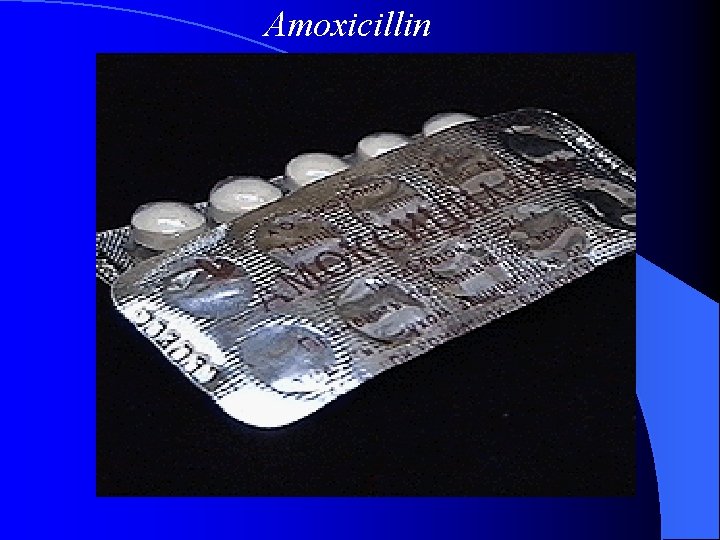
Amoxicillin
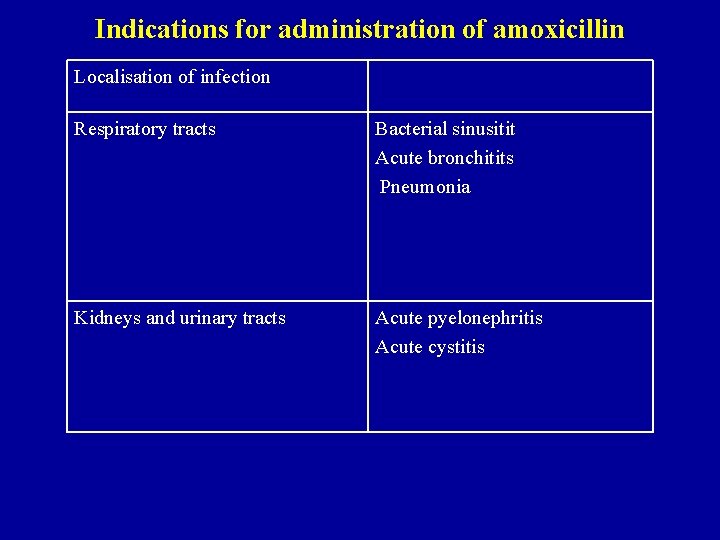
Indications for administration of amoxicillin Localisation of infection Respiratory tracts Bacterial sinusitit Acute bronchitits Pneumonia Kidneys and urinary tracts Acute pyelonephritis Acute cystitis
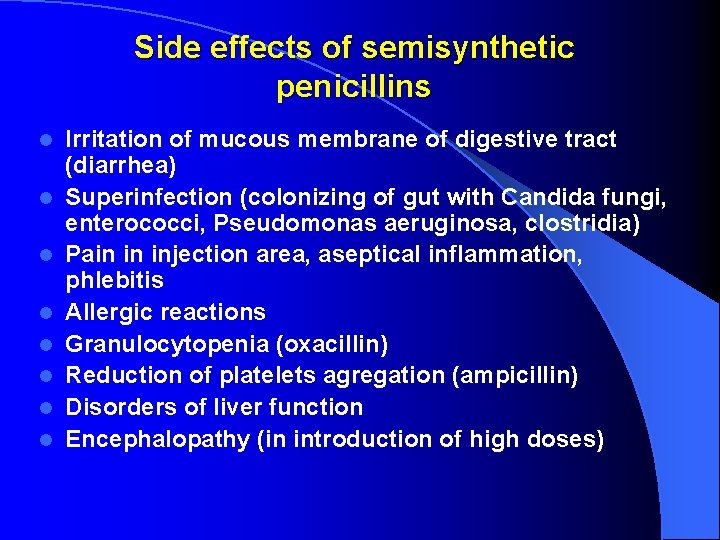
Side effects of semisynthetic penicillins l l l l Irritation of mucous membrane of digestive tract (diarrhea) Superinfection (colonizing of gut with Candida fungi, enterococci, Pseudomonas aeruginosa, clostridia) Pain in injection area, aseptical inflammation, phlebitis Allergic reactions Granulocytopenia (oxacillin) Reduction of platelets agregation (ampicillin) Disorders of liver function Encephalopathy (in introduction of high doses)

Inhibitors of beta-lactamases Clavulanic acid Sulbactam
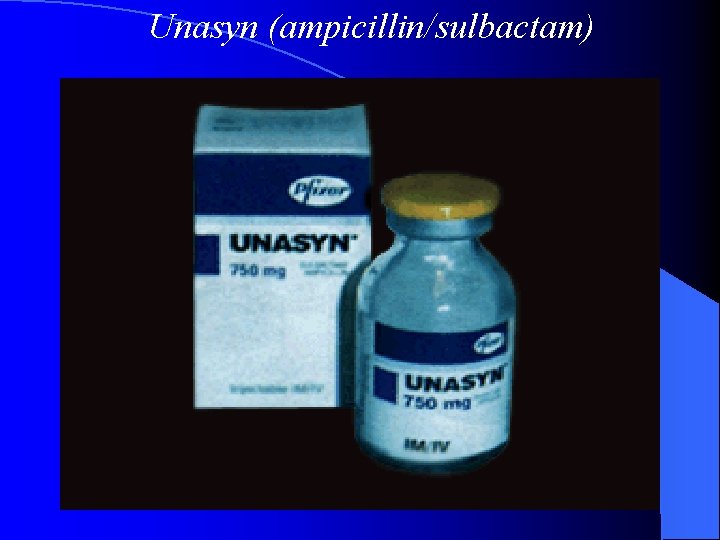
Unasyn (ampicillin/sulbactam)

Inhibitor-protected (“screened”, “protected”) penicillins Amoxicillin/clavulanate (amoxyclav, augmentin) Ampicillin/sulbactam (sultamycillin, unasin)
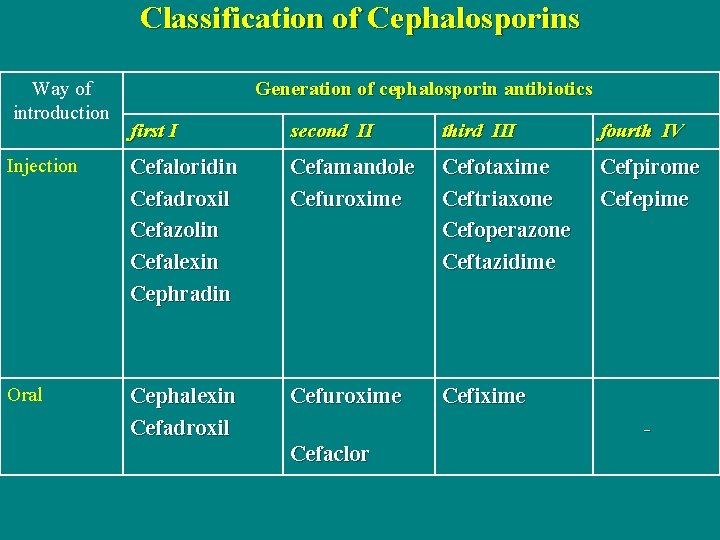
Classification of Cephalosporins Way of introduction Generation of cephalosporin antibiotics first I second II third III fourth IV Injection Cefaloridin Cefadroxil Cefazolin Cefalexin Cephradin Cefamandole Cefuroxime Cefotaxime Ceftriaxone Cefoperazone Ceftazidime Cefpirome Cefepime Oral Cephalexin Cefadroxil Cefuroxime Cefixime - Cefaclor

Cefazolin-sodium (C I)

Cezolin (Cefazolin, C I)

Cefalexin ( C I)

Zinnat (Cefuroxime, C II)

Cefotaxime (C III)

Claphoran (cefotaxime, C III)

Cefobid (Cefoperazone, C III)
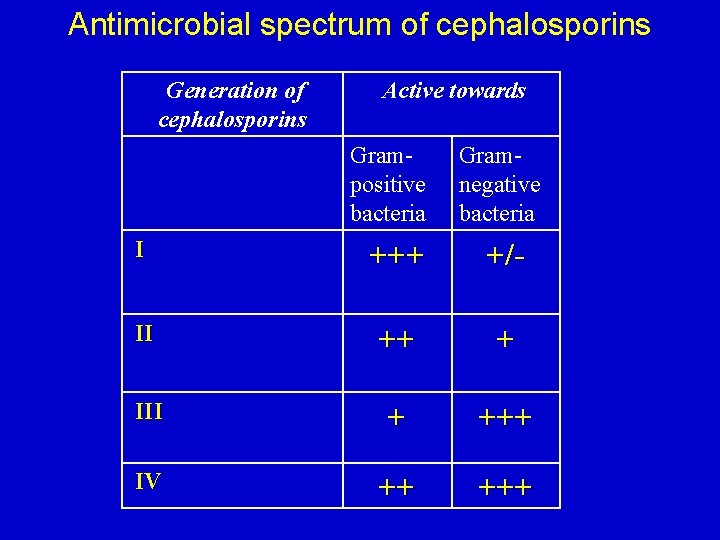
Antimicrobial spectrum of cephalosporins Generation of cephalosporins Active towards Grampositive bacteria Gramnegative bacteria І +++ +/- ІІ ++ + ІІІ + +++ ІV ++ +++
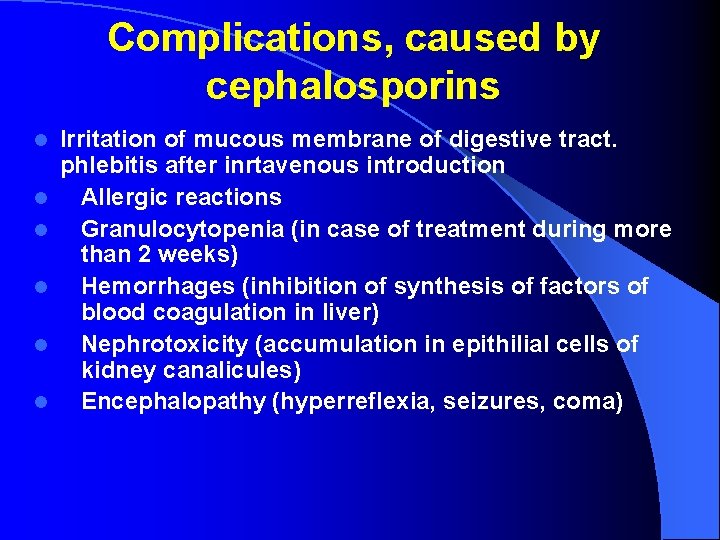
Complications, caused by cephalosporins l l l Irritation of mucous membrane of digestive tract. phlebitis after inrtavenous introduction Allergic reactions Granulocytopenia (in case of treatment during more than 2 weeks) Hemorrhages (inhibition of synthesis of factors of blood coagulation in liver) Nephrotoxicity (accumulation in epithilial cells of kidney canalicules) Encephalopathy (hyperreflexia, seizures, coma)
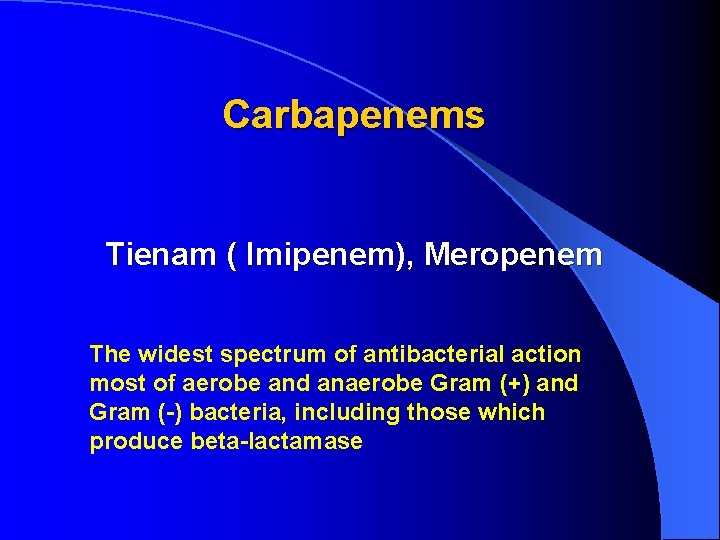
Carbapenems Tienam ( Imipenem), Meropenem The widest spectrum of antibacterial action most of aerobe and anaerobe Gram (+) and Gram (-) bacteria, including those which produce beta-lactamase
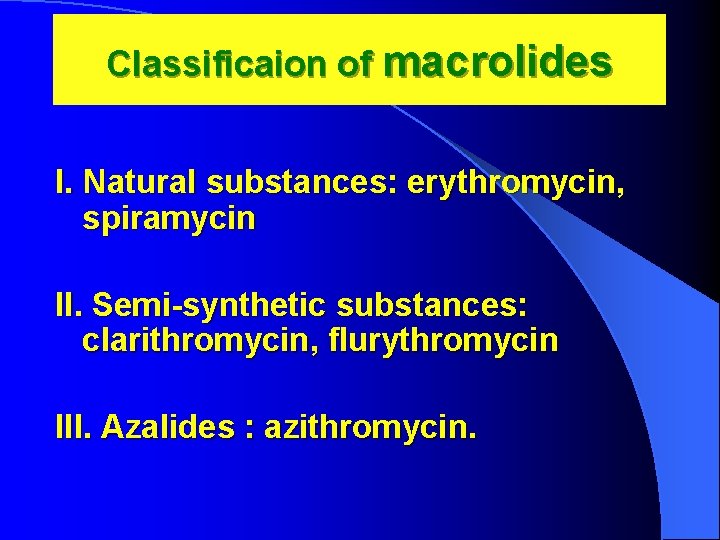
Classificaion of macrolides І. Natural substances: erythromycin, spiramycin ІІ. Semi-synthetic substances: clarithromycin, flurythromycin III. Azalides : azithromycin.

Erythromycin
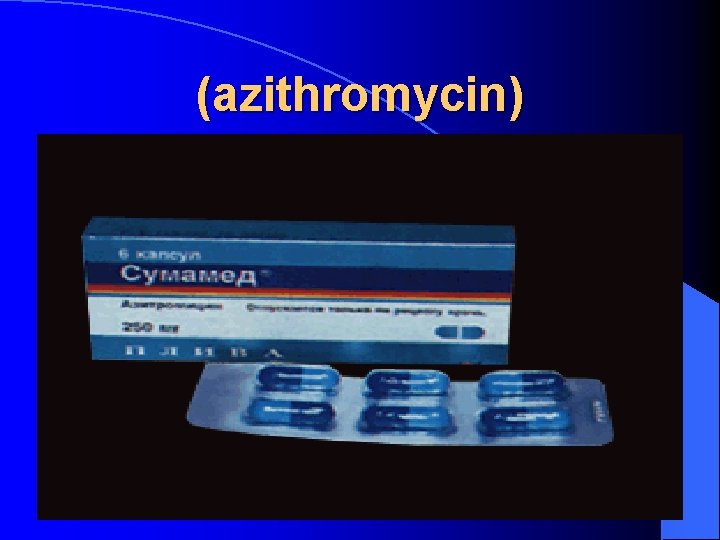
(azithromycin)
spectrum of action of macrolides and azalides l Staphylo-, strepto-, anaerobe cocci, enterobacteria l H. influenzae (clarythromycin, azithromycin) l Intracellular situated microorganisms (strains of Helicobacter, Chlamydia, Legionellа, M. pneumoniae, U. urealyticum etc. )

Indications for usage of macrolides and azalides Infections of upper respiratory tracts, skin and soft tissues infections, ulcer disease; whooping-cough, syphilis, typhoid fever (azithromycin). Drugs of choice for: mycoplasma, chlamydia, legionella pneumonia

Side affects of macrolides l l Dispeptic disorders Cholestasis, cholestatic jaundice (erythromycin) Depression of liver microsome enzyme activity (erythromycin) Development of resistance in process of treatment

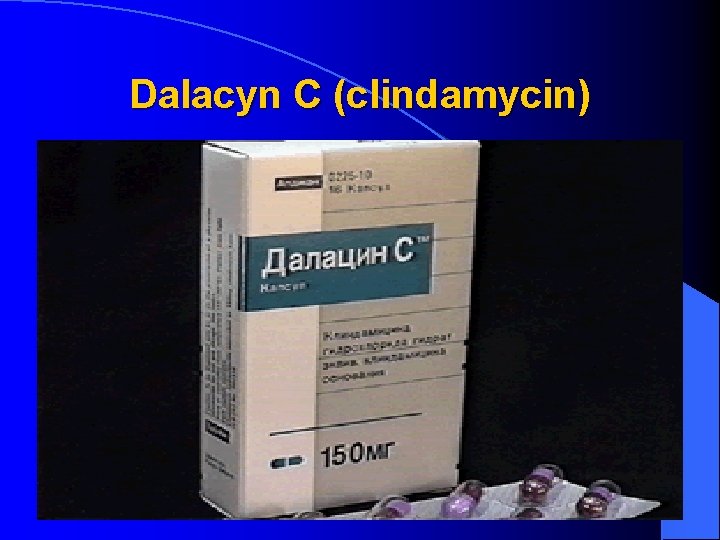
Linkosamides Linkomycin l l Clindamycin Action spectrum: Gram positive aerobe cocci, grampositive and gramnegatvie anaerobes Penetrate all the tissues Usage: usually in heavy infections, caused by anaerobe microorganisms A lot of side effects
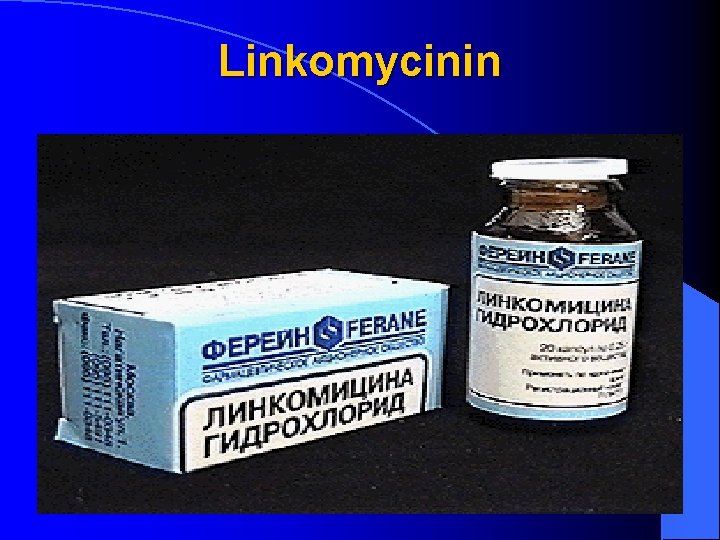
Linkomycinin
Dalacyn C (clindamycin)
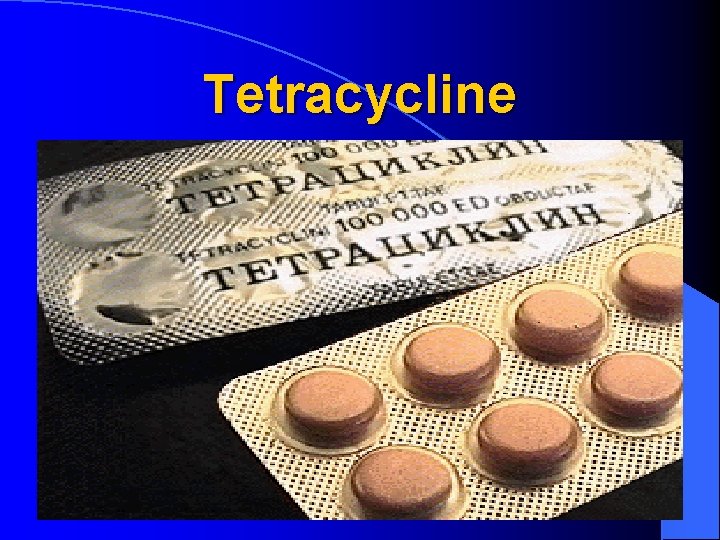
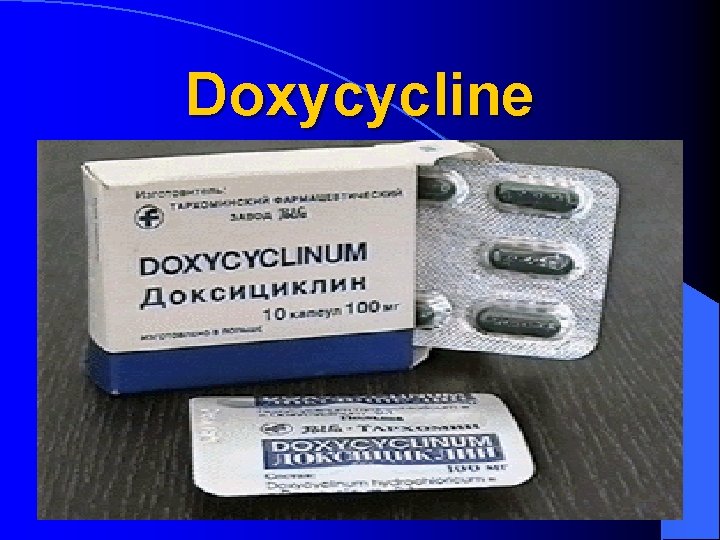
Tetracyclines 1. Natural - biosynthetic: chlortetracycline, oxytetracycline, tetracycline 2. Semisynthetic: doxycycline (vibramycin), metacycline (rondomycin)
Tetracycline
Doxycycline

Vibramycin (doxycycline)
Side effects of tetracyclines Dispeptic disorders, stomatitis, glositis, esophagitis, pruritus etc). l Superinfection with Candida fungi, proteus, pseudomonadas or staphylococci. l l Photosensitization Liver toxicity. Absorbtion by bones and teeth of a fetus or a child: hypoplasia of dental enamel, disorder of teeth formation, tendency for caries. l Damage of kidneys (when using tetracyclines with long terme doses, using big doses). Tetracyclines are forbidden for children under the age of 8/12, during pregnancy, liver diseases, kidney insufficiency l l
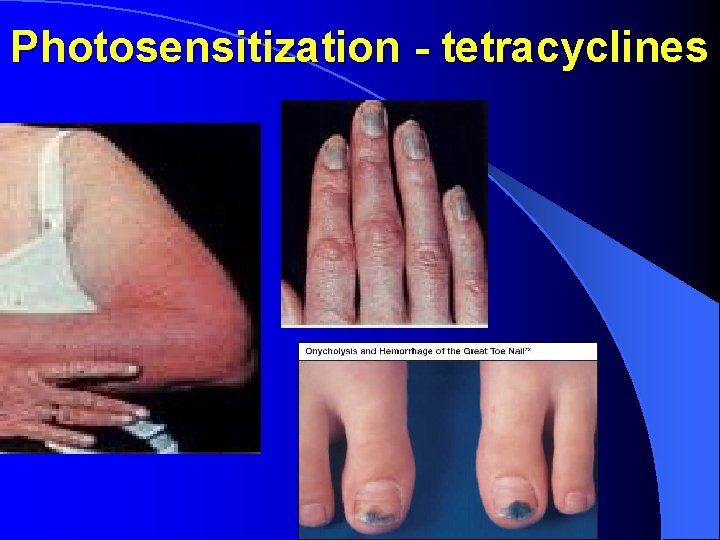
Photosensitization - tetracyclines
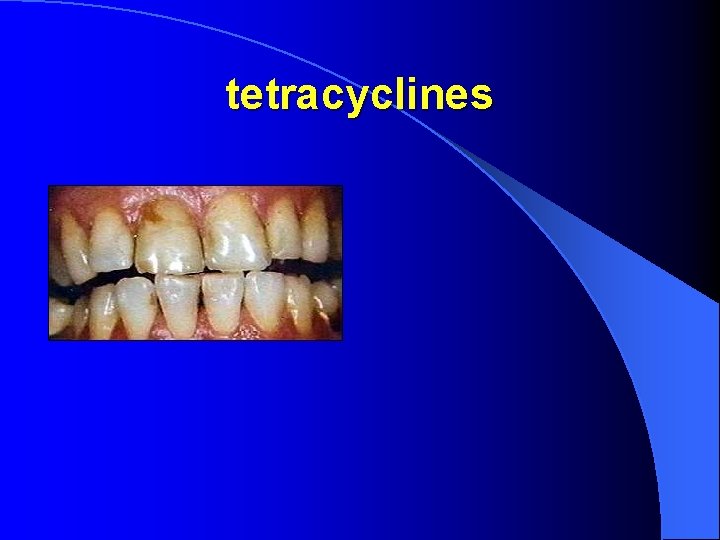
tetracyclines
AMINOGLYCOSIDES l І generation: streptomycin, neomycin, monomycin, kanamycin l ІІ generation: gentamycin (garamycin), tobramycin l ІІІ generation: netilmycin (netromycin), amikacin.

Gentamycin
spectrum of action of aminoglycosides wide gram-negative bacteria (escherichia coli, salmonella, klebsiella, especially K. рneumoniae, proteus, brucella, helicobacters, shigella etc. ). l some gram-positive microorganisms, including staphylococci which are resistant to other antibiotics l
Indications for usage of aminoglycosides - Inflammatory component of heavy infections (peritonitis, sepsis, mediastinitis, abscesses - Acute attack of chronical purulentinflammatory diseases, including secondary immune defficiency; - Early stage of development of secondary bacterial meningitis; - Bacterial endocarditis; - Infections of urinary tracts; - Skin infections and subcutaneous fat tissue infections, burns.
Complications in administration of aminoglycosides l l l Ototoxicity Nephrotoxicity Neurotoxicity Leuko-, thrombocytopenia, hemmorhages, Hemolysis Allergic reactions
Chloramphenicol Indications: Meningitis, typhoid fever, paratyphoid fever, brucellosis, tularemia l l Side effects: Hypochrome and aplastic anemia Granulocytopenia, thrombocytopenia «Grey syndrome of a featus» superinfection
Glycopeptide antibiotics Vankomycin l Active towards МRSA OR MRCNS l Drugs of choice for C. difficile - associated colitis

l THANK YOU
- Slides: 51