
Antibiotic Safety From Allergy to QTc Monique Bidell

Antibiotic Safety: From Allergy to QTc Monique Bidell, Pharm. D, BCPS Assistant Professor Albany College of Pharmacy and Health Sciences Albany, New York
Disclosures § I have no actual or potential conflicts of interest related to this presentation.
Objectives § Compare cardiac risks between macrolides and fluoroquinolones § Summarize the literature on vancomycin- and vancomycin/piperacillin-tazobactam- induced nephrotoxicity § Describe an evidence-based approach to assess betalactam cross reactivity
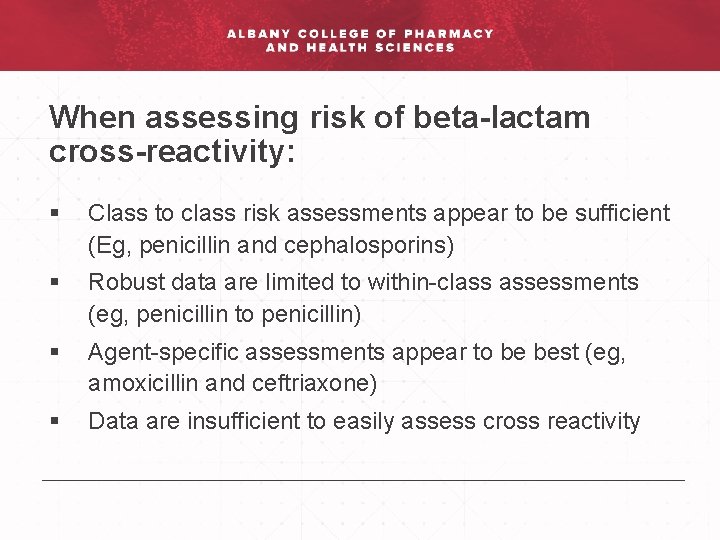
When assessing risk of beta-lactam cross-reactivity: § Class to class risk assessments appear to be sufficient (Eg, penicillin and cephalosporins) § Robust data are limited to within-class assessments (eg, penicillin to penicillin) § Agent-specific assessments appear to be best (eg, amoxicillin and ceftriaxone) § Data are insufficient to easily assess cross reactivity

http: //www. quickmeme. com/fingers-crossed
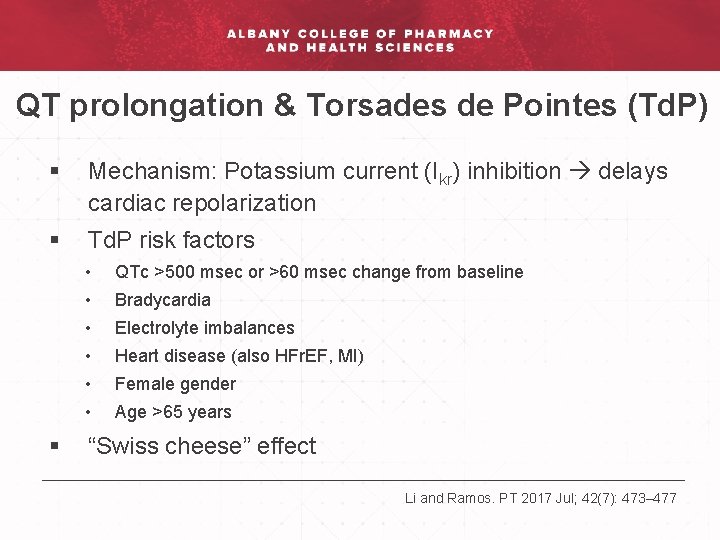
QT prolongation & Torsades de Pointes (Td. P) § Mechanism: Potassium current (Ikr) inhibition delays cardiac repolarization § Td. P risk factors § • QTc >500 msec or >60 msec change from baseline • Bradycardia • Electrolyte imbalances • Heart disease (also HFr. EF, MI) • Female gender • Age >65 years “Swiss cheese” effect Li and Ramos. PT 2017 Jul; 42(7): 473– 477
Azithromycin and levofloxacin § QTc prolongation themselves (& versus other class agents) § Cardiac risks: Lu et al. , 2015: 15 case reports/series, 5 observational studies, 5 clinical trials
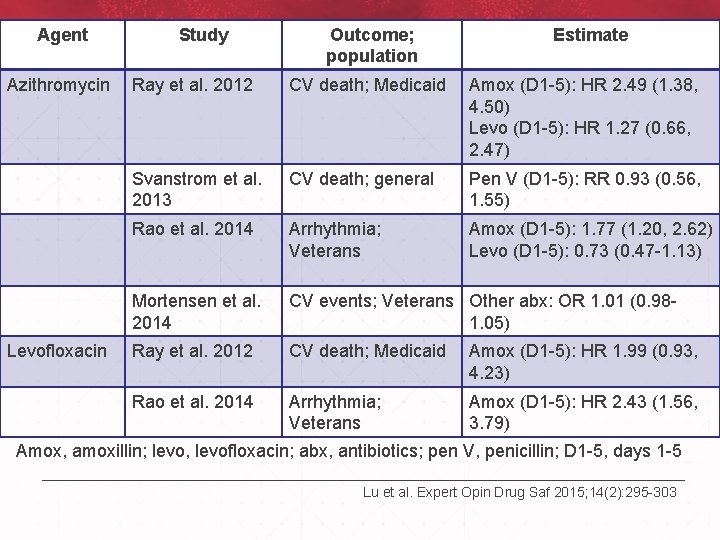
Agent Azithromycin Levofloxacin Study Outcome; population Estimate Ray et al. 2012 CV death; Medicaid Amox (D 1 -5): HR 2. 49 (1. 38, 4. 50) Levo (D 1 -5): HR 1. 27 (0. 66, 2. 47) Svanstrom et al. 2013 CV death; general Pen V (D 1 -5): RR 0. 93 (0. 56, 1. 55) Rao et al. 2014 Arrhythmia; Veterans Amox (D 1 -5): 1. 77 (1. 20, 2. 62) Levo (D 1 -5): 0. 73 (0. 47 -1. 13) Mortensen et al. 2014 CV events; Veterans Other abx: OR 1. 01 (0. 981. 05) Ray et al. 2012 CV death; Medicaid Amox (D 1 -5): HR 1. 99 (0. 93, 4. 23) Rao et al. 2014 Arrhythmia; Veterans Amox (D 1 -5): HR 2. 43 (1. 56, 3. 79) Amox, amoxillin; levo, levofloxacin; abx, antibiotics; pen V, penicillin; D 1 -5, days 1 -5 Lu et al. Expert Opin Drug Saf 2015; 14(2): 295 -303
Considerations § Populations (co-morbidities, severity of illness) § Correlation vs causation § Non-randomized design
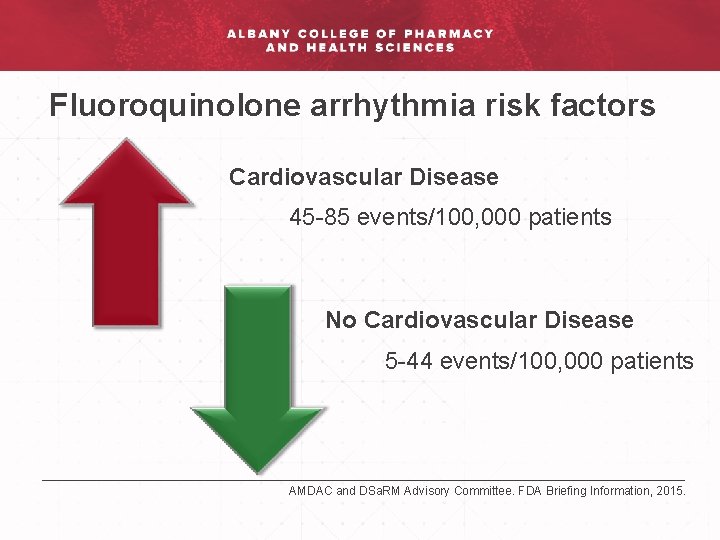
Fluoroquinolone arrhythmia risk factors Cardiovascular Disease 45 -85 events/100, 000 patients No Cardiovascular Disease 5 -44 events/100, 000 patients AMDAC and DSa. RM Advisory Committee. FDA Briefing Information, 2015.
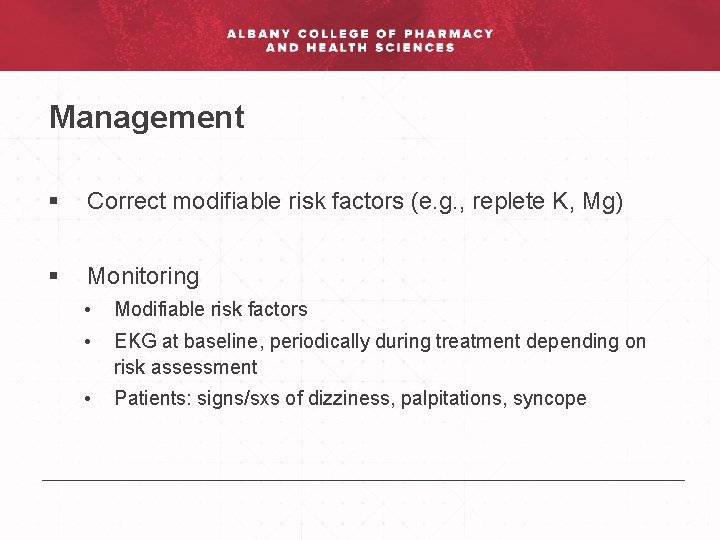
Management § Correct modifiable risk factors (e. g. , replete K, Mg) § Monitoring • Modifiable risk factors • EKG at baseline, periodically during treatment depending on risk assessment • Patients: signs/sxs of dizziness, palpitations, syncope
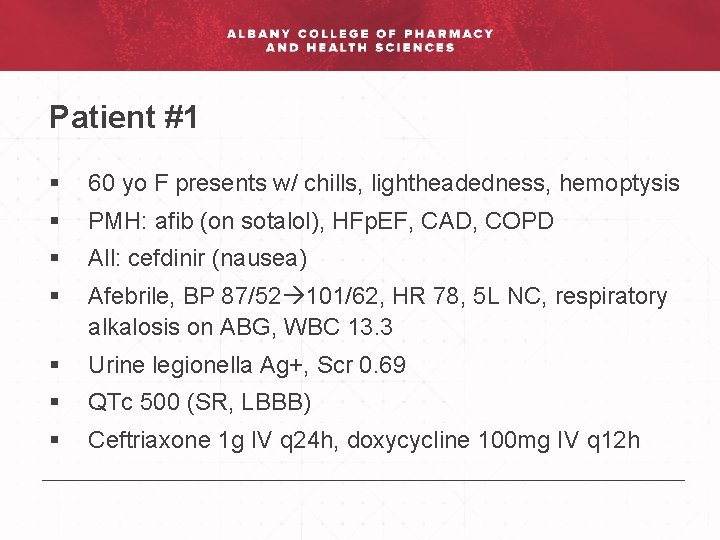
Patient #1 § 60 yo F presents w/ chills, lightheadedness, hemoptysis § PMH: afib (on sotalol), HFp. EF, CAD, COPD § All: cefdinir (nausea) § Afebrile, BP 87/52 101/62, HR 78, 5 L NC, respiratory alkalosis on ABG, WBC 13. 3 § Urine legionella Ag+, Scr 0. 69 § QTc 500 (SR, LBBB) § Ceftriaxone 1 g IV q 24 h, doxycycline 100 mg IV q 12 h
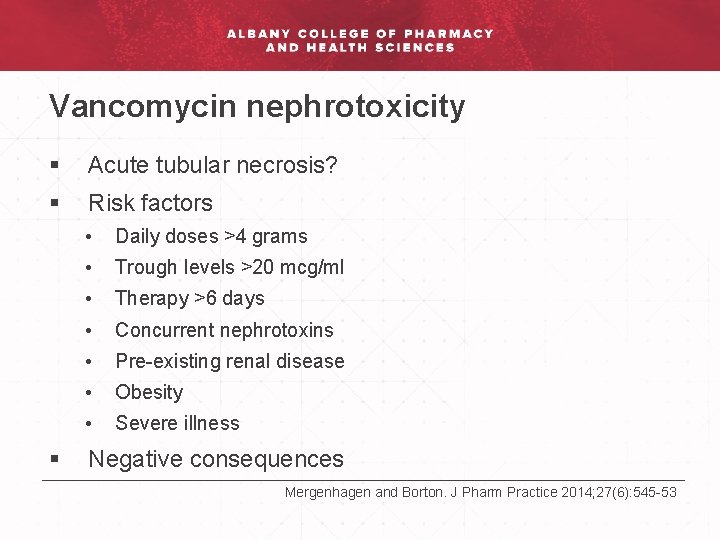
Vancomycin nephrotoxicity § Acute tubular necrosis? § Risk factors § • Daily doses >4 grams • Trough levels >20 mcg/ml • Therapy >6 days • Concurrent nephrotoxins • Pre-existing renal disease • Obesity • Severe illness Negative consequences Mergenhagen and Borton. J Pharm Practice 2014; 27(6): 545 -53
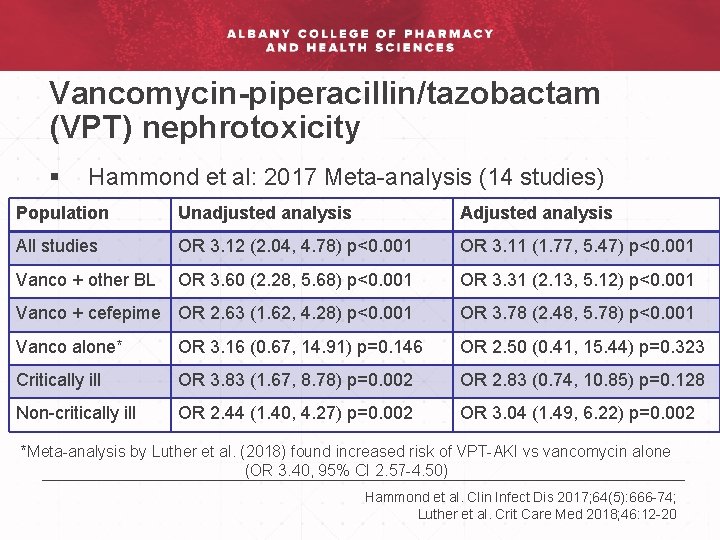
Vancomycin-piperacillin/tazobactam (VPT) nephrotoxicity § Hammond et al: 2017 Meta-analysis (14 studies) Population Unadjusted analysis All studies OR 3. 12 (2. 04, 4. 78) p<0. 001 OR 3. 11 (1. 77, 5. 47) p<0. 001 Vanco + other BL OR 3. 60 (2. 28, 5. 68) p<0. 001 OR 3. 31 (2. 13, 5. 12) p<0. 001 Vanco + cefepime OR 2. 63 (1. 62, 4. 28) p<0. 001 OR 3. 78 (2. 48, 5. 78) p<0. 001 Vanco alone* OR 3. 16 (0. 67, 14. 91) p=0. 146 OR 2. 50 (0. 41, 15. 44) p=0. 323 Critically ill OR 3. 83 (1. 67, 8. 78) p=0. 002 OR 2. 83 (0. 74, 10. 85) p=0. 128 Non-critically ill OR 2. 44 (1. 40, 4. 27) p=0. 002 OR 3. 04 (1. 49, 6. 22) p=0. 002 *Meta-analysis by Luther et al. (2018) found increased risk of VPT-AKI vs vancomycin alone (OR 3. 40, 95% CI 2. 57 -4. 50) Hammond et al. Clin Infect Dis 2017; 64(5): 666 -74; Luther et al. Crit Care Med 2018; 46: 12 -20
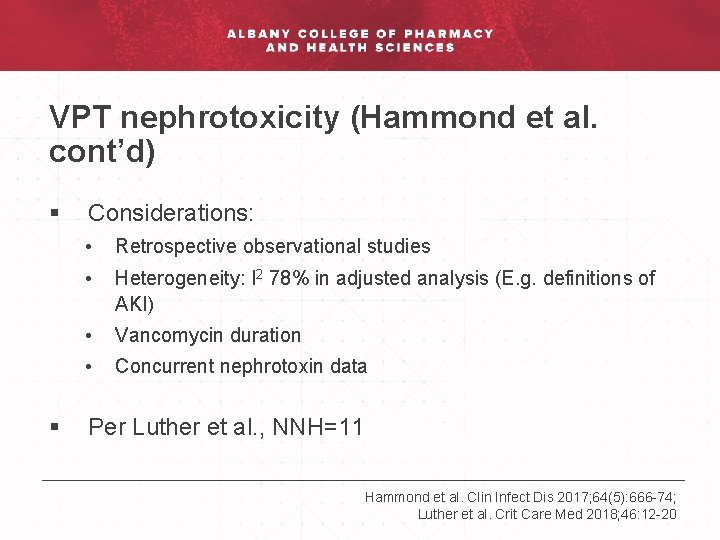
VPT nephrotoxicity (Hammond et al. cont’d) § § Considerations: • Retrospective observational studies • Heterogeneity: I 2 78% in adjusted analysis (E. g. definitions of AKI) • Vancomycin duration • Concurrent nephrotoxin data Per Luther et al. , NNH=11 Hammond et al. Clin Infect Dis 2017; 64(5): 666 -74; Luther et al. Crit Care Med 2018; 46: 12 -20
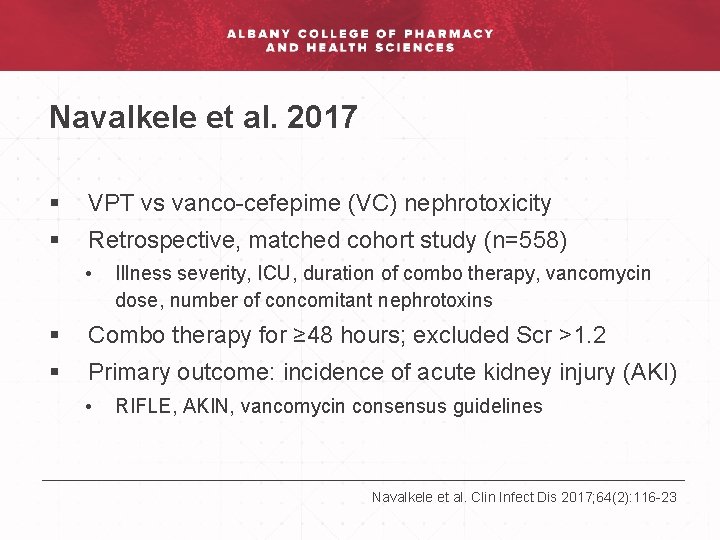
Navalkele et al. 2017 § VPT vs vanco-cefepime (VC) nephrotoxicity § Retrospective, matched cohort study (n=558) • Illness severity, ICU, duration of combo therapy, vancomycin dose, number of concomitant nephrotoxins § Combo therapy for ≥ 48 hours; excluded Scr >1. 2 § Primary outcome: incidence of acute kidney injury (AKI) • RIFLE, AKIN, vancomycin consensus guidelines Navalkele et al. Clin Infect Dis 2017; 64(2): 116 -23
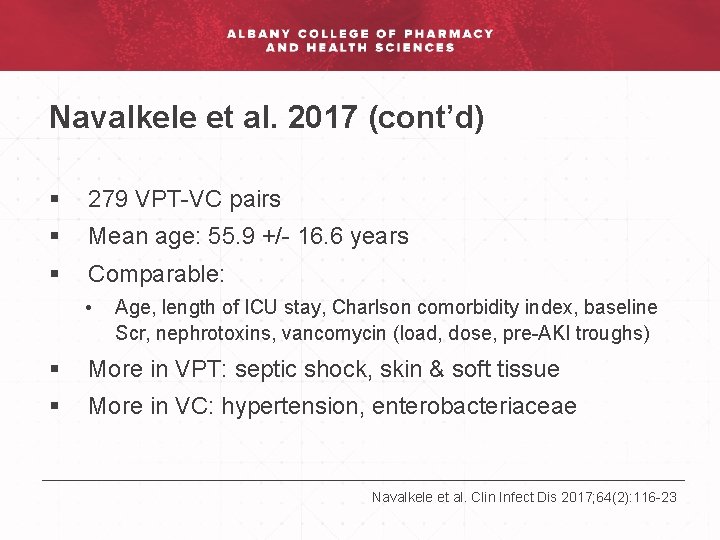
Navalkele et al. 2017 (cont’d) § 279 VPT-VC pairs § Mean age: 55. 9 +/- 16. 6 years § Comparable: • Age, length of ICU stay, Charlson comorbidity index, baseline Scr, nephrotoxins, vancomycin (load, dose, pre-AKI troughs) § More in VPT: septic shock, skin & soft tissue § More in VC: hypertension, enterobacteriaceae Navalkele et al. Clin Infect Dis 2017; 64(2): 116 -23
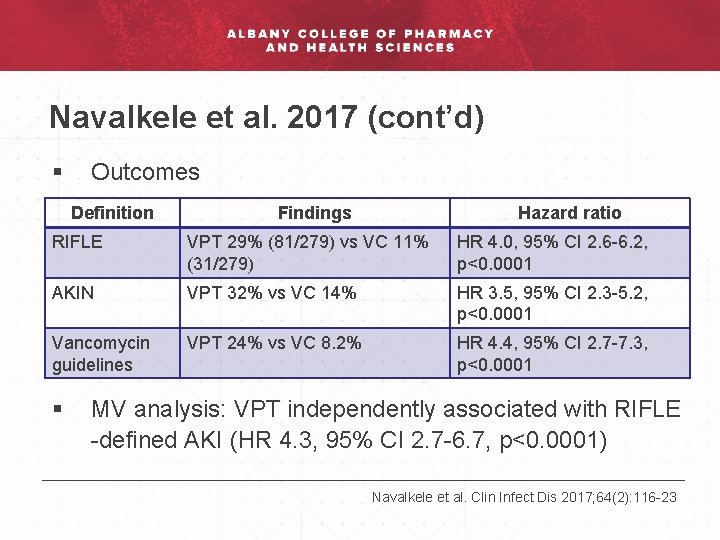
Navalkele et al. 2017 (cont’d) § Outcomes Definition Findings Hazard ratio RIFLE VPT 29% (81/279) vs VC 11% (31/279) HR 4. 0, 95% CI 2. 6 -6. 2, p<0. 0001 AKIN VPT 32% vs VC 14% HR 3. 5, 95% CI 2. 3 -5. 2, p<0. 0001 Vancomycin guidelines VPT 24% vs VC 8. 2% HR 4. 4, 95% CI 2. 7 -7. 3, p<0. 0001 § MV analysis: VPT independently associated with RIFLE -defined AKI (HR 4. 3, 95% CI 2. 7 -6. 7, p<0. 0001) Navalkele et al. Clin Infect Dis 2017; 64(2): 116 -23
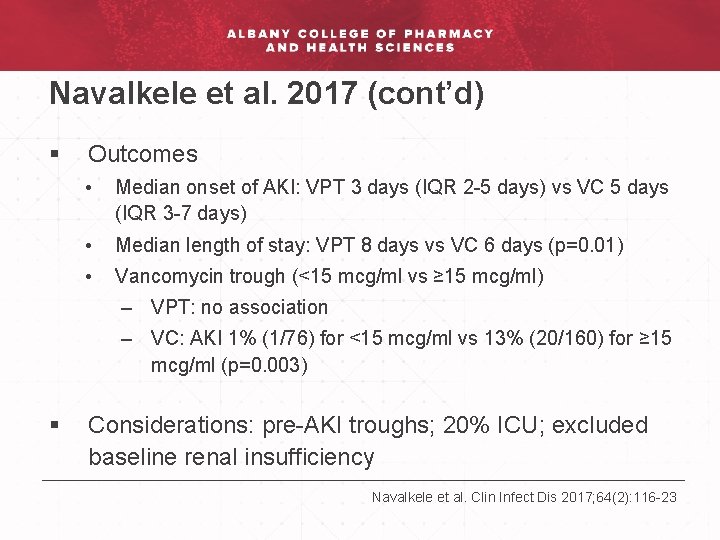
Navalkele et al. 2017 (cont’d) § Outcomes • Median onset of AKI: VPT 3 days (IQR 2 -5 days) vs VC 5 days (IQR 3 -7 days) • Median length of stay: VPT 8 days vs VC 6 days (p=0. 01) • Vancomycin trough (<15 mcg/ml vs ≥ 15 mcg/ml) – VPT: no association – VC: AKI 1% (1/76) for <15 mcg/ml vs 13% (20/160) for ≥ 15 mcg/ml (p=0. 003) § Considerations: pre-AKI troughs; 20% ICU; excluded baseline renal insufficiency Navalkele et al. Clin Infect Dis 2017; 64(2): 116 -23
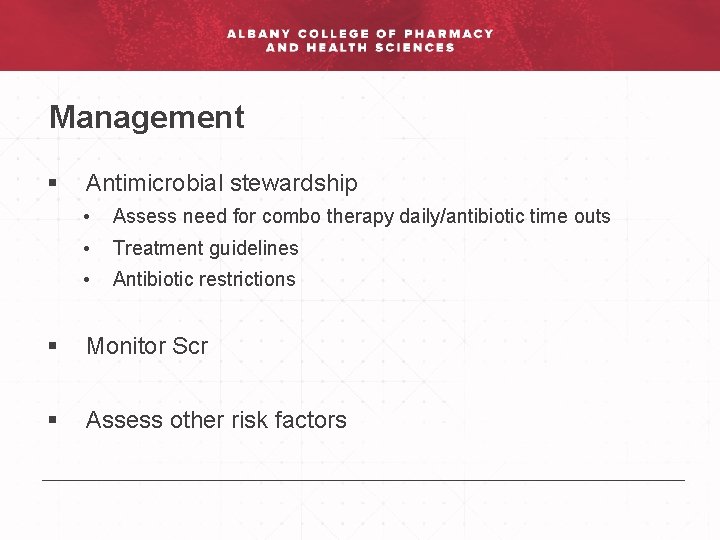
Management § Antimicrobial stewardship • Assess need for combo therapy daily/antibiotic time outs • Treatment guidelines • Antibiotic restrictions § Monitor Scr § Assess other risk factors
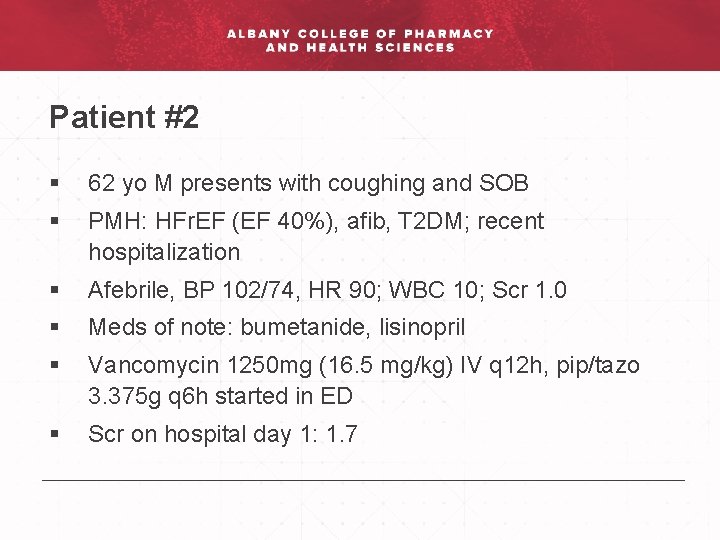
Patient #2 § 62 yo M presents with coughing and SOB § PMH: HFr. EF (EF 40%), afib, T 2 DM; recent hospitalization § Afebrile, BP 102/74, HR 90; WBC 10; Scr 1. 0 § Meds of note: bumetanide, lisinopril § Vancomycin 1250 mg (16. 5 mg/kg) IV q 12 h, pip/tazo 3. 375 g q 6 h started in ED § Scr on hospital day 1: 1. 7
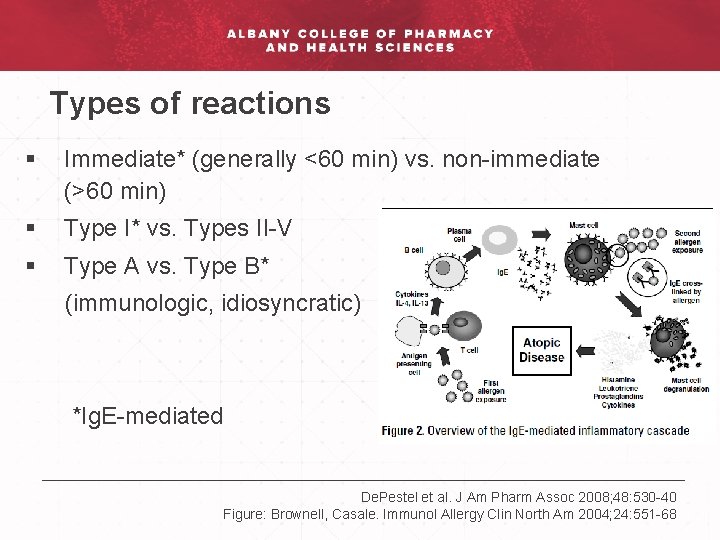
Types of reactions § Immediate* (generally <60 min) vs. non-immediate (>60 min) § Type I* vs. Types II-V § Type A vs. Type B* (immunologic, idiosyncratic) *Ig. E-mediated De. Pestel et al. J Am Pharm Assoc 2008; 48: 530 -40 Figure: Brownell, Casale. Immunol Allergy Clin North Am 2004; 24: 551 -68
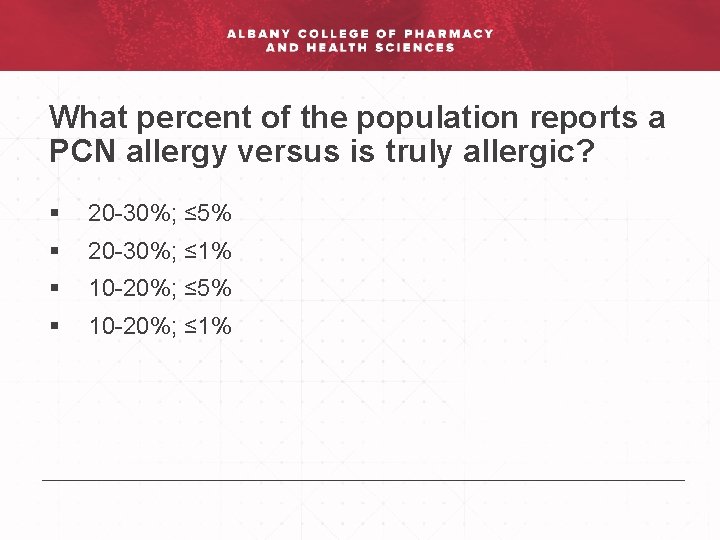
What percent of the population reports a PCN allergy versus is truly allergic? § 20 -30%; ≤ 5% § 20 -30%; ≤ 1% § 10 -20%; ≤ 5% § 10 -20%; ≤ 1%
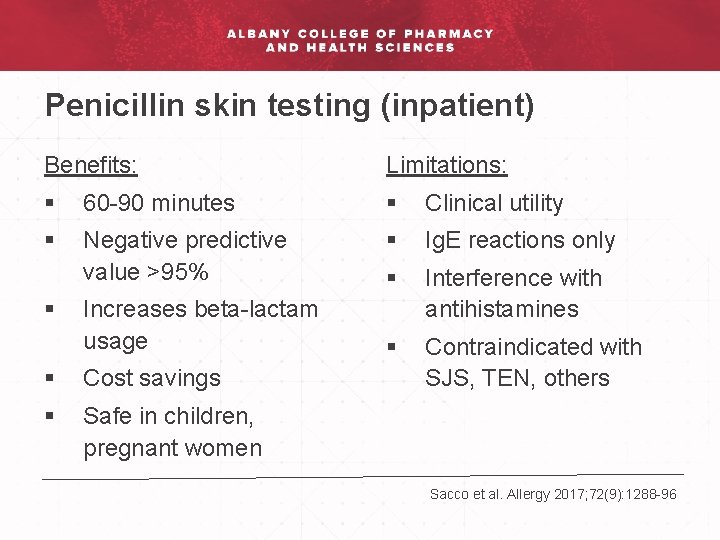
Penicillin skin testing (inpatient) Benefits: Limitations: § 60 -90 minutes § Clinical utility § Negative predictive value >95% § Ig. E reactions only § Interference with antihistamines § Contraindicated with SJS, TEN, others § Increases beta-lactam usage § Cost savings § Safe in children, pregnant women Sacco et al. Allergy 2017; 72(9): 1288 -96
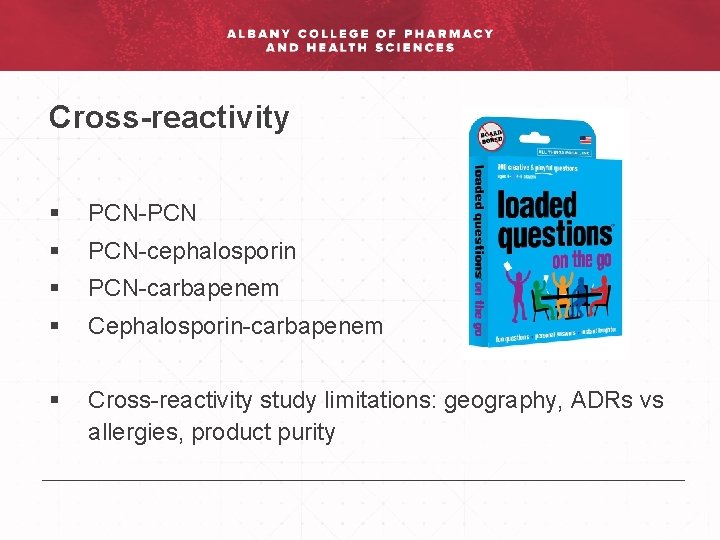
Cross-reactivity § PCN-PCN § PCN-cephalosporin § PCN-carbapenem § Cephalosporin-carbapenem § Cross-reactivity study limitations: geography, ADRs vs allergies, product purity
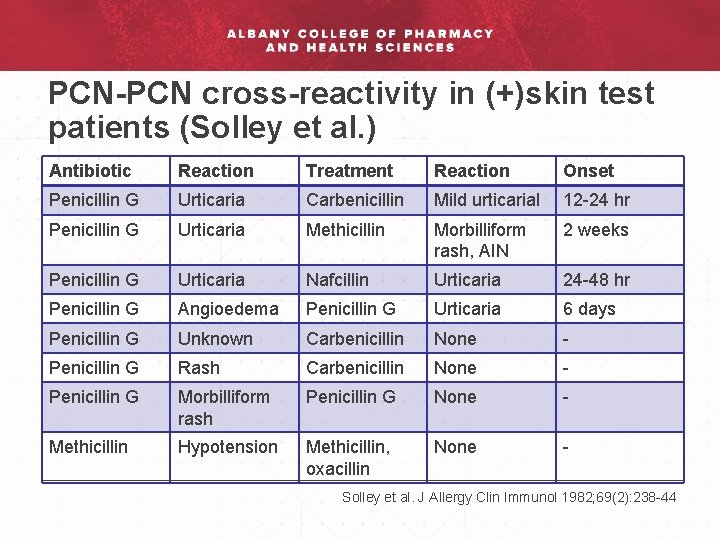
PCN-PCN cross-reactivity in (+)skin test patients (Solley et al. ) Antibiotic Reaction Treatment Reaction Onset Penicillin G Urticaria Carbenicillin Mild urticarial 12 -24 hr Penicillin G Urticaria Methicillin Morbilliform rash, AIN 2 weeks Penicillin G Urticaria Nafcillin Urticaria 24 -48 hr Penicillin G Angioedema Penicillin G Urticaria 6 days Penicillin G Unknown Carbenicillin None - Penicillin G Rash Carbenicillin None - Penicillin G Morbilliform rash Penicillin G None - Methicillin Hypotension Methicillin, oxacillin None - Solley et al. J Allergy Clin Immunol 1982; 69(2): 238 -44
Implications of a ‘side chain’ approach § Experimental and clinical data suggest role of side chain immunogenic epitopes & specific Ig. E antibodies § If side chains drive Ig. E response: • Skin testing with benzylpenicillin may have negative response • Patients may tolerate penicillins not possessing the relevant side chain determinants Silviu-Dan et al. J Allergy Clin Immunol 1993; 91: 694 -701
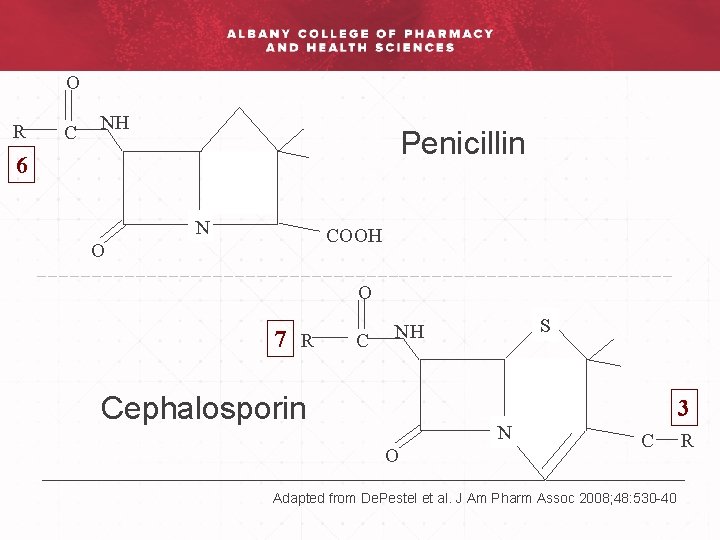
O R C NH Penicillin 6 N COOH O O 7 R C S NH Cephalosporin 3 N O C Adapted from De. Pestel et al. J Am Pharm Assoc 2008; 48: 530 -40 R
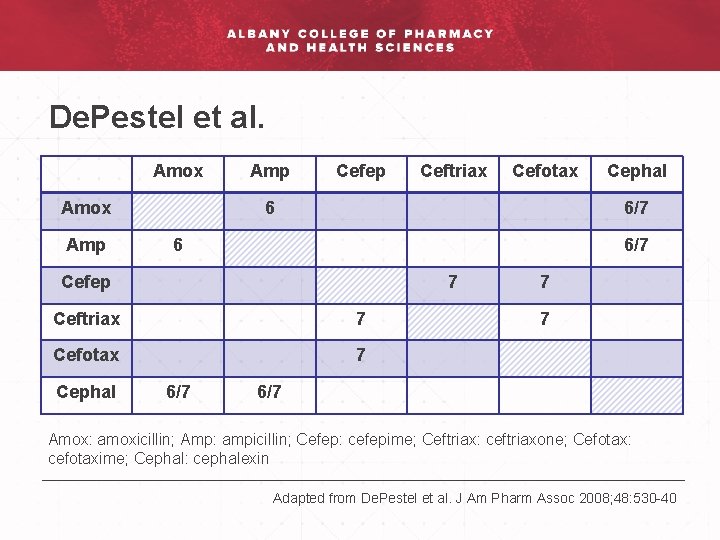
De. Pestel et al. Amox Amp Cefep Cefotax 6 6 6/7 7 Ceftriax 7 Cefotax 7 6/7 Cephal 6/7 Cefep Cephal Ceftriax 7 7 6/7 Amox: amoxicillin; Amp: ampicillin; Cefep: cefepime; Ceftriax: ceftriaxone; Cefotax: cefotaxime; Cephal: cephalexin Adapted from De. Pestel et al. J Am Pharm Assoc 2008; 48: 530 -40
Silviu-Dan et al. (1993) § 112 patients in Allergy and Clinical Immunology Clinic (Winnipeg; 1981 -1991) • § Clearly defined allergy to penicillin or derivatives Intradermal testing: benzylpenicillin derivatives, >=1 semisynthetic penicillin Silviu-Dan et al. J Allergy Clin Immunol 1993; 91: 694 -701
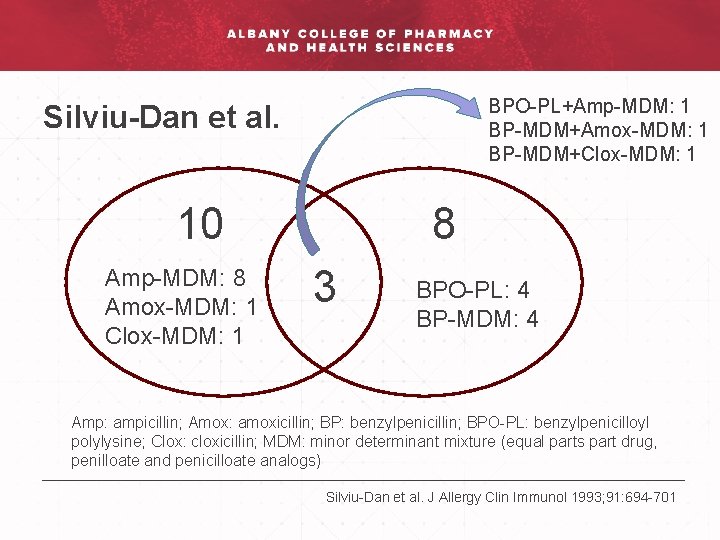
BPO-PL+Amp-MDM: 1 BP-MDM+Amox-MDM: 1 BP-MDM+Clox-MDM: 1 Silviu-Dan et al. 10 Amp-MDM: 8 Amox-MDM: 1 Clox-MDM: 1 8 3 BPO-PL: 4 BP-MDM: 4 Amp: ampicillin; Amox: amoxicillin; BP: benzylpenicillin; BPO-PL: benzylpenicilloyl polylysine; Clox: cloxicillin; MDM: minor determinant mixture (equal parts part drug, penilloate and penicilloate analogs) Silviu-Dan et al. J Allergy Clin Immunol 1993; 91: 694 -701
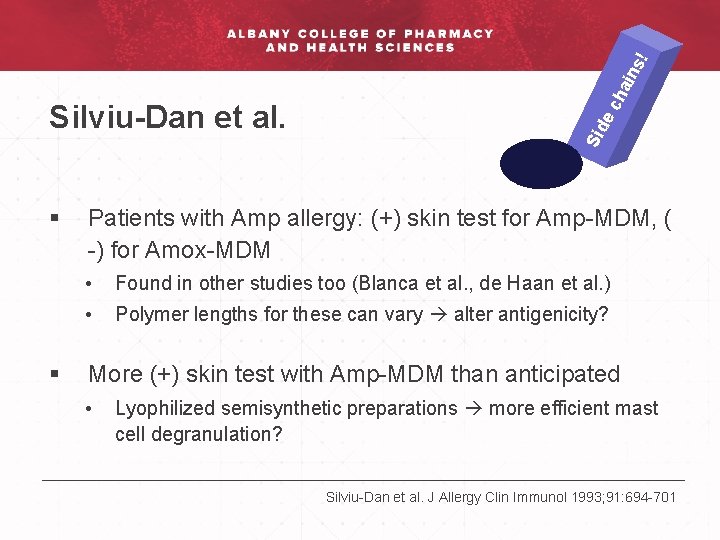
§ ec ha ins ! § Sid Silviu-Dan et al. Patients with Amp allergy: (+) skin test for Amp-MDM, ( -) for Amox-MDM • Found in other studies too (Blanca et al. , de Haan et al. ) • Polymer lengths for these can vary alter antigenicity? More (+) skin test with Amp-MDM than anticipated • Lyophilized semisynthetic preparations more efficient mast cell degranulation? Silviu-Dan et al. J Allergy Clin Immunol 1993; 91: 694 -701
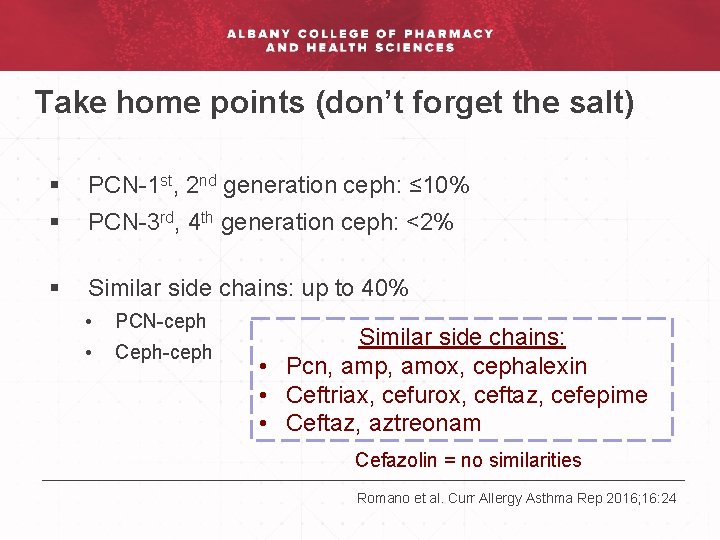
Take home points (don’t forget the salt) § PCN-1 st, 2 nd generation ceph: ≤ 10% § PCN-3 rd, 4 th generation ceph: <2% § Similar side chains: up to 40% • PCN-ceph • Ceph-ceph Similar side chains: • Pcn, amp, amox, cephalexin • Ceftriax, cefurox, ceftaz, cefepime • Ceftaz, aztreonam Cefazolin = no similarities Romano et al. Curr Allergy Asthma Rep 2016; 16: 24
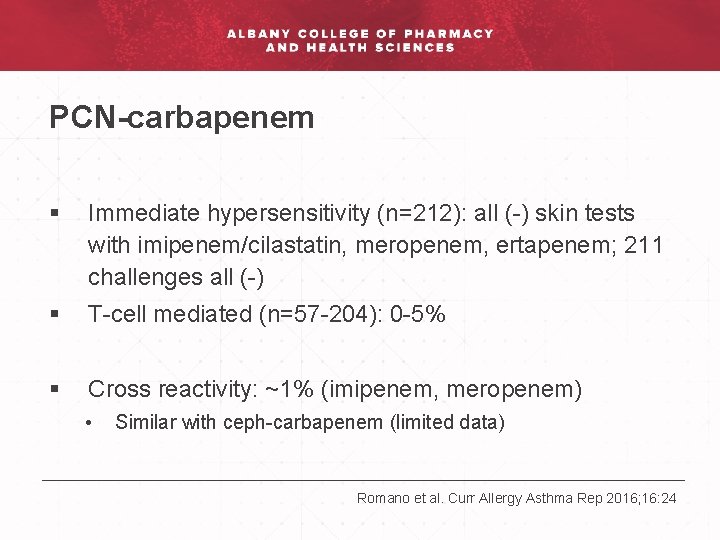
PCN-carbapenem § Immediate hypersensitivity (n=212): all (-) skin tests with imipenem/cilastatin, meropenem, ertapenem; 211 challenges all (-) § T-cell mediated (n=57 -204): 0 -5% § Cross reactivity: ~1% (imipenem, meropenem) • Similar with ceph-carbapenem (limited data) Romano et al. Curr Allergy Asthma Rep 2016; 16: 24
Assessment & management of allergies § Patient history: specific agent, nature of event/severity, timing, onset, course/resolution, current meds, previous ADRs and outcomes § Skin testing § Desensitization (90 -95% success rate) or graded dose challenge Romano et al. Curr Allergy Asthma Rep 2016; 16: 24
Patient case #3 § 75 yo M presents w/ malaise, fevers x 2 days § PMH: ESRD on HD, T 2 DM, chronic LE wound, CAD § Allergies: penicillin (unknown) § Empiric vancomycin & levofloxacin § Blood cultures GPC clusters MSSA § Antibiotics plan?
When assessing risk of beta-lactam cross-reactivity: § Class to class risk assessments appear to be sufficient (Eg, penicillin and cephalosporins) § Robust data are limited to within-class assessments (eg, penicillin to penicillin) § Agent-specific assessments appear to be best (eg, amoxicillin and ceftriaxone) § Data are insufficient to easily assess cross reactivity
Summary § Limited data suggest that azithromycin and levofloxacin have comparable CV risks • § Vancomycin & piperacillin/tazobactam carry an increased risk of AKI • § Study limitations; patient factors appear to be most important Duration appears to be a prominent risk factor When assessing penicillin and cephalosporin crossreactivity, a specific agent approach seems best • Class approach appears outdated, though penicillin-carbapenem seems okay
- Slides: 38