
Antibiotic efflux pumps in eucaryotic cells consequences for

Antibiotic efflux pumps in eucaryotic cells: consequences for activity against intracellular bacteria Françoise Van Bambeke on behalf of J. M. Michot, C. Seral, M. Heremans, M. P. Mingeot-Leclercq, P. M. Tulkens Unité de Pharmacologie cellulaire et moléculaire Université catholique de Louvain Brussels, Belgium www. md. ucl. ac. be/facm
pharmacy
antibiotics as magic bullets already concerned in efflux ?
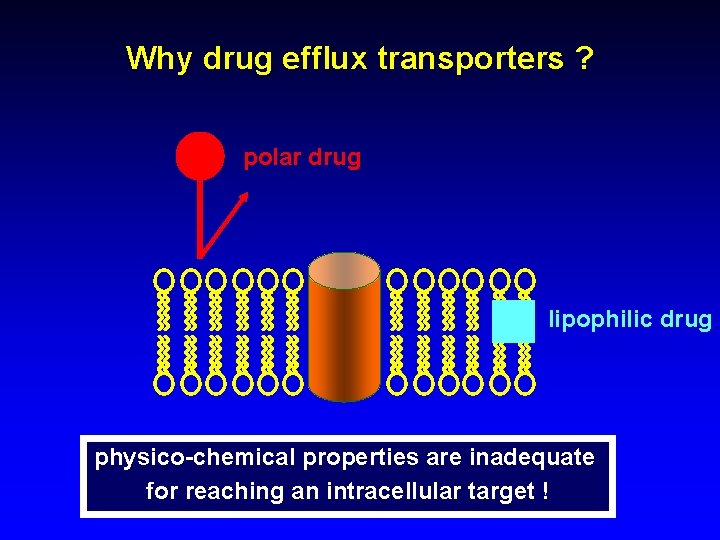
Why drug efflux transporters ? polar drug lipophilic drug physico-chemical properties are inadequate for reaching an intracellular target !

Why drug efflux transporters ? amphipathic drug most drugs are amphipathic by design, to be able to cross membrane barriers !
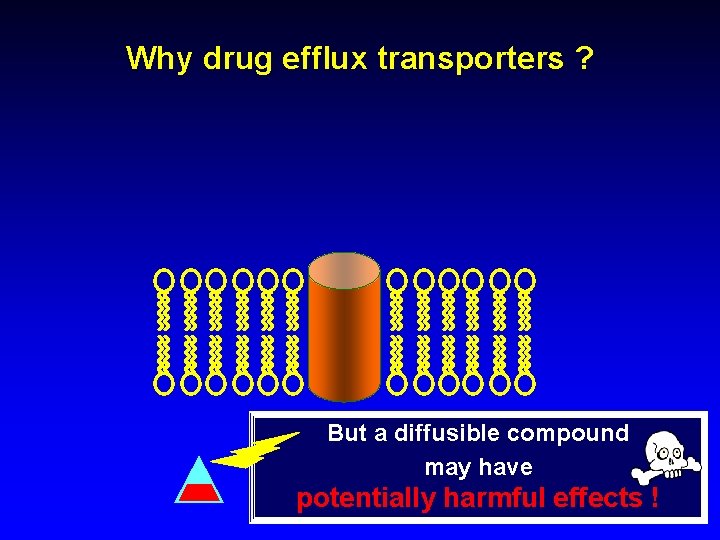
Why drug efflux transporters ? But a diffusible compound may have potentially harmful effects !
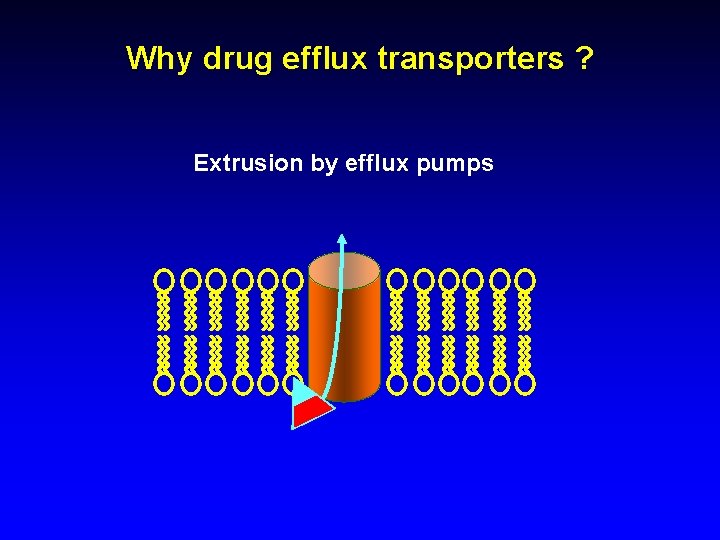
Why drug efflux transporters ? Extrusion by efflux pumps
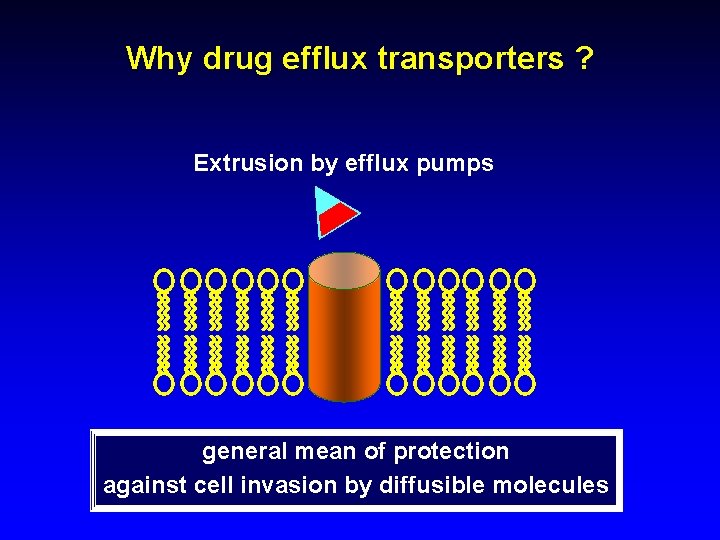
Why drug efflux transporters ? Extrusion by efflux pumps general mean of protection against cell invasion by diffusible molecules

Typical ‘toxic’ diffusible substances well known as substrates for efflux pumps antibiotics antifungals anticancer agents
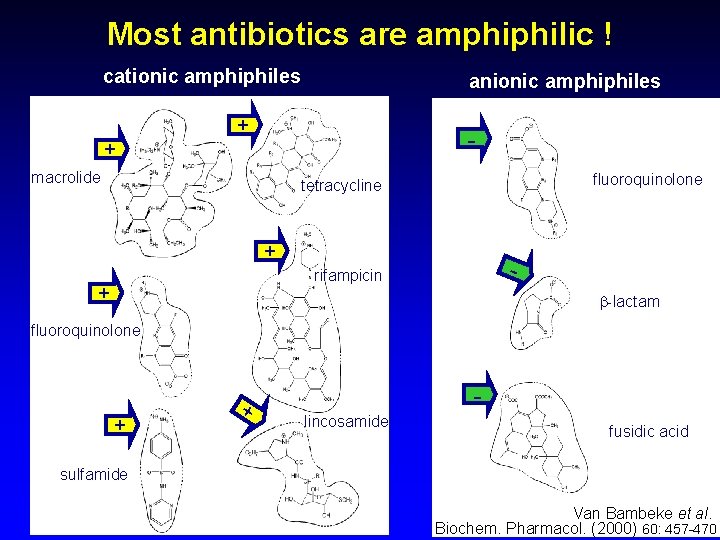
Most antibiotics are amphiphilic ! cationic amphiphiles anionic amphiphiles + - + macrolide fluoroquinolone tetracycline + - rifampicin + b-lactam fluoroquinolone + + lincosamide fusidic acid sulfamide Van Bambeke et al. Biochem. Pharmacol. (2000) 60: 457 -470
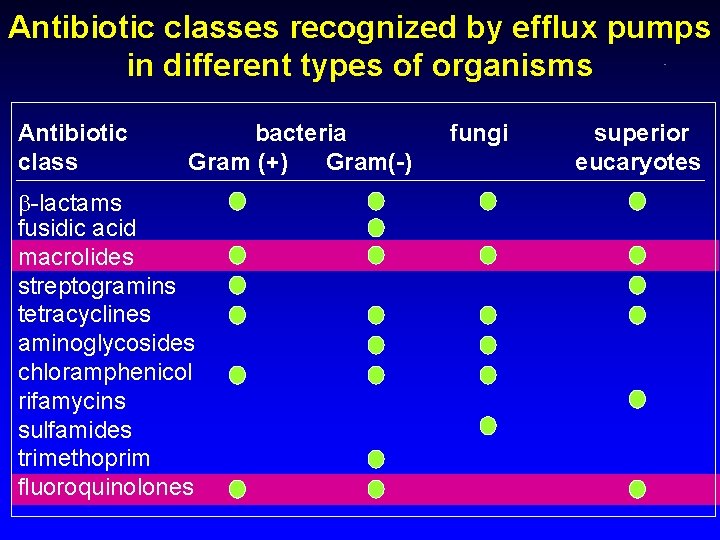
Antibiotic classes recognized by efflux pumps in different types of organisms Antibiotic class bacteria Gram (+) Gram(-) b-lactams fusidic acid macrolides streptogramins tetracyclines aminoglycosides chloramphenicol rifamycins sulfamides trimethoprim fluoroquinolones fungi superior eucaryotes
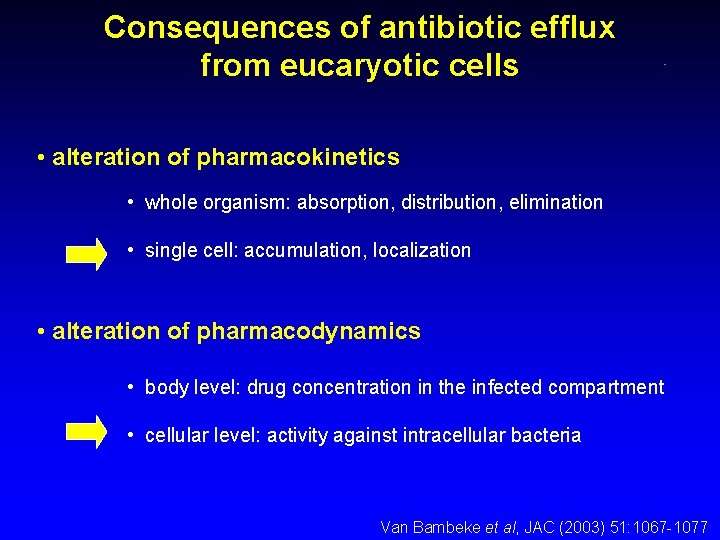
Consequences of antibiotic efflux from eucaryotic cells • alteration of pharmacokinetics • whole organism: absorption, distribution, elimination • single cell: accumulation, localization • alteration of pharmacodynamics • body level: drug concentration in the infected compartment • cellular level: activity against intracellular bacteria Van Bambeke et al, JAC (2003) 51: 1067 -1077
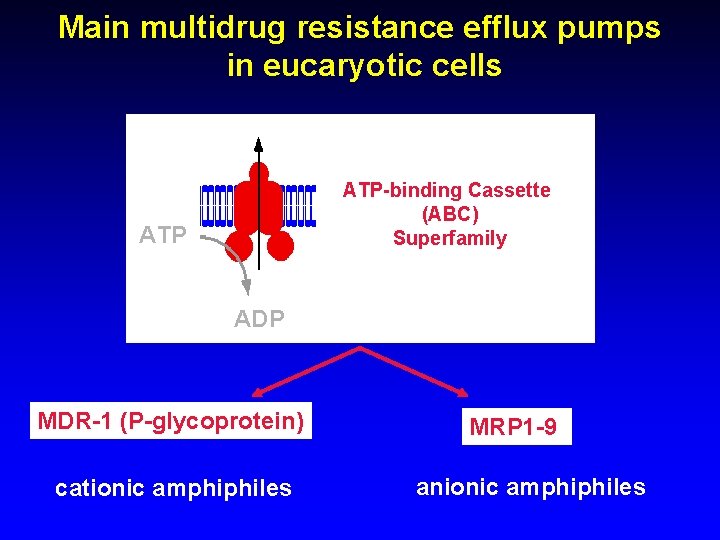
Main multidrug resistance efflux pumps in eucaryotic cells ATP-binding Cassette (ABC) Superfamily ATP ADP MDR-1 (P-glycoprotein) cationic amphiphiles MRP 1 -9 anionic amphiphiles
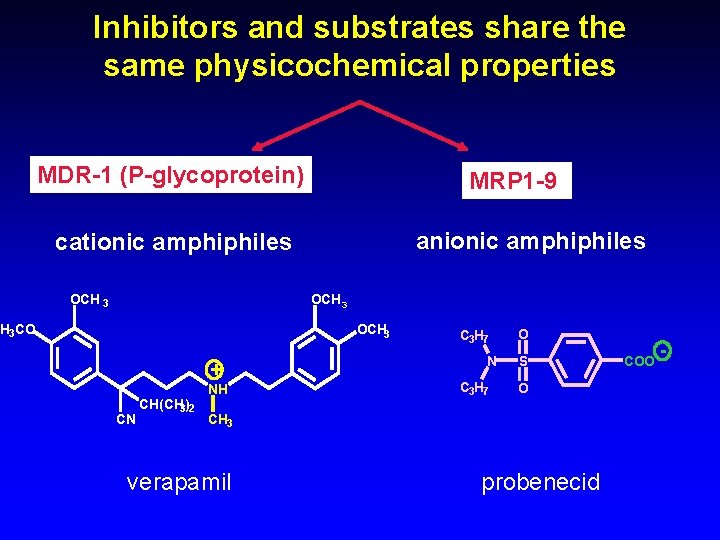
Inhibitors and substrates share the same physicochemical properties MDR-1 (P-glycoprotein) MRP 1 -9 anionic amphiphiles cationic amphiphiles OCH 3 H 3 CO OCH 3 + CN CH(CH 3)2 NH C 3 H 7 N C 3 H 7 O S O CH 3 verapamil probenecid COO -
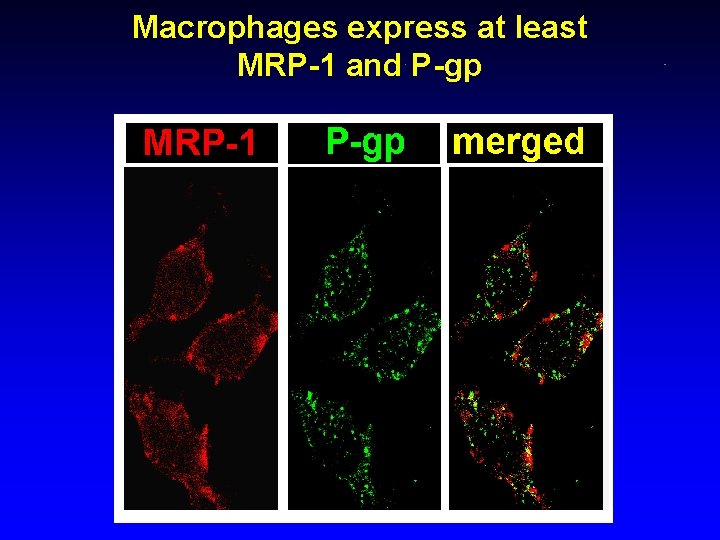
Macrophages express at least MRP-1 and P-gp
1. Influence of efflux pumps on antibiotic cellular pharmacokinetics macrolides
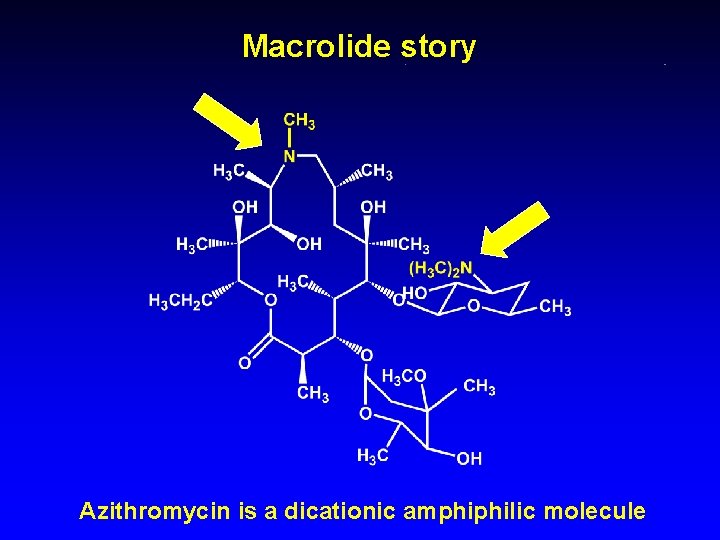
Macrolide story Azithromycin is a dicationic amphiphilic molecule
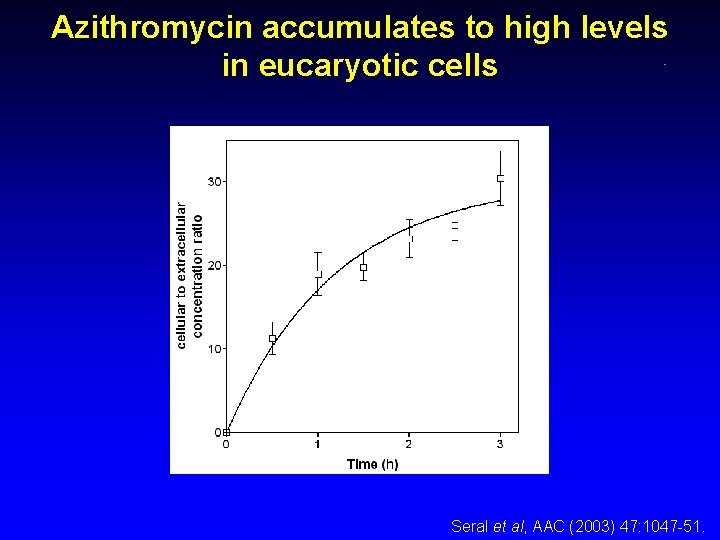
Azithromycin accumulates to high levels in eucaryotic cells Seral et al, AAC (2003) 47: 1047 -51.
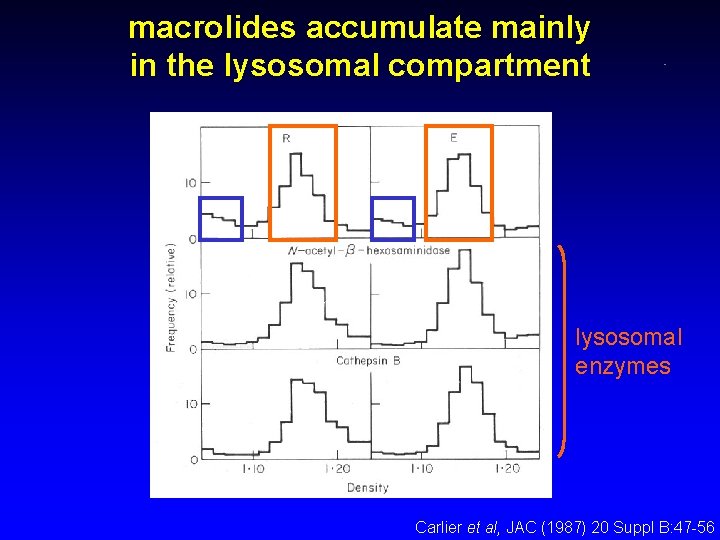
macrolides accumulate mainly in the lysosomal compartment lysosomal enzymes Carlier et al, JAC (1987) 20 Suppl B: 47 -56
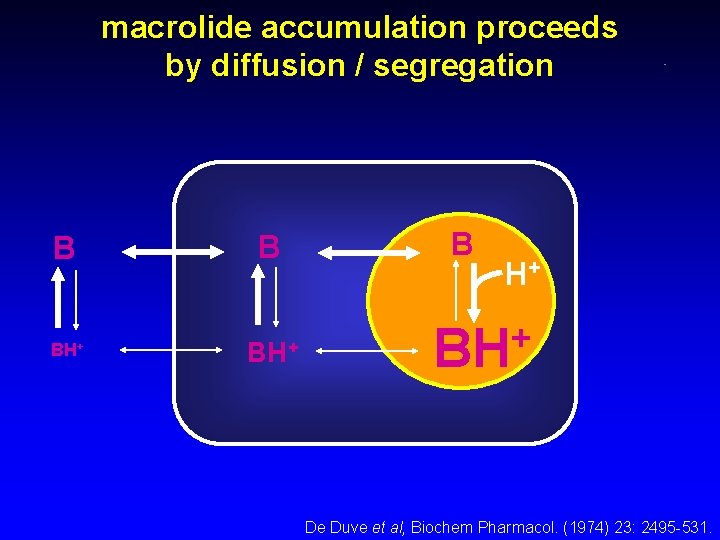
macrolide accumulation proceeds by diffusion / segregation B B BH+ B H+ + BH De Duve et al, Biochem Pharmacol. (1974) 23: 2495 -531.
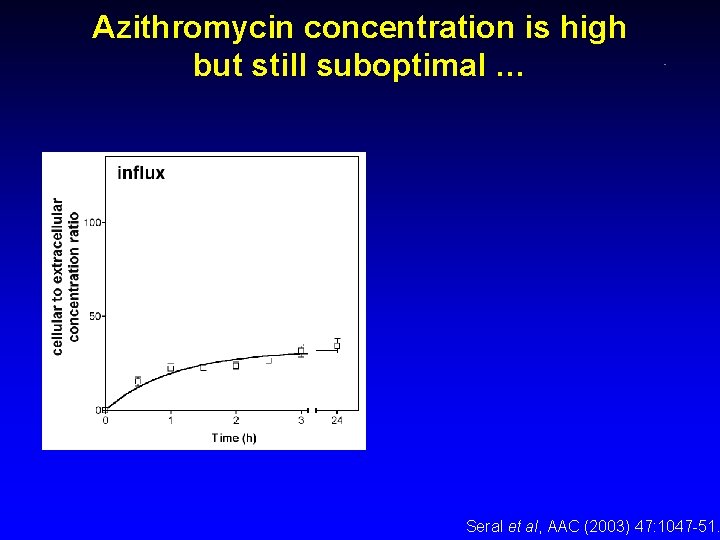
Azithromycin concentration is high but still suboptimal … Seral et al, AAC (2003) 47: 1047 -51.
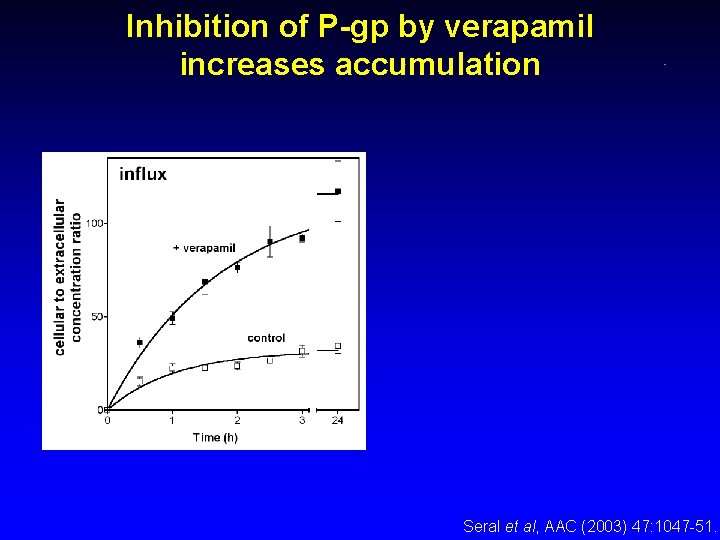
Inhibition of P-gp by verapamil increases accumulation Seral et al, AAC (2003) 47: 1047 -51.
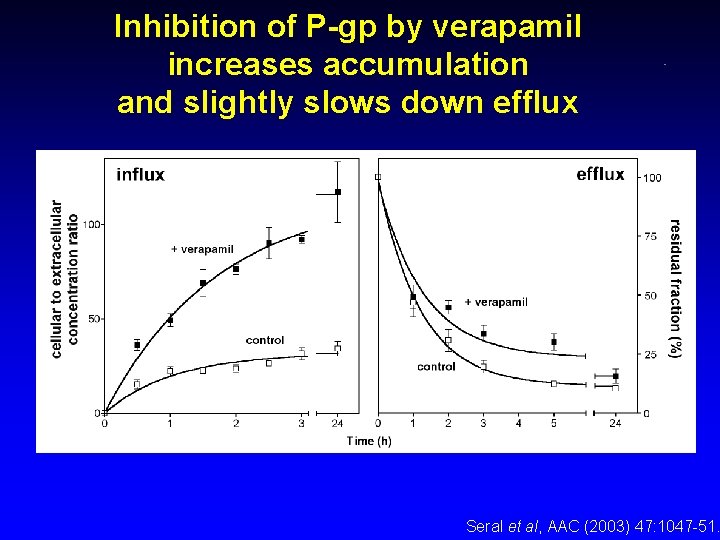
Inhibition of P-gp by verapamil increases accumulation and slightly slows down efflux Seral et al, AAC (2003) 47: 1047 -51.
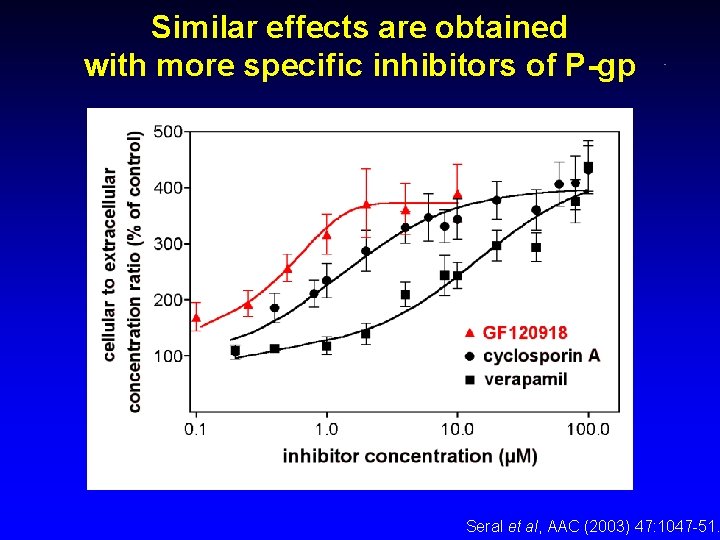
Similar effects are obtained with more specific inhibitors of P-gp Seral et al, AAC (2003) 47: 1047 -51.
How can efflux pumps increase azithromycin accumulation without markedly affecting its efflux ? mechanism of action of efflux pumps
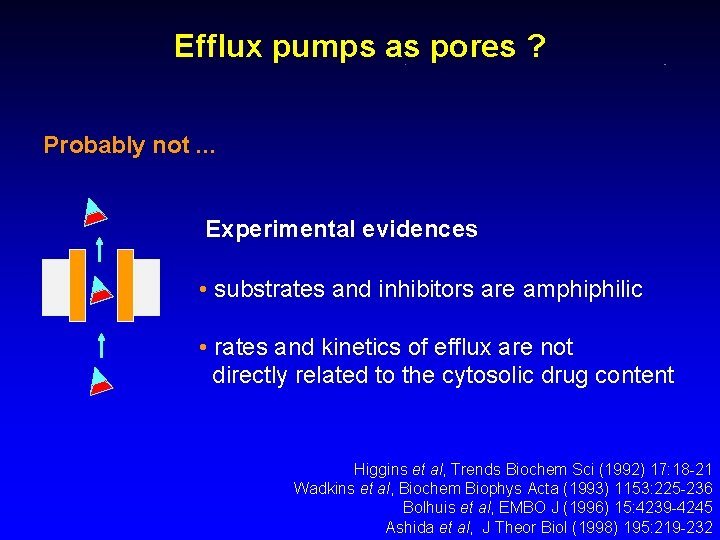
Efflux pumps as pores ? Probably not. . . Experimental evidences • substrates and inhibitors are amphiphilic • rates and kinetics of efflux are not directly related to the cytosolic drug content Higgins et al, Trends Biochem Sci (1992) 17: 18 -21 Wadkins et al, Biochem Biophys Acta (1993) 1153: 225 -236 Bolhuis et al, EMBO J (1996) 15: 4239 -4245 Ashida et al, J Theor Biol (1998) 195: 219 -232
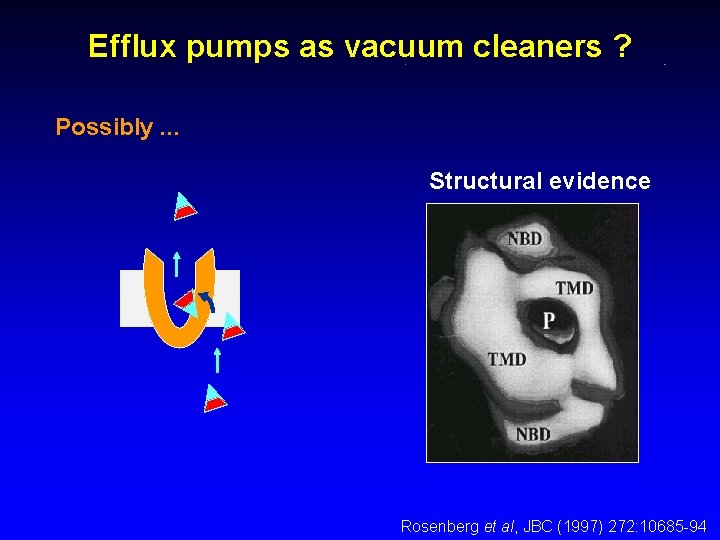
Efflux pumps as vacuum cleaners ? Possibly. . . Structural evidence Rosenberg et al, JBC (1997) 272: 10685 -94
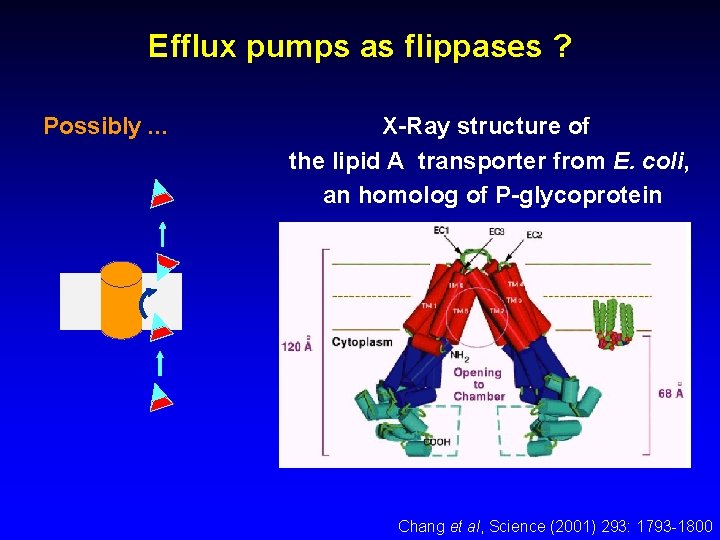
Efflux pumps as flippases ? Possibly. . . X-Ray structure of the lipid A transporter from E. coli, an homolog of P-glycoprotein Chang et al, Science (2001) 293: 1793 -1800
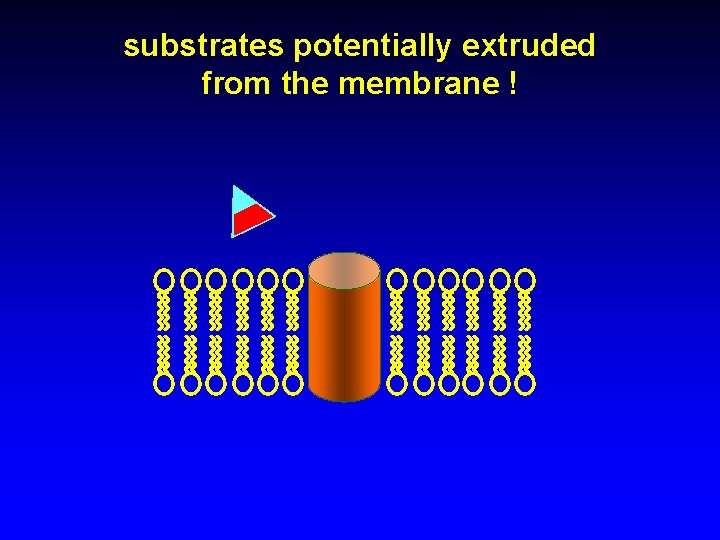
substrates potentially extruded from the membrane !
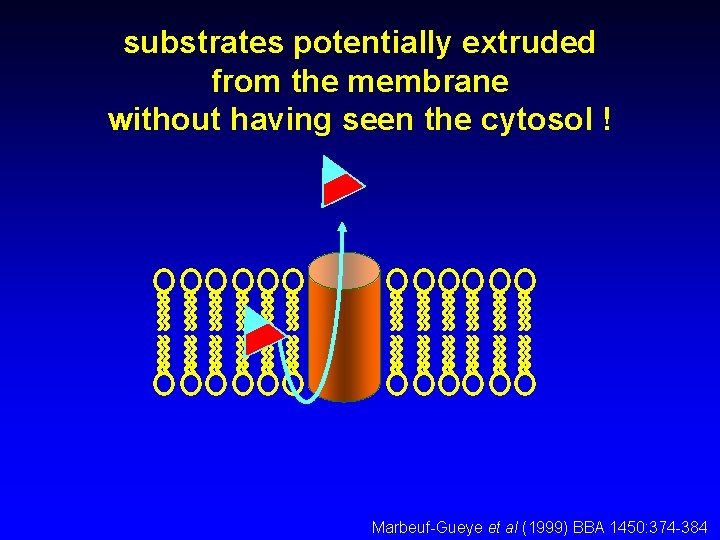
substrates potentially extruded from the membrane without having seen the cytosol ! Marbeuf-Gueye et al (1999) BBA 1450: 374 -384
2. Influence of efflux pumps on antibiotic cellular pharmacokinetics quinolones
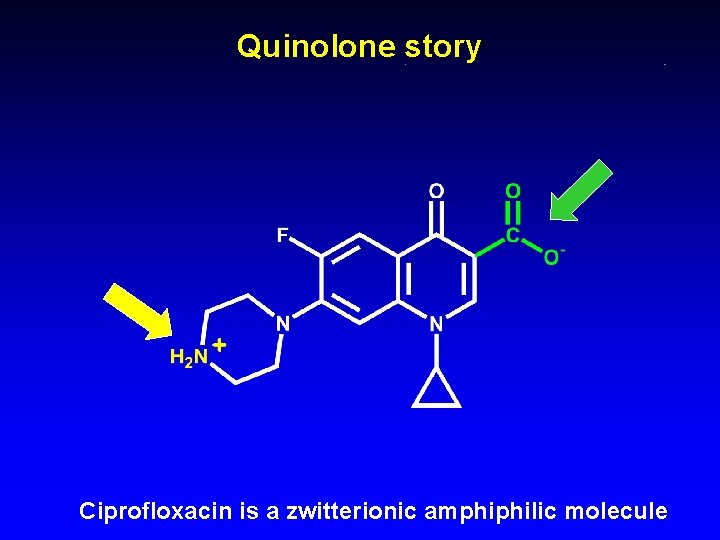
Quinolone story Ciprofloxacin is a zwitterionic amphiphilic molecule
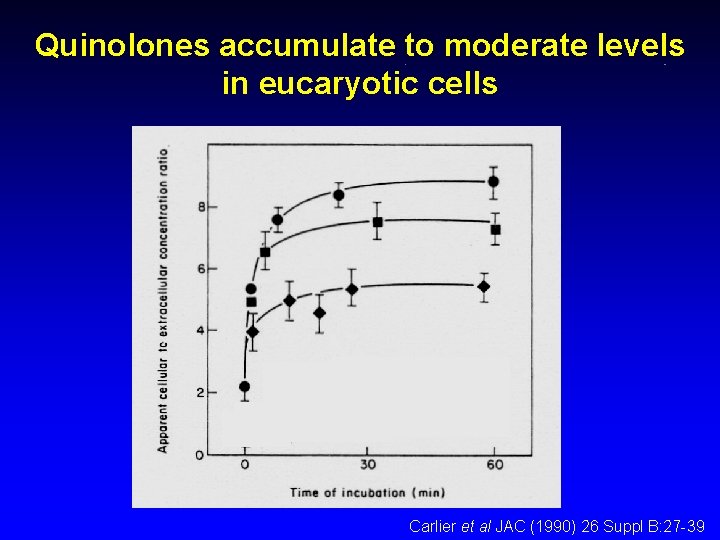
Quinolones accumulate to moderate levels in eucaryotic cells Carlier et al JAC (1990) 26 Suppl B: 27 -39
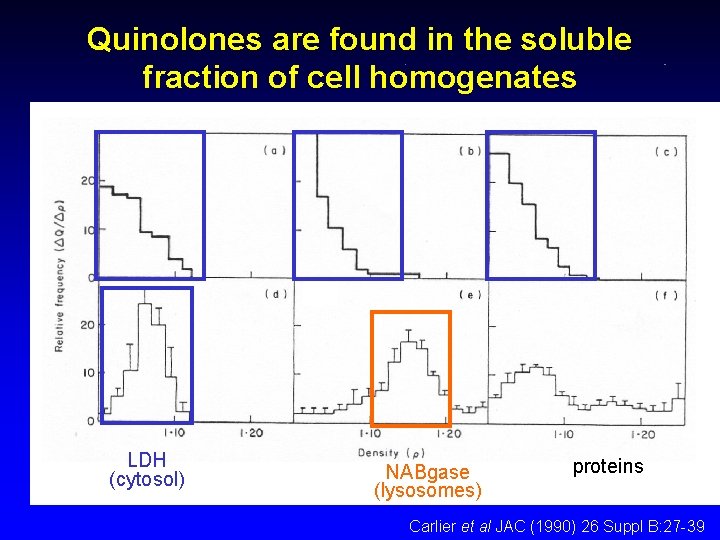
Quinolones are found in the soluble fraction of cell homogenates LDH (cytosol) NABgase (lysosomes) proteins Carlier et al JAC (1990) 26 Suppl B: 27 -39
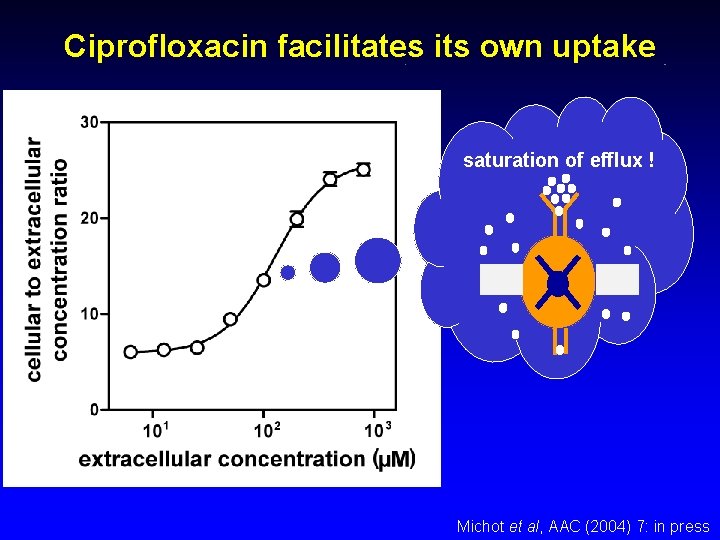
Ciprofloxacin facilitates its own uptake saturation of efflux ! Michot et al, AAC (2004) 7: in press
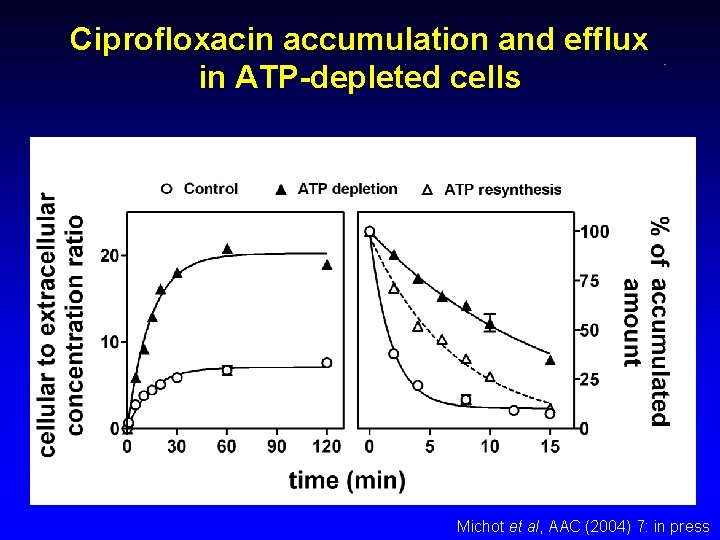
Ciprofloxacin accumulation and efflux in ATP-depleted cells Michot et al, AAC (2004) 7: in press
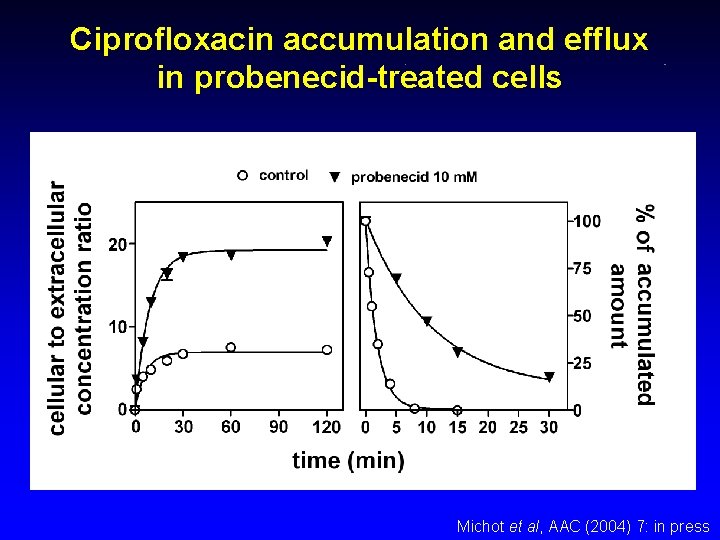
Ciprofloxacin accumulation and efflux in probenecid-treated cells Michot et al, AAC (2004) 7: in press
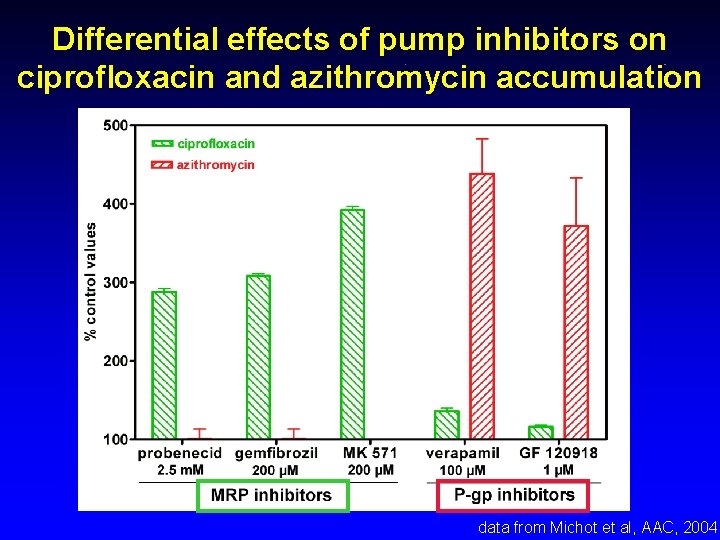
Differential effects of pump inhibitors on ciprofloxacin and azithromycin accumulation data from Michot et al, AAC, 2004
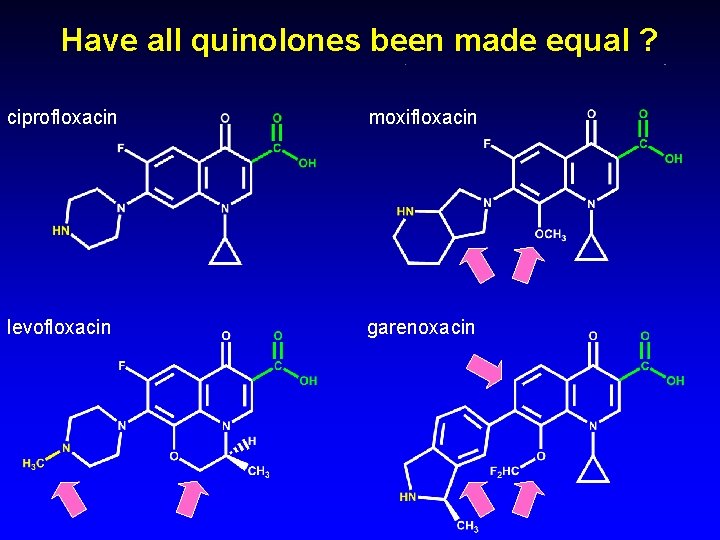
Have all quinolones been made equal ? ciprofloxacin moxifloxacin levofloxacin garenoxacin
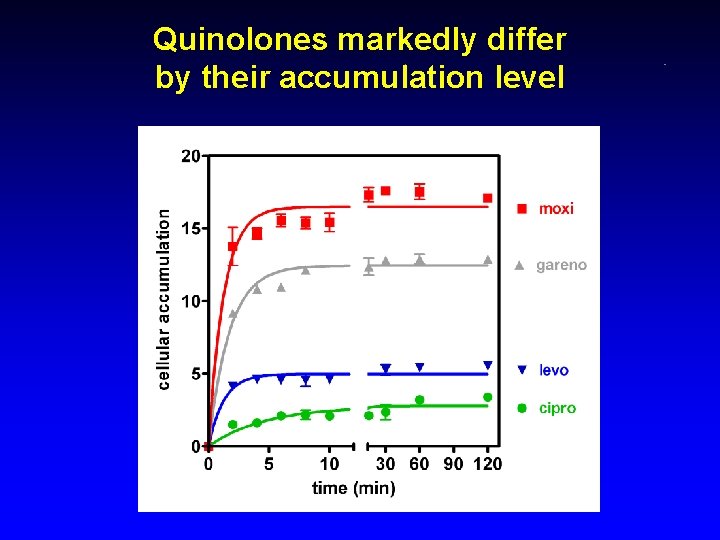
Quinolones markedly differ by their accumulation level
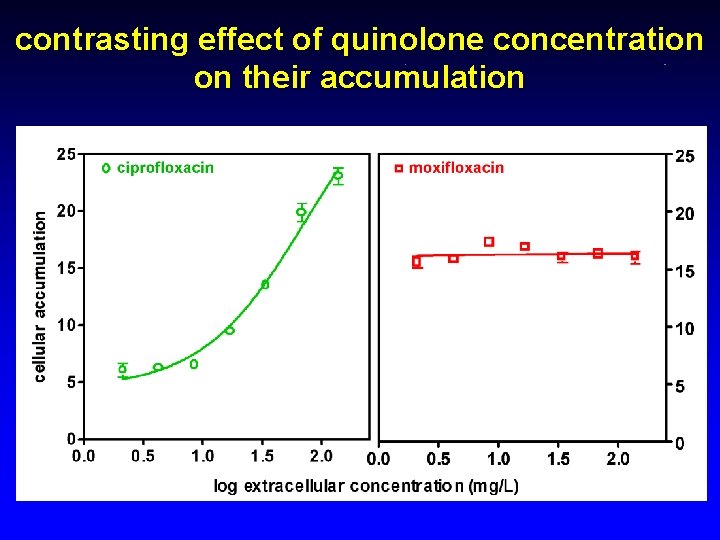
contrasting effect of quinolone concentration on their accumulation
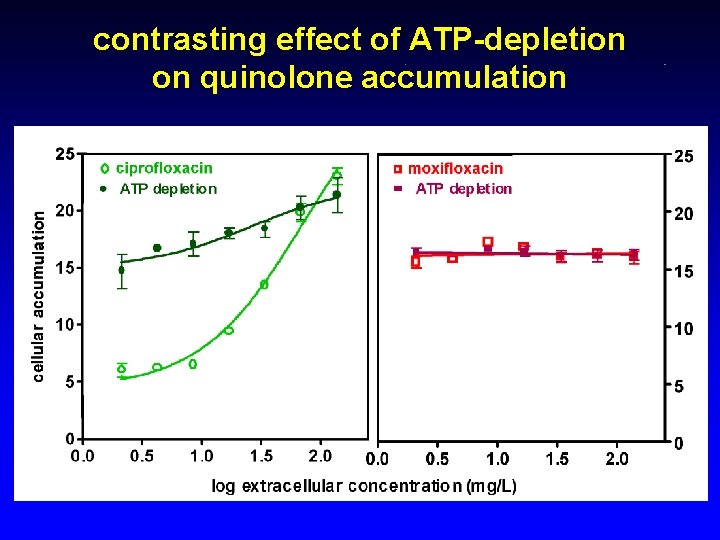
contrasting effect of ATP-depletion on quinolone accumulation
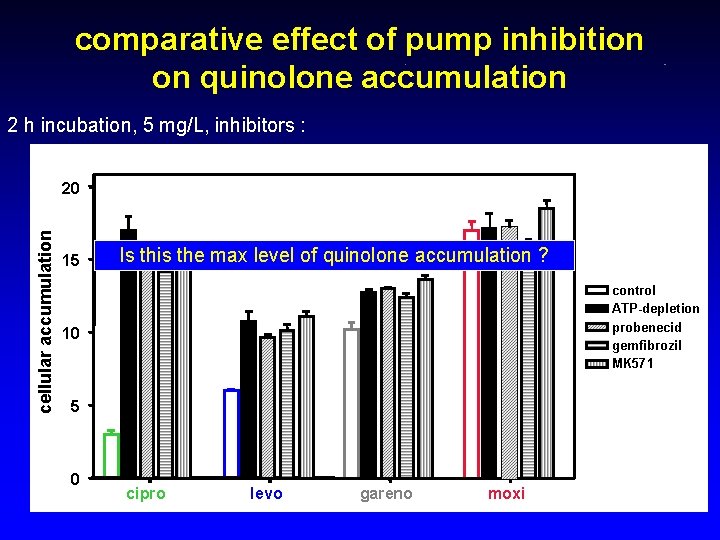
comparative effect of pump inhibition on quinolone accumulation 2 h incubation, 5 mg/L, inhibitors : cellular accumulation 20 15 Is this the max level of quinolone accumulation ? control ATP-depletion probenecid gemfibrozil MK 571 10 5 0 cipro levo gareno moxi
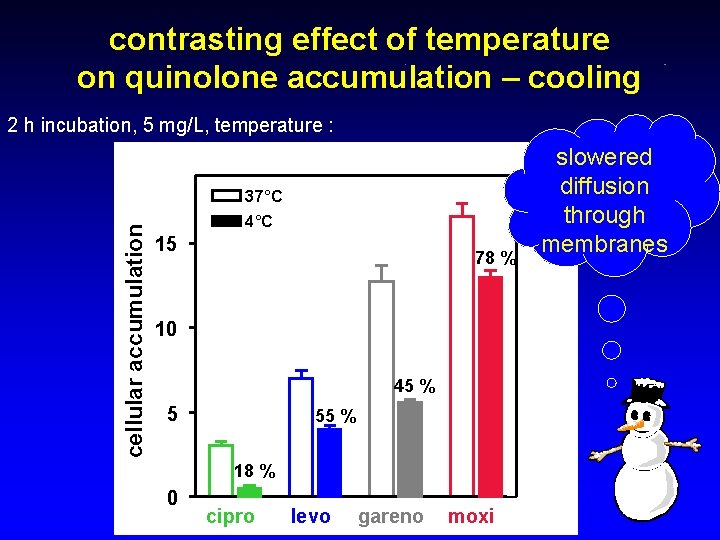
contrasting effect of temperature on quinolone accumulation – cooling cellular accumulation 2 h incubation, 5 mg/L, temperature : 37°C 4°C 15 78 % 10 45 % 5 55 % 18 % 0 cipro levo gareno moxi slowered diffusion through membranes
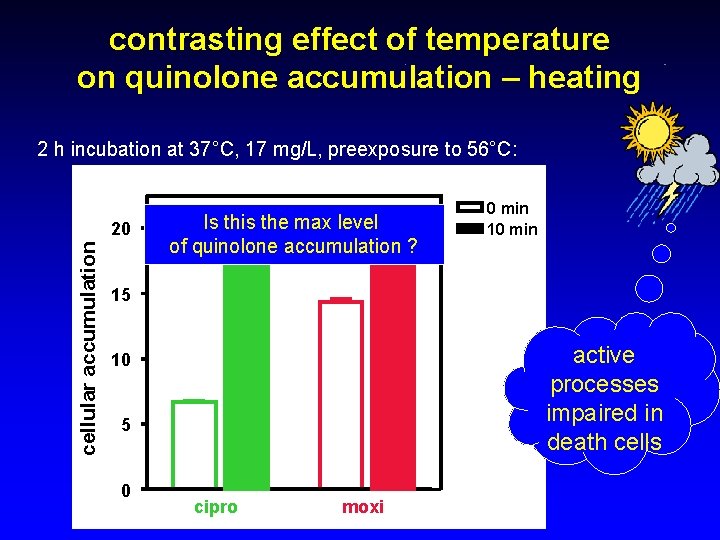
contrasting effect of temperature on quinolone accumulation – heating 2 h incubation at 37°C, 17 mg/L, preexposure to 56°C: cellular accumulation 20 Is this the max level of quinolone accumulation ? 0 min 15 active processes impaired in death cells 10 5 0 cipro moxi
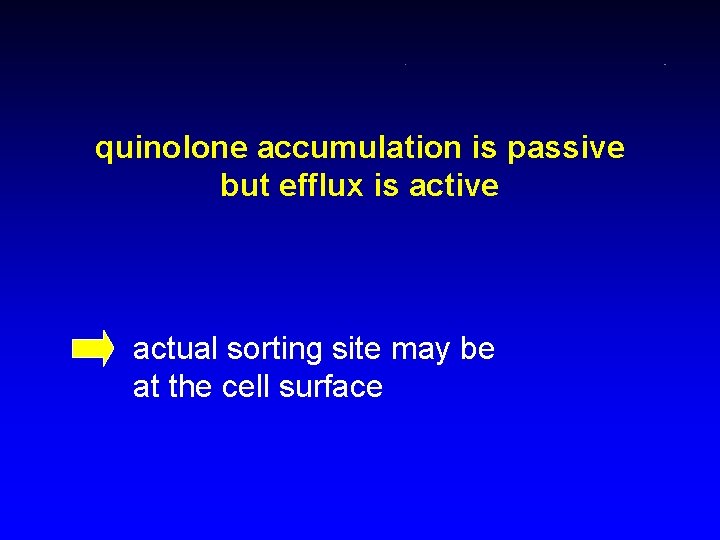
quinolone accumulation is passive but efflux is active actual sorting site may be at the cell surface
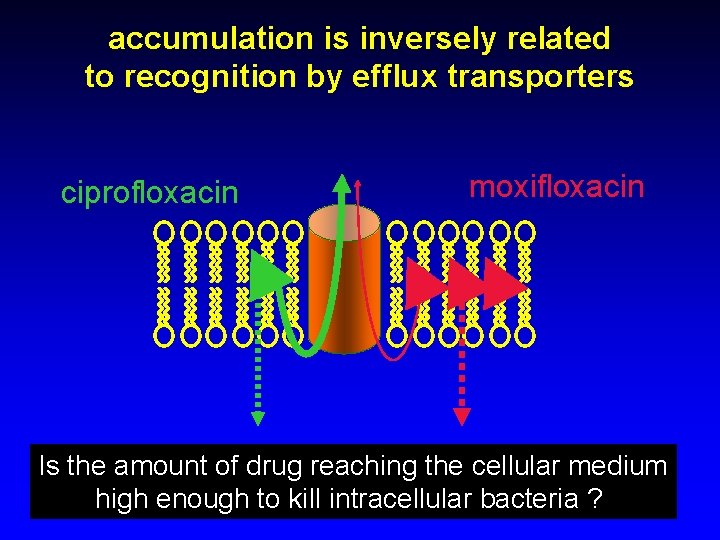
accumulation is inversely related to recognition by efflux transporters ciprofloxacin moxifloxacin Is the amount of drug reaching the cellular medium high enough to kill intracellular bacteria ?
3. Influence of efflux pumps on antibiotic cellular pharmacodynamics
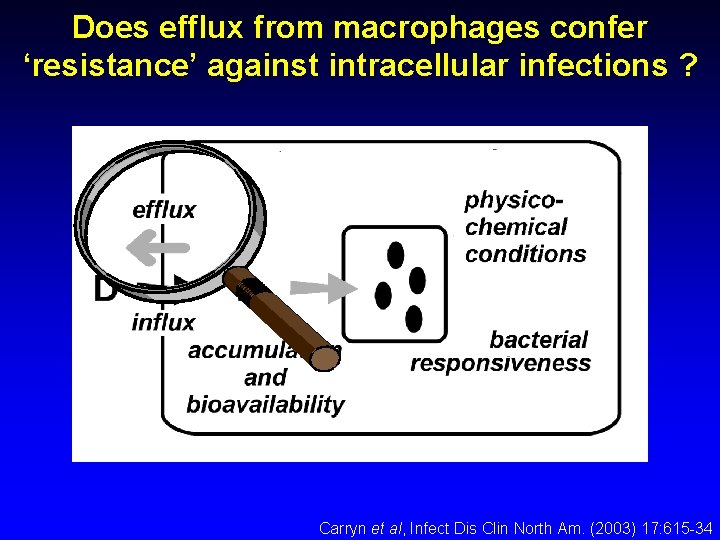
Does efflux from macrophages confer ‘resistance’ against intracellular infections ? Carryn et al, Infect Dis Clin North Am. (2003) 17: 615 -34
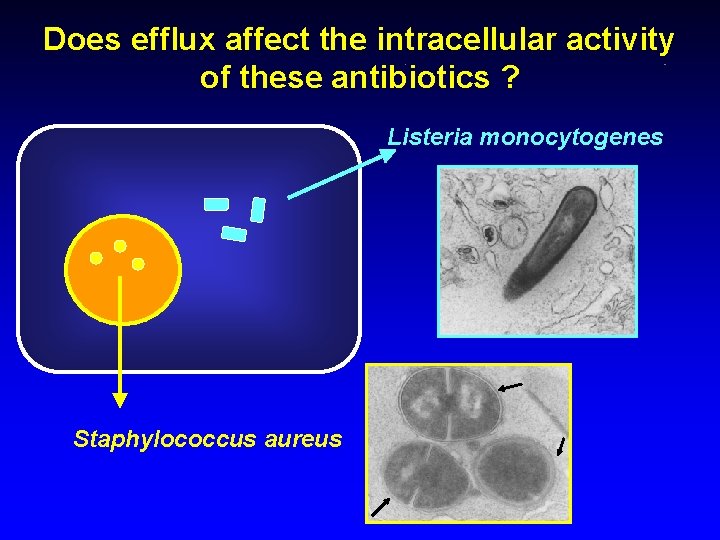
Does efflux affect the intracellular activity of these antibiotics ? Listeria monocytogenes Staphylococcus aureus
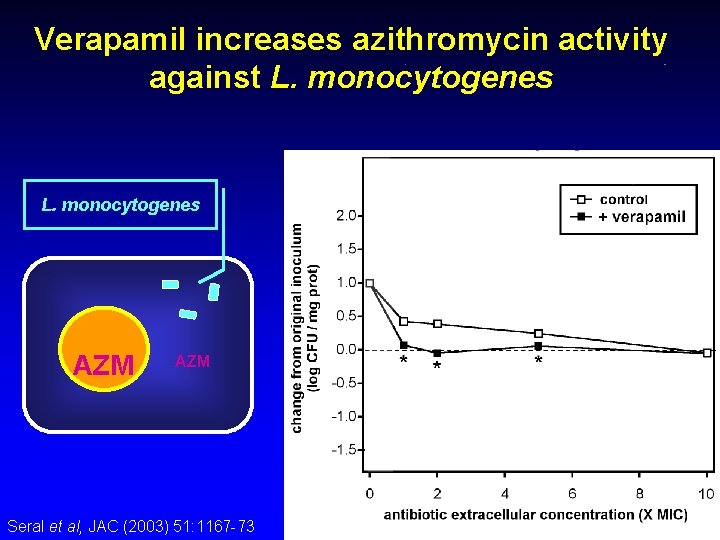
Verapamil increases azithromycin activity against L. monocytogenes AZM Seral et al, JAC (2003) 51: 1167 -73
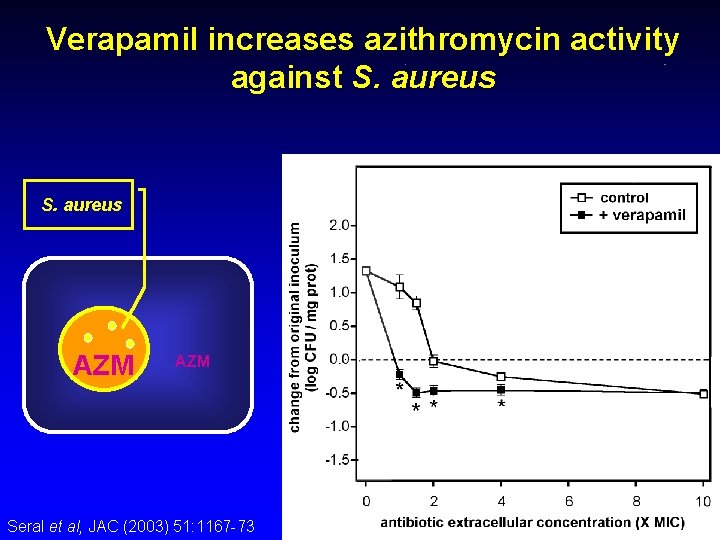
Verapamil increases azithromycin activity against S. aureus AZM Seral et al, JAC (2003) 51: 1167 -73
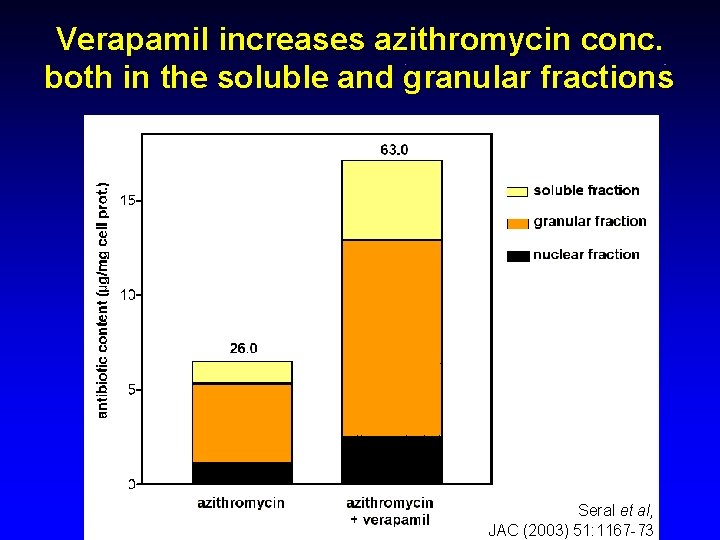
Verapamil increases azithromycin conc. both in the soluble and granular fractions Seral et al, JAC (2003) 51: 1167 -73
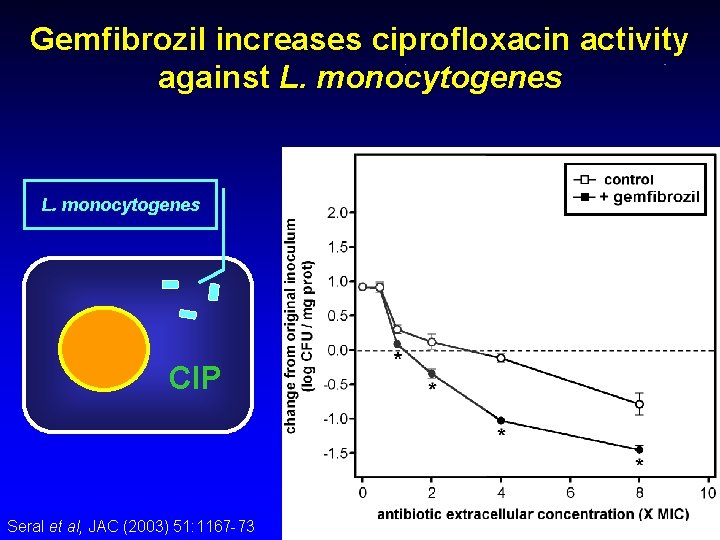
Gemfibrozil increases ciprofloxacin activity against L. monocytogenes CIP Seral et al, JAC (2003) 51: 1167 -73
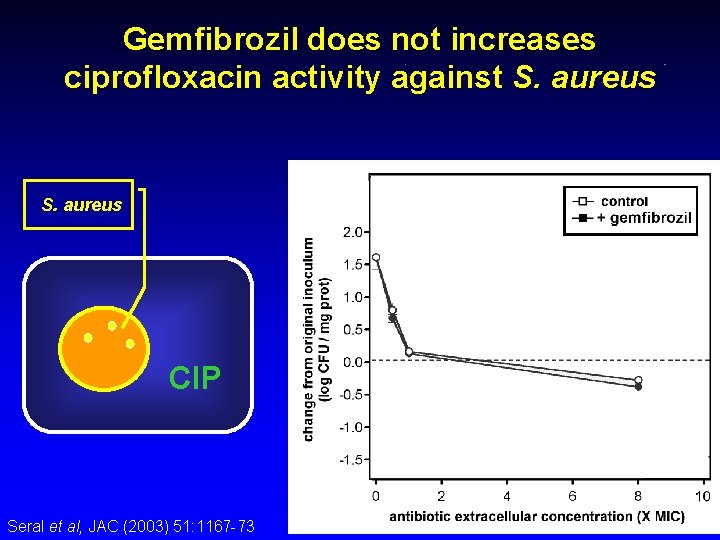
Gemfibrozil does not increases ciprofloxacin activity against S. aureus CIP Seral et al, JAC (2003) 51: 1167 -73
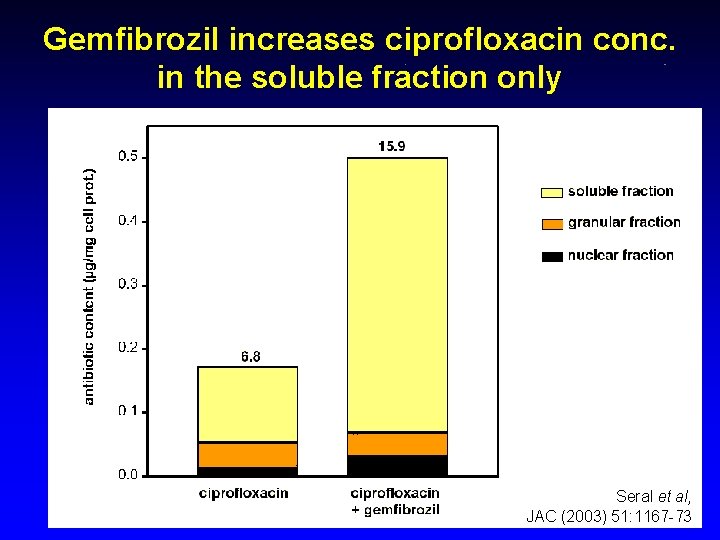
Gemfibrozil increases ciprofloxacin conc. in the soluble fraction only Seral et al, JAC (2003) 51: 1167 -73
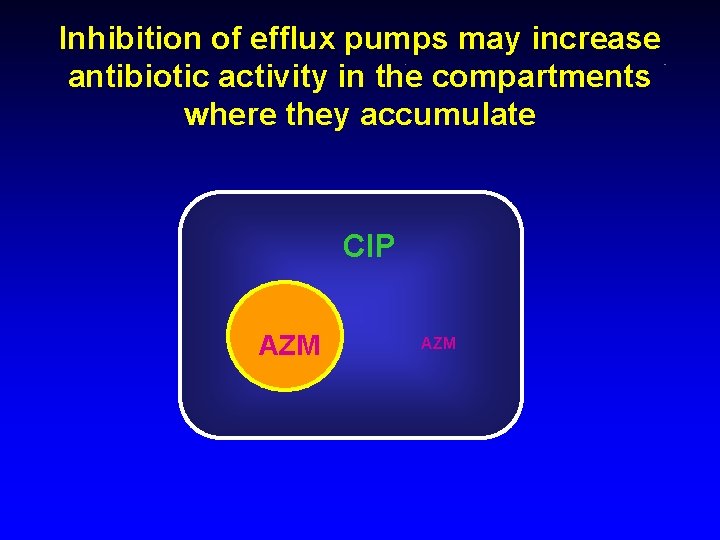
Inhibition of efflux pumps may increase antibiotic activity in the compartments where they accumulate CIP AZM
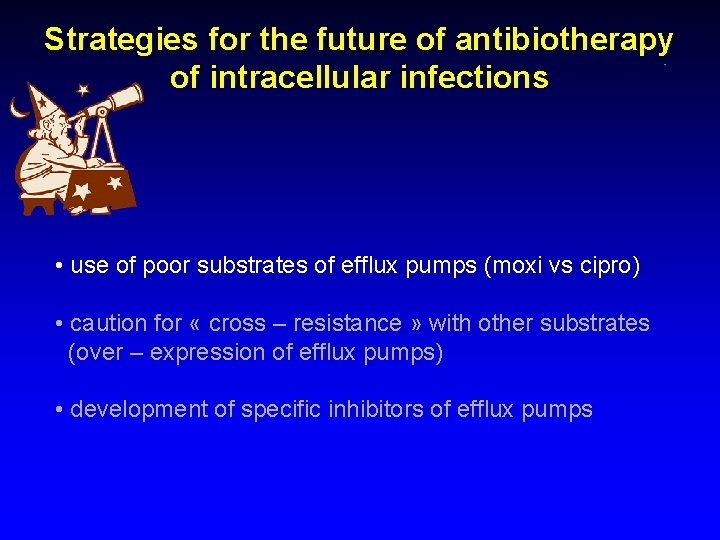
Strategies for the future of antibiotherapy of intracellular infections • use of poor substrates of efflux pumps (moxi vs cipro) • caution for « cross – resistance » with other substrates (over – expression of efflux pumps) • development of specific inhibitors of efflux pumps
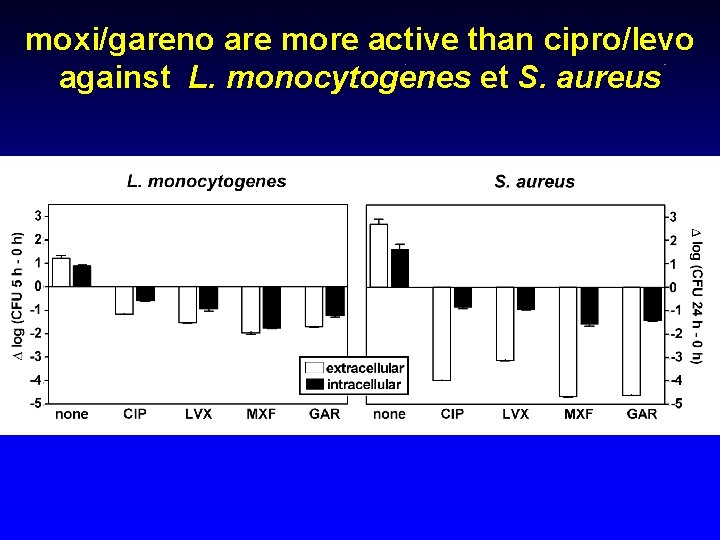
moxi/gareno are more active than cipro/levo against L. monocytogenes et S. aureus
Strategies for the future of antibiotherapy of intracellular infections • use of poor substrates of efflux pumps (moxi vs cipro) • caution for « cross – resistance » with other substrates (over – expression of efflux pumps) • development of specific inhibitors of efflux pumps
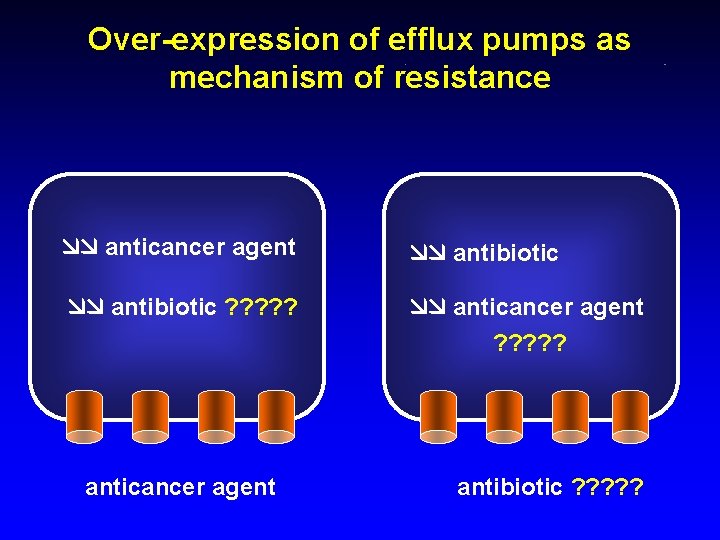
Over-expression of efflux pumps as mechanism of resistance anticancer agent antibiotic ? ? ? anticancer agent ? ? ? anticancer agent antibiotic ? ? ?
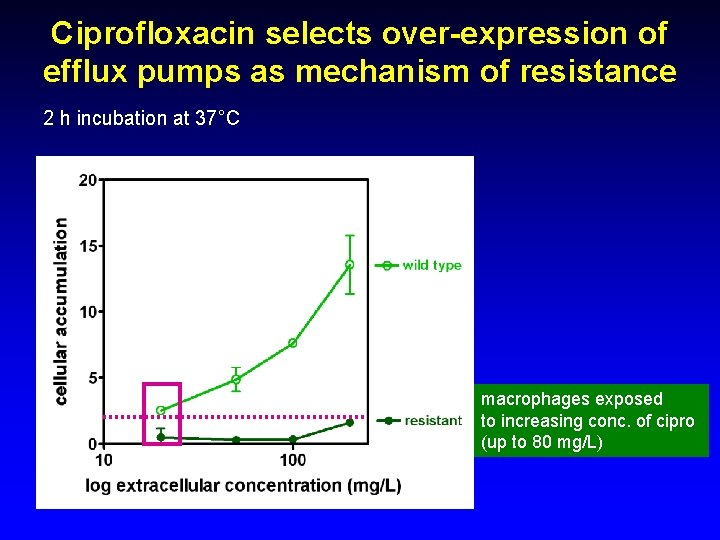
Ciprofloxacin selects over-expression of efflux pumps as mechanism of resistance 2 h incubation at 37°C 10 macrophages exposed to increasing conc. of cipro (up to 80 mg/L)
Strategies for the future of antibiotherapy of intracellular infections • use of poor substrates of efflux pumps (moxi vs cipro) • caution for « cross – resistance » with other substrates (over – expression of efflux pumps) • development of specific inhibitors of efflux pumps

Inhibitors of efflux transporters … should help you to keep your stuff in. . .
Inhibitors of efflux transporters … But be careful not to turn off a useful pump. . .

F Van Bambeke JM Michot C Seral M Heremans MP Mingeot. Leclercq PM Tulkens come and see us at <www. md. ucl. ac. be/facm>
- Slides: 66