
ANTIANXIETY DRUGS DR meherunisa Associate professor CIMS Anxiety

- Slides: 27
ANTI-ANXIETY DRUGS DR. meherunisa Associate professor CIMS
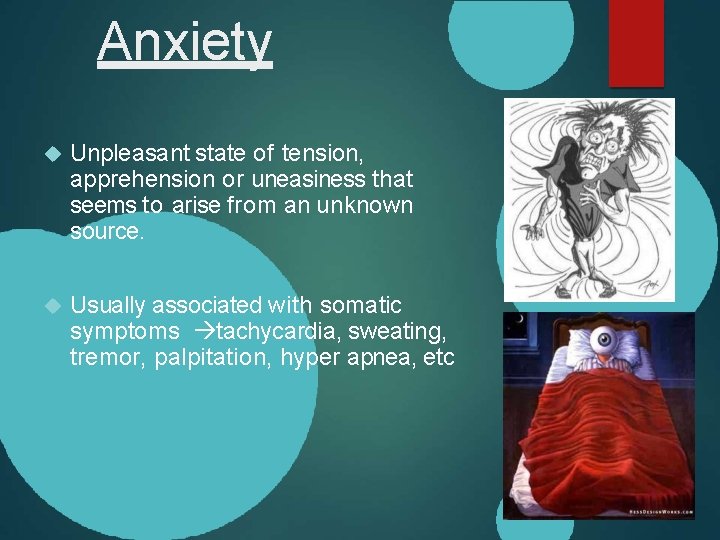
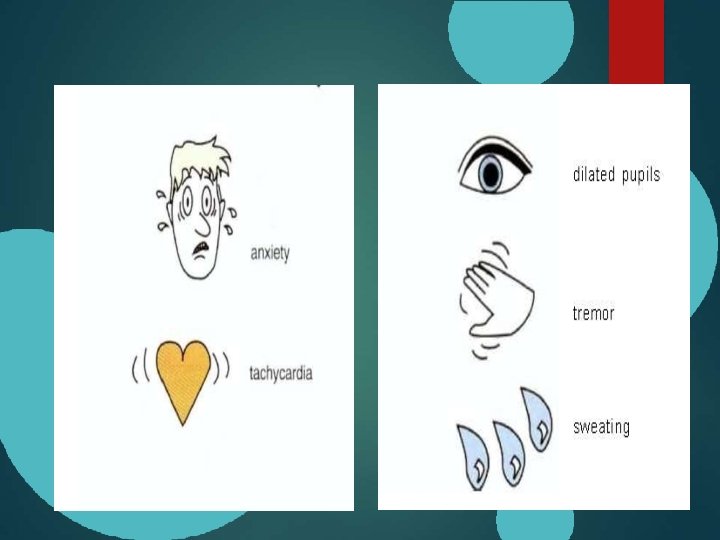
Anxiety Unpleasant state of tension, apprehension or uneasiness that seems to arise from an unknown source. Usually associated with somatic symptoms tachycardia, sweating, tremor, palpitation, hyper apnea, etc
ANXIETY DISORDERS o. Panic Disorder o. Generalized Anxiety Disorder o. Phobic Disorders o. Stress Disorders o. Obsessive-Compulsive Disorder
Anti anxiety drugs o Mostly mild CNS depressants o Control the symptoms of anxiety, produce a restful state of mind without interfering with normal mental or physical functions.
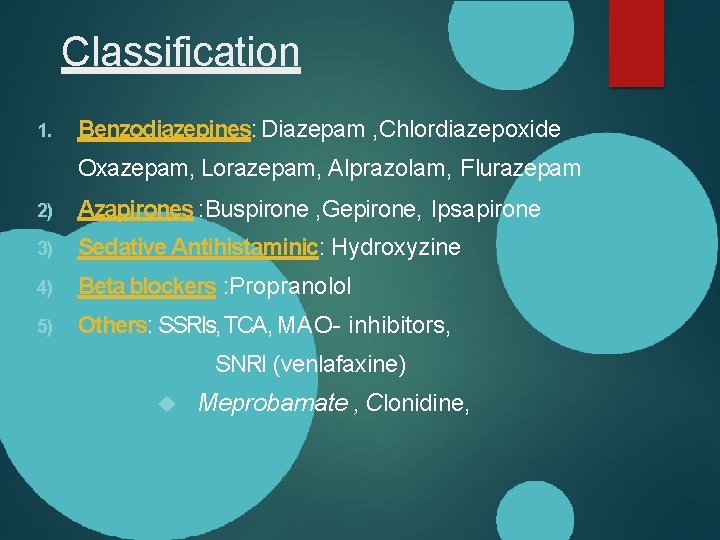
Classification 1. Benzodiazepines: Diazepam , Chlordiazepoxide Oxazepam, Lorazepam, Alprazolam, Flurazepam 2) Azapirones : Buspirone , Gepirone, Ipsapirone 3) Sedative Antihistaminic: Hydroxyzine 4) Beta blockers : Propranolol 5) Others: SSRIs, TCA, MAO- inhibitors, SNRI (venlafaxine) Meprobamate , Clonidine,
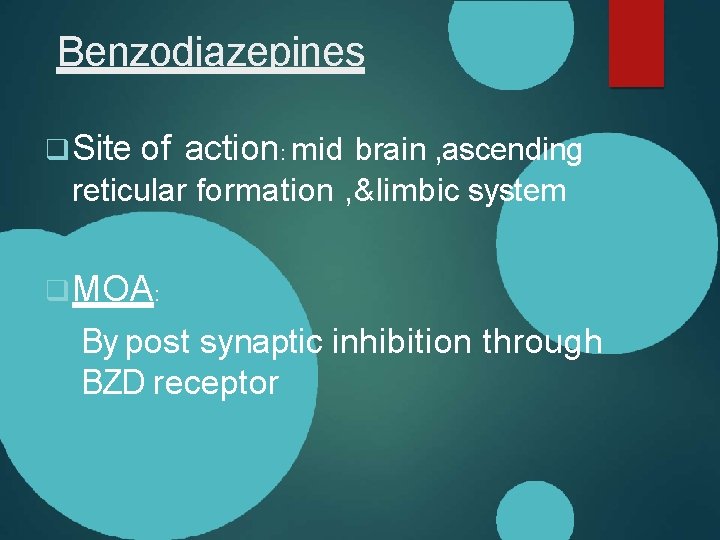
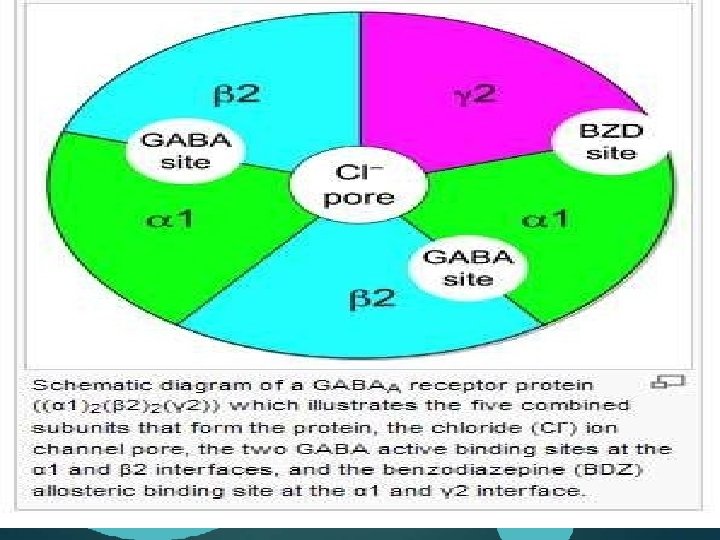
Benzodiazepines Site of action: mid brain , ascending reticular formation , &limbic system MOA: By post synaptic inhibition through BZD receptor
PK of Benzodiazepines Given orally , iv & im (lorazepam & temazepam) Oral absorption good Phase I & phase II metabolism Lorazepam & Oxazepam no active metabolite short acting
ADR Sedation Light headedness Cognitive impairment Vertigo Confusion Appetite & Wt gain Alt in sexual function Dependence
Advantages of BZD High therapeutic index Do not affect respiration or cardiovascular function No microsomal induction Low abuse liability Specific BZD antagonist Flumazenil is available
CHLORDIAZEPOXIDE First BZD used as an antianxiety agent Produce smooth long lasting effect Preferred in chronic anxiety states T 1/2 : 5 -15 hours Dose : 20 -100 mg
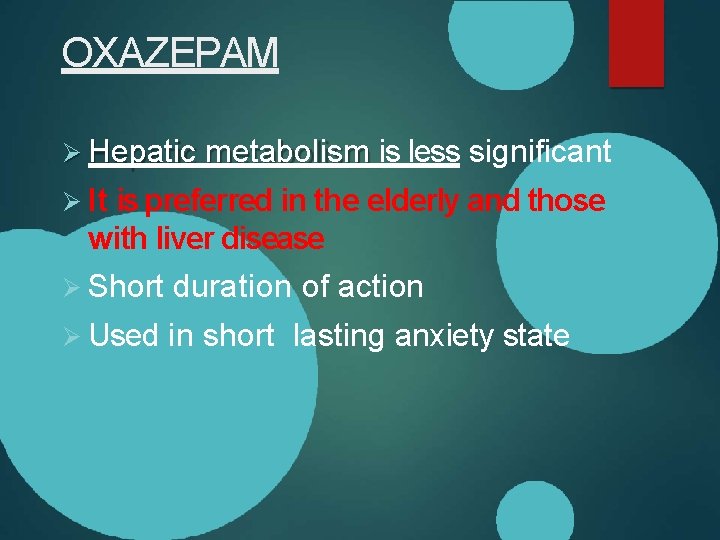
OXAZEPAM Hepatic metabolism is less significant It is preferred in the elderly and those with liver disease Short duration of action Used in short lasting anxiety state
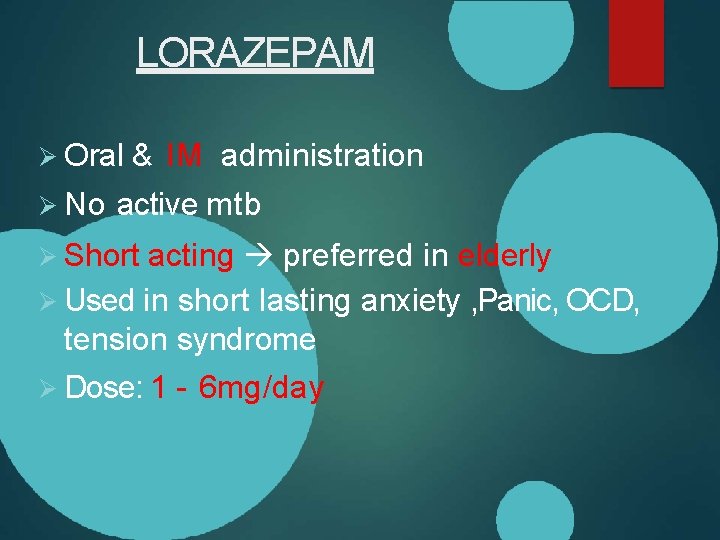
LORAZEPAM Oral No & IM administration active mtb Short acting preferred in elderly Used in short lasting anxiety , Panic, OCD, tension syndrome Dose: 1 - 6 mg/day
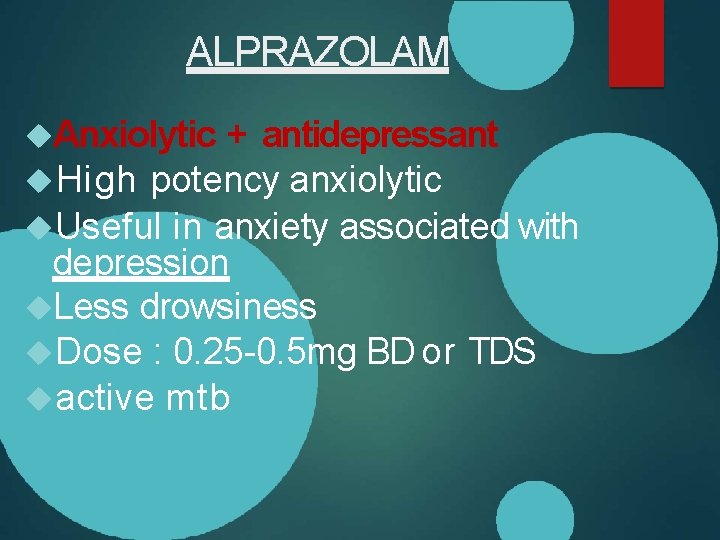
ALPRAZOLAM Anxiolytic + antidepressant High potency anxiolytic Useful in anxiety associated with depression Less drowsiness Dose : 0. 25 -0. 5 mg BD or TDS active mtb
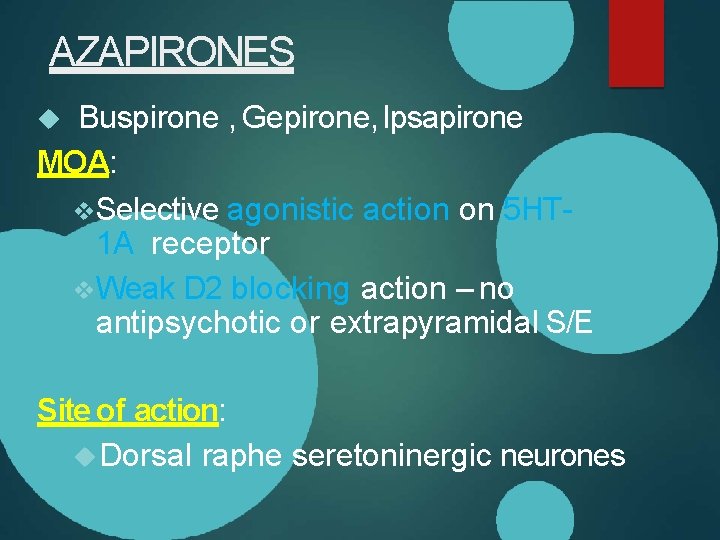
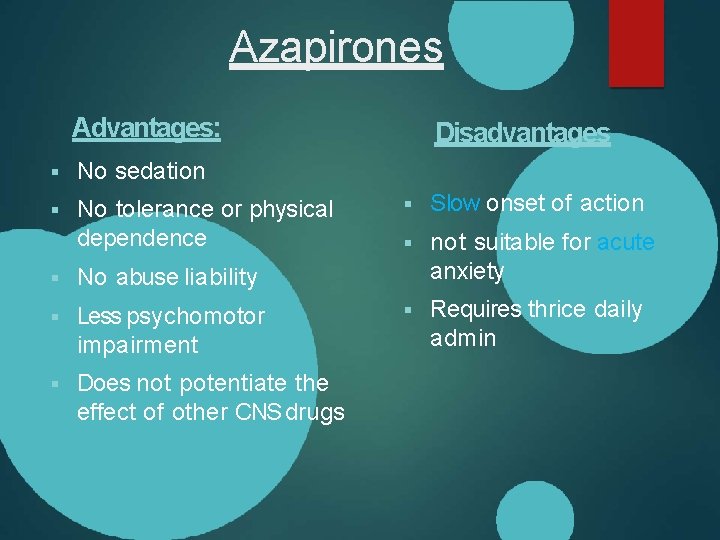
AZAPIRONES Buspirone , Gepirone, Ipsapirone MOA: Selective agonistic action on 5 HT 1 A receptor Weak D 2 blocking action – no antipsychotic or extrapyramidal S/E Site of action: Dorsal raphe seretoninergic neurones
Azapirones Advantages: No sedation No tolerance or physical dependence No abuse liability Less psychomotor impairment Does not potentiate the effect of other CNS drugs Disadvantages Slow onset of action not suitable for acute anxiety Requires thrice daily admin
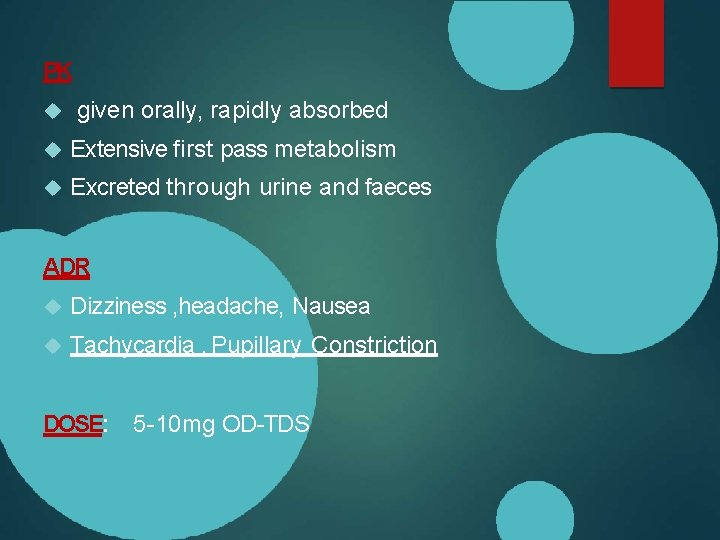
PK given orally, rapidly absorbed Extensive first pass metabolism Excreted through urine and faeces ADR Dizziness , headache, Nausea Tachycardia , Pupillary Constriction DOSE: 5 -10 mg OD-TDS
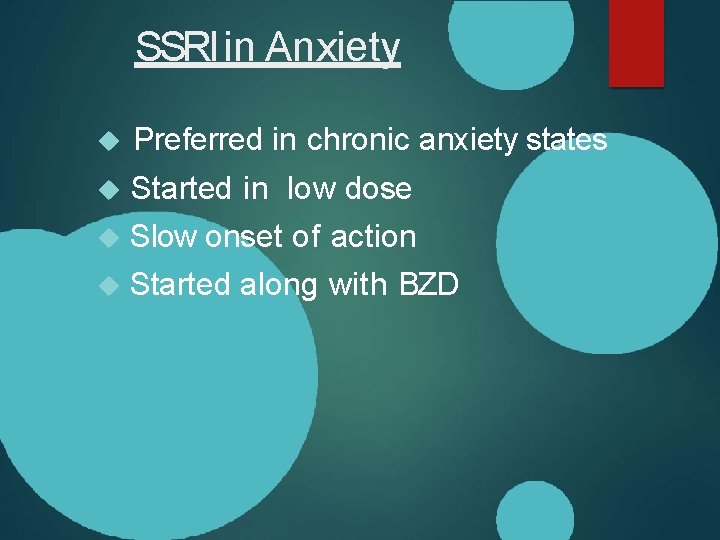
SSRI in Anxiety Preferred in chronic anxiety states Started in low dose Slow onset of action Started along with BZD
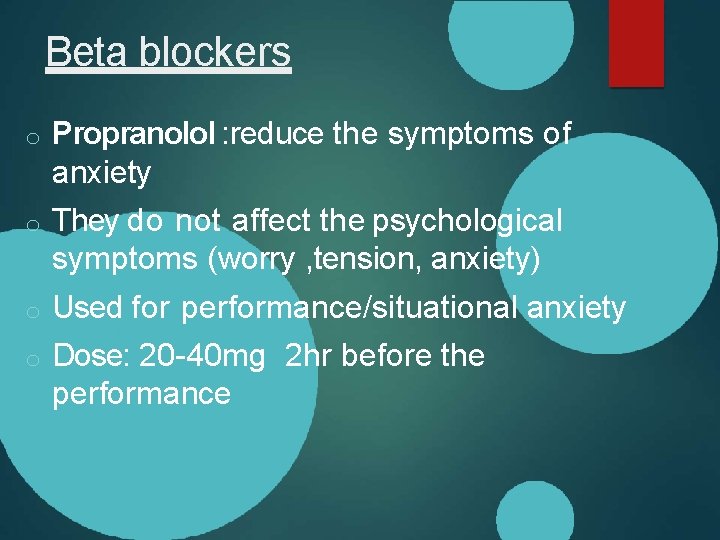
Beta blockers o Propranolol : reduce the symptoms of anxiety o They do not affect the psychological symptoms (worry , tension, anxiety) o Used for performance/situational anxiety o Dose: 20 -40 mg 2 hr before the performance
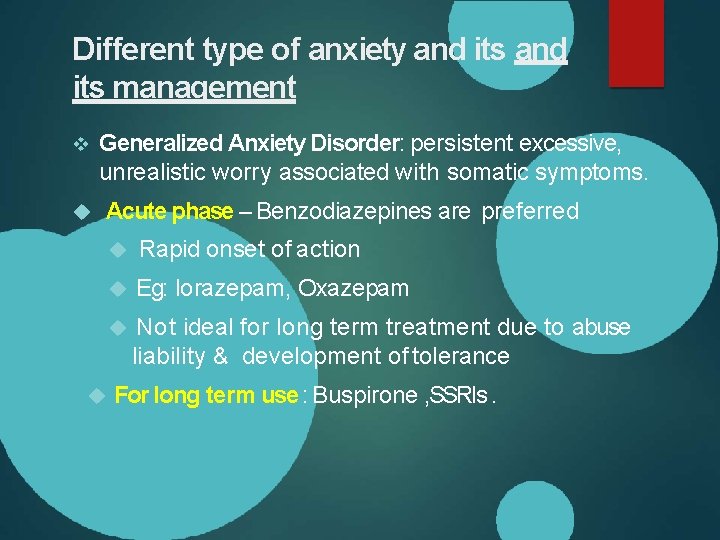
Different type of anxiety and its management Generalized Anxiety Disorder: persistent excessive, unrealistic worry associated with somatic symptoms. Acute phase – Benzodiazepines are preferred Rapid onset of action Eg: lorazepam, Oxazepam Not ideal for long term treatment due to abuse liability & development of tolerance For long term use : Buspirone , SSRIs.
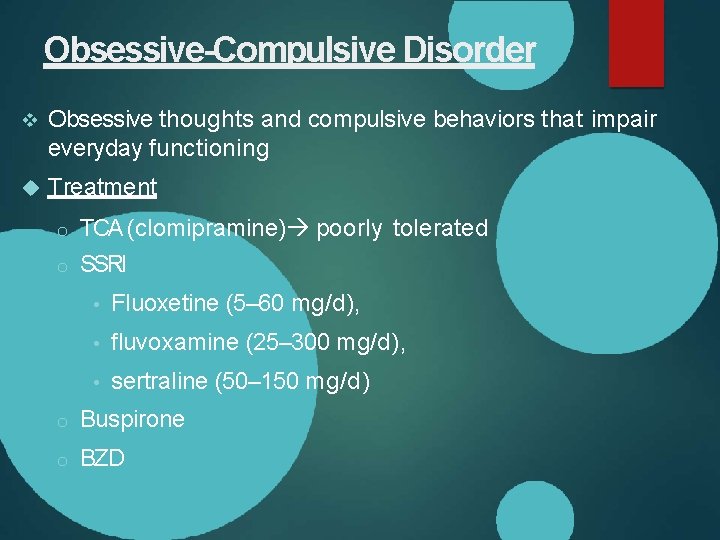
Obsessive-Compulsive Disorder Obsessive thoughts and compulsive behaviors that impair everyday functioning Treatment o TCA (clomipramine) poorly tolerated o SSRI • Fluoxetine (5– 60 mg/d), • fluvoxamine (25– 300 mg/d), • sertraline (50– 150 mg/d) o Buspirone o BZD
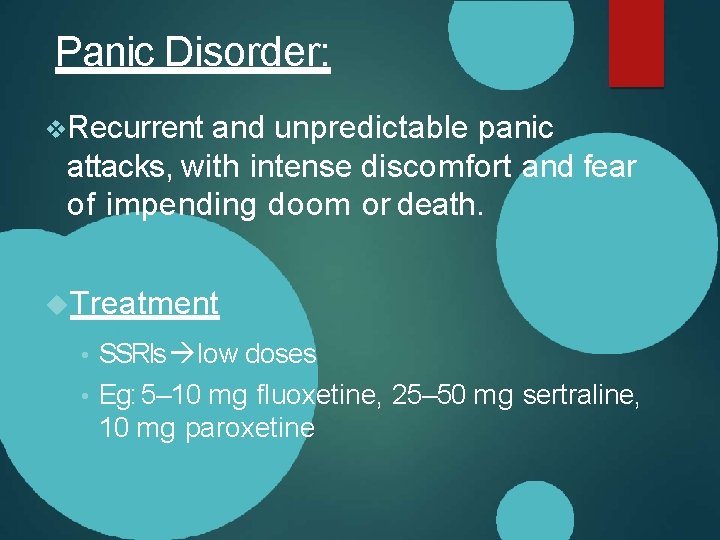
Panic Disorder: Recurrent and unpredictable panic attacks, with intense discomfort and fear of impending doom or death. Treatment SSRIs low doses • Eg: 5– 10 mg fluoxetine, 25– 50 mg sertraline, 10 mg paroxetine •
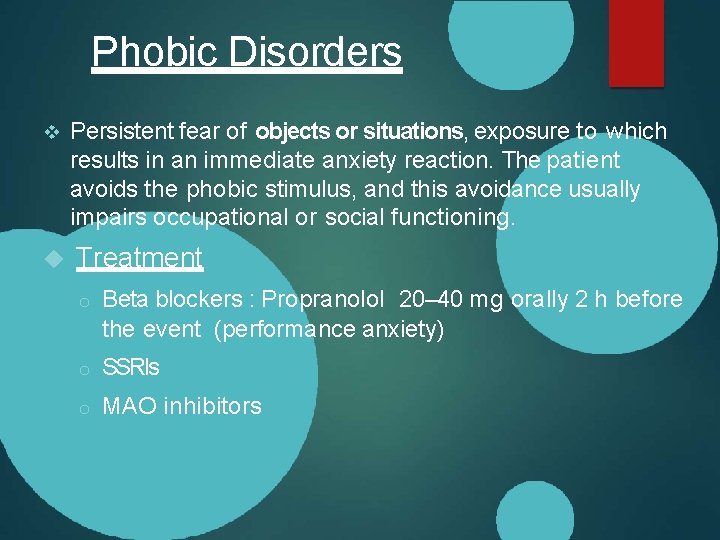
Phobic Disorders Persistent fear of objects or situations, exposure to which results in an immediate anxiety reaction. The patient avoids the phobic stimulus, and this avoidance usually impairs occupational or social functioning. Treatment o Beta blockers : Propranolol 20– 40 mg orally 2 h before the event (performance anxiety) o SSRIs o MAO inhibitors
Stress Disorders Anxiety following exposure to extreme traumatic events. The reaction may occur shortly after the trauma (acute stress disorder) or be delayed and subject to recurrence (PTSD). In both syndromes, individuals experience associated symptoms of detachment and loss of emotional responsivity. Treatment o Benzodiazepines and supportive/expressive psychotherapy o SSRI o MAO inhibitors
Future prospects Cholecystokinin (CCK) antagonists Alpiderm: partial agonist on BZD receptor Corticotropin-releasing factor (CRF) antagonists Neuroactive steroids
THANK YOU