
Anti Cancer Drugs Dr Prabhakar Adake MD Associate
Anti Cancer Drugs Dr. Prabhakar Adake MD Associate Professor Department of Pharmacology Yenepoya Medical College MANGALORE
Introduction • • Also called as anti neoplastic drugs or cytotoxic agents. Cancer affects 1 in 3 people and is responsible for 25% of all deaths Cancer is an unregulated proliferation of cells due to loss of normal controls, resulting in unregulated growth, local tissue invasion, and often, metastasis. Cancer can develop in any tissue or organ at any age. Many cancers are curable if detected at an early stage, and long-term remission is often possible in later stages. Causes of Cancer: 1. 30 % is due to smoking: lung, mouth, pharynx, larynx, esophagus, urinary bladder, pancreas, and kidney cancers. 2. Lifestyle – diet, alcohol consumption, exposure to sunlight, etc. 3. At least 15% are related to viruses, e. g. cervical cancer caused by human papillomavirus.
Anti Cancer Drugs Either kill the cancer cells or modify their growth. Cancer chemotherapy is a recent development. Combined modality of treatment. Leukemias, Ewings sarcoma>> Breast cancer >> Ca. Colon
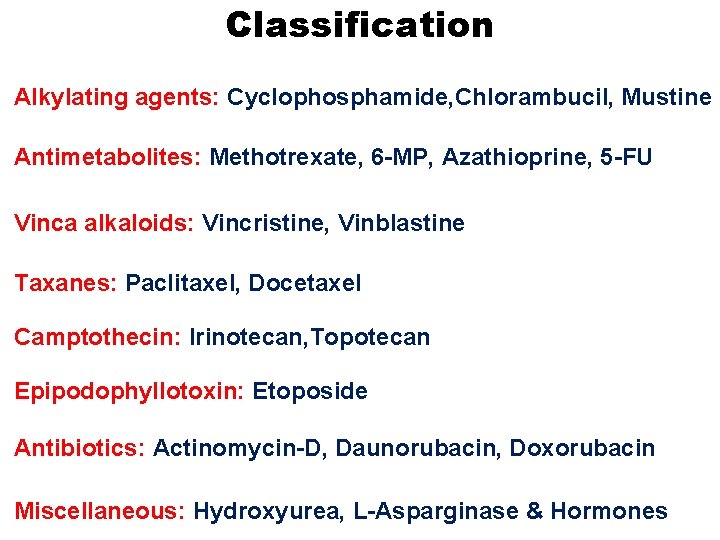
Classification Alkylating agents: Cyclophosphamide, Chlorambucil, Mustine Antimetabolites: Methotrexate, 6 -MP, Azathioprine, 5 -FU Vinca alkaloids: Vincristine, Vinblastine Taxanes: Paclitaxel, Docetaxel Camptothecin: Irinotecan, Topotecan Epipodophyllotoxin: Etoposide Antibiotics: Actinomycin-D, Daunorubacin, Doxorubacin Miscellaneous: Hydroxyurea, L-Asparginase & Hormones
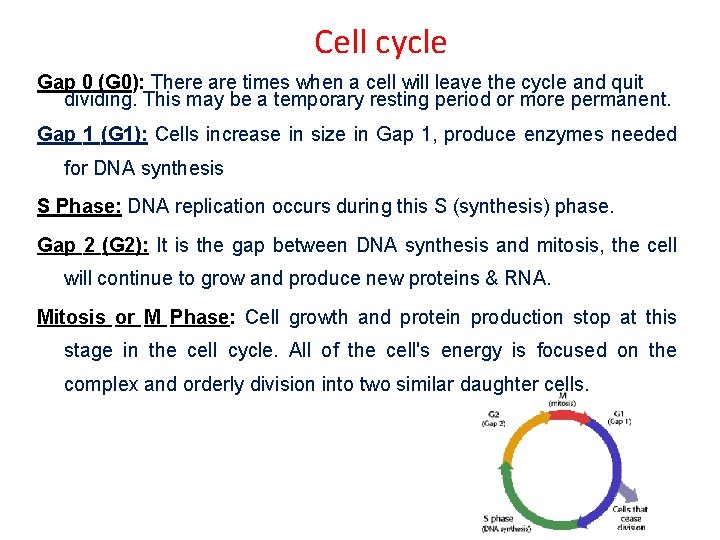
Cell cycle Gap 0 (G 0): There are times when a cell will leave the cycle and quit dividing. This may be a temporary resting period or more permanent. Gap 1 (G 1): Cells increase in size in Gap 1, produce enzymes needed for DNA synthesis S Phase: DNA replication occurs during this S (synthesis) phase. Gap 2 (G 2): It is the gap between DNA synthesis and mitosis, the cell will continue to grow and produce new proteins & RNA. Mitosis or M Phase: Cell growth and protein production stop at this stage in the cell cycle. All of the cell's energy is focused on the complex and orderly division into two similar daughter cells.

Cancer chemotherapeutic agents • Cell-cycle non specific agents(CCNS): are cytotoxic in any phase of the cycle even on G 0 phase and so are more effective against large slowly growing tumors. Ex: Bleomycin. • Cell-cycle specific (CCS): are cytotoxic on all phases but not on cells out of the cycle(at G 0 ) and so are more effective against rapidly growing tumors. Work better in combination than alone Ex: Mitomycin, doxorubicin, …. etc.
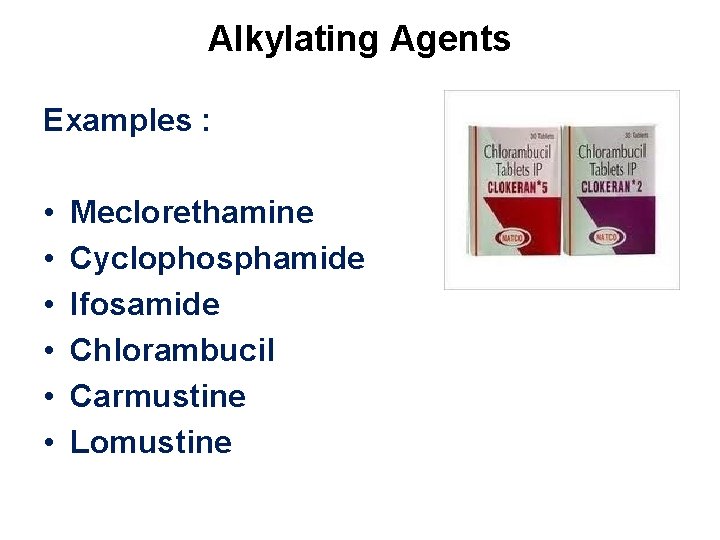
Alkylating Agents Examples : • • • Meclorethamine Cyclophosphamide Ifosamide Chlorambucil Carmustine Lomustine
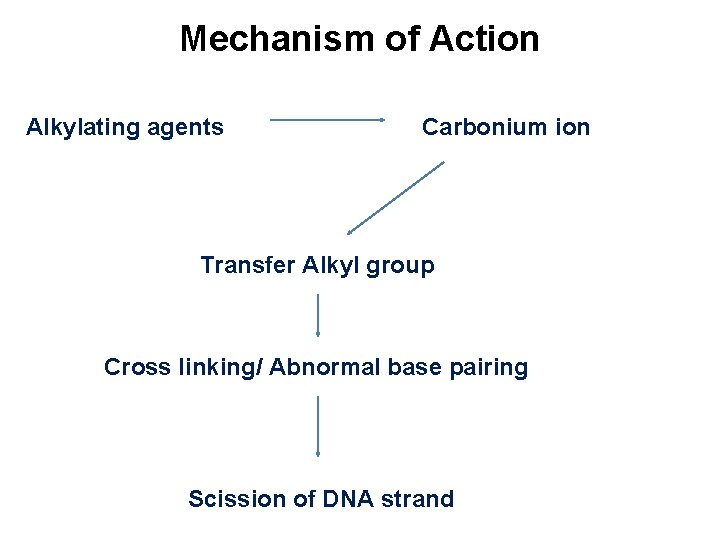
Mechanism of Action Alkylating agents Carbonium ion Transfer Alkyl group Cross linking/ Abnormal base pairing Scission of DNA strand
Uses Leukemias, Lymphomas, Bronchogenic carcinoma, Ca. Breast, Osteogenic carcinoma, Testicular cancer & Immunosupressant Adverse Effects Haemorrhagic cystitis, Alopecia, Emesis, Hyperuricaemia, Pulmonary fibrosis, Bone marrow depression.
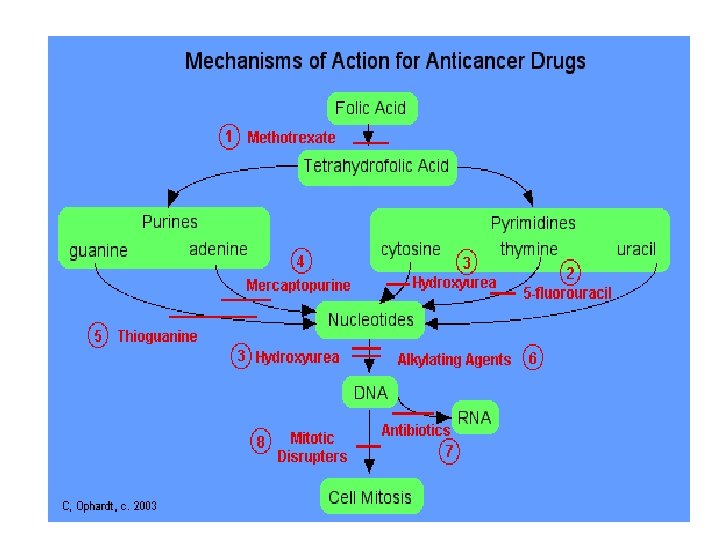
Antimetabolites Folate antagonist Methotrexate(Mtx) Purine antagonist Mercaptopurine 6 thioguanine Azathioprine Fludarabine Pyrimidine antagonist Flurouracil Cytarabine
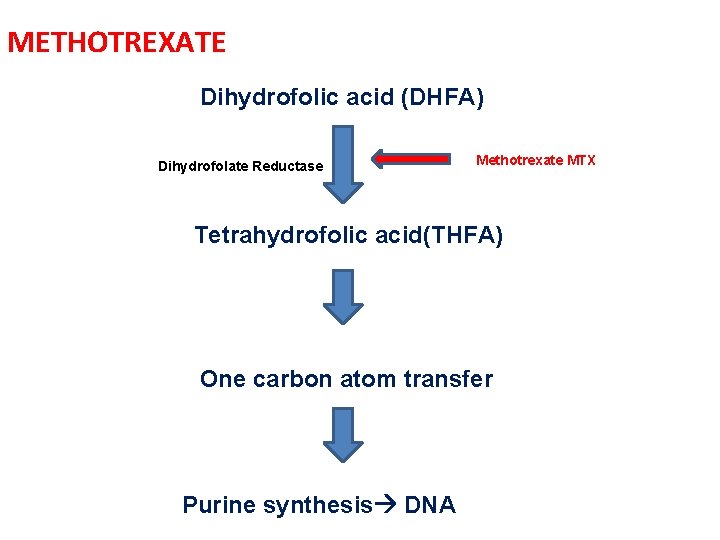
METHOTREXATE Dihydrofolic acid (DHFA) Dihydrofolate Reductase Methotrexate MTX Tetrahydrofolic acid(THFA) One carbon atom transfer Purine synthesis DNA
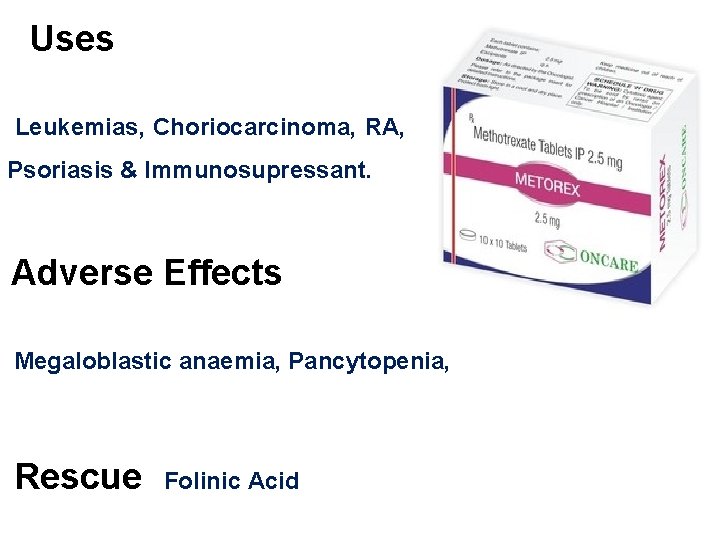
Uses Leukemias, Choriocarcinoma, RA, Psoriasis & Immunosupressant. Adverse Effects Megaloblastic anaemia, Pancytopenia, Rescue Folinic Acid
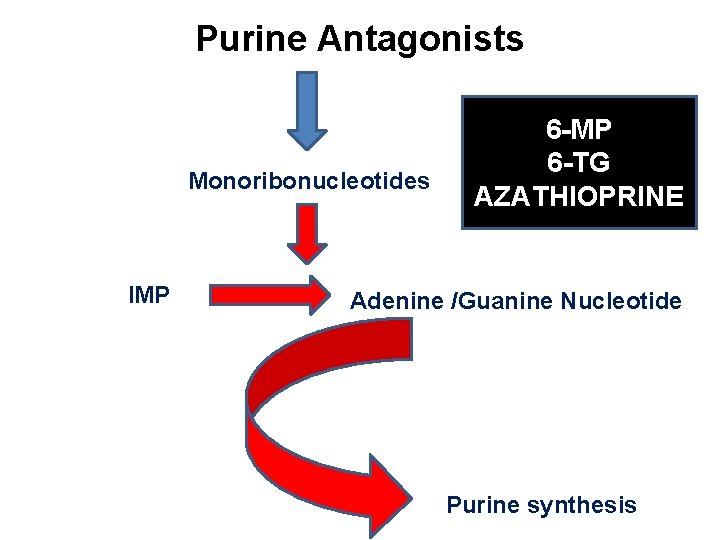
Purine Antagonists Monoribonucleotides IMP 6 -TG AZATHIOPRINE Adenine /Guanine Nucleotide Purine synthesis
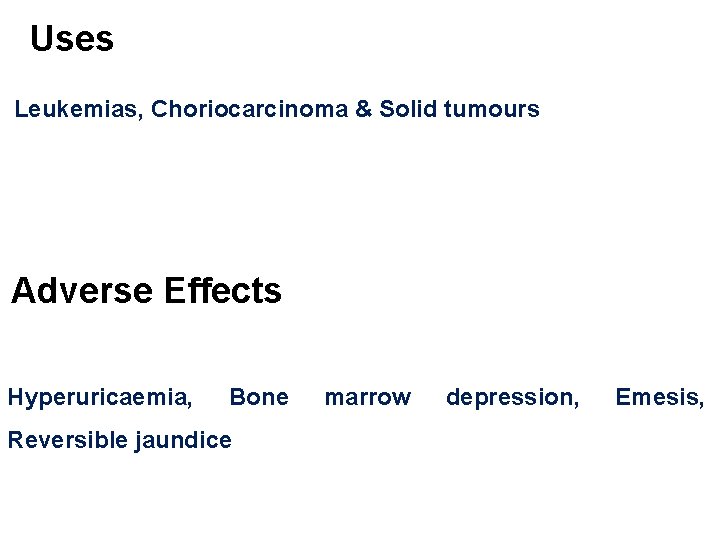
Uses Leukemias, Choriocarcinoma & Solid tumours Adverse Effects Hyperuricaemia, Bone Reversible jaundice marrow depression, Emesis,
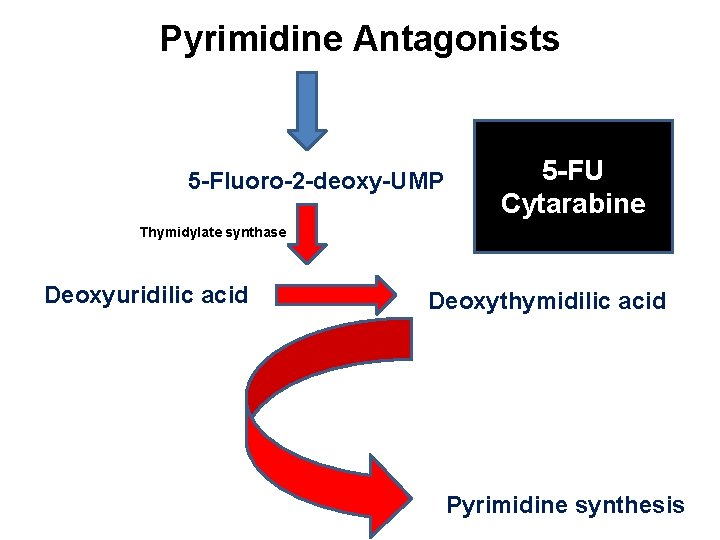
Pyrimidine Antagonists 5 -Fluoro-2 -deoxy-UMP 5 -FU Cytarabine Thymidylate synthase Deoxyuridilic acid Deoxythymidilic acid Pyrimidine synthesis
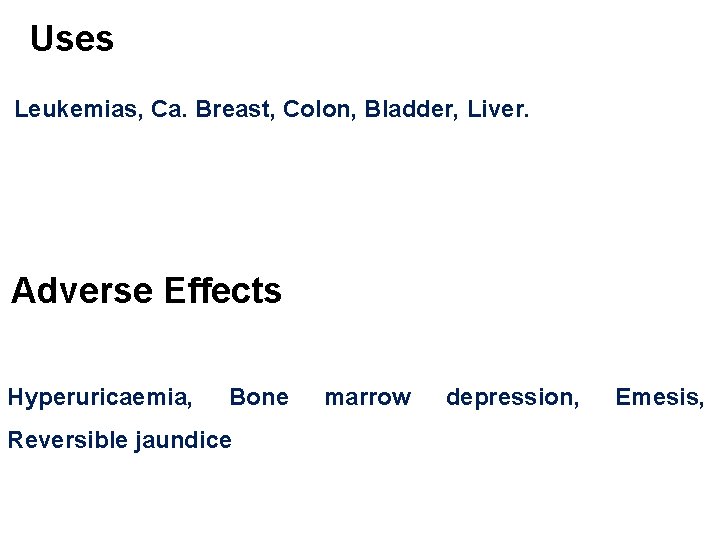
Uses Leukemias, Ca. Breast, Colon, Bladder, Liver. Adverse Effects Hyperuricaemia, Bone Reversible jaundice marrow depression, Emesis,
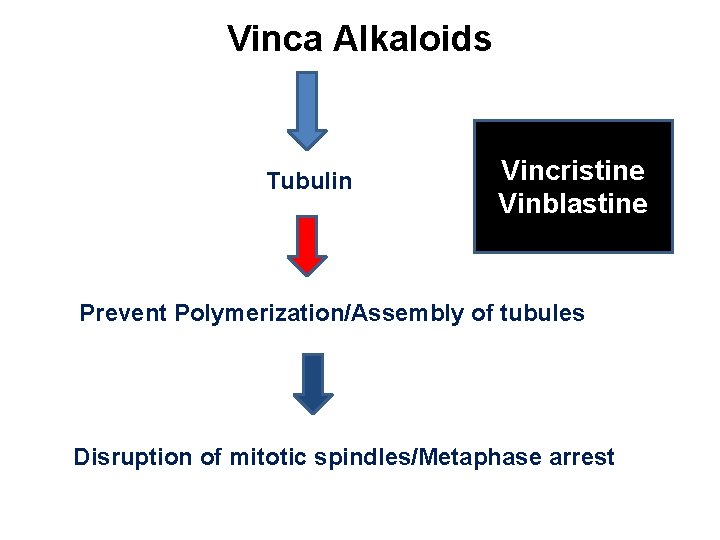
Vinca Alkaloids Tubulin Vincristine Vinblastine Prevent Polymerization/Assembly of tubules Disruption of mitotic spindles/Metaphase arrest
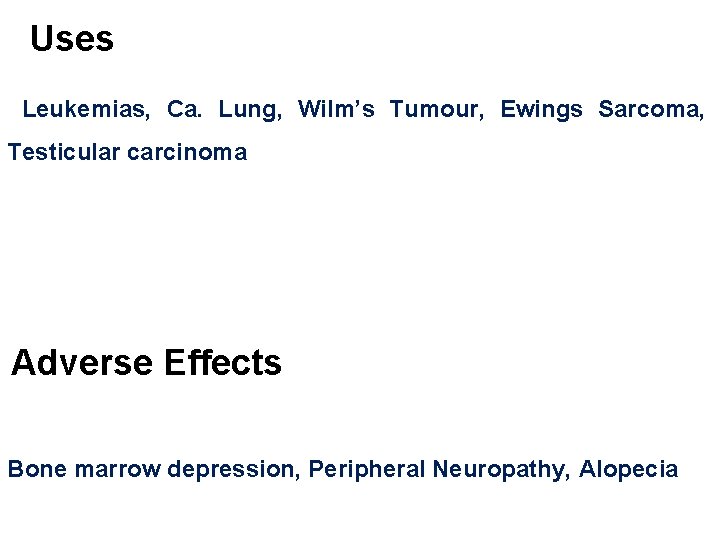
Uses Leukemias, Ca. Lung, Wilm’s Tumour, Ewings Sarcoma, Testicular carcinoma Adverse Effects Bone marrow depression, Peripheral Neuropathy, Alopecia
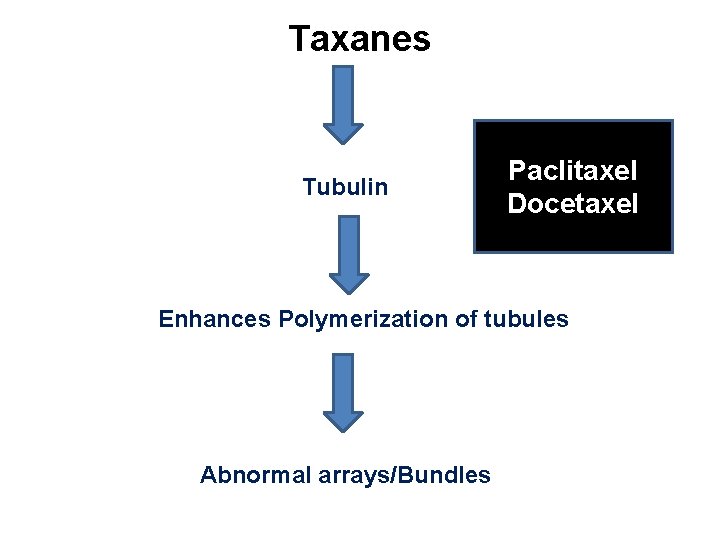
Taxanes Tubulin Paclitaxel Docetaxel Enhances Polymerization of tubules Abnormal arrays/Bundles
Uses Metastatic ovarian & breast cancer; Advanced head n neck, small cell cancer of lung, Prostate & esophageal cancer. Adverse Effects Bone marrow depression, Peripheral Neuropathy (stocking and glove), chest pain, artharlgia, mucositis.
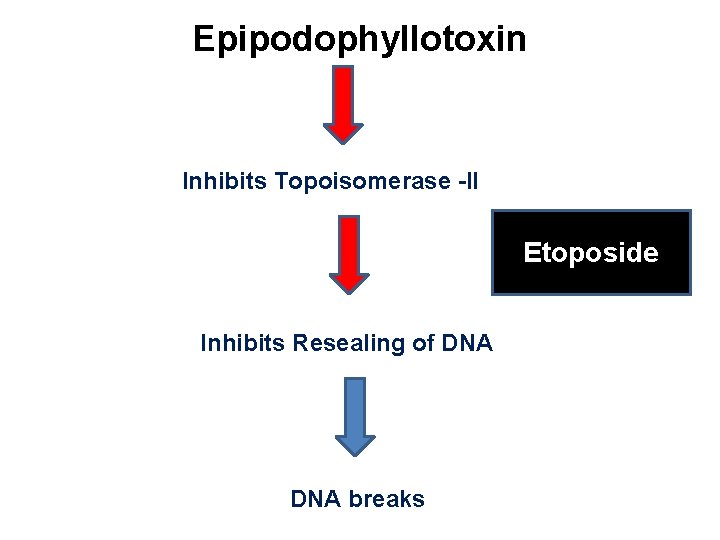
Epipodophyllotoxin Inhibits Topoisomerase -II Etoposide Inhibits Resealing of DNA breaks
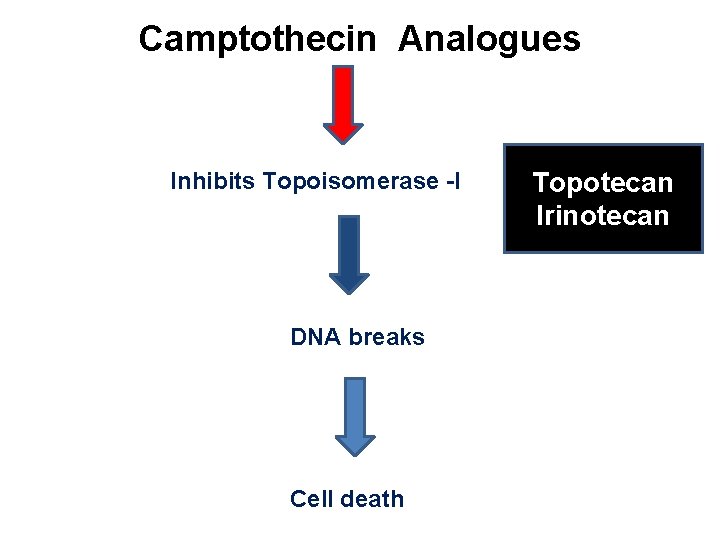
Camptothecin Analogues Inhibits Topoisomerase -I DNA breaks Cell death Topotecan Irinotecan

Uses Metastatic Colorectal cancer; Advanced lung/cervical/ ovarian cancers. Adverse Effects Bone marrow depression, bodyache, weakness.
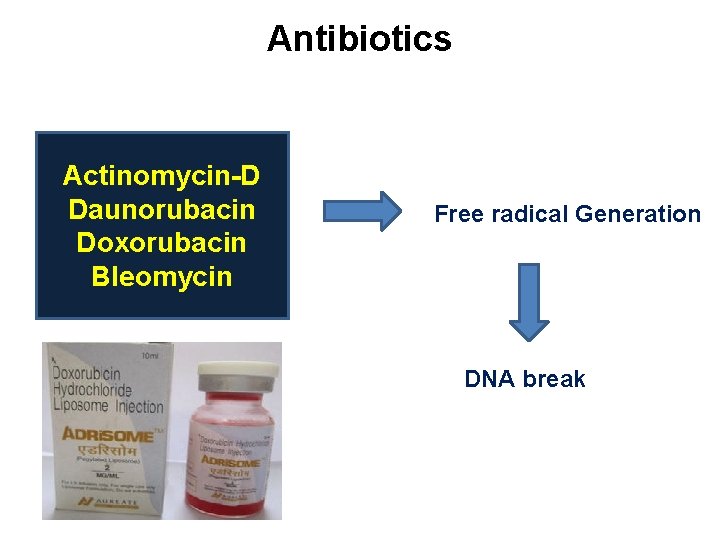
Antibiotics Actinomycin-D Daunorubacin Doxorubacin Bleomycin Free radical Generation DNA break
Uses Choriocarcinoma, Wilm’s Tumour, Rabdomyosarcoma, Ca. Breast, Leukemias. Adverse Effects Cardiotoxicity, Myelosupression, Pulmonary fibrosis.
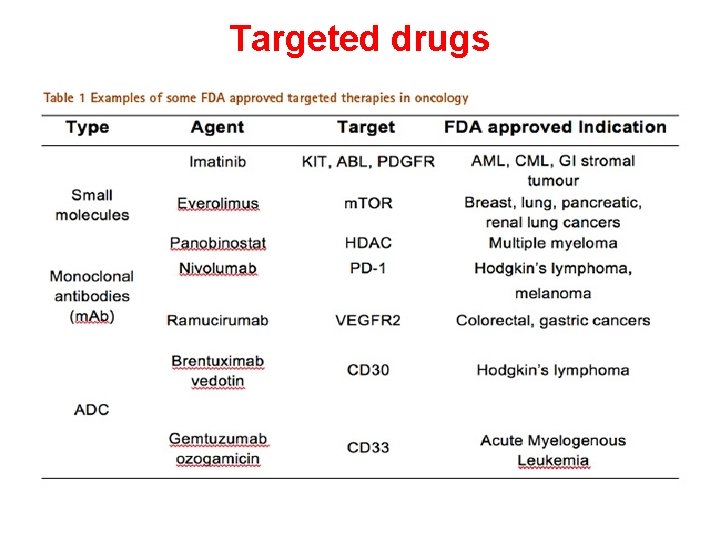
Targeted drugs
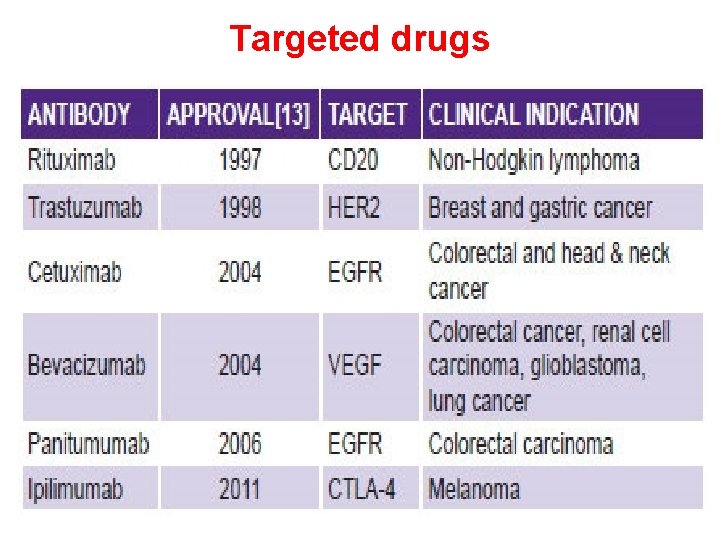
Targeted drugs
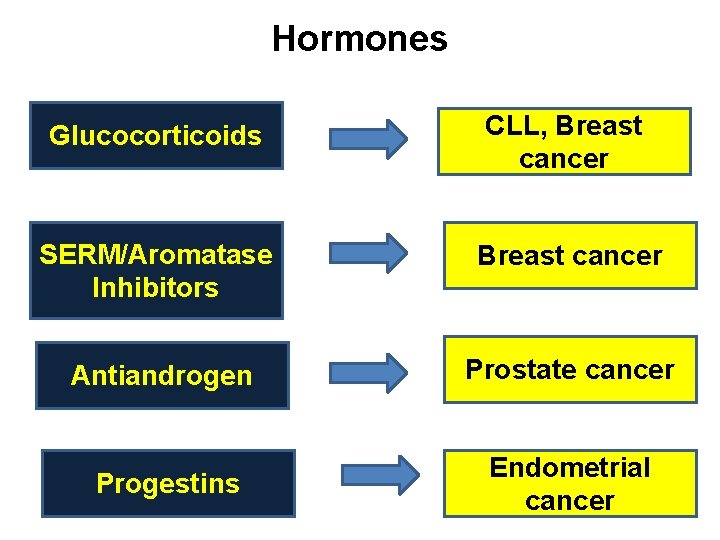
Hormones Glucocorticoids CLL, Breast cancer SERM/Aromatase Inhibitors Breast cancer Antiandrogen Prostate cancer Progestins Endometrial cancer
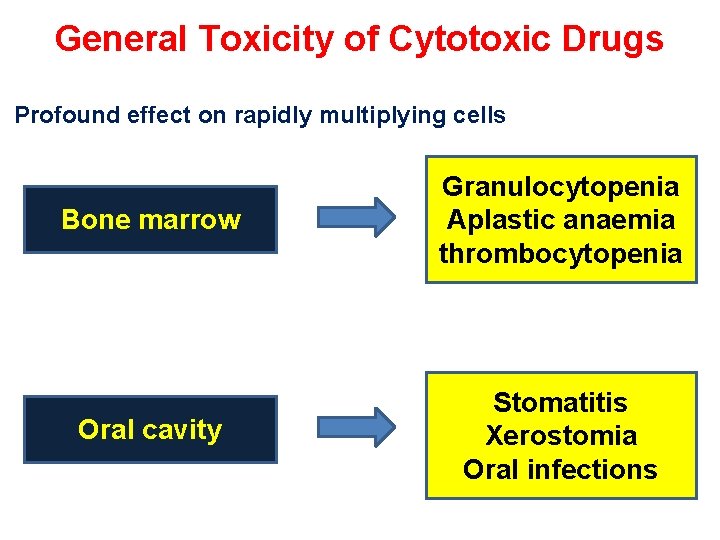
General Toxicity of Cytotoxic Drugs Profound effect on rapidly multiplying cells Bone marrow Granulocytopenia Aplastic anaemia thrombocytopenia Oral cavity Stomatitis Xerostomia Oral infections
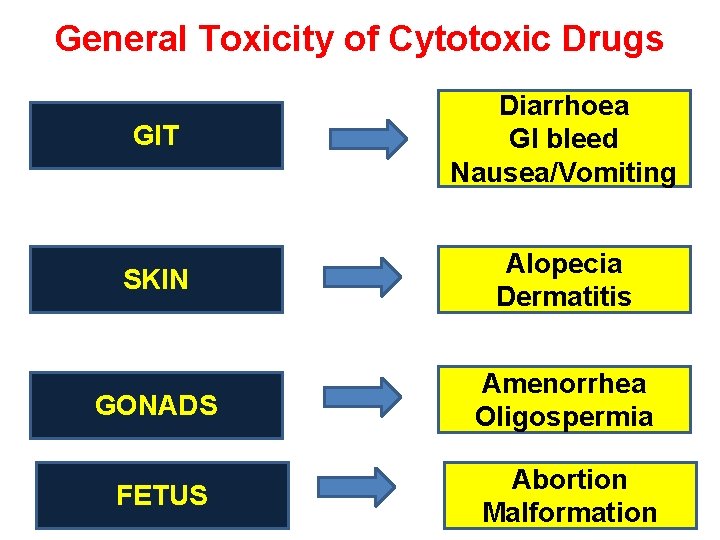
General Toxicity of Cytotoxic Drugs Gl. T Diarrhoea GI bleed Nausea/Vomiting SKIN Alopecia Dermatitis GONADS Amenorrhea Oligospermia FETUS Abortion Malformation

THANK YOU
- Slides: 35