
Anthropology by Data Science The EPIC Project with
Anthropology by Data Science: The EPIC Project with Indicia Consulting as an Exploratory Case Study By Stephen Paff
Introduction Thesis: Anthropologists should, when applicable, conduct anthropology by science (that is, integrate data science techniques into ethnographic and other anthropological work) 1. I will use Nick Seaver’s concept of bastard methodology to ground this theoretically. 2. My practicum with Indicia Consulting is an exploratory case study in such integrative work. Indicia Consulting “is a mission-driven social enterprise” that seeks to “increase in sustainability and subsequent improvement in the natural environment through engaging behavior through proven social science insights and methods” (EPIC 2018). Outline: 1. Introduce key concepts 2. Discuss Nick Seaver’s concept of bastard methodology 3. Summarize our project 4. Analyze strengths and weaknesses of our project 5. Conclusion
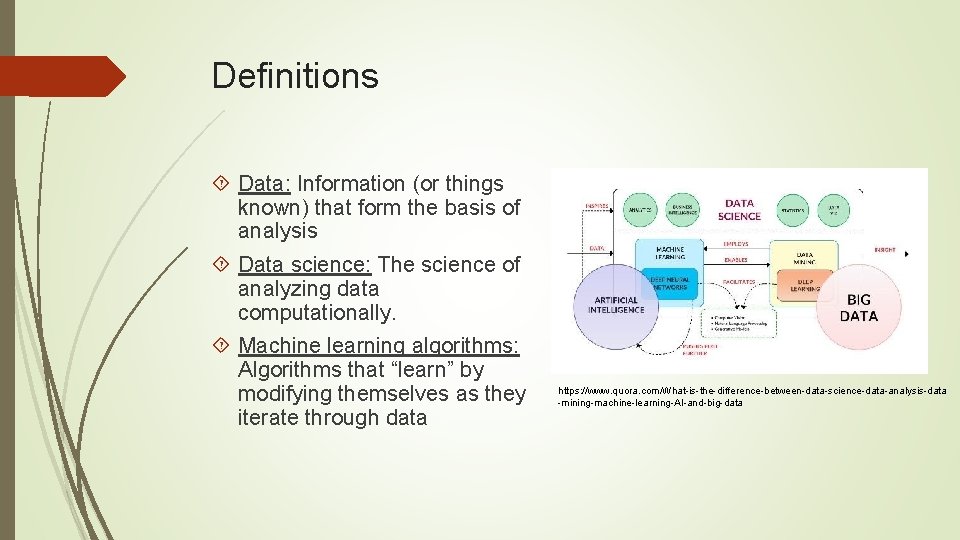
Definitions Data: Information (or things known) that form the basis of analysis Data science: The science of analyzing data computationally. Machine learning algorithms: Algorithms that “learn” by modifying themselves as they iterate through data https: //www. quora. com/What-is-the-difference-between-data-science-data-analysis-data -mining-machine-learning-AI-and-big-data
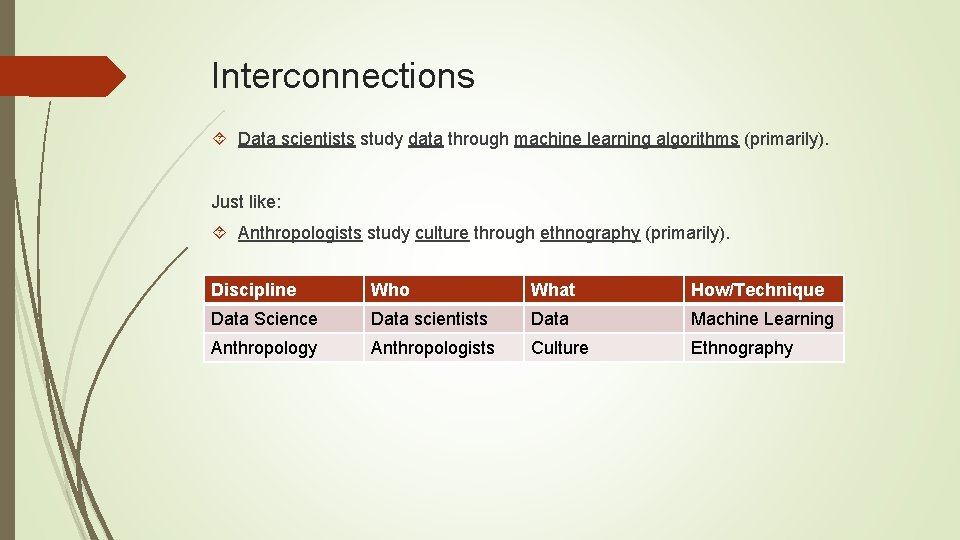
Interconnections Data scientists study data through machine learning algorithms (primarily). Just like: Anthropologists study culture through ethnography (primarily). Discipline Who What How/Technique Data Science Data scientists Data Machine Learning Anthropology Anthropologists Culture Ethnography

Shift in Relationship in Computer Science Traditional Programming Requirements Data Human Program Computer Output Input Machine Learning Requirements Data Machine Program Learning (parameters) Computer Output Input Human Slide taken from lecture by Dr. Deepak Venugopal
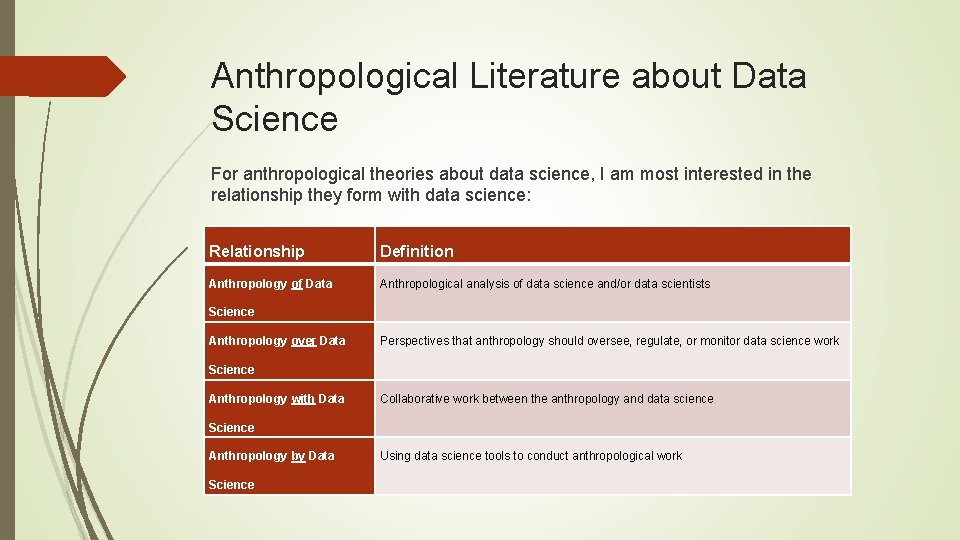
Anthropological Literature about Data Science For anthropological theories about data science, I am most interested in the relationship they form with data science: Relationship Definition Anthropology of Data Anthropological analysis of data science and/or data scientists Science Anthropology over Data Perspectives that anthropology should oversee, regulate, or monitor data science work Science Anthropology with Data Collaborative work between the anthropology and data science Science Anthropology by Data Science Using data science tools to conduct anthropological work
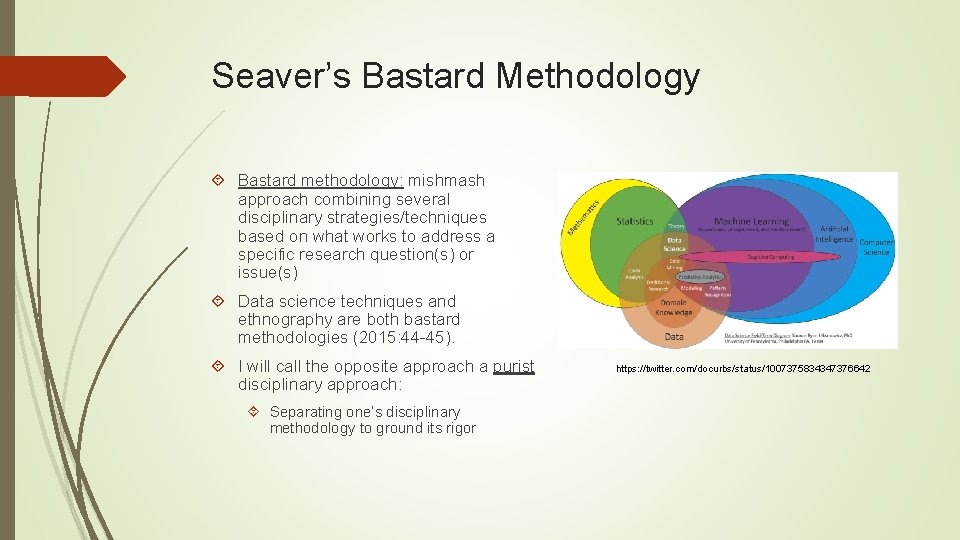
Seaver’s Bastard Methodology Bastard methodology: mishmash approach combining several disciplinary strategies/techniques based on what works to address a specific research question(s) or issue(s) Data science techniques and ethnography are both bastard methodologies (2015: 44 -45). I will call the opposite approach a purist disciplinary approach: Separating one’s disciplinary methodology to ground its rigor https: //twitter. com/docurbs/status/1007375834347376642
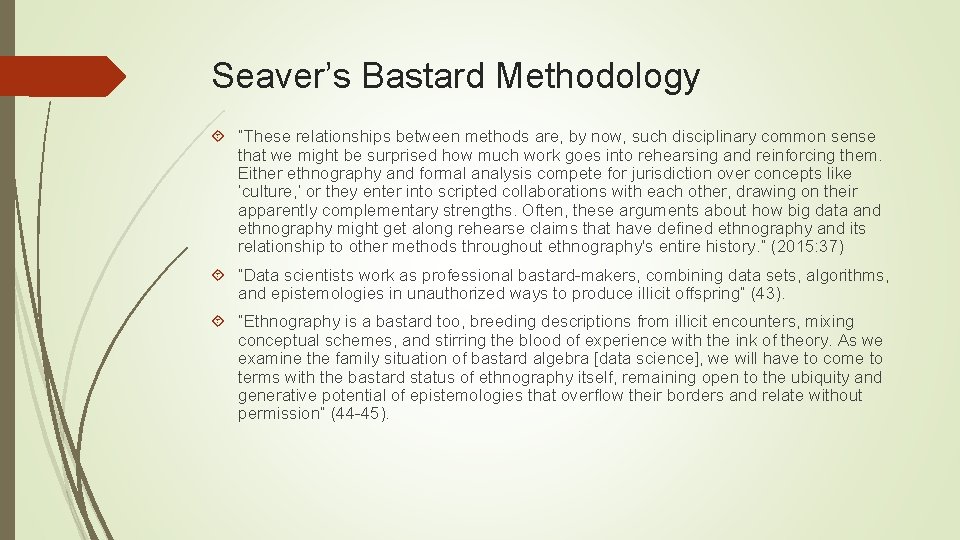
Seaver’s Bastard Methodology “These relationships between methods are, by now, such disciplinary common sense that we might be surprised how much work goes into rehearsing and reinforcing them. Either ethnography and formal analysis compete for jurisdiction over concepts like ‘culture, ’ or they enter into scripted collaborations with each other, drawing on their apparently complementary strengths. Often, these arguments about how big data and ethnography might get along rehearse claims that have defined ethnography and its relationship to other methods throughout ethnography's entire history. ” (2015: 37) “Data scientists work as professional bastard-makers, combining data sets, algorithms, and epistemologies in unauthorized ways to produce illicit offspring” (43). “Ethnography is a bastard too, breeding descriptions from illicit encounters, mixing conceptual schemes, and stirring the blood of experience with the ink of theory. As we examine the family situation of bastard algebra [data science], we will have to come to terms with the bastard status of ethnography itself, remaining open to the ubiquity and generative potential of epistemologies that overflow their borders and relate without permission” (44 -45).
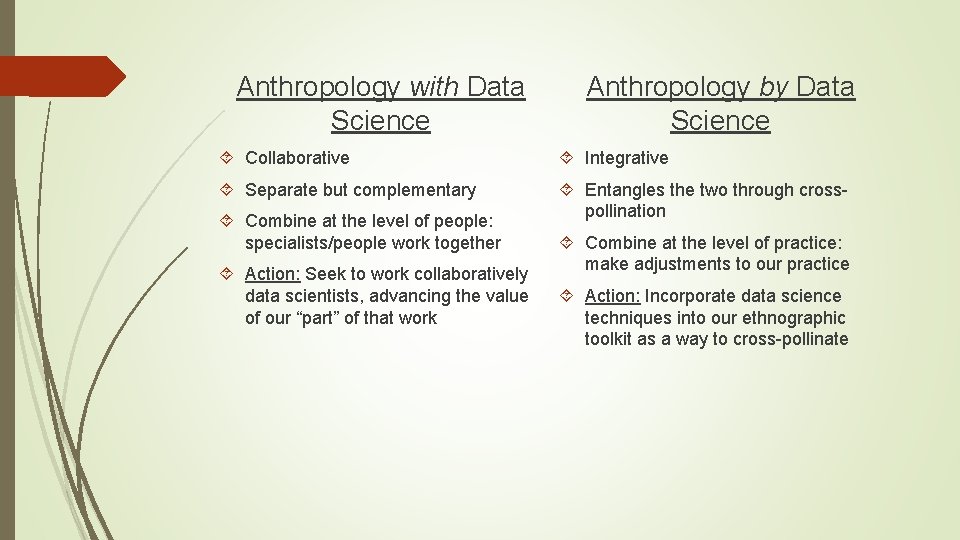
Anthropology with Data Science Anthropology by Data Science Collaborative Integrative Separate but complementary Entangles the two through crosspollination Combine at the level of people: specialists/people work together Action: Seek to work collaboratively data scientists, advancing the value of our “part” of that work Combine at the level of practice: make adjustments to our practice Action: Incorporate data science techniques into our ethnographic toolkit as a way to cross-pollinate
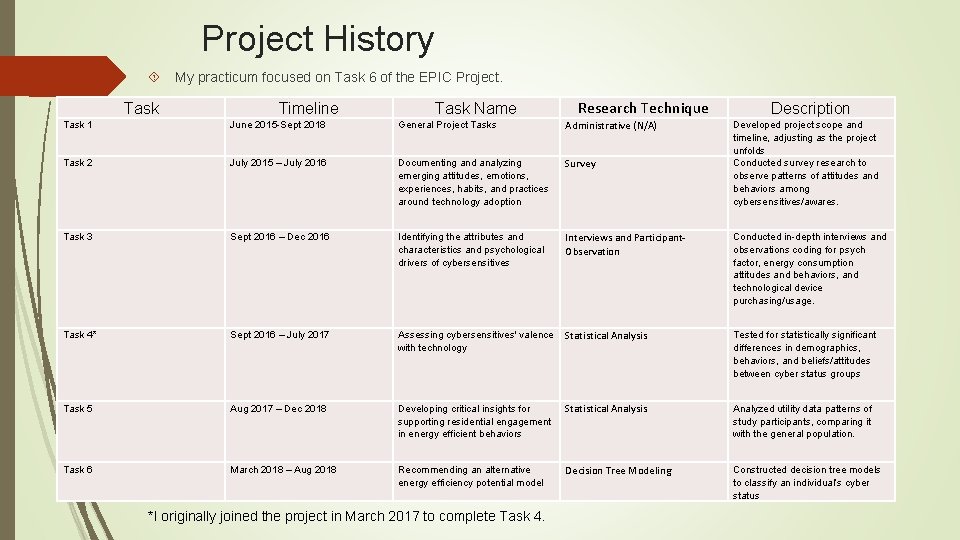
Project History My practicum focused on Task 6 of the EPIC Project. Task Timeline Task Name Research Technique Description Task 1 June 2015 -Sept 2018 General Project Tasks Administrative (N/A) Task 2 July 2015 – July 2016 Documenting and analyzing emerging attitudes, emotions, experiences, habits, and practices around technology adoption Survey Task 3 Sept 2016 – Dec 2016 Identifying the attributes and characteristics and psychological drivers of cybersensitives Interviews and Participant. Observation Conducted in-depth interviews and observations coding for psych factor, energy consumption attitudes and behaviors, and technological device purchasing/usage. Task 4* Sept 2016 – July 2017 Assessing cybersensitives' valence with technology Statistical Analysis Tested for statistically significant differences in demographics, behaviors, and beliefs/attitudes between cyber status groups Task 5 Aug 2017 – Dec 2018 Developing critical insights for supporting residential engagement in energy efficient behaviors Statistical Analysis Analyzed utility data patterns of study participants, comparing it with the general population. Task 6 March 2018 – Aug 2018 Recommending an alternative energy efficiency potential model Decision Tree Modeling Constructed decision tree models to classify an individual’s cyber status *I originally joined the project in March 2017 to complete Task 4. Developed project scope and timeline, adjusting as the project unfolds Conducted survey research to observe patterns of attitudes and behaviors among cybersensitives/awares.
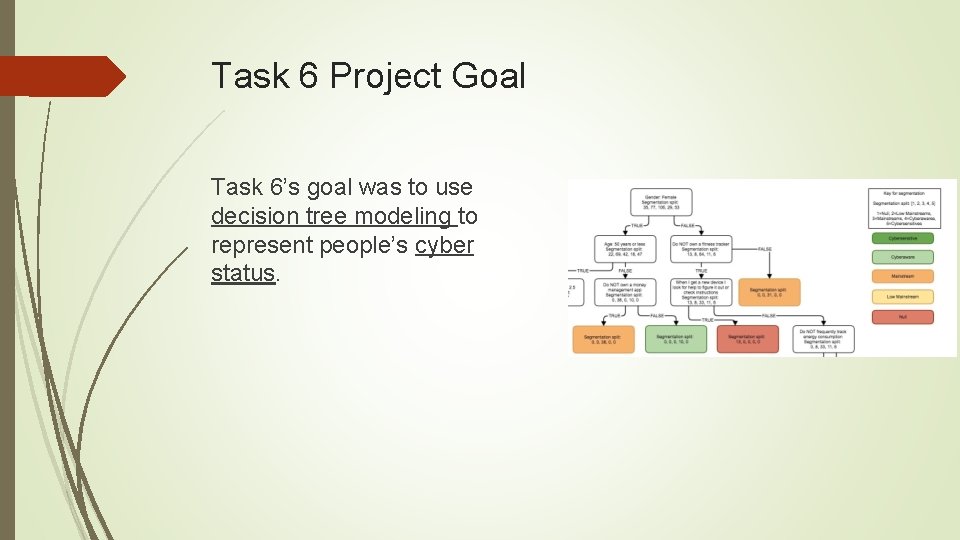
Task 6 Project Goal Task 6’s goal was to use decision tree modeling to represent people’s cyber status.
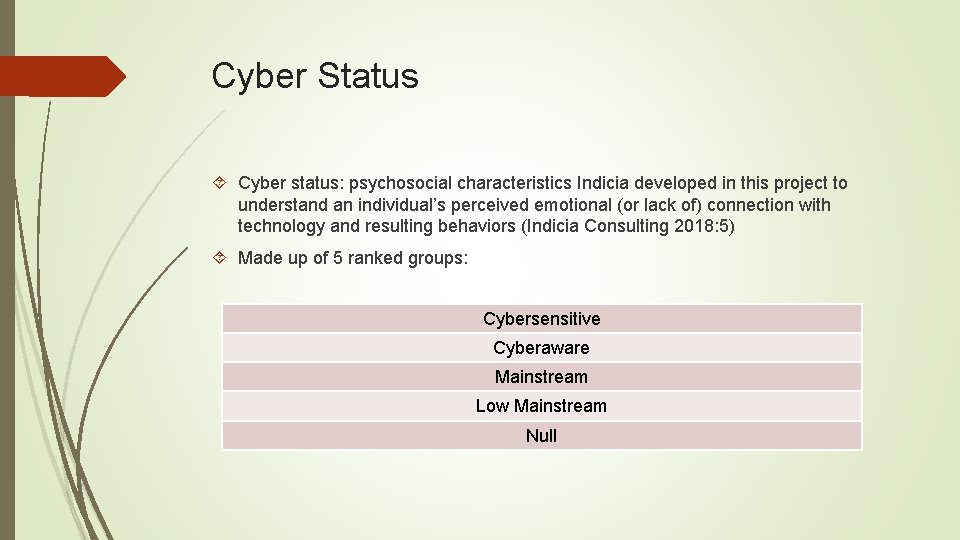
Cyber Status Cyber status: psychosocial characteristics Indicia developed in this project to understand an individual’s perceived emotional (or lack of) connection with technology and resulting behaviors (Indicia Consulting 2018: 5) Made up of 5 ranked groups: Cybersensitive Cyberaware Mainstream Low Mainstream Null
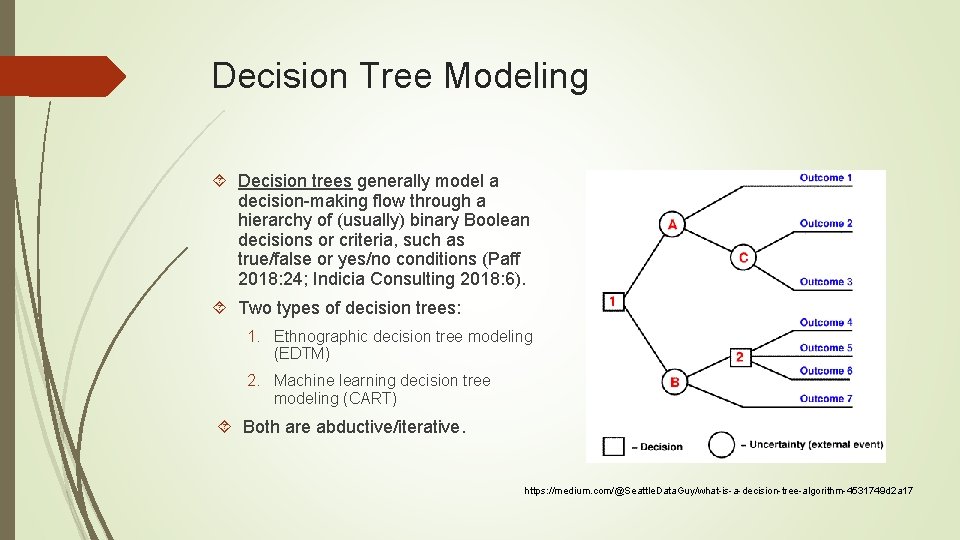
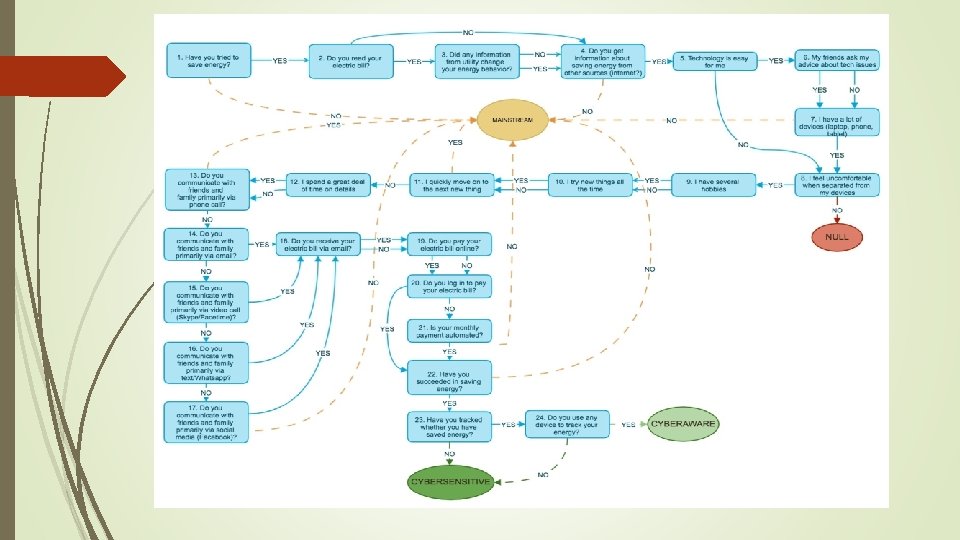
Decision Tree Modeling Decision trees generally model a decision-making flow through a hierarchy of (usually) binary Boolean decisions or criteria, such as true/false or yes/no conditions (Paff 2018: 24; Indicia Consulting 2018: 6). Two types of decision trees: 1. Ethnographic decision tree modeling (EDTM) 2. Machine learning decision tree modeling (CART) Both are abductive/iterative. https: //medium. com/@Seattle. Data. Guy/what-is-a-decision-tree-algorithm-4531749 d 2 a 17
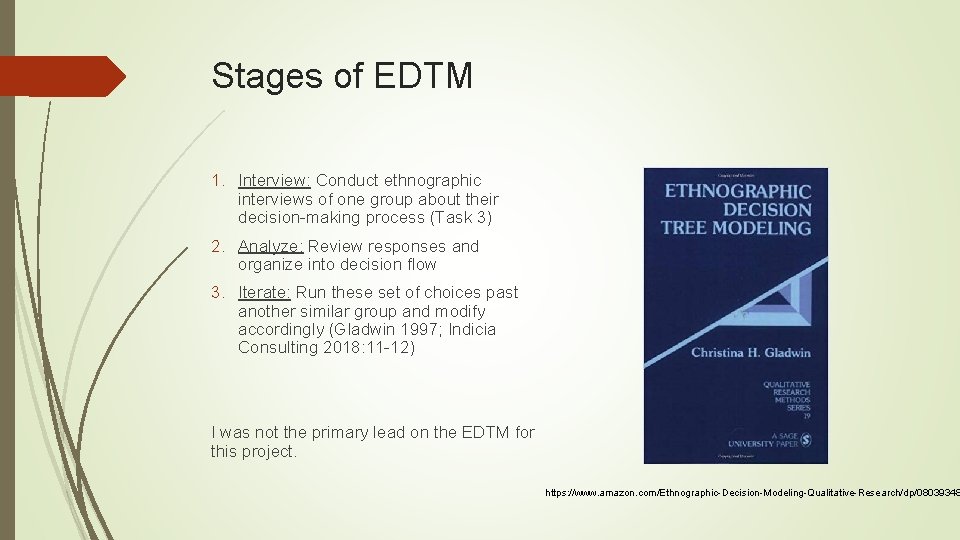
Stages of EDTM 1. Interview: Conduct ethnographic interviews of one group about their decision-making process (Task 3) 2. Analyze: Review responses and organize into decision flow 3. Iterate: Run these set of choices past another similar group and modify accordingly (Gladwin 1997; Indicia Consulting 2018: 11 -12) I was not the primary lead on the EDTM for this project. https: //www. amazon. com/Ethnographic-Decision-Modeling-Qualitative-Research/dp/08039348
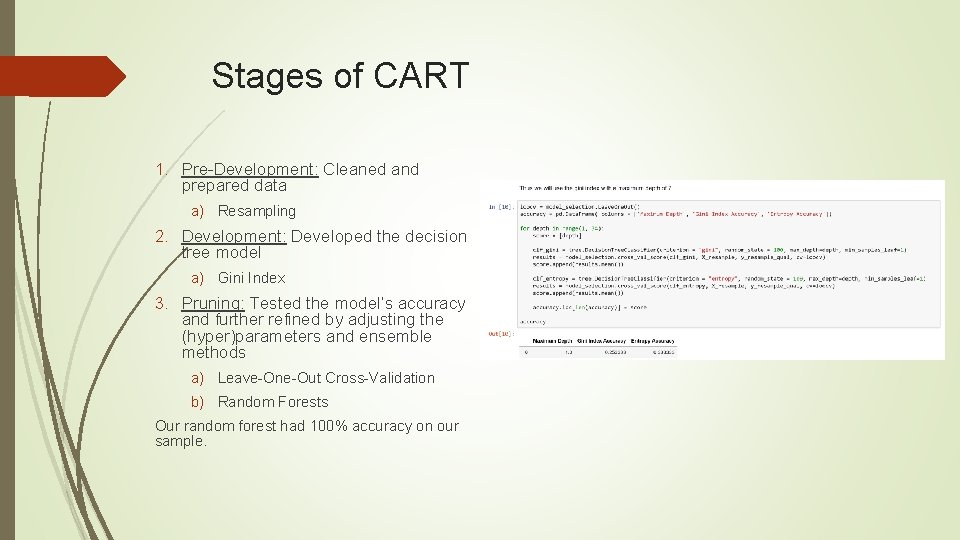
Stages of CART 1. Pre-Development: Cleaned and prepared data a) Resampling 2. Development: Developed the decision tree model a) Gini Index 3. Pruning: Tested the model’s accuracy and further refined by adjusting the (hyper)parameters and ensemble methods a) Leave-One-Out Cross-Validation b) Random Forests Our random forest had 100% accuracy on our sample.
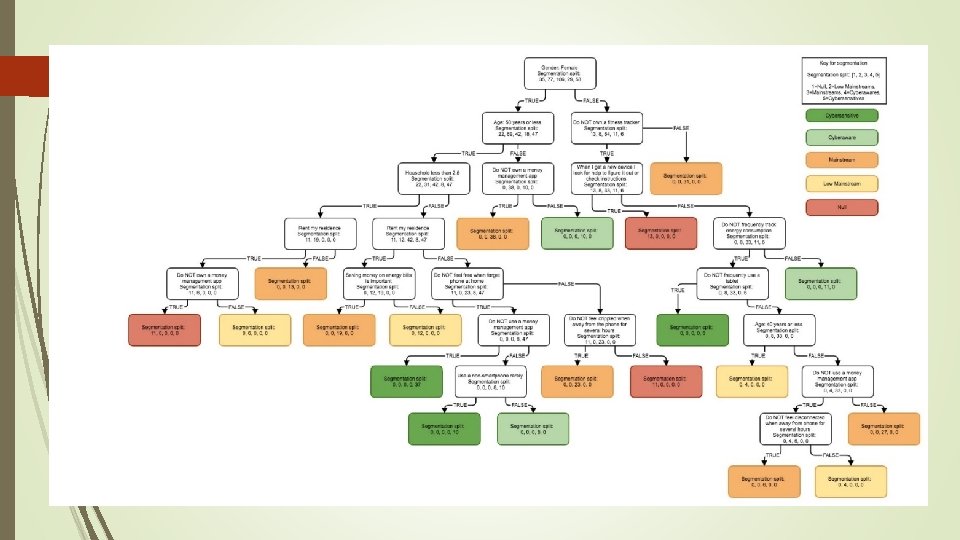
Project Strengths Our decision tree models had the following strengths: 1. Intelligible narratives for both humans and computers 2. Intermixable parts, allowing for unique connections 3. Translatable: a. Between disciplines b. Into actionable insights for policymakers http: //www. invistaperforms. org/strengths-key-higher-productivity-effectiveness-employee-engagement joy/
Project Weaknesses 1. Unable to test against an external dataset 2. Potential for overfitting (representing features specific to the group studied) 3. Models developed separately to be integrated in testing https: //www. potentash. com/2018/02/20/important-embrace-your-weaknesses-lifestyle/
Strategy to Address Weaknesses We obtained a second, external dataset of Prince Williams County for testing from Network Dynamics Simulation Science Laboratory at Virginia Tech University. Ultimate Goals: To create a general criteria to classify the cyber status of individuals in a whole population To segment market specific energysaving campaigns towards each group https: //www. marketingtechnews. net/news/2015/aug/21/big-data-and-personalisation-truly-comesage-next-steps-cmo/
Conclusion Nick Seaver’s concept of bastard methodology/disciplines helps ground a crosspollinating approach between the anthropology and data science, Within anthropology, this manifests as anthropology by data science work: using data science techniques in ethnographies when applicable. Decision tree modeling is helpful for this. The project is a exploration in anthropology by data science.
Work Cited EPIC. Indicia Consulting. 2018. <https: //www. epicpeople. org/businessdirectory/4430/indicia-consulting/>. Gladwin, Christina H. Ethnographic Decision Tree Modeling. Newbury, CA: Sage, 1997. Indicia Consulting. "Engaging Cybersensitives and Cyberawares in Energy Efficiency Part 1. " Epic Project Task 6. 2018. Paff, Stephen. Anthropology by Data Science: The EPIC Project with Indicia Consulting as an Exploratory Case Study. Practicum Report. Memphis: University of Memphis, 2018. Seaver, Nick. "Bastard Algebra. " Boellstorff, Tom and Bill Maurer. Data, Now Bigger and Better. Chicago: Prickly Paradigm Press, 2015. 27 -46.
- Slides: 22