
Anthropology A holistic study of what it means
- Slides: 6
Anthropology A holistic study of what it means to be human
Subfields of Anthropology • Four basic fields of Anthropology: • • Archaeology Linguistics Physical Cultural
Characteristics of Research • Holism • Ground-up research • Descriptive vs. experimental vs. predictive • Seeks to be in the field • An insider’s perspective • Attention to contexts • Comparative • Ethical representation: of those we study and of the research process, including: • Disclosure of researcher’s position • Showing research as a process • Showing complexity of research process
Examples of Stuff and Style: • • • Language Religion Clothing Food • • Tragedies Homeland Heritage Phenotype/race Dance Historical events Just about anything
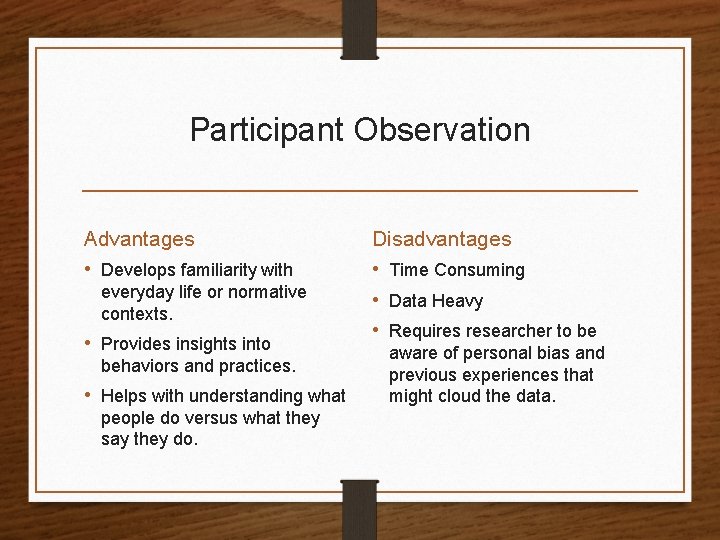
Participant Observation Advantages • Develops familiarity with everyday life or normative contexts. • Provides insights into behaviors and practices. • Helps with understanding what people do versus what they say they do. Disadvantages • Time Consuming • Data Heavy • Requires researcher to be aware of personal bias and previous experiences that might cloud the data.
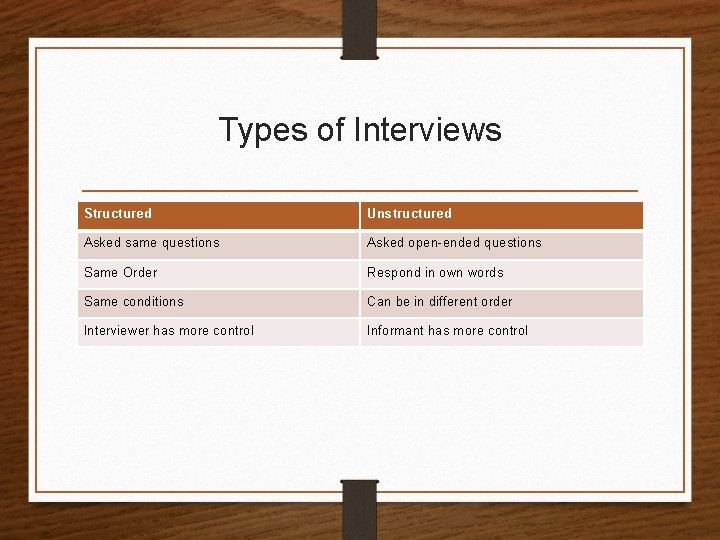
Types of Interviews Structured Unstructured Asked same questions Asked open-ended questions Same Order Respond in own words Same conditions Can be in different order Interviewer has more control Informant has more control