
Anthrax Zoonotic disease caused by Bacillus anthracis Described


Anthrax • Zoonotic disease caused by Bacillus anthracis • Described in biblical times • First animal vaccine developed by Louis Pasteur in 1881 • Used for bioterrorism in 2001
Bacillus anthracis • Dry weather induces sporulation and Spores may remain viable in soil for years • Toxins responsible for tissue damage and edema

Anthrax Epidemiology • Reservoir Infected animals, soil • Transmission Direct contact (cutaneous) Ingestion (gastrointestinal) Inhalation • Communicability Not communicable (inhalation) very rare (cutaneous)
Anthrax Epidemiology Persons at Risk • Agricultural exposure to animals (rare) • Laboratorians exposed to B. anthracis spores (rare) • Processors of wool, hair, hides, bones or other animal products (extremely rare) • Biological terrorism
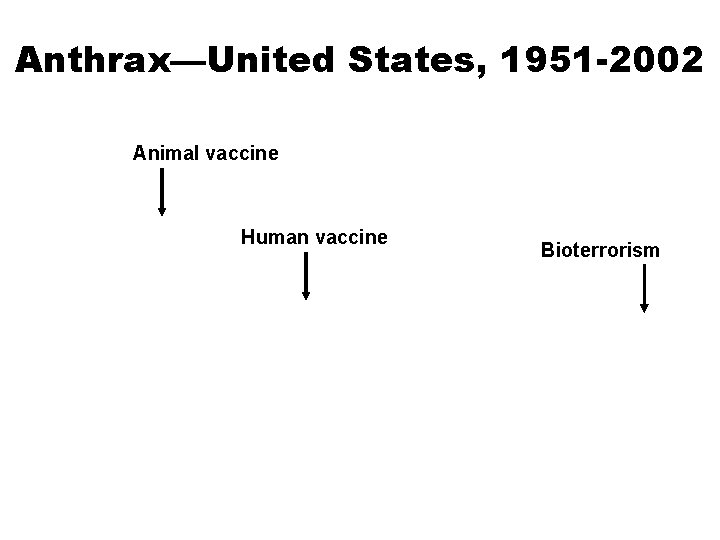
Anthrax—United States, 1951 -2002 Animal vaccine Human vaccine Bioterrorism
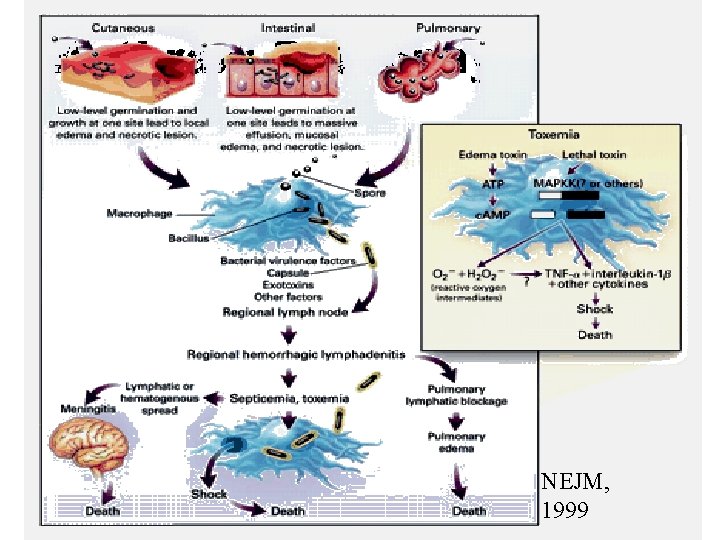
Anthrax: Pathophysiology NEJM, 1999
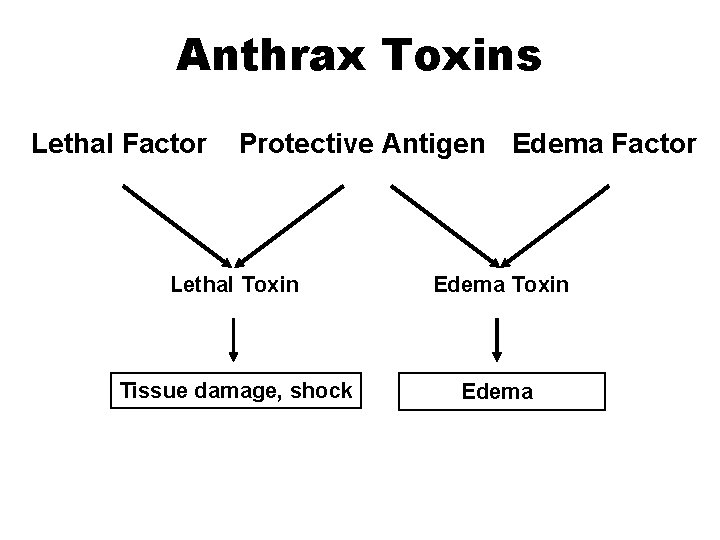
Anthrax Toxins Lethal Factor Protective Antigen Edema Factor Lethal Toxin Edema Toxin Tissue damage, shock Edema

Anthrax: Clinical Features • Inhalational: “Woolsorter’s disease” –high mortality • Gastrointestinal: meat ingestion –mortality 100% • Cutaneous(most common in natural Exposure situation) –low mortality

Cutaneous Anthrax Pathogenesis • Spores enters through broken skin or mucous membranes • Germinate in macrophages, replicate in lymph nodes and intracellular space • Bacteria produce antiphagocytic capsule • Production of toxins cause tissue destruction and edema

Cutaneous Anthrax • • • Incubation period 1 -12 days • • Painful LAN may last for weeks Head &neck&upper limb Pruritic Papule(usually painless), then vesicle, then necrotic ulcer (eschar) with black center Case-fatality: –without antibiotics – 5%-20% –with antibiotics – <1%
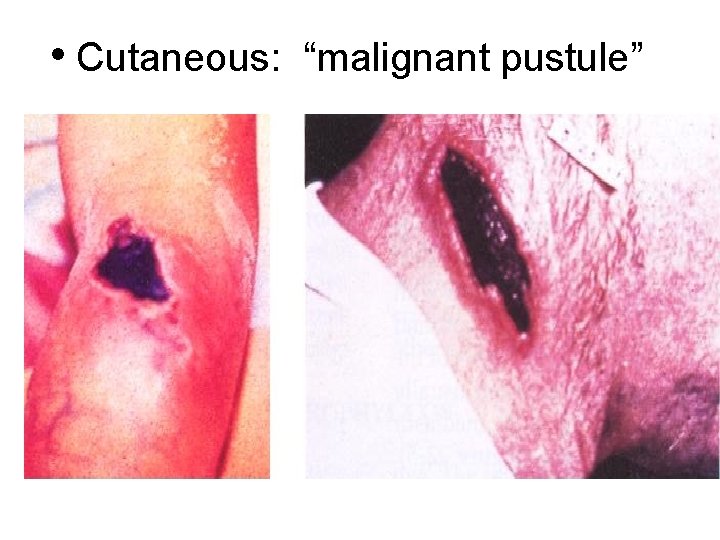
• Cutaneous: “malignant pustule” Textbook of Military Medicine
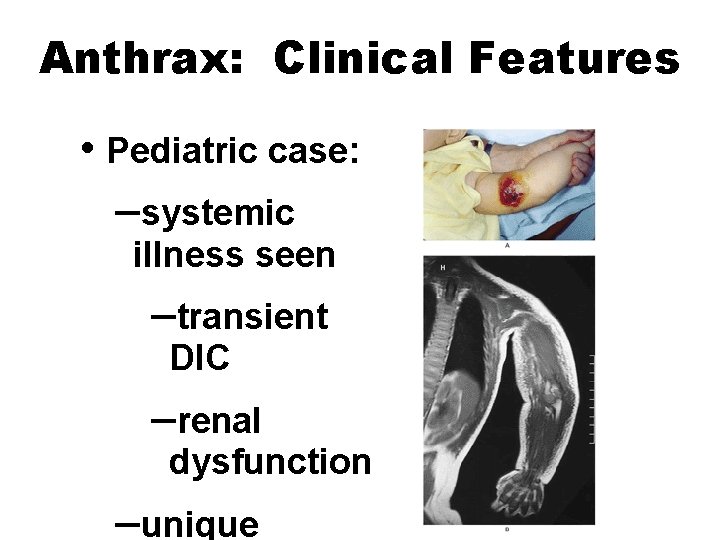
Anthrax: Clinical Features • Pediatric case: –systemic illness seen –transient DIC –renal dysfunction –unique NEJM, 2001

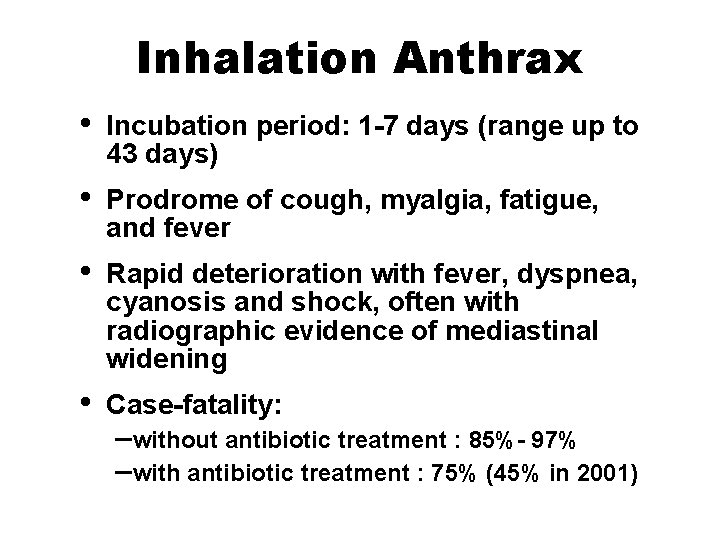
Inhalation Anthrax • Incubation period: 1 -7 days (range up to 43 days) • Prodrome of cough, myalgia, fatigue, and fever • Rapid deterioration with fever, dyspnea, cyanosis and shock, often with radiographic evidence of mediastinal widening • Case-fatality: –without antibiotic treatment : 85%- 97% –with antibiotic treatment : 75% (45% in 2001)
Anthrax Pathogenesis • Inhaled spores may reside in alveoli without germination for weeks • Antibiotics effective against vegetative form but not spores • Disease may develop after antibiotics discontinued

Inhalational Anthrax Textbook of Military Medicine
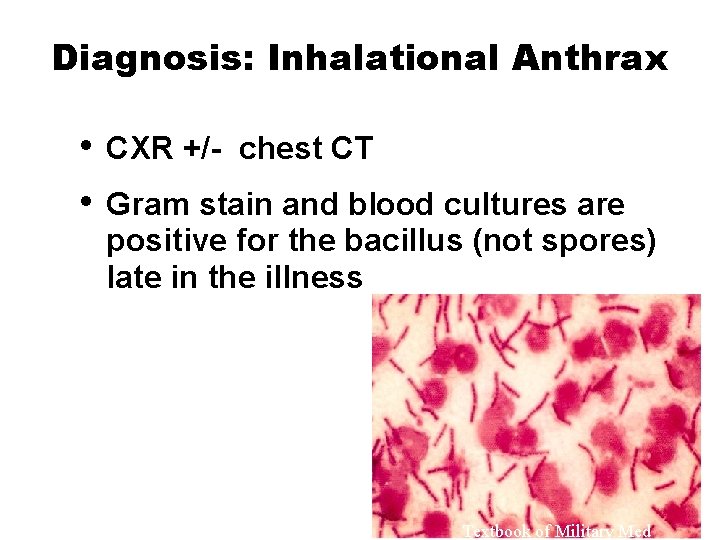
Diagnosis: Inhalational Anthrax • • CXR +/- chest CT Gram stain and blood cultures are positive for the bacillus (not spores) late in the illness Textbook of Military Med
Gastrointestinal Anthrax • Incubation period 1 -7 days • Pharyngeal involvement includes oropharyngeal ulcerations with cervical adenopathy and fever • Intestinal involvement includes abdominal pain, fever, bloody vomiting or diarrhea


Anthrax Bioterrorism Attacks– United States, 2001 • 22 cases (11 inhalation, 11 cutaneous) in 4 states • B. anthracis sent through U. S. mail • Most exposures occurred in mail sorting facilities and sites where mail was opened
Safe Mail Handling • • • Do not open suspicious mail – inappropriate or unusual labeling – strange or no return address – postmark different from return address – excessive packaging material Keep mail away from face No not blow or sniff mail or mail contents Wash hands after handling Avoid vigorous handling (tearing, shredding) Discard envelopes
Anthrax Vaccines • 1881 Pasteur develops first live attenuated veterinary vaccine for livestock • 1939 Improved live veterinary vaccine • 1954 First cell-free human vaccine • 1970 Improved cell-free vaccine licensed
Anthrax Vaccine Efficacy • 95% seroconversion following 3 doses • Duration of immunity unknown
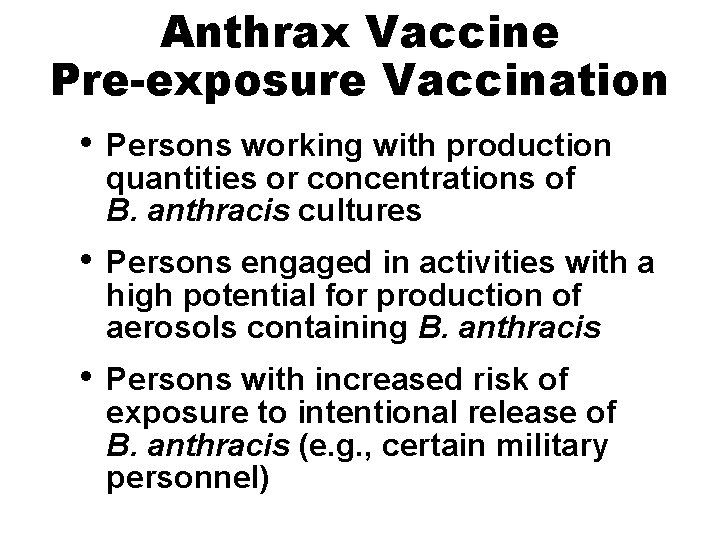
Anthrax Vaccine Pre-exposure Vaccination • Persons working with production quantities or concentrations of B. anthracis cultures • Persons engaged in activities with a high potential for production of aerosols containing B. anthracis • Persons with increased risk of exposure to intentional release of B. anthracis (e. g. , certain military personnel)
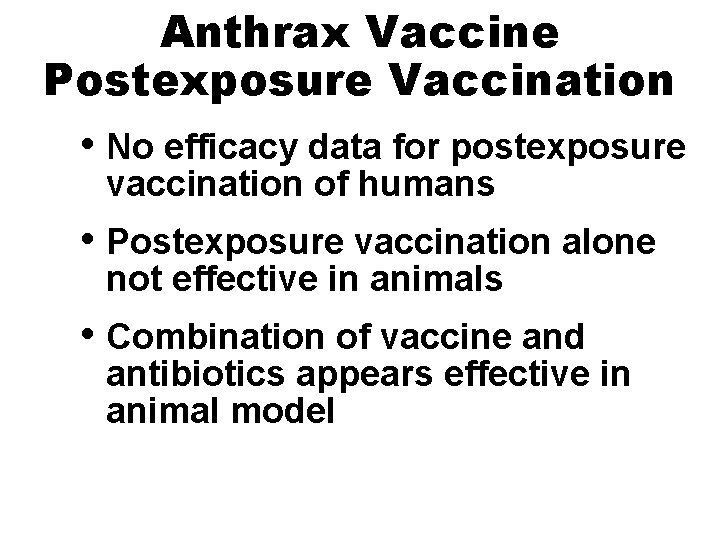
Anthrax Vaccine Postexposure Vaccination • No efficacy data for postexposure vaccination of humans • Postexposure vaccination alone not effective in animals • Combination of vaccine and antibiotics appears effective in animal model
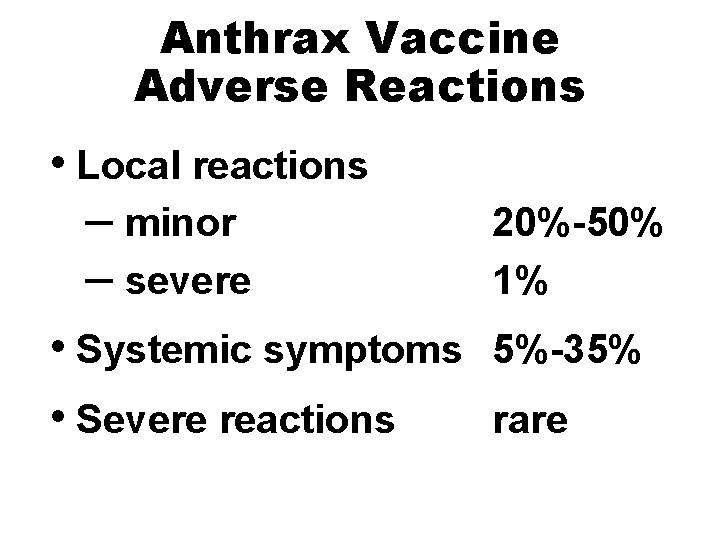
Anthrax Vaccine Adverse Reactions • Local reactions – minor – severe • Systemic symptoms • Severe reactions 20%-50% 1% 5%-35% rare
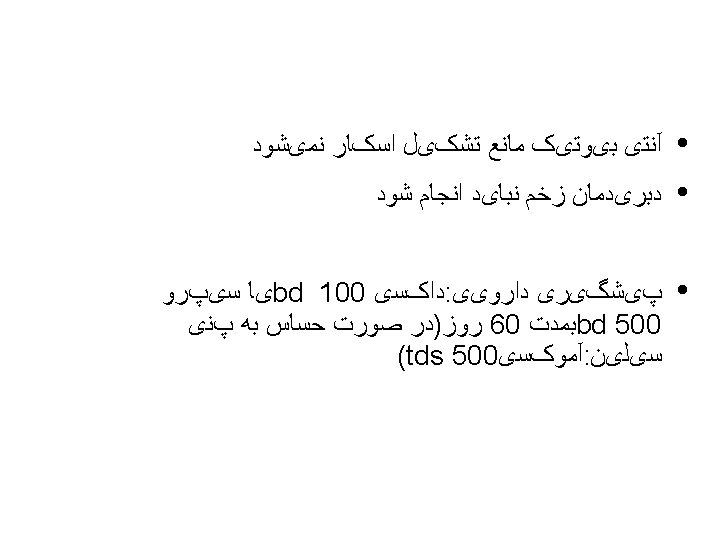
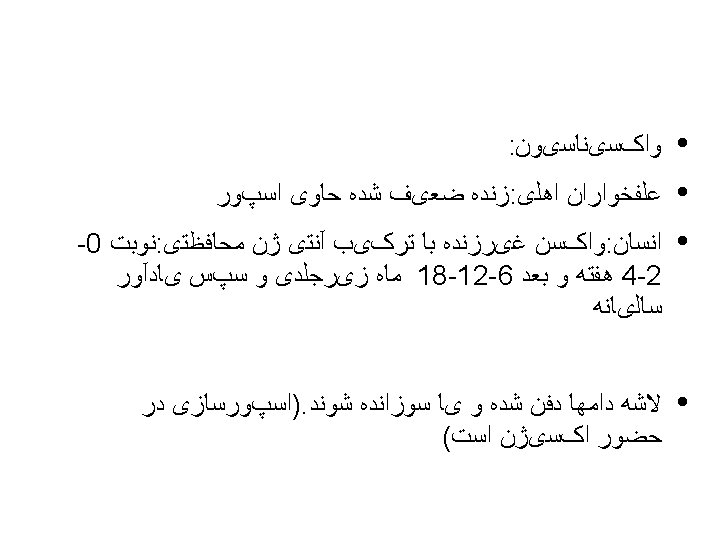

§ Anthrax Postexposure Antibiotic Prophylaxis • Discontinue antibiotics after third dose of vaccine

Recommended Postexposure Prophylaxis to Prevent Inhalational Anthrax Adults (including pregnant women and immunocompromised) Children Initial Therapy Ciprofloxacin 500 mg PO BID OR Doxycycline 100 mg PO BID Duration 60 days Ciprofloxacin 60 days 10 -15 mg/kg PO Q 12 hrs* OR Doxycycline: >8 yrs and >45 kg: 100 mg PO BID >8 yrs and <45 kg: 2. 2 mg/kg PO BID <8 yrs: 2. 2 mg/kg PO BID *Ciprofloxacin dose should not exceed 1 gram per day in children.
- Slides: 37