
Anthrax Wool sorters disease rag sorters disease malignant

- Slides: 21
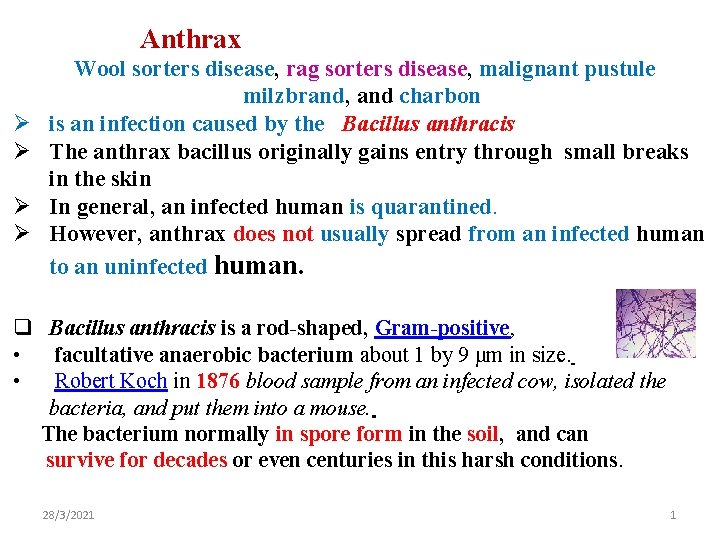
Anthrax Ø Ø Wool sorters disease, rag sorters disease, malignant pustule milzbrand, and charbon is an infection caused by the Bacillus anthracis The anthrax bacillus originally gains entry through small breaks in the skin In general, an infected human is quarantined. However, anthrax does not usually spread from an infected human to an uninfected human. q Bacillus anthracis is a rod-shaped, Gram-positive, • facultative anaerobic bacterium about 1 by 9 μm in size. • Robert Koch in 1876 blood sample from an infected cow, isolated the bacteria, and put them into a mouse. The bacterium normally in spore form in the soil, and can survive for decades or even centuries in this harsh conditions. 28/3/2021 1
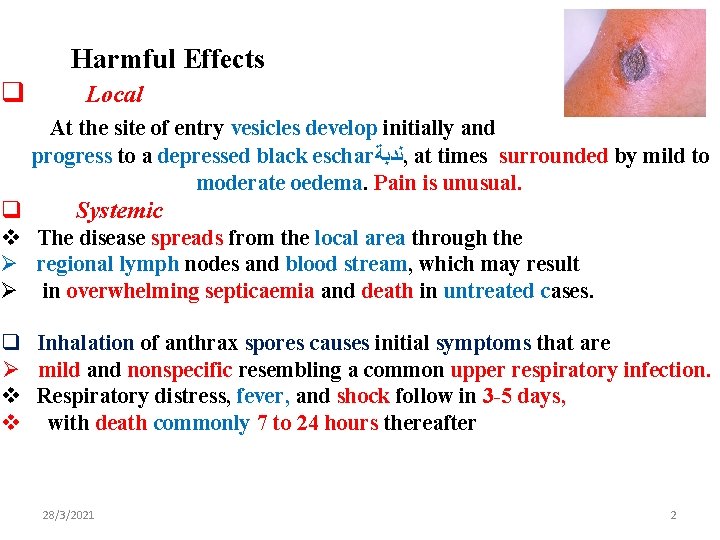
Harmful Effects q Local At the site of entry vesicles develop initially and progress to a depressed black eschar ﻧﺪﺑﺔ , at times surrounded by mild to moderate oedema. Pain is unusual. q Systemic v The disease spreads from the local area through the Ø regional lymph nodes and blood stream, which may result Ø in overwhelming septicaemia and death in untreated cases. q Inhalation of anthrax spores causes initial symptoms that are Ø mild and nonspecific resembling a common upper respiratory infection. v Respiratory distress, fever, and shock follow in 3 -5 days, v with death commonly 7 to 24 hours thereafter 28/3/2021 2
• Herbivores are often infected whilst grazing, plant-eating animals infection occurs when they eat or breathe in, the spores while grazing • especially when eating rough, irritant, or spiky vegetation; the vegetation has been hypothesized to cause wounds within the GI tract, permitting entry of the bacterial spores into the tissues, though this has not been proven • Carnivores may become infected by eating infected animals • Once ingested or placed in an open wound, the bacteria begin multiplying inside the animal or human and typically kill the host within a few days or weeks. • The spores germinate at the site of entry into the tissues and then spread by the circulation to the lymphatics, where the bacteria multiply. 28/3/2021 3
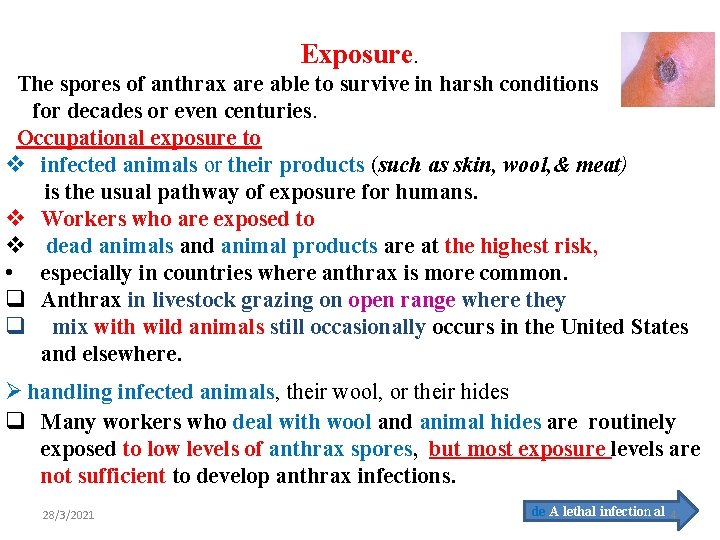
Exposure. The spores of anthrax are able to survive in harsh conditions for decades or even centuries. Occupational exposure to v infected animals or their products (such as skin, wool, & meat) is the usual pathway of exposure for humans. v Workers who are exposed to v dead animals and animal products are at the highest risk, • especially in countries where anthrax is more common. q Anthrax in livestock grazing on open range where they q mix with wild animals still occasionally occurs in the United States and elsewhere. Ø handling infected animals, their wool, or their hides q Many workers who deal with wool and animal hides are routinely exposed to low levels of anthrax spores, but most exposure levels are not sufficient to develop anthrax infections. 28/3/2021 de A lethal infection al 4
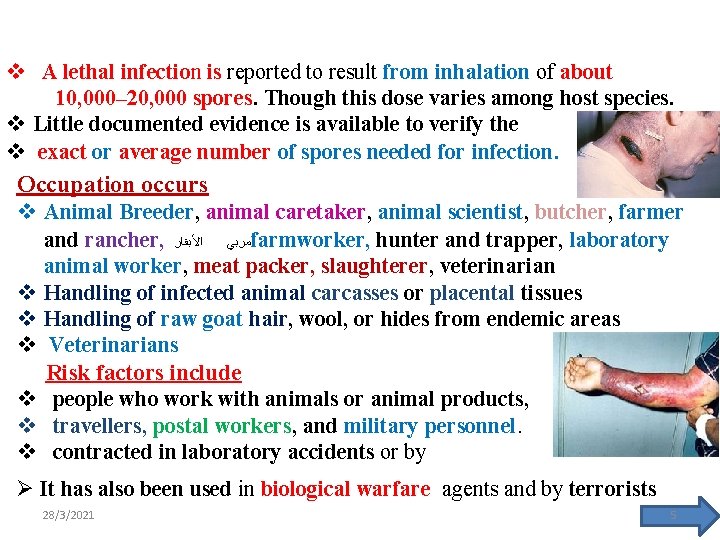
v A lethal infection is reported to result from inhalation of about 10, 000– 20, 000 spores. Though this dose varies among host species. v Little documented evidence is available to verify the v exact or average number of spores needed for infection. Occupation occurs v Animal Breeder, animal caretaker, animal scientist, butcher, farmer and rancher, ﻣﺮﺑﻲ ﺍﻷﺒﻘﺎﺭ farmworker, hunter and trapper, laboratory animal worker, meat packer, slaughterer, veterinarian v Handling of infected animal carcasses or placental tissues v Handling of raw goat hair, wool, or hides from endemic areas v Veterinarians Risk factors include v people who work with animals or animal products, v travellers, postal workers, and military personnel. v contracted in laboratory accidents or by Ø It has also been used in biological warfare agents and by terrorists 28/3/2021 5
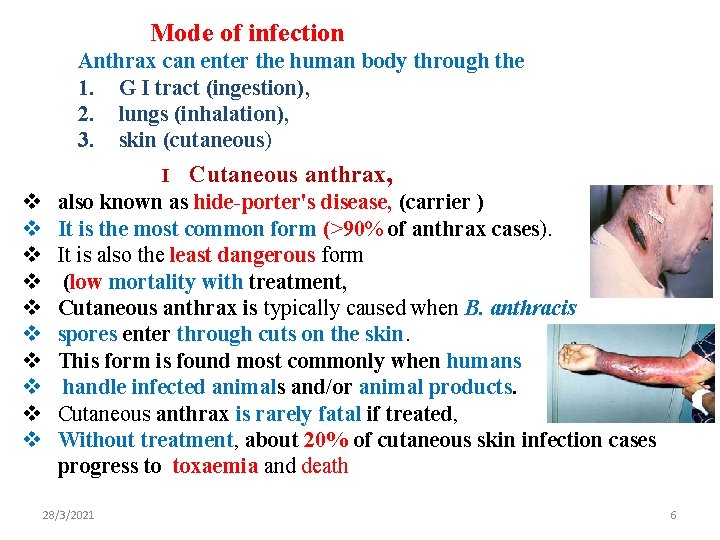
Mode of infection Anthrax can enter the human body through the 1. G I tract (ingestion), 2. lungs (inhalation), 3. skin (cutaneous) I v v v v v Cutaneous anthrax, also known as hide-porter's disease, (carrier ) It is the most common form (>90% of anthrax cases). It is also the least dangerous form (low mortality with treatment, Cutaneous anthrax is typically caused when B. anthracis spores enter through cuts on the skin. This form is found most commonly when humans handle infected animals and/or animal products. Cutaneous anthrax is rarely fatal if treated, Without treatment, about 20% of cutaneous skin infection cases progress to toxaemia and death 28/3/2021 6
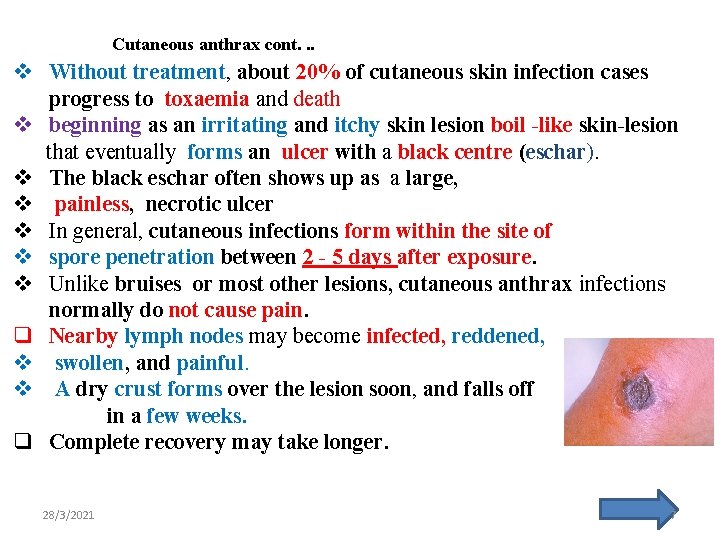
Cutaneous anthrax cont. . . v Without treatment, about 20% of cutaneous skin infection cases progress to toxaemia and death v beginning as an irritating and itchy skin lesion boil -like skin-lesion that eventually forms an ulcer with a black centre (eschar). v The black eschar often shows up as a large, v painless, necrotic ulcer v In general, cutaneous infections form within the site of v spore penetration between 2 - 5 days after exposure. v Unlike bruises or most other lesions, cutaneous anthrax infections normally do not cause pain. q Nearby lymph nodes may become infected, reddened, v swollen, and painful. v A dry crust forms over the lesion soon, and falls off in a few weeks. q Complete recovery may take longer. 28/3/2021 7
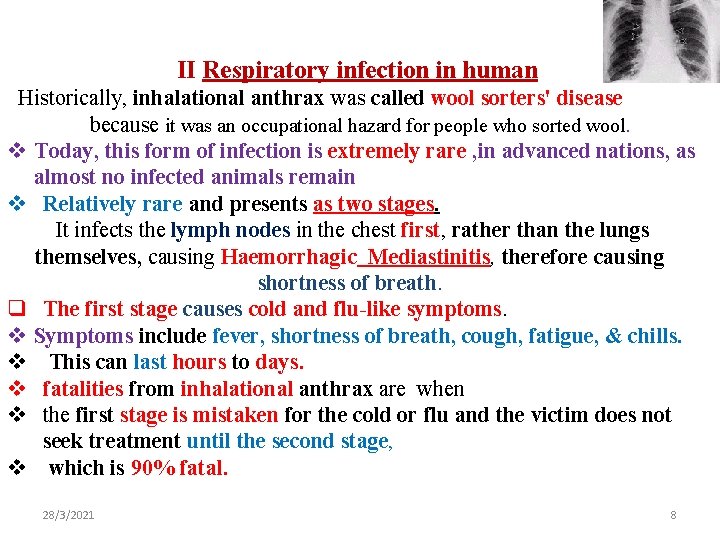
II Respiratory infection in human Historically, inhalational anthrax was called wool sorters' disease because it was an occupational hazard for people who sorted wool. v Today, this form of infection is extremely rare , in advanced nations, as almost no infected animals remain v Relatively rare and presents as two stages. It infects the lymph nodes in the chest first, rather than the lungs themselves, causing Haemorrhagic Mediastinitis, therefore causing shortness of breath. q The first stage causes cold and flu-like symptoms. v Symptoms include fever, shortness of breath, cough, fatigue, & chills. v This can last hours to days. v fatalities from inhalational anthrax are when v the first stage is mistaken for the cold or flu and the victim does not seek treatment until the second stage, v which is 90% fatal. 28/3/2021 8
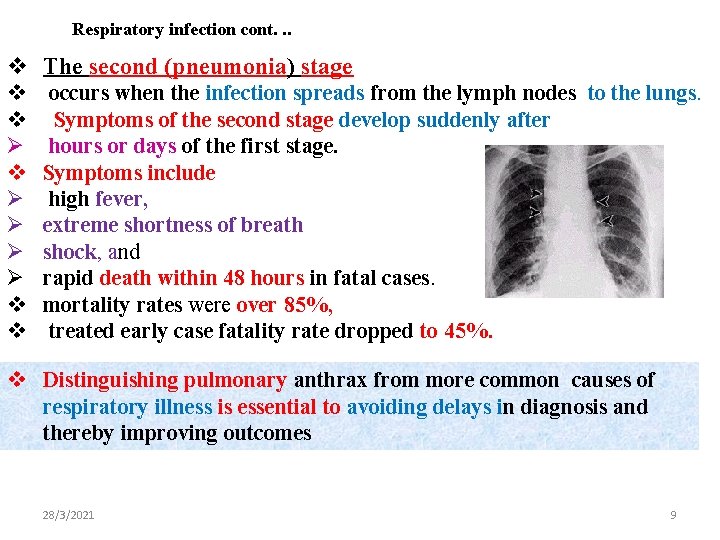
Respiratory infection cont. . . v The second (pneumonia) stage v v Ø Ø Ø Ø v v occurs when the infection spreads from the lymph nodes to the lungs. Symptoms of the second stage develop suddenly after hours or days of the first stage. Symptoms include high fever, extreme shortness of breath shock, and rapid death within 48 hours in fatal cases. mortality rates were over 85%, treated early case fatality rate dropped to 45%. v Distinguishing pulmonary anthrax from more common causes of respiratory illness is essential to avoiding delays in diagnosis and thereby improving outcomes 28/3/2021 9
Respiratory infection cont. . . q The infection of herbivores (and occasionally humans) by the inhalational route normally proceeds as: v Once the spores are inhaled, they are transported into the alveoli. v The spores are then picked up by macrophages in the lungs and are transported through lymphatic vessels to the lymph nodes in the mediastinum. v Once in the lymph nodes, the spores germinate into v active bacilli that multiply and eventually v burst the macrophages, v releasing many more bacilli into the bloodstream to be transferred to the entire body. Once in the blood stream, these bacilli release three proteins named lethal factor, edema factor, and protective antigen. 28/3/2021 The three are not toxic by themselves, but their combination is incredibly lethal to humans 10
III Gastrointestinal infection (GI) v is most often caused by consuming anthrax-infected meat and is characterized by § diarrhoea, potentially with blood, § abdominal pains, § loss of appetite. § Occasional vomiting of blood can occur. Lesions have been found • in the intestines and • in the mouth and • throat. q After the bacterium invades the gastrointestinal system, v it spreads to the bloodstream and throughout the body, while continuing to make toxins. v GI infections can be treated, v but usually result in fatality rates of 25% to 75%, depending upon how soon treatment commences. v This form of anthrax is the rarest. 28/3/2021 11
1 V The injection form presents with fever and an abscess at the site of drug injection Diagnosis. Various techniques may be used for the direct identification of B. anthracis in clinical material. Firstly, specimens may be Gram stained. Gram-positive. are not motile, susceptible to penicillin Diagnosis can be confirmed based on finding indirect hemagglutination, § antibodies or -linked immunosorbent assay § the toxin in the blood or v by culture of a sample from the infected site to identify To confirm the organism is B. anthracis, rapid diagnostic techniques such as Ø immunofluorescence microscopy may be used. Ø PCR though culture of the organism is still the gold standard for diagnosis. 28/3/2021 12
depending on the part of the body that’s affected. Ø If skin symptoms, take a small sample of the affected skin to test in a lab. v X-ray of chest or CT scan if inhalation anthrax. v And a stool test in order to diagnose gastrointestinal anthrax. v might have meningitis caused by anthrax, CSF test. Epidemiology v v v Anthrax is spread by contact with the bacterium's spores , which often appear in infectious animal products. Contact is by breathing, eating, or through an area of broken skin. does not typically spread directly between people Although a rare disease, human anthrax, is most common in Africa and central and southern Asia It also occurs more regularly in southern Europe than elsewhere 28/3/2021 13
Epidemiolog. . Cont. q is uncommon in North Europe and North America. q Globally, at least 2, 000 cases occur a year Ø with about two cases a year in the United States. v Skin infections represent more than 90% of cases. . v Without treatment, the risk of death from skin anthrax is 20%. . v For intestinal infection, the risk of death is 25 to 75%, v while respiratory anthrax has a mortality of up to 85%, even with treatment v Until the 20 th century, anthrax infections killed hundreds of thousands of people and animals each year. v Anthrax has been developed as a weapon by a number of countries. 28/3/2021 14
Prevention q Certification of imported hides, hair, and wool as anthrax free by the exporting country has helped to reduce the incidence of anthrax. v In the U. K. imported hair and wool are treated with warm formaldehyde solution. v Ø Ø Ø In the United States the chief preventive measure for high risk industrial workers is immunization. Improved personal hygiene of workers, protective clothing, ventilation and housekeeping controls in the plants Vaccination of animals in enzootic areas and strict adherence to laws regarding animals contracted or died of anthrax , have helped reduce agricultural incidence. Ø Precautions are taken to avoid contact with the skin and any fluids exuded through natural body openings of a deceased body that is suspected of harbouring anthrax 28/3/2021 15
Cont. . . Prevention v The body should be put in strict quarantine. v A blood sample is collected and sealed in a container and analysed in an approved laboratory to ascertain if anthrax is the cause of death. v The body should be sealed in an airtight body bag and incinerated to prevent transmission of anthrax spores. v Full isolation of the body is important to prevent possible contamination of others. v Protective, impermeable clothing and equipment such as rubber gloves , rubber apron, and rubber boots with no perforations are used when handling the body. Ø No skin, especially if it has any wounds or scratches, should be exposed. Ø Disposable PPE is preferable, § but if not available, decontamination can be achieved by autoclaving. Ø Used disposable equipment, is burned and/or buried after use Ø All contaminated bedding or clothing is isolated in double plastic bags and treated as biohazard waste. 28/3/2021 16
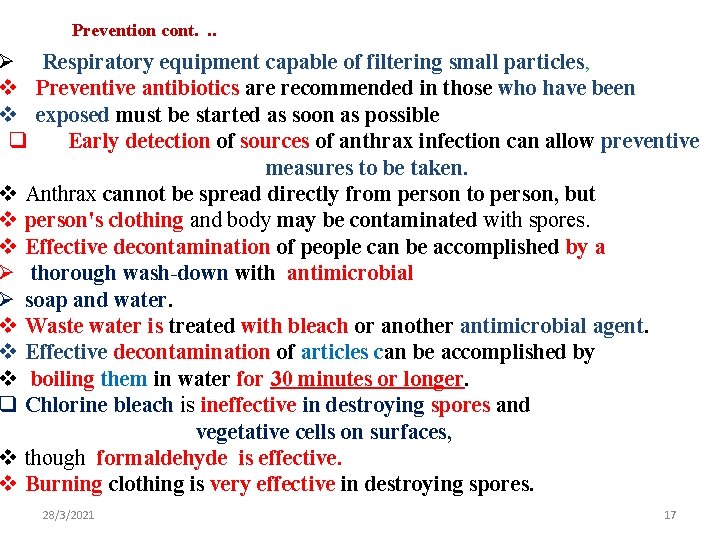
Prevention cont. . . Ø Respiratory equipment capable of filtering small particles, v Preventive antibiotics are recommended in those who have been v exposed must be started as soon as possible q Early detection of sources of anthrax infection can allow preventive measures to be taken. v Anthrax cannot be spread directly from person to person, but v person's clothing and body may be contaminated with spores. v Effective decontamination of people can be accomplished by a Ø thorough wash-down with antimicrobial Ø soap and water. v Waste water is treated with bleach or another antimicrobial agent. v Effective decontamination of articles can be accomplished by v boiling them in water for 30 minutes or longer. q Chlorine bleach is ineffective in destroying spores and vegetative cells on surfaces, v though formaldehyde is effective. v Burning clothing is very effective in destroying spores. 28/3/2021 17
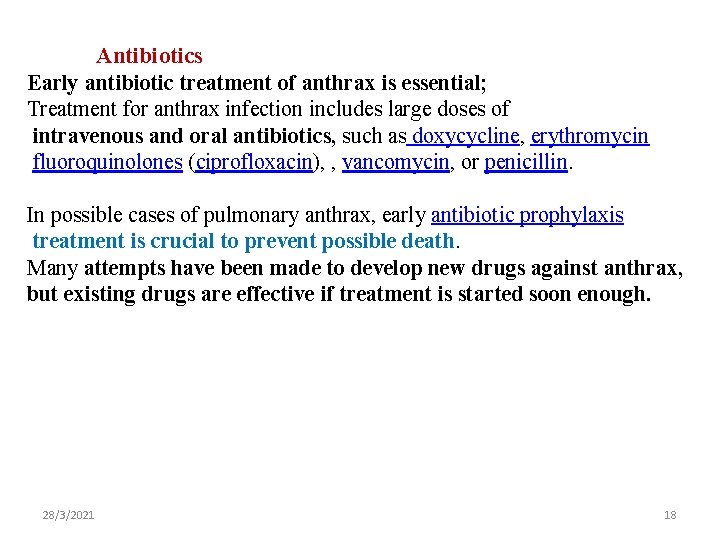
Antibiotics Early antibiotic treatment of anthrax is essential; Treatment for anthrax infection includes large doses of intravenous and oral antibiotics, such as doxycycline, erythromycin fluoroquinolones (ciprofloxacin), , vancomycin, or penicillin. In possible cases of pulmonary anthrax, early antibiotic prophylaxis treatment is crucial to prevent possible death. Many attempts have been made to develop new drugs against anthrax, but existing drugs are effective if treatment is started soon enough. 28/3/2021 18
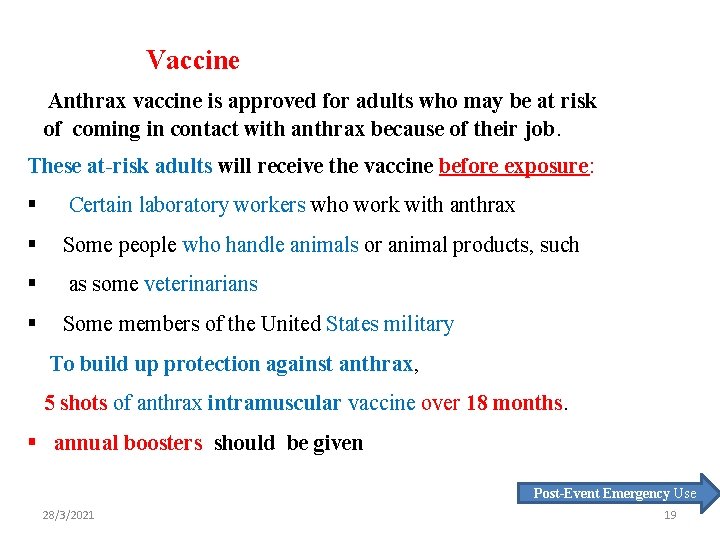
Vaccine Anthrax vaccine is approved for adults who may be at risk of coming in contact with anthrax because of their job. These at-risk adults will receive the vaccine before exposure: § Certain laboratory workers who work with anthrax § Some people who handle animals or animal products, such § as some veterinarians § Some members of the United States military To build up protection against anthrax, 5 shots of anthrax intramuscular vaccine over 18 months. § annual boosters should be given Post-Event Emergency Use 28/3/2021 19
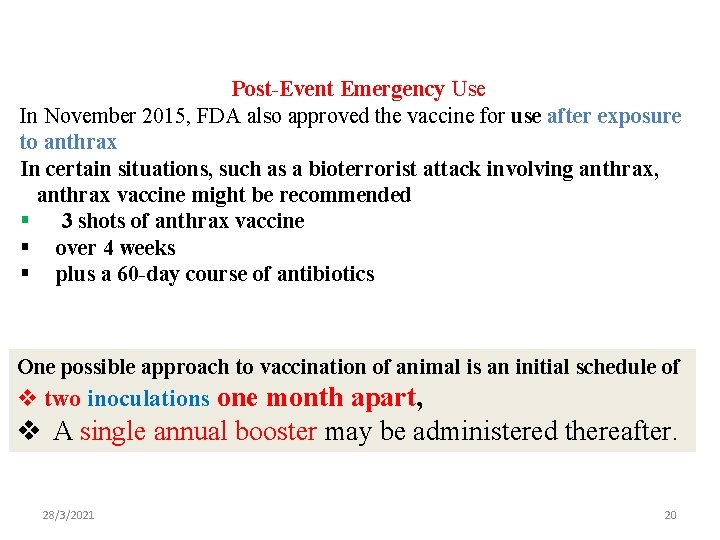
Post-Event Emergency Use In November 2015, FDA also approved the vaccine for use after exposure to anthrax In certain situations, such as a bioterrorist attack involving anthrax, anthrax vaccine might be recommended § 3 shots of anthrax vaccine § over 4 weeks § plus a 60 -day course of antibiotics One possible approach to vaccination of animal is an initial schedule of v two inoculations one month apart, v A single annual booster may be administered thereafter. 28/3/2021 20
28/3/2021 21