
Anterior Vertebrectomy and Cervical Fusion A Technique For
Anterior Vertebrectomy and Cervical Fusion: A Technique For Correction of Kyphotic Deformity in Diastrophic Dysplasia Suken A. Shah, MD; John A. Heydemann, MD; Kenneth J. Rogers, Ph. D; Jeffrey W. Campbell, MD, and William G. Mackenzie, MD Wilmington, DE USA
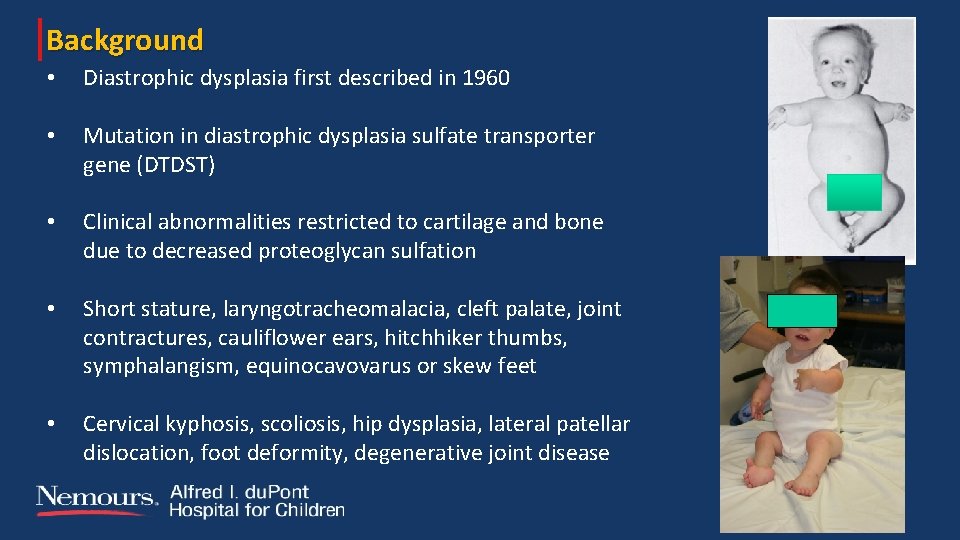
Background • Diastrophic dysplasia first described in 1960 • Mutation in diastrophic dysplasia sulfate transporter gene (DTDST) • Clinical abnormalities restricted to cartilage and bone due to decreased proteoglycan sulfation • Short stature, laryngotracheomalacia, cleft palate, joint contractures, cauliflower ears, hitchhiker thumbs, symphalangism, equinocavovarus or skew feet • Cervical kyphosis, scoliosis, hip dysplasia, lateral patellar dislocation, foot deformity, degenerative joint disease
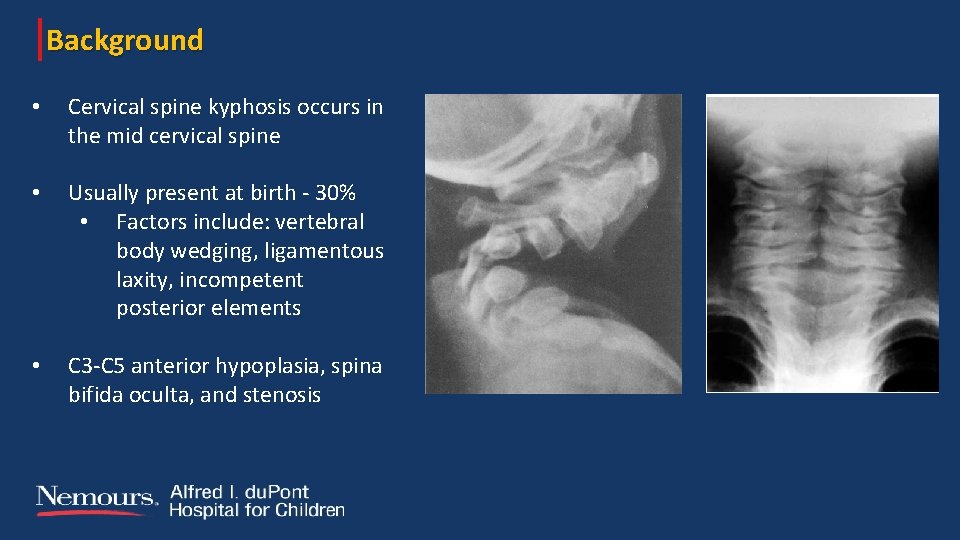
Background • Cervical spine kyphosis occurs in the mid cervical spine • Usually present at birth - 30% • Factors include: vertebral body wedging, ligamentous laxity, incompetent posterior elements • C 3 -C 5 anterior hypoplasia, spina bifida oculta, and stenosis
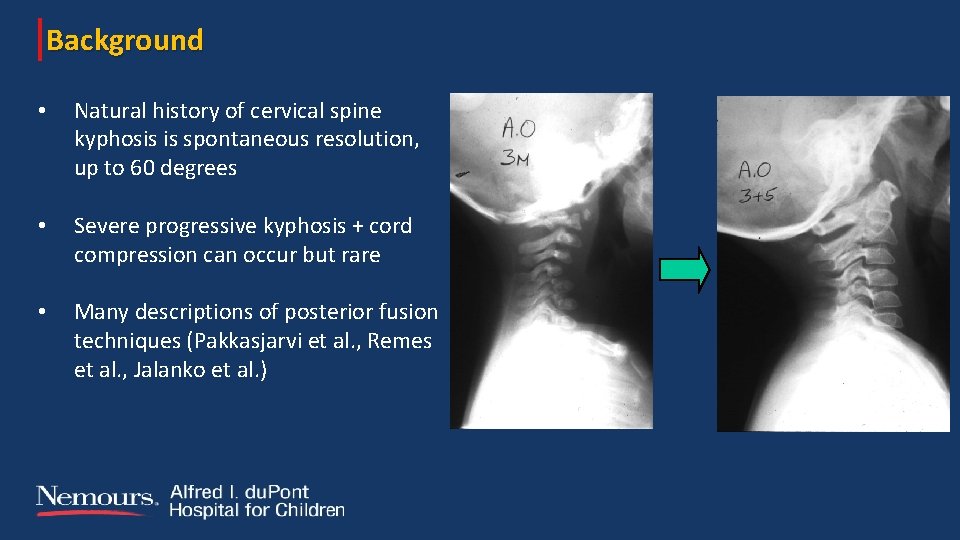
Background • Natural history of cervical spine kyphosis is spontaneous resolution, up to 60 degrees • Severe progressive kyphosis + cord compression can occur but rare • Many descriptions of posterior fusion techniques (Pakkasjarvi et al. , Remes et al. , Jalanko et al. )
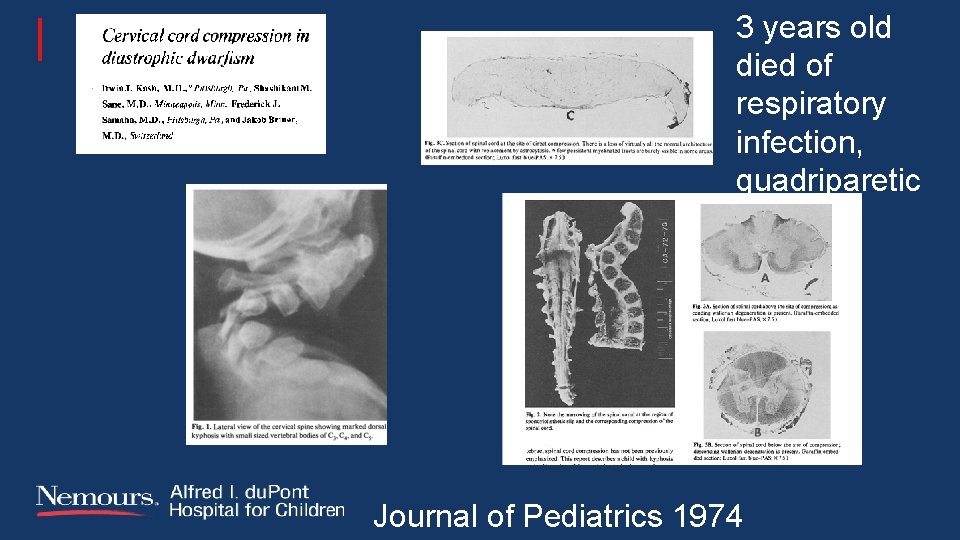
3 years old died of respiratory infection, quadriparetic Journal of Pediatrics 1974
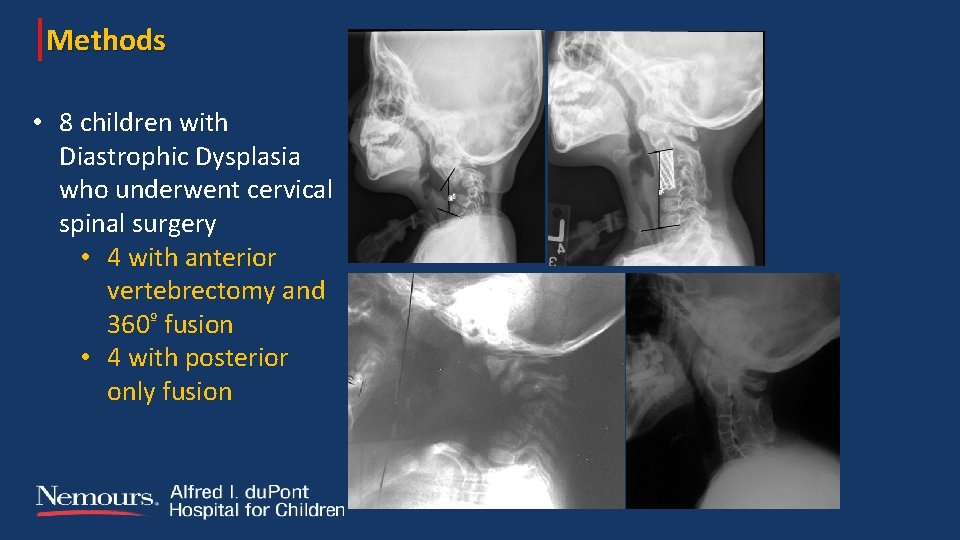
Methods • 8 children with Diastrophic Dysplasia who underwent cervical spinal surgery • 4 with anterior vertebrectomy and 360º fusion • 4 with posterior only fusion

Methods • Flexion/Extenson MRI studies displayed: • Cord compression + myelomalacia • Cervical spine instability • Plain radiographic measurements included cervical kyphosis Cobb angle from C 2 -C 7 • T 1 slope
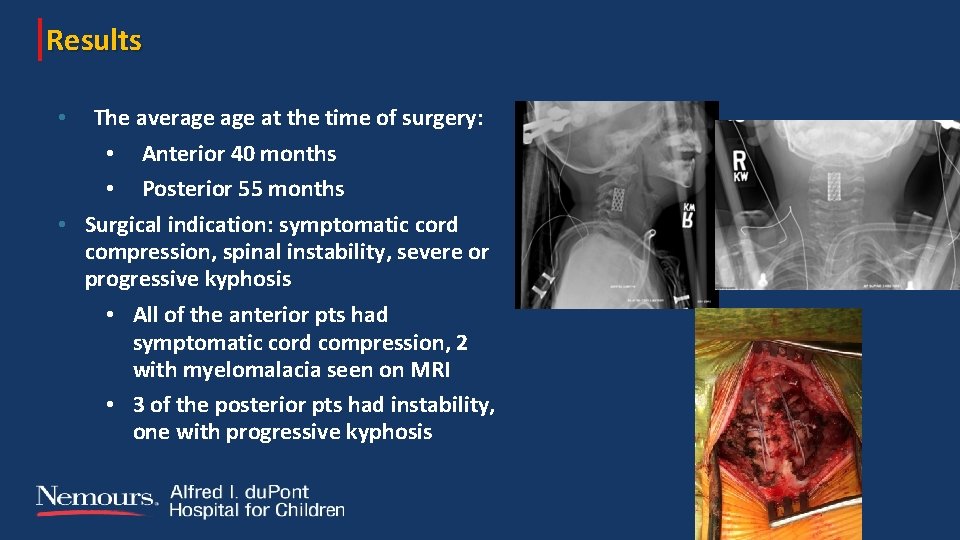
Results The average at the time of surgery: • Anterior 40 months • Posterior 55 months • Surgical indication: symptomatic cord compression, spinal instability, severe or progressive kyphosis • All of the anterior pts had symptomatic cord compression, 2 with myelomalacia seen on MRI • 3 of the posterior pts had instability, one with progressive kyphosis •
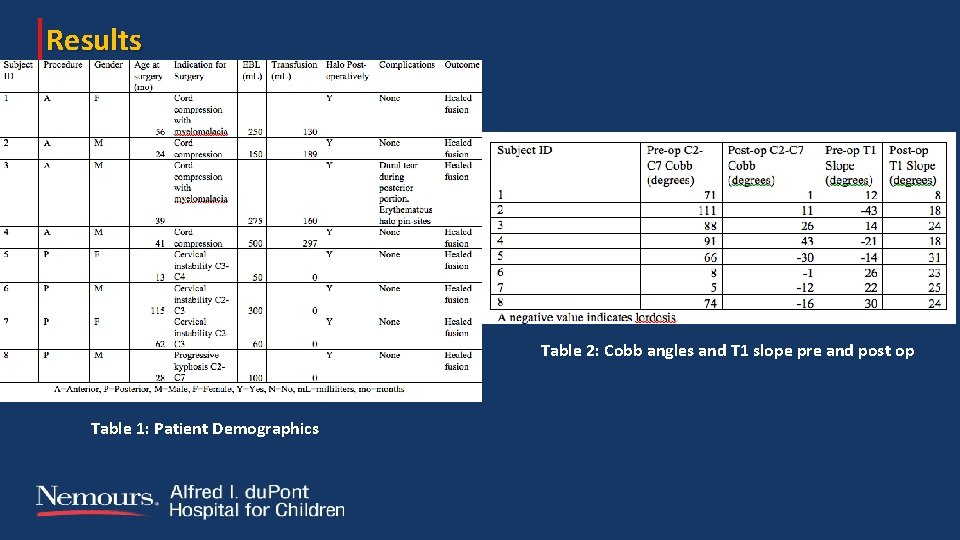
Results Table 2: Cobb angles and T 1 slope pre and post op Table 1: Patient Demographics
Results • All patients in the anterior group had more blood loss than posterior group • Cell saver used in anterior group to help decrease volume loss and blood was returned • All patients were placed in a halo post operatively • All patients healed fusion mass • Complications: • One pt with dural tear (repaired) • Same patient developed erythema of halo pinsites (treated successfully)
Conclusions • There are many ways to address cervical kyphosis in patients with Diastrophic Dysplasia • Spontaneous resolution is common • Posterior fusion results in progressive correction due to posterior tethering and continued growth if pre-op spine is flexible • Rigid kyphosis with anterior cord compression + myelomalacia can be safely addressed with this technique of anterior corpectomy and 3600 fusion
Thank You
- Slides: 12