
ANTERIOR AND POSTERIOR HORMONES OBJECTIVE Classification of Hormones
ANTERIOR AND POSTERIOR HORMONES
OBJECTIVE Classification of Hormones Mechanism of action of Hormones Anterior Pituitary Hormones Posterior Pituitary Hormones
§ INTRODUCTION 1. The “master gland”— controls three other endocrine glands 2. Better to think of the pituitary gland as the relay center— 3. Its function covers both endocrine target glands and nonendocrine target glands
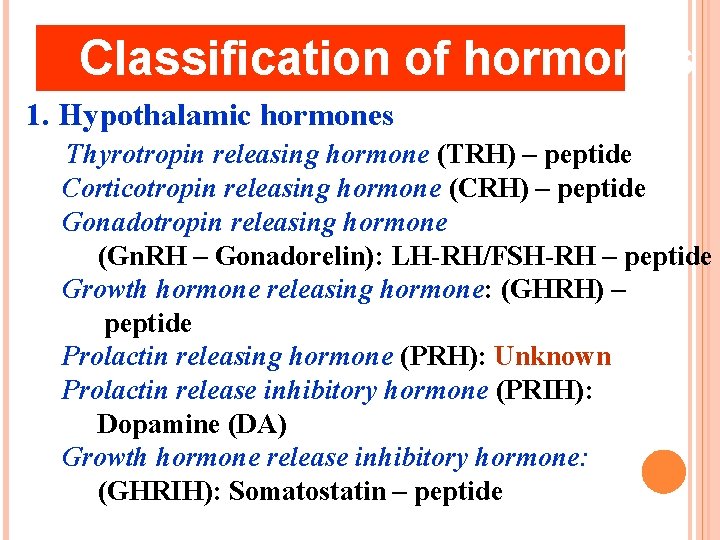
Classification of hormones 1. Hypothalamic hormones Thyrotropin releasing hormone (TRH) – peptide Corticotropin releasing hormone (CRH) – peptide Gonadotropin releasing hormone (Gn. RH – Gonadorelin): LH-RH/FSH-RH – peptide Growth hormone releasing hormone: (GHRH) – peptide Prolactin releasing hormone (PRH): Unknown Prolactin release inhibitory hormone (PRIH): Dopamine (DA) Growth hormone release inhibitory hormone: (GHRIH): Somatostatin – peptide
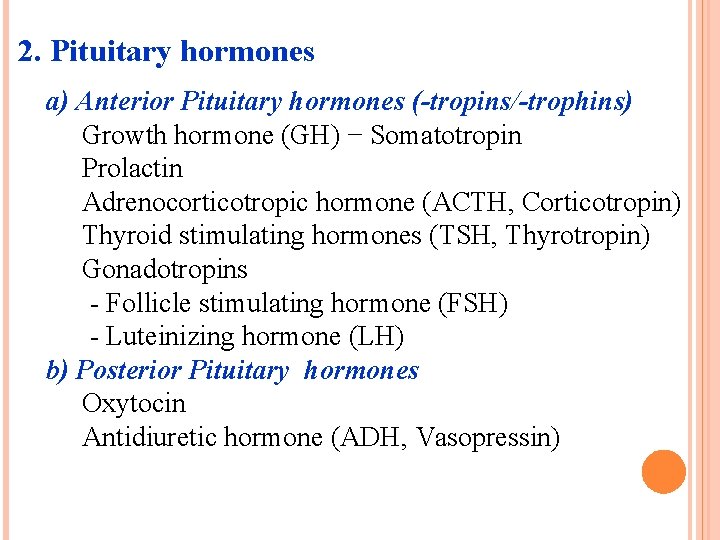
2. Pituitary hormones a) Anterior Pituitary hormones (-tropins/-trophins) Growth hormone (GH) − Somatotropin Prolactin Adrenocorticotropic hormone (ACTH, Corticotropin) Thyroid stimulating hormones (TSH, Thyrotropin) Gonadotropins - Follicle stimulating hormone (FSH) - Luteinizing hormone (LH) b) Posterior Pituitary hormones Oxytocin Antidiuretic hormone (ADH, Vasopressin)
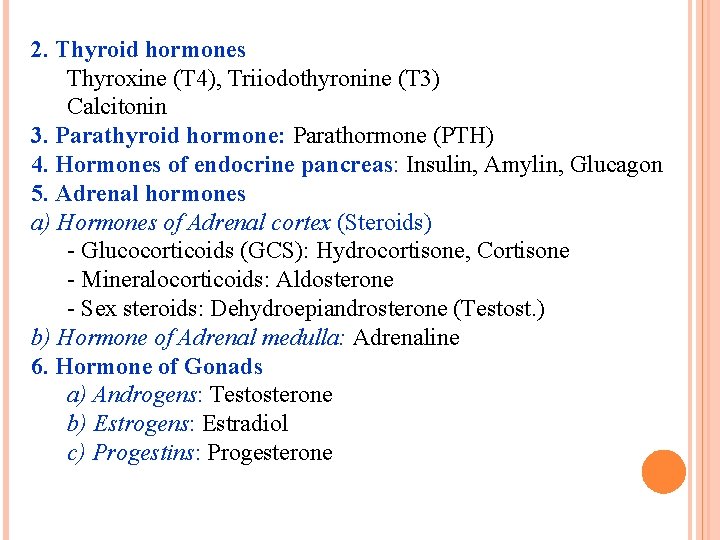
2. Thyroid hormones Thyroxine (T 4), Triiodothyronine (T 3) Calcitonin 3. Parathyroid hormone: Parathormone (PTH) 4. Hormones of endocrine pancreas: Insulin, Amylin, Glucagon 5. Adrenal hormones a) Hormones of Adrenal cortex (Steroids) - Glucocorticoids (GCS): Hydrocortisone, Cortisone - Mineralocorticoids: Aldosterone - Sex steroids: Dehydroepiandrosterone (Testost. ) b) Hormone of Adrenal medulla: Adrenaline 6. Hormone of Gonads a) Androgens: Testosterone b) Estrogens: Estradiol c) Progestins: Progesterone
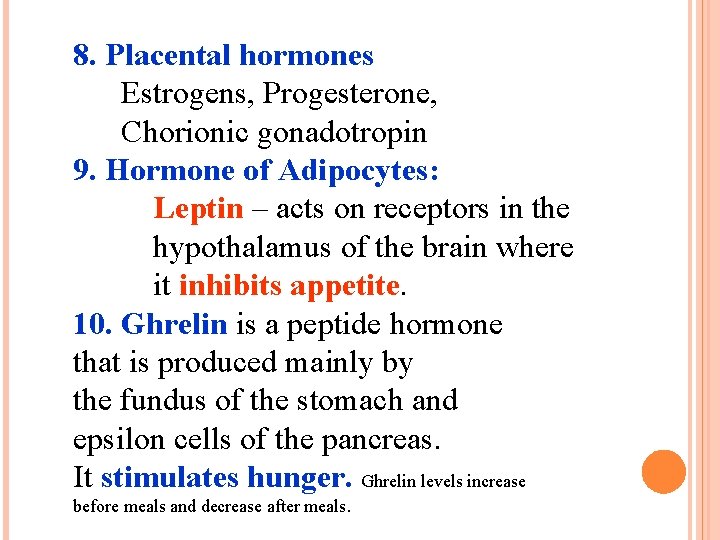
8. Placental hormones Estrogens, Progesterone, Chorionic gonadotropin 9. Hormone of Adipocytes: Leptin – acts on receptors in the hypothalamus of the brain where it inhibits appetite. 10. Ghrelin is a peptide hormone that is produced mainly by the fundus of the stomach and epsilon cells of the pancreas. It stimulates hunger. Ghrelin levels increase before meals and decrease after meals.
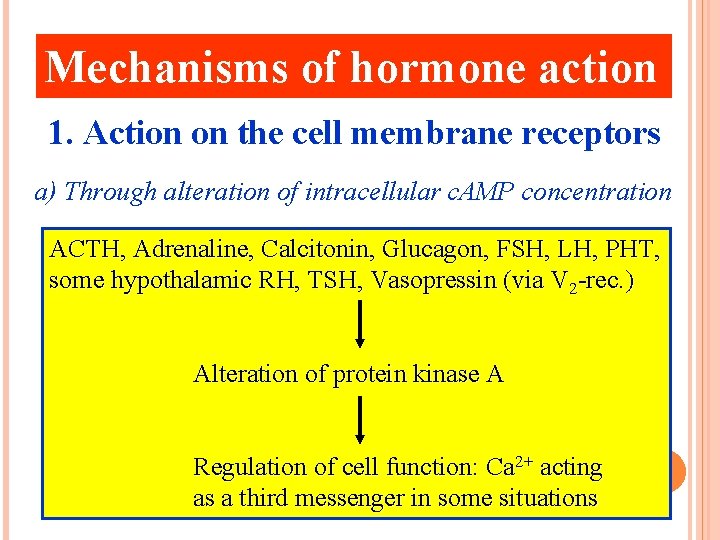
Mechanisms of hormone action 1. Action on the cell membrane receptors a) Through alteration of intracellular c. AMP concentration ACTH, Adrenaline, Calcitonin, Glucagon, FSH, LH, PHT, some hypothalamic RH, TSH, Vasopressin (via V 2 -rec. ) Alteration of protein kinase A Regulation of cell function: Ca 2+ acting as a third messenger in some situations
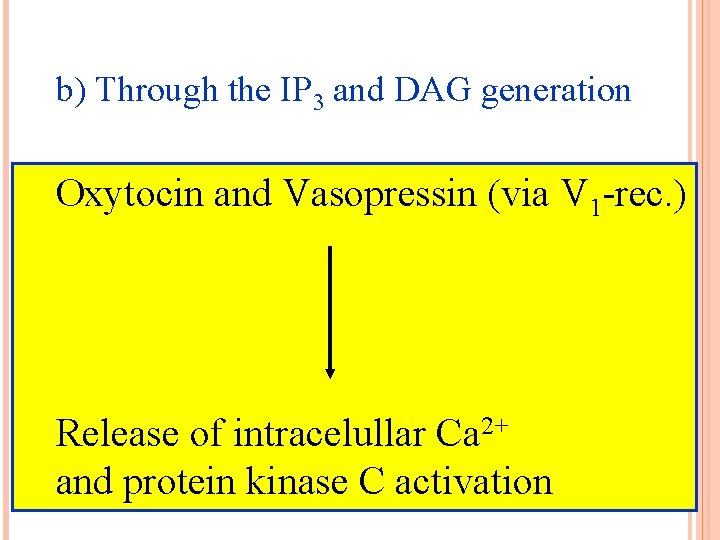
b) Through the IP 3 and DAG generation Oxytocin and Vasopressin (via V 1 -rec. ) Release of intracelullar Ca 2+ and protein kinase C activation
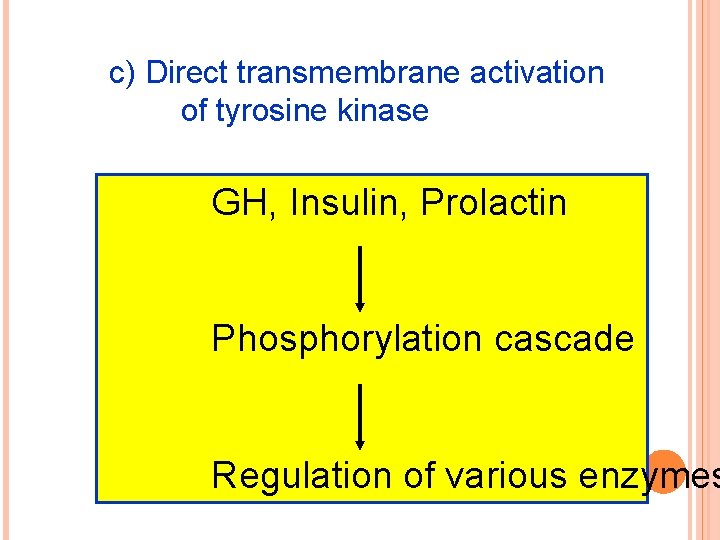
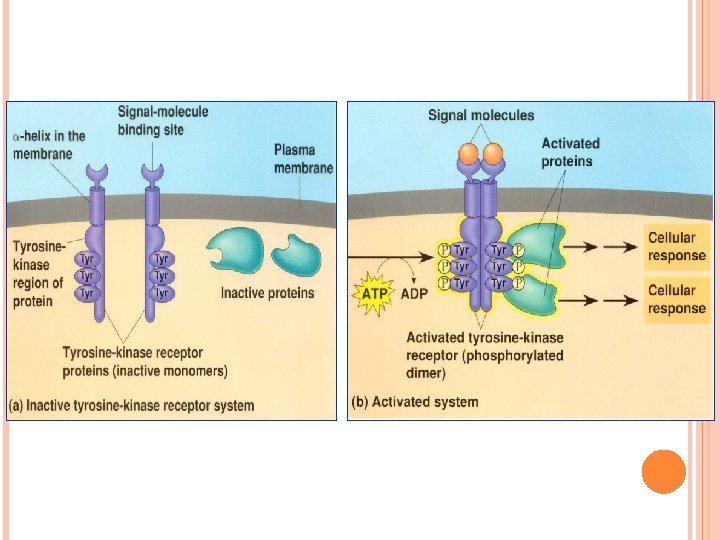
c) Direct transmembrane activation of tyrosine kinase GH, Insulin, Prolactin Phosphorylation cascade Regulation of various enzymes
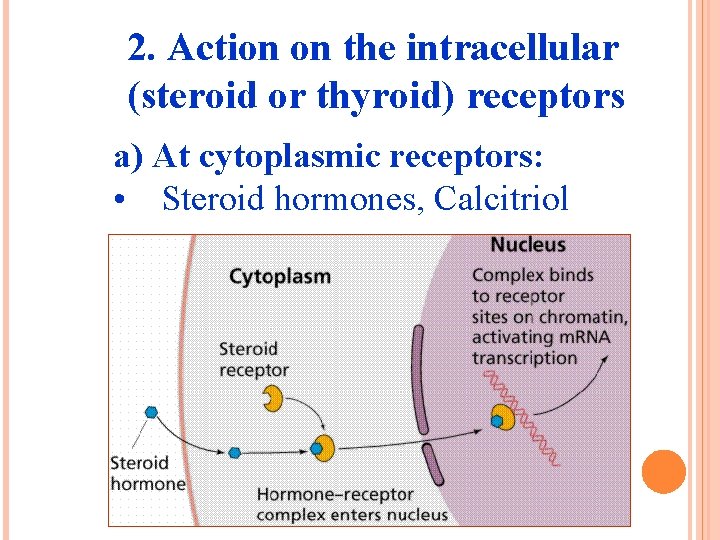
2. Action on the intracellular (steroid or thyroid) receptors a) At cytoplasmic receptors: • Steroid hormones, Calcitriol
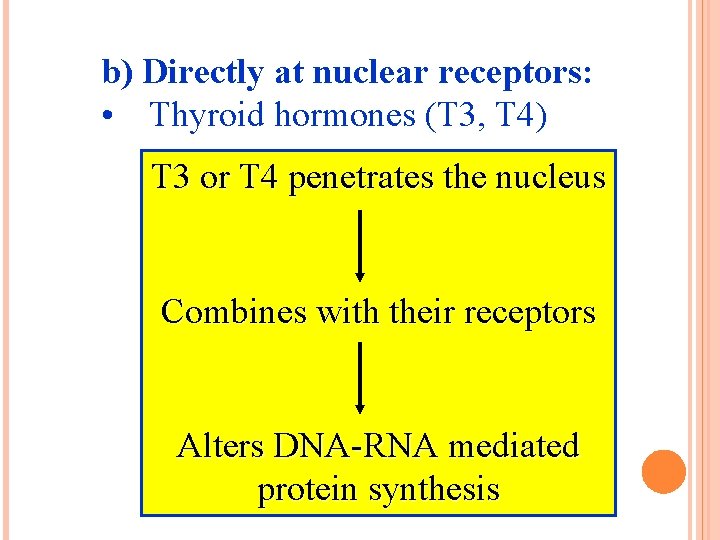
b) Directly at nuclear receptors: • Thyroid hormones (T 3, T 4) T 3 or T 4 penetrates the nucleus Combines with their receptors Alters DNA-RNA mediated protein synthesis
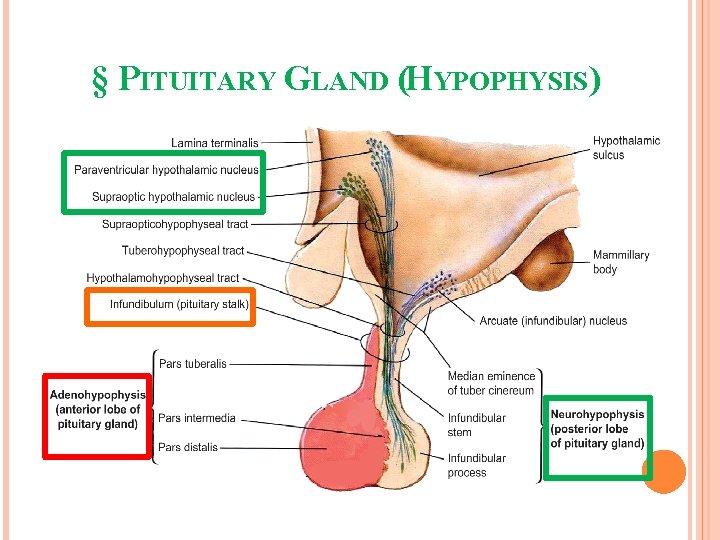
§ PITUITARY GLAND (HYPOPHYSIS)
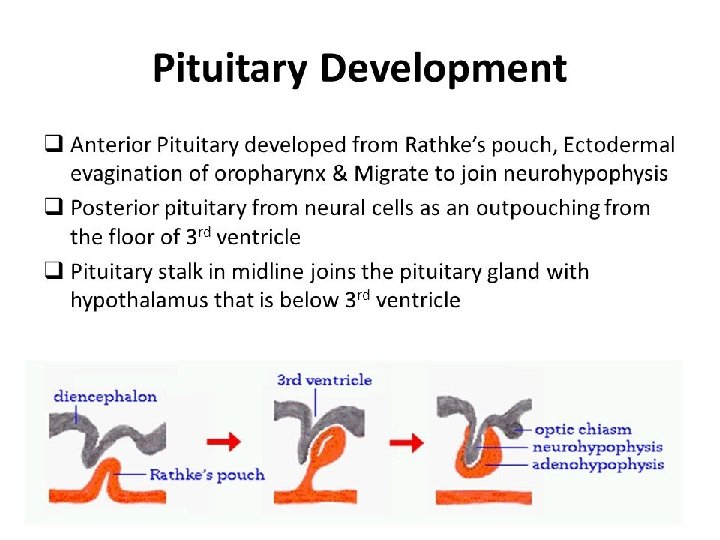
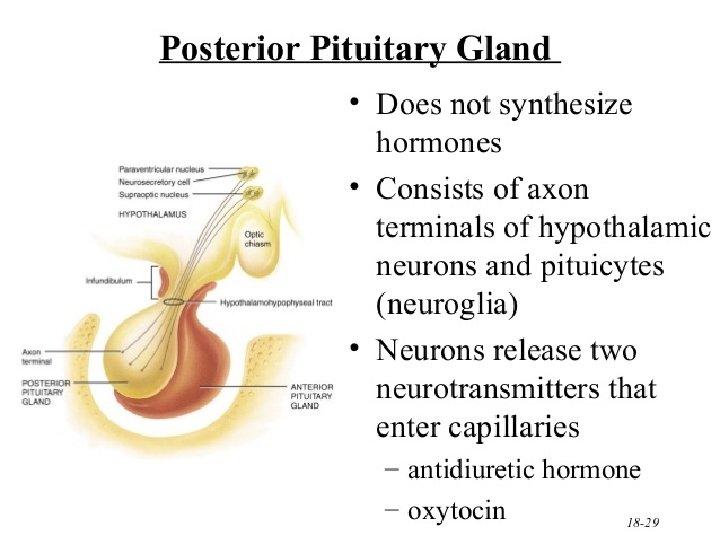
§ PITUITARY GLAND (HYPOPHYSIS) Suspended from hypothalamus by stalk (infundibulum) Location and size � housed in sella turcica of sphenoid bone � 1. 3 cm diameter Adenohypophysis (____ pituitary) � arises from hypophyseal (Rathke’s) pouch (outgrowth of pharynx); Neurohypophysis � arises (____ pituitary) from brain; � Magnocellular neurons– supraoptic and paraventricular nuclei; Nerve endings?
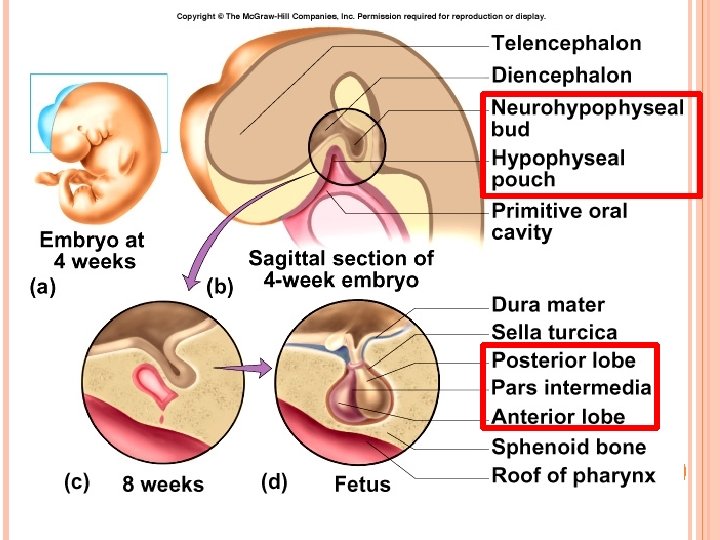
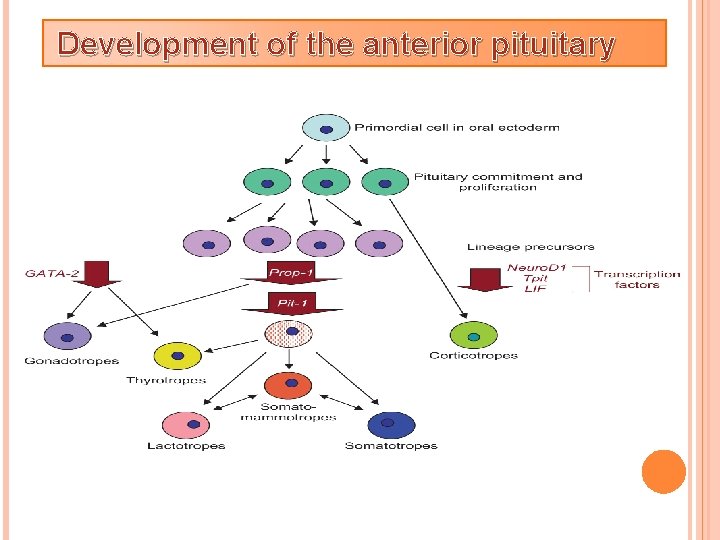
Development of the anterior pituitary
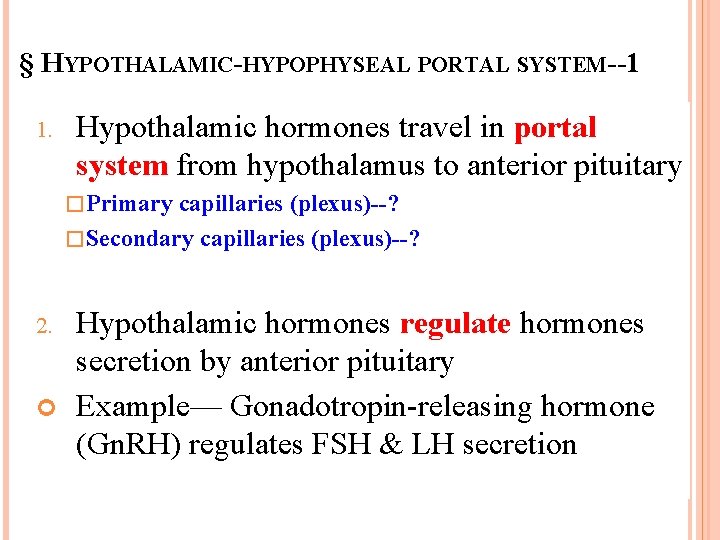
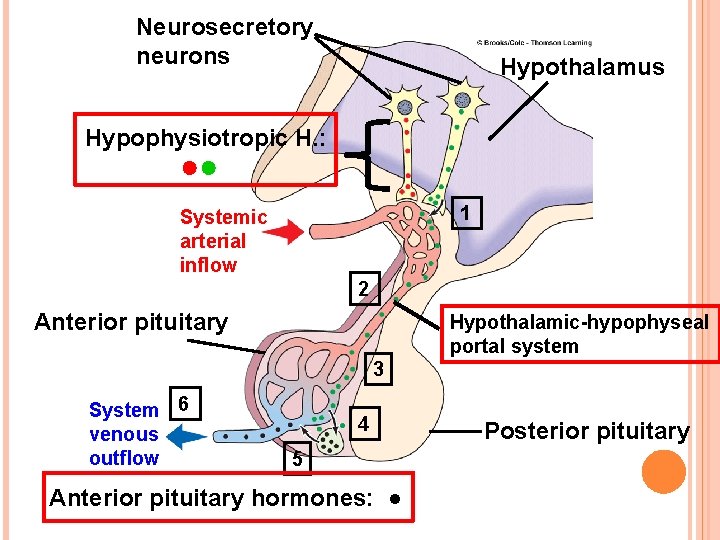
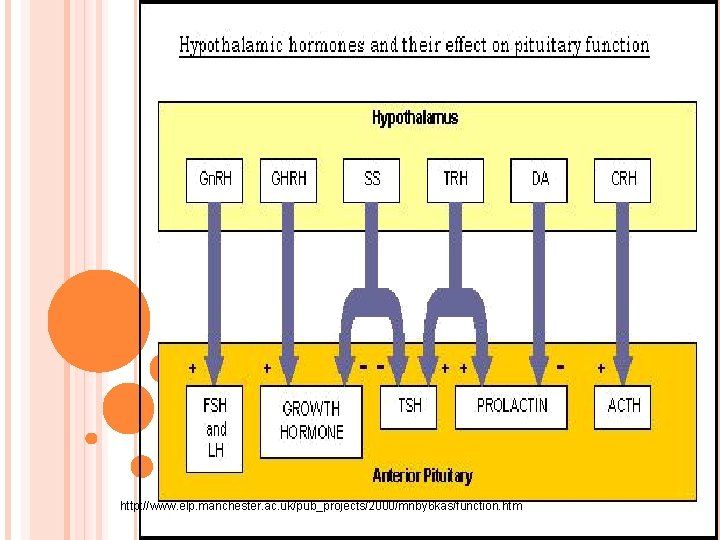
§ HYPOTHALAMIC-HYPOPHYSEAL PORTAL SYSTEM--1 1. Hypothalamic hormones travel in portal system from hypothalamus to anterior pituitary � Primary capillaries (plexus)--? � Secondary capillaries (plexus)--? 2. Hypothalamic hormones regulate hormones secretion by anterior pituitary Example— Gonadotropin-releasing hormone (Gn. RH) regulates FSH & LH secretion
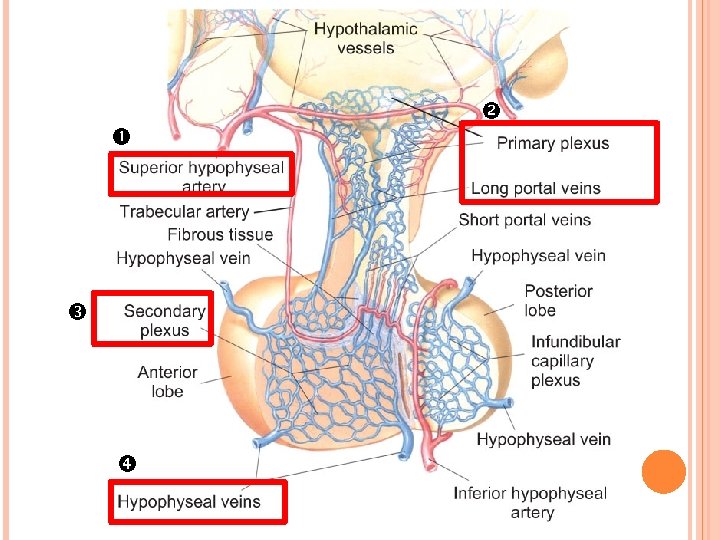
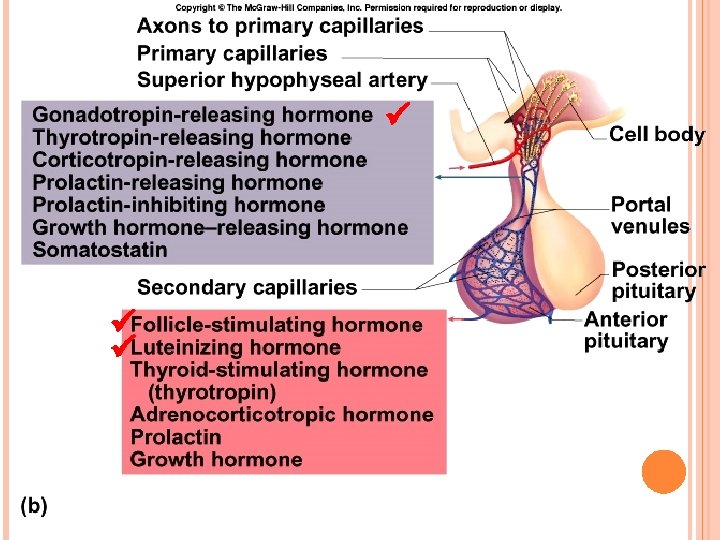
Neurosecretory neurons Hypothalamus Hypophysiotropic H. : ●● 1 Systemic arterial inflow 2 Anterior pituitary Hypothalamic-hypophyseal portal system 3 System 6 venous outflow 4 Posterior pituitary 5 Anterior pituitary hormones: •
§ HYPOTHALAMIC-HYPOPHYSEAL PORTAL SYSTEM--2 Advantages (of this portal system)— 3. Almost all the blood supplied to the anterior pituitary must first drain through the _____________ • Releasing/inhibiting hormones then can directly deliver to the anterior pituitary in what fashion ? ______________ • Therefore, only minute amounts of neural secretions are needed to achieve biologically effective concentrations in pituitary blood. •
CHECK POINT QUESTIONS-A. B. C. D. Besides hormones, give another way for intercellular communication. Give an example of a hormone. Why does your example qualify as a hormone? (hint: definition of hormone) Give an example of a hypothalamic hormone. What is the target tissue of a hypothalamic hormone secreted into the hypothalamichypophyseal portal system?
§ HORMONES SECRETED BY ANTERIOR PITUITARY FSH (follicle stimulating hormone) 2. LH (luteinizing hormone) The above two are called gonadotropins 3. TSH (thyroid stimulating hormone, thyrotropin) 4. ACTH (adrenocorticotropic hormone) 1. 2. GH (growth hormone; somatotropin or somatotropic hormone) PRL (prolactin) Tropic (trophic) hormones-- target other endocrine glands to release their own hormones; which ones above?
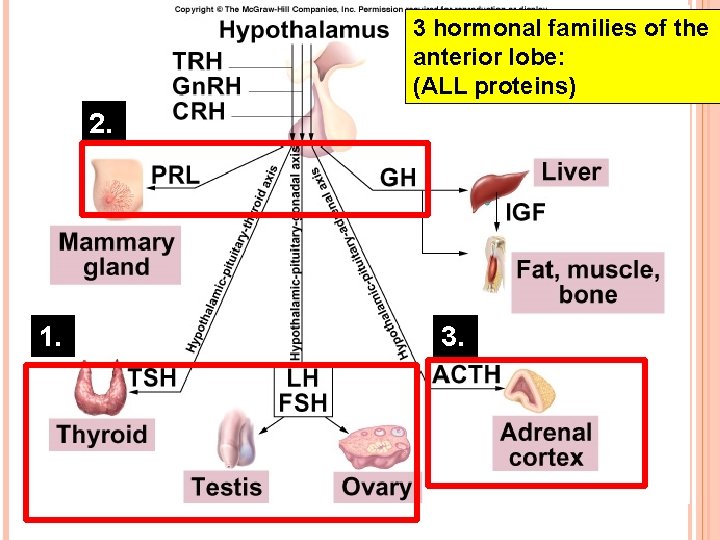
3 hormonal families of the anterior lobe: (ALL proteins) 2. 1. 3.
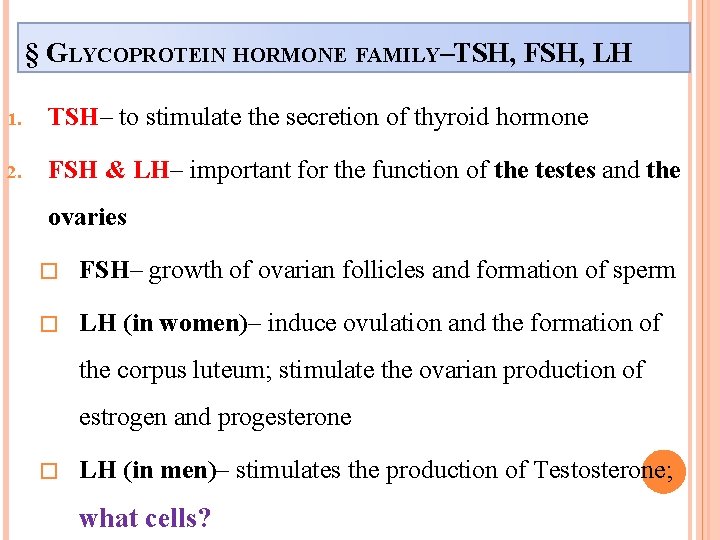
§ GLYCOPROTEIN HORMONE FAMILY–TSH, FSH, LH 1. TSH– to stimulate the secretion of thyroid hormone 2. FSH & LH– important for the function of the testes and the ovaries � FSH– growth of ovarian follicles and formation of sperm � LH (in women)– induce ovulation and the formation of the corpus luteum; stimulate the ovarian production of estrogen and progesterone � LH (in men)– stimulates the production of Testosterone; what cells?
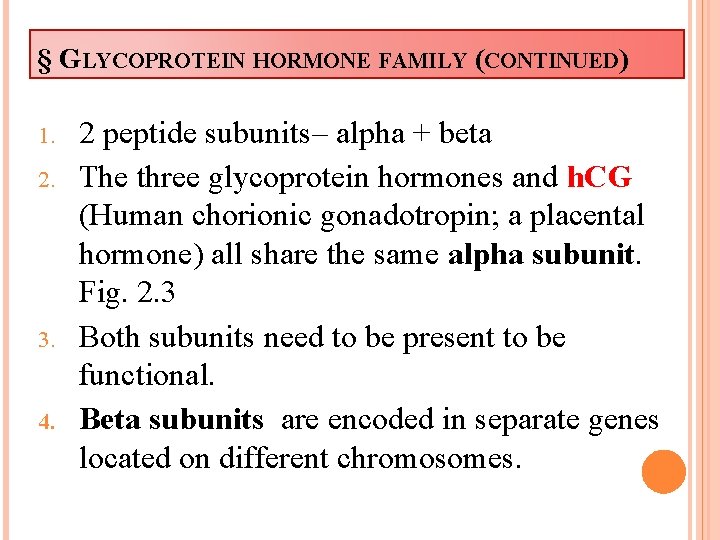
§ GLYCOPROTEIN HORMONE FAMILY (CONTINUED) 1. 2. 3. 4. 2 peptide subunits– alpha + beta The three glycoprotein hormones and h. CG (Human chorionic gonadotropin; a placental hormone) all share the same alpha subunit. Fig. 2. 3 Both subunits need to be present to be functional. Beta subunits are encoded in separate genes located on different chromosomes.
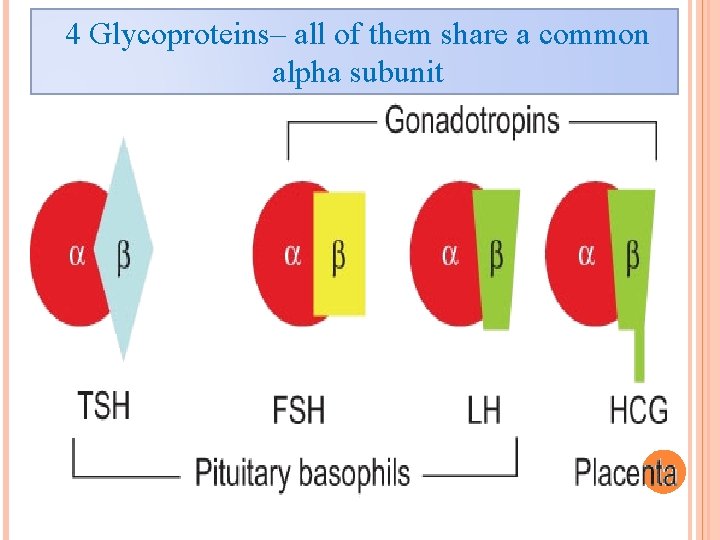
4 Glycoproteins– all of them share a common alpha subunit
§ GROWTH HORMONE AND PROLACTIN 1. Growth hormone (GH) is required for proper adult stature. � Species specificity: primates for primate GH � Metabolic effects 2. Prolactin (PRL) is required for milk production in post-partum women. � 3. In men or nonlactating women-- not clear; however, evidence suggests it may has to do with the immune function. Human pracental lactogen (HPL) = human chorionic somatomammotropin
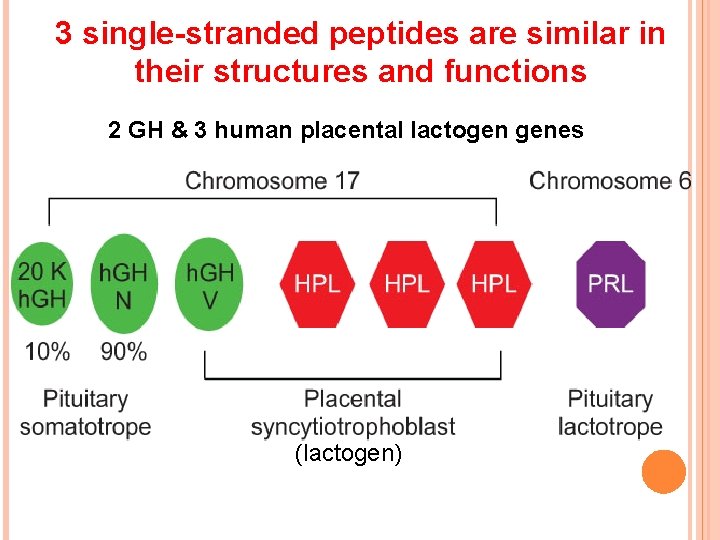
3 single-stranded peptides are similar in their structures and functions 2 GH & 3 human placental lactogen genes (lactogen)
§ ADRENOCORTICOTROPIN FAMILY 1. 2. ACTH (adrenal corticotropic hormone) regulates hormone secretion by the cortex of the adrenal glands. The gene produces ACTH is called POMC (proopiomelanocortin) in corticotropes and other cells by prohormone convertases. � (Corticotropes) ACTH is the only one has an established physiological role in humans � (melanocytes and keratinocytes)– pigmentation by MSH � (Melanotrope in arcuate neurons)– food intake
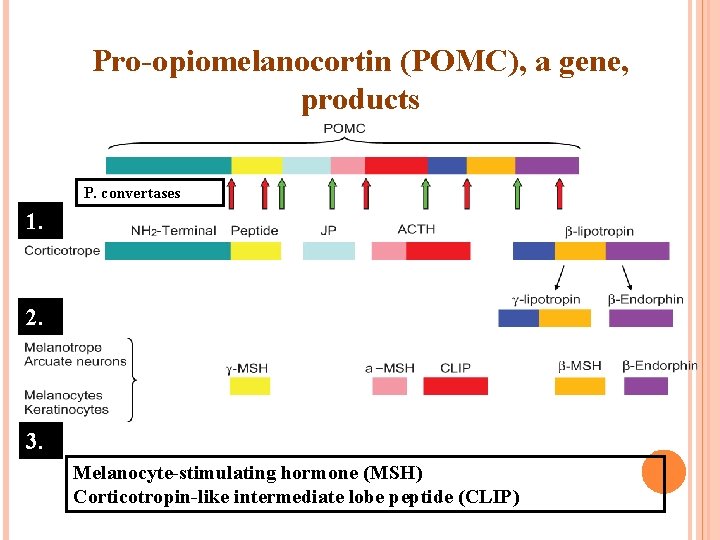
Pro-opiomelanocortin (POMC), a gene, products P. convertases 1. 2. 3. Melanocyte-stimulating hormone (MSH) Corticotropin-like intermediate lobe peptide (CLIP)
REGULATION OF ANTERIOR PITUITARY HORMONES
§ REGULATION OF ANTERIOR PITUITARY FUNCTION 1. Primarily by the CNS– All pituitary hormones except PRL would decline in the absence of the hypothalamus � 2. By hormones produced in peripheral target glands— Example– inhibin secreted from gonads All anterior pituitary hormones secreted in a diurnal pattern. � 3. Experiment--Pituitary gland is removed. . . and in vitro. . .
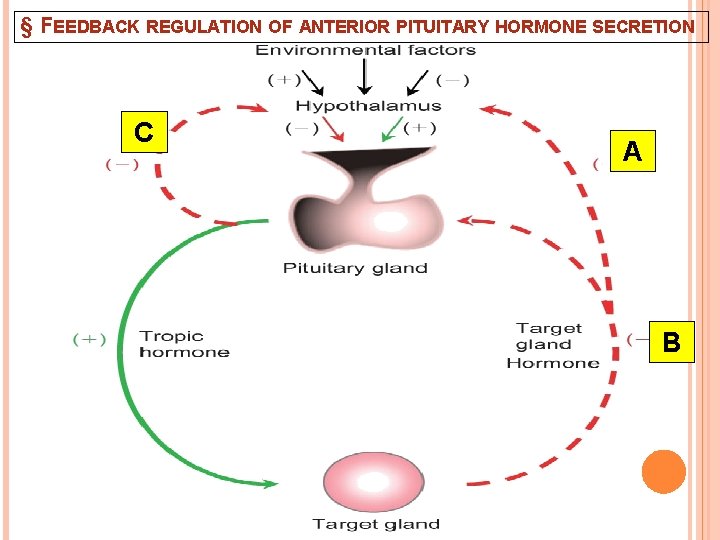
§ FEEDBACK REGULATION OF ANTERIOR PITUITARY HORMONE SECRETION C A B
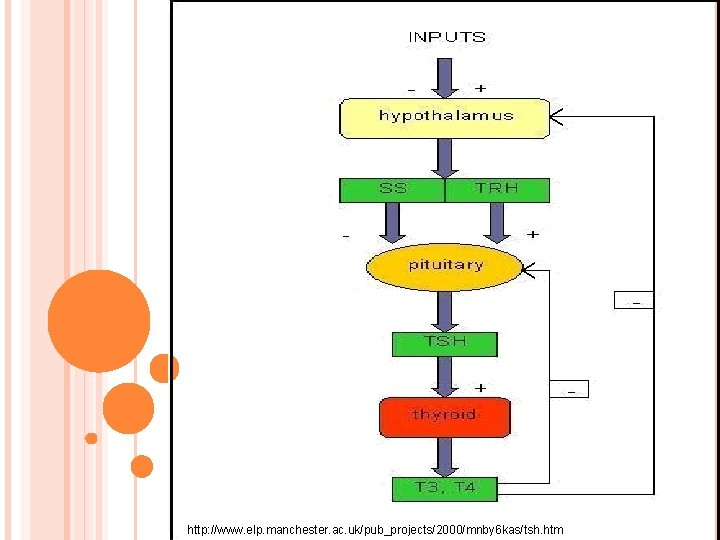
http: //www. elp. manchester. ac. uk/pub_projects/2000/mnby 6 kas/tsh. htm
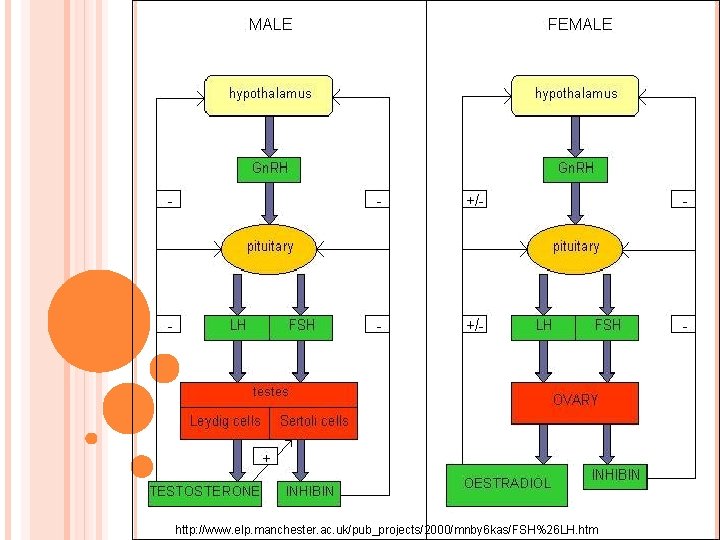
http: //www. elp. manchester. ac. uk/pub_projects/2000/mnby 6 kas/FSH%26 LH. htm
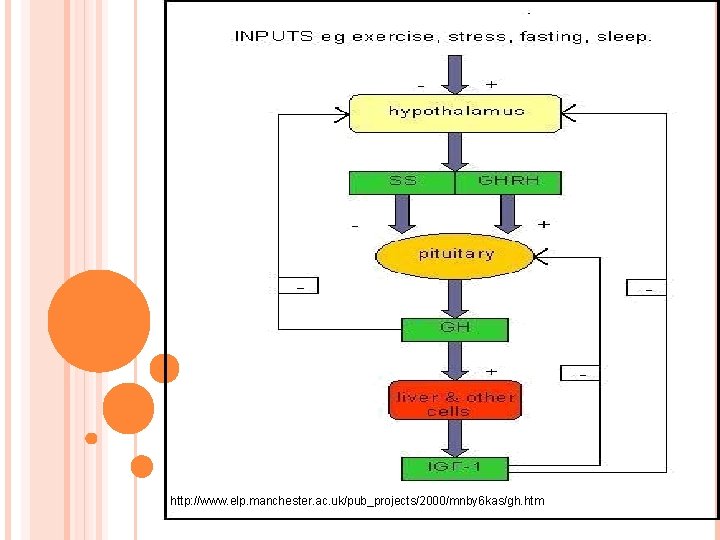
http: //www. elp. manchester. ac. uk/pub_projects/2000/mnby 6 kas/gh. htm
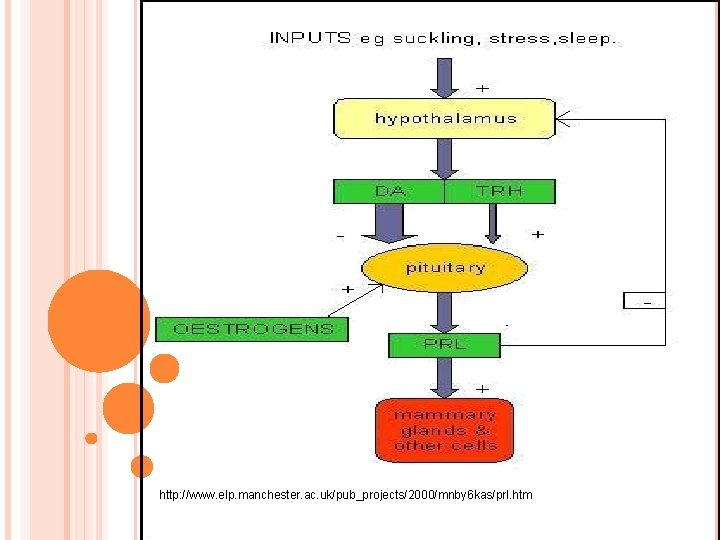
http: //www. elp. manchester. ac. uk/pub_projects/2000/mnby 6 kas/prl. htm
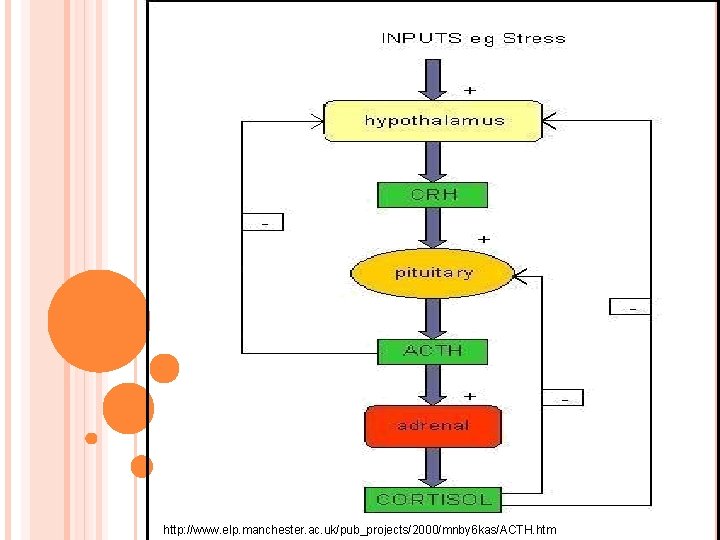
http: //www. elp. manchester. ac. uk/pub_projects/2000/mnby 6 kas/ACTH. htm
http: //www. elp. manchester. ac. uk/pub_projects/2000/mnby 6 kas/function. htm
HORMONES OF POSTERIOR PITUITARY
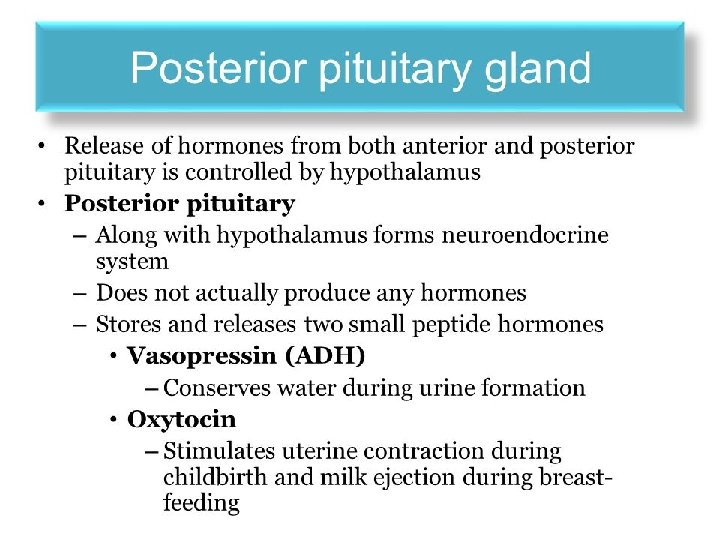
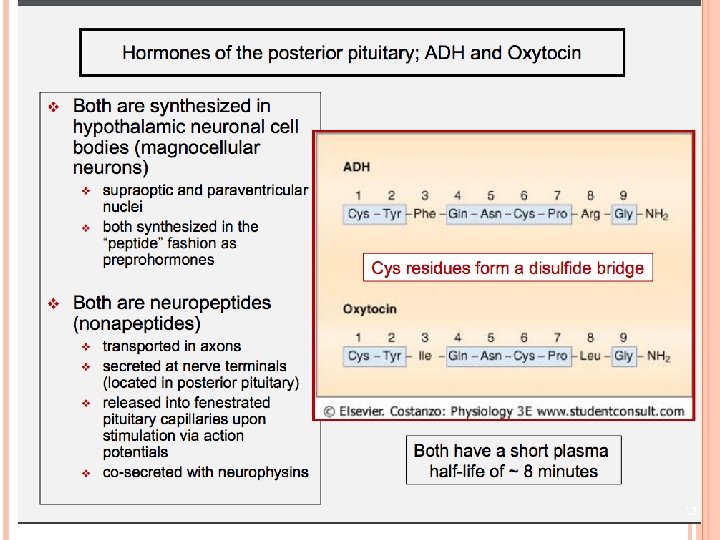
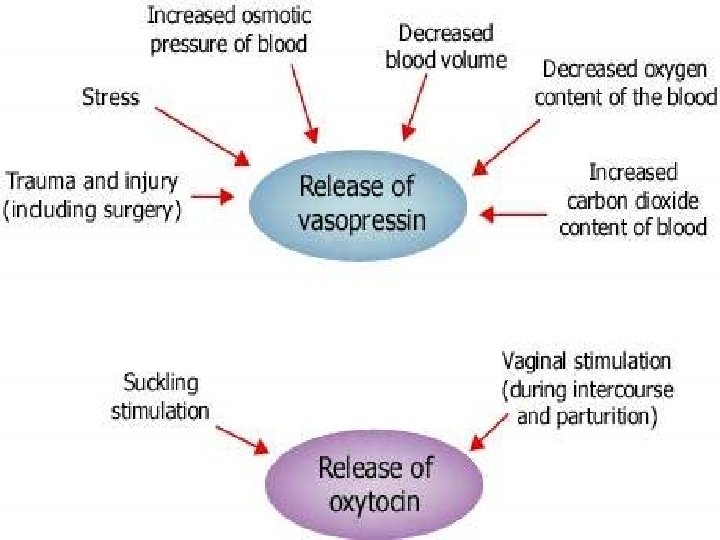
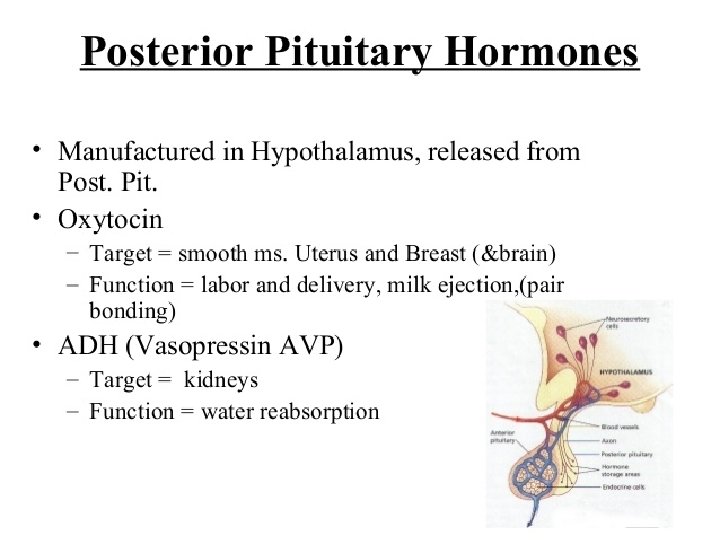
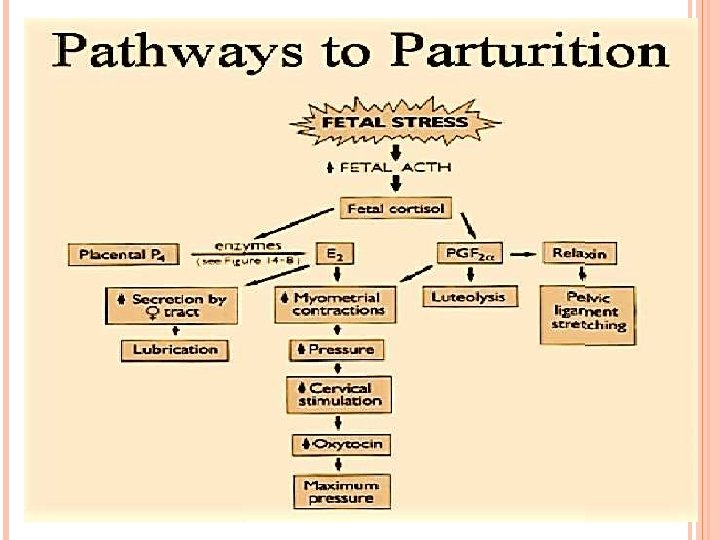
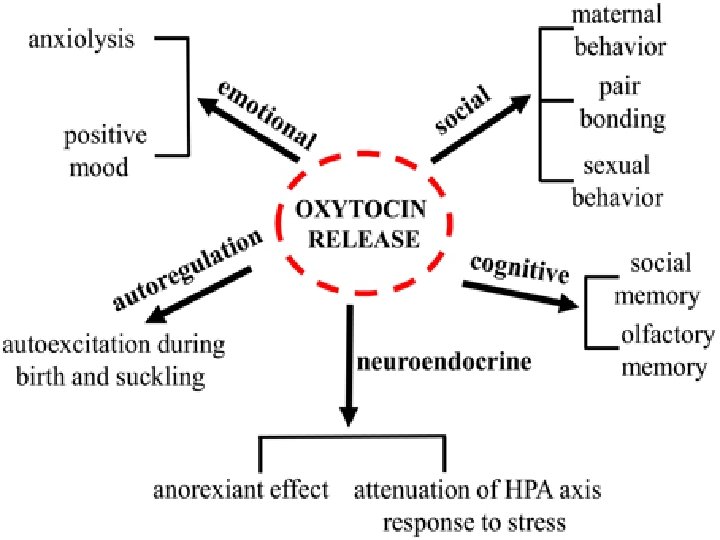
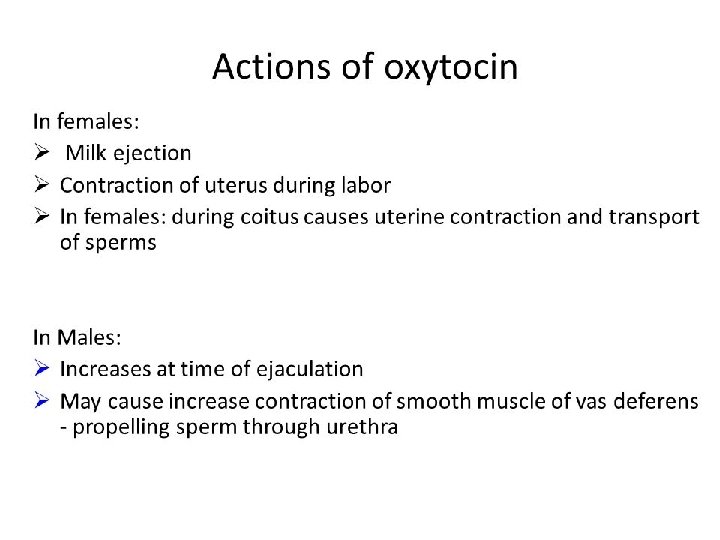
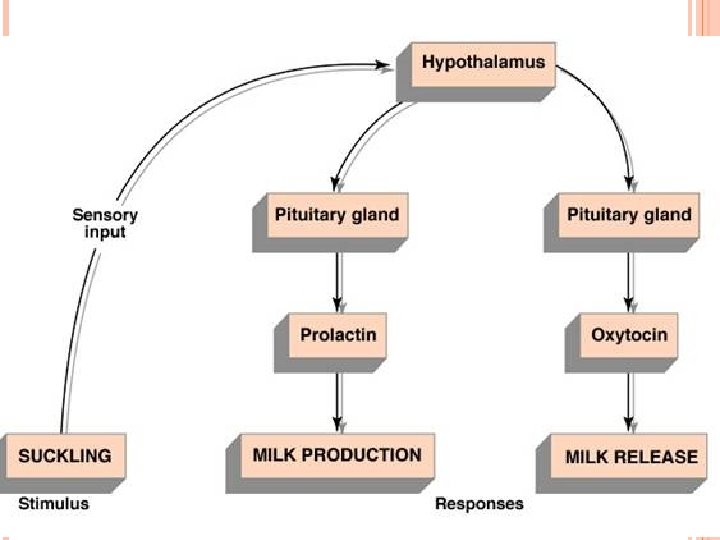
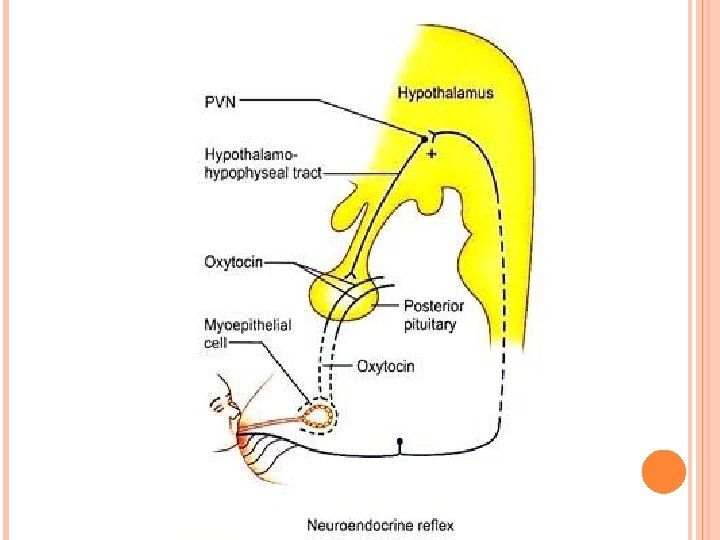
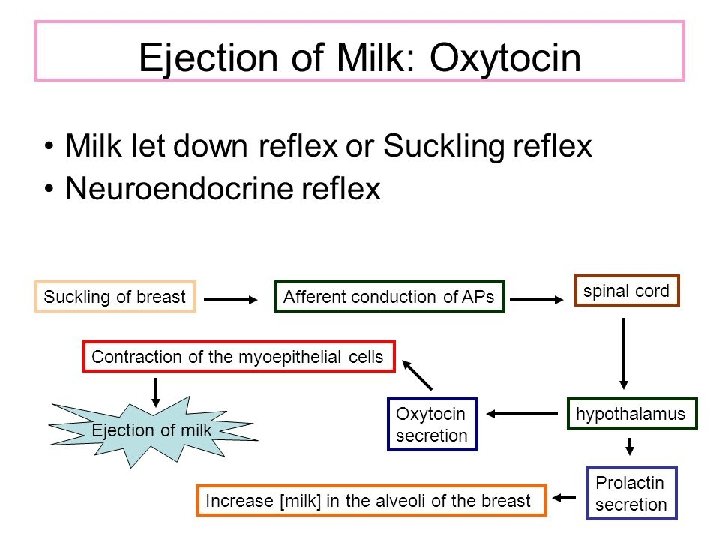
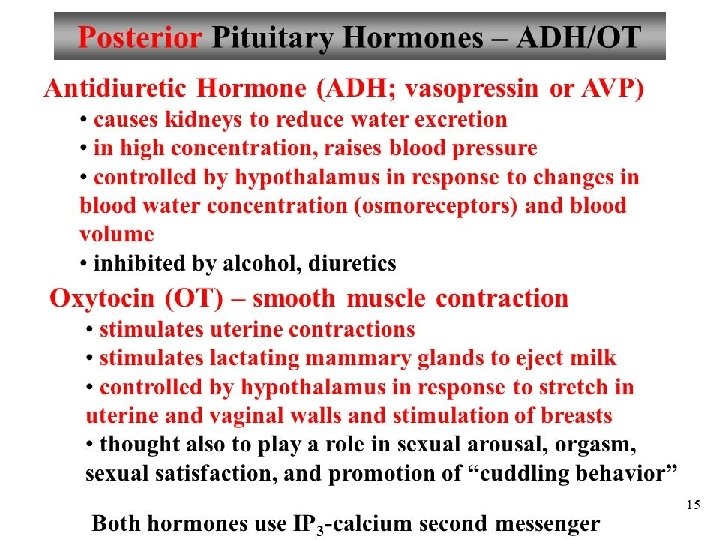
OBJECTIVES OF POSTERIOR PITUITARY HOMRONES Posterior Pituitary Hormones ADH �Water regulation Oxytocin �Milk secretion �Parturition Disorders Summary
Regulation of anterior pituitary function
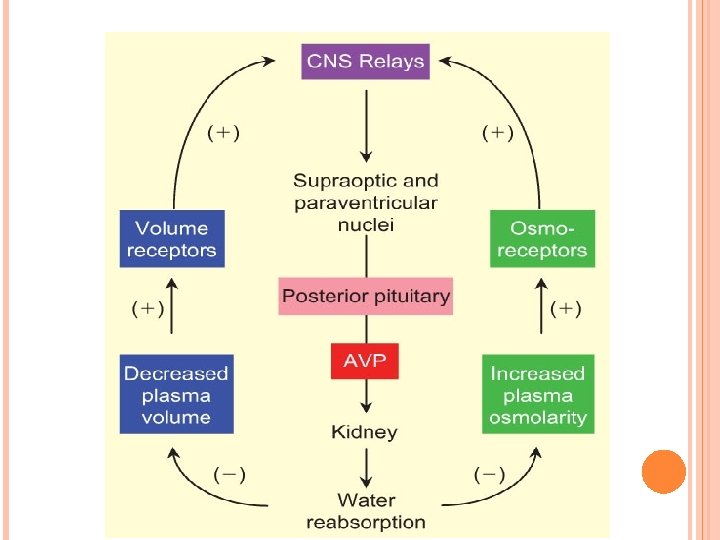
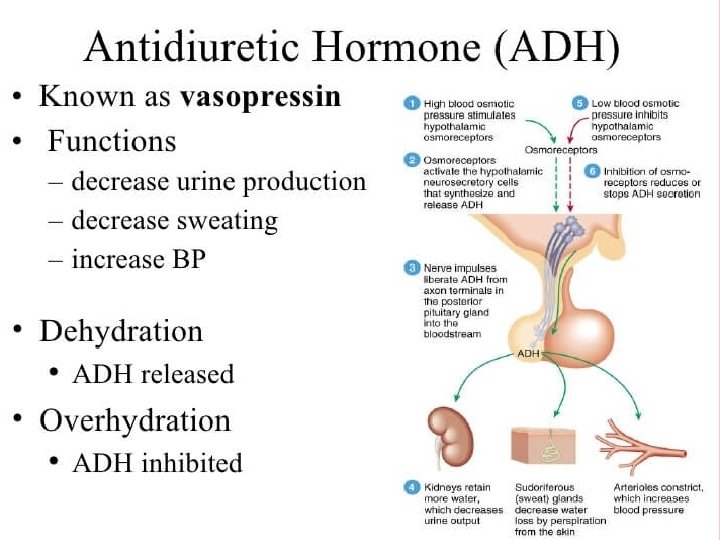
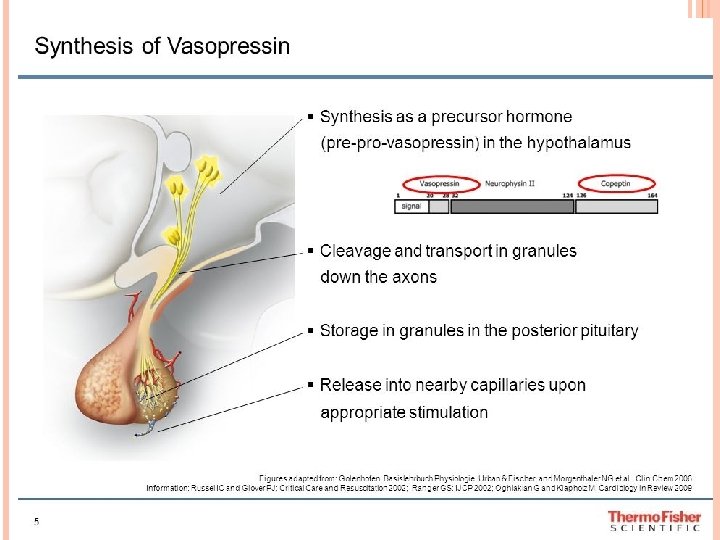
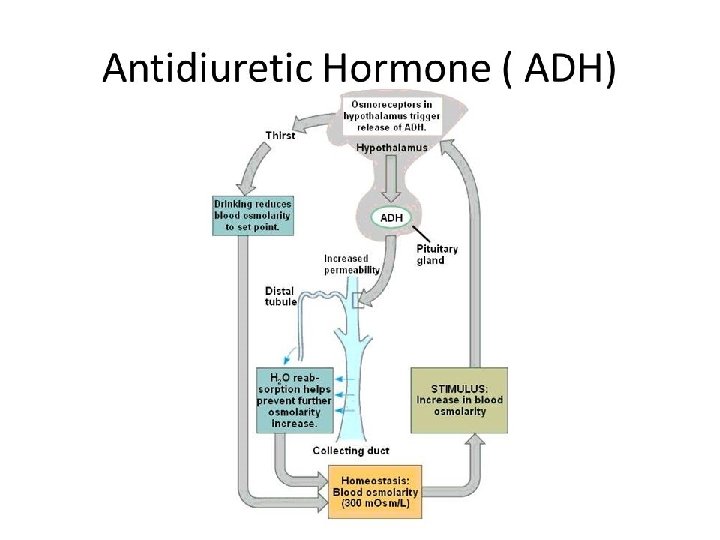
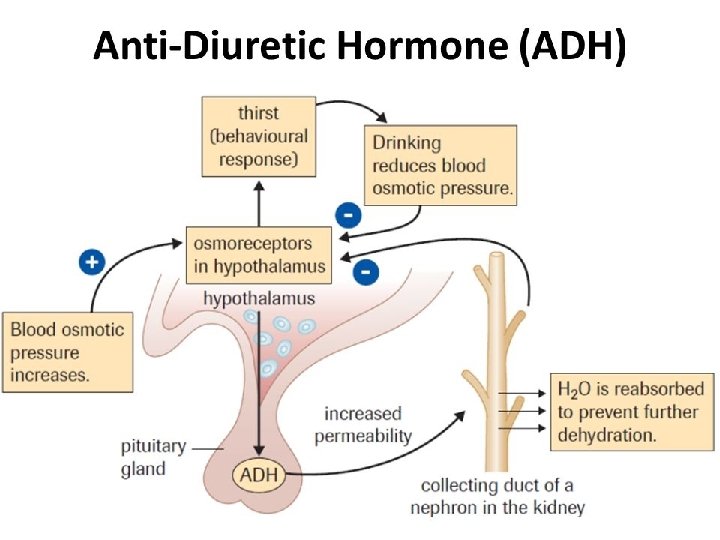
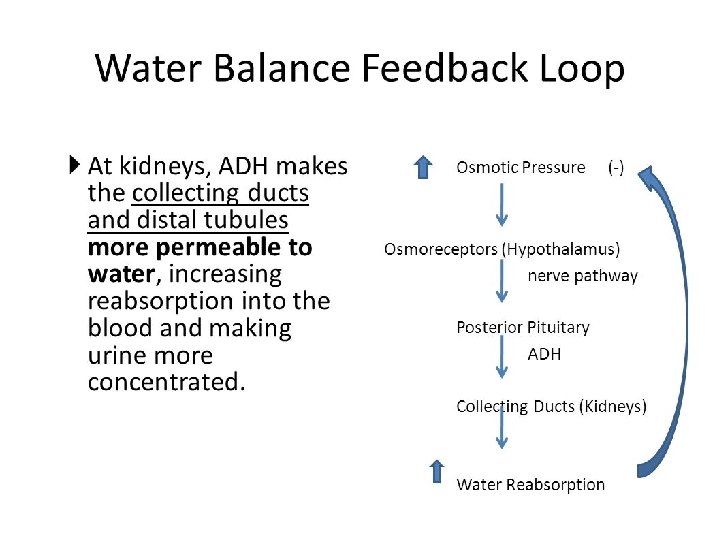
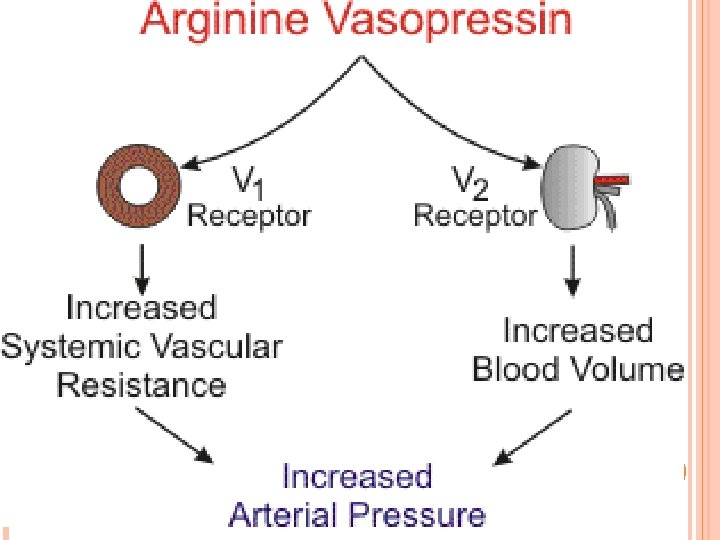
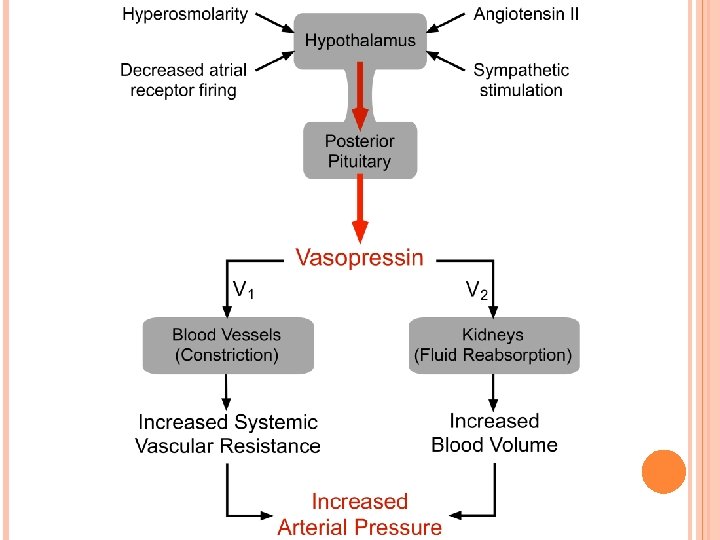
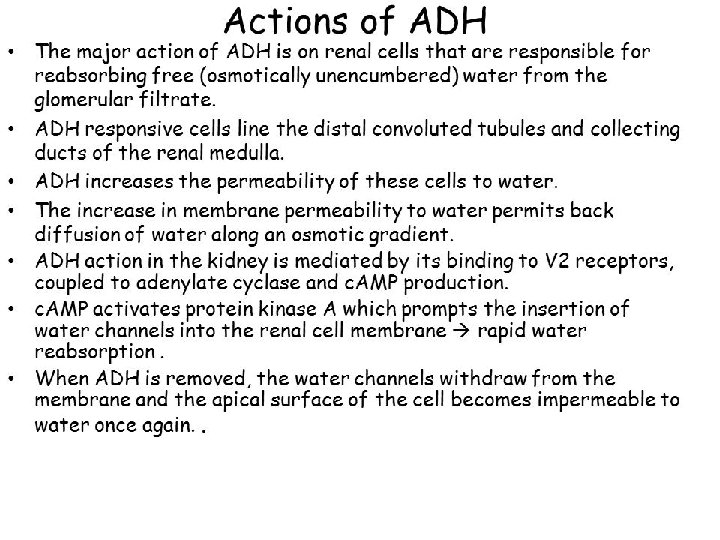
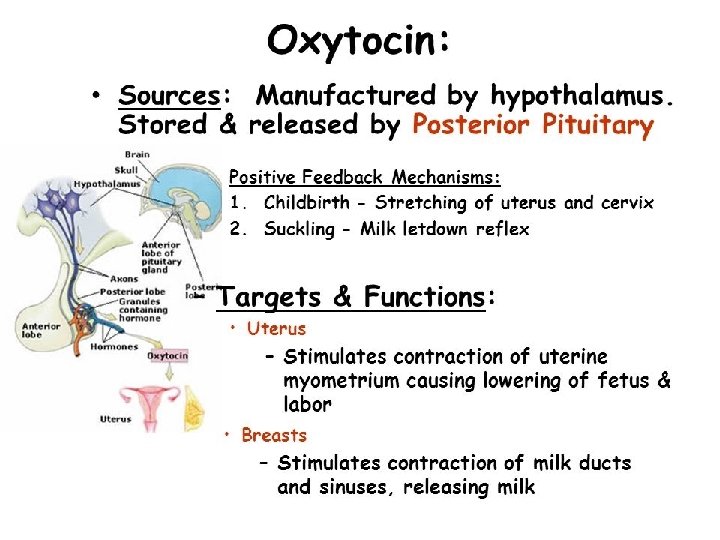
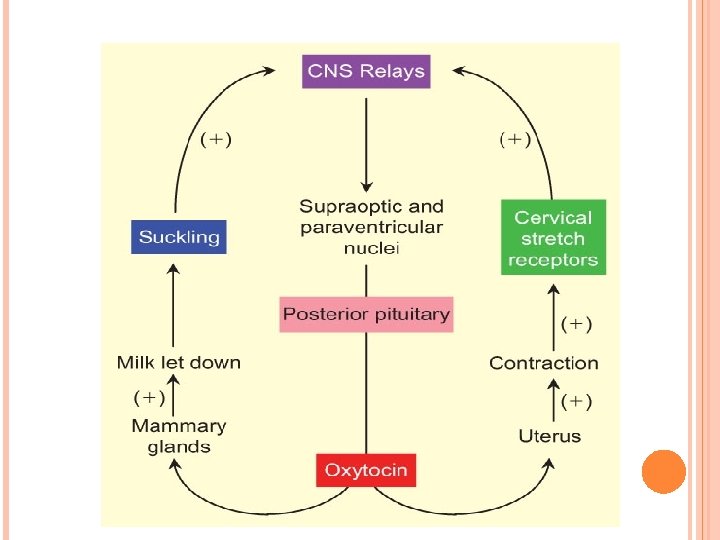
FIGURE 2. 10
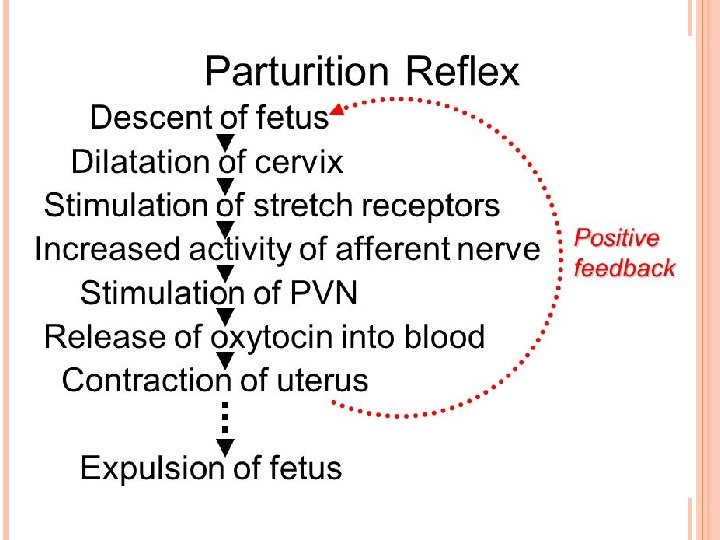
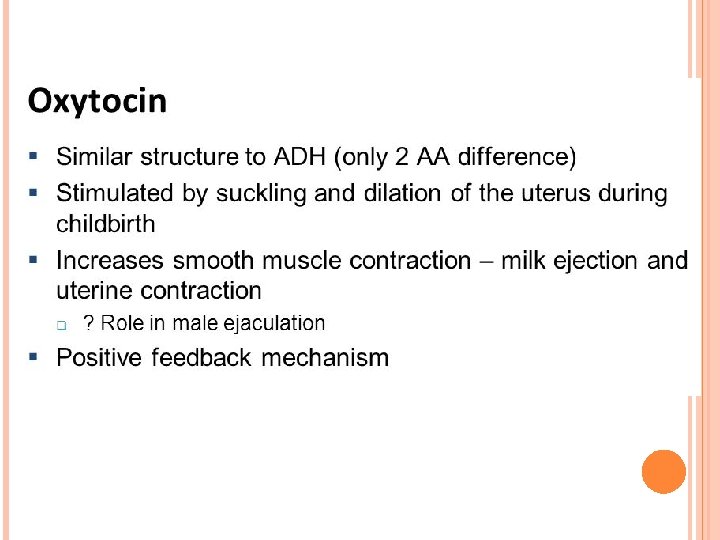
DISORDERS OF ANTERIOR & POSTERIOR PITUITARY
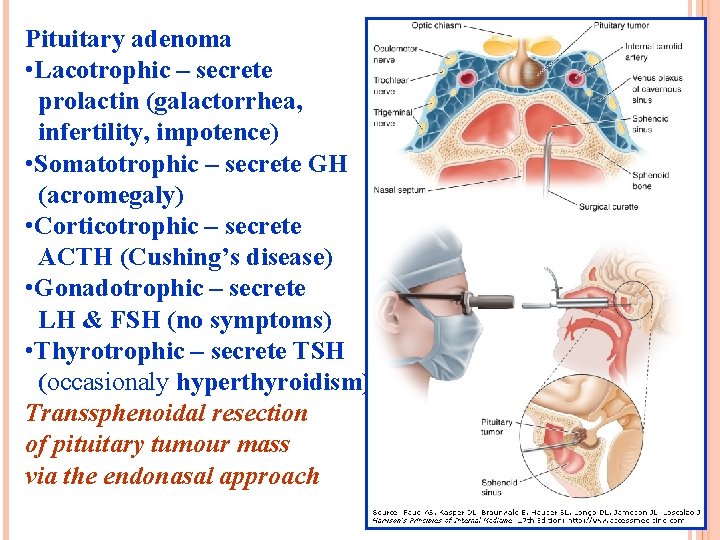
Pituitary adenoma • Lacotrophic – secrete prolactin (galactorrhea, infertility, impotence) • Somatotrophic – secrete GH (acromegaly) • Corticotrophic – secrete ACTH (Cushing’s disease) • Gonadotrophic – secrete LH & FSH (no symptoms) • Thyrotrophic – secrete TSH (occasionaly hyperthyroidism) Transsphenoidal resection of pituitary tumour mass via the endonasal approach
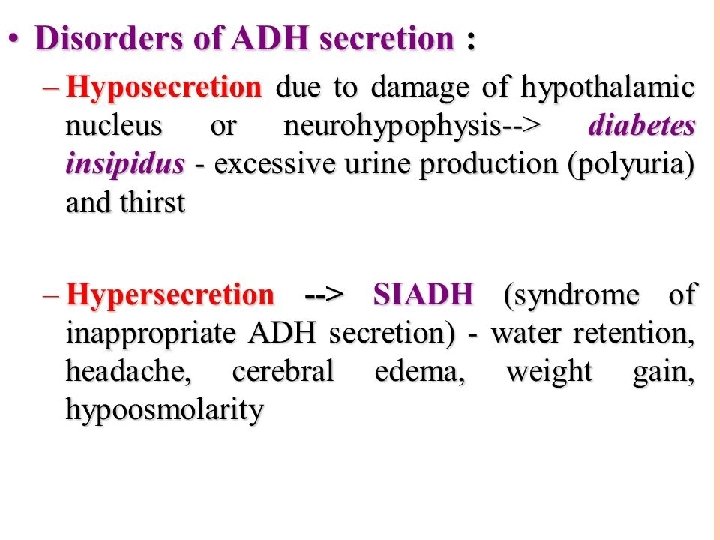
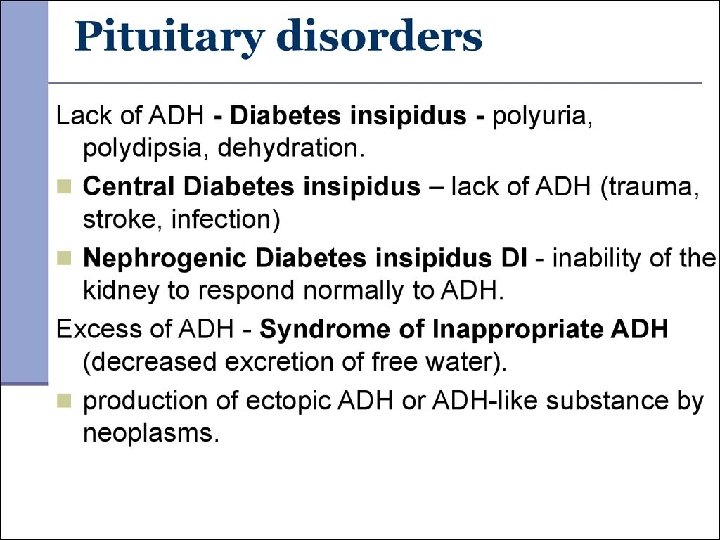
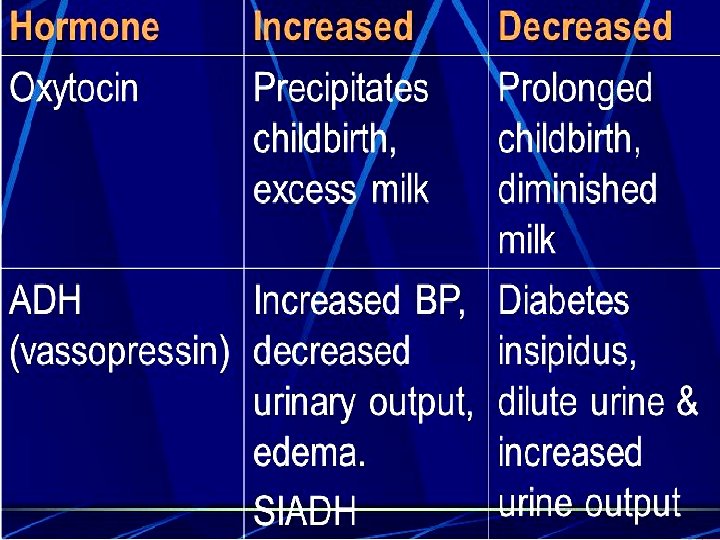
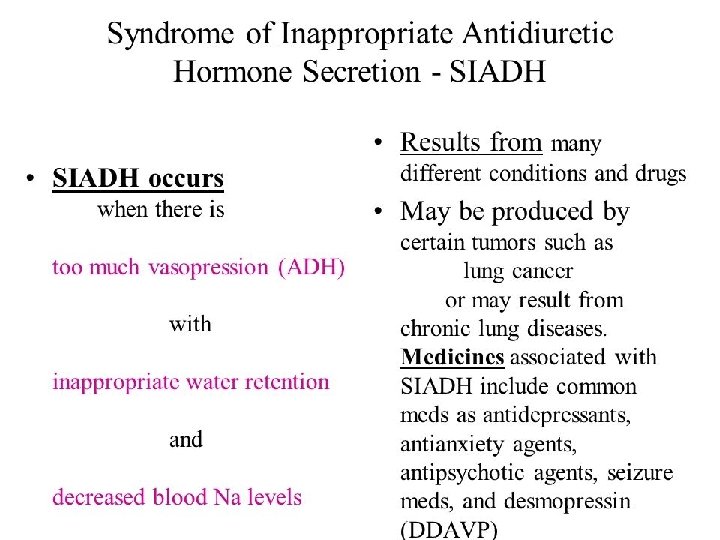
SUMMARY OF POSTERIOR PITUITARY HORMONES
PRACTICE QUESTIONS
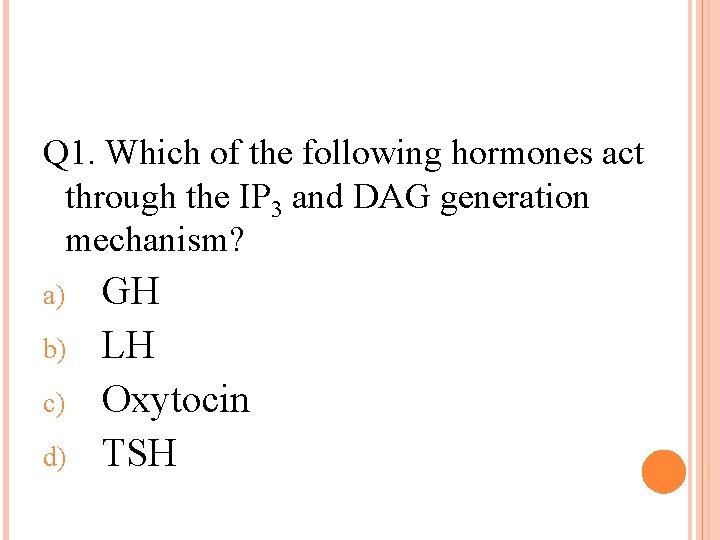
Q 1. Which of the following hormones act through the IP 3 and DAG generation mechanism? a) b) c) d) GH LH Oxytocin TSH
KEY: C: OXYTOCIN GH, Insulin, Prolactin act directly through transmembrane activation of tyrosine kinase activity b) FSH, LH, TSH act through alteration of intracellular c. AMP concentration c) Oxytocin and Vasopressin (via V 1 -rec. ) release of intracelullar Ca 2+ and protein kinase C activation d) TSH through alteration of intracellular c. AMP a)
Q 2: Which of the following hormones stimulate the contraction of uterine myometrium and breast tissue in females? a) ADH b) Growth hormone c) Oxytocin d) Prolactin
KEY: C: OXYTOCIN a) b) c) d) ADH is also called arginine vasopressin. It's a hormone made by the hypothalamus in the brain and stored in the posterior pituitary gland Growth hormone (GH), also called somatotropin or human growth hormone, peptide hormone secreted by the anterior lobe of the pituitary gland. The two main actions of oxytocin in the body are contraction of the womb (uterus) during childbirth and lactation. Prolactin is mainly used to help women produce milk after childbirth. It's important for both male and female reproductive health
Q 3: The supraoptic nucleus of the hypothalamus is believed to control secretion of which of the following hormones? a) Antidiuretic hormone (arginine vasopressin) b) Adrenocorticotropic hormone c) Growth hormone d) TSH
KEY: A a) b) c) d) It is thought that the secretion of antidiuretic hormone (ADH)-also called arginine vasopressin (AVP)-and oxytocin by the neurohypophysis is regulated in the hypothalamic supraoptic and paraventricular nuclei, respectively. ACTH is controlled by POMC from hypothalamus Growth hormone is controlled by GHRH from the hypothalamus TSH is controlled by TRH from the hypothalamus
4. Which of the following hormones stimulate the synthesis of milk protein? Luteinizing hormone b) Prolactin c) Thyroid stimulating hormone d) Growth hormone a) Key: d: Prolactin
KEY: D: PROLACTIN a) LH triggers ovulation and development of the corpus luteum. In males, LH stimulates Leydig cell production of testosterone. b) Prolactin (PRL), is a protein that is best known for its role in enabling mammals, usually females, to produce milk. c) TSH is a pituitary hormone that stimulates the thyroid gland to produce thyroxine (T 4), and then triiodothyronine (T 3) d) Growth hormone is a peptide hormone that stimulates growth, cell reproduction, and cell regeneration in humans and other animals
5. The release of which one of the following hormones is inhibited by thyroxine? a) ACTH b) GH c) LH d) TSH Key: c: TSH
KEY: C : TSH ACTH is secreted from the anterior pituitary in response to corticotropin-releasing hormone from the hypothalamus Growth hormone (GH): GH is essential in early years to maintaining a healthy body composition and for growth in children. IGF-1 is regulated Growth hormone in human body Luteinizing hormone (LH): LH works with FSH to ensure normal functioning of the ovaries and testes TSH in turn is under feedback control by the thyroid hormones T 4 and T 3.
- Slides: 89