
Antennas By Amy Haupt Senior Introduction What is

Antennas By: Amy Haupt Senior
Introduction What is a microstrip antenna? n Design using Microwave Studio. n Construction of the microstrip patch. n Experimental measurements. n Comparison of computed vs. experimental measurements. n
Microstrip Antennas An antenna projects radiation into space. n A source is used to feed the antenna n Antennas radiate better in certain directions and not as well in others. n
Design Using Microwave Studio Using the computer program Microwave Studio I was able to optimize the design of a microstrip patch antenna. n Microwave Studio provided the dimensions for all of the parts of the antenna. n
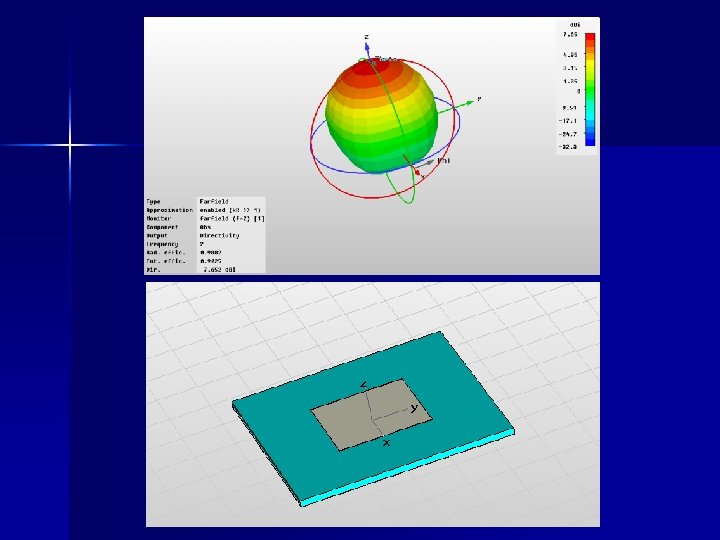
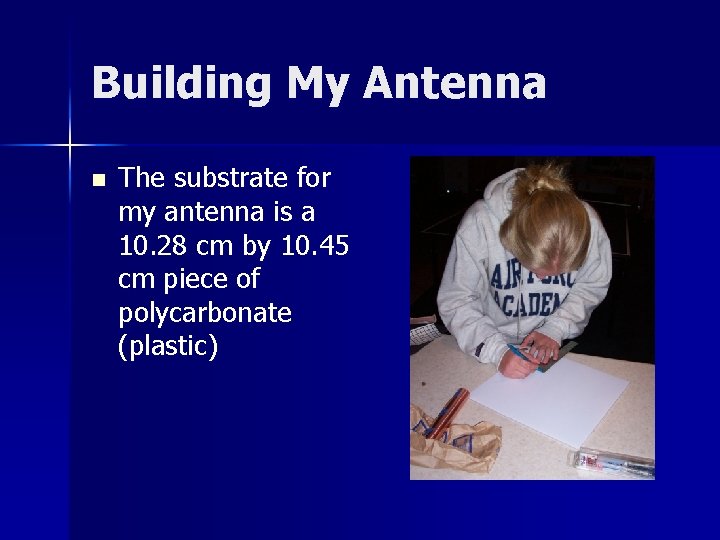
Building My Antenna n The substrate for my antenna is a 10. 28 cm by 10. 45 cm piece of polycarbonate (plastic)
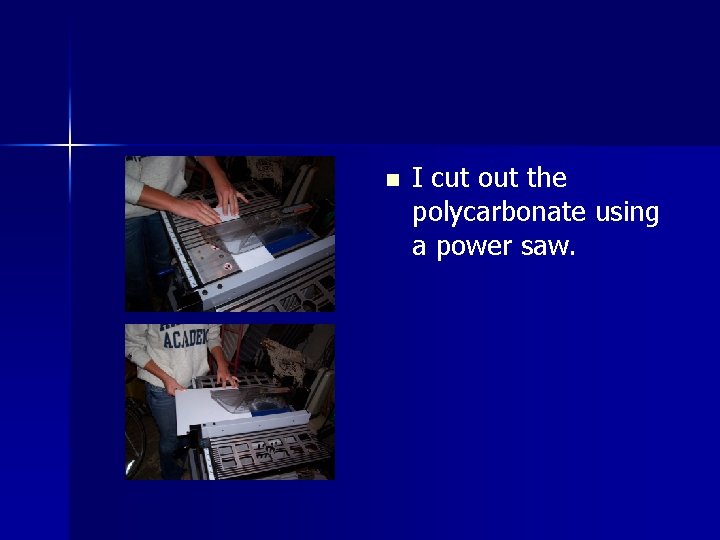
n I cut out the polycarbonate using a power saw.
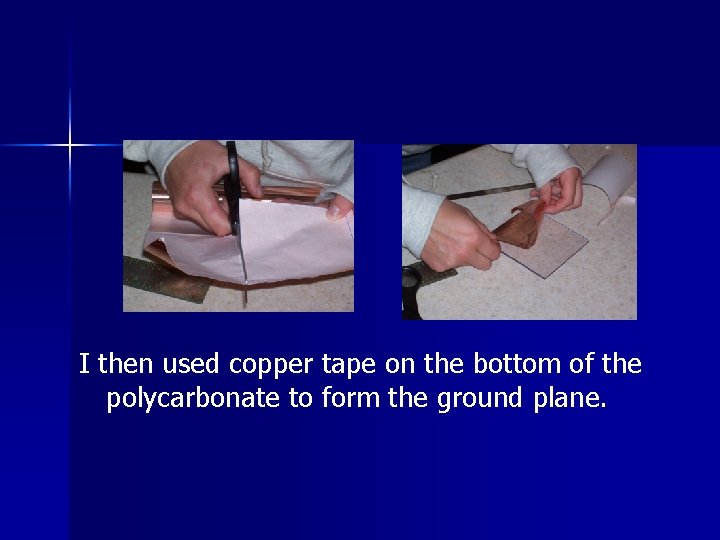
I then used copper tape on the bottom of the polycarbonate to form the ground plane.
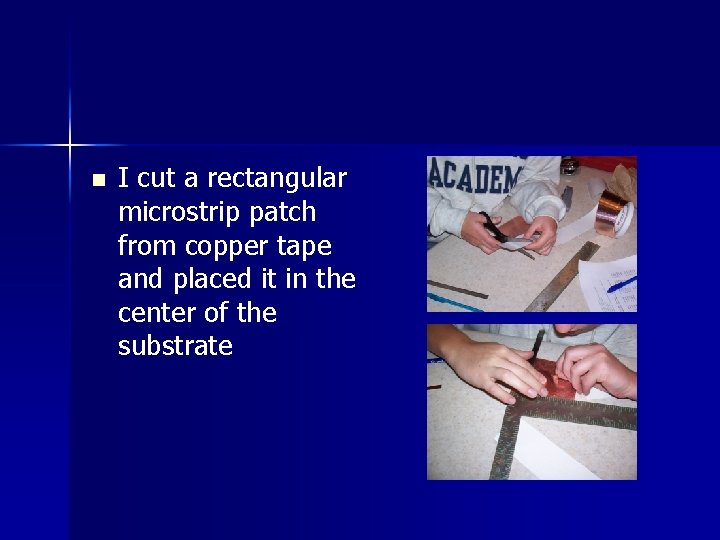
n I cut a rectangular microstrip patch from copper tape and placed it in the center of the substrate
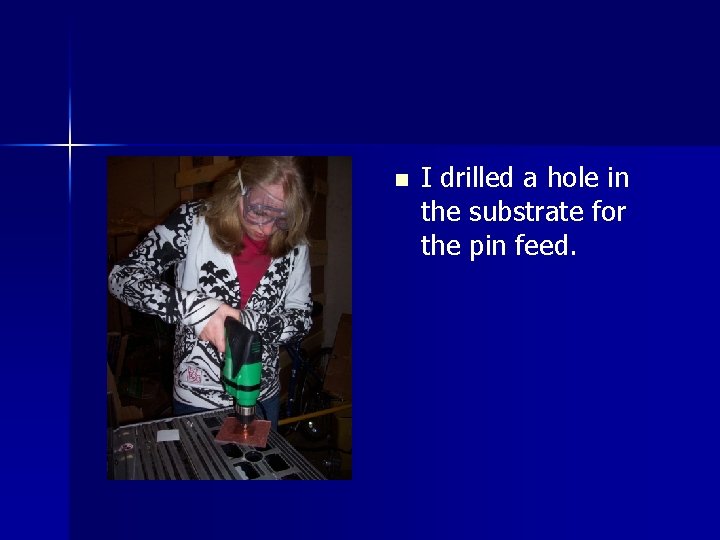
n I drilled a hole in the substrate for the pin feed.
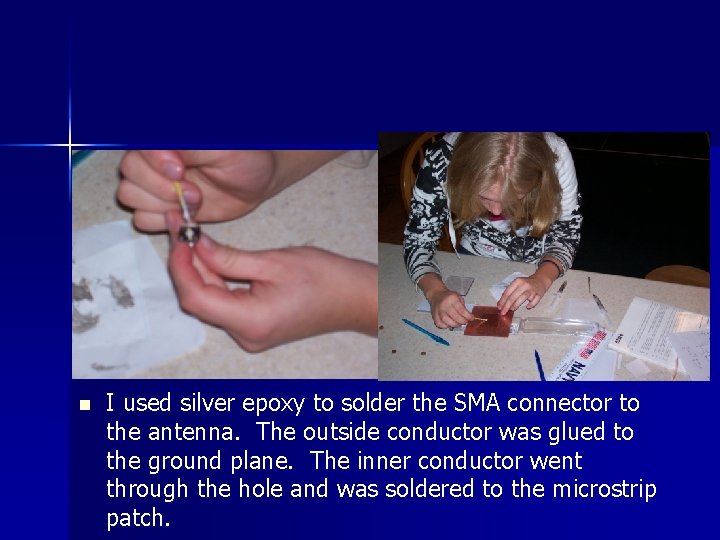
n I used silver epoxy to solder the SMA connector to the antenna. The outside conductor was glued to the ground plane. The inner conductor went through the hole and was soldered to the microstrip patch.
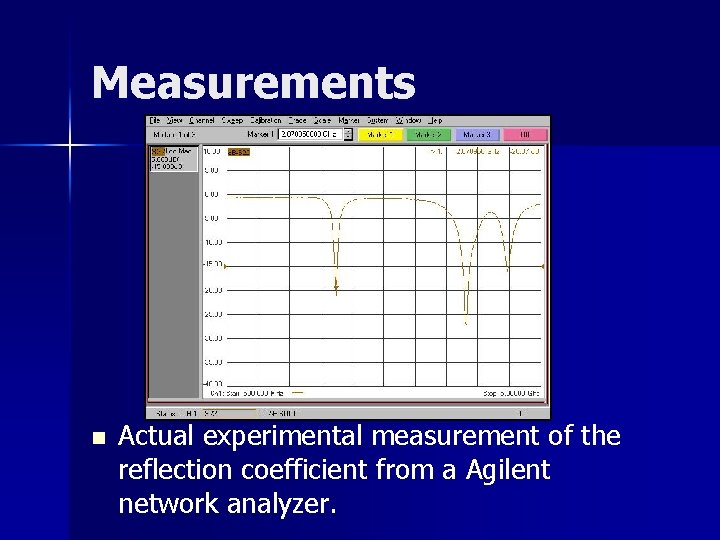
Measurements n Actual experimental measurement of the reflection coefficient from a Agilent network analyzer.
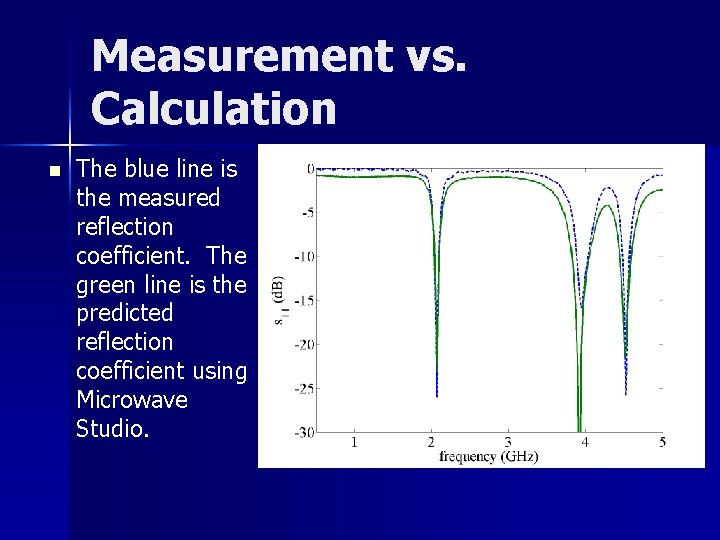
Measurement vs. Calculation n The blue line is the measured reflection coefficient. The green line is the predicted reflection coefficient using Microwave Studio.
Conclusion n The microstrip patch designed using Microwave Studio matched the experimental measurements.
- Slides: 14