
Antenna Take Off Angles A Contesters Perspective By
Antenna Take Off Angles A Contester’s Perspective By Gary C. Sutcliffe, W 9 XT August 2018 1
What we will cover today �What affects antenna take off angles �Why antenna take off angles are important �What we can do about it 2
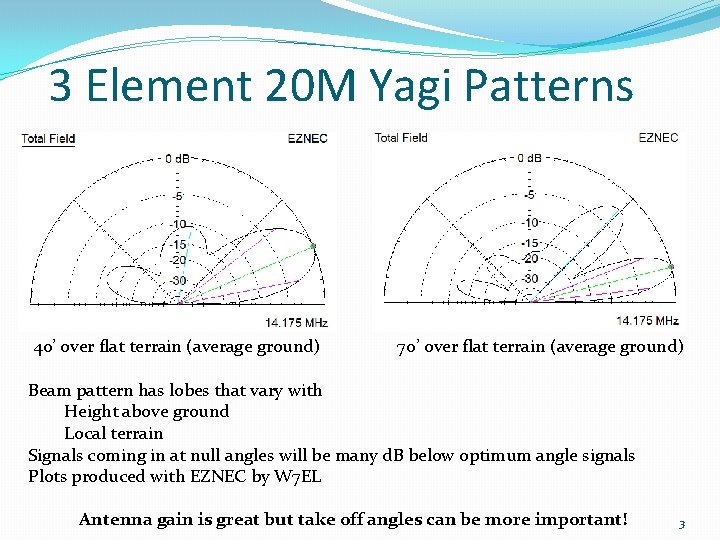
3 Element 20 M Yagi Patterns 40’ over flat terrain (average ground) 70’ over flat terrain (average ground) Beam pattern has lobes that vary with Height above ground Local terrain Signals coming in at null angles will be many d. B below optimum angle signals Plots produced with EZNEC by W 7 EL Antenna gain is great but take off angles can be more important! 3
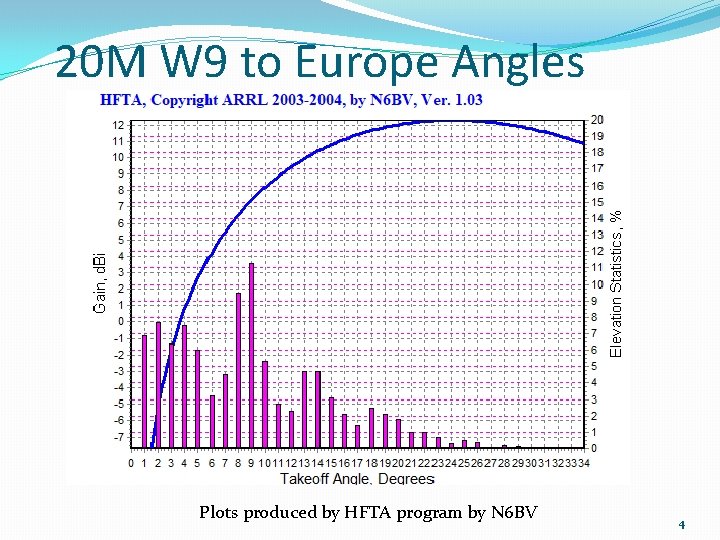
20 M W 9 to Europe Angles Plots produced by HFTA program by N 6 BV 4
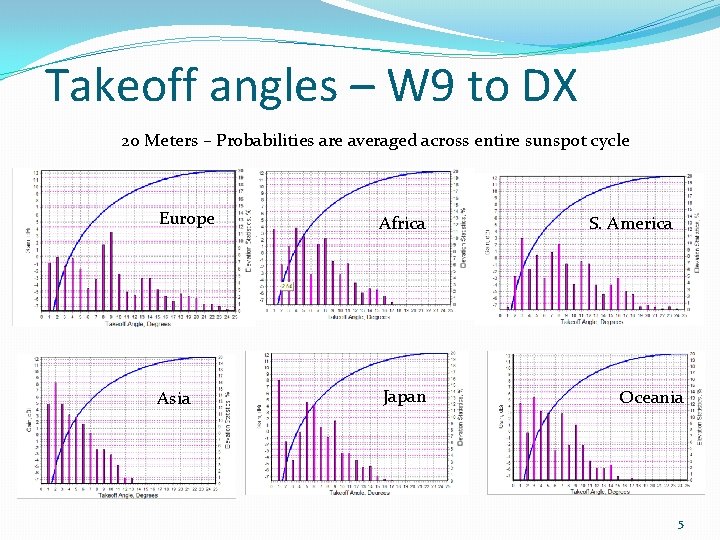
Takeoff angles – W 9 to DX 20 Meters – Probabilities are averaged across entire sunspot cycle Europe Africa Asia Japan S. America Oceania 5
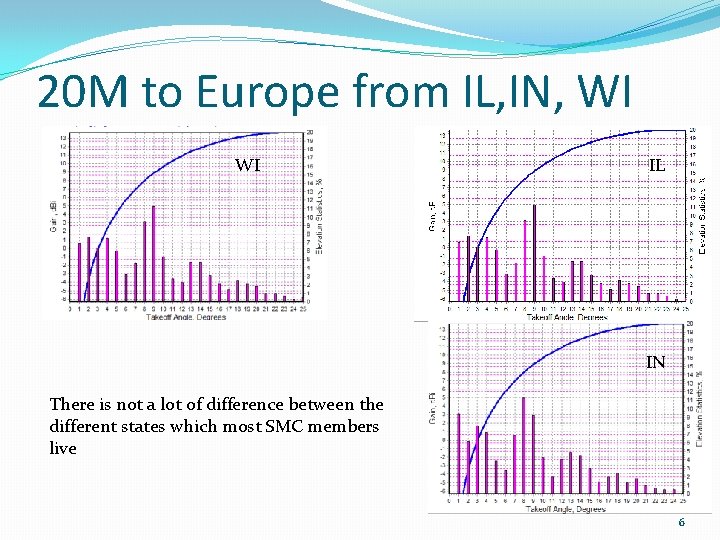
20 M to Europe from IL, IN, WI WI IL IN There is not a lot of difference between the different states which most SMC members live 6
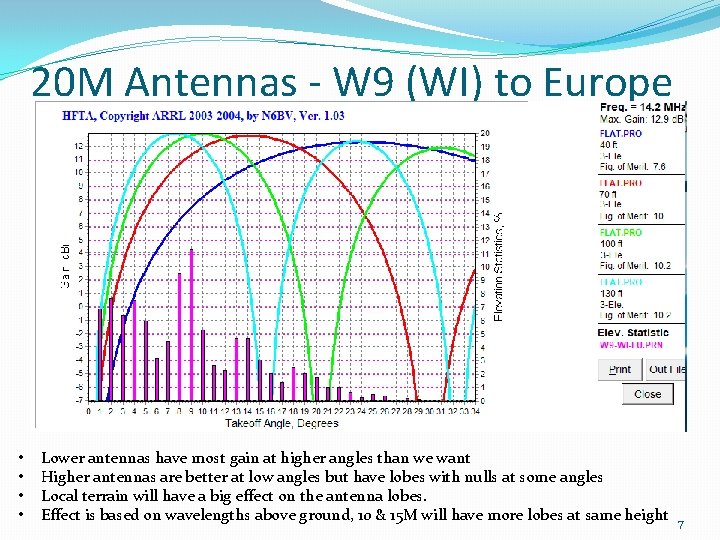
20 M Antennas - W 9 (WI) to Europe • • Lower antennas have most gain at higher angles than we want Higher antennas are better at low angles but have lobes with nulls at some angles Local terrain will have a big effect on the antenna lobes. Effect is based on wavelengths above ground, 10 & 15 M will have more lobes at same height 7
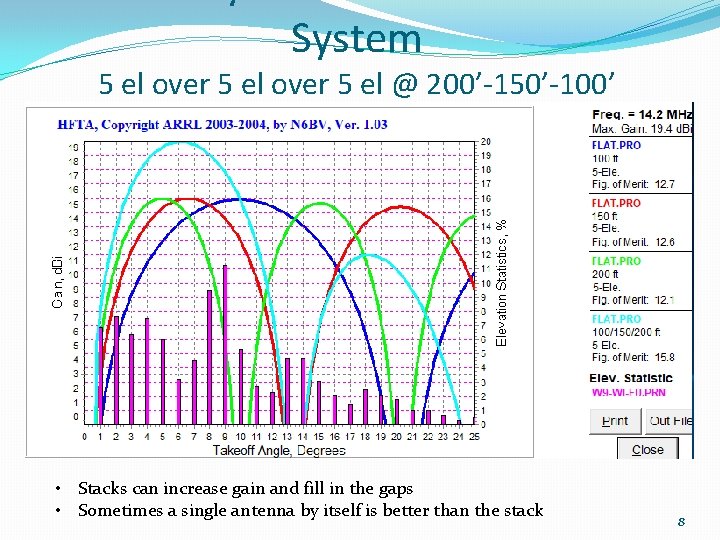
System 5 el over 5 el @ 200’-150’-100’ • Stacks can increase gain and fill in the gaps • Sometimes a single antenna by itself is better than the stack 8
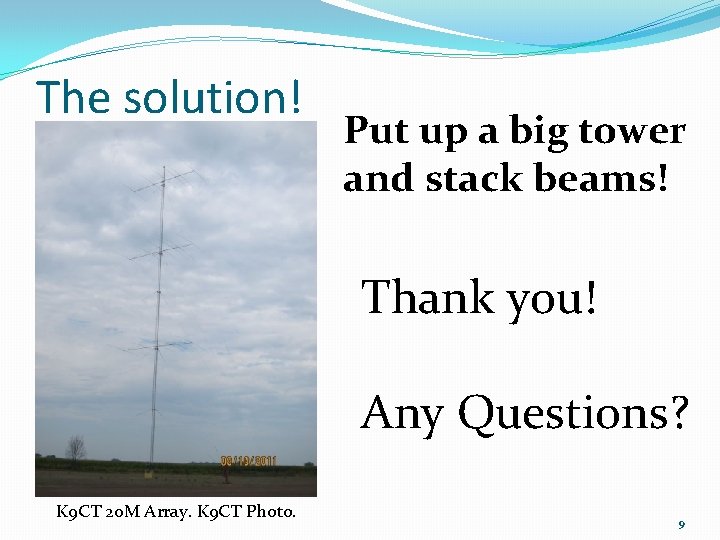
The solution! Put up a big tower and stack beams! Thank you! Any Questions? K 9 CT 20 M Array. K 9 CT Photo. 9

What about the rest of us? What can we do? 10
What do we know? �Most of us have maxed out our towers/beams �Low bands will be critical for next few years �Low take off angles will dominate for DX �Even low bands will go long and/or close early �We want to be loud in �High population and multiplier rich areas � Europe in DX contests � The coasts and Midwest in domestic contests �The SMC circle 11
True or False? Verticals radiate equally poorly in all directions. 12
Mostly True! But a poor radiator is better than a really bad one! 13
The case for verticals and inverted L antennas on the low bands 14
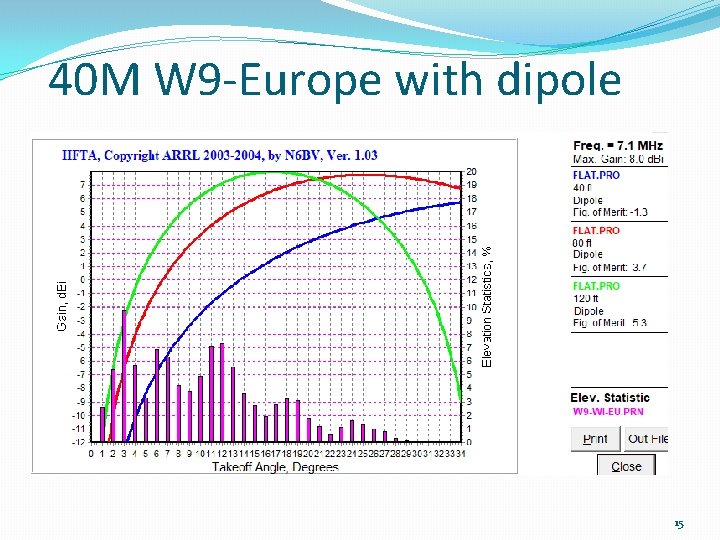
40 M W 9 -Europe with dipole 15
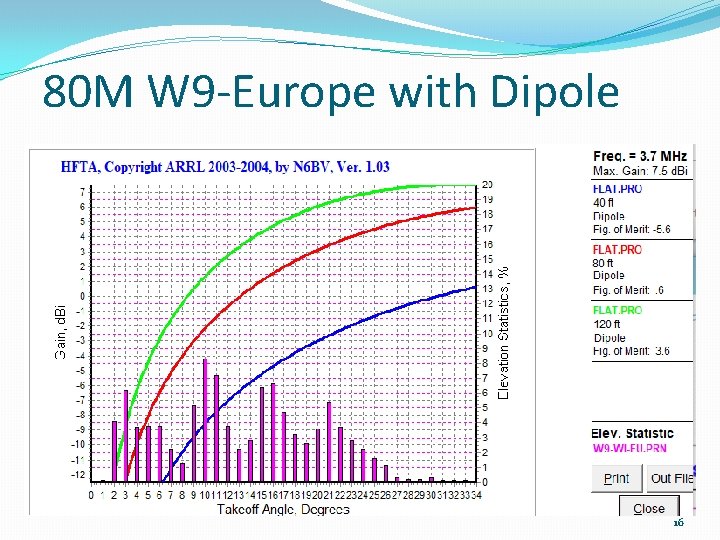
80 M W 9 -Europe with Dipole 16
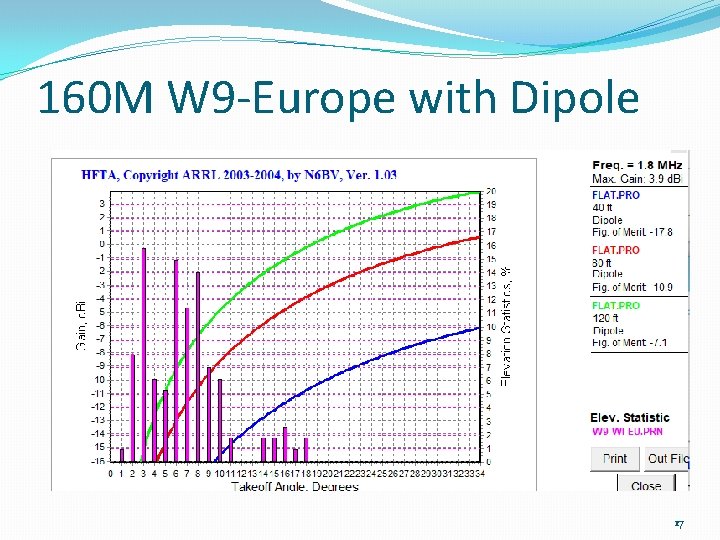
160 M W 9 -Europe with Dipole 17
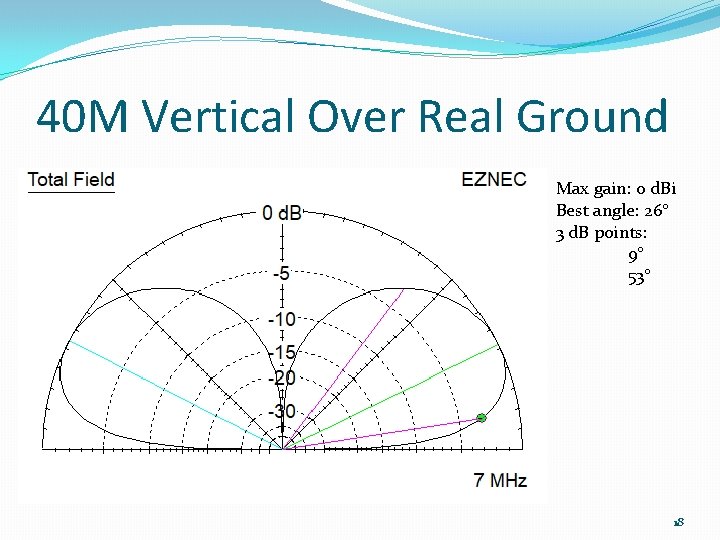
40 M Vertical Over Real Ground Max gain: 0 d. Bi Best angle: 26° 3 d. B points: 9° 53° 18
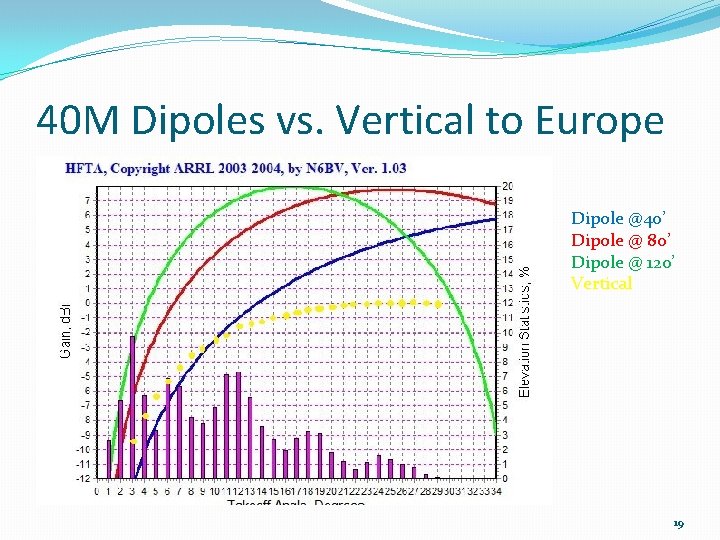
40 M Dipoles vs. Vertical to Europe Dipole @40’ Dipole @ 80’ Dipole @ 120’ Vertical 19
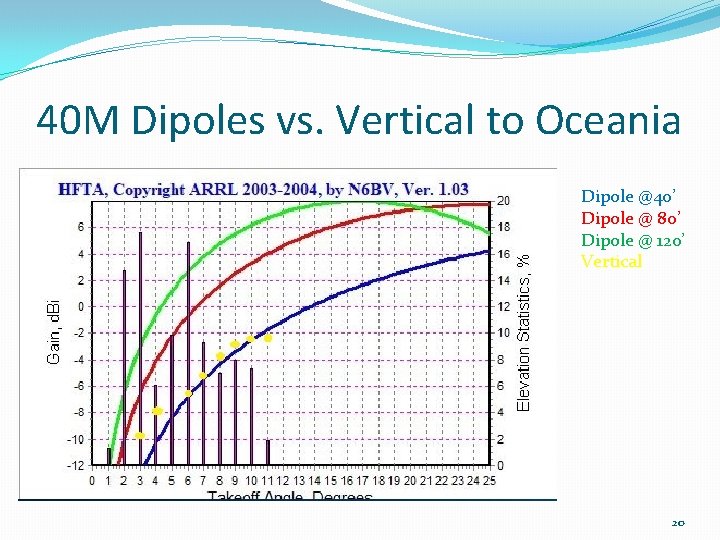
40 M Dipoles vs. Vertical to Oceania Dipole @40’ Dipole @ 80’ Dipole @ 120’ Vertical 20
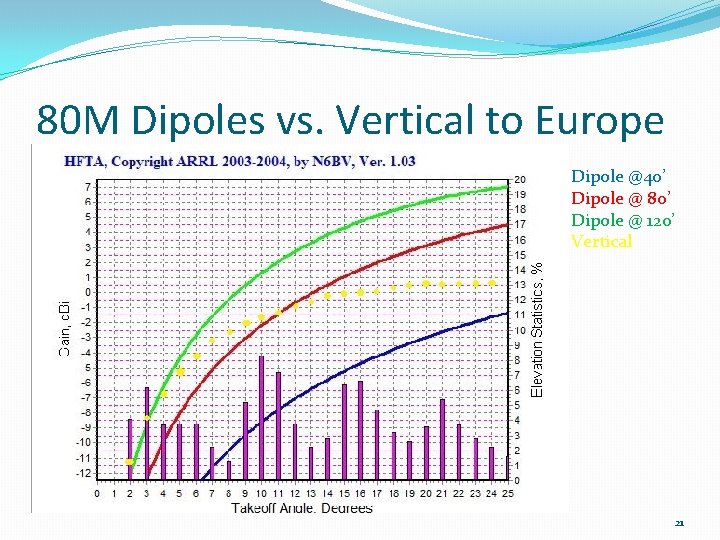
80 M Dipoles vs. Vertical to Europe Dipole @40’ Dipole @ 80’ Dipole @ 120’ Vertical 21
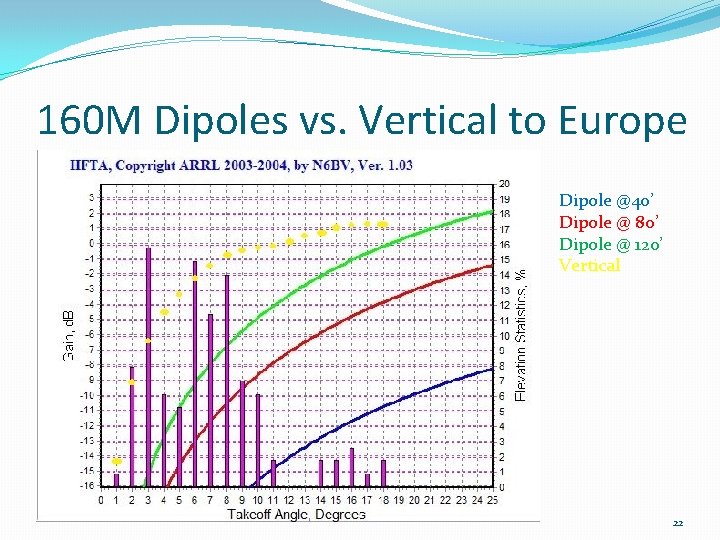
160 M Dipoles vs. Vertical to Europe Dipole @40’ Dipole @ 80’ Dipole @ 120’ Vertical 22
Vertical Antenna Conclusions �Verticals & Inverted Ls can be effective, especially on the lower bands. �Good ground/radial systems are important for high efficiency, but �On 80 & 160 M there is a lot of difference between vert and low dipole performance. Even a vertical with a moderate radial system might still be an improvement over a low dipole. �Put in whatever radials you can – don’t let the perfect be the enemy of the good 23
The Case for NVIS Antennas (Near Vertical Incidence Skywave) �We want to work more fellow SMC members & close in states �What we know �You want higher angles for close in stations (geometry) �Lower antennas have higher take off angles �As sunspots decline the lower bands will go long sooner 24
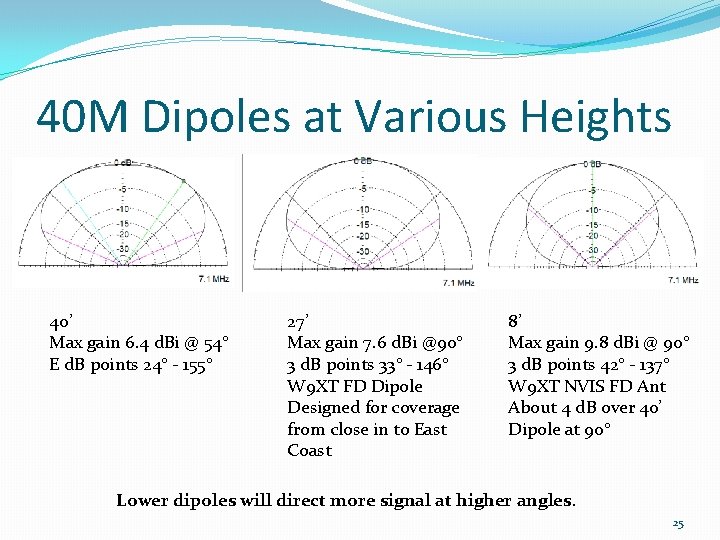
40 M Dipoles at Various Heights 40’ Max gain 6. 4 d. Bi @ 54° E d. B points 24° - 155° 27’ Max gain 7. 6 d. Bi @90° 3 d. B points 33° - 146° W 9 XT FD Dipole Designed for coverage from close in to East Coast 8’ Max gain 9. 8 d. Bi @ 90° 3 d. B points 42° - 137° W 9 XT NVIS FD Ant About 4 d. B over 40’ Dipole at 90° Lower dipoles will direct more signal at higher angles. 25
Problems with Low Dipoles �Impedance drops as dipole is lowered �~12 ohms at 8’ �Solution �Use a folded dipole with higher input impedance (~280 ohms) �Folded dipole impedance goes down to about 50 ohms at low height 26
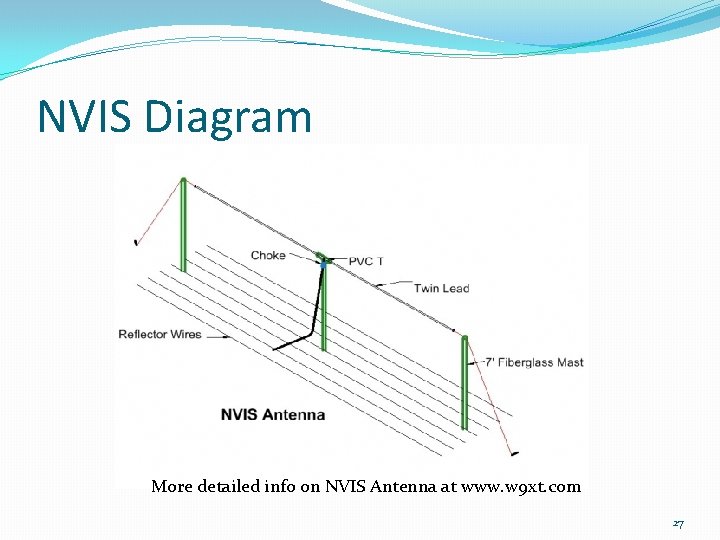
NVIS Diagram More detailed info on NVIS Antenna at www. w 9 xt. com 27
W 9 XT FD Experience �Been 40 M CW FD specialist for over 30 years �Always trying new antennas to improve results �Current system: Dipole @27’, Vert w/2 raised radials, NVIS �Tried an NVIS dipole after a discussion at an ARES meeting �Effective for up to about 250 miles �Very quiet antenna – rejects signals from lower angles �Listening to W 9 CA circa 2012: � Vertical with elevated radials: not heard � Dipole @27’: S 4 (just above noise level) � NVIS: S 6 �Not very good in 2018 FD - Why? 28
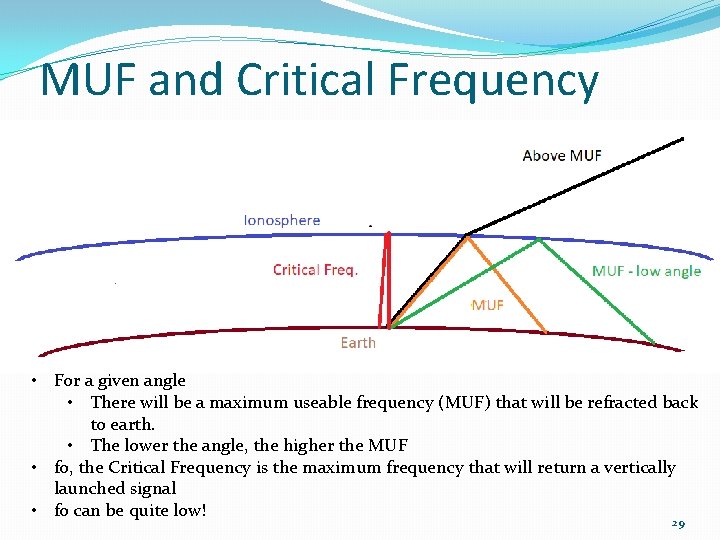
MUF and Critical Frequency • For a given angle • There will be a maximum useable frequency (MUF) that will be refracted back to earth. • The lower the angle, the higher the MUF • fo, the Critical Frequency is the maximum frequency that will return a vertically launched signal • fo can be quite low! 29
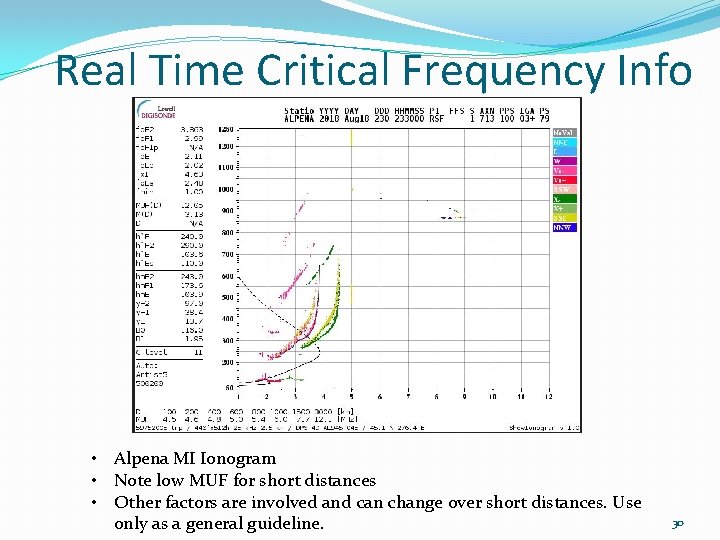
Real Time Critical Frequency Info • Alpena MI Ionogram • Note low MUF for short distances • Other factors are involved and can change over short distances. Use only as a general guideline. 30
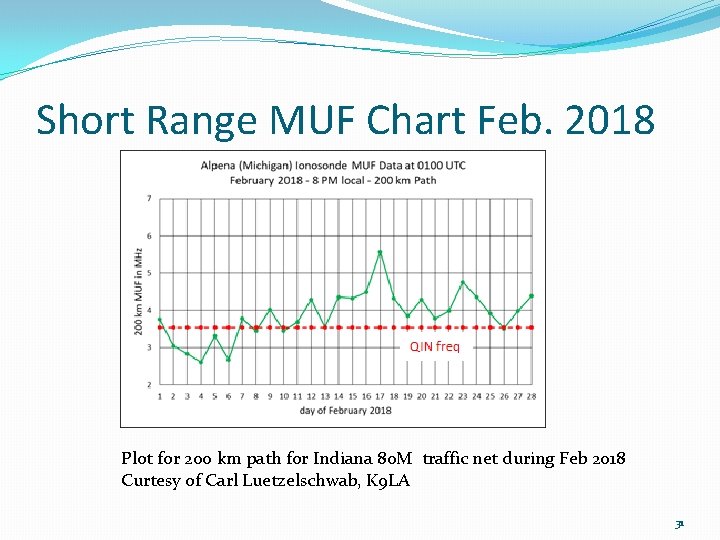
Short Range MUF Chart Feb. 2018 Plot for 200 km path for Indiana 80 M traffic net during Feb 2018 Curtesy of Carl Luetzelschwab, K 9 LA 31
NVIS Conclusions �NVIS antennas can be effective for short distances (SMC Circle!) �We are probably too far into sunspot minimum to be effective on 40 M on a regular basis �An NVIS antenna for 80/75 could be useful �Overall, a dipole at moderate heights (30 -60’) will be a more useful antenna, but the NVIS is a good second antenna for close in work. �If you only have verticals for the low bands, a low dipole or NVIS can be a big improvement for regional QSOs 32
Summary �Signals can arrive over a long range of angles depending on target location, band solar conditions �We usually won’t know what the current angle is and there might be multiple angles in play at the same time �If we don’t match our antennas to the useful angles, our antennas will not be very effective. �It can be difficult (expensive) to match angles for the higher HF bands �Verticals and NVIS can be inexpensive upgrades for the low bands �Don’t let the perfect be the enemy with the good. Do the best you can putting up antennas and have fun! 33

Questions? For real this time! 34
Acknowledgements Carl Luetzelschwab, K 9 LA, for his help and suggestions Craig Thompson, K 9 CT, 20 M stack photo This paper uses ionospheric data from the USAF NEXION Digisonde network. The NEXION Program Manager is Mark Leahy. (Alpena MI Ionograms) This presentation will be posted at www. w 9 xt. com 35
Notes The following programs were used to generate plots: HFTA by Dean Straw, N 6 BV EZNEC by Roy Lewallen, W 7 EL Both programs are on the CD in the back of the ARRL Antenna book (Paid EZNEC version used to prepare this presentation) 36
- Slides: 36