
Antegrade Guidewire Basics Guidewire Tip Shaping Escalation Strategies
Antegrade Guidewire Basics: Guidewire Tip Shaping, Escalation Strategies and Drilling vs. Penetration Shigeru SAITO, MD, FACC Kamakura & Sapporo, JAPAN NPO TRI International Network
Shigeru Saito, MD I have no real or apparent conflicts of interest to report.

Tip Shaping NPO TRI International Network
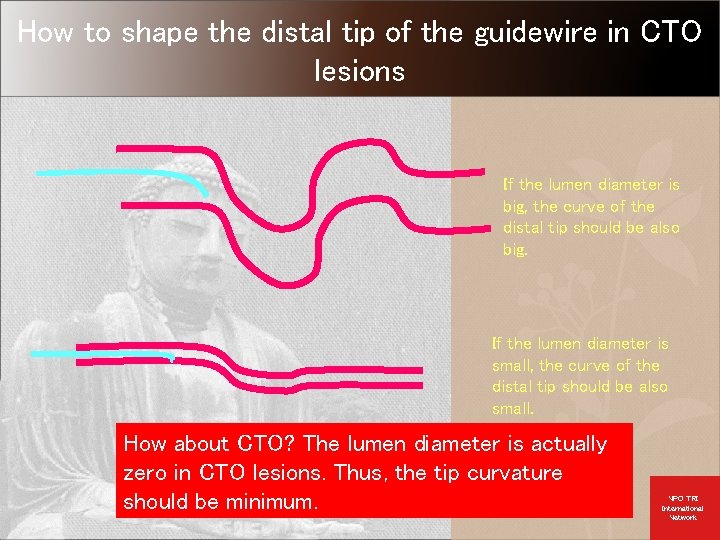
How to shape the distal tip of the guidewire in CTO lesions If the lumen diameter is big, the curve of the distal tip should be also big. If the lumen diameter is small, the curve of the distal tip should be also small. How about CTO? The lumen diameter is actually zero in CTO lesions. Thus, the tip curvature should be minimum. NPO TRI International Network

How I shape the tip of guidewires? For non-CTO lesions For CTO lesions u Use a small needle to shape the tip. u We bend the tip. u Shaping has smooth curve. u 2 bending points. u The diameter of the curve is 3 to 6 mm. u Distal bending is only 1 to 2 mm in length. NPO TRI International Network

The bending of the distal tip 0. 32 mm 0. 53 mm NPO TRI International Network

Escalation Strategies NPO TRI International Network
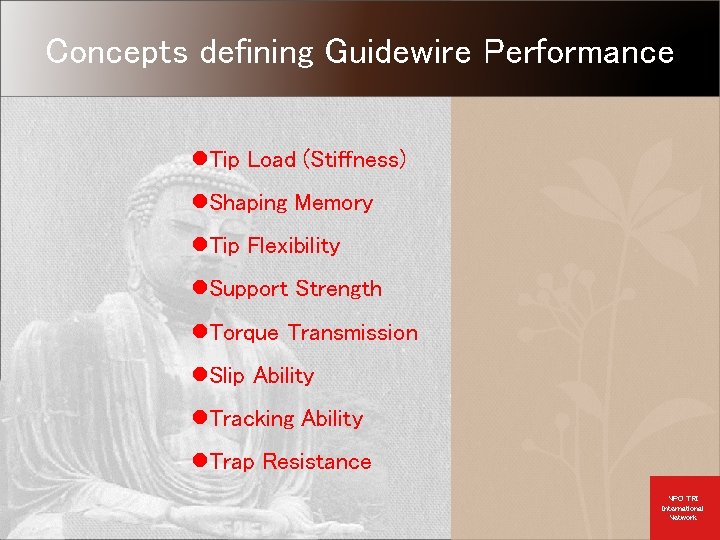
Concepts defining Guidewire Performance l. Tip Load (Stiffness) l. Shaping Memory l. Tip Flexibility l. Support Strength l. Torque Transmission l. Slip Ability l. Tracking Ability l. Trap Resistance NPO TRI International Network
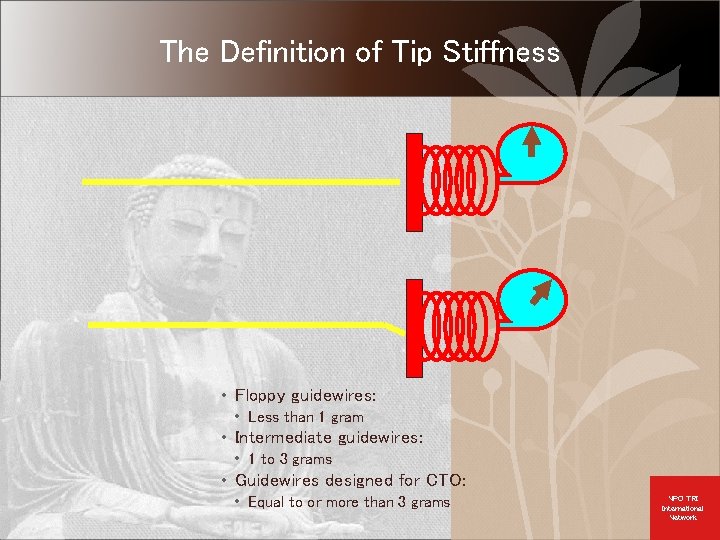
The Definition of Tip Stiffness • Floppy guidewires: • Less than 1 gram • Intermediate guidewires: • 1 to 3 grams • Guidewires designed for CTO: • Equal to or more than 3 grams NPO TRI International Network
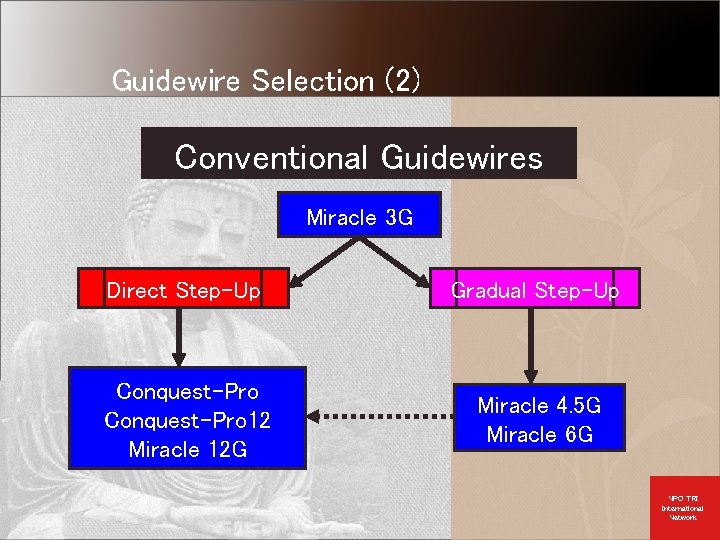
Guidewire Selection (2) Conventional Guidewires Miracle 3 G Direct Step-Up Gradual Step-Up Conquest-Pro 12 Miracle 12 G Miracle 4. 5 G Miracle 6 G NPO TRI International Network
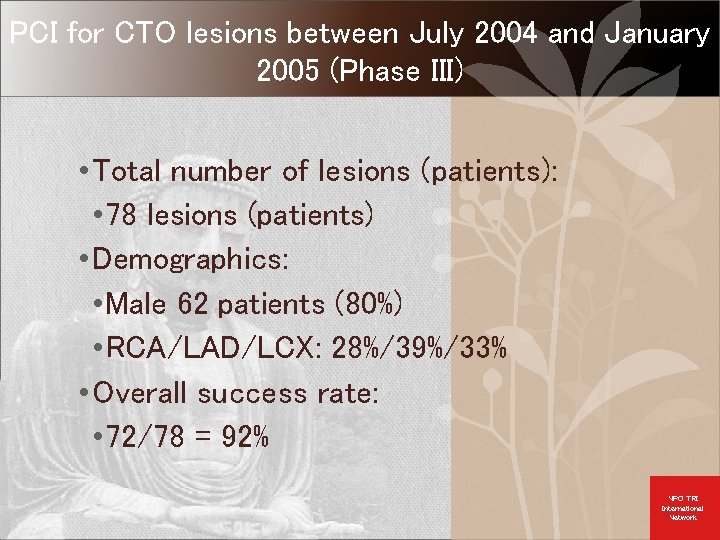
PCI for CTO lesions between July 2004 and January 2005 (Phase III) • Total number of lesions (patients): • 78 lesions (patients) • Demographics: • Male 62 patients (80%) • RCA/LAD/LCX: 28%/39%/33% • Overall success rate: • 72/78 = 92% NPO TRI International Network

Which guidewire finally crossed the CTO lesion? Among 72 CTO lesions successfully crossed between July 2004 and January 2005 NPO TRI International Network
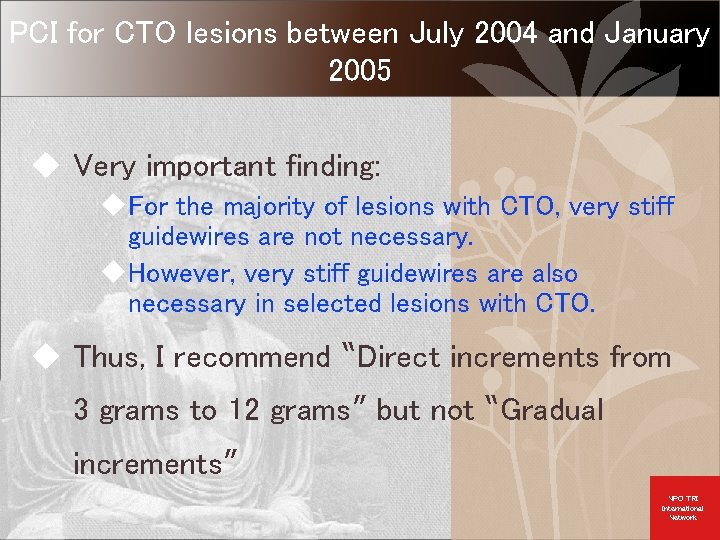
PCI for CTO lesions between July 2004 and January 2005 u Very important finding: u. For the majority of lesions with CTO, very stiff guidewires are not necessary. u. However, very stiff guidewires are also necessary in selected lesions with CTO. u Thus, I recommend “Direct increments from 3 grams to 12 grams” but not “Gradual increments” NPO TRI International Network
Introduction of tapered-tip guidewires NPO TRI International Network
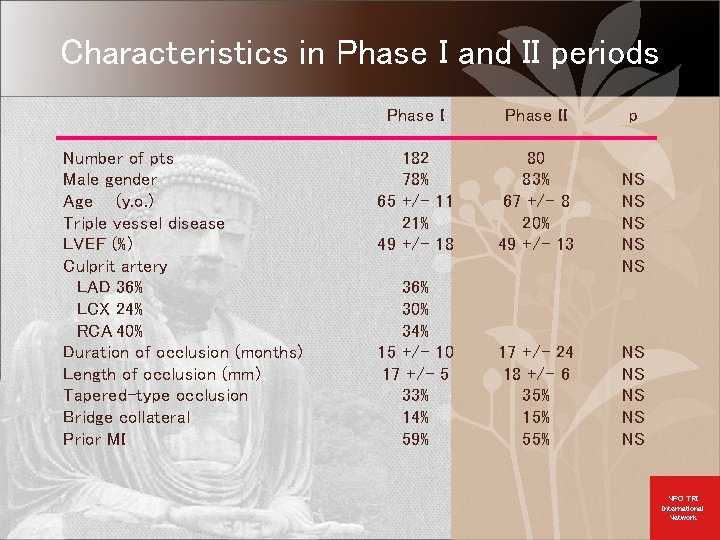
Characteristics in Phase I and II periods Number of pts Male gender Age (y. o. ) Triple vessel disease LVEF (%) Culprit artery LAD 36% LCX 24% RCA 40% Duration of occlusion (months) Length of occlusion (mm) Tapered-type occlusion Bridge collateral Prior MI Phase II 182 78% 65 +/- 11 21% 49 +/- 18 80 83% 67 +/- 8 20% 49 +/- 13 36% 30% 34% 15 +/- 10 17 +/- 5 33% 14% 59% 17 +/- 24 18 +/- 6 35% 15% 55% p NS NS NS NPO TRI International Network
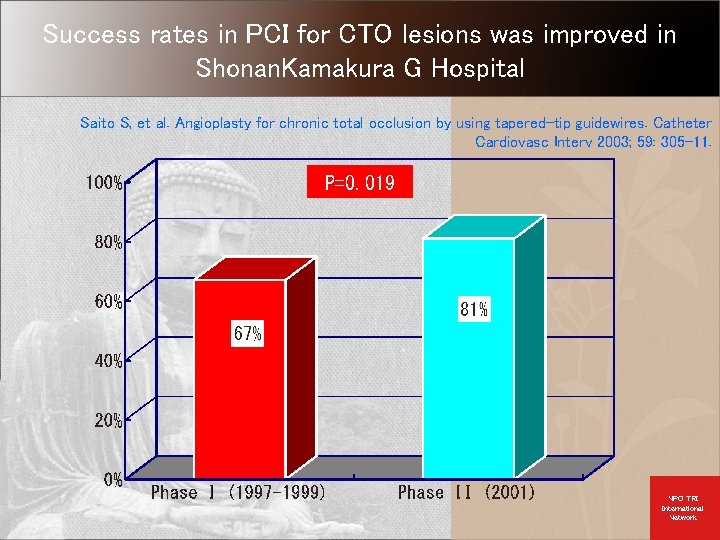
Success rates in PCI for CTO lesions was improved in Shonan. Kamakura G Hospital Saito S, et al. Angioplasty for chronic total occlusion by using tapered-tip guidewires. Catheter Cardiovasc Interv 2003; 59: 305 -11. P=0. 019 NPO TRI International Network
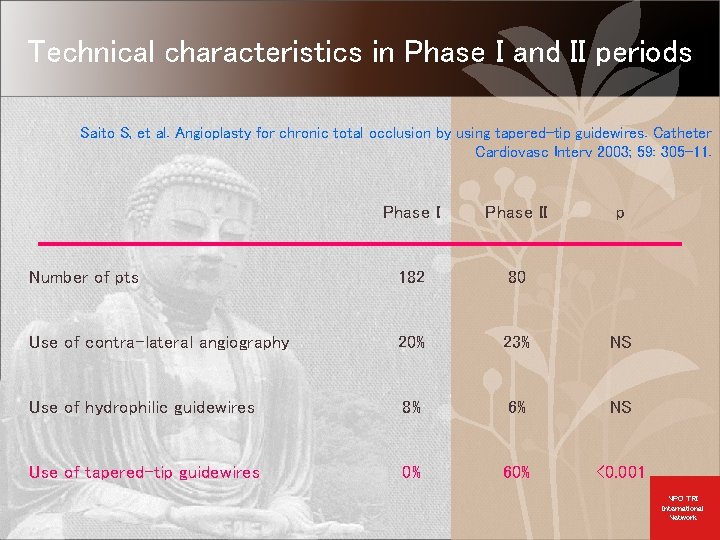
Technical characteristics in Phase I and II periods Saito S, et al. Angioplasty for chronic total occlusion by using tapered-tip guidewires. Catheter Cardiovasc Interv 2003; 59: 305 -11. Phase II p Number of pts 182 80 Use of contra-lateral angiography 20% 23% NS Use of hydrophilic guidewires 8% 6% NS Use of tapered-tip guidewires 0% 60% <0. 001 NPO TRI International Network
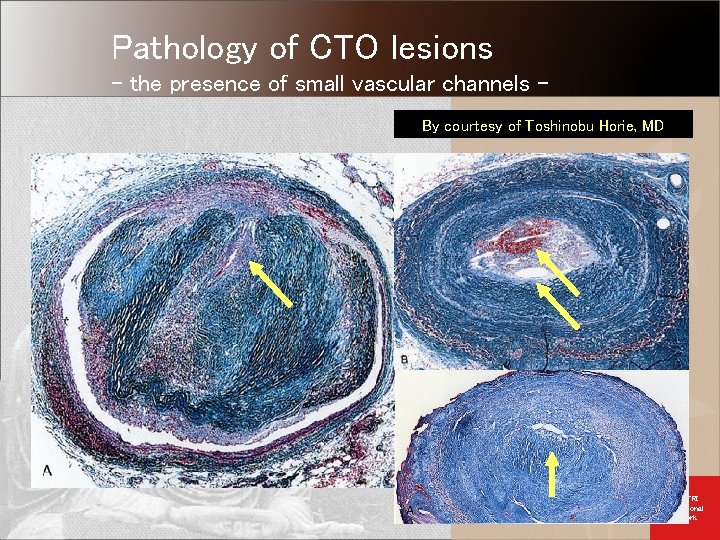
Pathology of CTO lesions - the presence of small vascular channels By courtesy of Toshinobu Horie, MD NPO TRI International Network
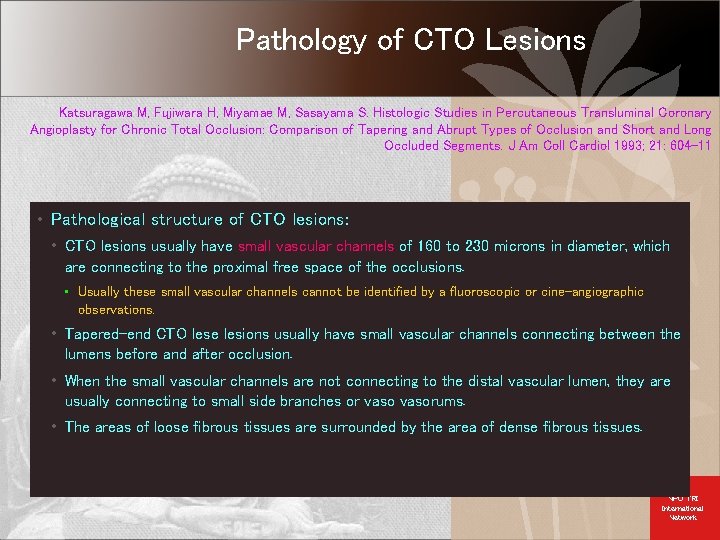
Pathology of CTO Lesions Katsuragawa M, Fujiwara H, Miyamae M, Sasayama S. Histologic Studies in Percutaneous Transluminal Coronary Angioplasty for Chronic Total Occlusion: Comparison of Tapering and Abrupt Types of Occlusion and Short and Long Occluded Segments. J Am Coll Cardiol 1993; 21: 604 -11 • Pathological structure of CTO lesions: • CTO lesions usually have small vascular channels of 160 to 230 microns in diameter, which are connecting to the proximal free space of the occlusions. • Usually these small vascular channels cannot be identified by a fluoroscopic or cine-angiographic observations. • Tapered-end CTO lese lesions usually have small vascular channels connecting between the lumens before and after occlusion. • When the small vascular channels are not connecting to the distal vascular lumen, they are usually connecting to small side branches or vasorums. • The areas of loose fibrous tissues are surrounded by the area of dense fibrous tissues. NPO TRI International Network
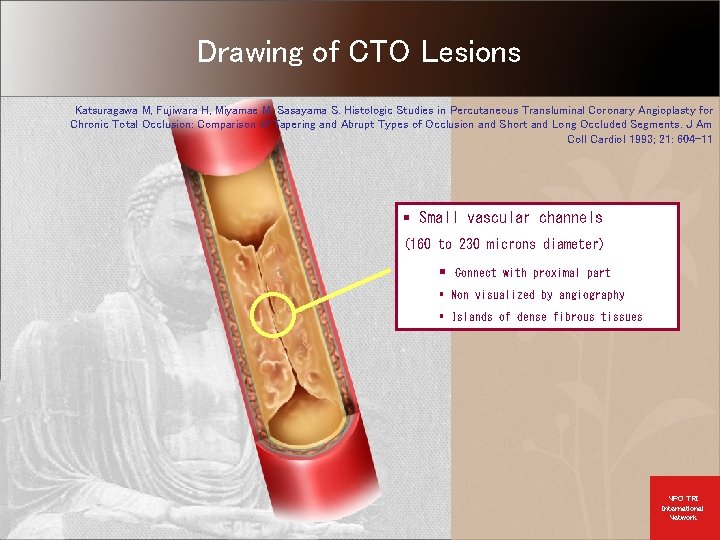
Drawing of CTO Lesions Katsuragawa M, Fujiwara H, Miyamae M, Sasayama S. Histologic Studies in Percutaneous Transluminal Coronary Angioplasty for Chronic Total Occlusion: Comparison of Tapering and Abrupt Types of Occlusion and Short and Long Occluded Segments. J Am Coll Cardiol 1993; 21: 604 -11 § Small vascular channels (160 to 230 microns diameter) § Connect with proximal part § Non visualized by angiography § Islands of dense fibrous tissues NPO TRI International Network

Introduction of hydrophilic tapered-tip guidewires NPO TRI International Network
Plastic-Jacket Hydrophilic Tapered-Tip Guidewire • Rationales for CTO Lesions: • They can easily enter into non-visible microchannels because of their small diameters. • They can easily enter into non-visible microchannels because of their lower friction resistance. • They can rarely damage or induce intimal dissection because of their lower tip stiffness. NPO TRI International Network
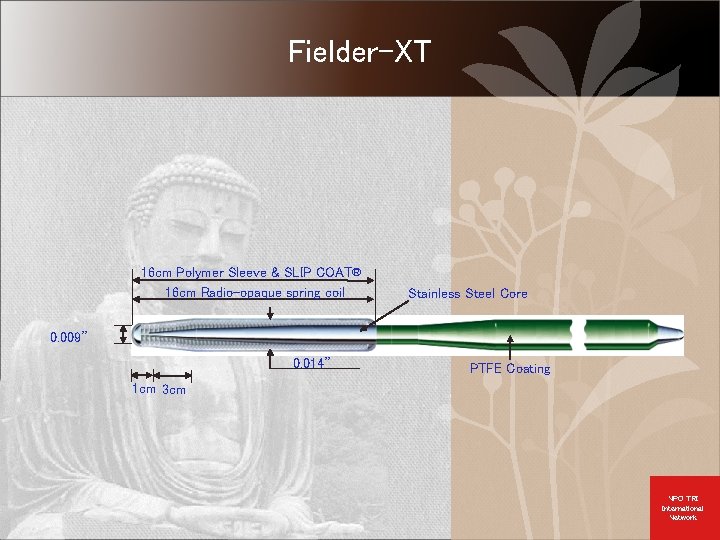
Fielder-XT 16 cm Polymer Sleeve & SLIP COAT® 16 cm Radio-opaque spring coil Stainless Steel Core 0. 009” 0. 014” PTFE Coating 1 cm 3 cm NPO TRI International Network

WIZARD 17 cm Polymer-Dipping with Hydrophilic Coating O. D: 0. 010” O. D: 0. 014” 16. 5 cm Radiopaque Model Tip Stiffness Radiopaque Coating Length WIZARD 1 1 g 16. 5 cm Hydrophilic 178 cm WIZARD 3 3 g 16. 5 cm Hydrophilic 178 cm NPO TRI International Network
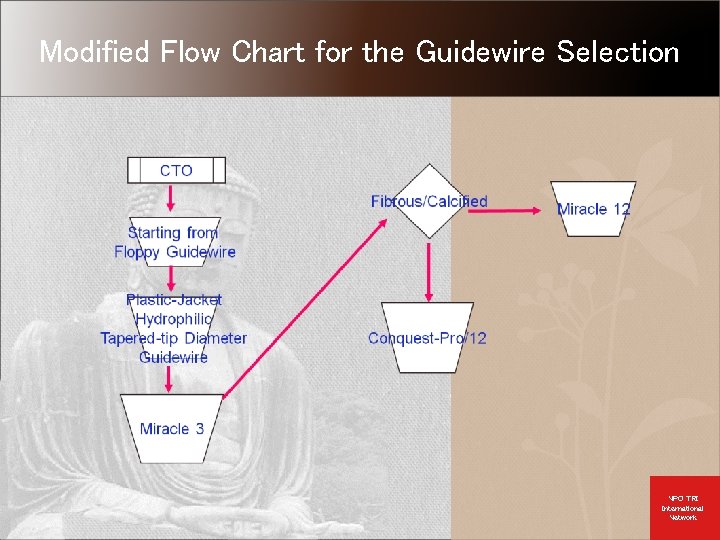
Modified Flow Chart for the Guidewire Selection NPO TRI International Network

Flow Chart for the Guidewire Selection CTO Fibrous/Calcified Miracle 6/12 Starting from Floppy Guidewire Plastic-Jacket Micro channels Hydrophilic +/Tapered-tip Guidewire Conquest-Pro/12 Miracle 3 NPO TRI International Network
Drilling vs. Penetration NPO TRI International Network

Manipulation of Guidewires • There are 2 types of techniques to manipulate the guidewires. • #1: To advance the guidewire, where it is going (Drilling Technique) • #2: To aim at the target, penetrate the obstruction and advance the guidewire to the target (Penetrating Technique) • For the usual or tortuous lesions, #1 may be better, • We can choose non tapered-tip guidewires or hydrophilic plastic guidewires for these lesions. • For the very hard lesions, #2 may be better, • We can choose tapered-tip guidewires with strong penetration power for these lesions. • However, we have to understand that heavily calcified plaque cannot be penetrated even by using the stiffest guidewire. • The current most difficult subset is the combination of the tortuosity and the presence of very hard plaque. NPO TRI International Network

Reconsideration of physical properties NPO TRI International Network

Penetration Power of Guidewires • Penetration power of the guidewire is defined as follows: • Tip stiffness divided by tip surface area (sharpness). • The power can be modified by the decreased friction resistance earned by hydrophilic coating. Regular guidewires: 0. 014 inches Cross-it: 0. 010 inches Confienza: 0. 009 inches NPO TRI International Network
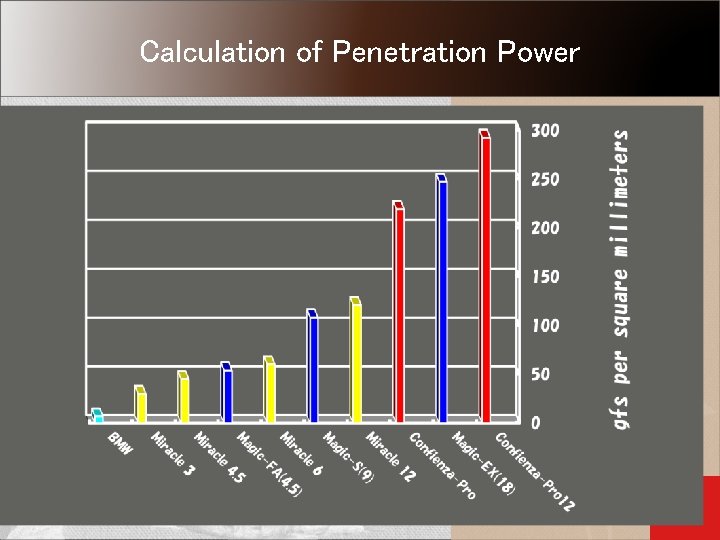
Calculation of Penetration Power NPO TRI International Network
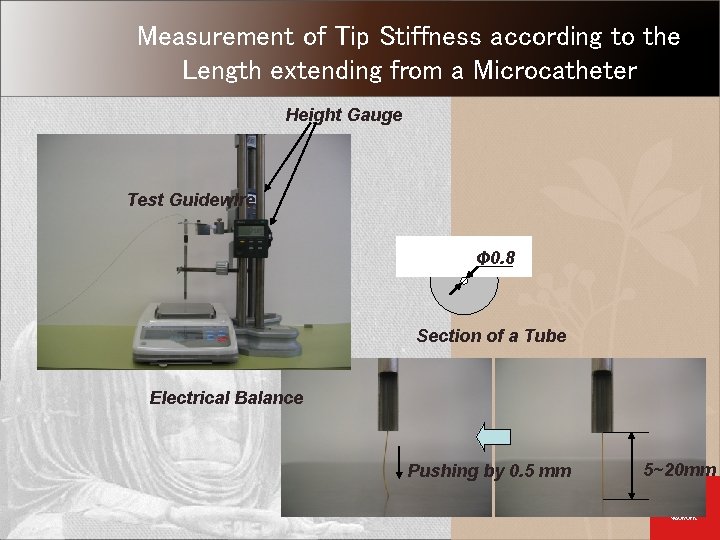
Measurement of Tip Stiffness according to the Length extending from a Microcatheter Height Gauge Test Guidewire Φ 0. 8 Section of a Tube Electrical Balance Pushing by 0. 5 mm 5~20 mm NPO TRI International Network
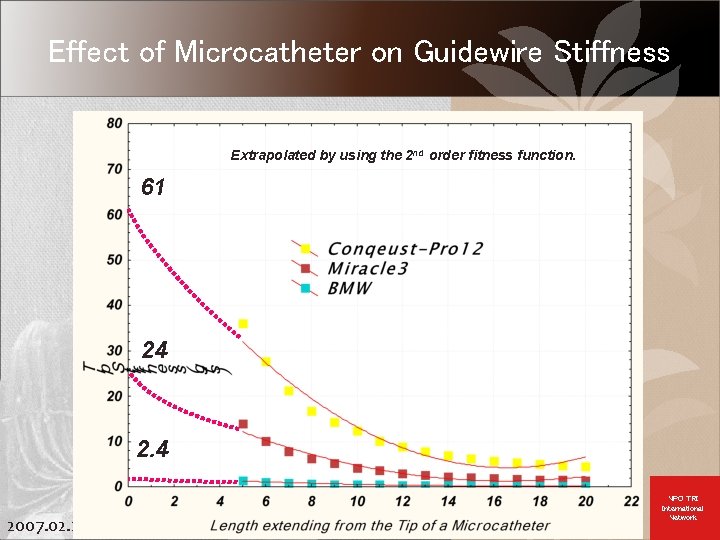
Effect of Microcatheter on Guidewire Stiffness Extrapolated by using the 2 nd order fitness function. 61 24 2. 4 2007. 02. 22. CTO Summit, New York, USA NPO TRI International Network
Tip Stiffness through Microcatheters • For CTO guidewires, tip stiffness is dramatically changing with the length extending out of microcatheters. • We have to handle those guidewires carefully while understanding this characteristics of stiff guidewires different from floppy ones. NPO TRI International Network

Measurements of Torque Transmission Vid eo PTFE tube of 0. 56 mm inner diameter Ang le Dis k 0 1 8 0 30 m m Test guidewi re Torq ue Moto r NPO TRI International Network

Torque transmission of stiff guidewires is lost in tortuous peripheral arteries NPO TRI International Network

Torque Transmission of Stiff Guidewires • In tortuous peripheral arteries, torque transmission is lost for stiff guidewires more than floppy ones. • Thus, in patients with tortuous peripheral arteries, we have to place long (metal) stiff introducers. NPO TRI International Network
Use of Microcatheters NPO TRI International Network

Use of over-the-wire system is essential! • Use of over-the-wire (OTW) system • To provide better support to guidewires • To provide more precise torque control • To enable guidewire exchange p 1. 5 -mm OTW balloon p. Microcatheters: The following OTW support systems without balloons are preferable to OTW balloons, since they have distal shaft softer than the latter and align a guidewire more easily with coronary arteries. • Transit (Cordis) • Prowler (Cordis) • Excelsior (Boston Scientific) • Finecross (TERUMO, Japan) • Progreat (TERUMO, Japan) NPO TRI International Network

Antegrade Guidewire Basics u Final Messages u We have to understand lesion characteristics. u We have to understand physical properties of each guidewire. u Fine manipulation of guidewires is important. u Success rate is improving for CTO lesions. NPO TRI International Network
- Slides: 40