
Antebellum American Art The Hudson River School 1820
Antebellum American Art
The Hudson River School: 1820 s-1870
Background ► These artists captured the undiluted power of nature ► Paint the nation’s most spectacular and undeveloped areas [the new Garden of Eden]. ► Nature was the best source of wisdom & fulfillment. ► They created visual embodiments of the ideals of the Transcendentalists. * Painting is the vehicle through which the universal mind could reach the mind of mankind. * Art is the agent of moral & spiritual transformation.
Characteristics of the Hudson River School A new art for a new land. 1. Paint grand, scenic vistas. 2. Humans are an insignificant [even non-existent] part of the picture. 3. Experiment with affects of light on water and sky. 4. Symbol of the school a broken tree stump
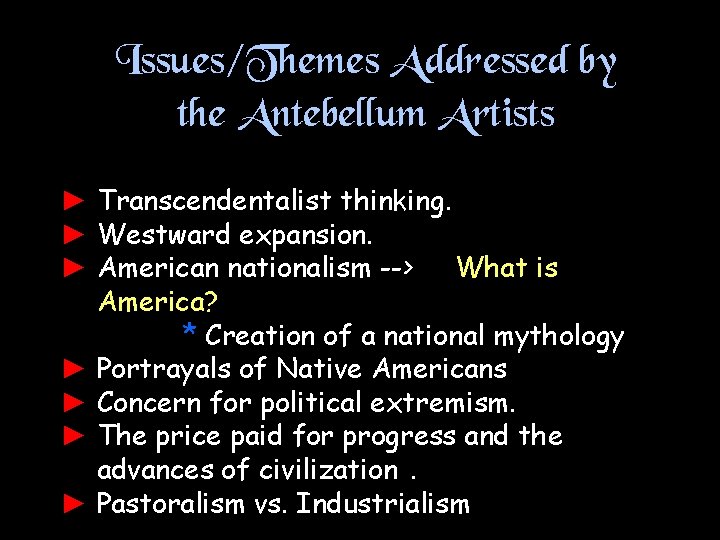
Issues/Themes Addressed by the Antebellum Artists ► Transcendentalist thinking. ► Westward expansion. ► American nationalism --> What is America? * Creation of a national mythology ► Portrayals of Native Americans ► Concern for political extremism. ► The price paid for progress and the advances of civilization. ► Pastoralism vs. Industrialism
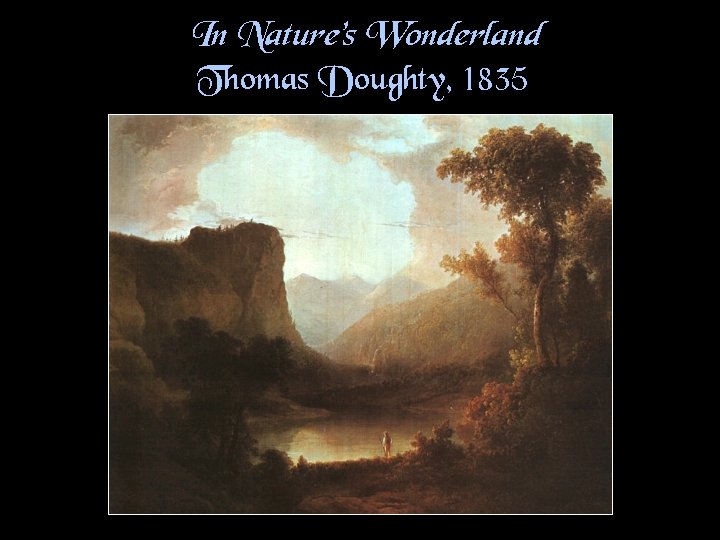
In Nature’s Wonderland Thomas Doughty, 1835
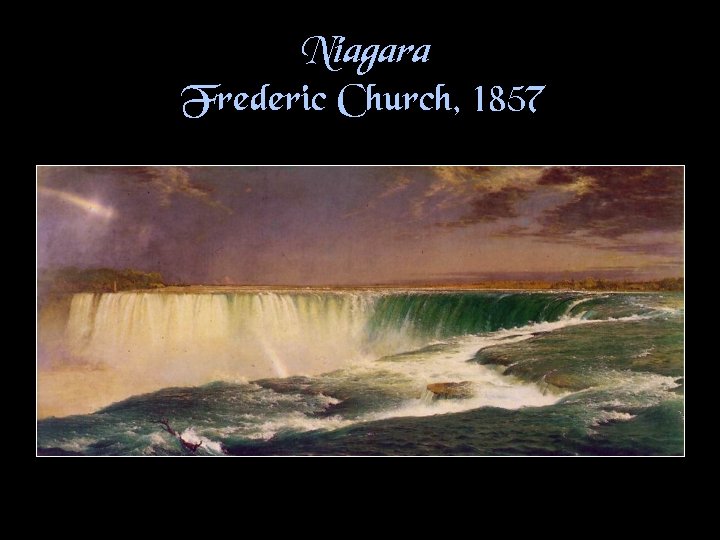
Niagara Frederic Church, 1857
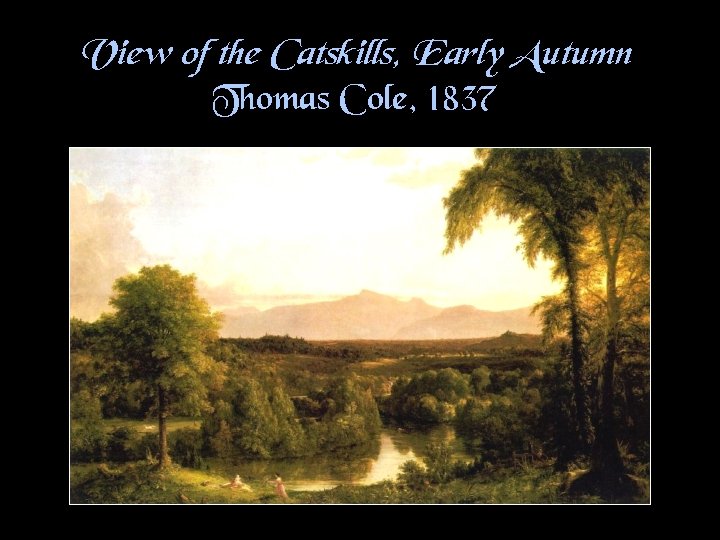
View of the Catskills, Early Autumn Thomas Cole, 1837
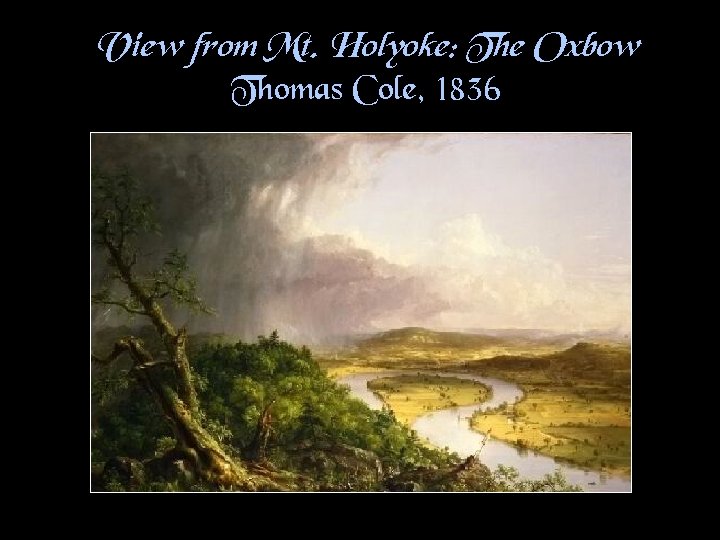
View from Mt. Holyoke: The Oxbow Thomas Cole, 1836
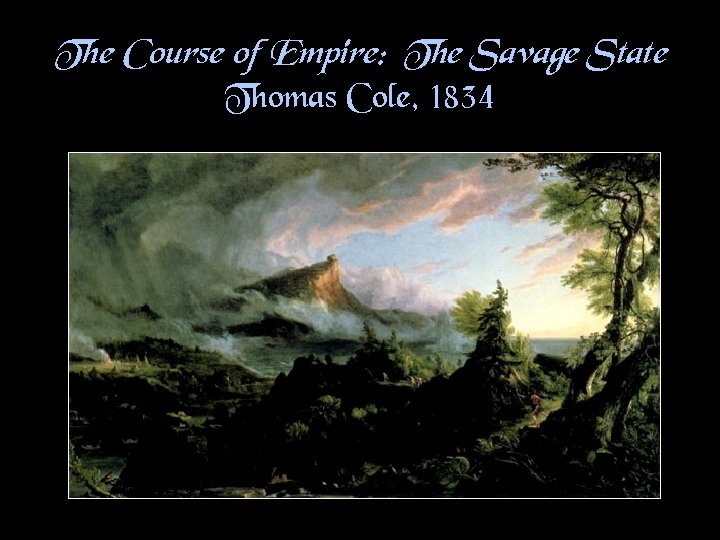
The Course of Empire: The Savage State Thomas Cole, 1834
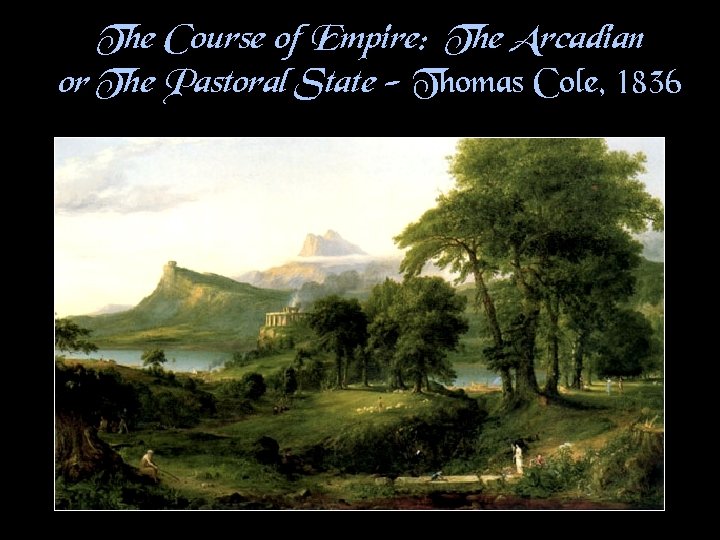
The Course of Empire: The Arcadian or The Pastoral State - Thomas Cole, 1836
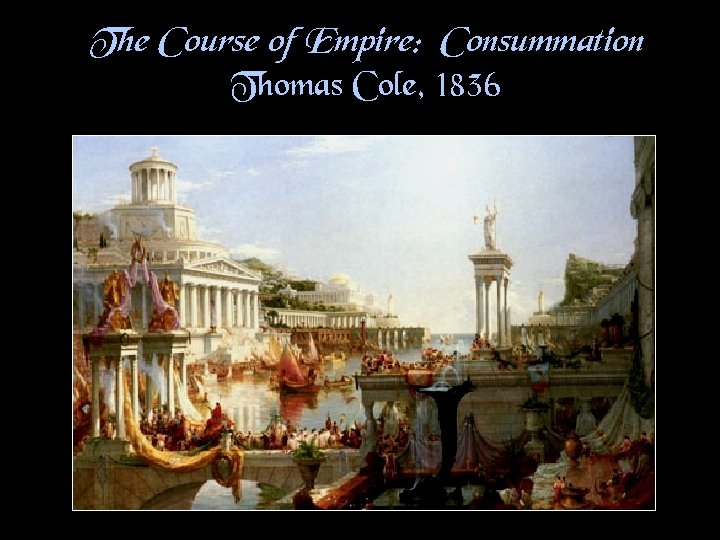
The Course of Empire: Consummation Thomas Cole, 1836

The Course of Empire: Destruction Thomas Cole, 1836
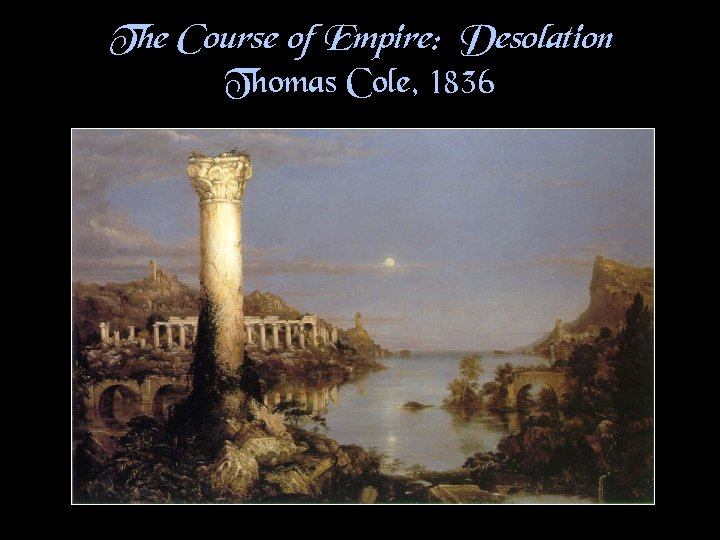
The Course of Empire: Desolation Thomas Cole, 1836
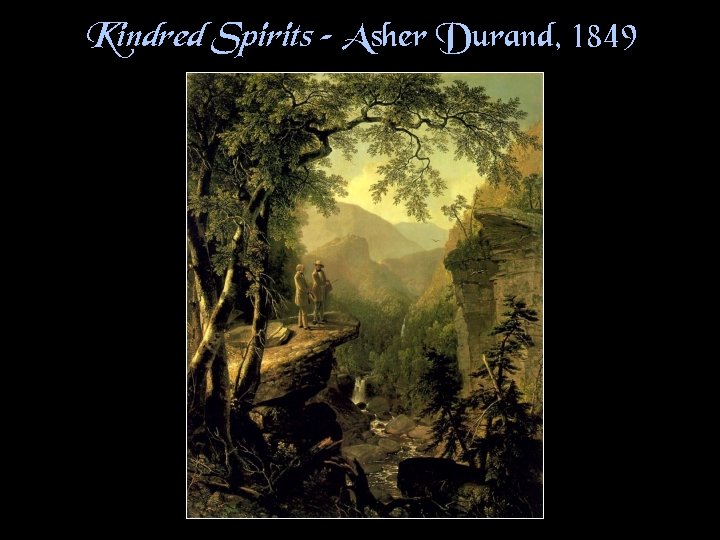
Kindred Spirits – Asher Durand, 1849
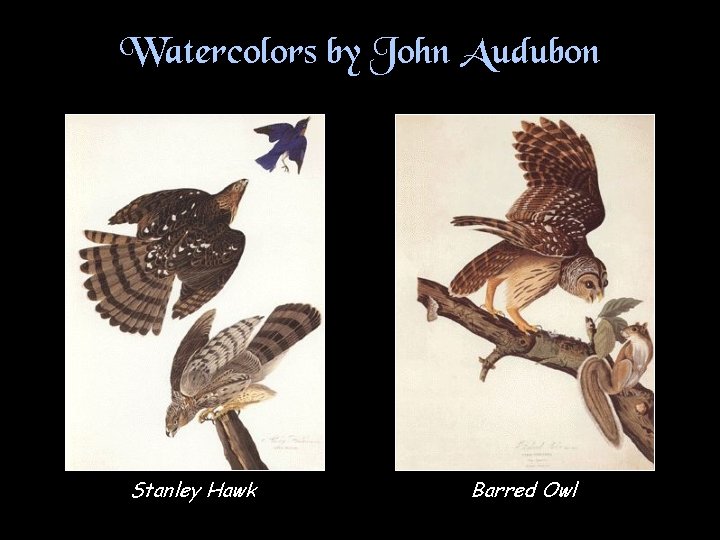
Watercolors by John Audubon Stanley Hawk Barred Owl
The Luminists
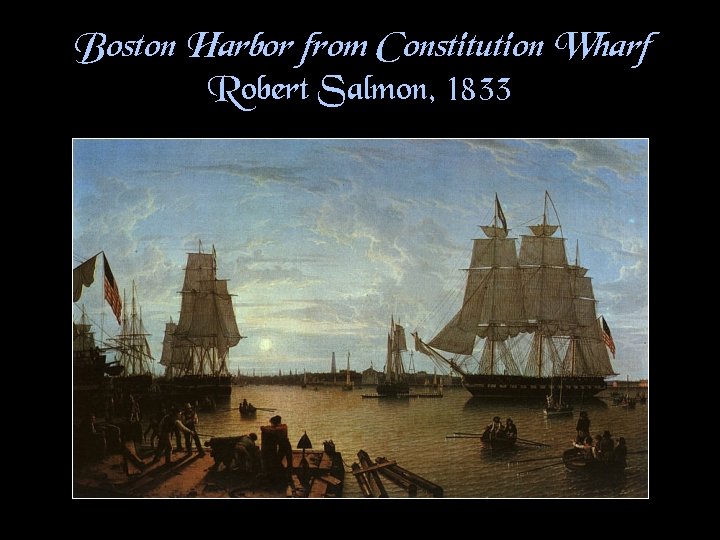
Boston Harbor from Constitution Wharf Robert Salmon, 1833
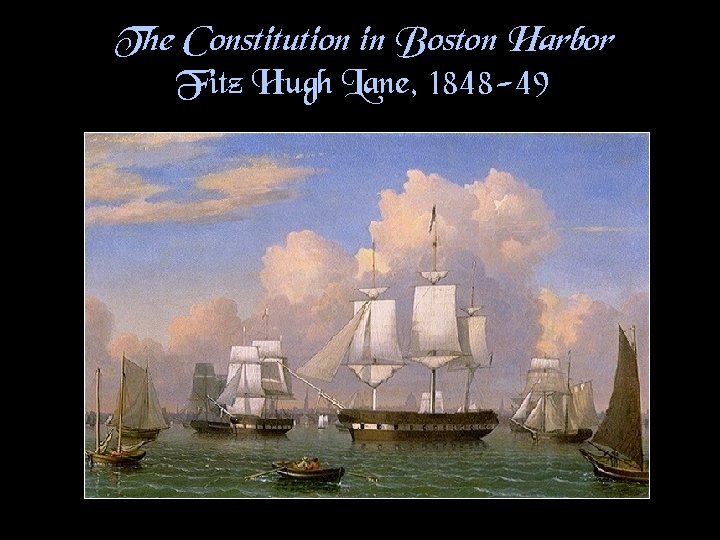
The Constitution in Boston Harbor Fitz Hugh Lane, 1848 -49
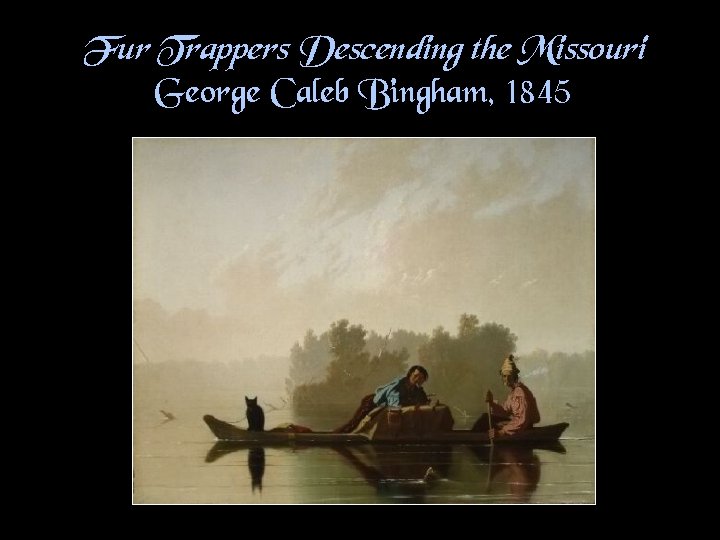
Fur Trappers Descending the Missouri George Caleb Bingham, 1845
The Classical Styles of Greece & Rome
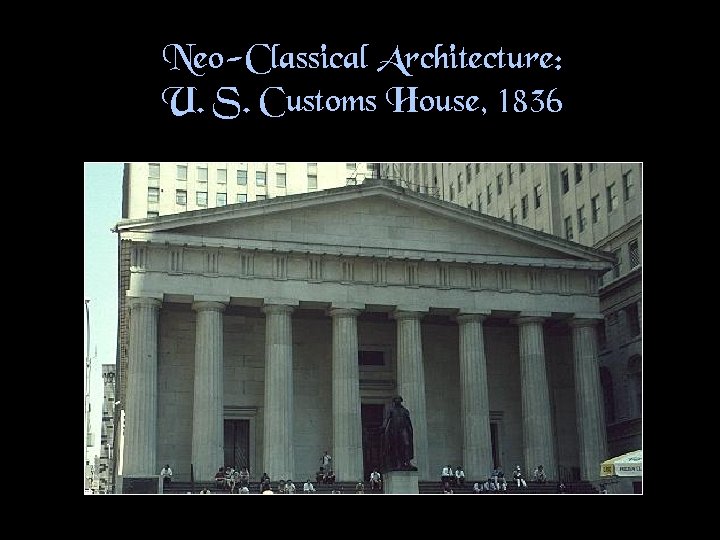
Neo-Classical Architecture: U. S. Customs House, 1836
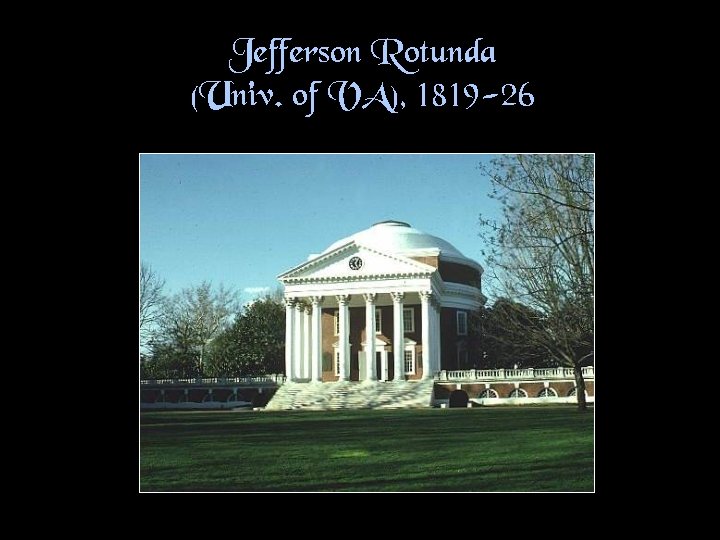
Jefferson Rotunda (Univ. of VA), 1819 -26
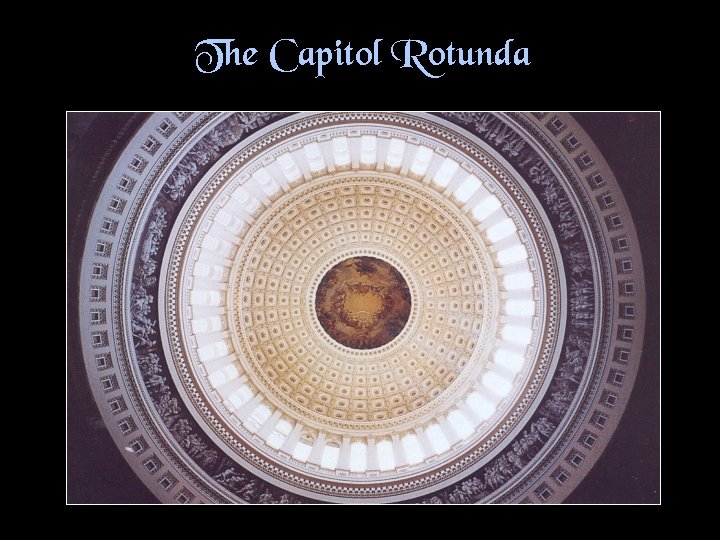
The Capitol Rotunda
Patriotic Art
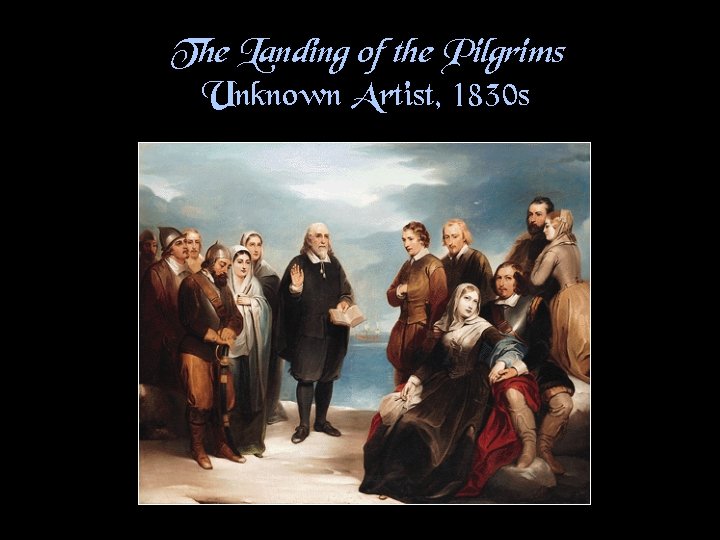
The Landing of the Pilgrims Unknown Artist, 1830 s
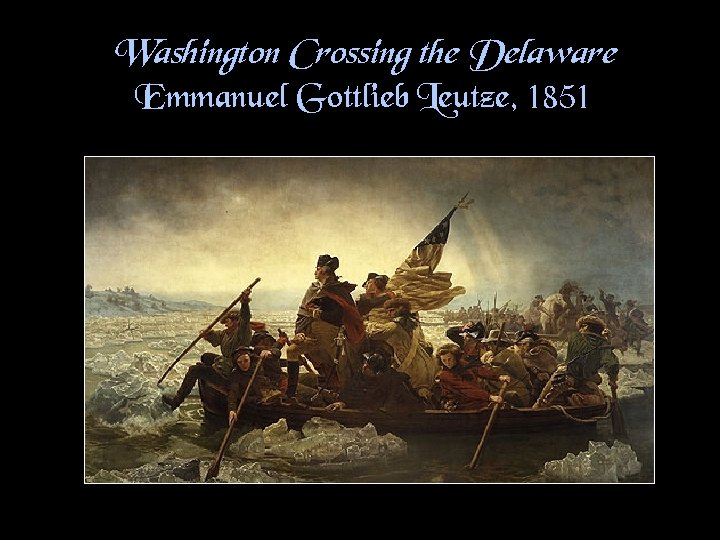
Washington Crossing the Delaware Emmanuel Gottlieb Leutze, 1851
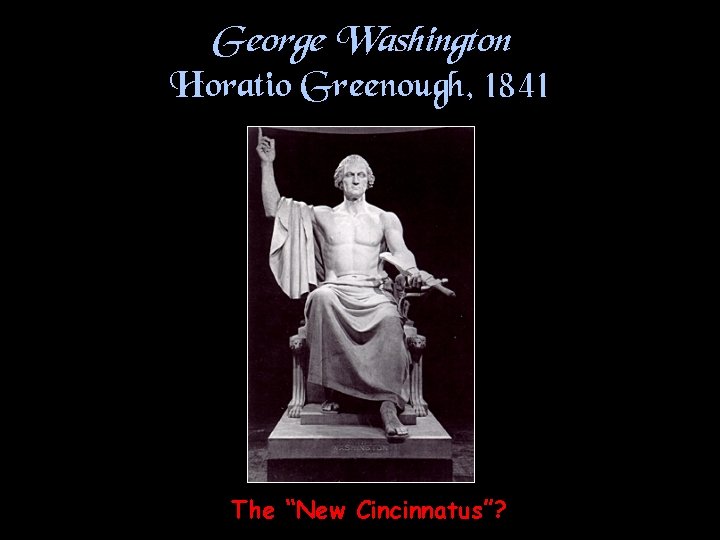
George Washington Horatio Greenough, 1841 The “New Cincinnatus”?
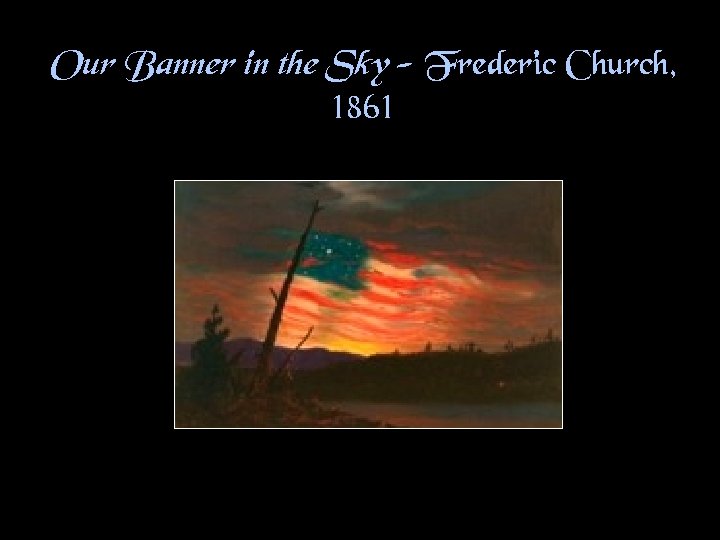
Our Banner in the Sky - Frederic Church, 1861
The “Frontier” Artists
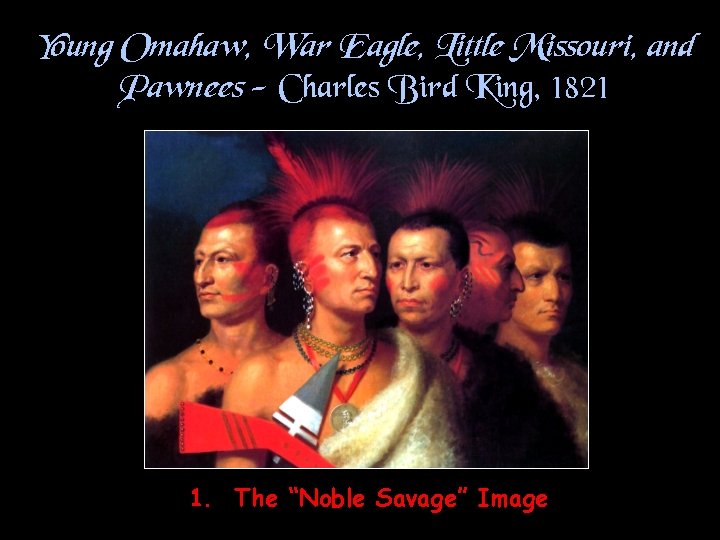
Young Omahaw, War Eagle, Little Missouri, and Pawnees - Charles Bird King, 1821 1. The “Noble Savage” Image
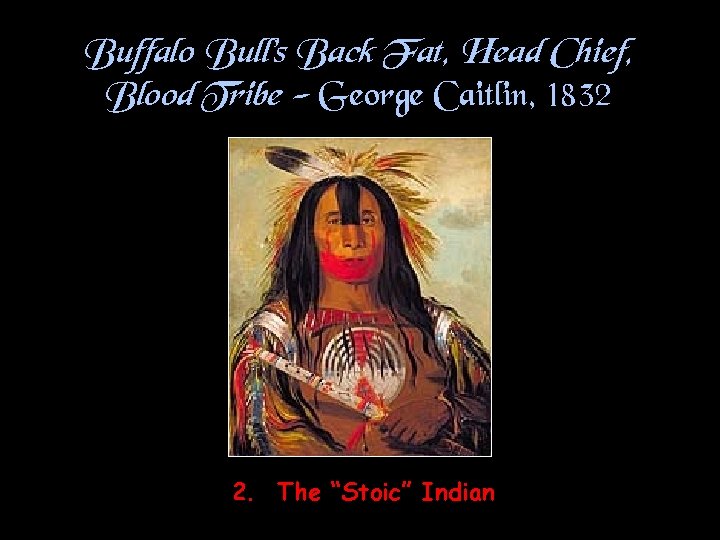
Buffalo Bull’s Back Fat, Head Chief, Blood Tribe - George Caitlin, 1832 2. The “Stoic” Indian
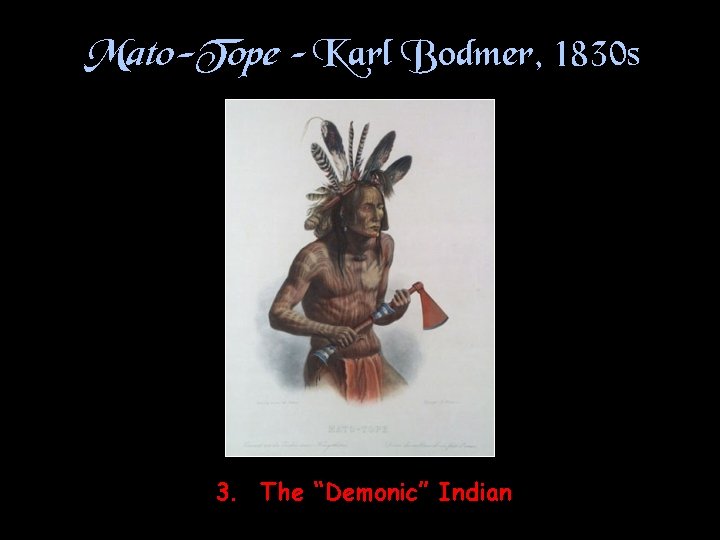
Mato-Tope – Karl Bodmer, 1830 s 3. The “Demonic” Indian
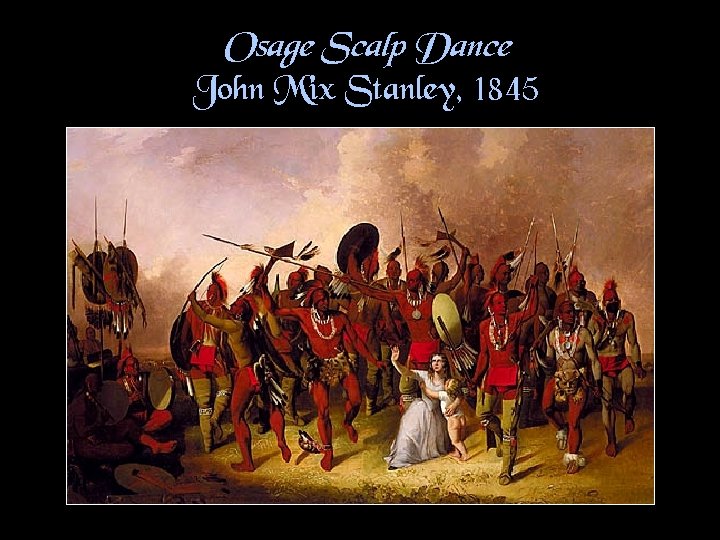
Osage Scalp Dance John Mix Stanley, 1845

Last of the Race – Tompkins Matteson, 1847 4. The “Doomed” Indian
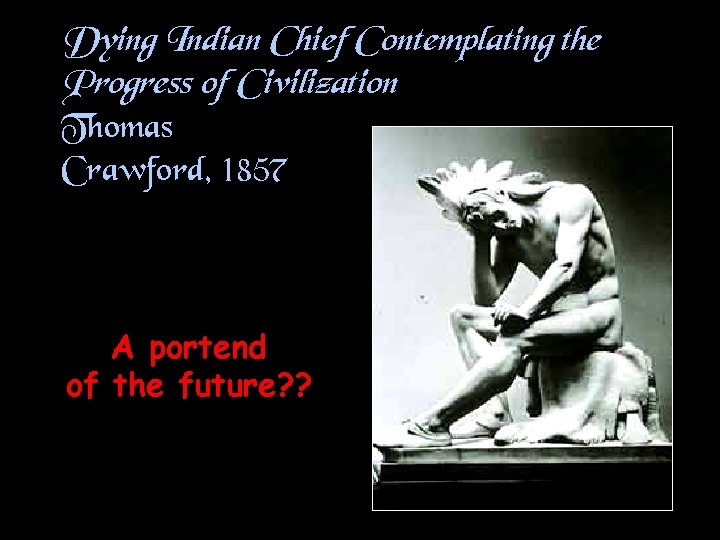
Dying Indian Chief Contemplating the Progress of Civilization Thomas Crawford, 1857 A portend of the future? ?
- Slides: 36