
ANTARCTICA AUSTRALIA OCEANIA ANTARCTICA 5 th largest continent
- Slides: 34
ANTARCTICA, AUSTRALIA, & OCEANIA
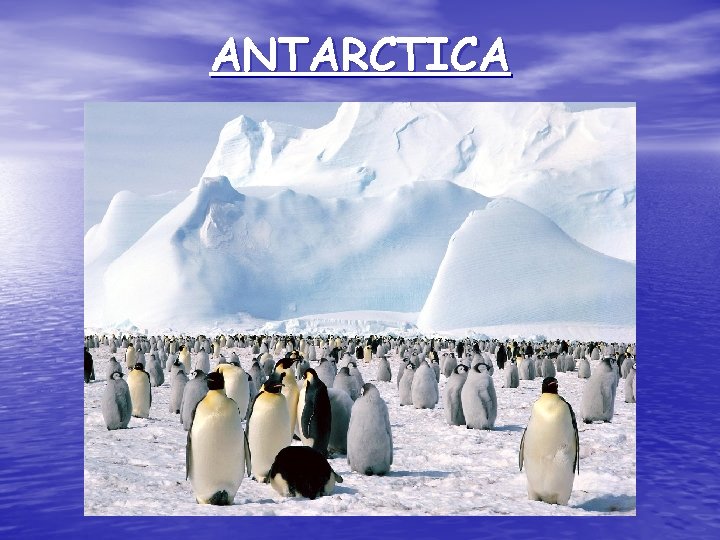
ANTARCTICA
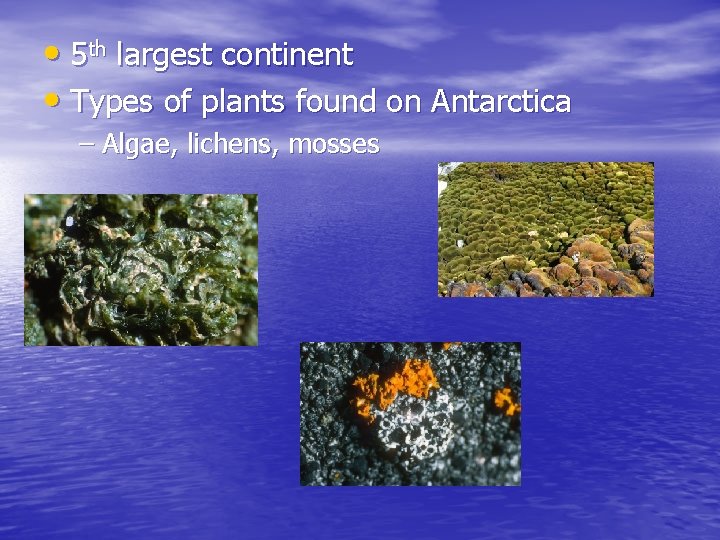
• 5 th largest continent • Types of plants found on Antarctica – Algae, lichens, mosses
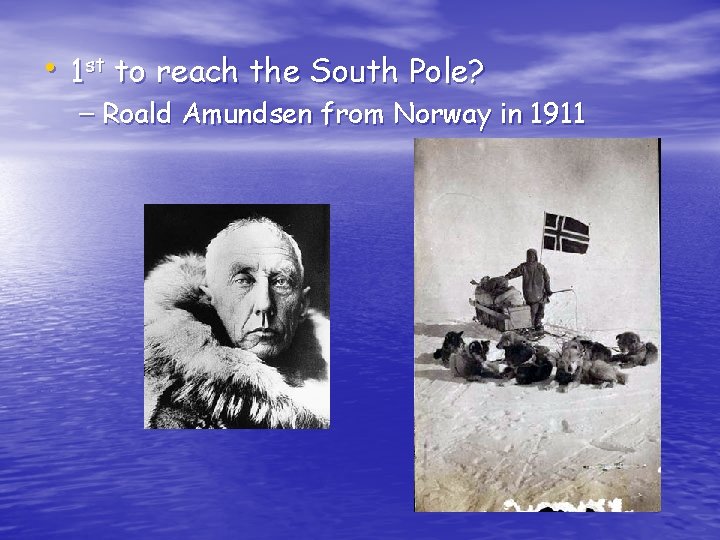
• 1 st to reach the South Pole? – Roald Amundsen from Norway in 1911
• Antarctic Treaty – Signed in 1959 by 12 countries including the United States – Prohibits military activities except to support science – Prohibits nuclear testing – Promotes scientific research & cooperation
• Only 1% of Antarctica has been mined • • for minerals. The continent is rich in minerals coal, copper, lead, zinc, silver, gold, oil, & natural gas. The Protocol on Environmental Protection (added to Antarctic Treaty) caused restrictions on mining in 1991. – Bans all commercial mineral resource activity (oil & natural gas) – Conservation of flora and fauna – No polluting
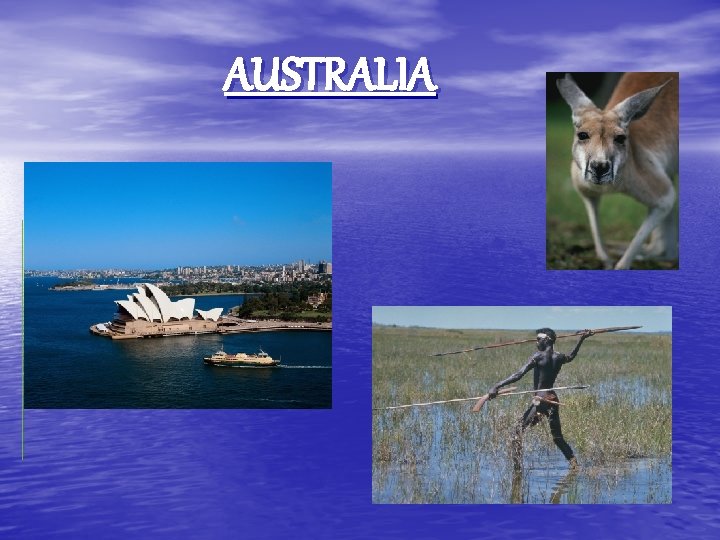
AUSTRALIA
The Land • Why is Australia unique? – Only country that is also a continent – World’s smallest continent • Where do most of Australia’s rivers start? – Great Dividing Range • Two rivers supply water for irrigation – Murray and Darling Rivers
• Most of Australia’s water comes from artesian wells. – Water that comes up from underground pressurized water • Only 10% of the land is arable (farmable). – Wheat, barley, fruit, & sugarcane • The land of the Outback is used by ranchers to raise cattle, sheep, & chickens. – World’s largest producer of wool
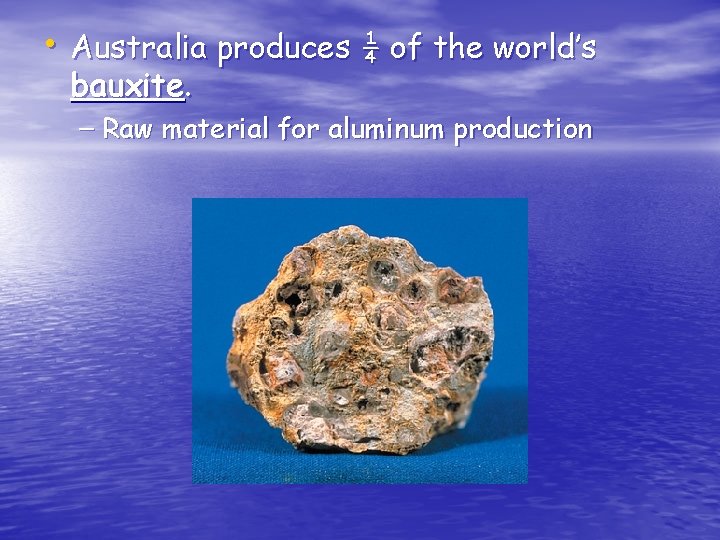
• Australia produces ¼ of the world’s bauxite. – Raw material for aluminum production
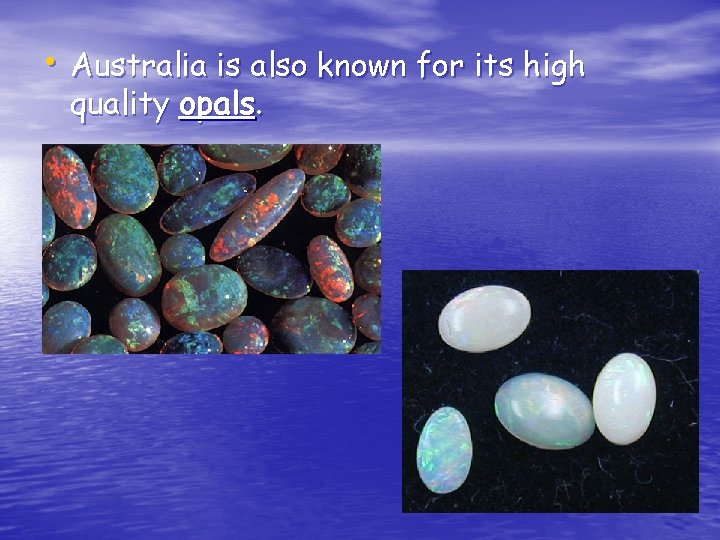
• Australia is also known for its high quality opals.
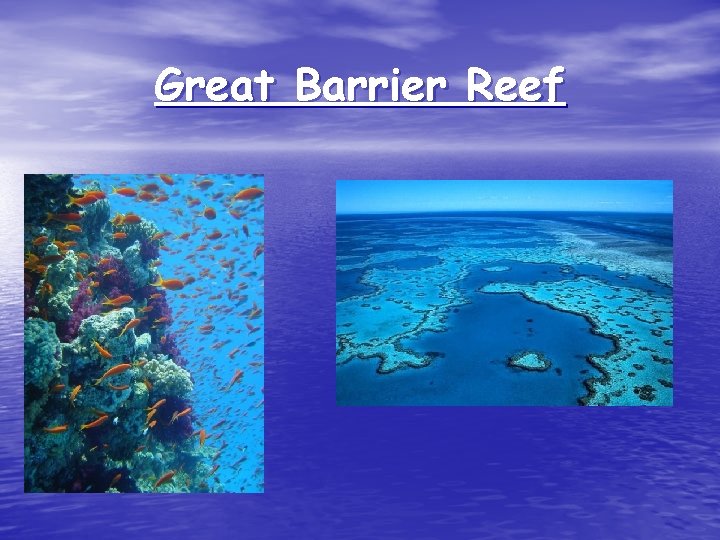
Great Barrier Reef
• Great Barrier Reef is the world’s largest coral • • reef. It is actually over 2500 small reefs. Over 1800 miles Coral is slowly dying because of pollution, warming waters, and human contact. Actions taken to save the reef – – Pollution control Fishing restrictions Part of the reef closed to tourists Reef Water Quality Protection Plan
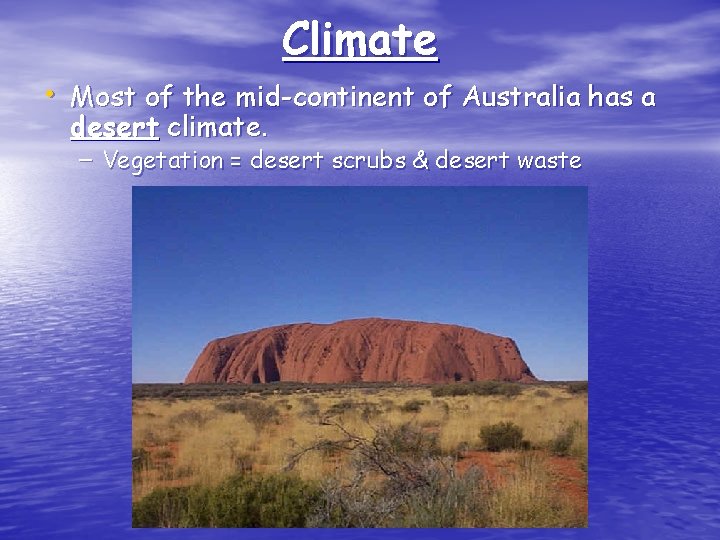
Climate • Most of the mid-continent of Australia has a desert climate. – Vegetation = desert scrubs & desert waste
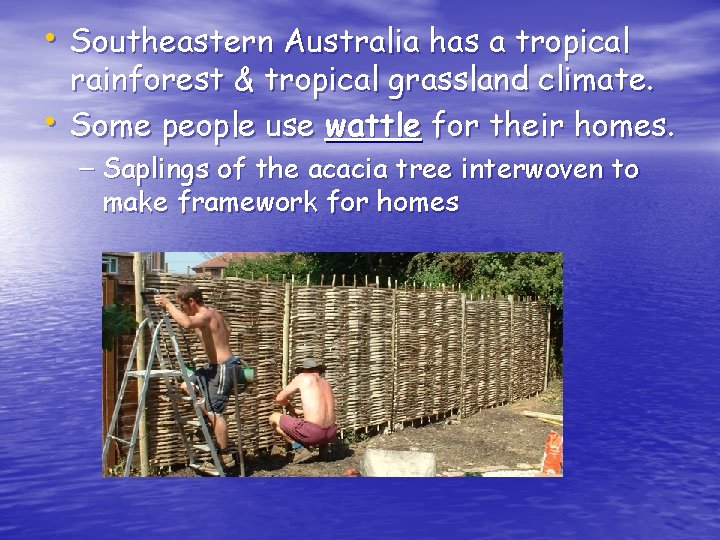
• Southeastern Australia has a tropical • rainforest & tropical grassland climate. Some people use wattle for their homes. – Saplings of the acacia tree interwoven to make framework for homes
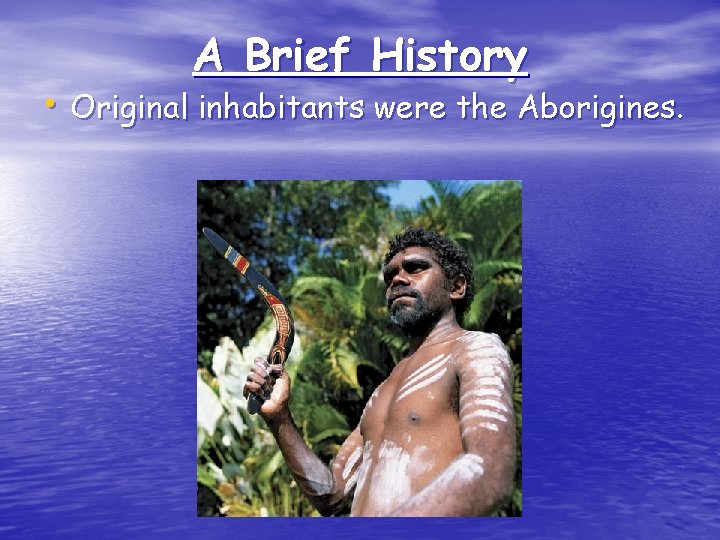
A Brief History • Original inhabitants were the Aborigines.
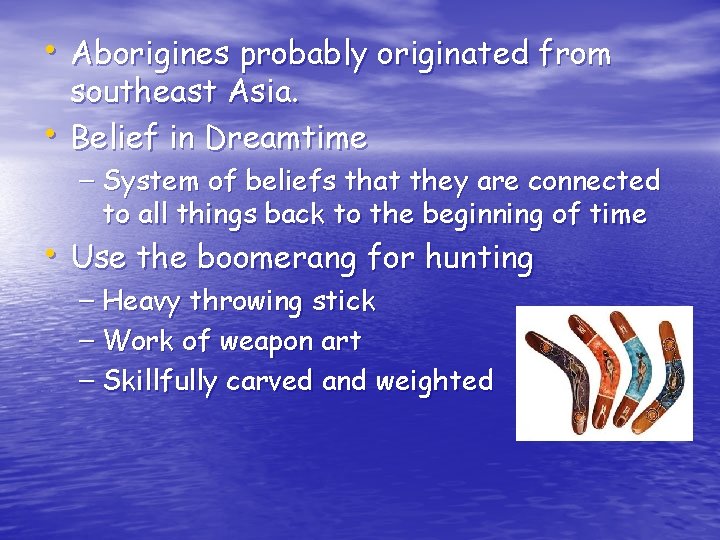
• Aborigines probably originated from • southeast Asia. Belief in Dreamtime – System of beliefs that they are connected to all things back to the beginning of time • Use the boomerang for hunting – Heavy throwing stick – Work of weapon art – Skillfully carved and weighted
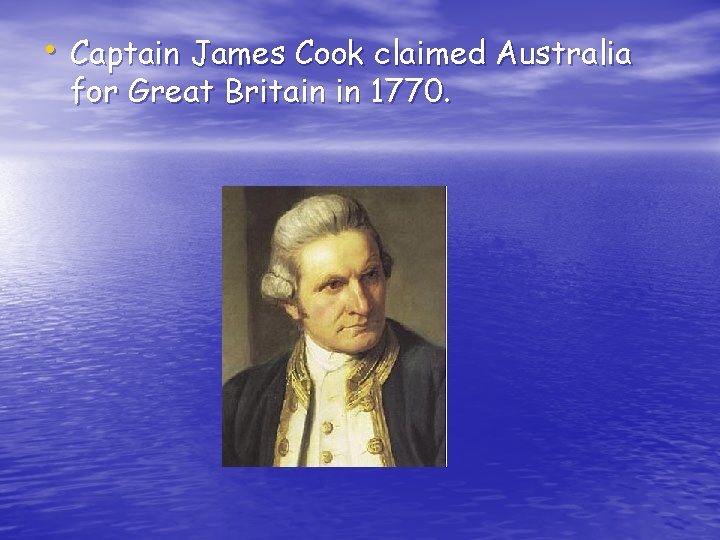
• Captain James Cook claimed Australia for Great Britain in 1770.
• What happened to the Aborigines when the British settled in? – Europeans removed people from their lands by force. – They also brought diseases that killed many Aborigines. • What did Great Britain use Australia for in the late 1700 s and early 1800 s? – Colony for convicts. – British prisons were overcrowded.
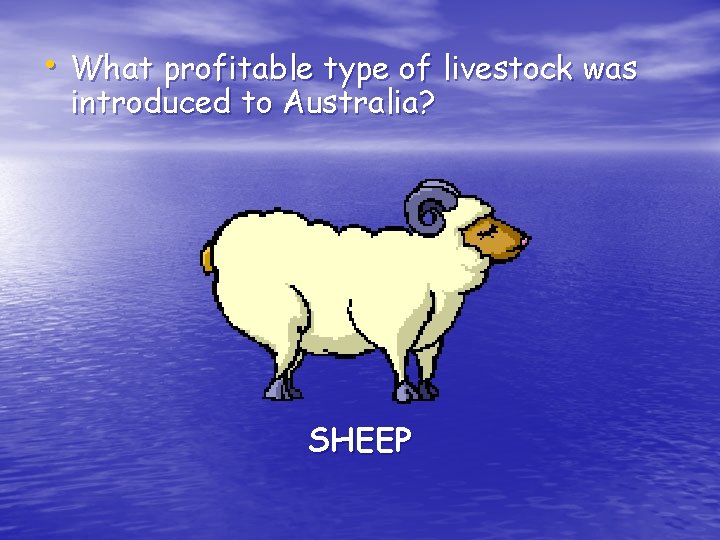
• What profitable type of livestock was introduced to Australia? SHEEP
Independence • Australia became independent from Great Britain in 1901. • It became a dominion (self-governing country within the British Empire). • Official name: Commonwealth of Australia
Australia Today • The country has actively recruited immigrants. – People from east and southeast Asia have answered the call. • Major trading partners? – Japan & U. S. • Strine is spoken by many Australians. – A unique vocabulary made up of Aboriginal words and Australian slang.
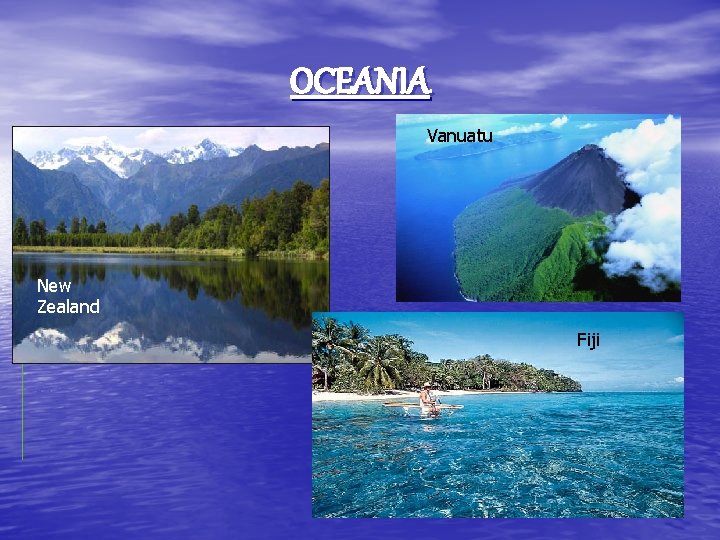
OCEANIA Vanuatu New Zealand Fiji
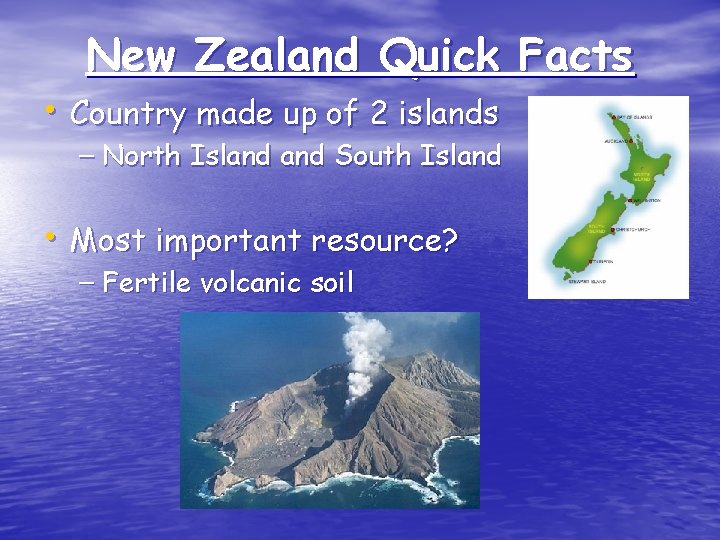
New Zealand Quick Facts • Country made up of 2 islands – North Island South Island • Most important resource? – Fertile volcanic soil
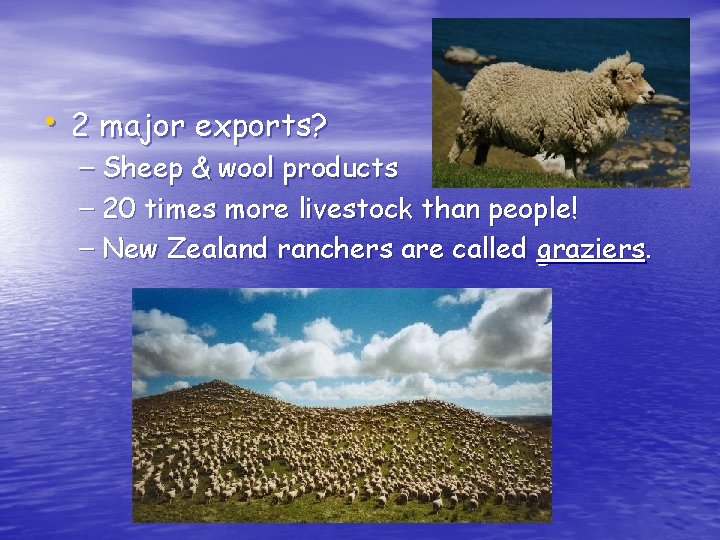
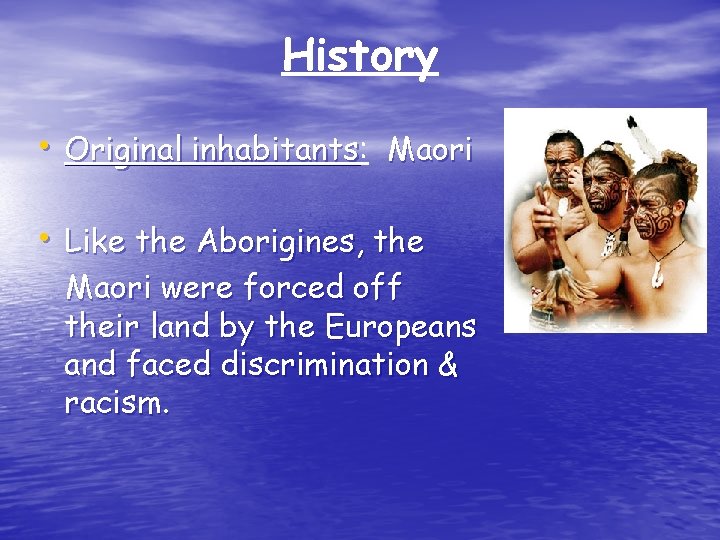
• 2 major exports? – Sheep & wool products – 20 times more livestock than people! – New Zealand ranchers are called graziers.
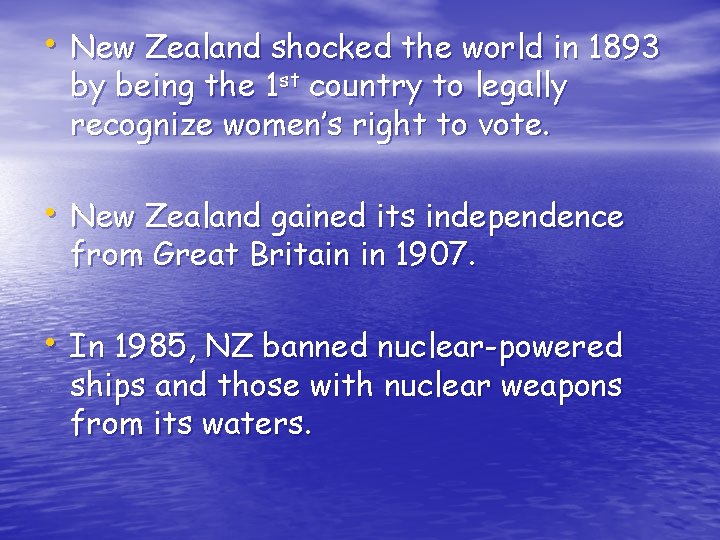
History • Original inhabitants: inhabitants Maori • Like the Aborigines, the Maori were forced off their land by the Europeans and faced discrimination & racism.
• New Zealand shocked the world in 1893 by being the 1 st country to legally recognize women’s right to vote. • New Zealand gained its independence from Great Britain in 1907. • In 1985, NZ banned nuclear-powered ships and those with nuclear weapons from its waters.
OCEANIA QUICK FACTS • The islands were created by colliding • tectonic plates and volcanic hot spots. 3 island types – High islands: tops of underwater mountain ranges (Tahiti & Hawaii’s big islands) – Low islands: coral atolls (Nauru & Hawaii’s small islands) – Continental islands: created by the rising and folding of ancient rock from ocean floor (Papua New Guinea)
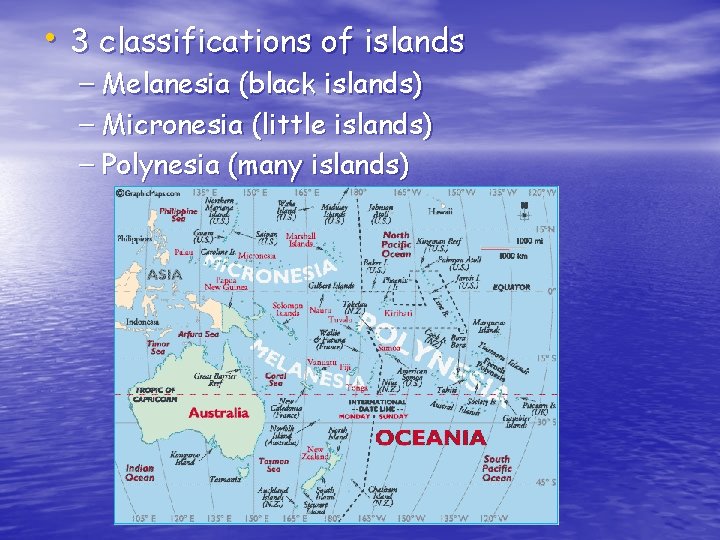
• 3 classifications of islands – Melanesia (black islands) – Micronesia (little islands) – Polynesia (many islands)
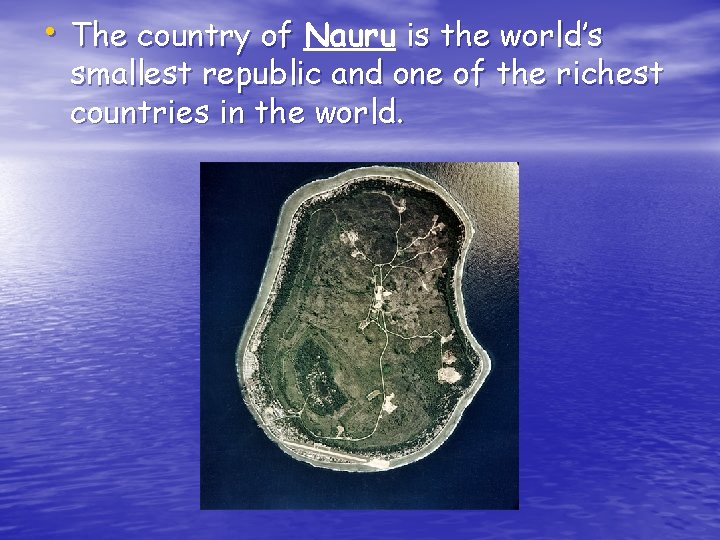
• The country of Nauru is the world’s smallest republic and one of the richest countries in the world.
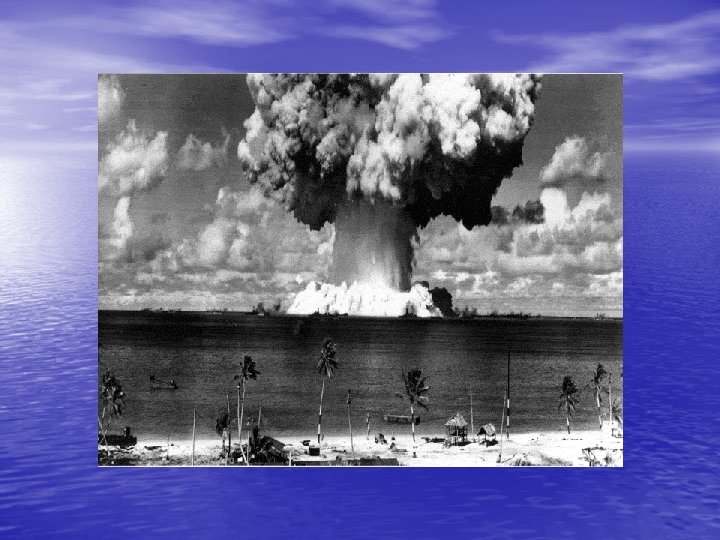
• Many Pacific islands are trust territories. – Created after WWII by the United States – U. S. gave dependent areas to other countries to control. • In 1954, the U. S. exploded an atom bomb at Bikini Atoll and other nearby islands. – People were unable to return to the islands. – In the 1990 s, the U. S. paid $90 million to decontaminate the areas and create trust funds for the injured.
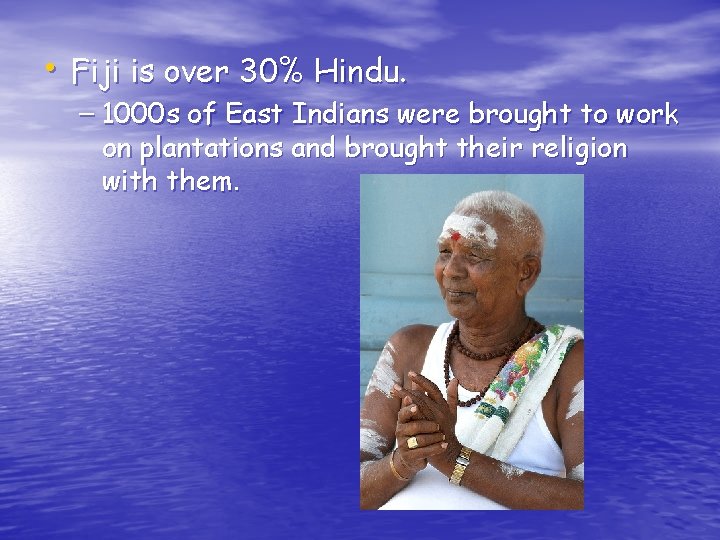
• Fiji is over 30% Hindu. – 1000 s of East Indians were brought to work on plantations and brought their religion with them.
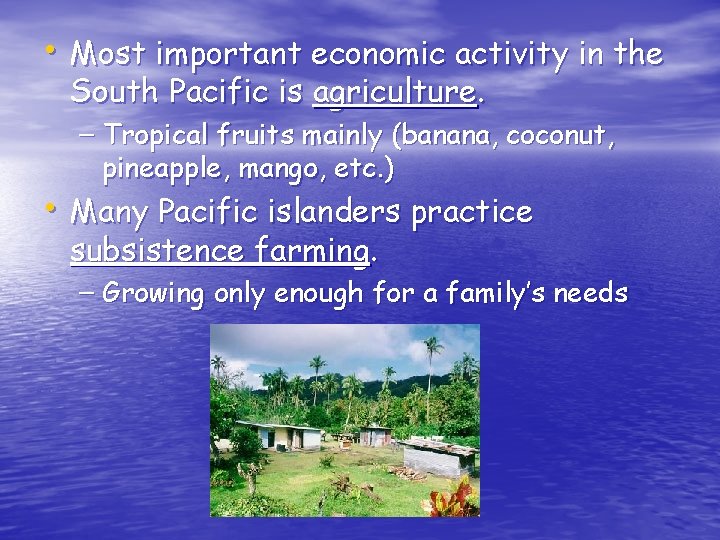
• Most important economic activity in the South Pacific is agriculture. – Tropical fruits mainly (banana, coconut, pineapple, mango, etc. ) • Many Pacific islanders practice subsistence farming. – Growing only enough for a family’s needs