
Answering the Call for Help Handling the Suicidal

- Slides: 24
Answering the Call for Help Handling the Suicidal Caller Presented by: Mesa Police Public Safety Communications Training
Objectives: �Understand facts & myths about suicides �State at least 3 causes of suicidal behavior �Understand gender disparities �State at least 4 active listening techniques
Definition Suicide : A desperate attempt to escape suffering that has become unbearable. The process of purposely ending one's own life. .
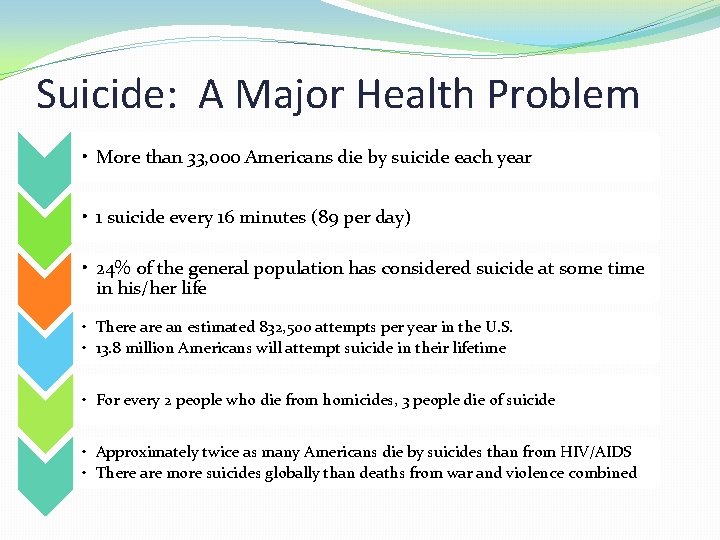
Suicide: A Major Health Problem • More than 33, 000 Americans die by suicide each year • 1 suicide every 16 minutes (89 per day) • 24% of the general population has considered suicide at some time in his/her life • There an estimated 832, 500 attempts per year in the U. S. • 13. 8 million Americans will attempt suicide in their lifetime • For every 2 people who die from homicides, 3 people die of suicide • Approximately twice as many Americans die by suicides than from HIV/AIDS • There are more suicides globally than deaths from war and violence combined
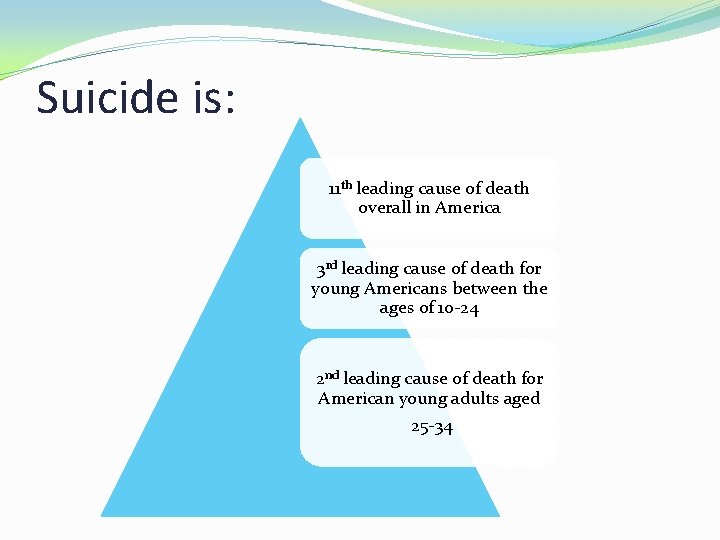
Suicide is: 11 th leading cause of death overall in America 3 rd leading cause of death for young Americans between the ages of 10 -24 2 nd leading cause of death for American young adults aged 25 -34
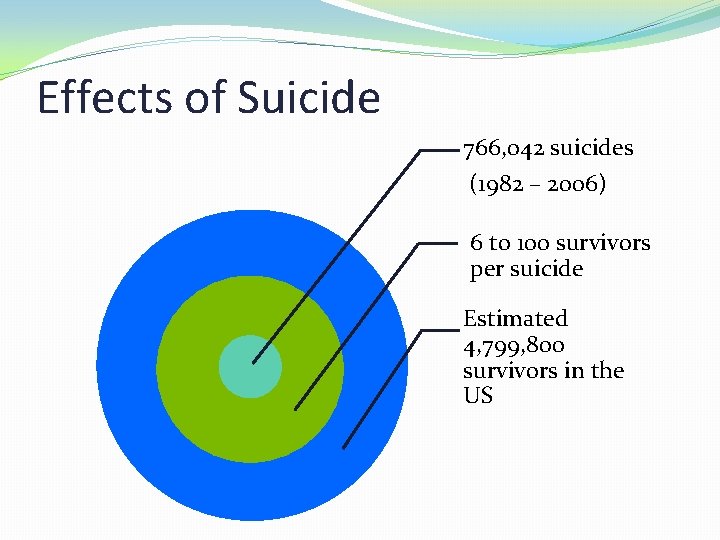
Effects of Suicide 766, 042 suicides (1982 – 2006) 6 to 100 survivors per suicide Estimated 4, 799, 800 survivors in the US
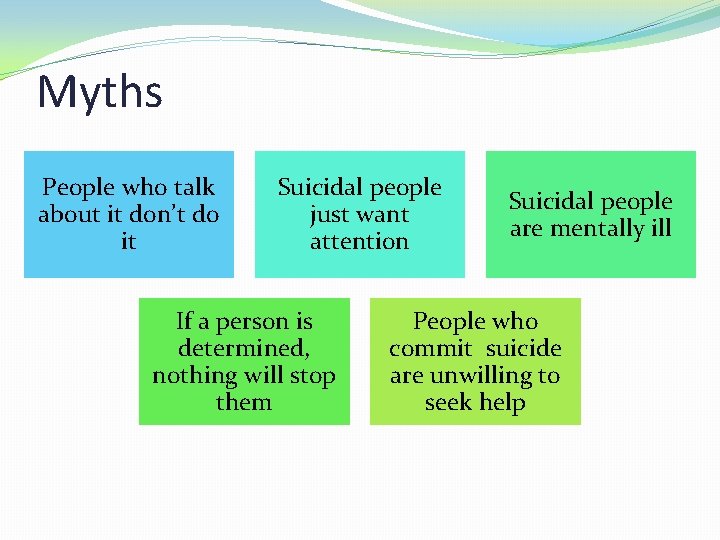
Myths People who talk about it don’t do it Suicidal people just want attention If a person is determined, nothing will stop them Suicidal people are mentally ill People who commit suicide are unwilling to seek help
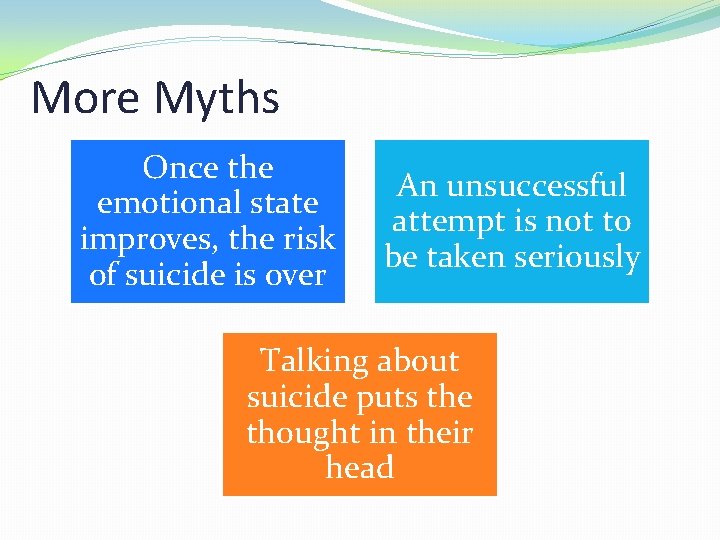
More Myths Once the emotional state improves, the risk of suicide is over An unsuccessful attempt is not to be taken seriously Talking about suicide puts the thought in their head
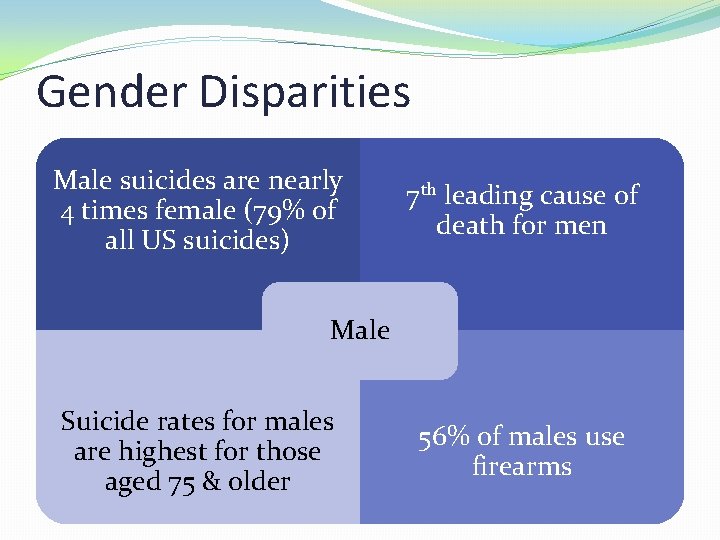
Gender Disparities Male suicides are nearly 4 times female (79% of all US suicides) 7 th leading cause of death for men Male Suicide rates for males are highest for those aged 75 & older 56% of males use firearms
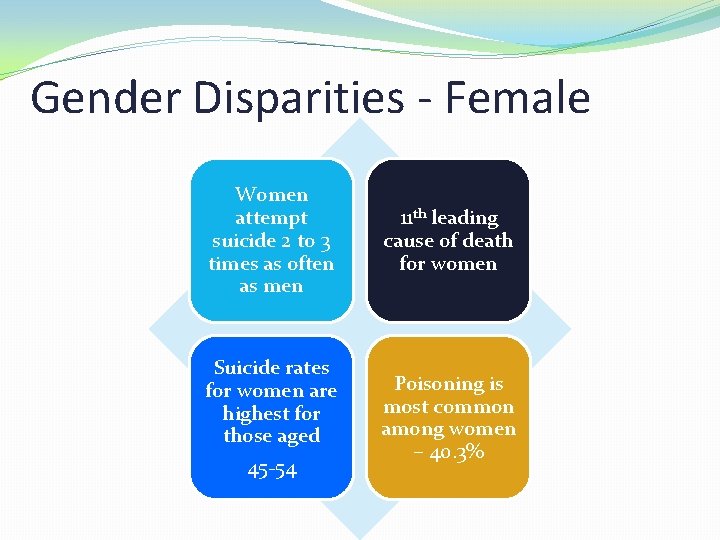
Gender Disparities - Female Women attempt suicide 2 to 3 times as often as men 11 th leading cause of death for women Suicide rates for women are highest for those aged 45 -54 Poisoning is most common among women – 40. 3%
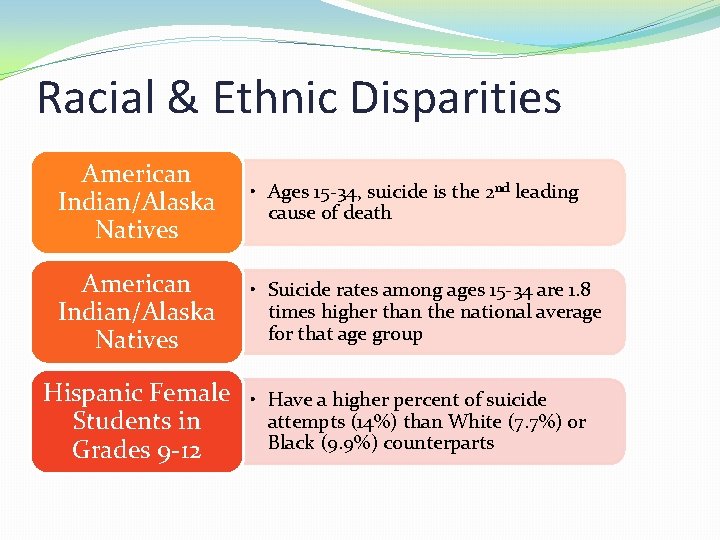
Racial & Ethnic Disparities American Indian/Alaska Natives • Ages 15 -34, suicide is the 2 nd leading cause of death American Indian/Alaska Natives • Suicide rates among ages 15 -34 are 1. 8 times higher than the national average for that age group Hispanic Female Students in Grades 9 -12 • Have a higher percent of suicide attempts (14%) than White (7. 7%) or Black (9. 9%) counterparts
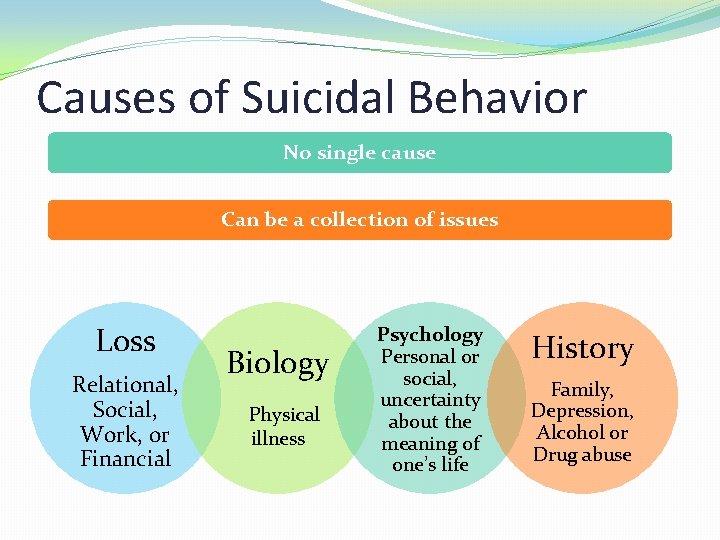
Causes of Suicidal Behavior No single cause Can be a collection of issues Loss Relational, Social, Work, or Financial Biology Physical illness Psychology Personal or social, uncertainty about the meaning of one’s life History Family, Depression, Alcohol or Drug abuse
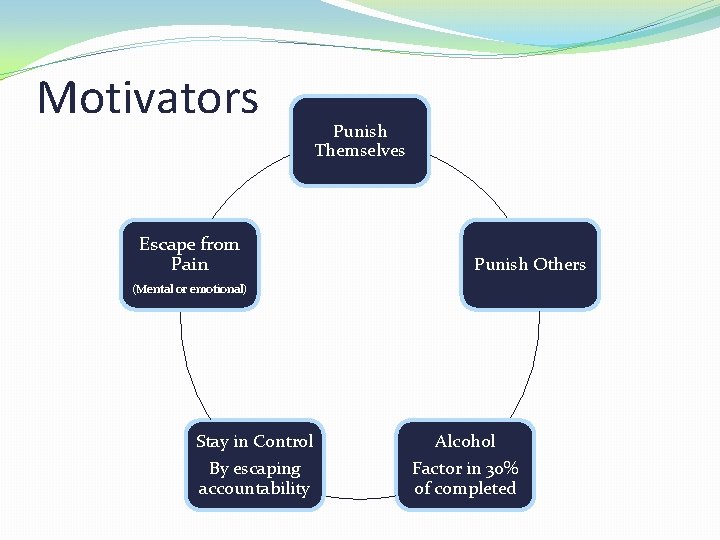
Motivators Escape from Pain Punish Themselves Punish Others (Mental or emotional) Stay in Control By escaping accountability Alcohol Factor in 30% of completed
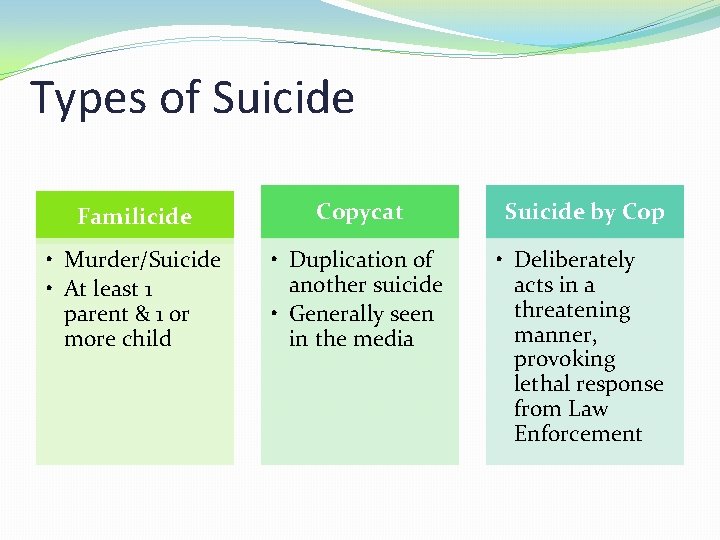
Types of Suicide Familicide Copycat Suicide by Cop • Murder/Suicide • At least 1 parent & 1 or more child • Duplication of another suicide • Generally seen in the media • Deliberately acts in a threatening manner, provoking lethal response from Law Enforcement
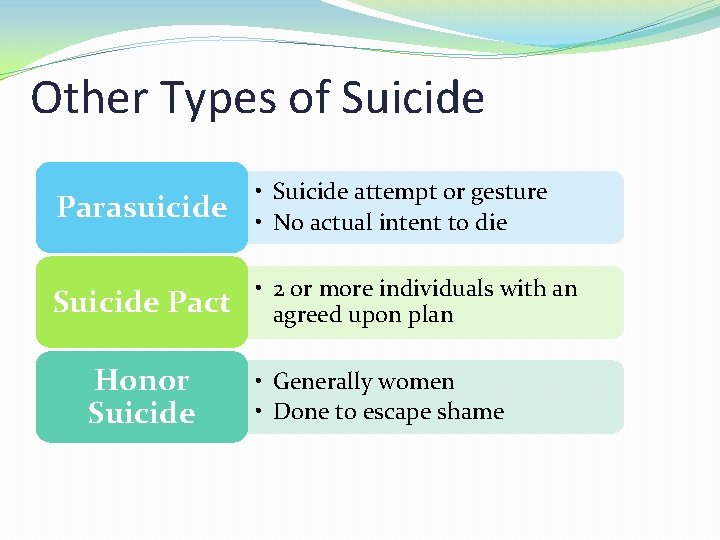
Other Types of Suicide Parasuicide • Suicide attempt or gesture • No actual intent to die Suicide Pact • 2 or more individuals with an agreed upon plan Honor Suicide • Generally women • Done to escape shame
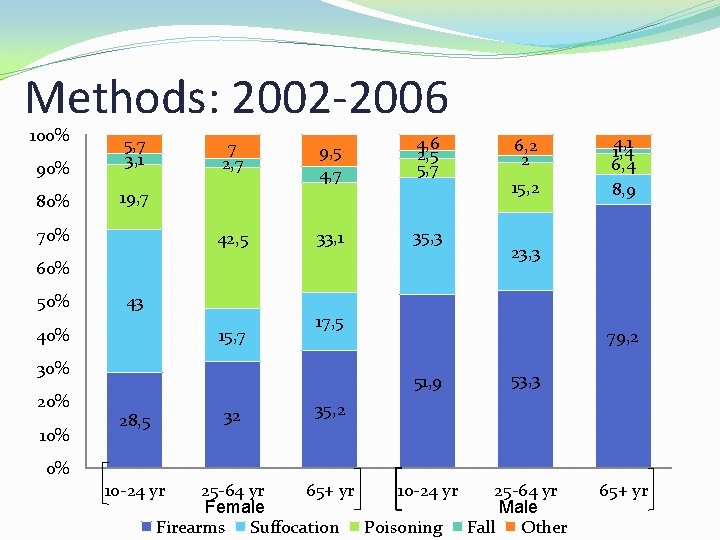
Methods: 2002 -2006 100% 90% 80% 5, 7 3, 1 7 2, 7 9, 5 4, 7 4, 6 2, 5 5, 7 33, 1 35, 3 19, 7 70% 42, 5 60% 50% 43 40% 15, 7 10% 0% 32 10 -24 yr 4, 1 1, 4 6, 4 8, 9 23, 3 79, 2 51, 9 28, 5 15, 2 17, 5 30% 20% 6, 2 2 53, 3 35, 2 25 -64 yr 65+ yr 10 -24 yr 25 -64 yr Female Male Firearms Suffocation Poisoning Fall Other 65+ yr
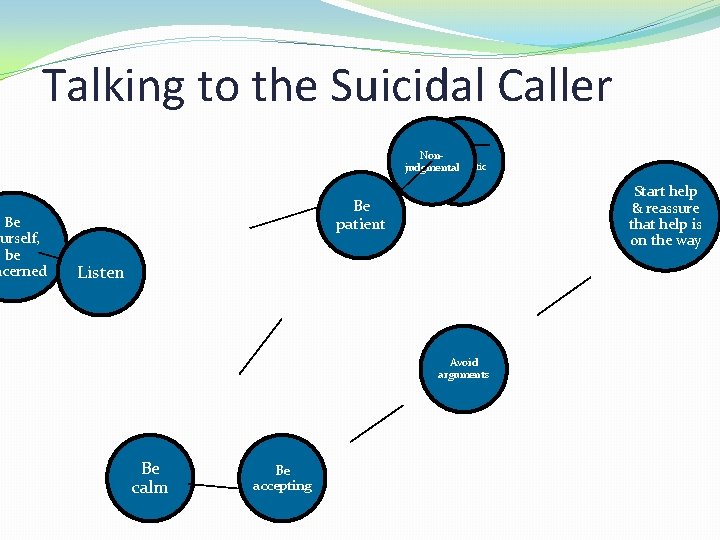
Talking to the Suicidal Caller Be urself, be ncerned Non- Be sympathetic judgmental Start help & reassure that help is on the way Be patient Listen Avoid arguments Be calm Be accepting
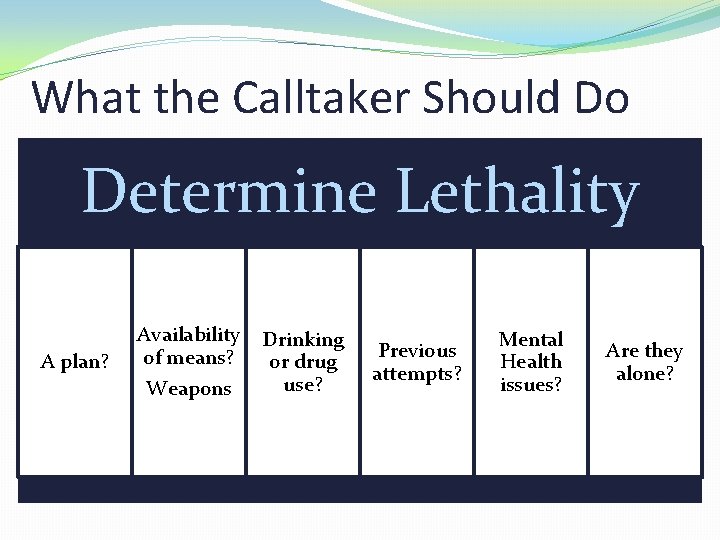
What the Calltaker Should Do Determine Lethality A plan? Availability of means? Weapons Drinking or drug use? Previous attempts? Mental Health issues? Are they alone?
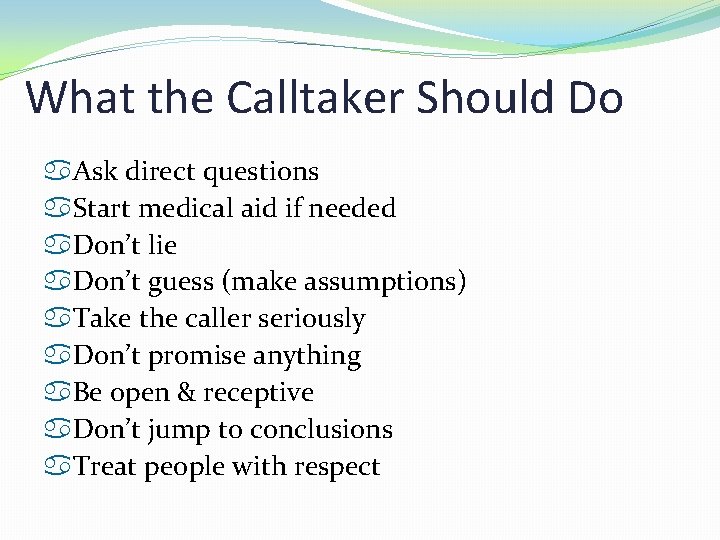
What the Calltaker Should Do Ask direct questions Start medical aid if needed Don’t lie Don’t guess (make assumptions) Take the caller seriously Don’t promise anything Be open & receptive Don’t jump to conclusions Treat people with respect
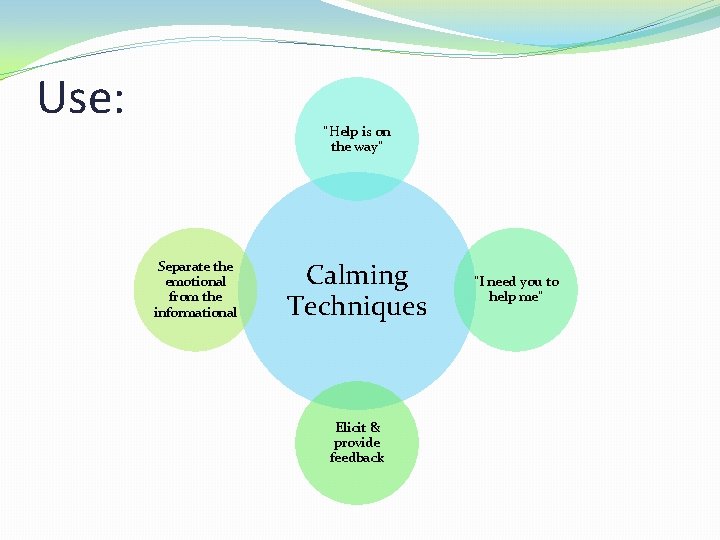
Use: “Help is on the way” Separate the emotional from the informational Calming Techniques Elicit & provide feedback “I need you to help me”
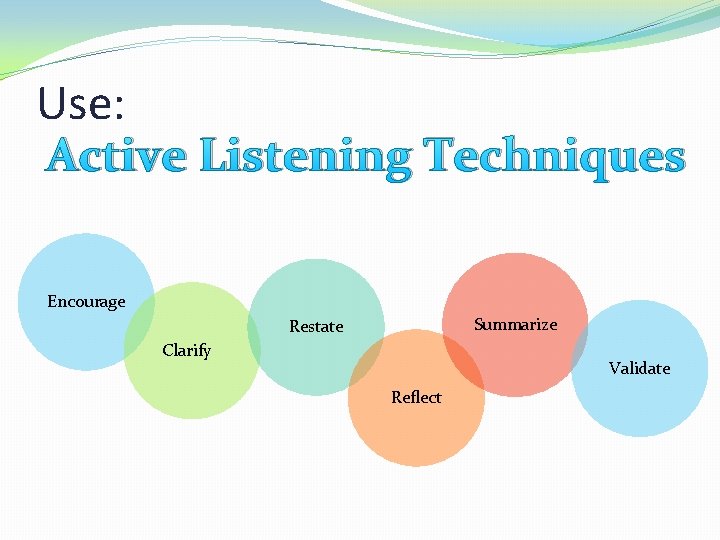
Use: Active Listening Techniques Encourage Summarize Restate Clarify Validate Reflect
By listening, being sympathetic, non-judgmental, patient, calm and accepting you increase your chances of obtaining the information you need to help the caller, ensure the safety of our field units and make your job easier.
Resources Øwww. cdc. gov (Centers for Disease Control & Prevention) Øwww. nimn. nih. gov (National Institute for Mental Health) Øwww. suicide. org Øwww. medicinenet. com Øwww. metanoia. org ØAPCO (The Association of Public Safety Communications Officials)
Questions?