
Answering ecological questions 1 Ecology is a quantitative
- Slides: 13
Answering ecological questions 1. Ecology is a quantitative science. 2. Experiments and observations can inform one another and both have a minimum set of requirements. 3. Statistics can tell you whether what you’re seeing is a real pattern.
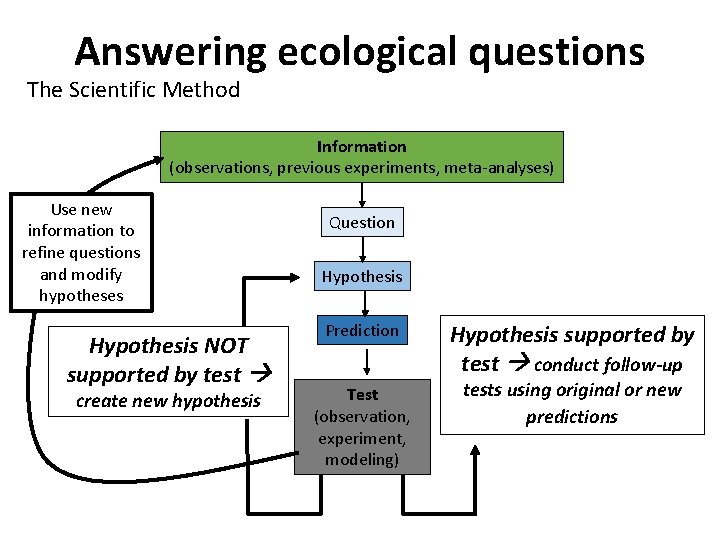
Answering ecological questions The Scientific Method Information (observations, previous experiments, meta-analyses) Use new information to refine questions and modify hypotheses Hypothesis NOT supported by test create new hypothesis Question Hypothesis Prediction Test (observation, experiment, modeling) Hypothesis supported by test conduct follow-up tests using original or new predictions
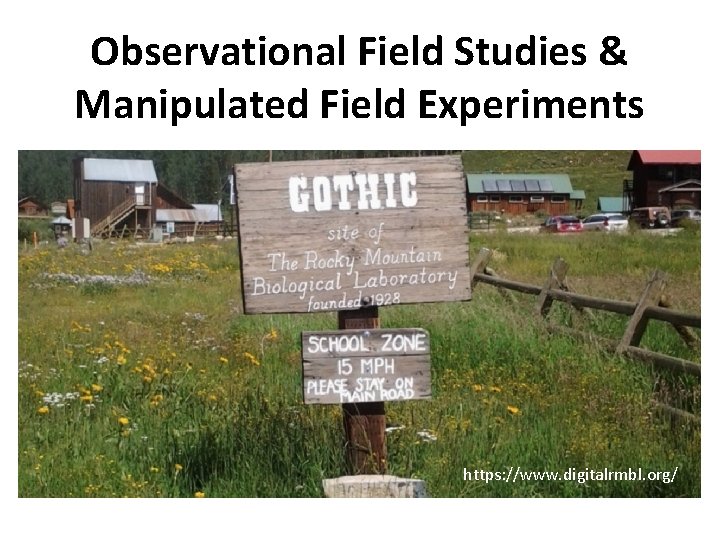
Observational Field Studies & Manipulated Field Experiments https: //www. digitalrmbl. org/
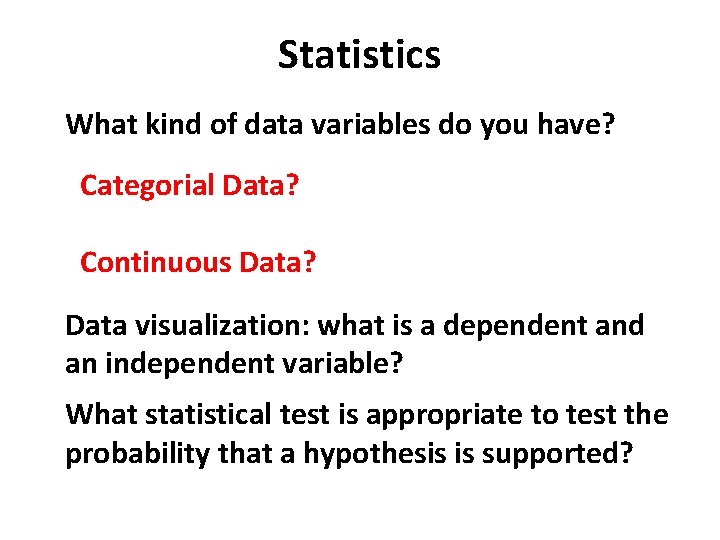
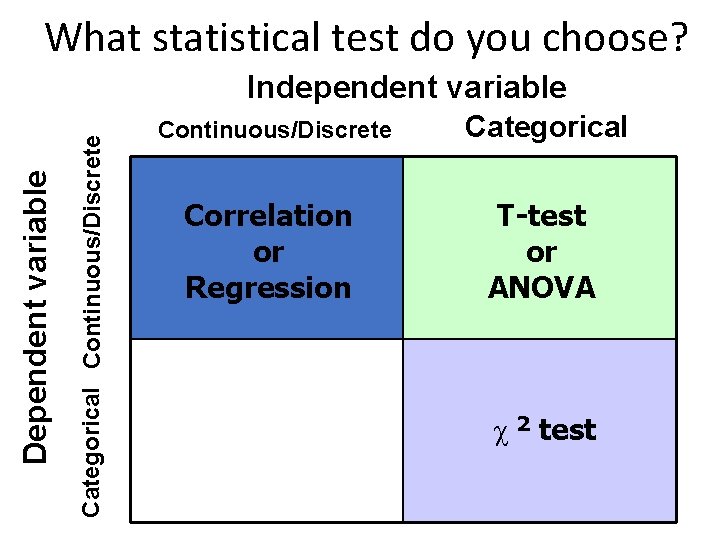
Statistics What kind of data variables do you have? Categorial Data? Continuous Data? Data visualization: what is a dependent and an independent variable? What statistical test is appropriate to test the probability that a hypothesis is supported?
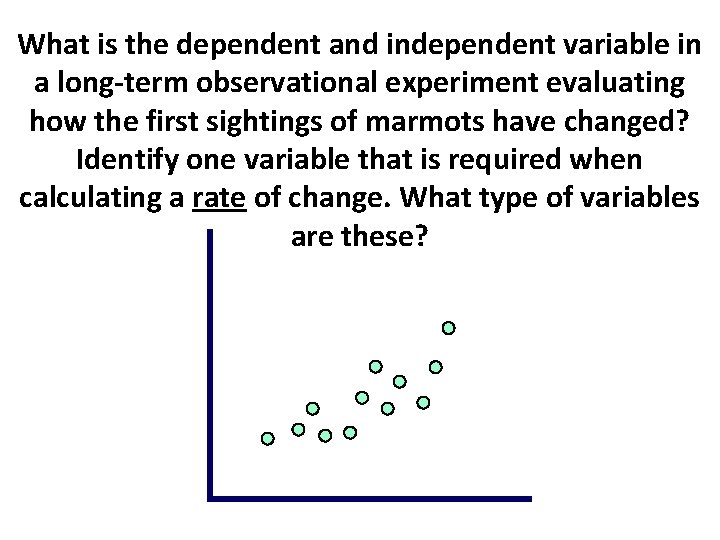
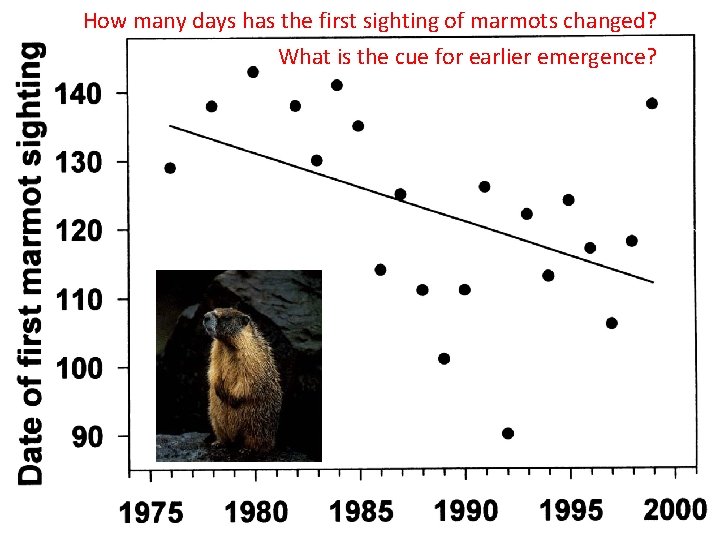
What is the dependent and independent variable in a long-term observational experiment evaluating how the first sightings of marmots have changed? Identify one variable that is required when calculating a rate of change. What type of variables are these?
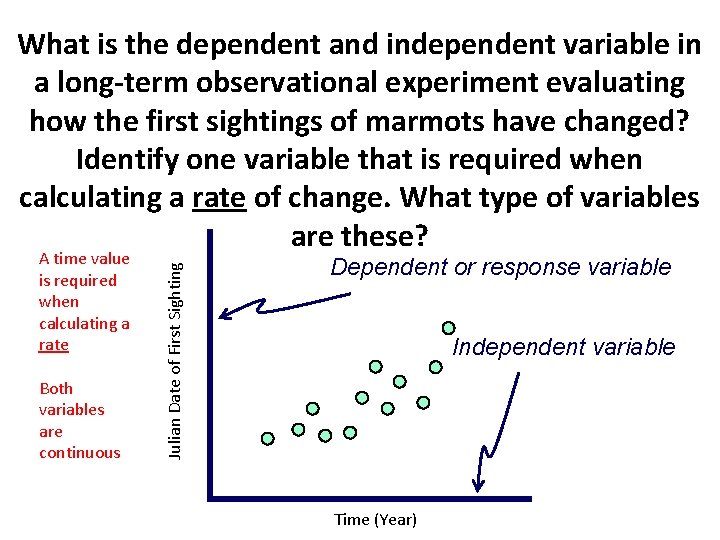
A time value is required when calculating a rate Both variables are continuous Julian Date of First Sighting What is the dependent and independent variable in a long-term observational experiment evaluating how the first sightings of marmots have changed? Identify one variable that is required when calculating a rate of change. What type of variables are these? Dependent or response variable Independent variable Time (Year)
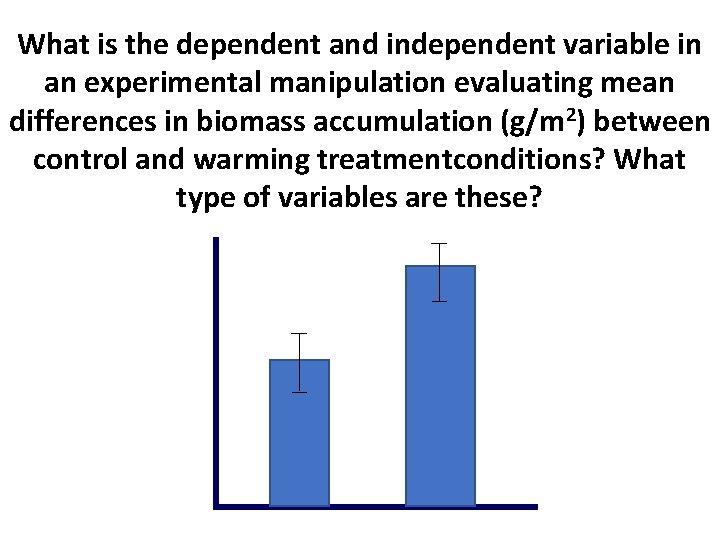
What is the dependent and independent variable in an experimental manipulation evaluating mean differences in biomass accumulation (g/m 2) between control and warming treatmentconditions? What type of variables are these?
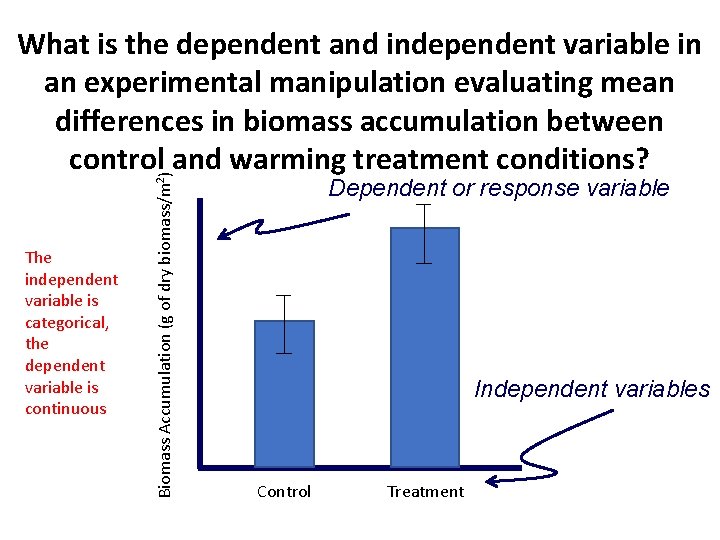
The independent variable is categorical, the dependent variable is continuous Biomass Accumulation (g of dry biomass/m 2) What is the dependent and independent variable in an experimental manipulation evaluating mean differences in biomass accumulation between control and warming treatment conditions? Dependent or response variable Independent variables Control Treatment
What statistical test do you choose? Categorical Continuous/Discrete Dependent variable Independent variable Continuous/Discrete Categorical Correlation or Regression T-test or ANOVA c 2 test
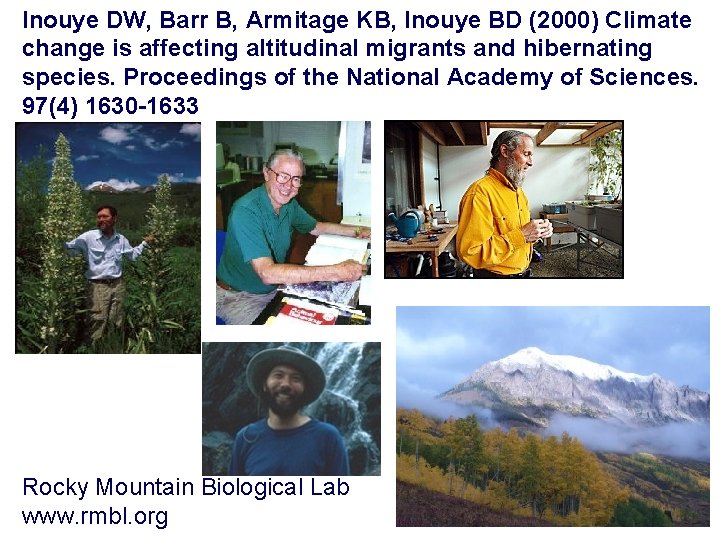
Inouye DW, Barr B, Armitage KB, Inouye BD (2000) Climate change is affecting altitudinal migrants and hibernating species. Proceedings of the National Academy of Sciences. 97(4) 1630 -1633 Rocky Mountain Biological Lab www. rmbl. org
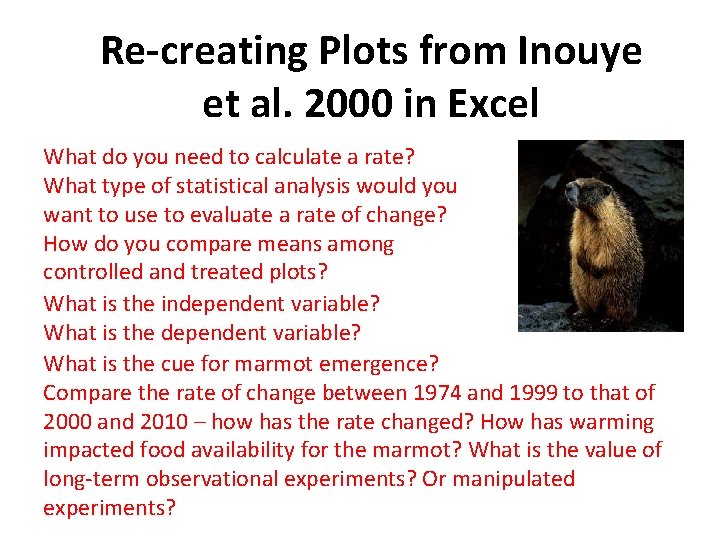
Re-creating Plots from Inouye et al. 2000 in Excel What do you need to calculate a rate? What type of statistical analysis would you want to use to evaluate a rate of change? How do you compare means among controlled and treated plots? What is the independent variable? What is the cue for marmot emergence? Compare the rate of change between 1974 and 1999 to that of 2000 and 2010 – how has the rate changed? How has warming impacted food availability for the marmot? What is the value of long-term observational experiments? Or manipulated experiments?
How many days has the first sighting of marmots changed? What is the cue for earlier emergence?
Tips for constructing graphs in Excel • Check out: https: //www. hhmi. org/biointeractive/spreadsheet-data-analysistutorials • Calculating a rate using a temporal variable requires a trendline, which can be added to graphs in excel with a right click. NOTE: don't forget the units of your rate! You can even click 'Display equation on chart' for the type of trendline (linear for us!) you use. The slope of the trendline provides the rate of change over the temporal unit you’re evaluating. • Don’t forget to think about what question you’re asking – are you asking questions regarding rates of change? Or are you comparing mean differences in a manipulated experiment – how will this impact data visualization and analysis? Are you comparing continuous? or categorical variables? How might this impact your choice of statistical test?