
Anorexia Nervosa Restricting type Has not regularly engaged

- Slides: 29
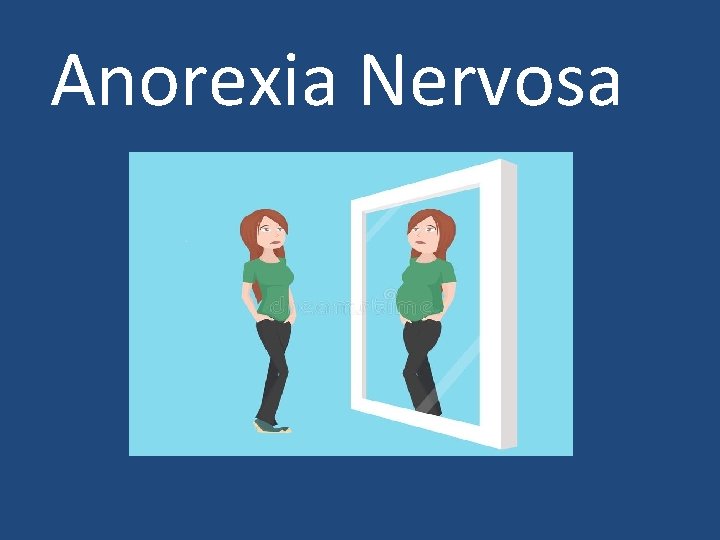
Anorexia Nervosa
■■ Restricting type: Has not regularly engaged in binge-eating or purging behavior; weight loss is achieved through diet, fasting, and/or excessive exercise. ■■ Binge-eating/purging type: Eating binges followed by selfinduced vomiting, and/or using laxatives, enemas, or diuretics. Some individuals purge after eating small amounts of food without binging.
DIAGNOSIS AND DSM-5 CRITERIA -Restriction of energy intake relative to requirements, leading to significant low body weight—defined as less than minimally normal or expected. -Intense fear of gaining weight or becoming fat. despite the already low weight. - Distortions in an individual’s self perception of body weight or shape(Disturbed body image), associated with the denial of the serious consequences of the current low body weight.
Physical manifestations -Amenorrhea -cold intolerance/hypothermia -hypotension (especially orthostasic) -bradycardia , arrhythmia -acute coronary syndrome, cardiomyopathy , mitral valve prolapse -Constipation -lanugo hair, alopecia -edema, dehydration -peripheral neuropathy, seizures -hypothyroidism -osteopenia, osteoporosis.
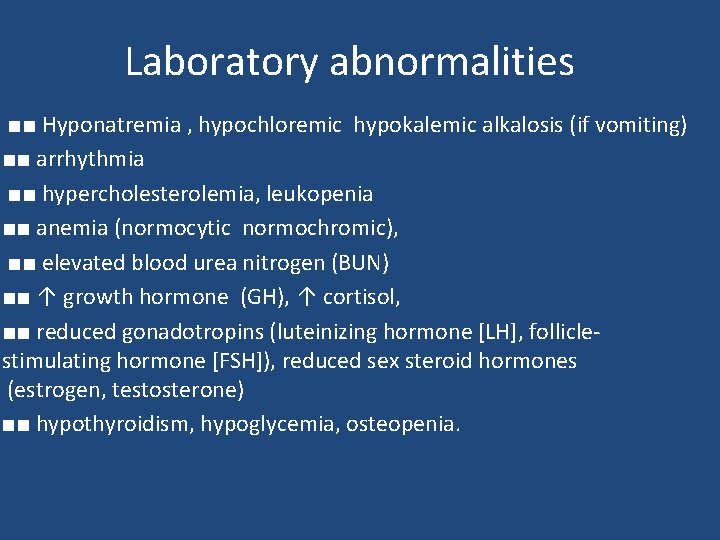
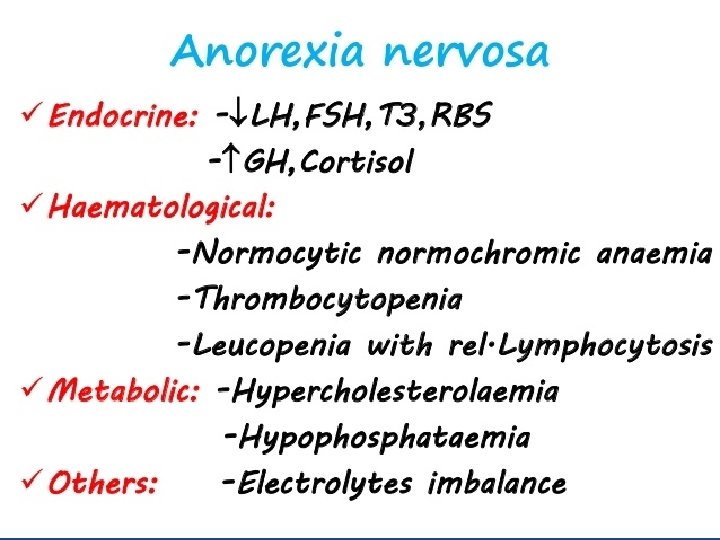
Laboratory abnormalities ■■ Hyponatremia , hypochloremic hypokalemic alkalosis (if vomiting) ■■ arrhythmia ■■ hypercholesterolemia, leukopenia ■■ anemia (normocytic normochromic), ■■ elevated blood urea nitrogen (BUN) ■■ ↑ growth hormone (GH), ↑ cortisol, ■■ reduced gonadotropins (luteinizing hormone [LH], folliclestimulating hormone [FSH]), reduced sex steroid hormones (estrogen, testosterone) ■■ hypothyroidism, hypoglycemia, osteopenia.
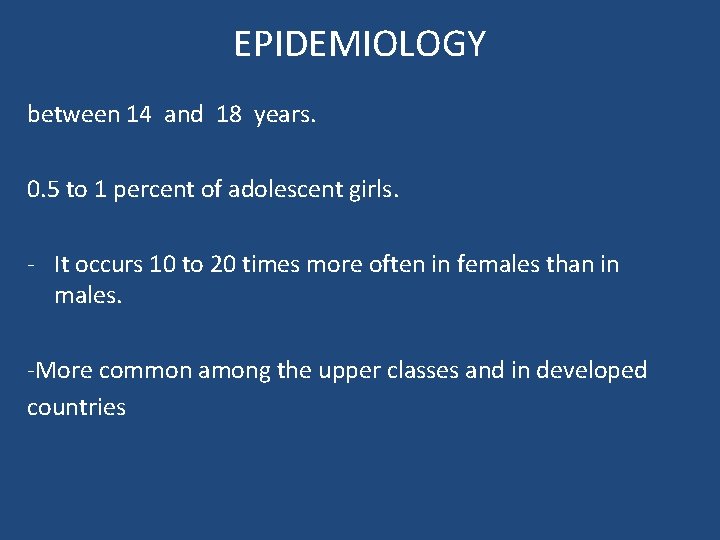
EPIDEMIOLOGY between 14 and 18 years. 0. 5 to 1 percent of adolescent girls. - It occurs 10 to 20 times more often in females than in males. -More common among the upper classes and in developed countries
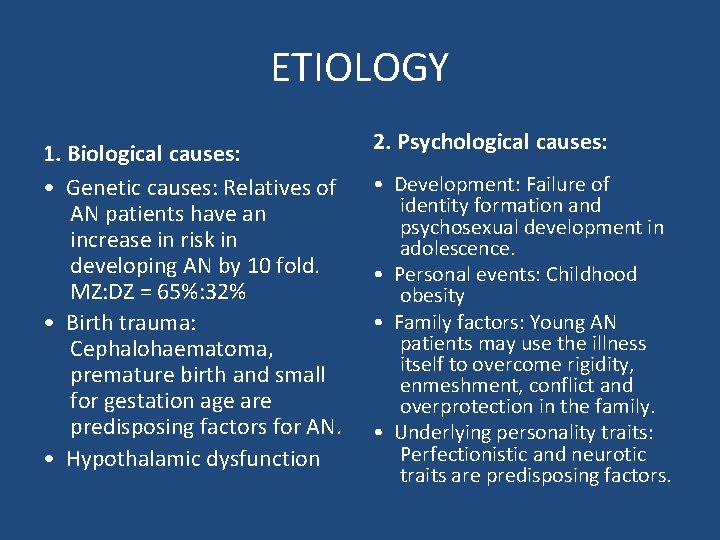
ETIOLOGY 1. Biological causes: • Genetic causes: Relatives of AN patients have an increase in risk in developing AN by 10 fold. MZ: DZ = 65%: 32% • Birth trauma: Cephalohaematoma, premature birth and small for gestation age are predisposing factors for AN. • Hypothalamic dysfunction 2. Psychological causes: • Development: Failure of identity formation and psychosexual development in adolescence. • Personal events: Childhood obesity • Family factors: Young AN patients may use the illness itself to overcome rigidity, enmeshment, conflict and overprotection in the family. • Underlying personality traits: Perfectionistic and neurotic traits are predisposing factors.
ETIOLOGY 3. Socio-cultural causes: • Changes in nutritional knowledge and dietary fashion in the society • Cult of thinness • Changed roles and images in women to pursue thinness.
DIFFERENTIAL DIAGNOSIS ■■ Medical conditions: Endocrine disorders (e. g. , hypothalamic disease, diabetes mellitus, hyperthyroidism), gastrointestinal illnesses (e. g. , malabsorption , inflammatory bowel disease), genetic disorders (e. g. , Turner syndrome, ), cancer, AIDS. ■■ Psychiatric disorders: Major depression, bulimia, or other mental disorders (such as somatic symptom disorder or schizophrenia).
COURSE AND PROGNOSIS Chronic and relapsing illness. Variable course—may completely recover, have fluctuating symptoms with relapses, or progressively deteriorate. Most remit within 5 years. Mortality rate is cumulative and approximately 5% 18%per decade due to starvation, suicide, or cardiac failure. One-third of AN patients may attempt suicide or self harm.
TREATMENT ■■ Food is the best medicine! ■■ Patients may be treated as outpatients unless they are dangerously below ideal body weight (>20– 25% below) ■■ Treatment involves cognitive-behavioral therapy, family therapy , and supervised weight-gain programs. ■■ Selective serotonin reuptake inhibitors (SSRIs) have not been effective in the treatment of anorexia nervosa but may be used for comorbid anxiety or depression. ■■ Little evidence that second-generation antipsychotics can treat preoccupation with weight and food, or independently promote weight gain.
Bulimia Nervosa
Bulimia Nervosa ■■ Bulimia nervosa involves binge eating combined with behaviors intended to counteract weight gain, such as vomiting; use of laxatives, enemas, or diuretics; fasting; or excessive exercise. ■■ Patients are embarrassed by their binge eating and are overly concerned with body weight. ■■ maintain a normal weight (and may be overweight)unlike anorexia nervosa.
DIAGNOSIS AND DSM-5 CRITERIA - Recurrent episodes of binge eating. - Recurrent, inappropriate attempts to compensate for overeating and prevent weight gain (such as laxative abuse, vomiting, diuretics, fasting, or excessive exercise). - The binge eating and compensatory behaviors occur at least once a week for 3 months. - Self-esteem is affected by self-evaluation of body weight and shape. - Does not occur exclusively during an episode of anorexia nervosa
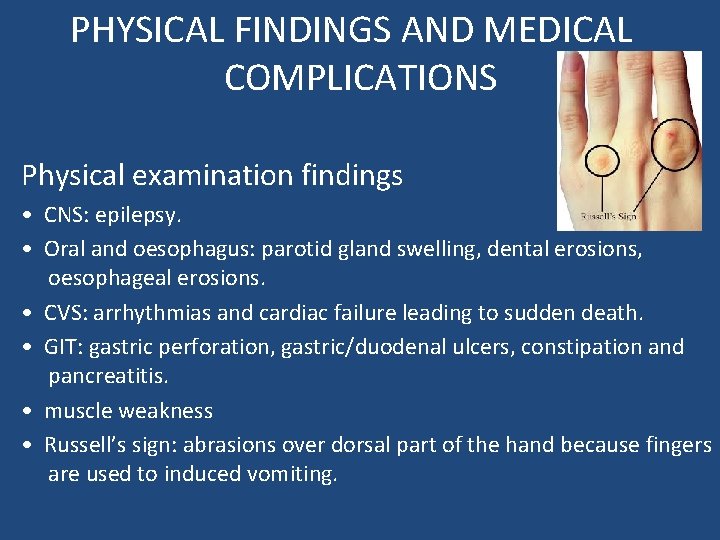
PHYSICAL FINDINGS AND MEDICAL COMPLICATIONS Physical examination findings • CNS: epilepsy. • Oral and oesophagus: parotid gland swelling, dental erosions, oesophageal erosions. • CVS: arrhythmias and cardiac failure leading to sudden death. • GIT: gastric perforation, gastric/duodenal ulcers, constipation and pancreatitis. • muscle weakness • Russell’s sign: abrasions over dorsal part of the hand because fingers are used to induced vomiting.
Laboratory/imaging abnormalities: • • • FBC: leukopenia and lymphocytosis. U&Es: ↓in K+, Na+, Cl-, ↑bicarbonate ↑in serum amylase Metabolic acidosis due to laxative use Metabolic alkalosis due to repeated vomiting.
EPIDEMIOLOGY -prevalence in young females is 1 -4%. - Significantly more common in women than men -Onset is in late adolescence or early adulthood. - More common in developed countries. - High incidence of comorbid mood disorders, anxiety disorders, impulse control disorders, substance use, prior physical/sexual abuse, and ↑ prevalence of borderline personality disorder.
ETIOLOGY - Multifactorial, with similar factors as for anorexia. - Childhood obesity increase risk for bulimia nervosa.
COURSE AND PROGNOSIS -Chronic and relapsing illness. - Better prognosis than anorexia nervosa - Symptoms are usually exacerbated by stressful conditions. - One-half recover fully with treatment; one-half have chronic course with fluctuating symptoms. - Crude mortality rate is 2% per decade. - Elevated suicide risk compared to the general population.
TREATMENT do not require inpatient hospitalization. -Both pharmacotherapy and psychotherapy could be considered. -Pharmacological treatment: antidepressants (SSRIs such as fluoxetine or fluvoxamine) It would be able to help in reduction of binge eating and also the associated impulsive behaviour. -Psychological treatment – Both cognitive behavioral therapy (CBT) and interpersonal psychotherapy (IPT) have been used. CBT has been shown to be highly effective for BN. -Nutritional counseling and education.
Binge-Eating Disorder
Binge-Eating Disorder -Patients with binge-eating disorder suffer emotional distress over their binge eating, but they do not try to control their weight by purging or restricting calories, as do anorexics or bulimics. Unlike anorexia and bulimia -Patients with binge-eating disorder are not as fixated on their body shape and weight
DIAGNOSIS AND DSM-5 CRITERIA - Recurrent episodes of binge eating (eating an excessive amount of food in a 2 -hour period associated with a lack of control), with at least three of the following: eating very rapidly, eating until uncomfortably full, eating large amounts when not hungry, eating alone due to embarrassment, and feeling guilty after eating. -Severe distress over binge eating. -Binge eating occurs at least once a week for 3 months. -Binge eating is not associated with compensatory behaviors (such as vomiting, laxative use, etc. ), and doesn’t occur exclusively during the course of anorexia or bulimia
PHYSIC AL FINDINGS AND MEDIC AL COMPLICATIONS Patients are typically obese and suffer from medical problems related to obesity including metabolic syndrome, type II diabetes, and cardiovascular disease.
EPIDEMIOLOGY Binge eating disorder is the most common eating disorder. It appears in approximately 25 percent of patients who seek medical care for obesity and in 50 to 75 percent of those with severe obesity (body mass index [BMI] greater than 40). It is more common in females (4 percent) than in males(2 percent).
ETIOLOGY Runs in families, reflecting likely genetic influences
COURSE AND PROGNOSIS -Typically begins in adolescence or young adulthood - Remission rates are higher than for other eating disorders - Higher rates of psychiatric comorbidities than in obese individuals without binge eating disorder.
TREATMENT Both pharmacotherapy and psychotherapy could be considered. Pharmacological treatment: antidepressants (SSRIs such as fluoxetine or fluvoxamine) Psychological treatment – Both cognitive behavioural therapy (CBT) and interpersonal psychotherapy (IPT)