
Annual Updated Introduction to Clinically Relevant Microbiology and

Annual Updated Introduction to Clinically Relevant Microbiology and Antibiotic Use Edward L. Goodman, MD, FACP, FIDSA, FSHEA Hospital Epidemiologist Core Faculty Clinical Professor UTSWMS July 7, 2016
Outline l Basic Clinical Bacteriology l Antibiotics – Categories – Pharmacology – Mechanisms of Resistance l Antibiotic Stewardship
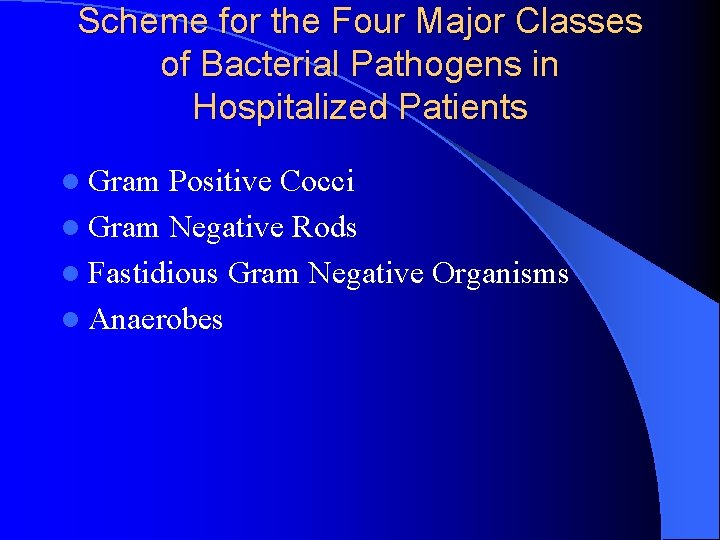
Scheme for the Four Major Classes of Bacterial Pathogens in Hospitalized Patients l Gram Positive Cocci l Gram Negative Rods l Fastidious Gram Negative Organisms l Anaerobes
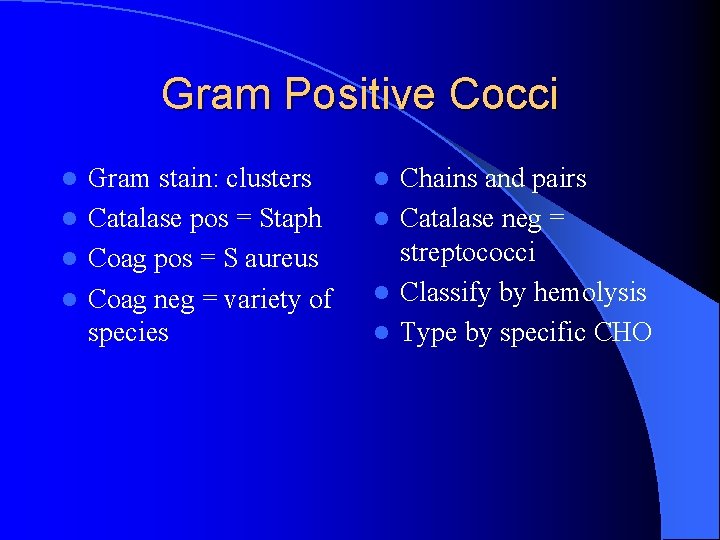
Gram Positive Cocci Gram stain: clusters l Catalase pos = Staph l Coag pos = S aureus l Coag neg = variety of species l Chains and pairs l Catalase neg = streptococci l Classify by hemolysis l Type by specific CHO l
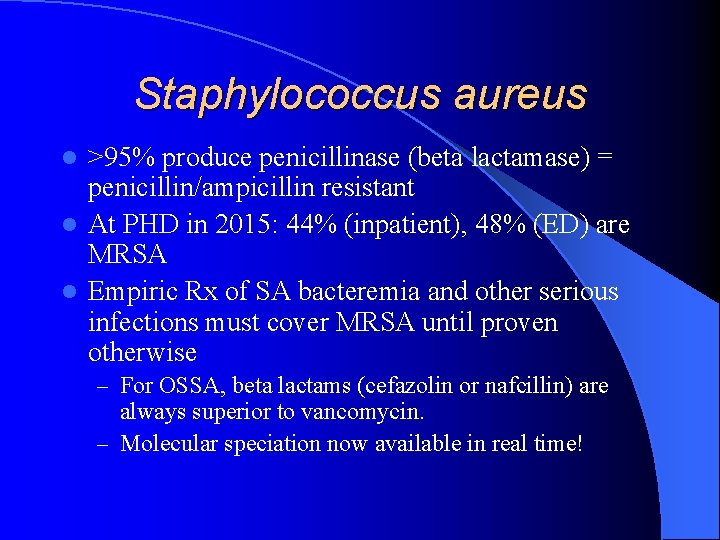
Staphylococcus aureus >95% produce penicillinase (beta lactamase) = penicillin/ampicillin resistant l At PHD in 2015: 44% (inpatient), 48% (ED) are MRSA l Empiric Rx of SA bacteremia and other serious infections must cover MRSA until proven otherwise l – For OSSA, beta lactams (cefazolin or nafcillin) are always superior to vancomycin. – Molecular speciation now available in real time!
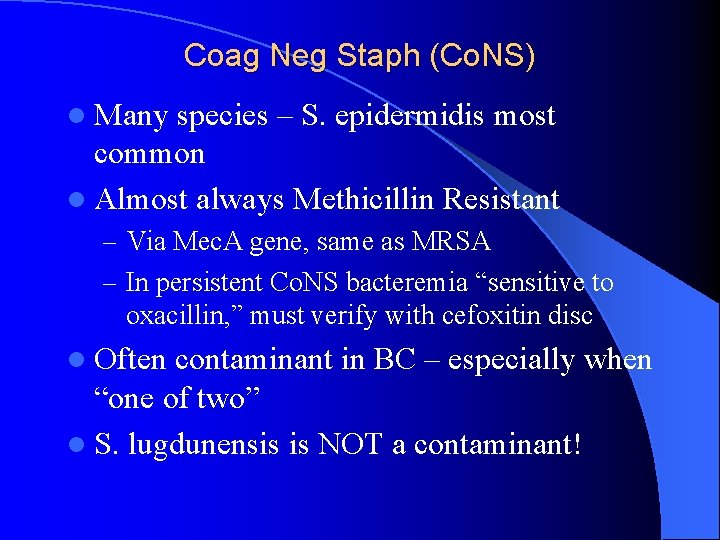
Coag Neg Staph (Co. NS) l Many species – S. epidermidis most common l Almost always Methicillin Resistant – Via Mec. A gene, same as MRSA – In persistent Co. NS bacteremia “sensitive to oxacillin, ” must verify with cefoxitin disc l Often contaminant in BC – especially when “one of two” l S. lugdunensis is NOT a contaminant!

Streptococci l Beta hemolysis: Group A, B, C etc. – Invasive – mimic staph in virulence l S. pyogenes (Group A) – Pharyngitis, – Soft tissue - add anti-toxin protein inhibitor (clinda) only if: • Necrotizing fascitis • TSS – Non suppurative sequellae: ARF, AGN
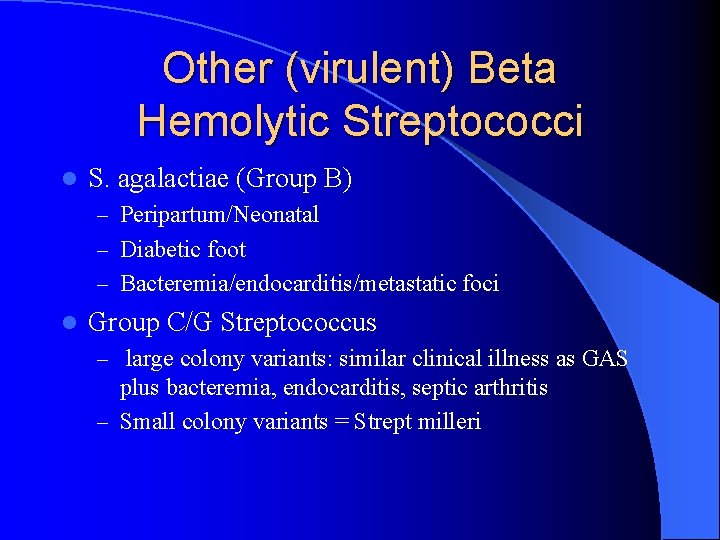
Other (virulent) Beta Hemolytic Streptococci l S. agalactiae (Group B) – Peripartum/Neonatal – Diabetic foot – Bacteremia/endocarditis/metastatic foci l Group C/G Streptococcus – large colony variants: similar clinical illness as GAS plus bacteremia, endocarditis, septic arthritis – Small colony variants = Strept milleri
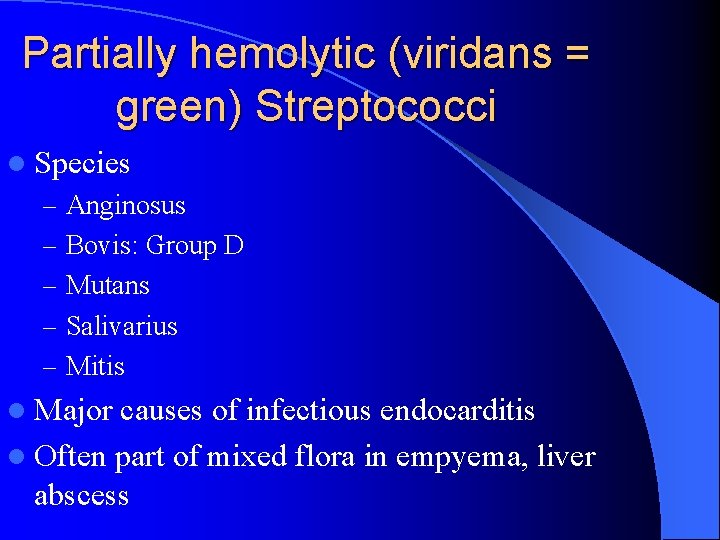
Partially hemolytic (viridans = green) Streptococci l Species – Anginosus – Bovis: Group D – Mutans – Salivarius – Mitis l Major causes of infectious endocarditis l Often part of mixed flora in empyema, liver abscess
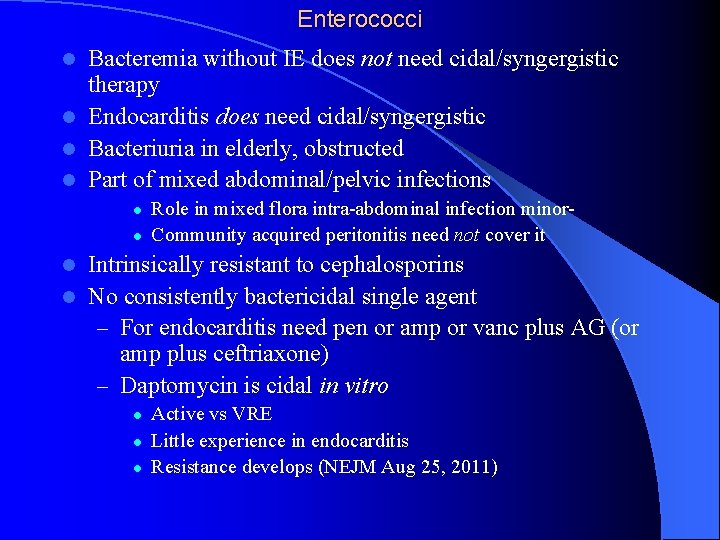
Enterococci Bacteremia without IE does not need cidal/syngergistic therapy l Endocarditis does need cidal/syngergistic l Bacteriuria in elderly, obstructed l Part of mixed abdominal/pelvic infections l l l Role in mixed flora intra-abdominal infection minor. Community acquired peritonitis need not cover it Intrinsically resistant to cephalosporins l No consistently bactericidal single agent – For endocarditis need pen or amp or vanc plus AG (or amp plus ceftriaxone) – Daptomycin is cidal in vitro l l Active vs VRE Little experience in endocarditis Resistance develops (NEJM Aug 25, 2011)
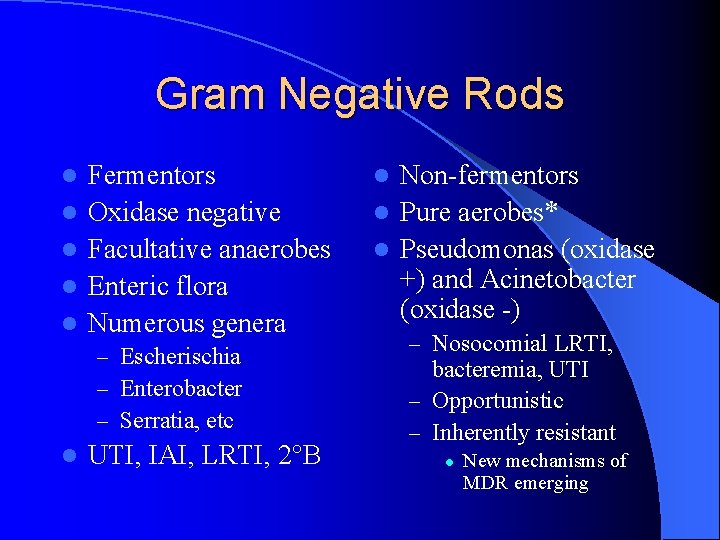
Gram Negative Rods l l l Fermentors Oxidase negative Facultative anaerobes Enteric flora Numerous genera – Escherischia – Enterobacter – Serratia, etc l UTI, IAI, LRTI, 2°B Non-fermentors l Pure aerobes* l Pseudomonas (oxidase +) and Acinetobacter (oxidase -) l – Nosocomial LRTI, bacteremia, UTI – Opportunistic – Inherently resistant l New mechanisms of MDR emerging
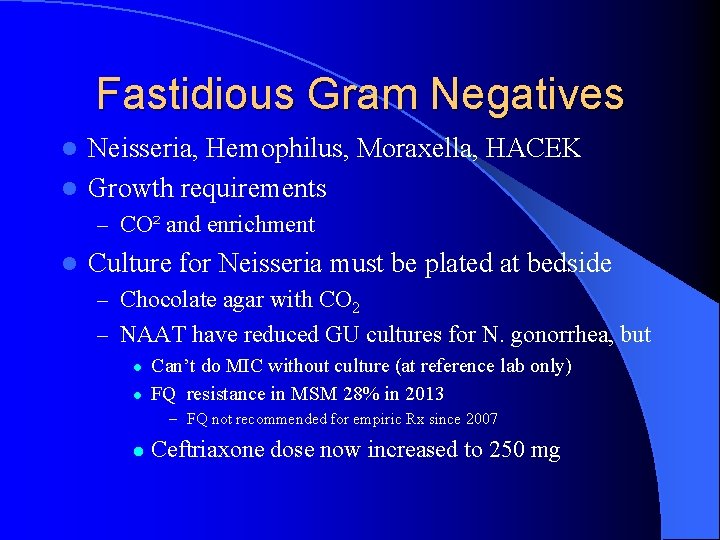
Fastidious Gram Negatives Neisseria, Hemophilus, Moraxella, HACEK l Growth requirements l – CO² and enrichment l Culture for Neisseria must be plated at bedside – Chocolate agar with CO 2 – NAAT have reduced GU cultures for N. gonorrhea, but l l Can’t do MIC without culture (at reference lab only) FQ resistance in MSM 28% in 2013 – FQ not recommended for empiric Rx since 2007 l Ceftriaxone dose now increased to 250 mg
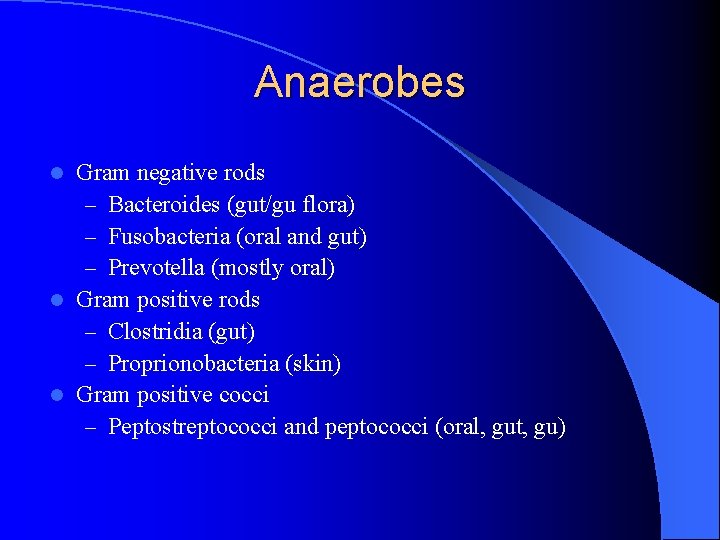
Anaerobes Gram negative rods – Bacteroides (gut/gu flora) – Fusobacteria (oral and gut) – Prevotella (mostly oral) l Gram positive rods – Clostridia (gut) – Proprionobacteria (skin) l Gram positive cocci – Peptostreptococci and peptococci (oral, gut, gu) l
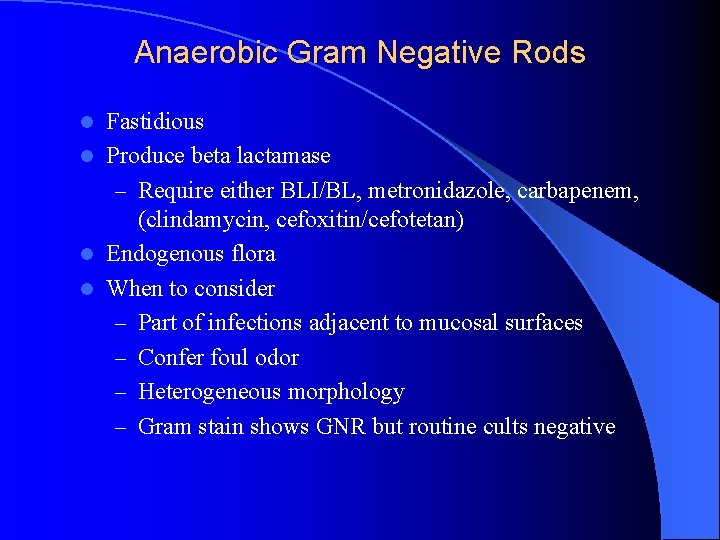
Anaerobic Gram Negative Rods Fastidious l Produce beta lactamase – Require either BLI/BL, metronidazole, carbapenem, (clindamycin, cefoxitin/cefotetan) l Endogenous flora l When to consider – Part of infections adjacent to mucosal surfaces – Confer foul odor – Heterogeneous morphology – Gram stain shows GNR but routine cults negative l
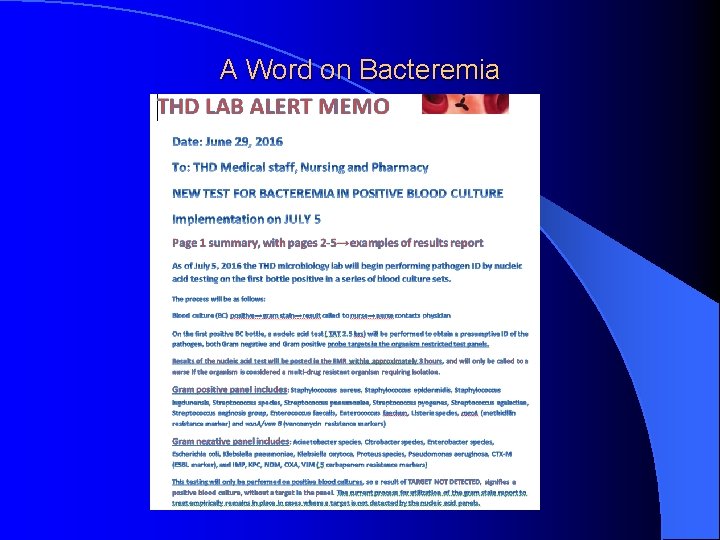
A Word on Bacteremia
What Does This Mean? l Within a few hours of detecting a positive BC: – Vancomycin can be changed to nafcillin or cefazolin for OSSA – Vancomycin can be stopped when one of two BC grow Co. NS is detected – Ceftriaxone or levofloxacin can be changed to an anti-pseudomonal when Ps. Aerug detected
(My) Antibiotic Classification l Narrow Spectrum – Active against only one of the four classes of bacteria l Broad Spectrum – Active against more than one of the classes
Narrow Spectrum (not on formulary) – Only gram positive: vancomycin, linezolid/ (tedizolid, ) daptomycin, (telavancin, dalbavancin/ oritovancin) – Only aerobic gram negative: aminoglycosides, aztreonam – Only gram negative anaerobes: metronidazole
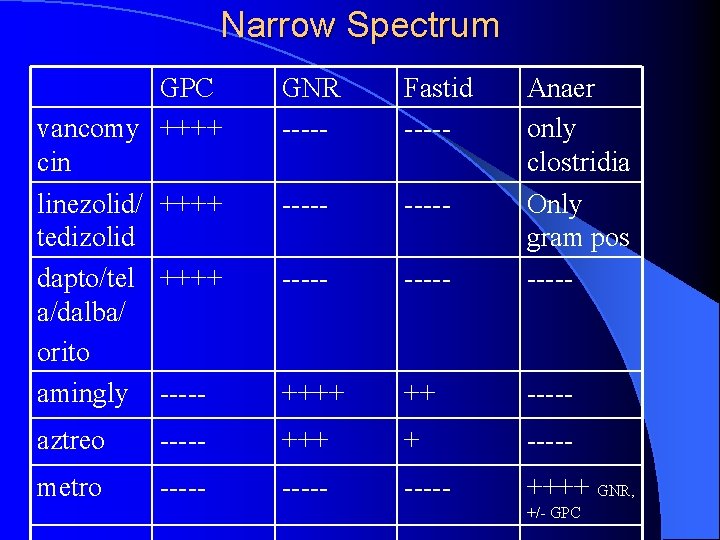
Narrow Spectrum GPC vancomy ++++ cin linezolid/ ++++ tedizolid dapto/tel ++++ a/dalba/ orito amingly ----- GNR ----- Fastid ----- ----- Anaer only clostridia Only gram pos ----- ++++ ++ ----- aztreo ----- +++ + ----- metro ----- ++++ GNR, +/- GPC
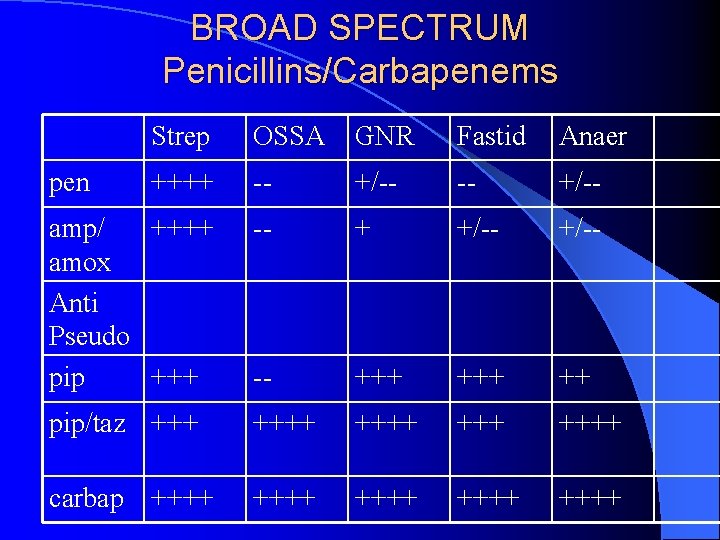
BROAD SPECTRUM Penicillins/Carbapenems Strep OSSA GNR Fastid Anaer ++++ -- +/-- amp/ ++++ amox Anti Pseudo pip +++ -- + +/-- -- +++ ++ pip/taz ++++ +++ ++++ carbap ++++ ++++ pen
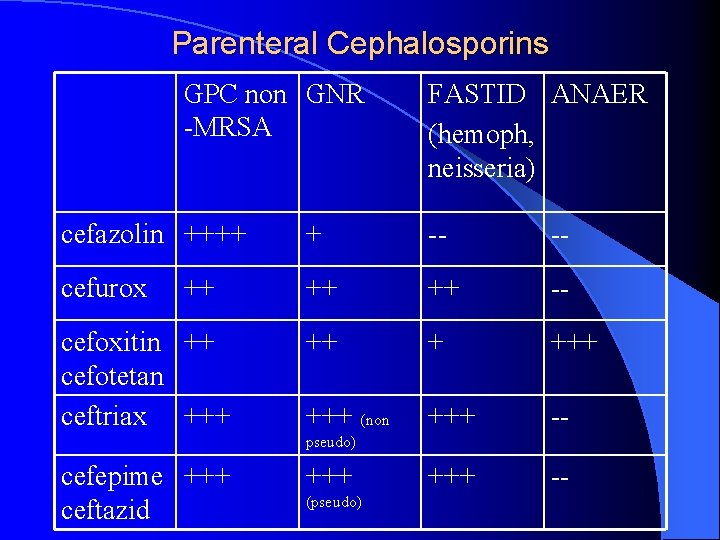
Parenteral Cephalosporins GPC non GNR -MRSA FASTID ANAER (hemoph, neisseria) cefazolin ++++ + -- -- cefurox ++ ++ -- ++ + +++ (non +++ -- ++ cefoxitin ++ cefotetan ceftriax +++ pseudo) cefepime +++ ceftazid +++ (pseudo)
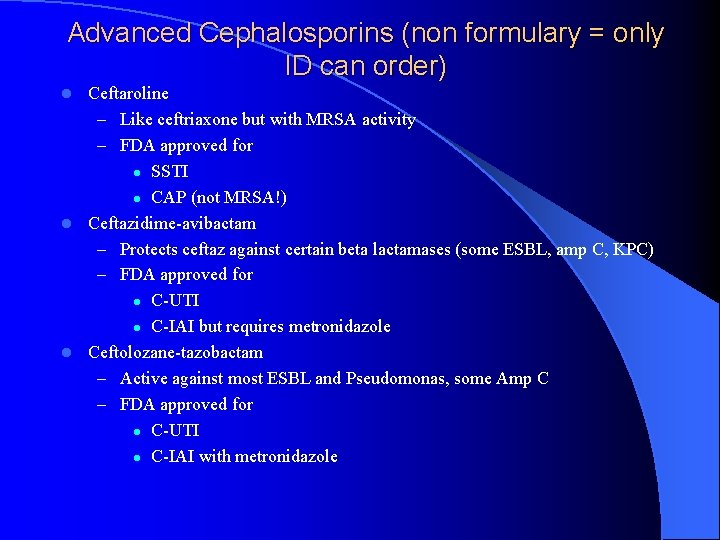
Advanced Cephalosporins (non formulary = only ID can order) Ceftaroline – Like ceftriaxone but with MRSA activity – FDA approved for l SSTI l CAP (not MRSA!) l Ceftazidime-avibactam – Protects ceftaz against certain beta lactamases (some ESBL, amp C, KPC) – FDA approved for l C-UTI l C-IAI but requires metronidazole l Ceftolozane-tazobactam – Active against most ESBL and Pseudomonas, some Amp C – FDA approved for l C-UTI l C-IAI with metronidazole l
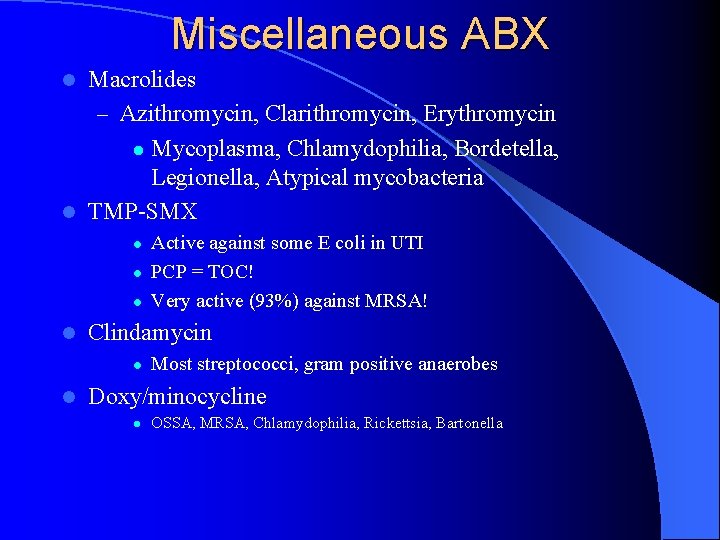
Miscellaneous ABX Macrolides – Azithromycin, Clarithromycin, Erythromycin l Mycoplasma, Chlamydophilia, Bordetella, Legionella, Atypical mycobacteria l TMP-SMX l l l Clindamycin l l Active against some E coli in UTI PCP = TOC! Very active (93%) against MRSA! Most streptococci, gram positive anaerobes Doxy/minocycline l OSSA, MRSA, Chlamydophilia, Rickettsia, Bartonella
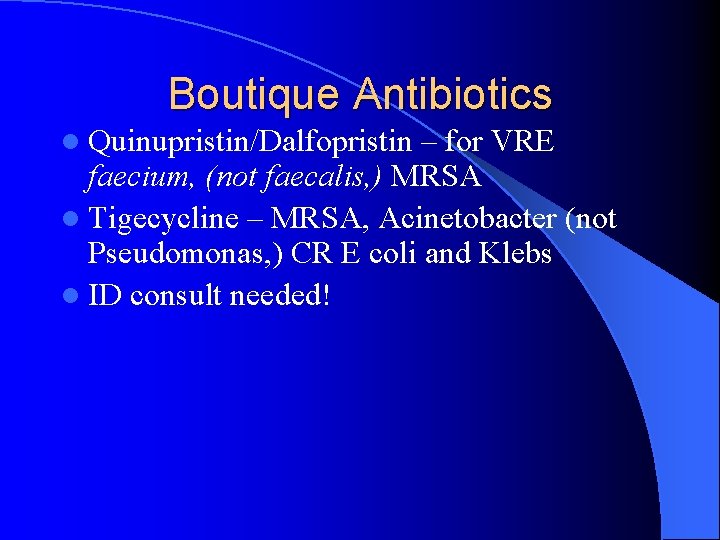
Boutique Antibiotics l Quinupristin/Dalfopristin – for VRE faecium, (not faecalis, ) MRSA l Tigecycline – MRSA, Acinetobacter (not Pseudomonas, ) CR E coli and Klebs l ID consult needed!
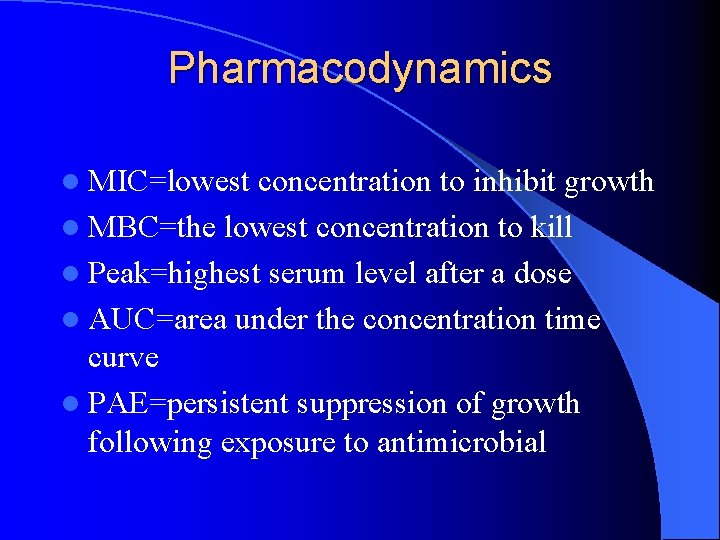
Pharmacodynamics l MIC=lowest concentration to inhibit growth l MBC=the lowest concentration to kill l Peak=highest serum level after a dose l AUC=area under the concentration time curve l PAE=persistent suppression of growth following exposure to antimicrobial
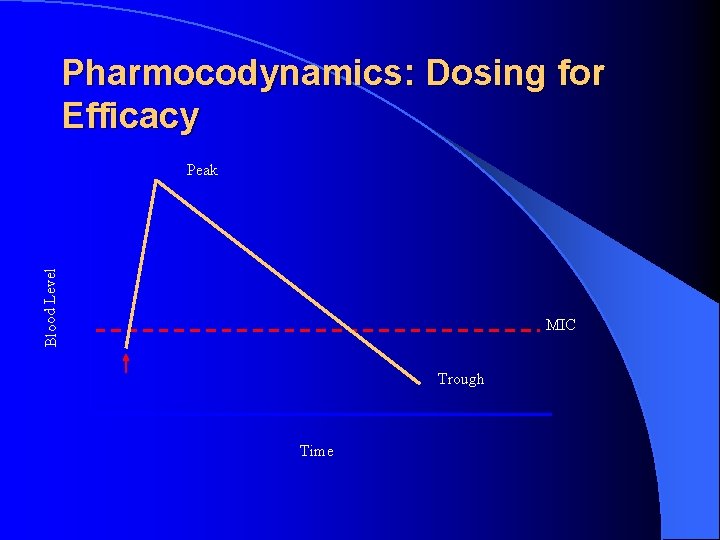
Pharmocodynamics: Dosing for Efficacy Blood Level Peak MIC Trough Time
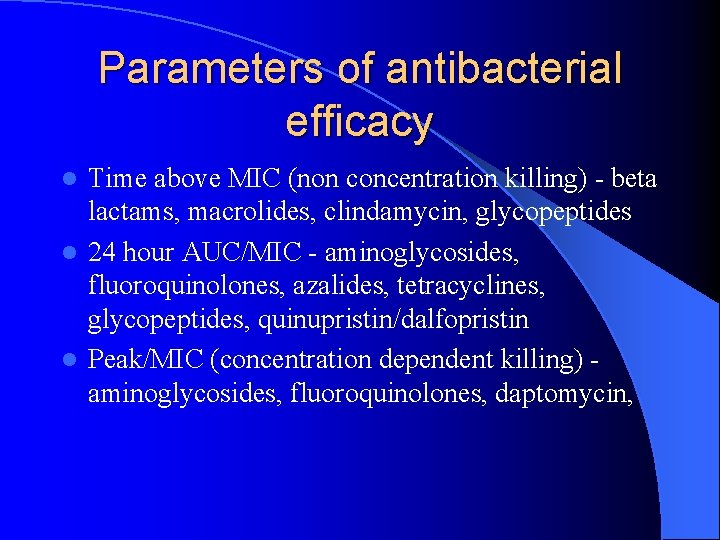
Parameters of antibacterial efficacy Time above MIC (non concentration killing) - beta lactams, macrolides, clindamycin, glycopeptides l 24 hour AUC/MIC - aminoglycosides, fluoroquinolones, azalides, tetracyclines, glycopeptides, quinupristin/dalfopristin l Peak/MIC (concentration dependent killing) aminoglycosides, fluoroquinolones, daptomycin, l
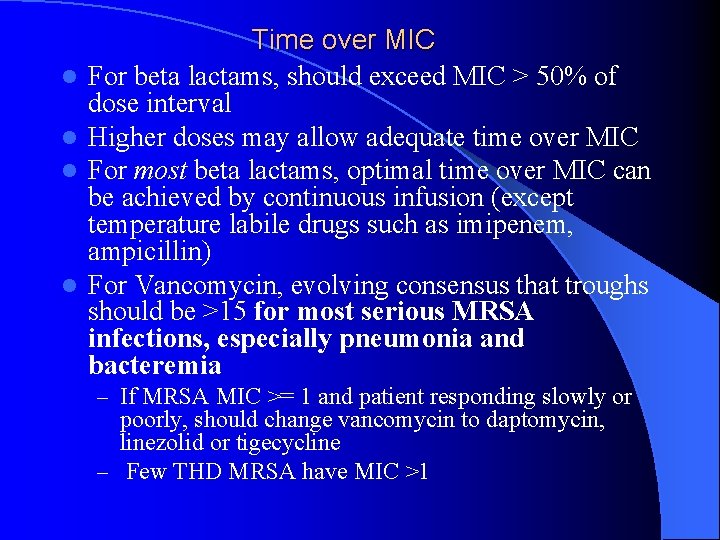
l l Time over MIC For beta lactams, should exceed MIC > 50% of dose interval Higher doses may allow adequate time over MIC For most beta lactams, optimal time over MIC can be achieved by continuous infusion (except temperature labile drugs such as imipenem, ampicillin) For Vancomycin, evolving consensus that troughs should be >15 for most serious MRSA infections, especially pneumonia and bacteremia – If MRSA MIC >= 1 and patient responding slowly or poorly, should change vancomycin to daptomycin, linezolid or tigecycline – Few THD MRSA have MIC >1
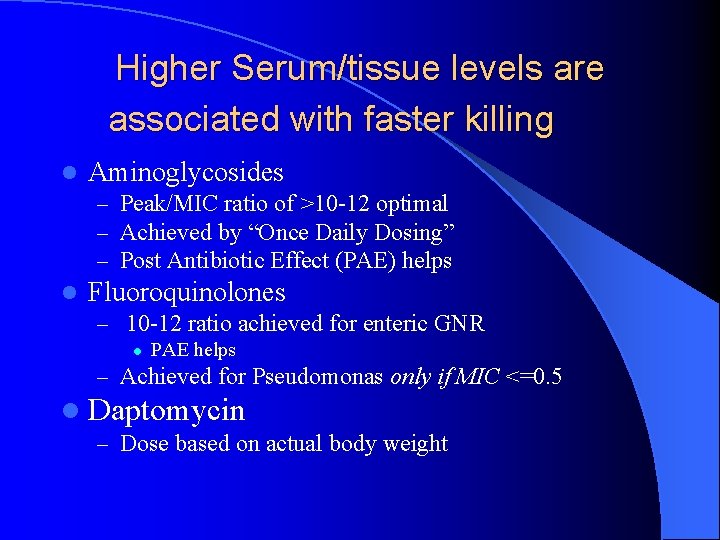
Higher Serum/tissue levels are associated with faster killing l Aminoglycosides – Peak/MIC ratio of >10 -12 optimal – Achieved by “Once Daily Dosing” – Post Antibiotic Effect (PAE) helps l Fluoroquinolones – 10 -12 ratio achieved for enteric GNR l PAE helps – Achieved for Pseudomonas only if MIC <=0. 5 l Daptomycin – Dose based on actual body weight
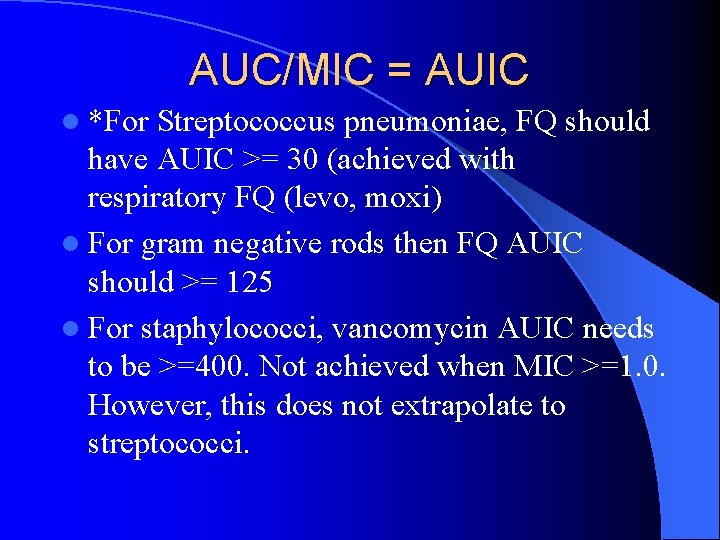
AUC/MIC = AUIC l *For Streptococcus pneumoniae, FQ should have AUIC >= 30 (achieved with respiratory FQ (levo, moxi) l For gram negative rods then FQ AUIC should >= 125 l For staphylococci, vancomycin AUIC needs to be >=400. Not achieved when MIC >=1. 0. However, this does not extrapolate to streptococci.
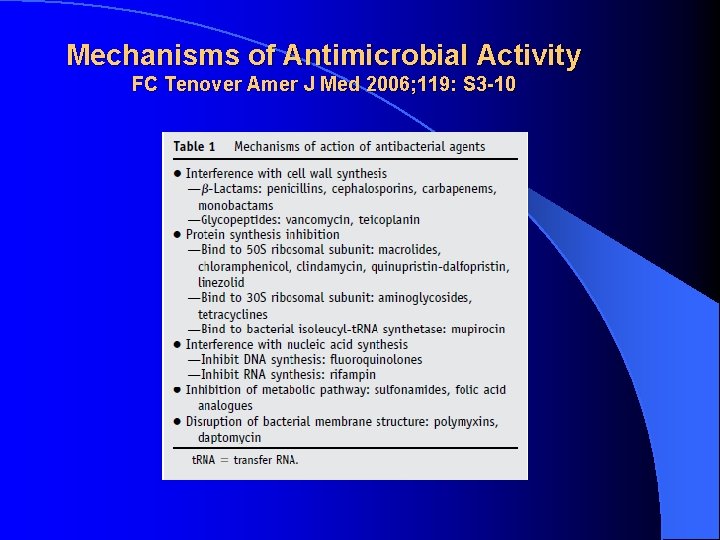
Mechanisms of Antimicrobial Activity FC Tenover Amer J Med 2006; 119: S 3 -10
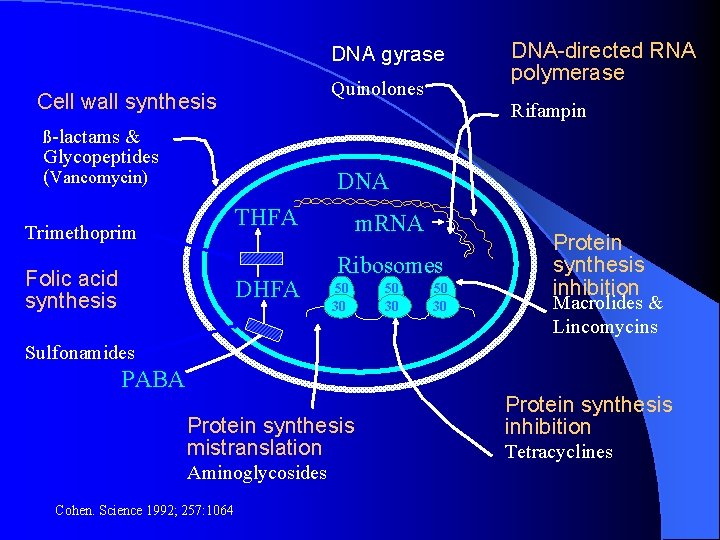
DNA gyrase Quinolones Cell wall synthesis DNA-directed RNA polymerase Rifampin ß-lactams & Glycopeptides (Vancomycin) DNA THFA Trimethoprim Folic acid synthesis DHFA m. RNA Ribosomes 50 30 Protein synthesis inhibition Macrolides & Lincomycins Sulfonamides PABA Protein synthesis mistranslation Aminoglycosides Cohen. Science 1992; 257: 1064 Protein synthesis inhibition Tetracyclines
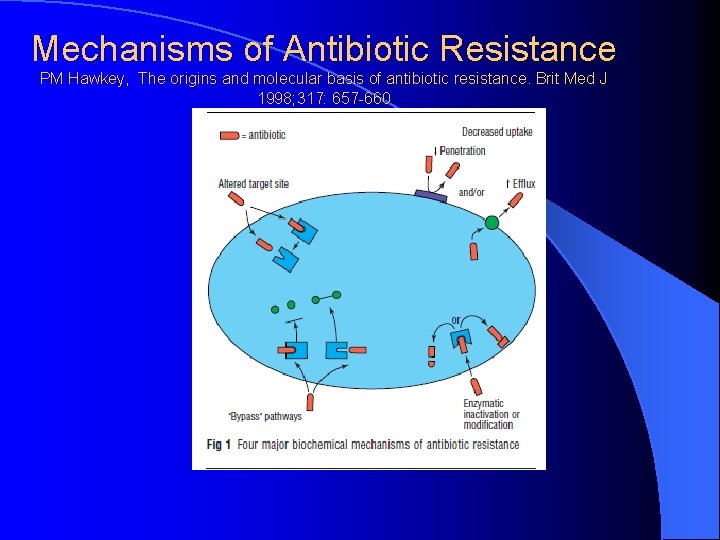
Mechanisms of Antibiotic Resistance PM Hawkey, The origins and molecular basis of antibiotic resistance. Brit Med J 1998; 317: 657 -660
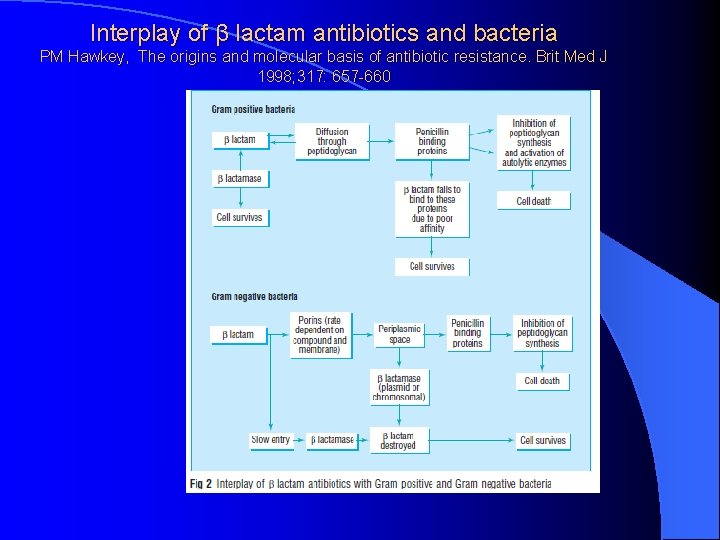
Interplay of β lactam antibiotics and bacteria PM Hawkey, The origins and molecular basis of antibiotic resistance. Brit Med J 1998; 317: 657 -660
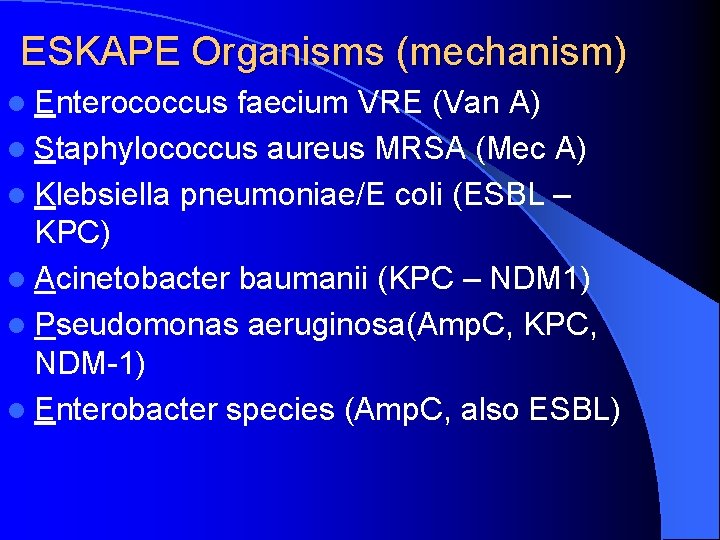
ESKAPE Organisms (mechanism) l Enterococcus faecium VRE (Van A) l Staphylococcus aureus MRSA (Mec A) l Klebsiella pneumoniae/E coli (ESBL – KPC) l Acinetobacter baumanii (KPC – NDM 1) l Pseudomonas aeruginosa(Amp. C, KPC, NDM-1) l Enterobacter species (Amp. C, also ESBL)
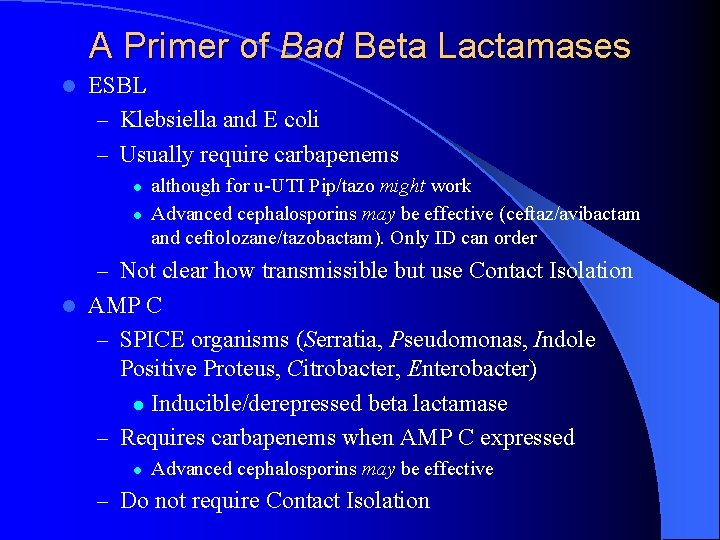
A Primer of Bad Beta Lactamases l ESBL – Klebsiella and E coli – Usually require carbapenems l l although for u-UTI Pip/tazo might work Advanced cephalosporins may be effective (ceftaz/avibactam and ceftolozane/tazobactam). Only ID can order – Not clear how transmissible but use Contact Isolation l AMP C – SPICE organisms (Serratia, Pseudomonas, Indole Positive Proteus, Citrobacter, Enterobacter) l Inducible/derepressed beta lactamase – Requires carbapenems when AMP C expressed l Advanced cephalosporins may be effective – Do not require Contact Isolation
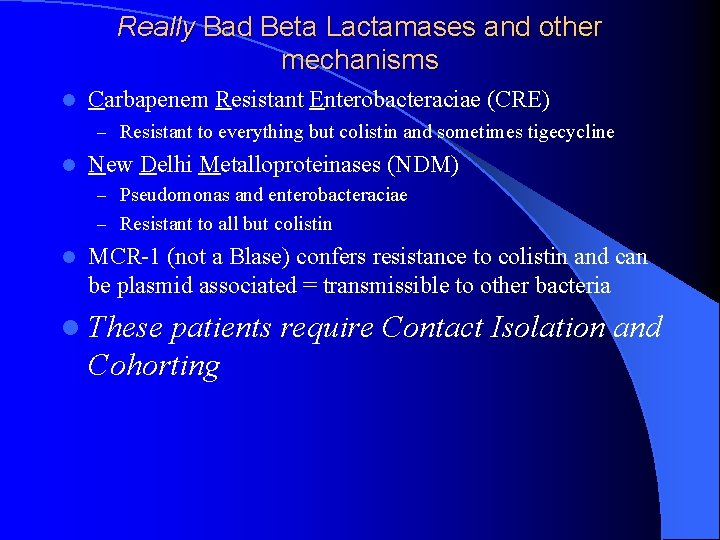
Really Bad Beta Lactamases and other mechanisms l Carbapenem Resistant Enterobacteraciae (CRE) – Resistant to everything but colistin and sometimes tigecycline l New Delhi Metalloproteinases (NDM) – Pseudomonas and enterobacteraciae – Resistant to all but colistin l MCR-1 (not a Blase) confers resistance to colistin and can be plasmid associated = transmissible to other bacteria l These patients require Contact Isolation and Cohorting
Antibiotic Use and Resistance l Strong epidemiological evidence that antibiotic use in humans and animals associated with increasing resistance l Subtherapeutic dosing encourages resistant mutants to emerge; conversely, rapid bactericidal activity discourages l Hospital antibiotic control programs have been demonstrated to reduce resistance
Antibiotic Armageddon “There is only a thin red line of ID practitioners who have dedicated themselves to rational therapy and control of hospital infections” Kunin CID 1997; 25: 240
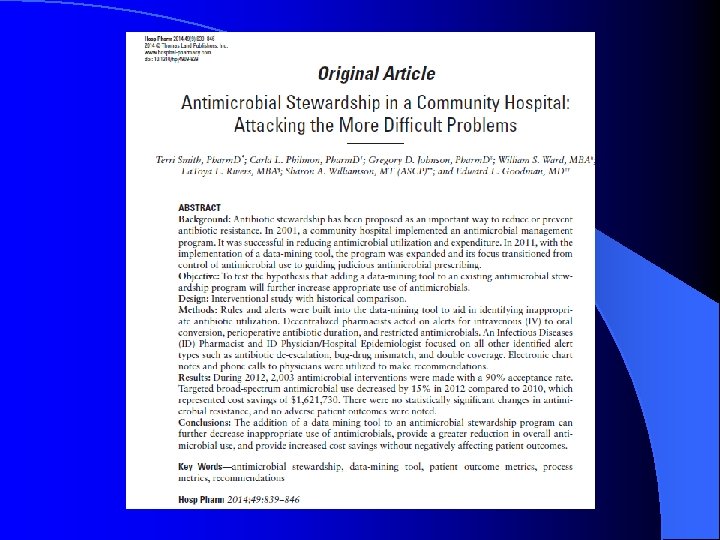
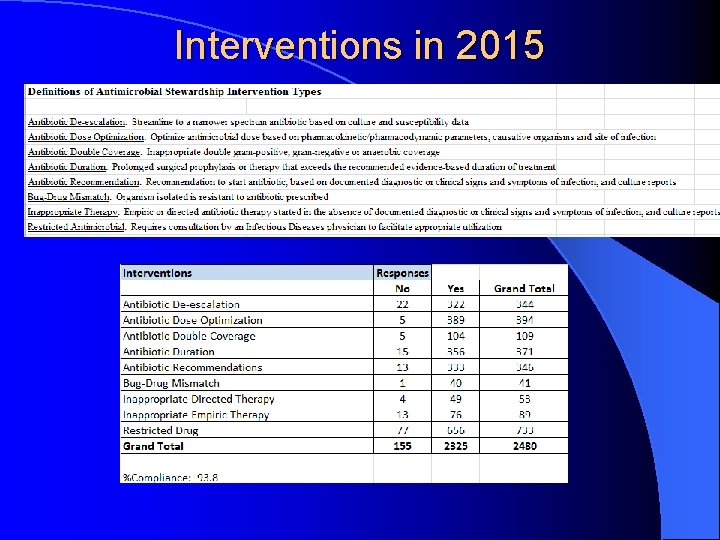
Interventions in 2015
Historic overview on treatment of infections l 2000 BC: Eat this root l 1000 AD: Say this prayer l 1800’s: Take this potion l 1940’s: Take penicillin, it is a miracle drug l 1980’s – 2000’s: Take this new antibiotic, it is a bigger miracle! l ? 2017: Eat this root!
Thanks to l Shahbaz Hasan, MD for allowing me to use slides from his 6/6/07 Clinical Grand Rounds on Streptococci l Eliane S Haron, MD for allowing me to use the “Eat this root” slide l Terri Smith, Pharm. D for collecting data from the Antibiotic Stewardship Program
- Slides: 43