
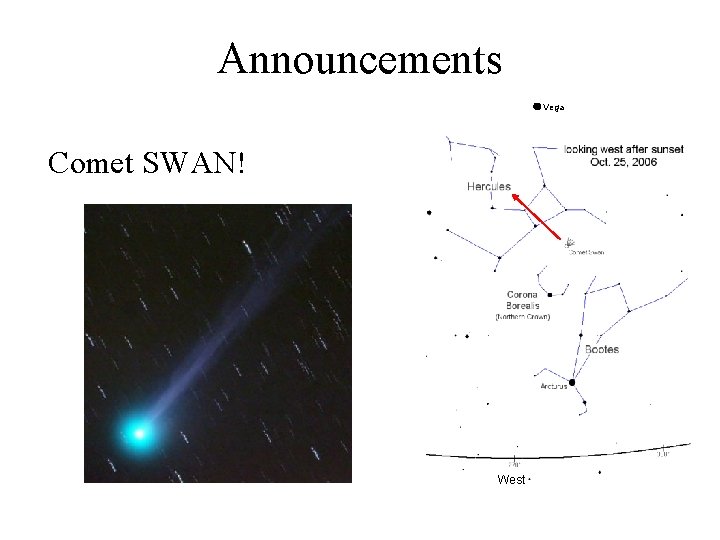
Announcements Vega Comet SWAN West Classifying the Stars


![“We understand the possibility of determining [celestial bodies’] shapes, their distances, their sizes and](https://slidetodoc.com/presentation_image_h/1f8ccb68e2b842eea964f4201cc2b07b/image-10.jpg "“We understand the possibility of determining [celestial bodies’] shapes, their distances, their sizes and")
- Slides: 18
Announcements Vega Comet SWAN! West
Classifying the Stars 27 October 2006
Today: • Stellar spectra: temperatures and compositions • Are hotter stars brighter? (H-R diagrams) • Determining sizes of stars • Classifying stars, looking for patterns
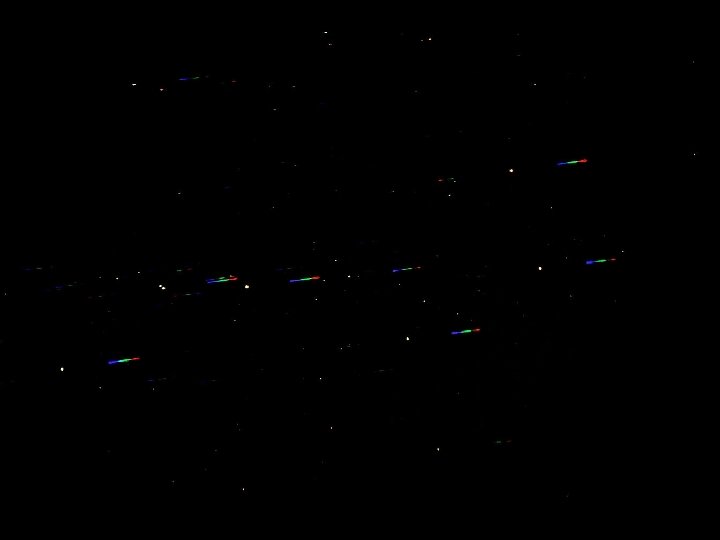
Stellar Spectra
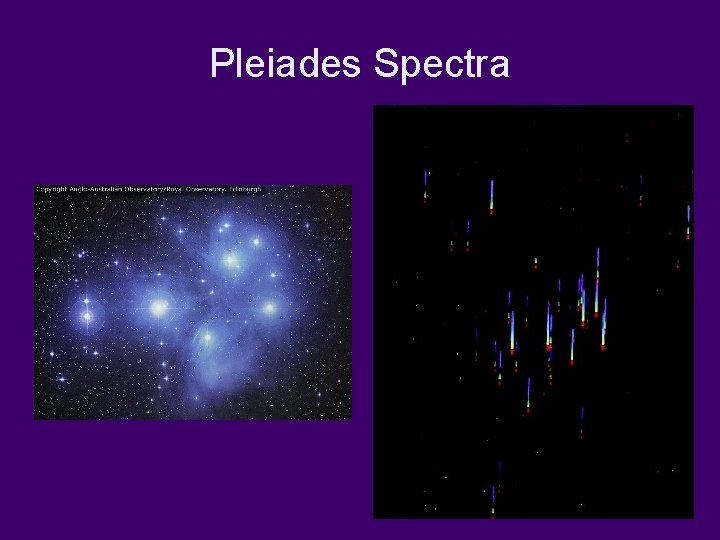
Pleiades Spectra
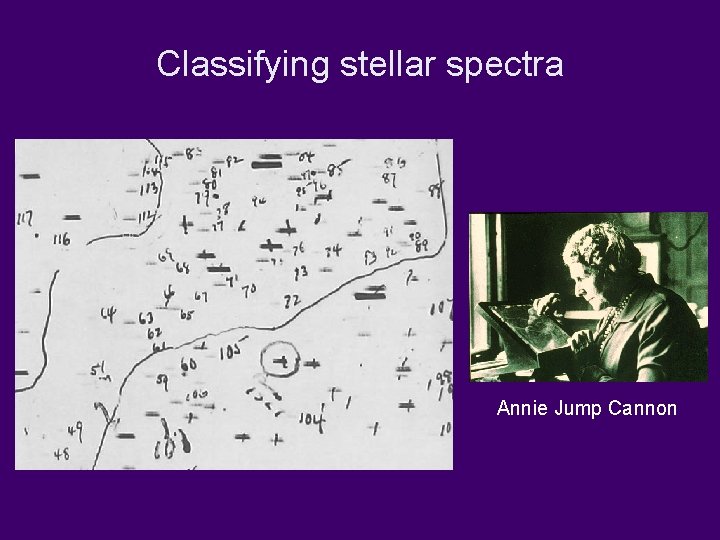
Edward Pickering and Harvard “computers, ” 1890’s - 1920’s Annie Jump Cannon
Classifying stellar spectra Annie Jump Cannon
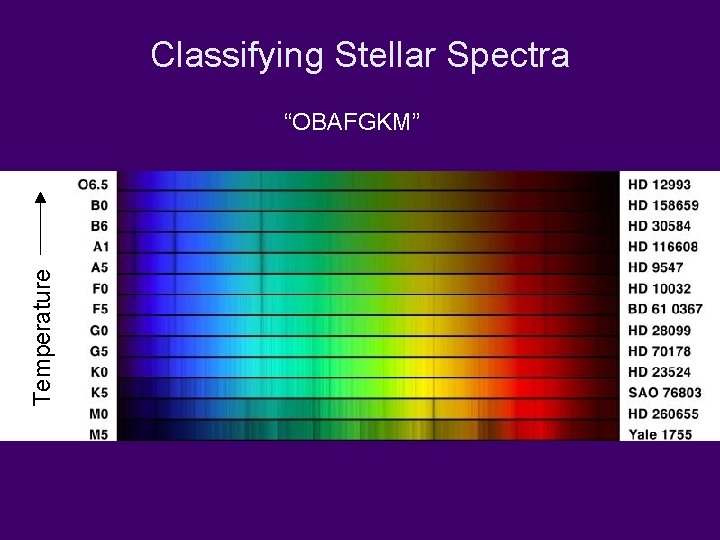
Classifying Stellar Spectra Temperature “OBAFGKM”
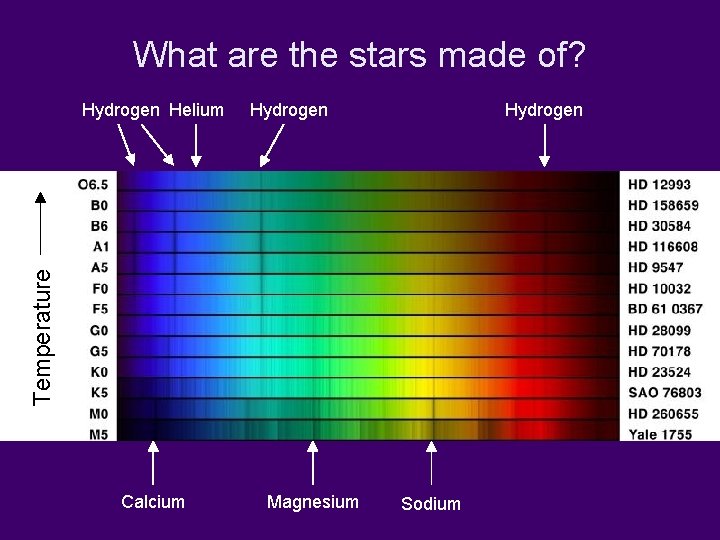
What are the stars made of? Hydrogen Temperature Hydrogen Helium Calcium Magnesium Sodium
“We understand the possibility of determining [celestial bodies’] shapes, their distances, their sizes and motions, whereas never, by any means, will we be able to study their chemical composition. --Auguste Comte (philosopher), 1835
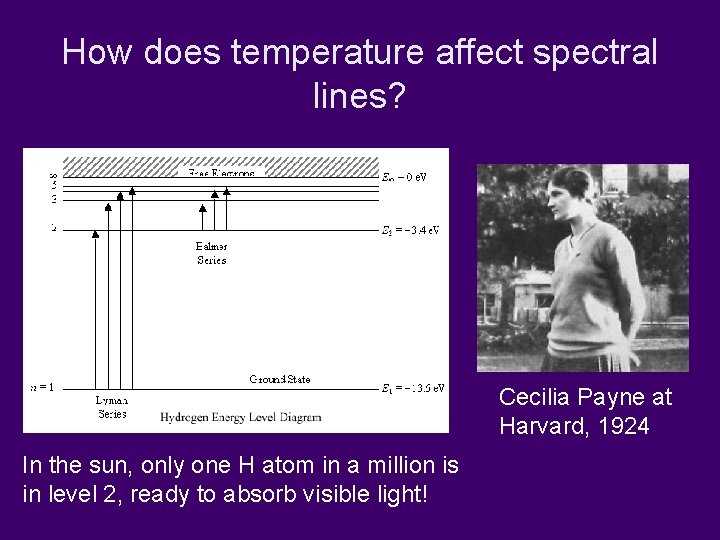
How does temperature affect spectral lines? Cecilia Payne at Harvard, 1924 In the sun, only one H atom in a million is in level 2, ready to absorb visible light!
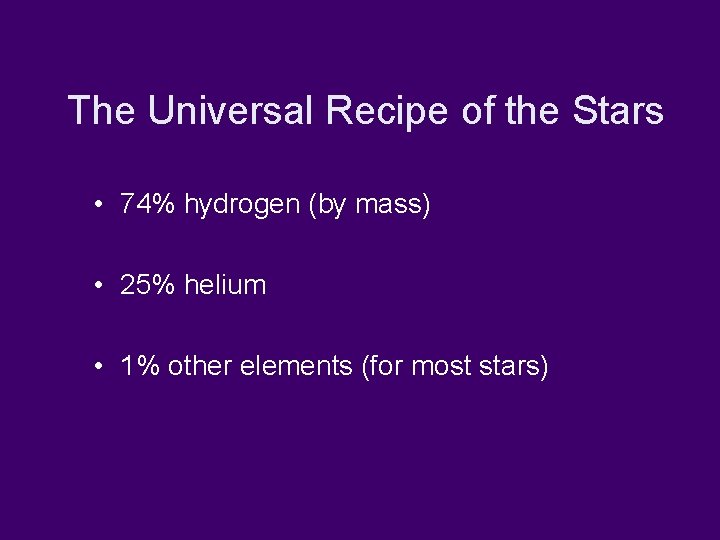
The Universal Recipe of the Stars • 74% hydrogen (by mass) • 25% helium • 1% other elements (for most stars)
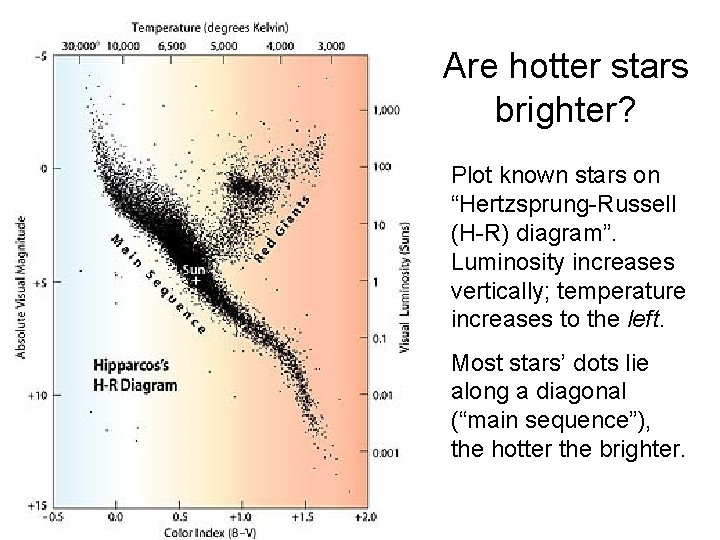
Are hotter stars brighter? Plot known stars on “Hertzsprung-Russell (H-R) diagram”. Luminosity increases vertically; temperature increases to the left. Most stars’ dots lie along a diagonal (“main sequence”), the hotter the brighter.
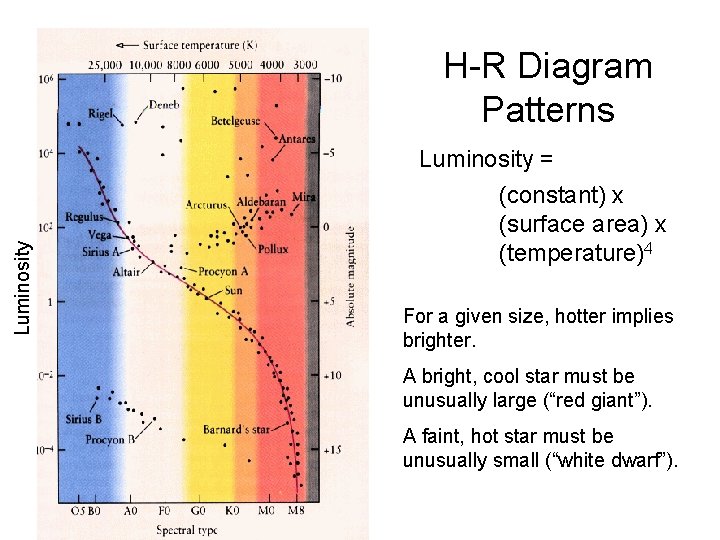
H-R Diagram Patterns Luminosity = (constant) x (surface area) x (temperature)4 For a given size, hotter implies brighter. A bright, cool star must be unusually large (“red giant”). A faint, hot star must be unusually small (“white dwarf”).
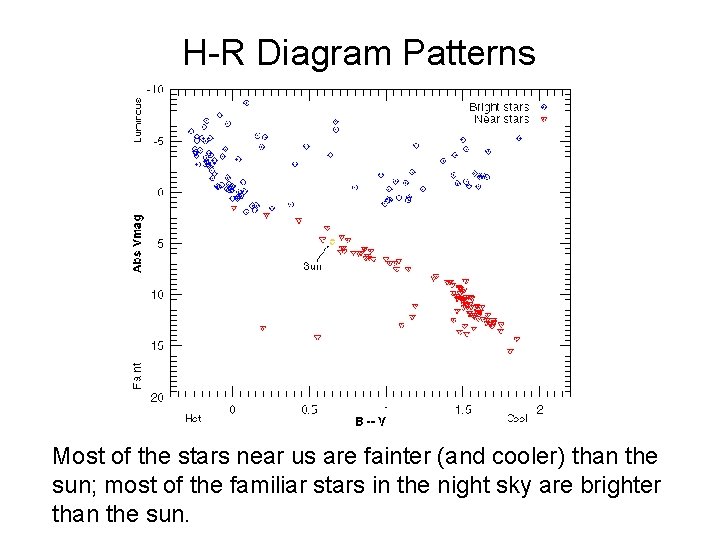
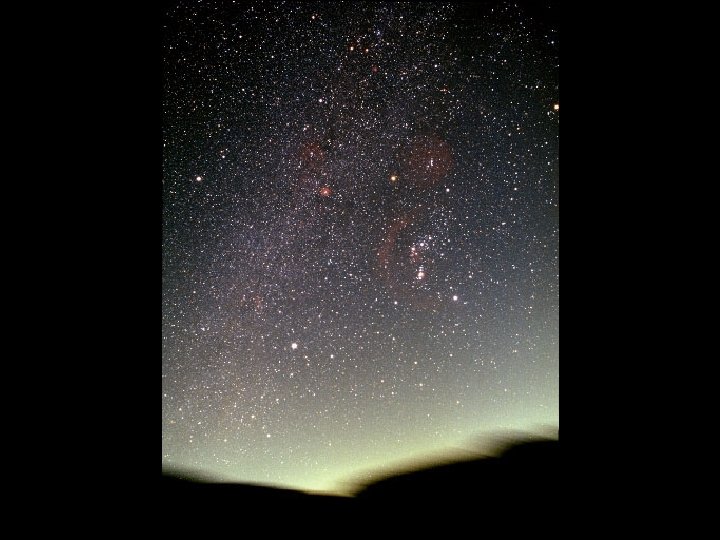
H-R Diagram Patterns Most of the stars near us are fainter (and cooler) than the sun; most of the familiar stars in the night sky are brighter than the sun.
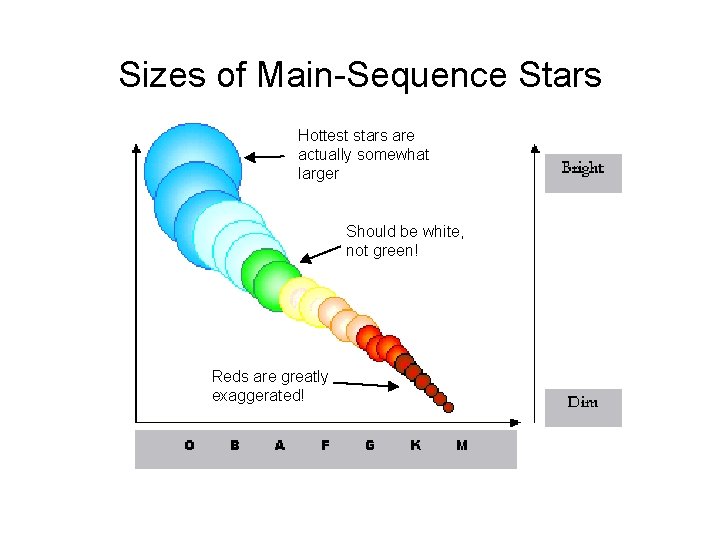
Sizes of Main-Sequence Stars Hottest stars are actually somewhat larger Should be white, not green! Reds are greatly exaggerated!
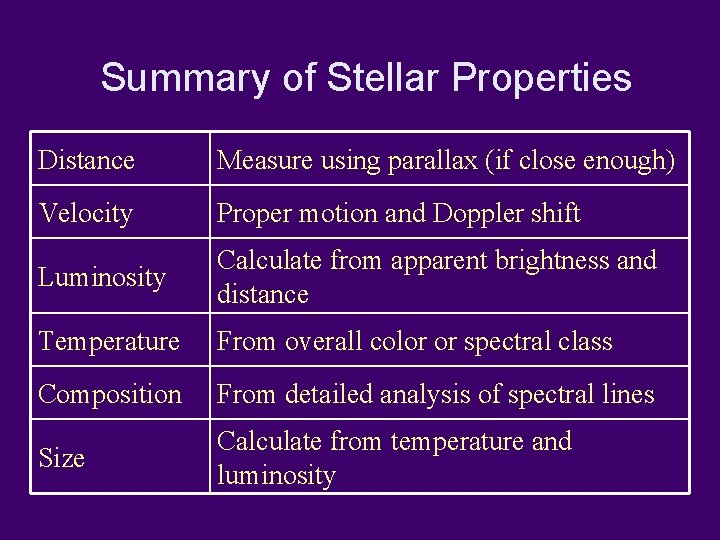
Summary of Stellar Properties Distance Measure using parallax (if close enough) Velocity Proper motion and Doppler shift Luminosity Calculate from apparent brightness and distance Temperature From overall color or spectral class Composition From detailed analysis of spectral lines Size Calculate from temperature and luminosity