
Announcement s Thursday Randy Conrads Monday Midterm Internal
- Slides: 39
Announcement s Thursday - Randy Conrads Monday - Midterm
Internal Analysis
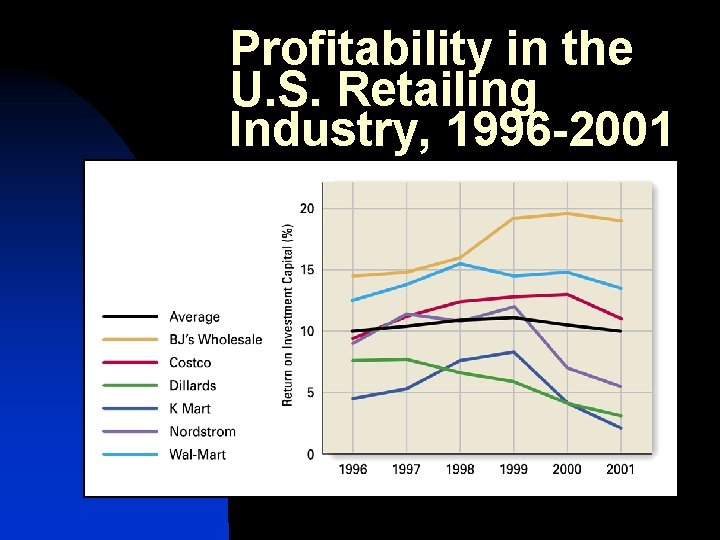
Profitability in the U. S. Retailing Industry, 1996 -2001
Why Internal Analysis? n n Early strategy theory rooted in industry structural analysis external focus This approach has lost its appeal because: internationalization & deregulation has all but removed safe havens u technology and changes in demand have blurred industry lines u
Internal Analysis n Tools and Concepts Sustainable Competitive Advantage u Value Chain u SWOT Analysis u
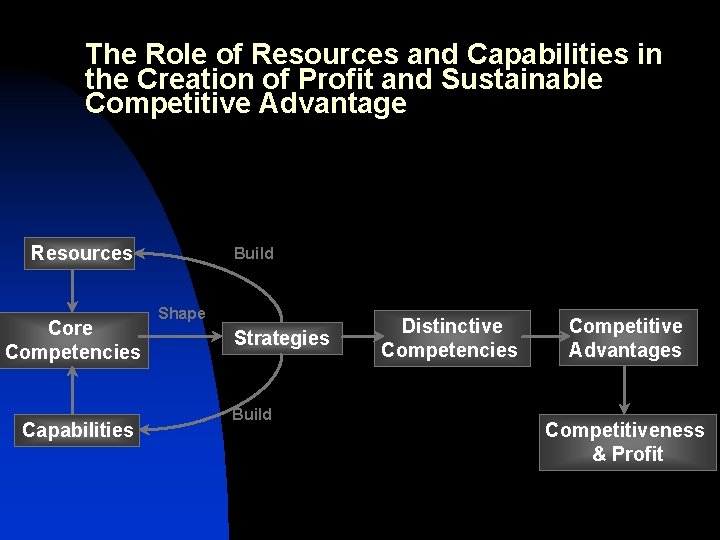
The Role of Resources and Capabilities in the Creation of Profit and Sustainable Competitive Advantage Resources Core Competencies Capabilities Build Shape Strategies Build Distinctive Competencies Competitive Advantages Competitiveness & Profit
Resources & Capabilities n n n n Resources are what you have; Capabilities are what you can do Physical asset Human assets or intellectual capital Organizational asset Intangible assets Competitive achievement Alliance or cooperative venture
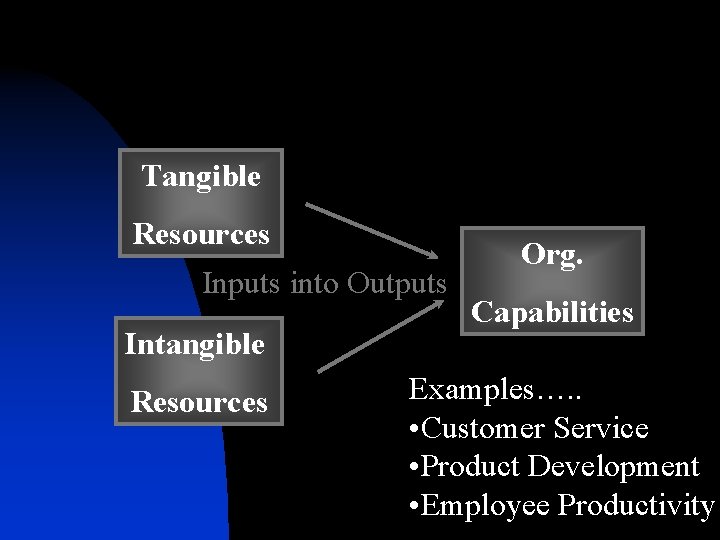
Tangible Resources Inputs into Outputs Intangible Resources Org. Capabilities Examples…. . • Customer Service • Product Development • Employee Productivity
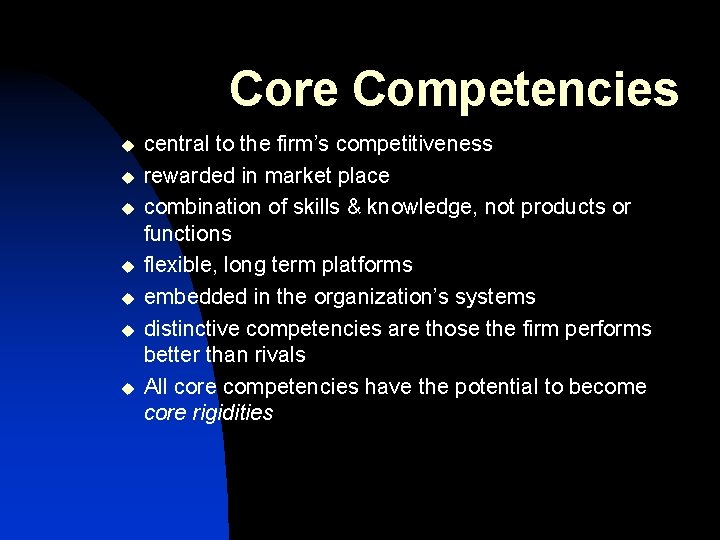
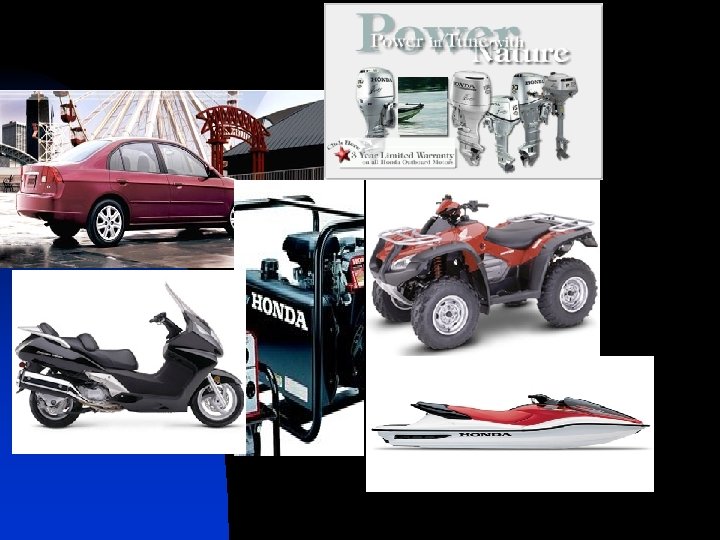
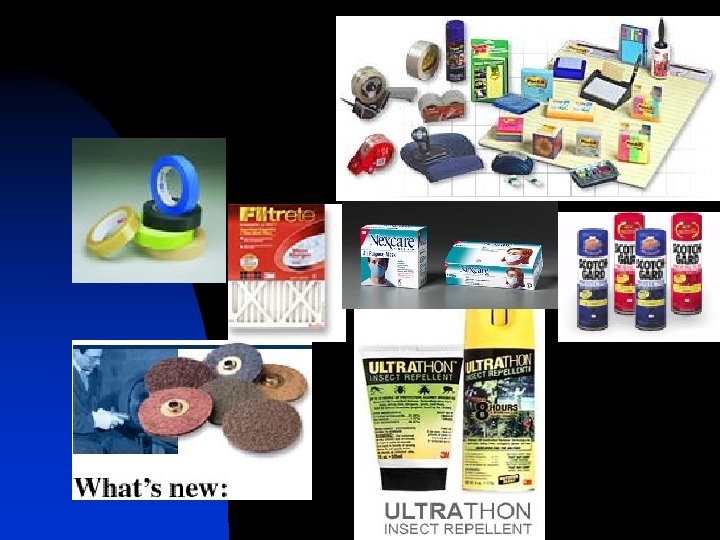
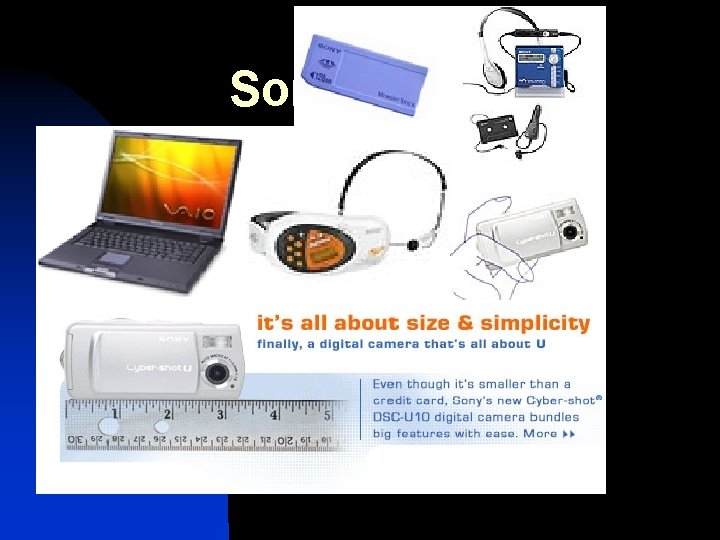
Core Competencies u u u u central to the firm’s competitiveness rewarded in market place combination of skills & knowledge, not products or functions flexible, long term platforms embedded in the organization’s systems distinctive competencies are those the firm performs better than rivals All core competencies have the potential to become core rigidities
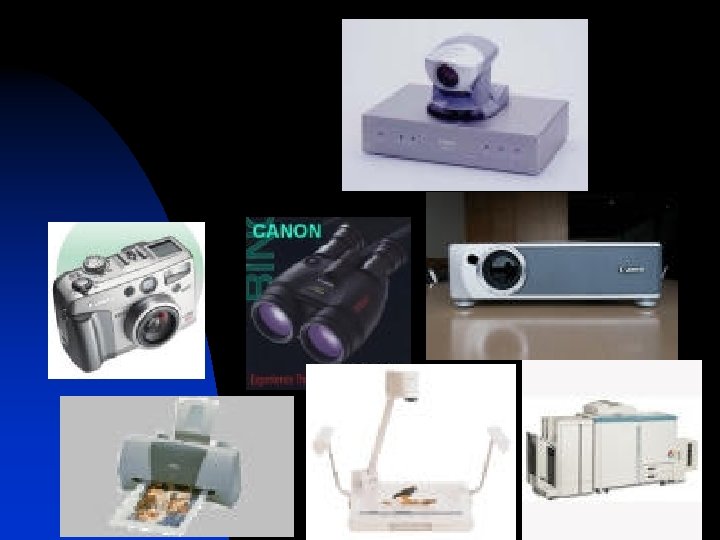
Sony
Sustainable Competitive Advantage Must be valuable, rare, inimitable, and non-substitutable Sustainability is a function of u Durability - how long will it last? « Technology? u Reputation? Fixed Assets? Imitability - how quickly can it be copied? « Transparent - easy to see? « Transferable - can it be done elsewhere? « Replicable - can we do it here?
Factors that Limit Imitation Ø Ø Ø Physical Uniqueness Path Dependency Causal Ambiguity Social Complexity bsorptive Capacity
Another Tool to Consider n Porter’s Value Chain
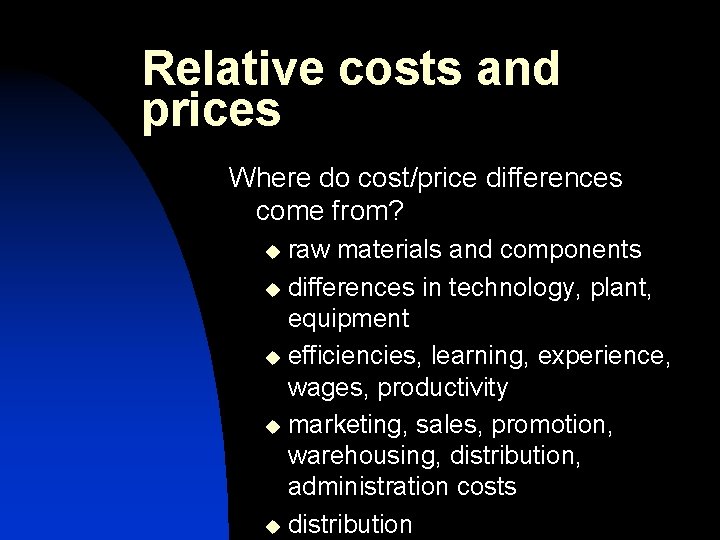
Relative costs and prices Where do cost/price differences come from? raw materials and components u differences in technology, plant, equipment u efficiencies, learning, experience, wages, productivity u marketing, sales, promotion, warehousing, distribution, administration costs u distribution u
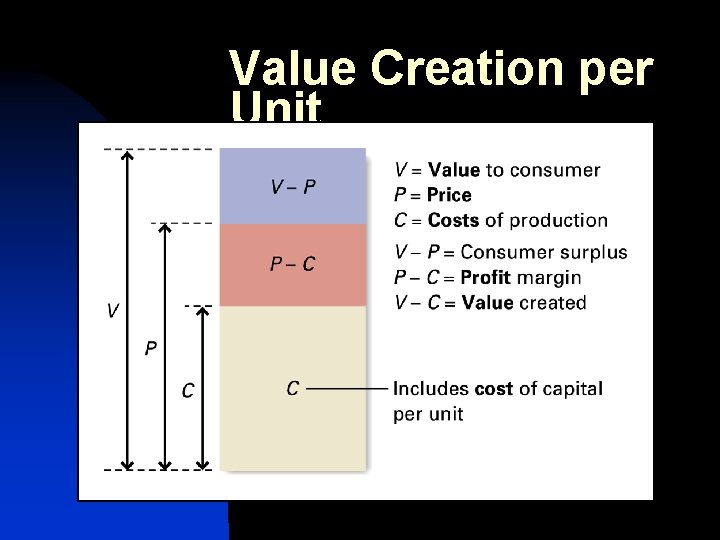
Value Creation per Unit
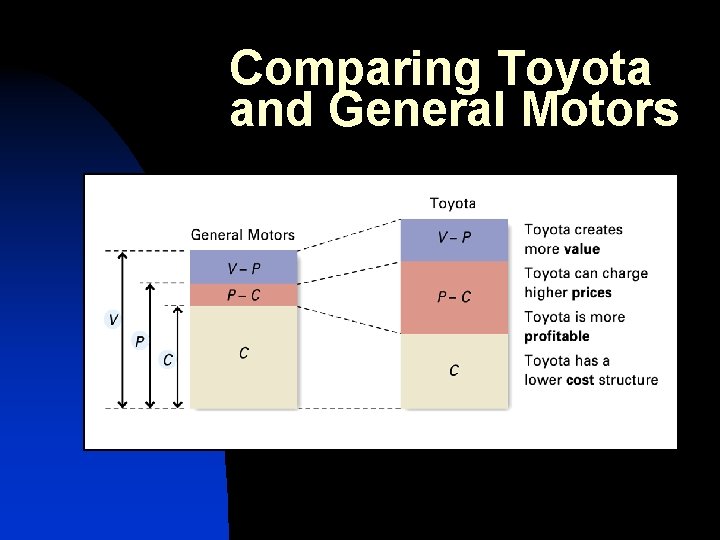
Comparing Toyota and General Motors
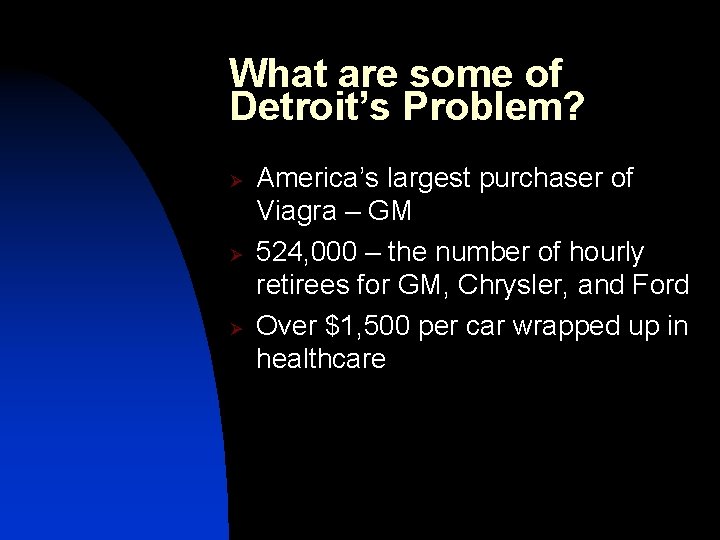
What are some of Detroit’s Problem? Ø Ø Ø America’s largest purchaser of Viagra – GM 524, 000 – the number of hourly retirees for GM, Chrysler, and Ford Over $1, 500 per car wrapped up in healthcare
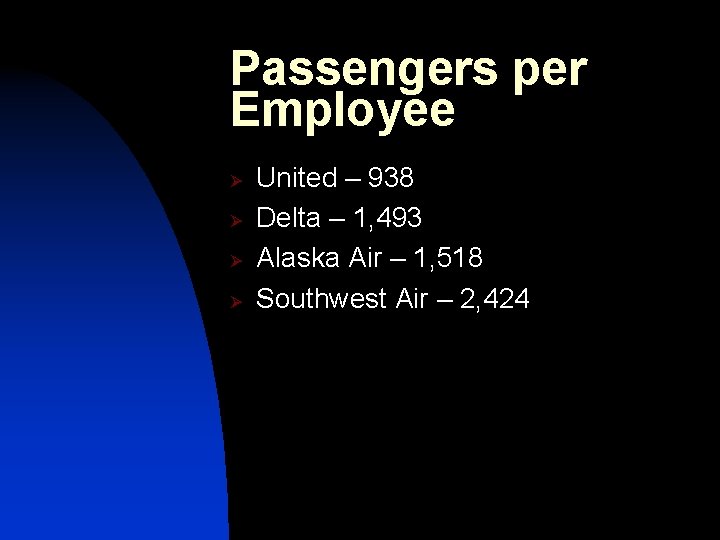
Passengers per Employee Ø Ø United – 938 Delta – 1, 493 Alaska Air – 1, 518 Southwest Air – 2, 424
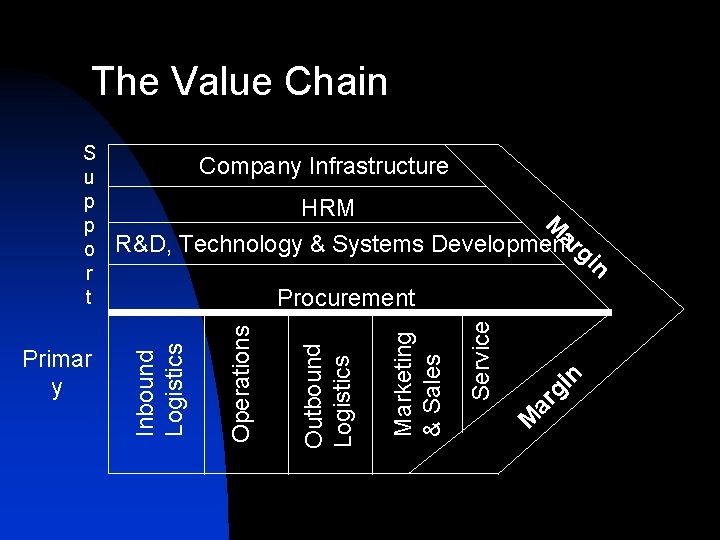
Porter’s Value Chain Views the organization as a series (chain) of activities, which may or may not create value
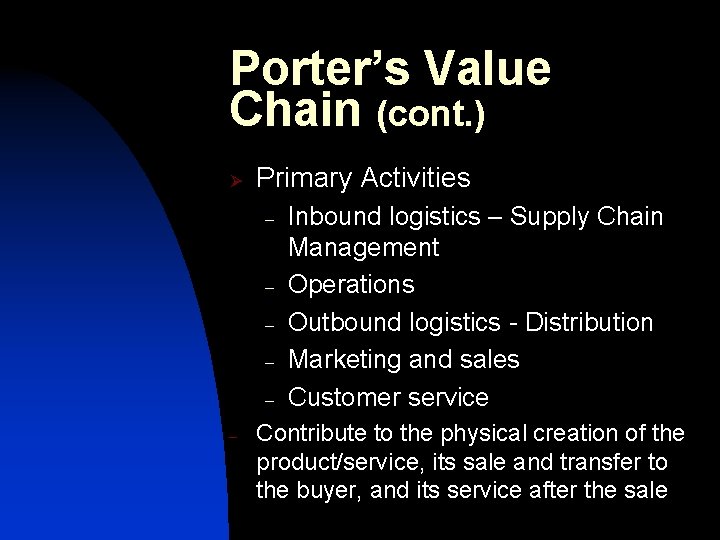
Porter’s Value Chain (cont. ) Ø Primary Activities – – – Inbound logistics – Supply Chain Management Operations Outbound logistics - Distribution Marketing and sales Customer service Contribute to the physical creation of the product/service, its sale and transfer to the buyer, and its service after the sale
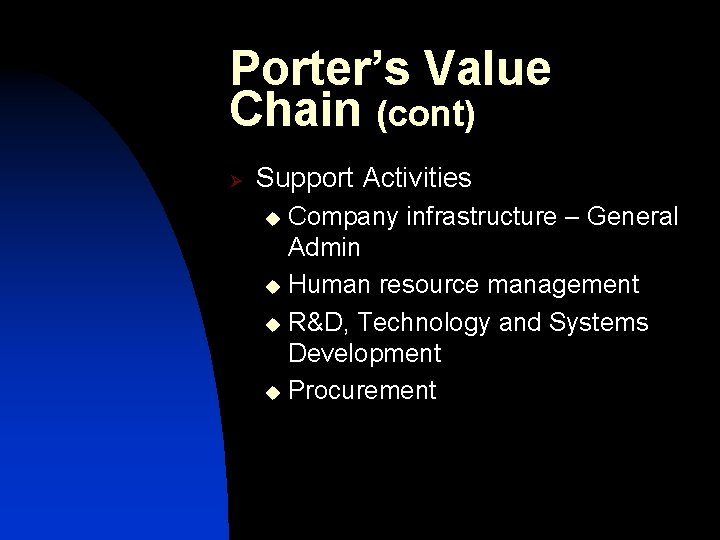
Porter’s Value Chain (cont) Ø Support Activities Company infrastructure – General Admin u Human resource management u R&D, Technology and Systems Development u Procurement u
The Value Chain HRM M ar R&D, Technology & Systems Development g in n gi ar M Service Marketing & Sales Outbound Logistics Procurement Operations Primar y Company Infrastructure Inbound Logistics S u p p o r t
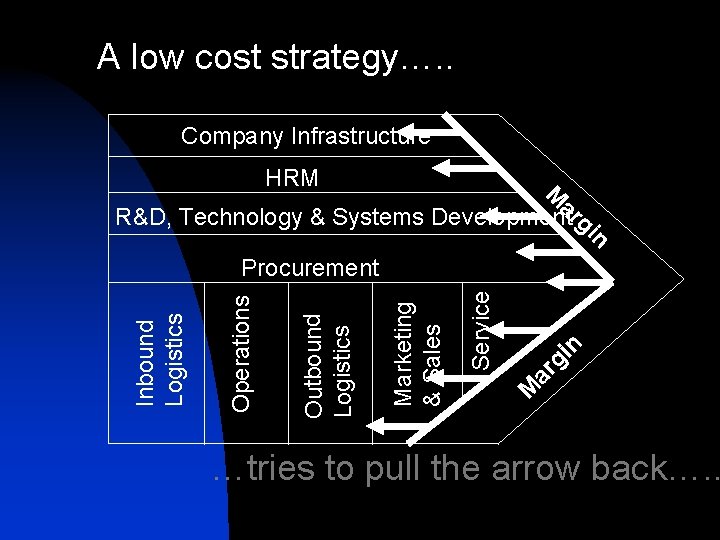
A low cost strategy…. . Company Infrastructure HRM M ar R&D, Technology & Systems Development gi n n gi ar M Service Marketing & Sales Outbound Logistics Operations Inbound Logistics Procurement …tries to pull the arrow back…. .
Think back to the Southwest example… n n n Single aircraft Short hauls No meals, transfers, seat assignments Secondary airports No use to travel agents…. .
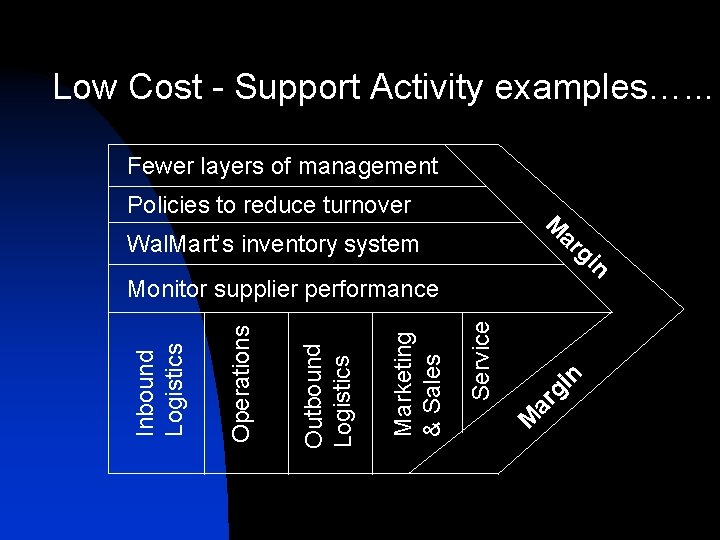
Low Cost - Support Activity examples…. . . Fewer layers of management Policies to reduce turnover M Wal. Mart’s inventory system ar g in n gi ar M Service Marketing & Sales Outbound Logistics Operations Inbound Logistics Monitor supplier performance
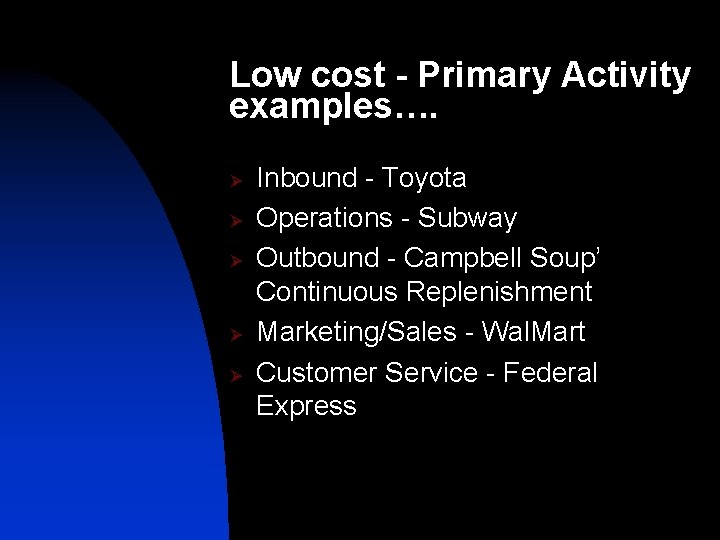
Low cost - Primary Activity examples…. Ø Ø Ø Inbound - Toyota Operations - Subway Outbound - Campbell Soup’ Continuous Replenishment Marketing/Sales - Wal. Mart Customer Service - Federal Express
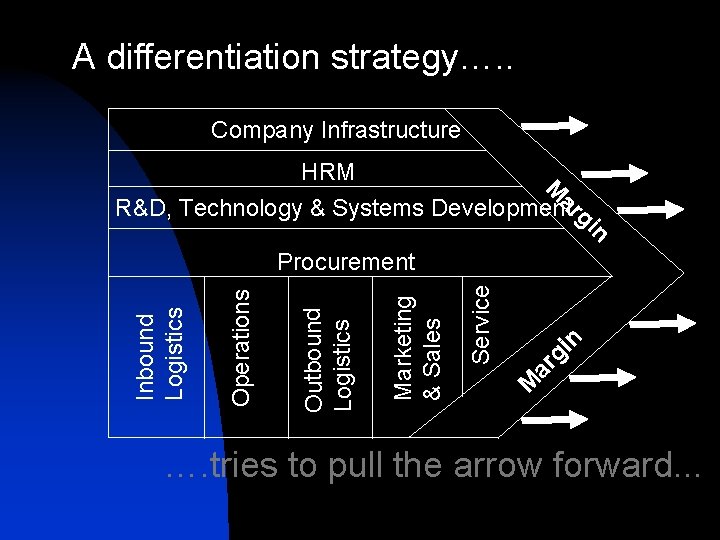
A differentiation strategy…. . Company Infrastructure HRM M ar R&D, Technology & Systems Development g in n gi ar M Service Marketing & Sales Outbound Logistics Operations Inbound Logistics Procurement …. tries to pull the arrow forward. . .
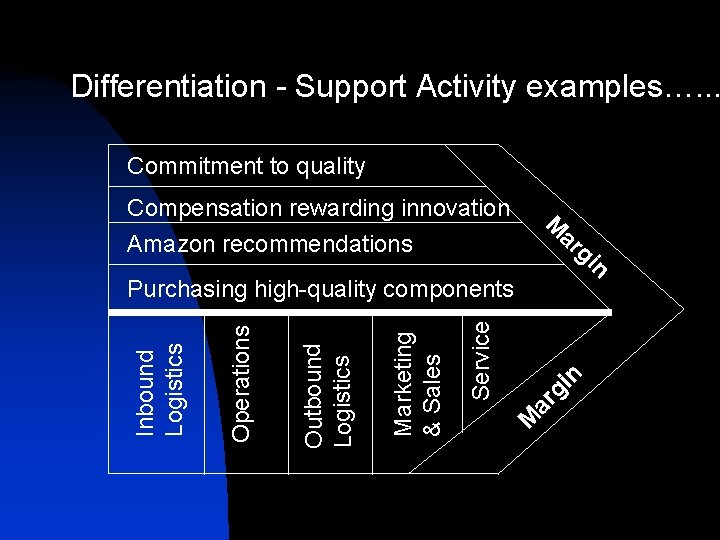
Differentiation - Support Activity examples…. . . Commitment to quality Compensation rewarding innovation Amazon recommendations M ar g in n gi ar M Service Marketing & Sales Outbound Logistics Operations Inbound Logistics Purchasing high-quality components
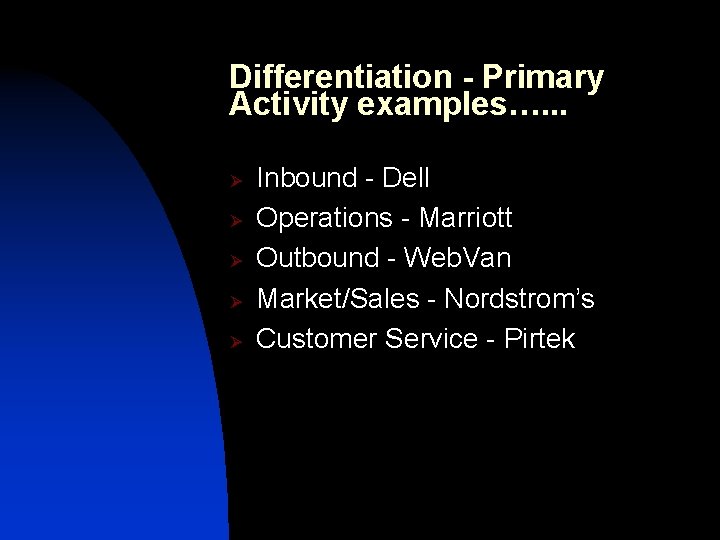
Differentiation - Primary Activity examples…. . . Ø Ø Ø Inbound - Dell Operations - Marriott Outbound - Web. Van Market/Sales - Nordstrom’s Customer Service - Pirtek
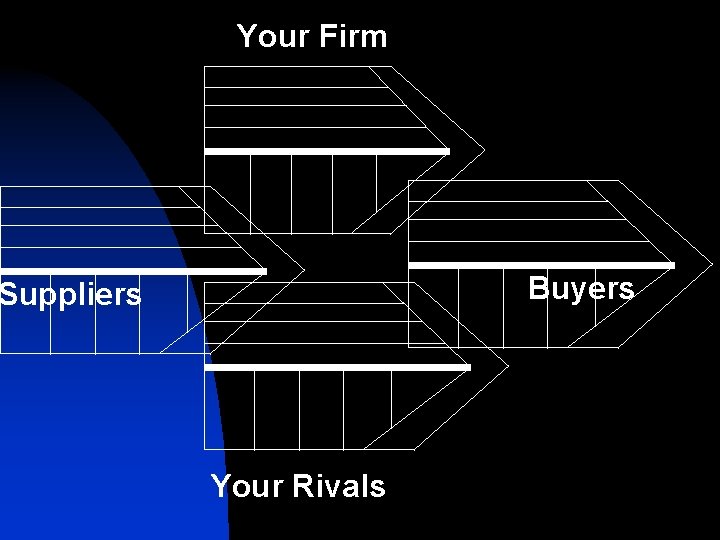
Your Firm Buyers Suppliers Your Rivals
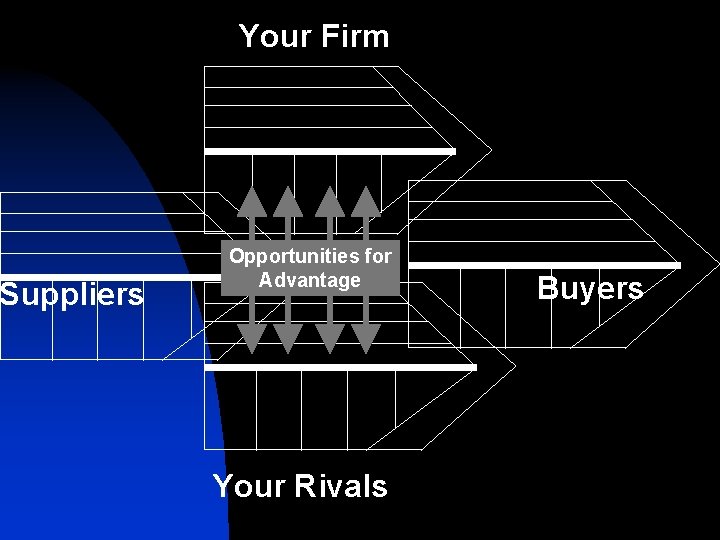
Suppliers Your Firm Opportunities for Advantage Your Rivals Buyers
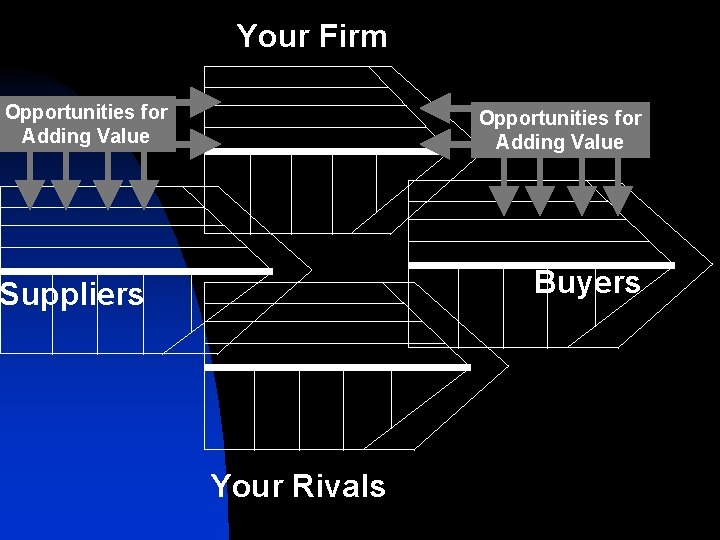
Your Firm Opportunities for Adding Value Buyers Suppliers Your Rivals
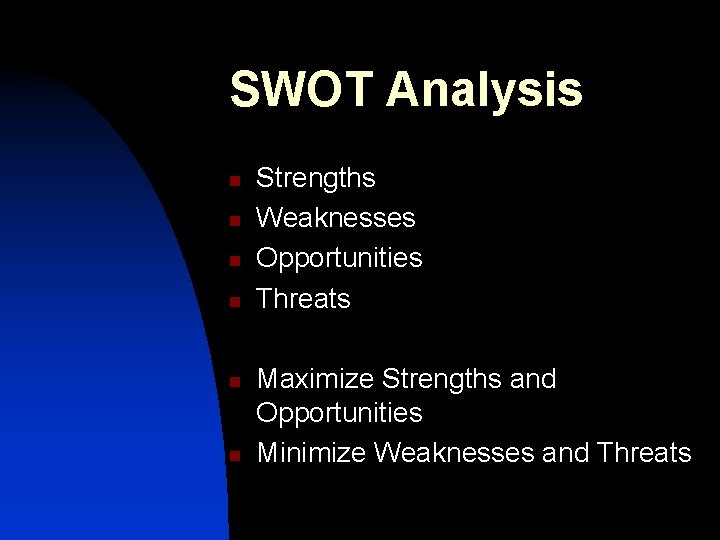
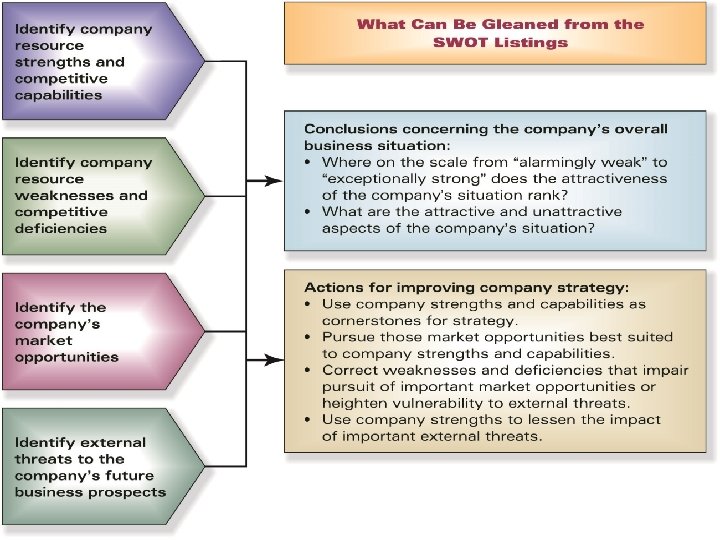
SWOT Analysis n n n Strengths Weaknesses Opportunities Threats Maximize Strengths and Opportunities Minimize Weaknesses and Threats
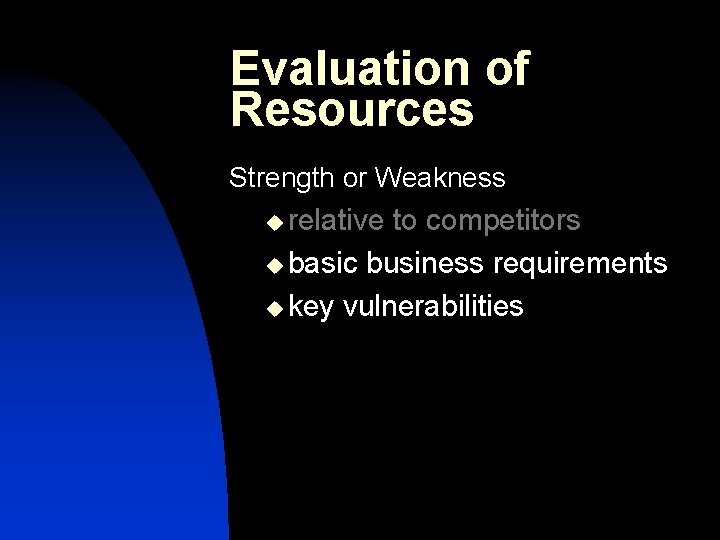
Evaluation of Resources Strength or Weakness u relative to competitors u basic business requirements u key vulnerabilities