
ANNIE Aquaponics New Novelties In Education Presentation Oradea
- Slides: 13
ANNIE – Aquaponics New Novelties In Education Presentation Oradea Triple Helix
ANNIE – Aquaponics New Novelties In Education • Partners: • Grm Novo Mesto – Slovenia • OECON Group – Thessaloniki – Greece • Askham Bryan College – York – United Kingdom • CIFEA – Molina de Segura – Murcia Spain • CIFEA – Torre Pacheco – Murcia – Spain • Servicio de Formation Murcia región – Spain • EPA – De Marco de Canaveses Portugal
ANNIE – Aquaponics New Novelties In Education • Partners: • EUROPEA Romania – Nasaud – Romania • Colegiul Agricol Dimitrie Petrescu – Caracal – Romania • Liceul Tehnologic Agroindustrial “Tamasi Aron” – Bors – Romania • Youmanitas Energy Farms – Netherlands • Inholland – University of applied sciences – Netherlands • Wellantcollege – Houten – Rotterdam - Netherlands
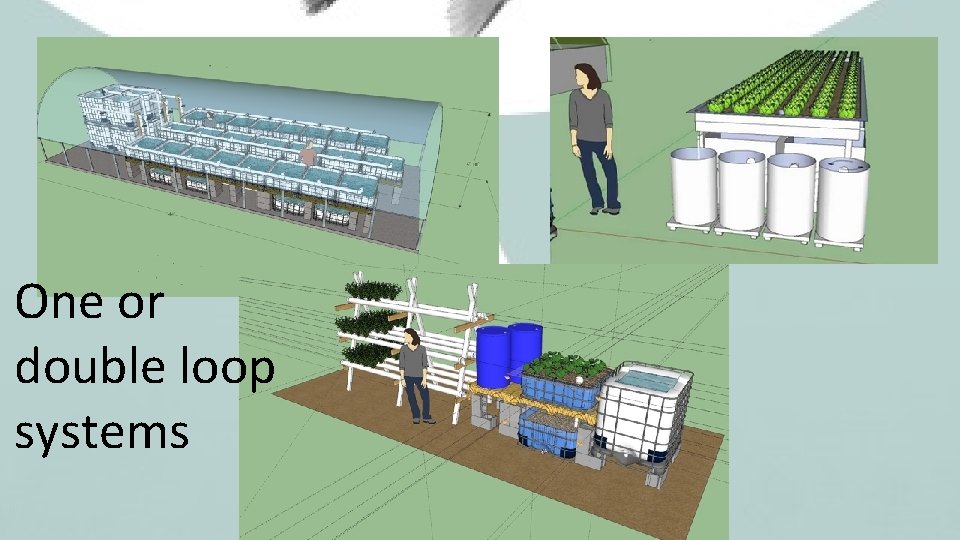
ANNIE – Aquaponics New Novelties In Education • What is Aquaponics? • Aquaponics is the combination of Aquaculture ( fish breeding for consumption or leisure) and Hydroponics (grow vegetables and herbs on water) • Hydroponics requires expensive nutrients and also requires periodic flushing of the systems which can lead to waste disposal issues • Re-circulating aquaculture needs to have excess nutrients removed from the system
One or double loop systems
ANNIE – Aquaponics New Novelties In Education • While re-circulating aquaculture and hydroponics are both very efficient methods of producing fish and vegetables, when we look at combining the two, the negative aspects – expensive nutrient for crops and clear water for aquaculture - are turned into positive aspects. The waste of the fish use for growing crops • This is a system that requires no bending, no weeding, no fertilizers, and only uses about the same power it takes to run a couple of light globes. • The products are clean, traceable, safe and biological
ANNIE – Aquaponics New Novelties In Education • Advantages: • Aquaponics is a clean and safe way to produce food - fresh organic food, vegetables and fish • No carbon footprint - minimized transport • No water footprint – reduced use expensive water up to 90% • Increased efficiency - short time of fish farming and growth of plants average proceeds are 30% higher than with conventional methods • Small effort of maintaining the system – cheap • Inclusion of disabled people
ANNIE – Aquaponics New Novelties In Education • Advantages: • Economical solutions – small size systems produce 360 fish and 1600 vegetable meals per year • Possibility of financial independence – groups can maintain a small system and feed themselves • Ecological solution – a remedy for overfishing of the seas • Use of unoccupied buildings in cities • Re-use of green waste of locals to breed insects as food for the fish
ANNIE – Aquaponics New Novelties In Education • Targets groups • Youth • Unemployed younsters • Disabled • Life Long Learning – EQF level 2 (training to reach the EQF levels) • Immigrants or minority groups who are difficult to get work on the regulair labour market • Chance for career changers
ANNIE – Aquaponics New Novelties In Education Aquaponics is one of the answers to: ● ● World Food problem in near future Efficient nutrients production (FCR) High emisions of Co² (carbon footprint) Excessive water consumption (water footprint)
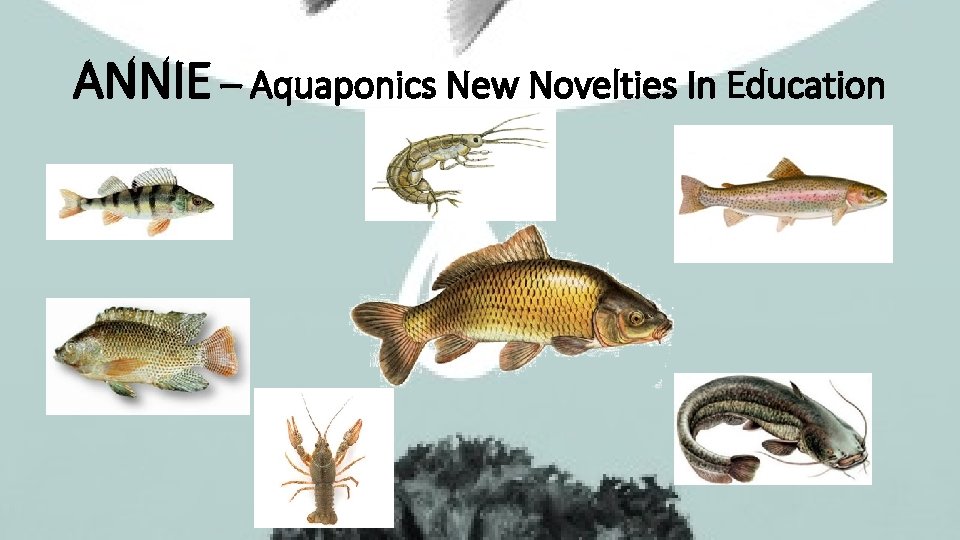
ANNIE – Aquaponics New Novelties In Education
ANNIE – Aquaponics New Novelties In Education • Red and green lettuce • Chinese cabbage • Romaine and curly lettuce • Spinach • Basil and parsley • Strawbwrries • Tomatoes and Peppers • Chicory
ANNIE – Aquaponics New Novelties In Education • Career opportunities: • Agricultural production, processing and sales in urban settings • Water technology and management • Vegetables and fish production, processing and selling • Logistics • Flowers and house plants instead of vegetables