
Annelids Polychaeta Oligochaeta Hirudinea Classification Body Plan Body
Annelids Polychaeta Oligochaeta Hirudinea
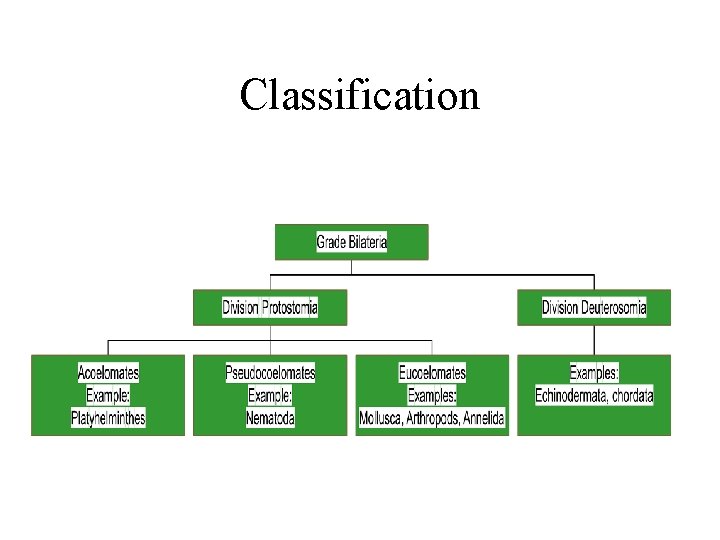
Classification
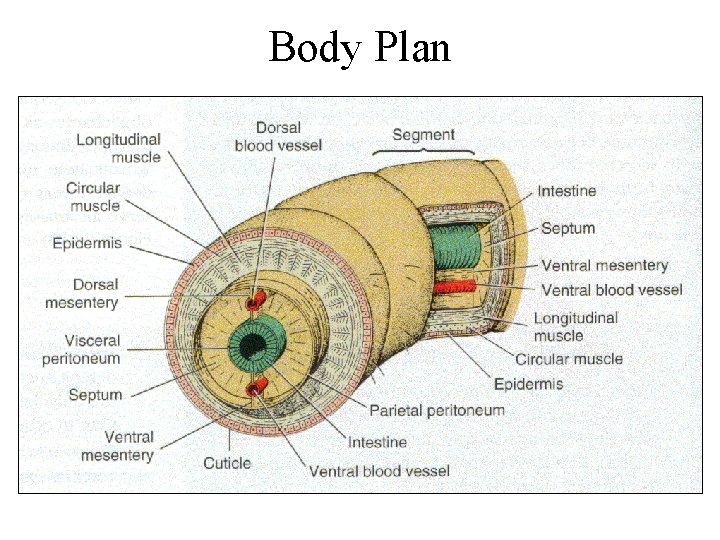
Body Plan
Body Plan – Key Features • • Segmented (metamers) Septa separate coelem at each segment Longitudinal and circular muscles Peristaltic movement Closed circulatory system Cerebral ganglia with two nerve cords Advanced nephridia
Class Polychaeta • Complex head structures – Eyes – Tentacles – Jaws – Filtering devices • Parapodia – leg-like appendages at each segment • Setae – chitinous fibers
Free Swimming Predator Nereis virens • • Parapodia used to swim and burrow Chitinous jaws to capture prey Eye spots and small tentacle Gas exchange at parapodia
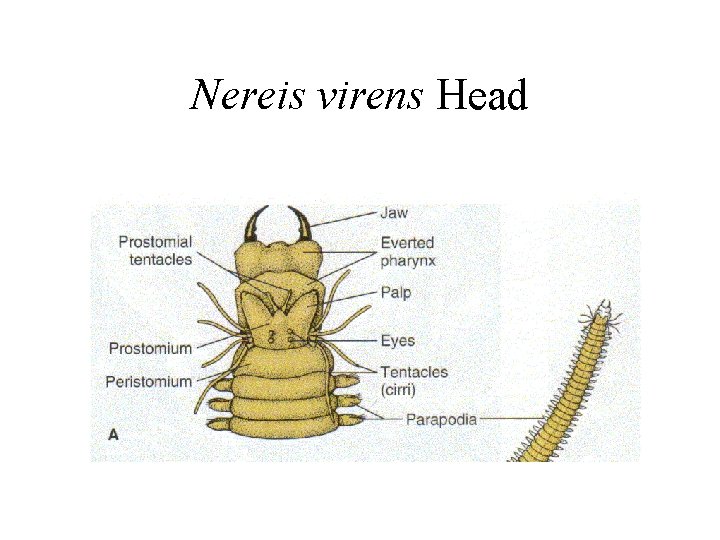
Nereis virens Head
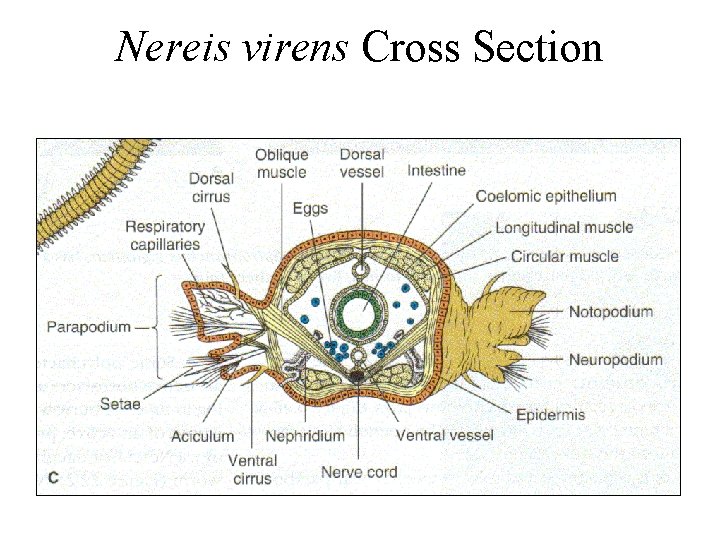
Nereis virens Cross Section
Tentacle Feeder • Burrow in sand or mud • Tentacles – Covered with mucous and cilia – Retracted to collect food or for protection • Gills present for gas exchange
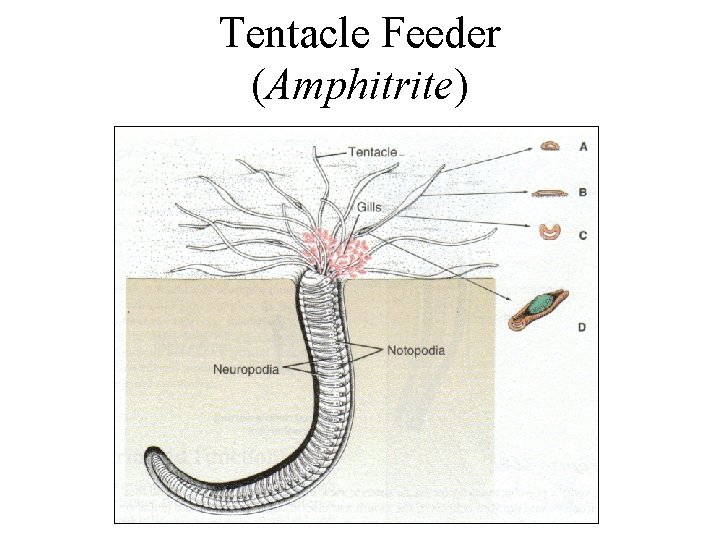
Tentacle Feeder (Amphitrite)
Ciliary Feeder • Burrow in sand or mud • Epithelia secretes leathery tube • Tentacles – Covered with mucous and cilia – Grooved for sorting different sized particles – Can be retracted for protection • Tentacles used for gas exchange
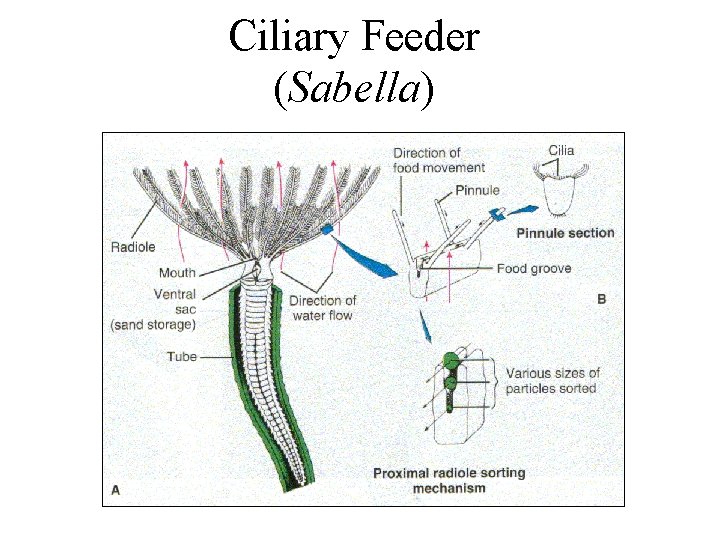
Ciliary Feeder (Sabella)
Tube Feeder • Epithelia often secretes parchment-like tube • Parapodia “fans” or peristaltic motion moves water through tube • Mucous captures food
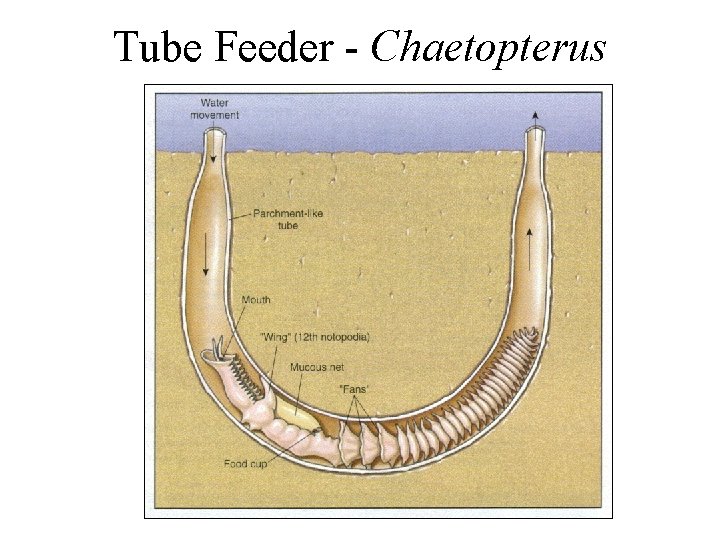
Tube Feeder - Chaetopterus
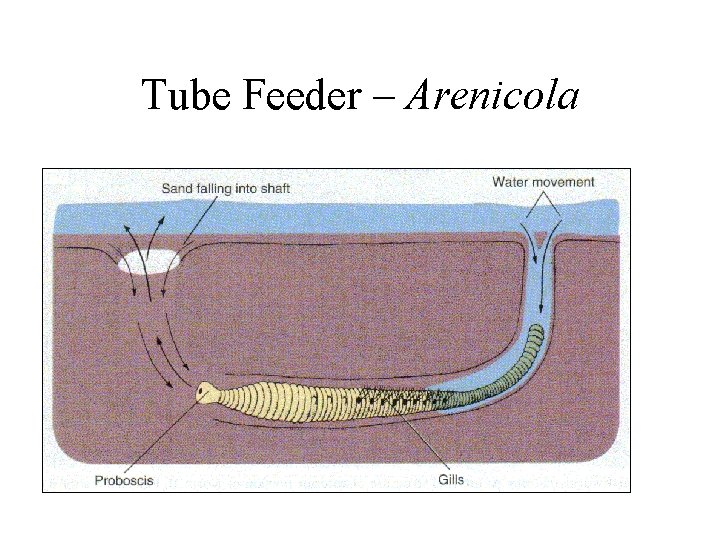
Tube Feeder – Arenicola
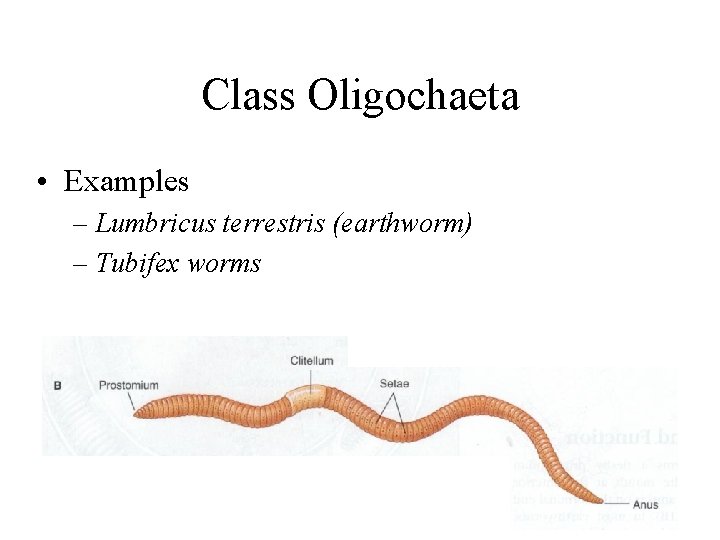
Class Oligochaeta • Examples – Lumbricus terrestris (earthworm) – Tubifex worms
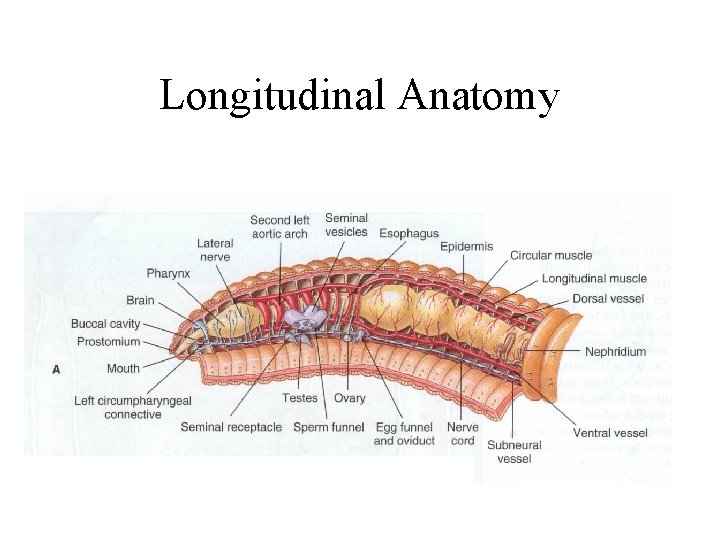
Longitudinal Anatomy
Circulatory System • • Closed – capillary network for exchange Dorsal and ventral blood vessels Five aortic arches for pumping (heart) Contains amoeboid cells and dissolved hemoglobin • Coelomic fluid – also involved in circulation
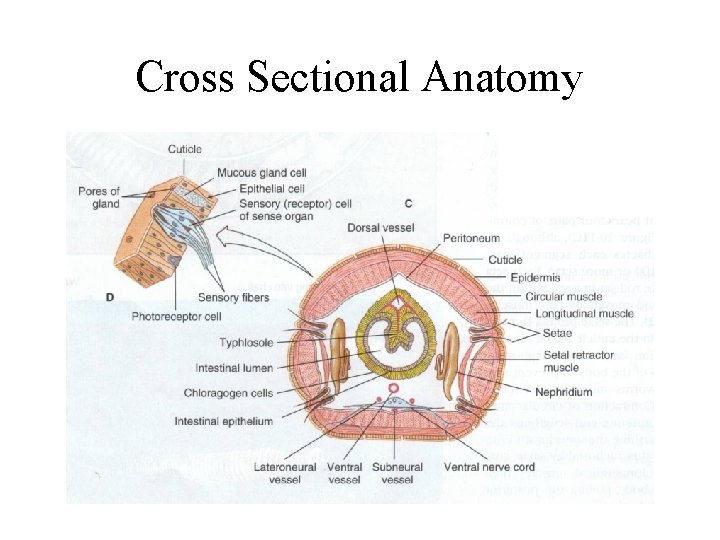
Cross Sectional Anatomy
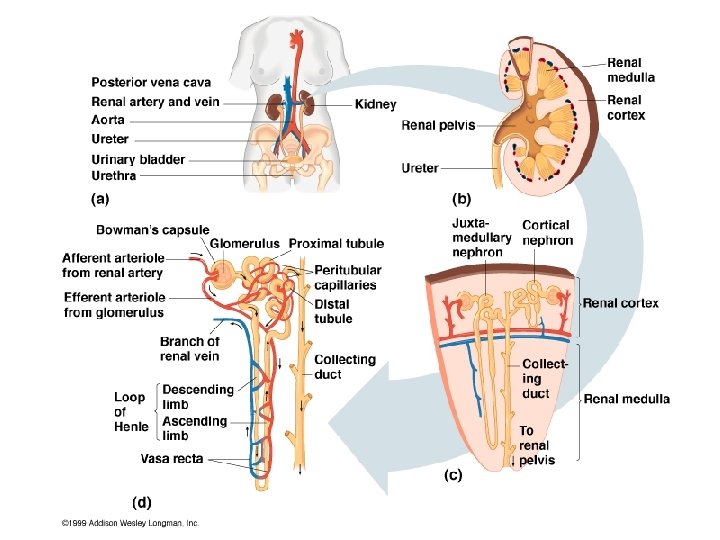
Nephridia • Found in each segment • Nephrostome crosses into next segment – Cilliated funnel to draw in fluid • Water and nutrient reabsorbed • Function similar to kidney
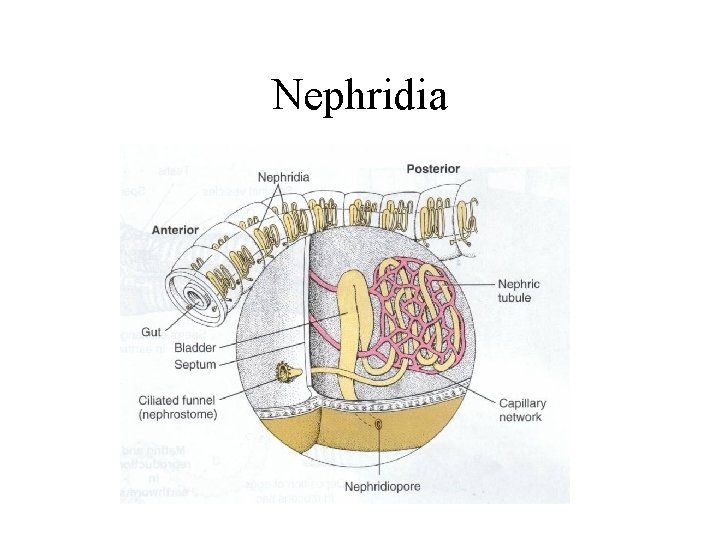
Nephridia
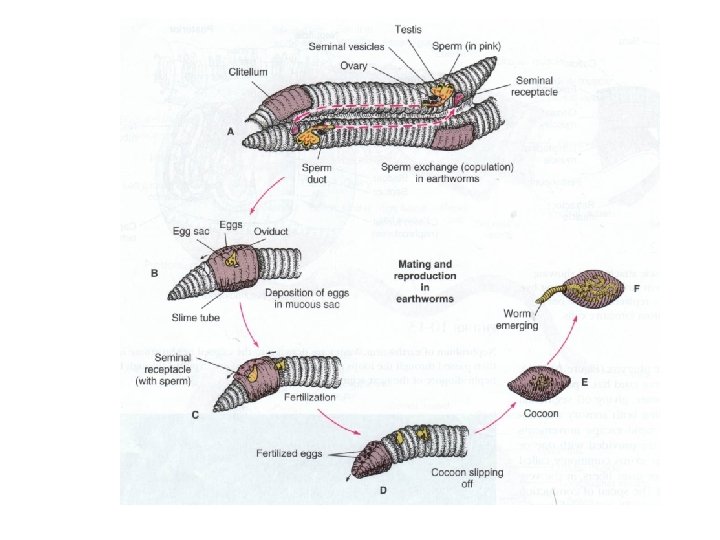
Reproduction • Hermaphroditic – exchange sperm • Clitellum – Attach during mating – Secretes cocoon
Class Hirudinea • Leeches – Anterior and posterior sucker – No, setae, septa – Coelom filled with muscle and connective tissue – Reproduction similar to Oligochaeta – Many lack enzymes for digestion – rely on bacteria
- Slides: 25