
Annelids Molluscs BSC 2011 L Animal Taxonomy Domain

Annelids, Molluscs BSC 2011 L
Animal Taxonomy � Domain Eukarya � Kingdom Animalia ○ Protostomes � Phylum Annelida – annelids � Class Polychaeta � Class Hirudinea � Class Oligiochaeta* � Phylum Mollusca - molluscs � Class Polyplacophora � Class Gastropoda � Class Bivalvia � Class Cephalopoda*
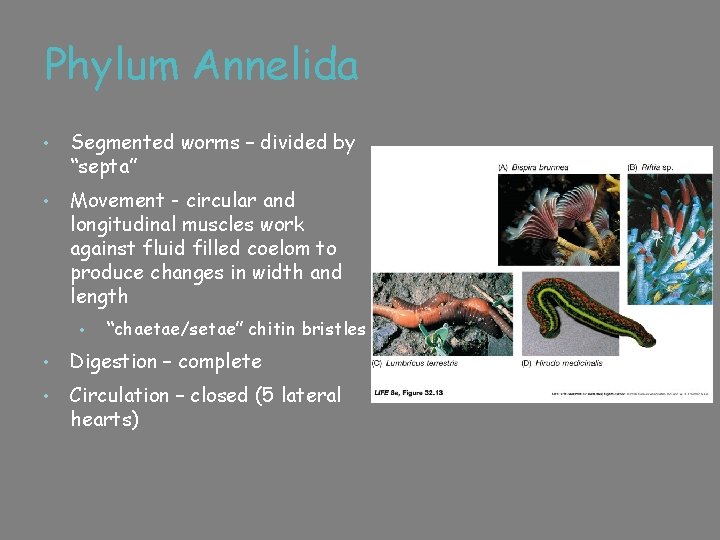
Phylum Annelida • Segmented worms – divided by “septa” • Movement - circular and longitudinal muscles work against fluid filled coelom to produce changes in width and length • “chaetae/setae” chitin bristles • Digestion – complete • Circulation – closed (5 lateral hearts)
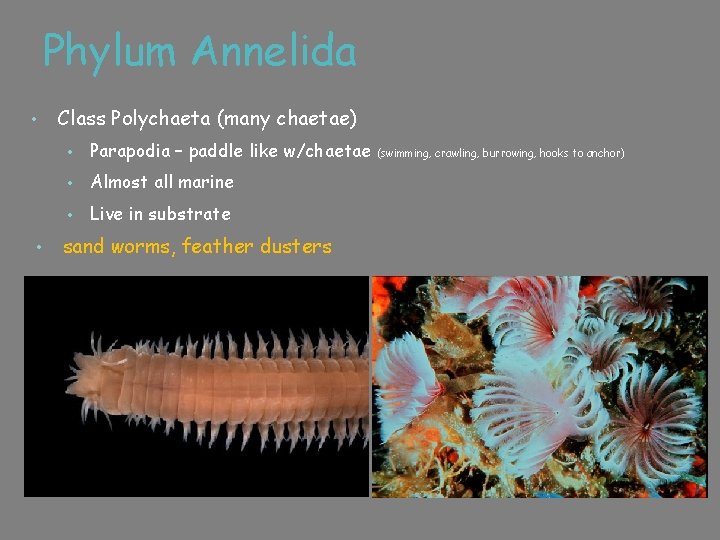
Phylum Annelida • • Class Polychaeta (many chaetae) • Parapodia – paddle like w/chaetae • Almost all marine • Live in substrate sand worms, feather dusters (swimming, crawling, burrowing, hooks to anchor)
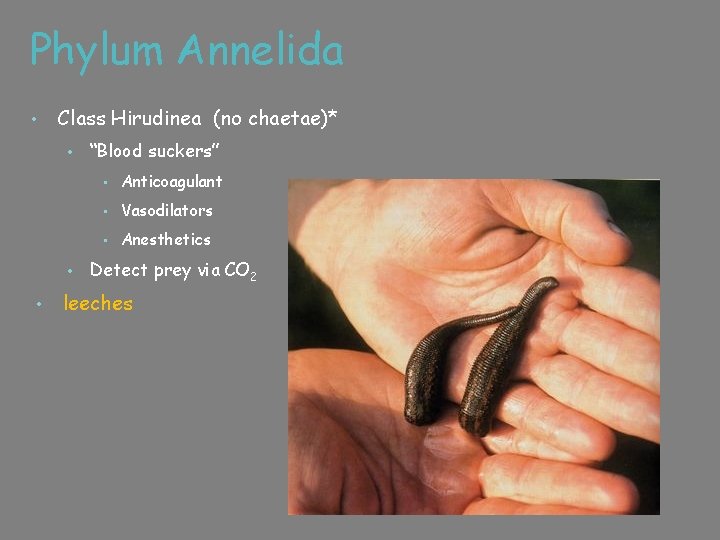
Phylum Annelida • Class Hirudinea (no chaetae)* • • • “Blood suckers” • Anticoagulant • Vasodilators • Anesthetics Detect prey via CO 2 leeches
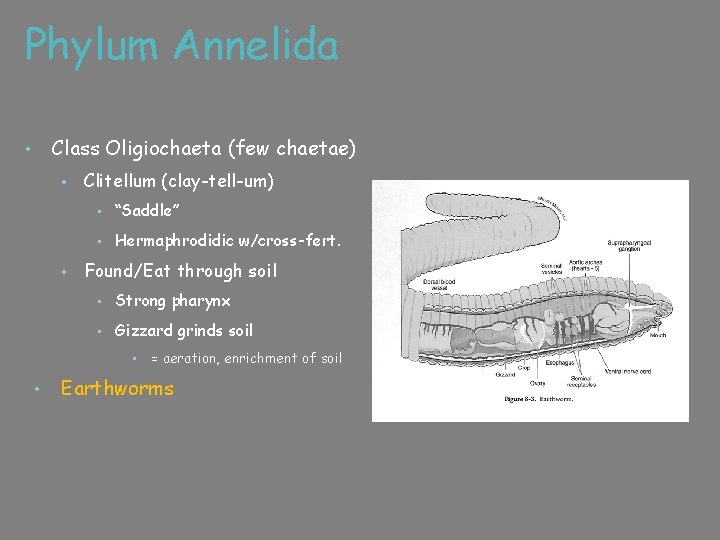
Phylum Annelida Class Oligiochaeta (few chaetae) • • • Clitellum (clay-tell-um) • “Saddle” • Hermaphrodidic w/cross-fert. Found/Eat through soil • Strong pharynx • Gizzard grinds soil • • = aeration, enrichment of soil Earthworms
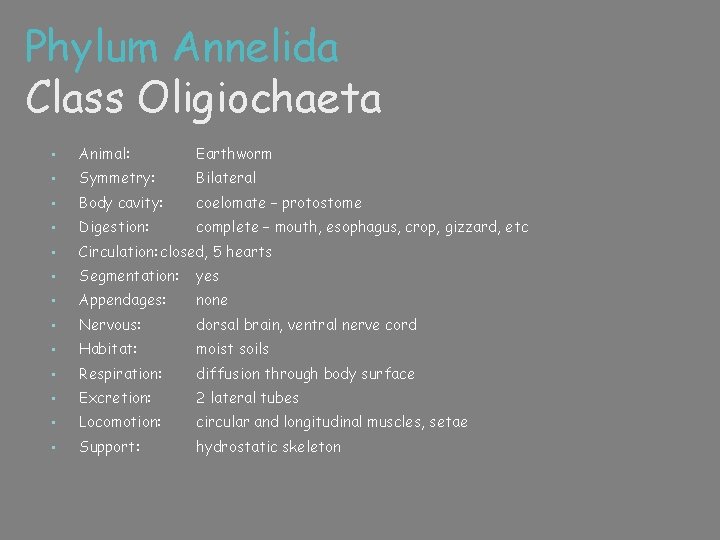
Phylum Annelida Class Oligiochaeta • Animal: Earthworm • Symmetry: Bilateral • Body cavity: coelomate – protostome • Digestion: complete – mouth, esophagus, crop, gizzard, etc • Circulation: closed, 5 hearts • Segmentation: yes • Appendages: none • Nervous: dorsal brain, ventral nerve cord • Habitat: moist soils • Respiration: diffusion through body surface • Excretion: 2 lateral tubes • Locomotion: circular and longitudinal muscles, setae • Support: hydrostatic skeleton
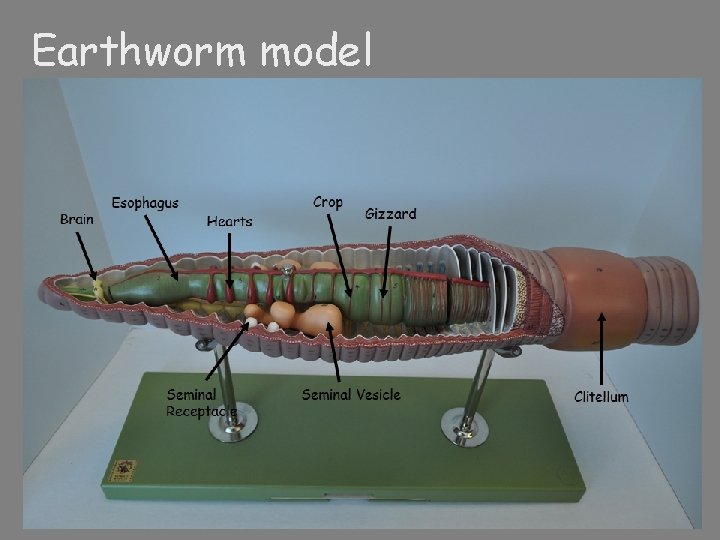
Earthworm model
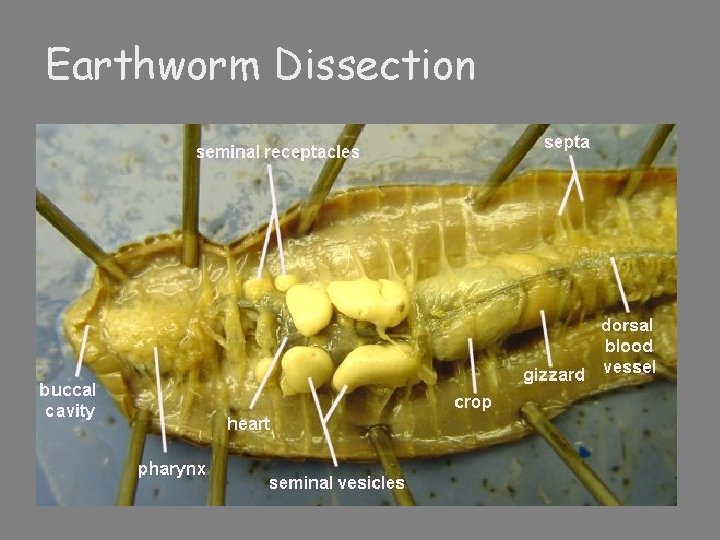
Earthworm Dissection
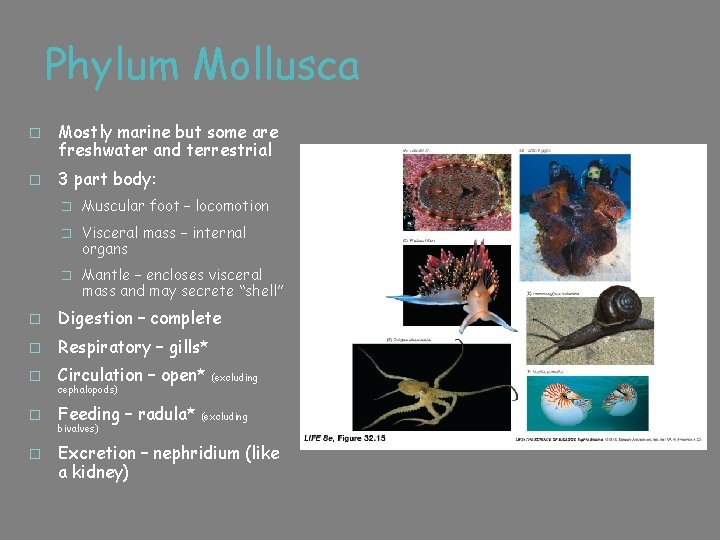
Phylum Mollusca � Mostly marine but some are freshwater and terrestrial � 3 part body: � Muscular foot – locomotion � Visceral mass – internal organs � Mantle – encloses visceral mass and may secrete “shell” � Digestion – complete � Respiratory – gills* � Circulation – open* � Feeding – radula* � Excretion – nephridium (like a kidney) cephalopods) bivalves) (excluding
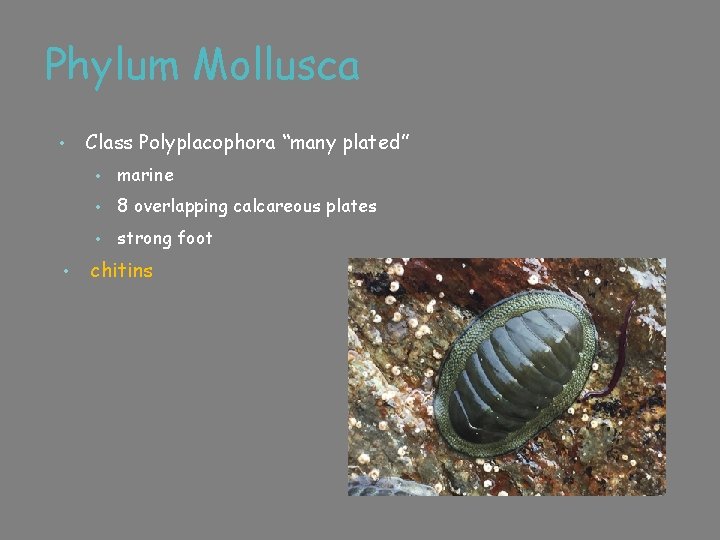
Phylum Mollusca • • Class Polyplacophora “many plated” • marine • 8 overlapping calcareous plates • strong foot chitins
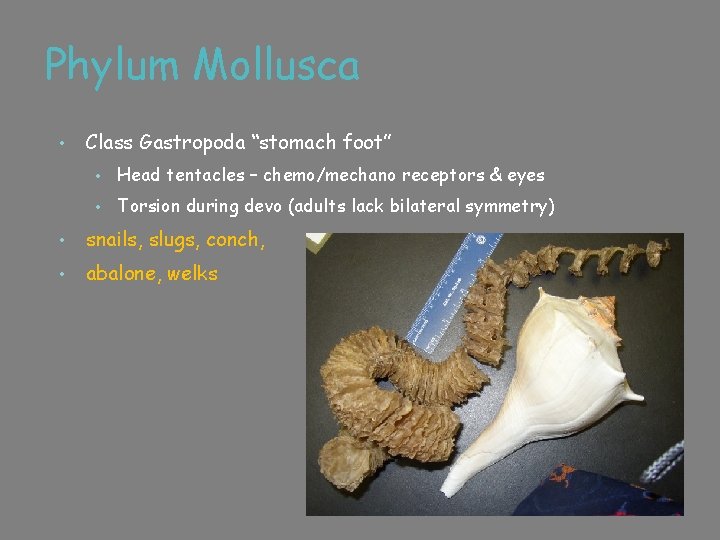
Phylum Mollusca • Class Gastropoda “stomach foot” • Head tentacles – chemo/mechano receptors & eyes • Torsion during devo (adults lack bilateral symmetry) • snails, slugs, conch, • abalone, welks
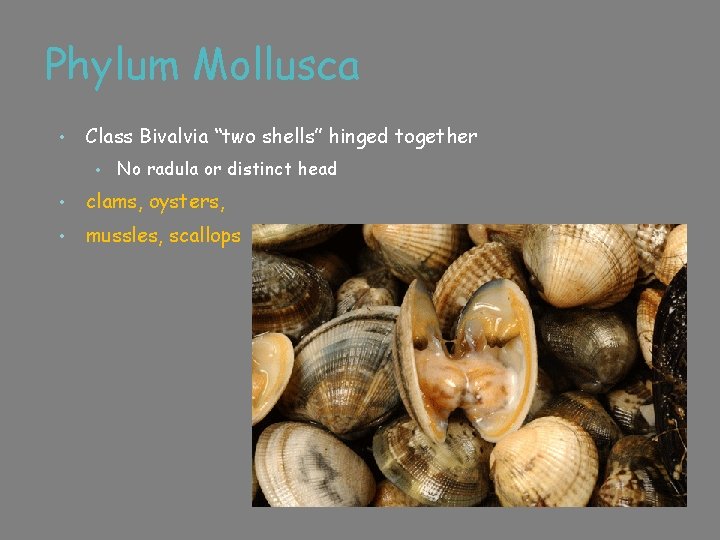
Phylum Mollusca • Class Bivalvia “two shells” hinged together • No radula or distinct head • clams, oysters, • mussles, scallops
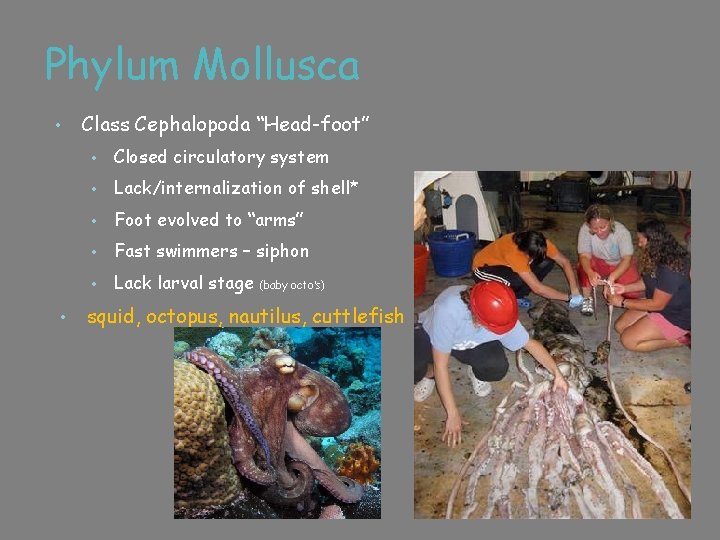
Phylum Mollusca • • Class Cephalopoda “Head-foot” • Closed circulatory system • Lack/internalization of shell* • Foot evolved to “arms” • Fast swimmers – siphon • Lack larval stage (baby octo’s) squid, octopus, nautilus, cuttlefish
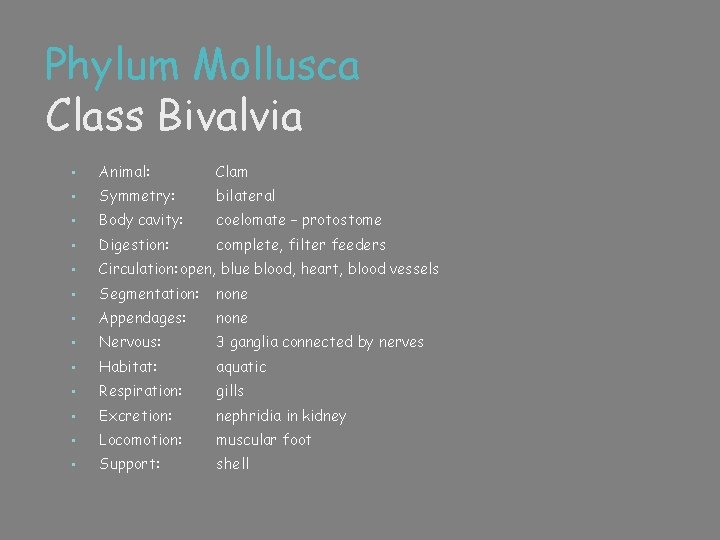
Phylum Mollusca Class Bivalvia • Animal: Clam • Symmetry: bilateral • Body cavity: coelomate – protostome • Digestion: complete, filter feeders • Circulation: open, blue blood, heart, blood vessels • Segmentation: none • Appendages: none • Nervous: 3 ganglia connected by nerves • Habitat: aquatic • Respiration: gills • Excretion: nephridia in kidney • Locomotion: muscular foot • Support: shell
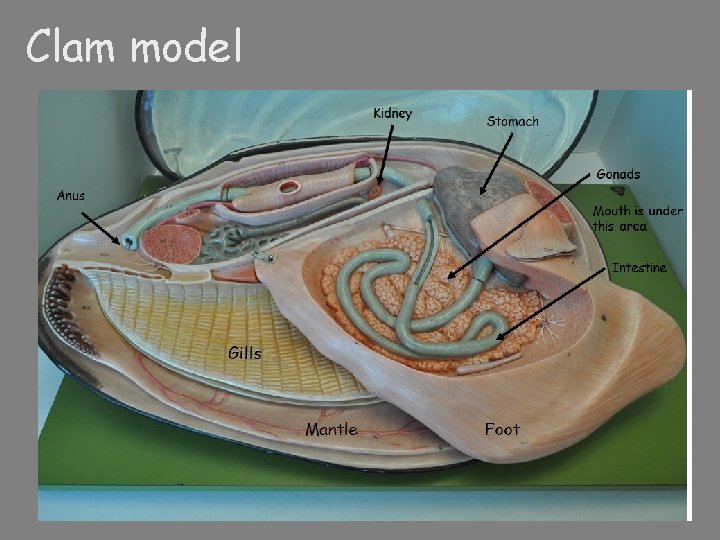
Clam model
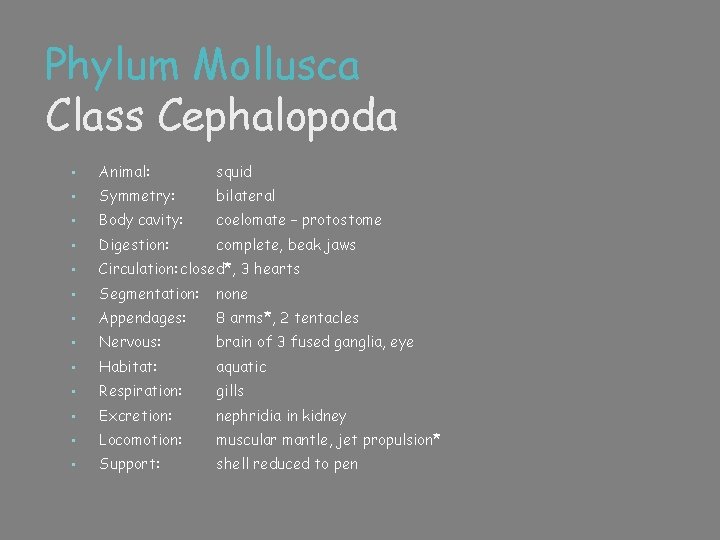
Phylum Mollusca Class Cephalopoda • Animal: squid • Symmetry: bilateral • Body cavity: coelomate – protostome • Digestion: complete, beak jaws • Circulation: closed*, 3 hearts • Segmentation: none • Appendages: 8 arms*, 2 tentacles • Nervous: brain of 3 fused ganglia, eye • Habitat: aquatic • Respiration: gills • Excretion: nephridia in kidney • Locomotion: muscular mantle, jet propulsion* • Support: shell reduced to pen
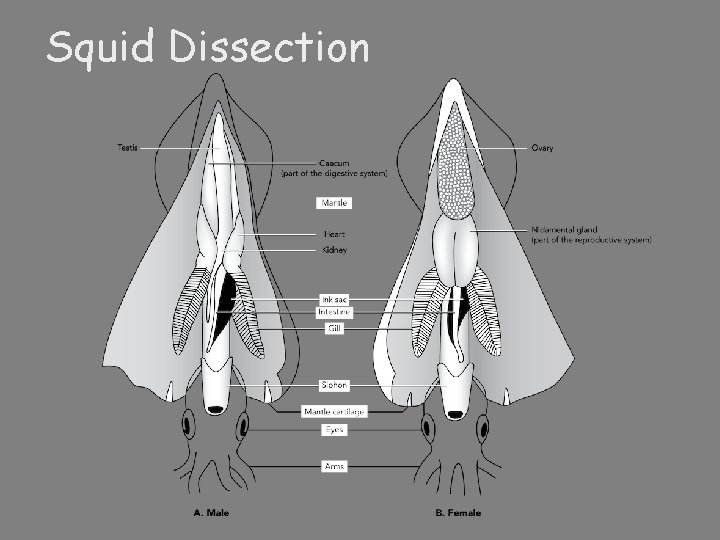
Squid Dissection
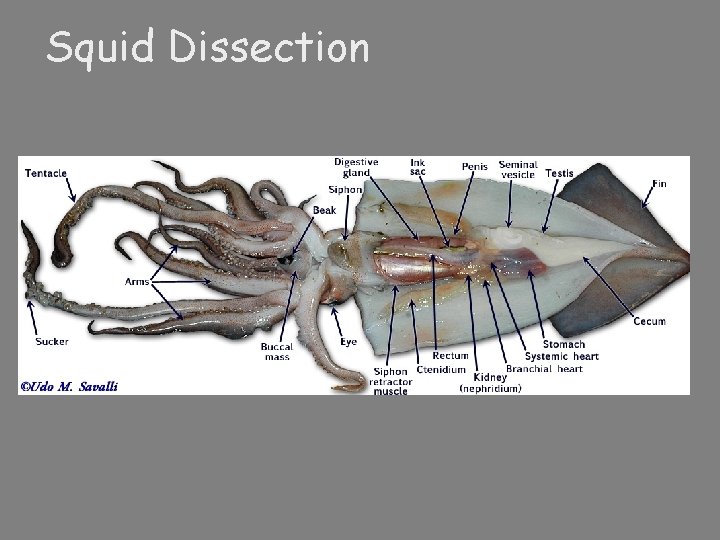
Squid Dissection
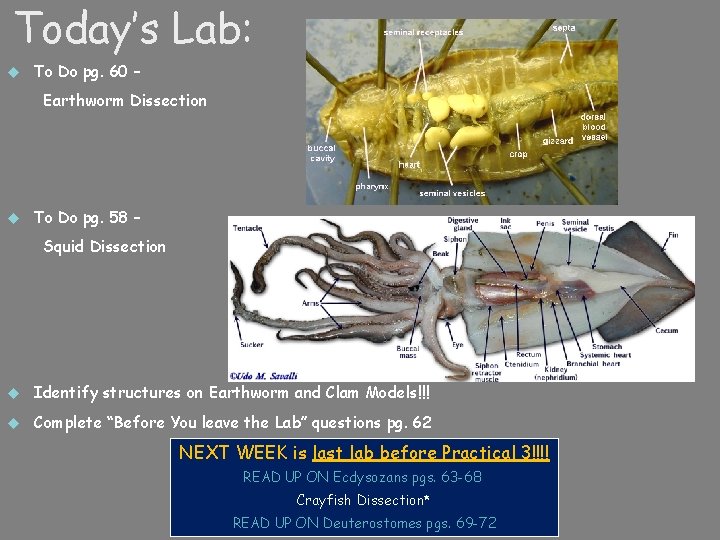
Today’s Lab: To Do pg. 60 – Earthworm Dissection To Do pg. 58 – Squid Dissection Identify structures on Earthworm and Clam Models!!! Complete “Before You leave the Lab” questions pg. 62 NEXT WEEK is last lab before Practical 3!!!! READ UP ON Ecdysozans pgs. 63 -68 Crayfish Dissection* READ UP ON Deuterostomes pgs. 69 -72
- Slides: 20