
AnNajah National University Faculty of Engineering Civil Engineering


- Slides: 59
An-Najah National University Faculty of Engineering Civil Engineering Department Seismic design for AL-Azizi building Supervisor : - Eng. Ibrahim Arman Prepared by: Abedallah Shurabi Khaldon Dela’ Mohammed Malaysha Wael Nasasrh 1
Outline �Abstract �Project description �Slab design �Beam design �Column design �Footing design �Shear wall design �Stairs design 2
Abstract Al-Azizi Building represents the most common building in Nablus. A one way ribbed slab structural system will be analyzed and designed for seismic load, then a flat plate structural system analyzed and designed for same purpose, In the end an economic comparison between two designs will be made. As a result, a recommendation will be given for the most economic system. 3
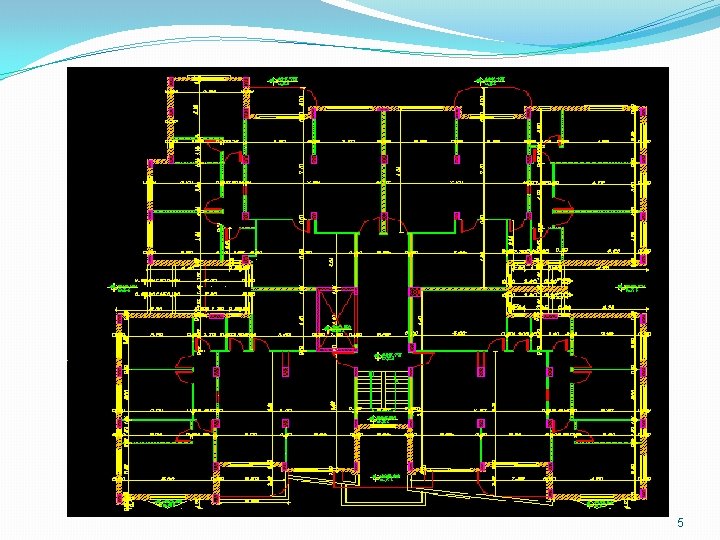
Project description � Consist of six floors � The area of the base floor is 766 m 2 � The height of the first floor is 6 m � The area of the rest floors for each one is 760 m 2 � The height of the rest of floors for each one is 3. 4 m 4
5
Codes and standards: �ACI 318 -08 �IBC 2006 �ASCE 7 -10 �SI 413 (Israeli standards) 6
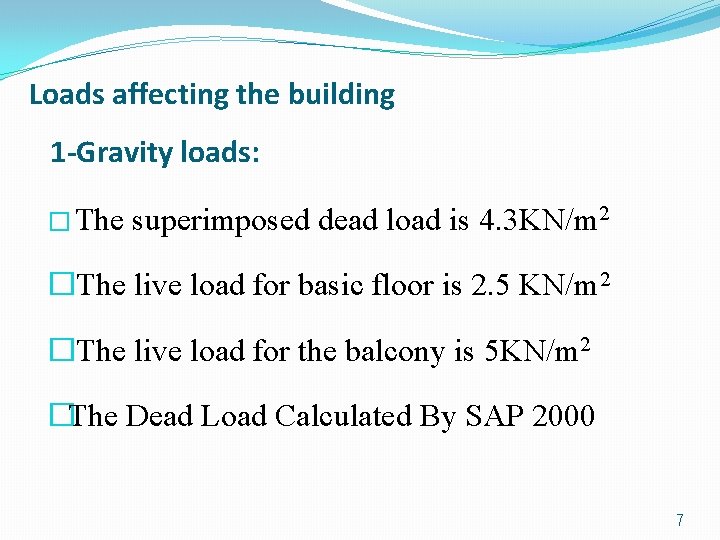
Loads affecting the building 1 -Gravity loads: � The superimposed dead load is 4. 3 KN/m 2 �The live load for basic floor is 2. 5 KN/m 2 �The live load for the balcony is 5 KN/m 2 �The Dead Load Calculated By SAP 2000 7
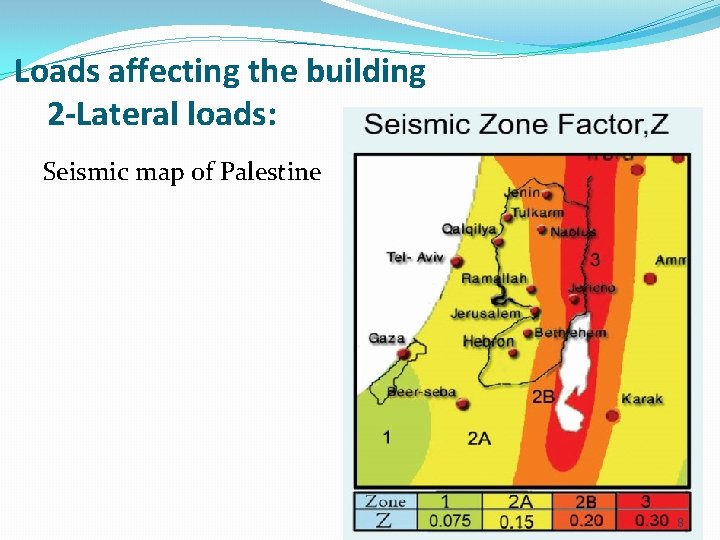
Loads affecting the building 2 -Lateral loads: Seismic map of Palestine 8
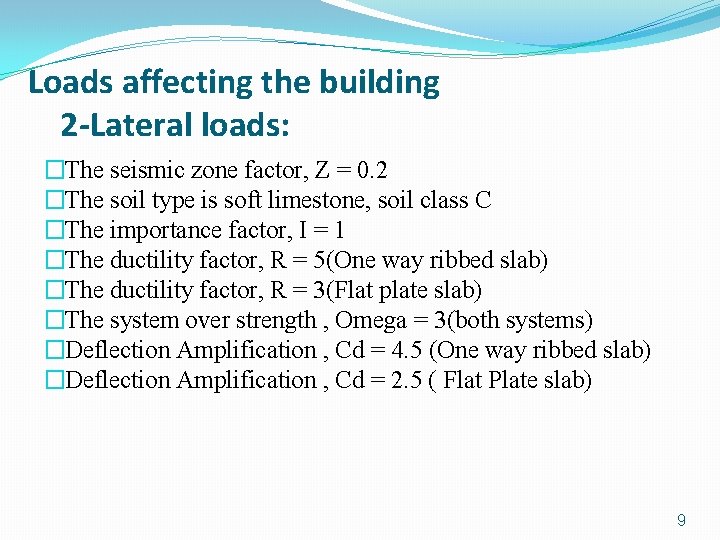
Loads affecting the building 2 -Lateral loads: �The seismic zone factor, Z = 0. 2 �The soil type is soft limestone, soil class C �The importance factor, I = 1 �The ductility factor, R = 5(One way ribbed slab) �The ductility factor, R = 3(Flat plate slab) �The system over strength , Omega = 3(both systems) �Deflection Amplification , Cd = 4. 5 (One way ribbed slab) �Deflection Amplification , Cd = 2. 5 ( Flat Plate slab) 9
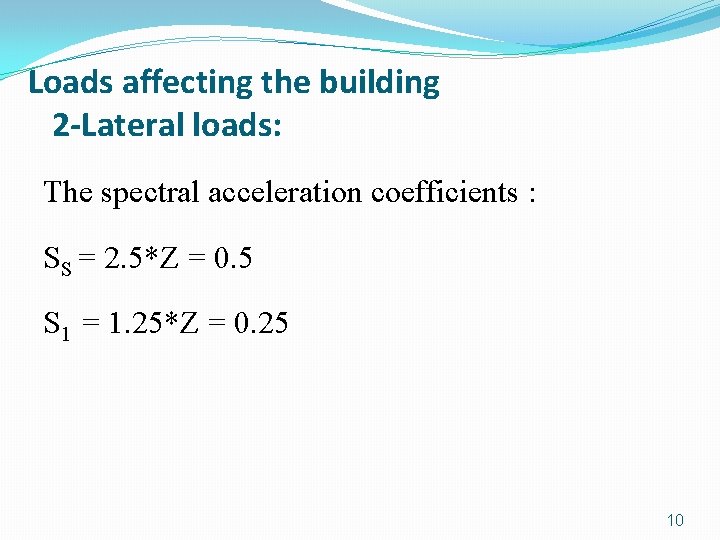
Loads affecting the building 2 -Lateral loads: The spectral acceleration coefficients : SS = 2. 5*Z = 0. 5 S 1 = 1. 25*Z = 0. 25 10
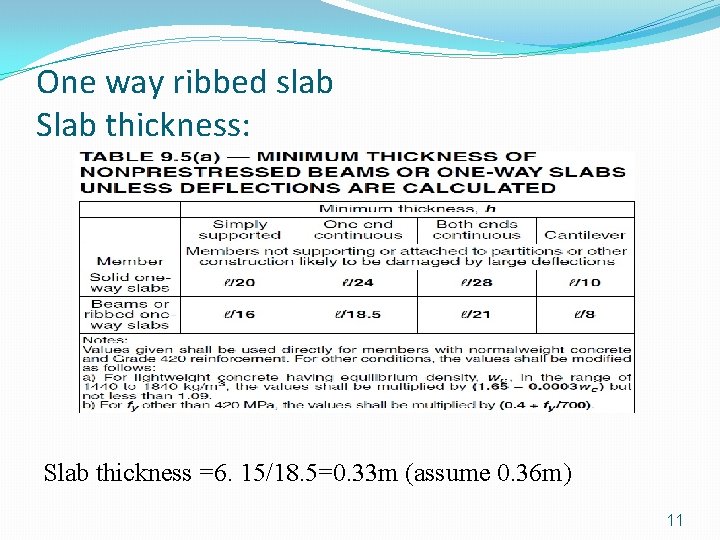
One way ribbed slab Slab thickness: Slab thickness =6. 15/18. 5=0. 33 m (assume 0. 36 m) 11
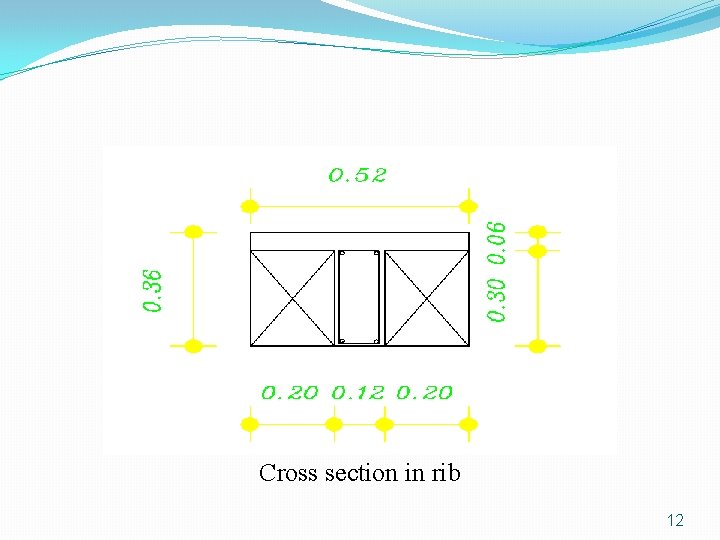
Cross section in rib 12
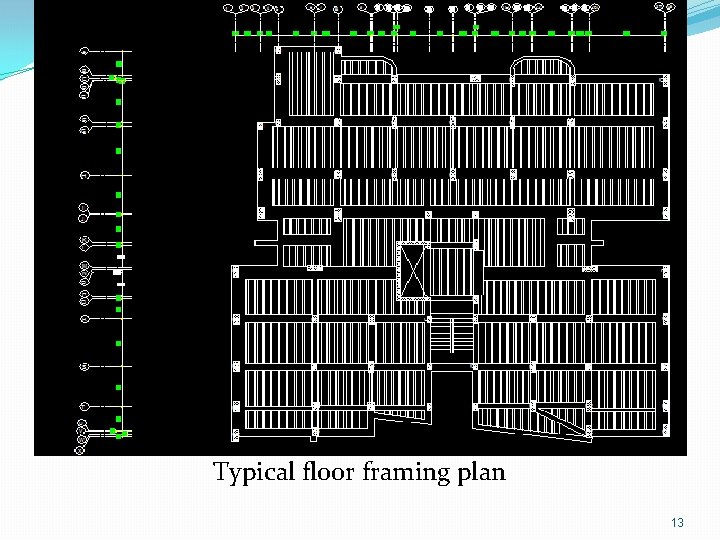
Typical floor framing plan 13
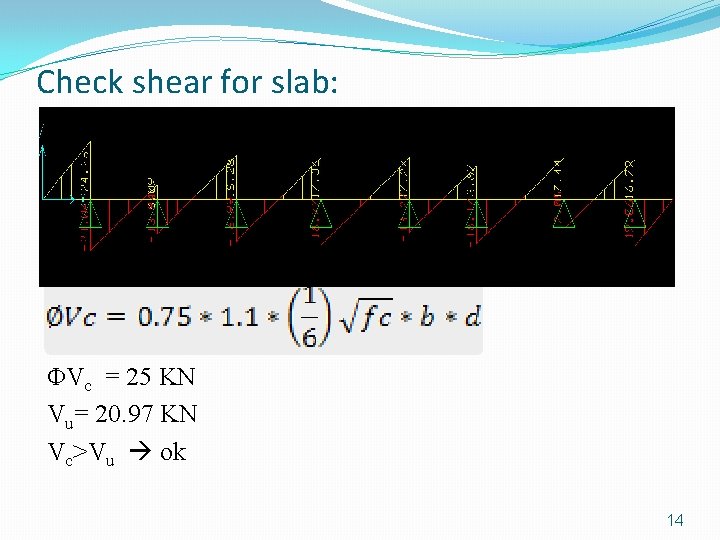
Check shear for slab: ΦVc = 25 KN Vu= 20. 97 KN Vc>Vu ok 14
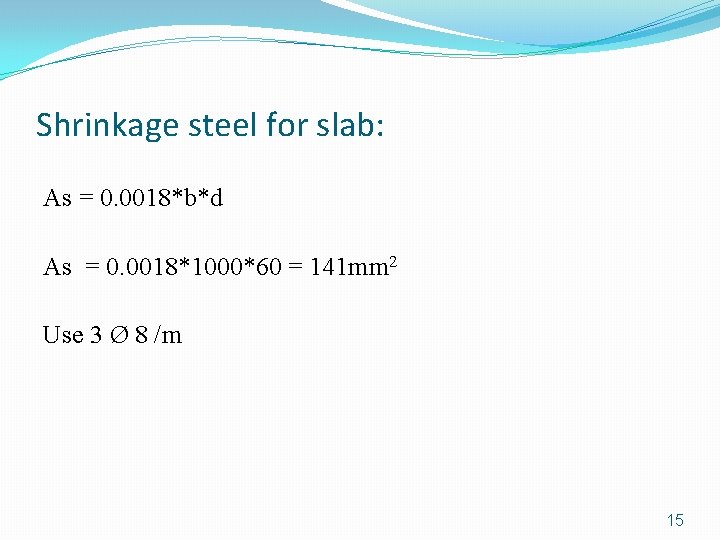
Shrinkage steel for slab: As = 0. 0018*b*d As = 0. 0018*1000*60 = 141 mm 2 Use 3 Ø 8 /m 15
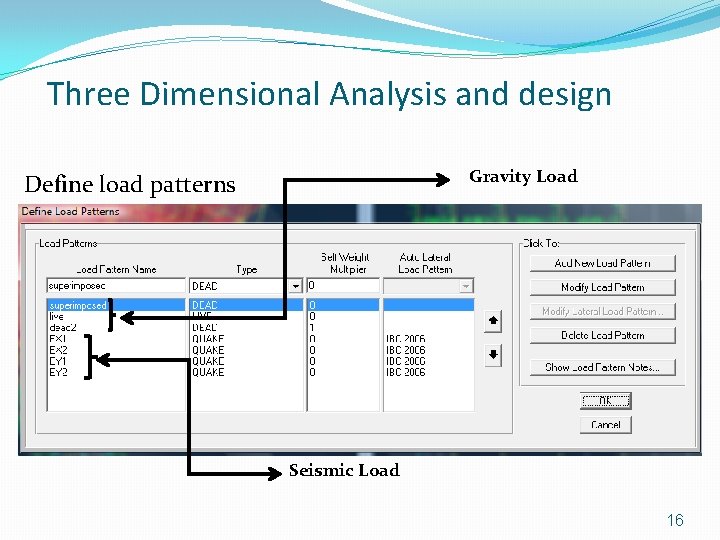
Three Dimensional Analysis and design Gravity Load Define load patterns Seismic Load 16
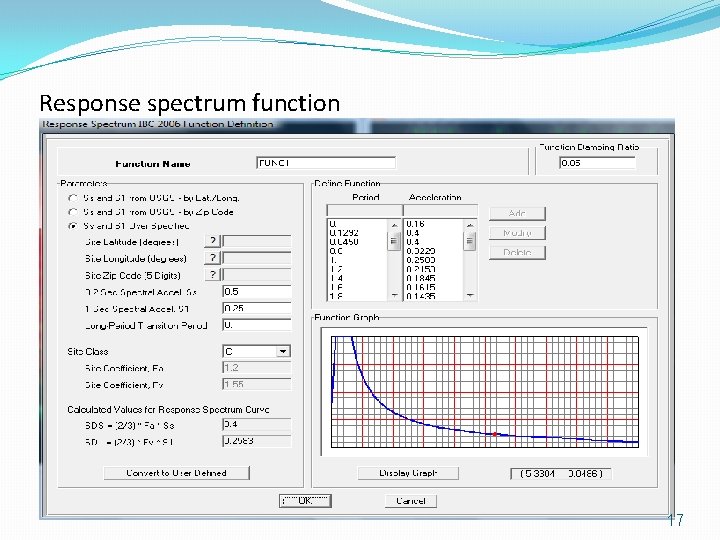
Response spectrum function 17
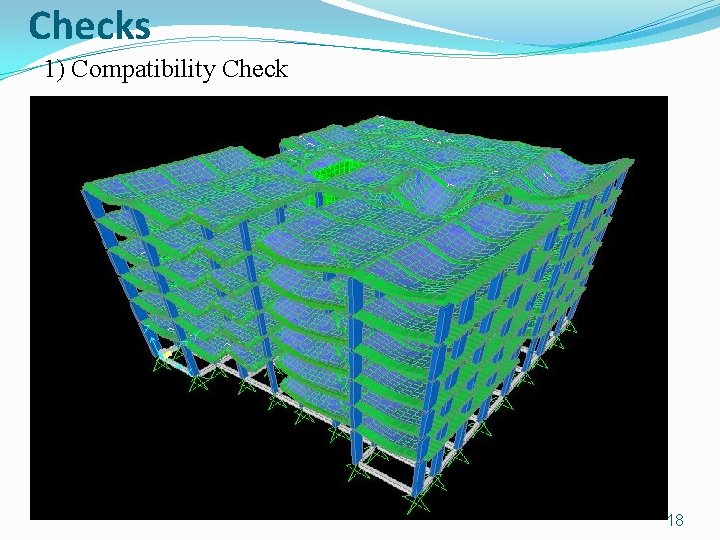
Checks 1) Compatibility Check 18
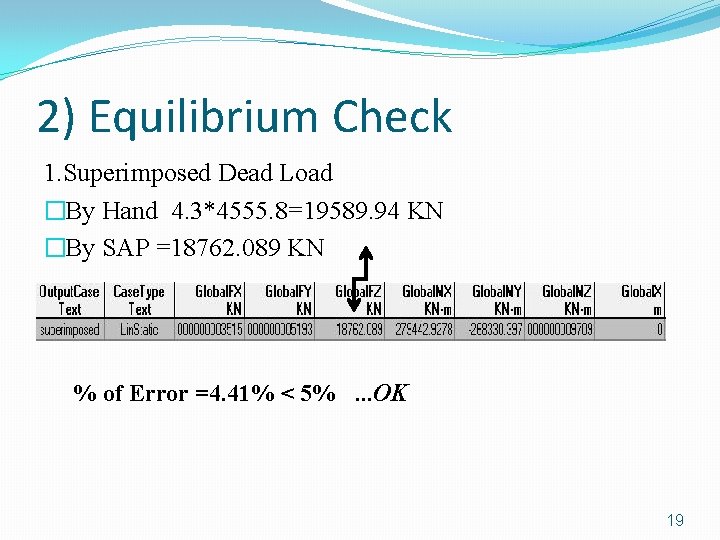
2) Equilibrium Check 1. Superimposed Dead Load �By Hand 4. 3*4555. 8=19589. 94 KN �By SAP =18762. 089 KN % of Error =4. 41% < 5%. . . OK 19
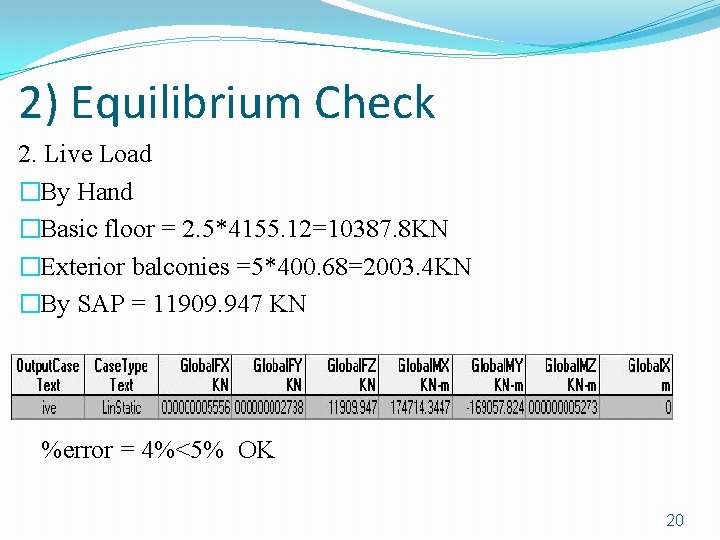
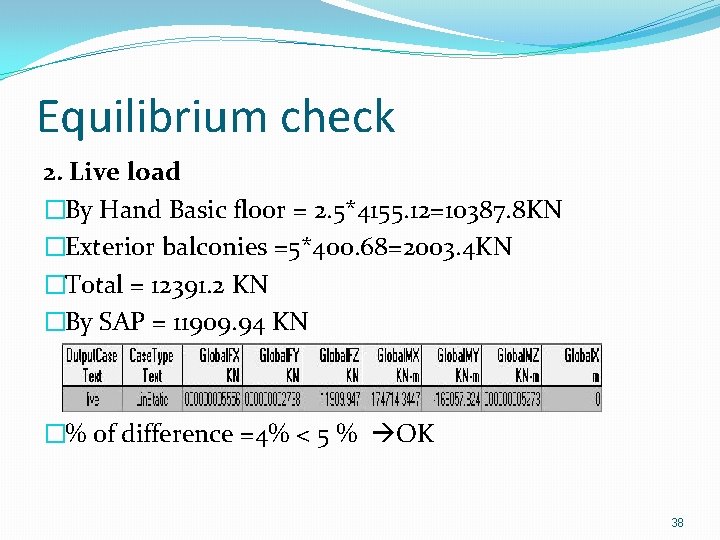
2) Equilibrium Check 2. Live Load �By Hand �Basic floor = 2. 5*4155. 12=10387. 8 KN �Exterior balconies =5*400. 68=2003. 4 KN �By SAP = 11909. 947 KN %error = 4%<5% OK 20
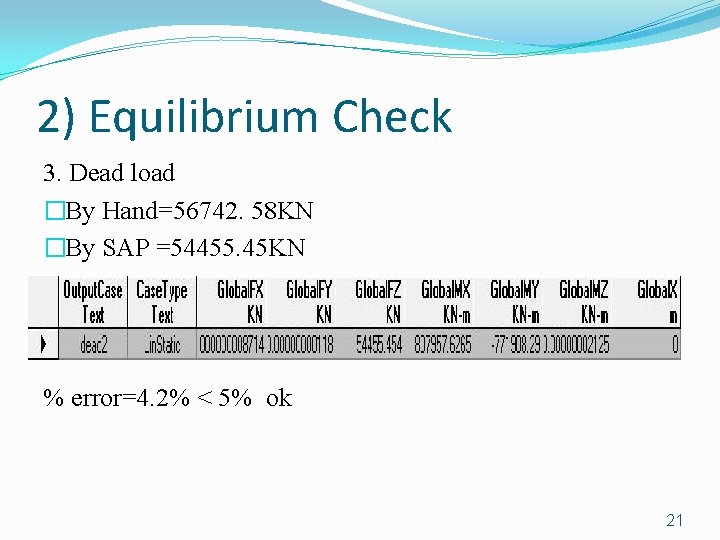
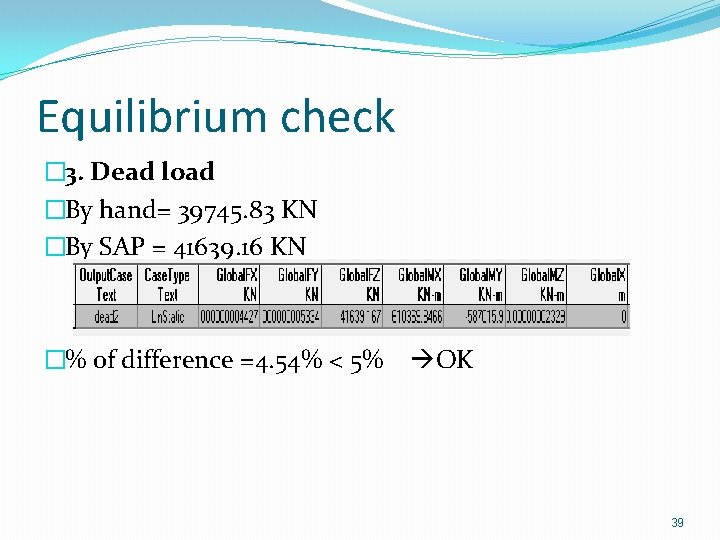
2) Equilibrium Check 3. Dead load �By Hand=56742. 58 KN �By SAP =54455. 45 KN % error=4. 2% < 5% ok 21
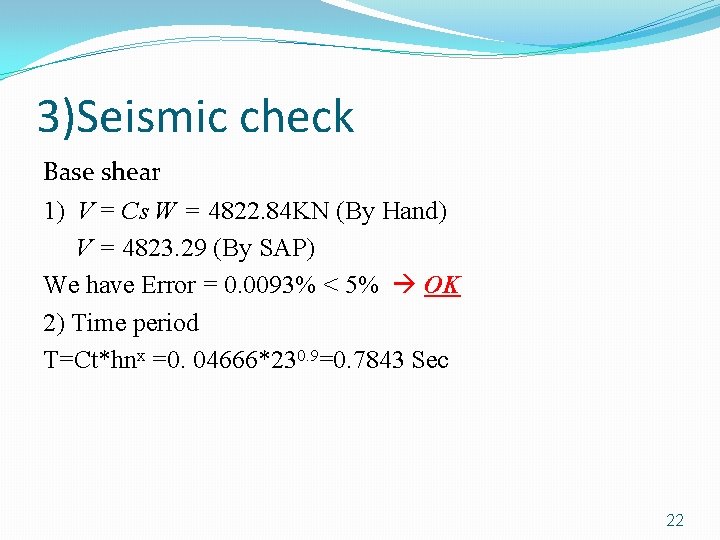
3)Seismic check Base shear 1) V = Cs W = 4822. 84 KN (By Hand) V = 4823. 29 (By SAP) We have Error = 0. 0093% < 5% OK 2) Time period T=Ct*hnx =0. 04666*230. 9=0. 7843 Sec 22
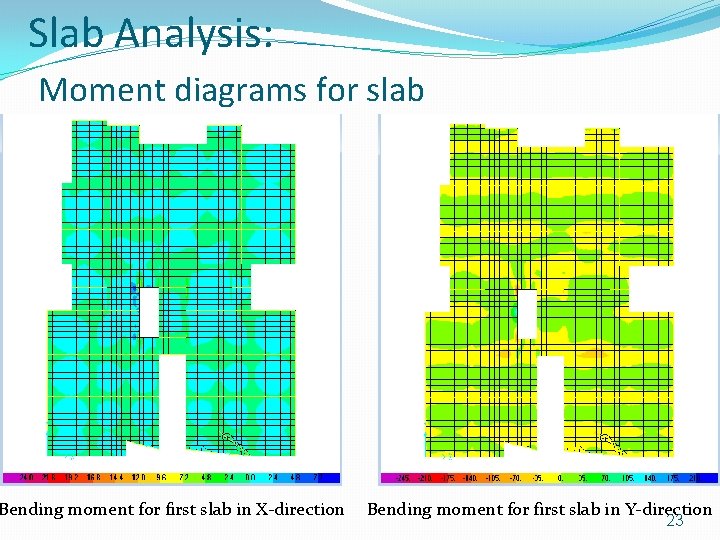
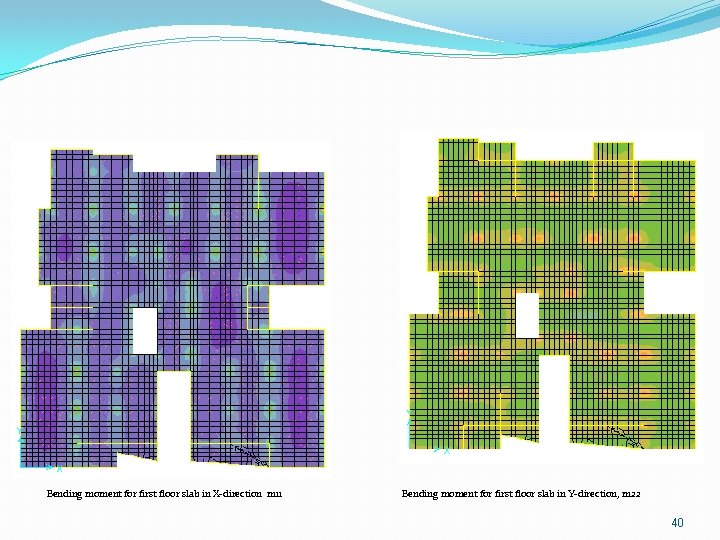
Slab Analysis: Moment diagrams for slab Bending moment for first slab in X-direction Bending moment for first slab in Y-direction 23
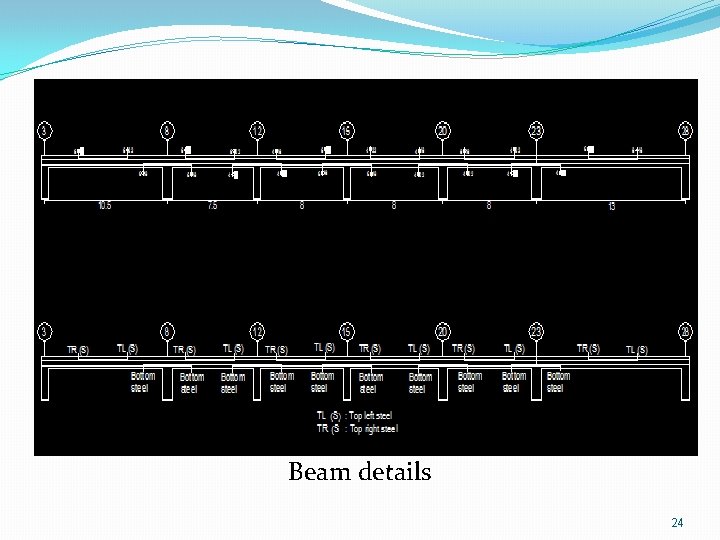
Beam details 24
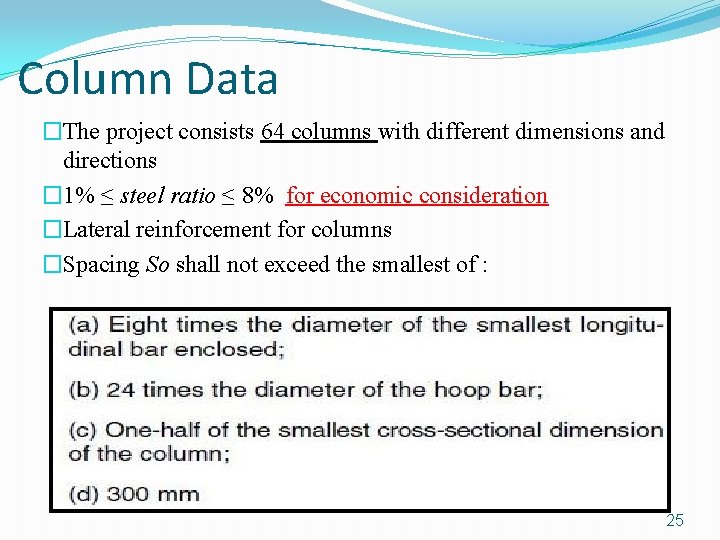
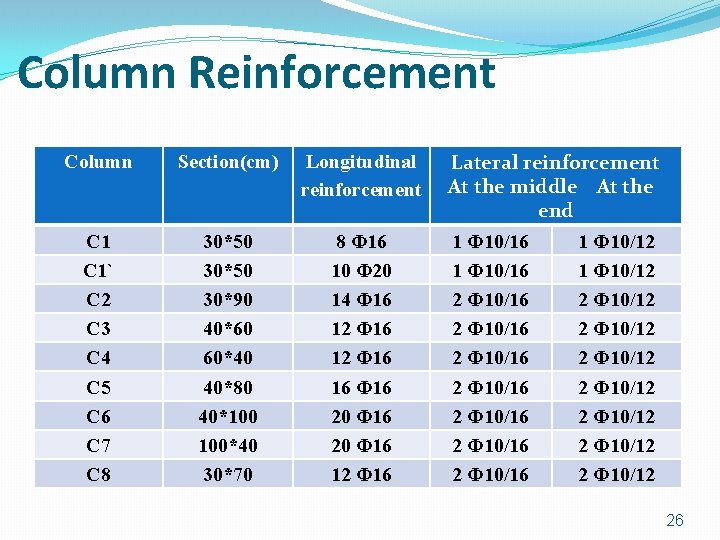
Column Data �The project consists 64 columns with different dimensions and directions � 1% ≤ steel ratio ≤ 8% for economic consideration �Lateral reinforcement for columns �Spacing So shall not exceed the smallest of : 25
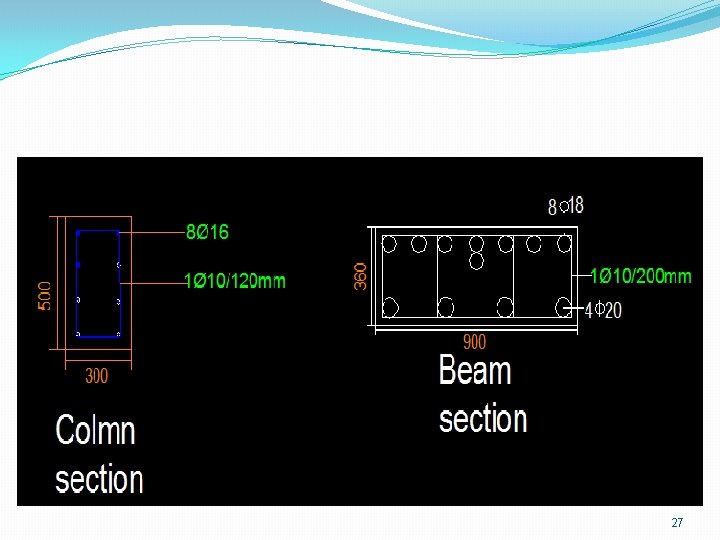
Column Reinforcement Column Section(cm) Longitudinal reinforcement C 1` C 2 C 3 C 4 C 5 C 6 C 7 C 8 30*50 30*90 40*60 60*40 40*80 40*100 100*40 30*70 8 Φ 16 10 Φ 20 14 Φ 16 12 Φ 16 16 Φ 16 20 Φ 16 12 Φ 16 Lateral reinforcement At the middle At the end 1 Φ 10/16 2 Φ 10/16 2 Φ 10/16 1 Φ 10/12 2 Φ 10/12 2 Φ 10/12 26
27
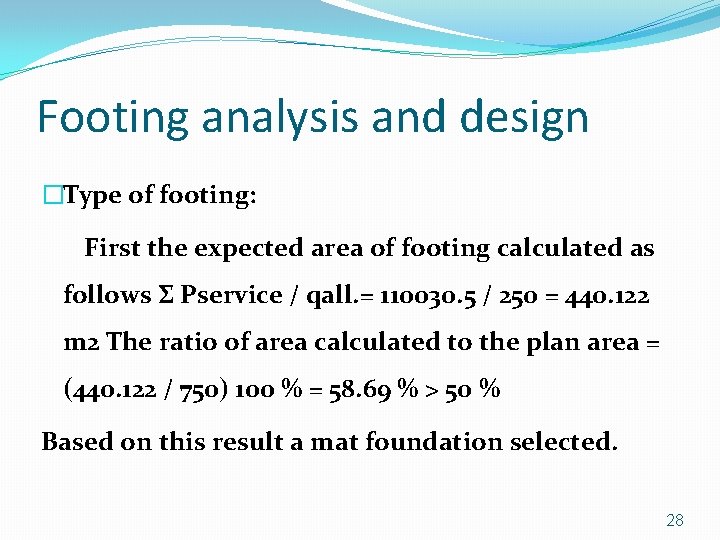
Footing analysis and design �Type of footing: First the expected area of footing calculated as follows Σ Pservice / qall. = 110030. 5 / 250 = 440. 122 m 2 The ratio of area calculated to the plan area = (440. 122 / 750) 100 % = 58. 69 % > 50 % Based on this result a mat foundation selected. 28
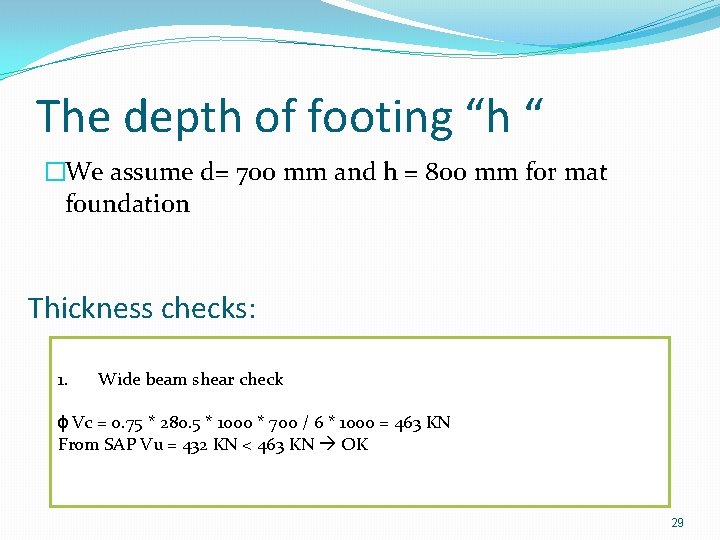
The depth of footing “h “ �We assume d= 700 mm and h = 800 mm for mat foundation Thickness checks: 1. Wide beam shear check ɸ Vc = 0. 75 * 280. 5 * 1000 * 700 / 6 * 1000 = 463 KN From SAP Vu = 432 KN < 463 KN OK 29
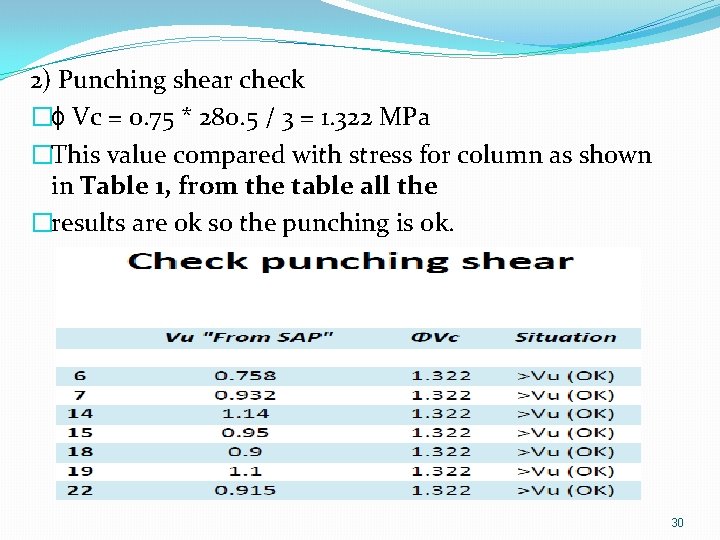
2) Punching shear check �ɸ Vc = 0. 75 * 280. 5 / 3 = 1. 322 MPa �This value compared with stress for column as shown in Table 1, from the table all the �results are ok so the punching is ok. 30
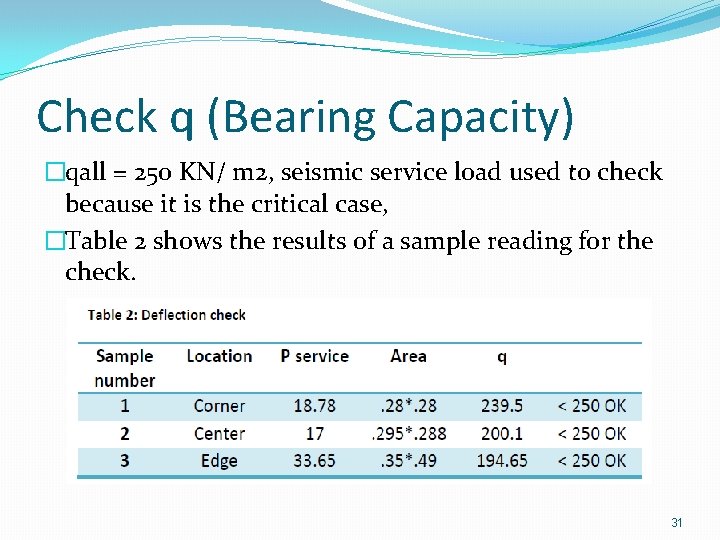
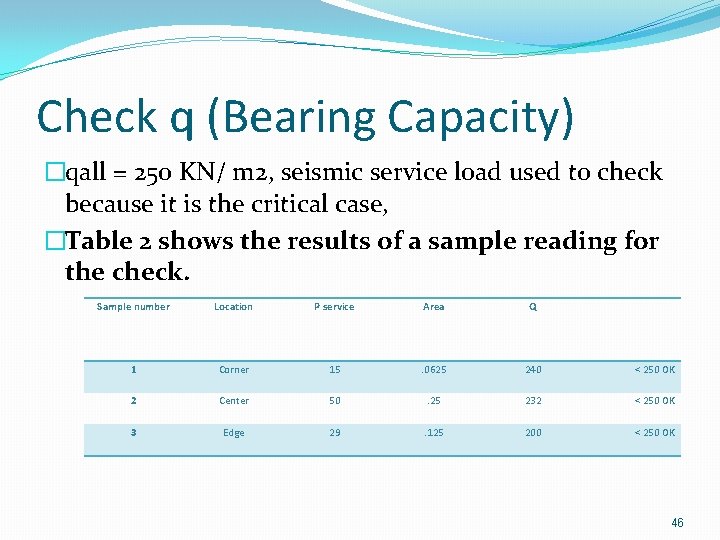
Check q (Bearing Capacity) �qall = 250 KN/ m 2, seismic service load used to check because it is the critical case, �Table 2 shows the results of a sample reading for the check. 31
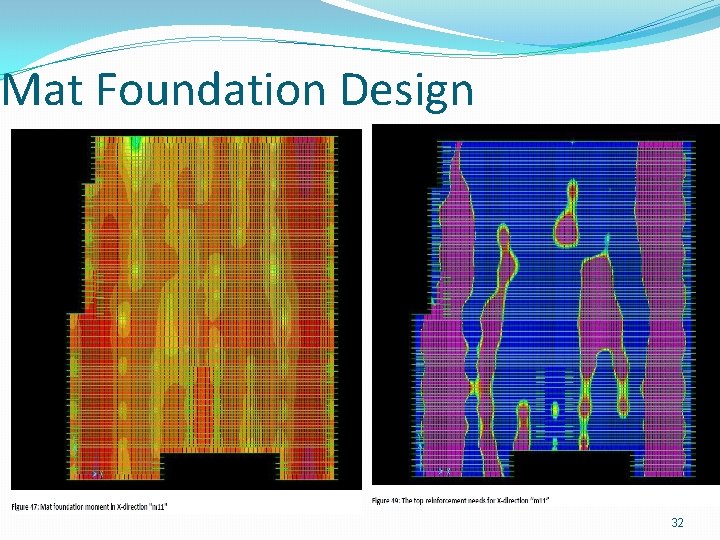
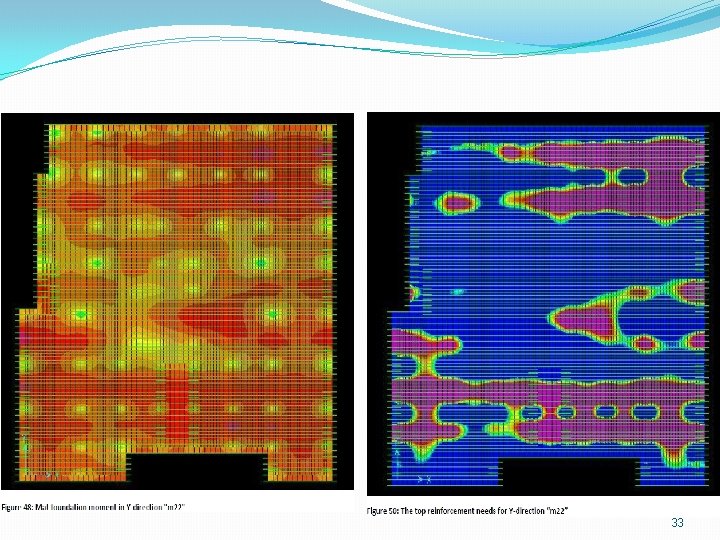
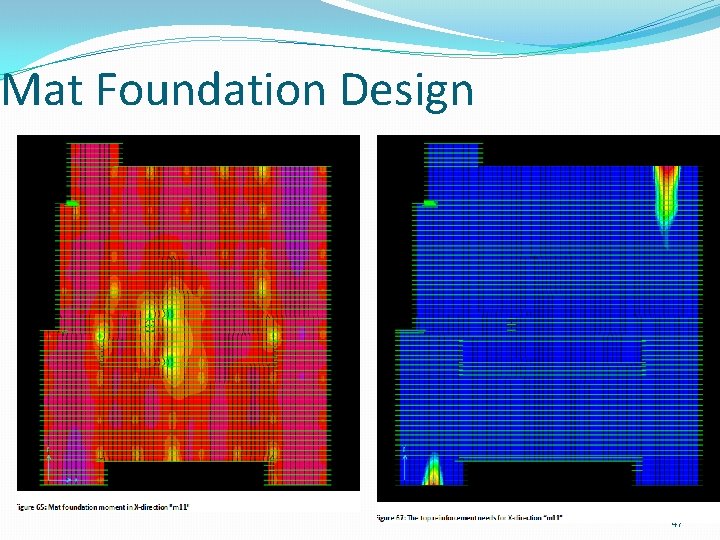
Mat Foundation Design 32
33
34
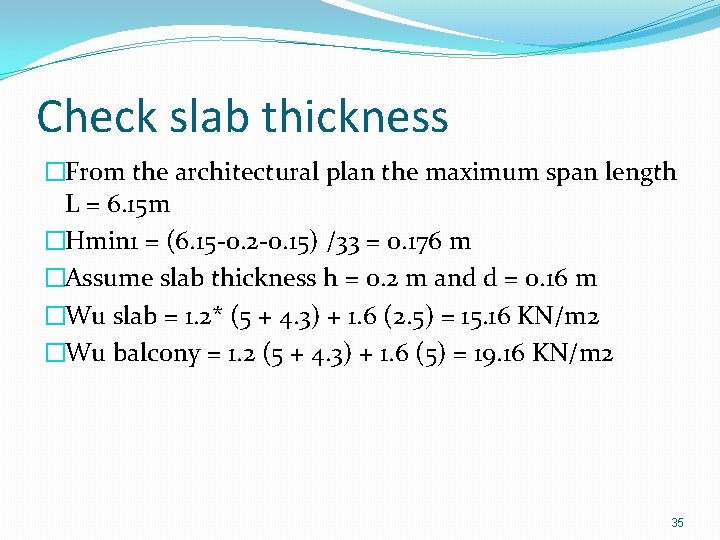
Check slab thickness �From the architectural plan the maximum span length L = 6. 15 m �Hmin 1 = (6. 15 -0. 2 -0. 15) /33 = 0. 176 m �Assume slab thickness h = 0. 2 m and d = 0. 16 m �Wu slab = 1. 2* (5 + 4. 3) + 1. 6 (2. 5) = 15. 16 KN/m 2 �Wu balcony = 1. 2 (5 + 4. 3) + 1. 6 (5) = 19. 16 KN/m 2 35
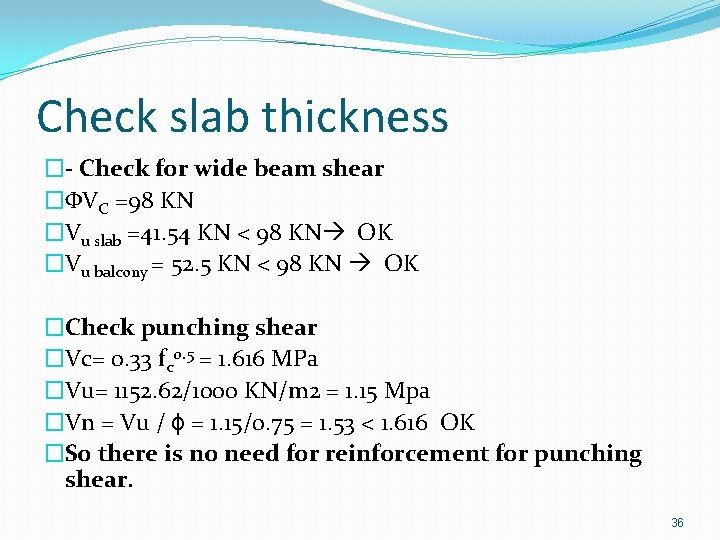
Check slab thickness �- Check for wide beam shear �ΦVC =98 KN �Vu slab =41. 54 KN < 98 KN OK �Vu balcony = 52. 5 KN < 98 KN OK �Check punching shear �Vc= 0. 33 fc 0. 5 = 1. 616 MPa �Vu= 1152. 62/1000 KN/m 2 = 1. 15 Mpa �Vn = Vu / ɸ = 1. 15/0. 75 = 1. 53 < 1. 616 OK �So there is no need for reinforcement for punching shear. 36
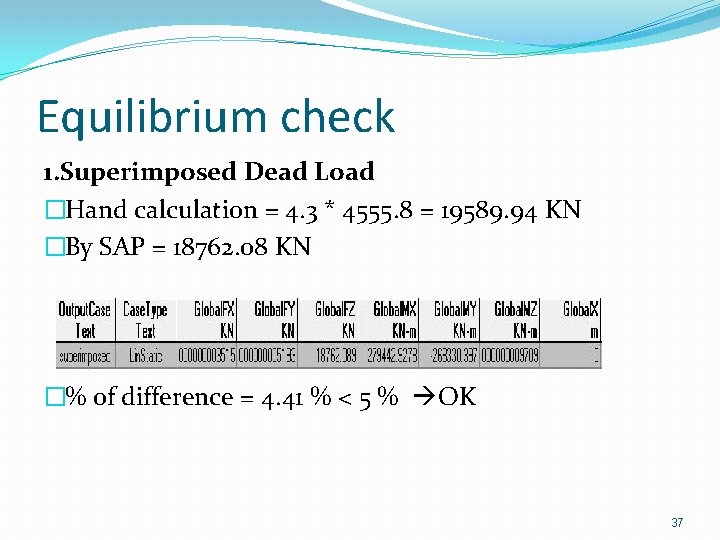
Equilibrium check 1. Superimposed Dead Load �Hand calculation = 4. 3 * 4555. 8 = 19589. 94 KN �By SAP = 18762. 08 KN �% of difference = 4. 41 % < 5 % OK 37
Equilibrium check 2. Live load �By Hand Basic floor = 2. 5*4155. 12=10387. 8 KN �Exterior balconies =5*400. 68=2003. 4 KN �Total = 12391. 2 KN �By SAP = 11909. 94 KN �% of difference =4% < 5 % OK 38
Equilibrium check � 3. Dead load �By hand= 39745. 83 KN �By SAP = 41639. 16 KN �% of difference =4. 54% < 5% OK 39
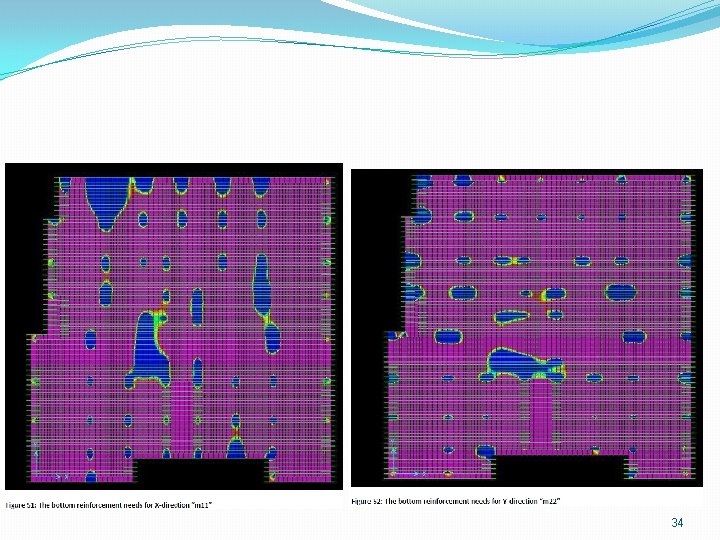
Bending moment for first floor slab in X-direction m 11 Bending moment for first floor slab in Y-direction, m 22 40
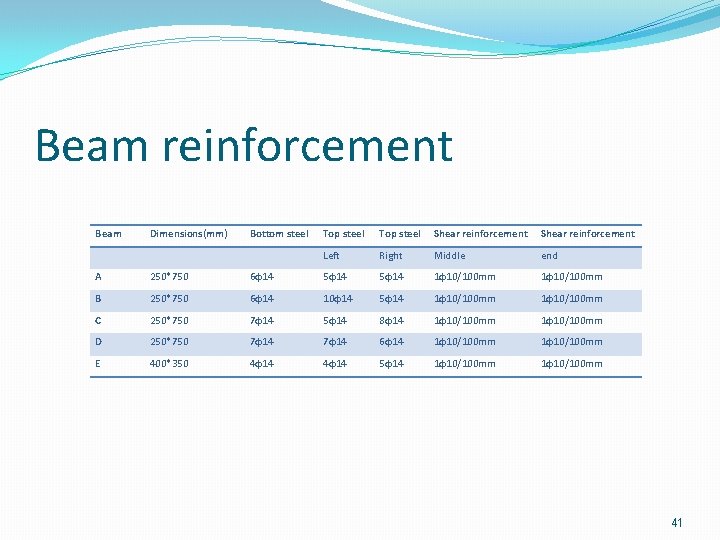
Beam reinforcement Beam Dimensions(mm) Bottom steel Top steel Shear reinforcement Left Right Middle end A 250*750 6ɸ 14 5ɸ 14 1ɸ 10/100 mm B 250*750 6ɸ 14 10ɸ 14 5ɸ 14 1ɸ 10/100 mm C 250*750 7ɸ 14 5ɸ 14 8ɸ 14 1ɸ 10/100 mm D 250*750 7ɸ 14 6ɸ 14 1ɸ 10/100 mm E 400*350 4ɸ 14 5ɸ 14 1ɸ 10/100 mm 41
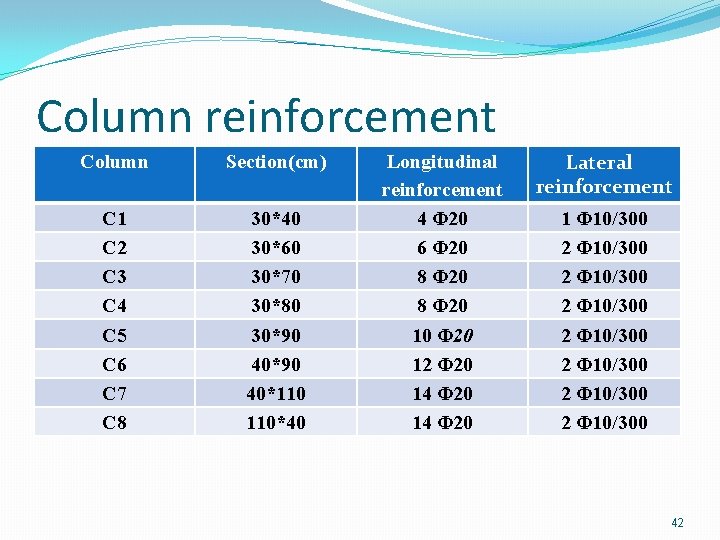
Column reinforcement Column Section(cm) C 1 C 2 C 3 C 4 C 5 C 6 C 7 C 8 30*40 30*60 30*70 30*80 30*90 40*110 110*40 Longitudinal reinforcement 4 Φ 20 6 Φ 20 8 Φ 20 10 Φ 20 12 Φ 20 14 Φ 20 Lateral reinforcement 1 Φ 10/300 2 Φ 10/300 2 Φ 10/300 42
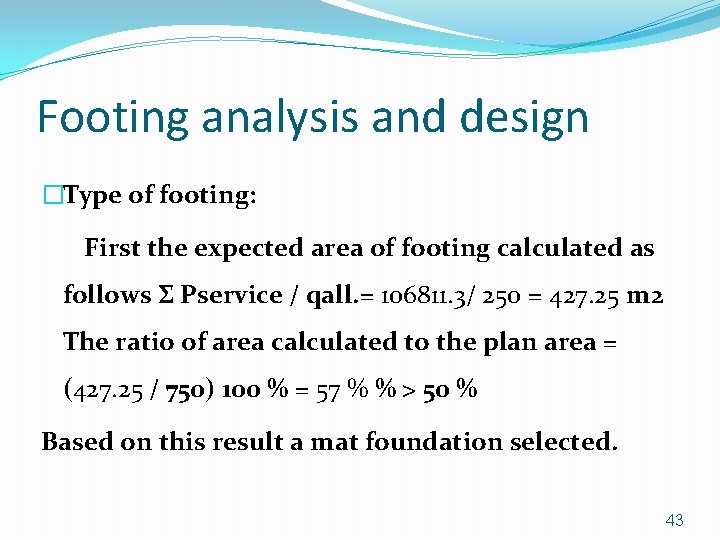
Footing analysis and design �Type of footing: First the expected area of footing calculated as follows Σ Pservice / qall. = 106811. 3/ 250 = 427. 25 m 2 The ratio of area calculated to the plan area = (427. 25 / 750) 100 % = 57 % % > 50 % Based on this result a mat foundation selected. 43
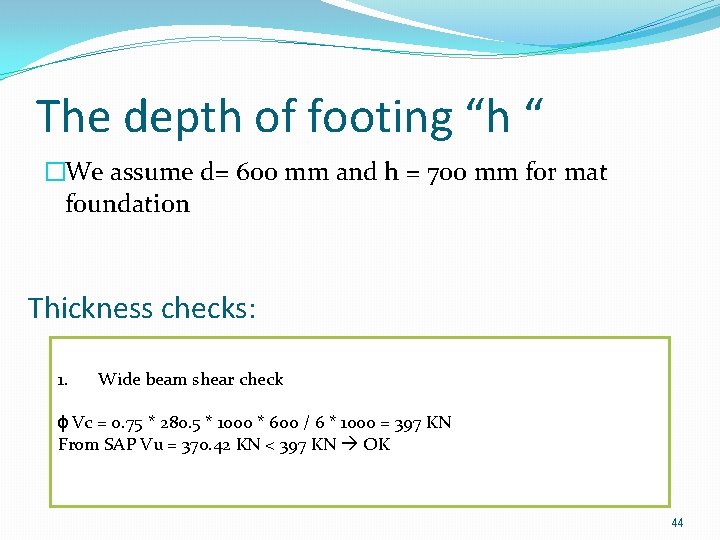
The depth of footing “h “ �We assume d= 600 mm and h = 700 mm for mat foundation Thickness checks: 1. Wide beam shear check ɸ Vc = 0. 75 * 280. 5 * 1000 * 600 / 6 * 1000 = 397 KN From SAP Vu = 370. 42 KN < 397 KN OK 44
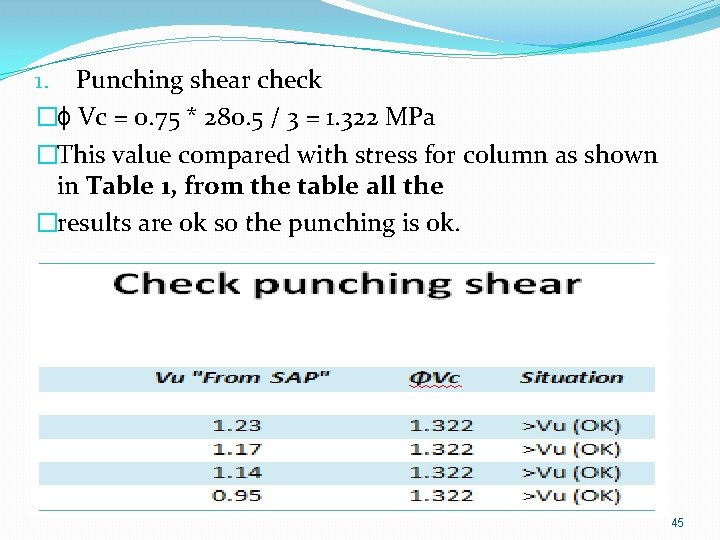
1. Punching shear check �ɸ Vc = 0. 75 * 280. 5 / 3 = 1. 322 MPa �This value compared with stress for column as shown in Table 1, from the table all the �results are ok so the punching is ok. 45
Check q (Bearing Capacity) �qall = 250 KN/ m 2, seismic service load used to check because it is the critical case, �Table 2 shows the results of a sample reading for the check. Sample number Location P service Area Q 1 Corner 15 . 0625 240 < 250 OK 2 Center 50 . 25 232 < 250 OK 3 Edge 29 . 125 200 < 250 OK 46
Mat Foundation Design 47
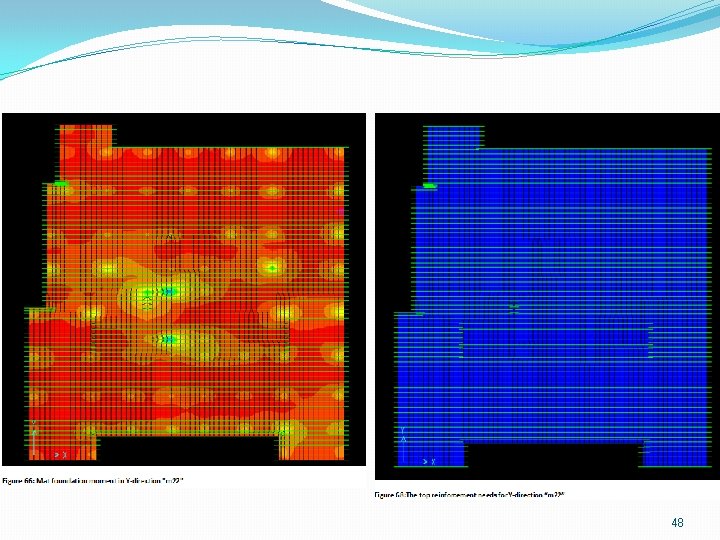
48
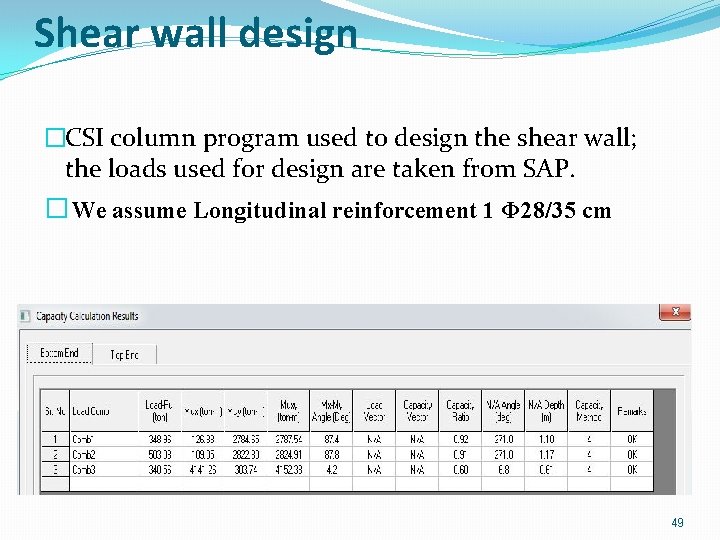
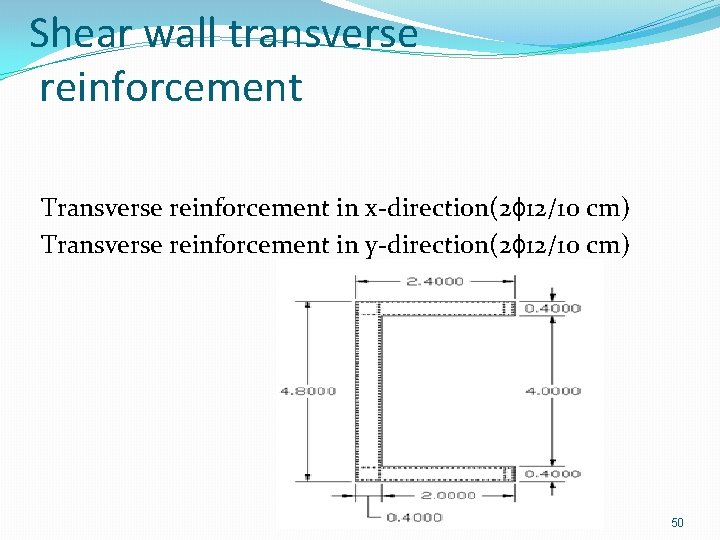
Shear wall design �CSI column program used to design the shear wall; the loads used for design are taken from SAP. � We assume Longitudinal reinforcement 1 Φ 28/35 cm 49
Shear wall transverse reinforcement Transverse reinforcement in x-direction(2ɸ 12/10 cm) Transverse reinforcement in y-direction(2ɸ 12/10 cm) 50
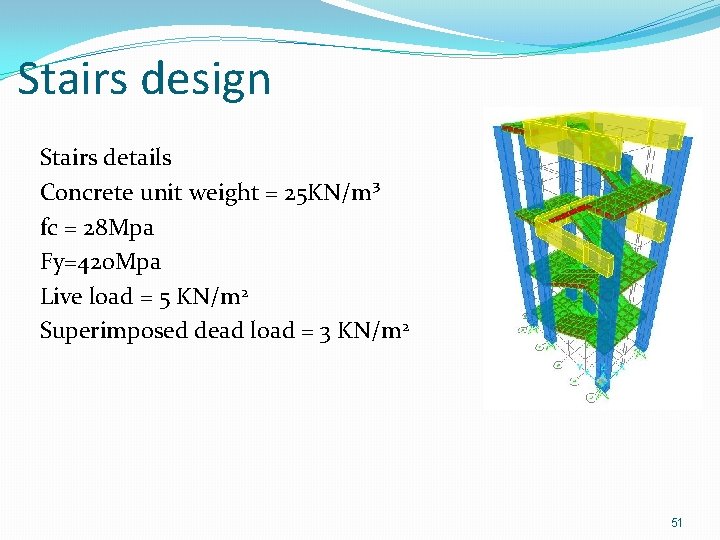
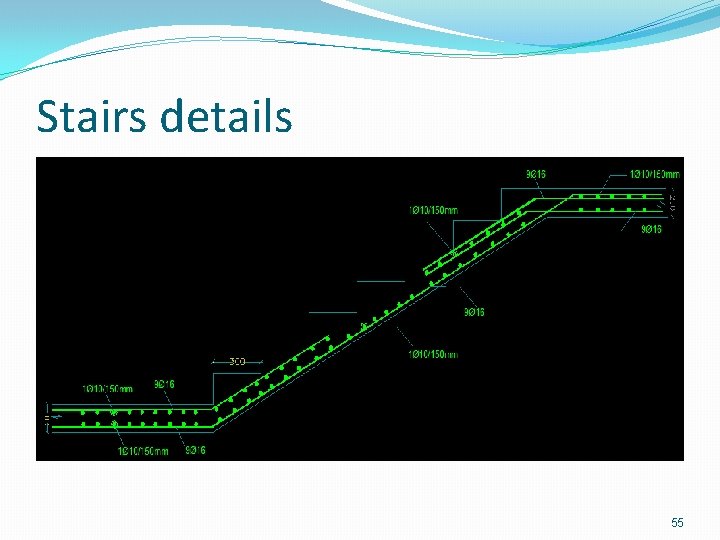
Stairs design Stairs details Concrete unit weight = 25 KN/m³ fc = 28 Mpa Fy=420 Mpa Live load = 5 KN/m 2 Superimposed dead load = 3 KN/m 2 51
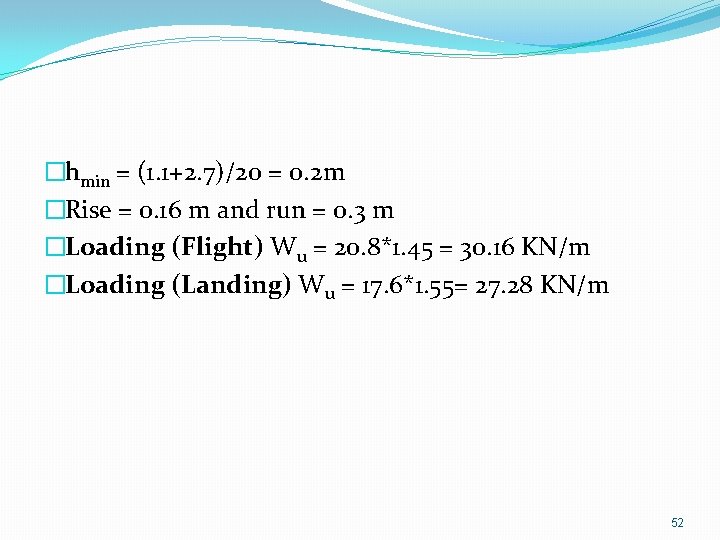
�hmin = (1. 1+2. 7)/20 = 0. 2 m �Rise = 0. 16 m and run = 0. 3 m �Loading (Flight) Wu = 20. 8*1. 45 = 30. 16 KN/m �Loading (Landing) Wu = 17. 6*1. 55= 27. 28 KN/m 52
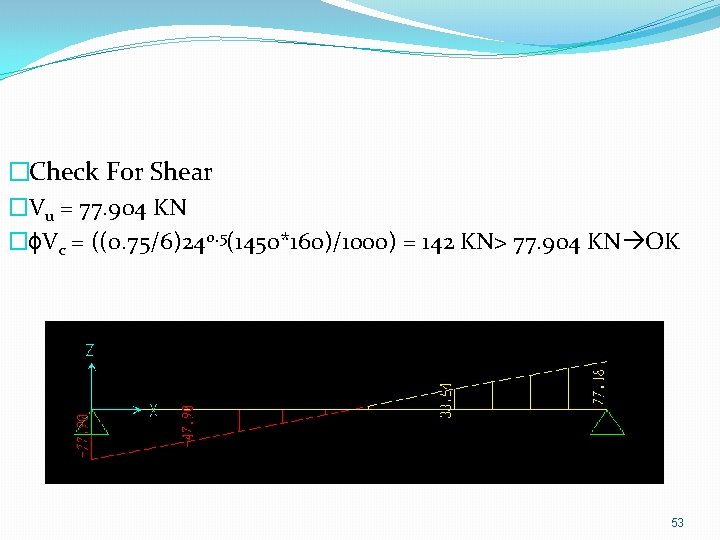
�Check For Shear �Vu = 77. 904 KN �ɸVc = ((0. 75/6)240. 5(1450*160)/1000) = 142 KN> 77. 904 KN OK 53
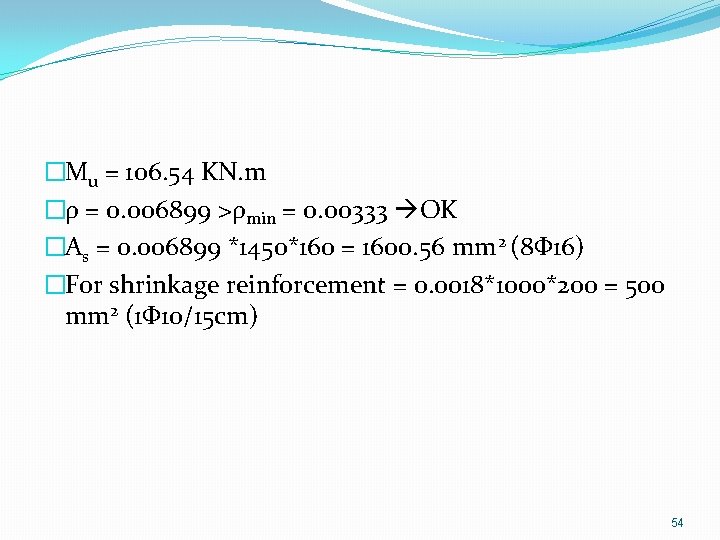
�Mu = 106. 54 KN. m �ρ = 0. 006899 >ρmin = 0. 00333 OK �As = 0. 006899 *1450*160 = 1600. 56 mm 2 (8Φ 16) �For shrinkage reinforcement = 0. 0018*1000*200 = 500 mm 2 (1Φ 10/15 cm) 54
Stairs details 55
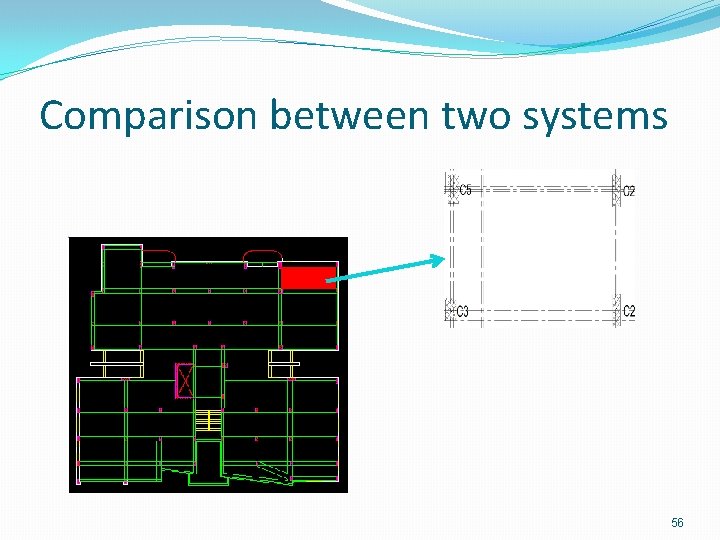
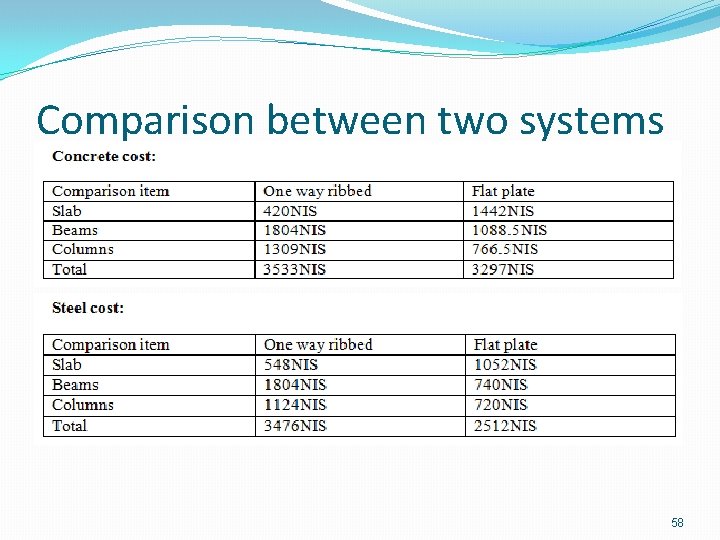
Comparison between two systems 56
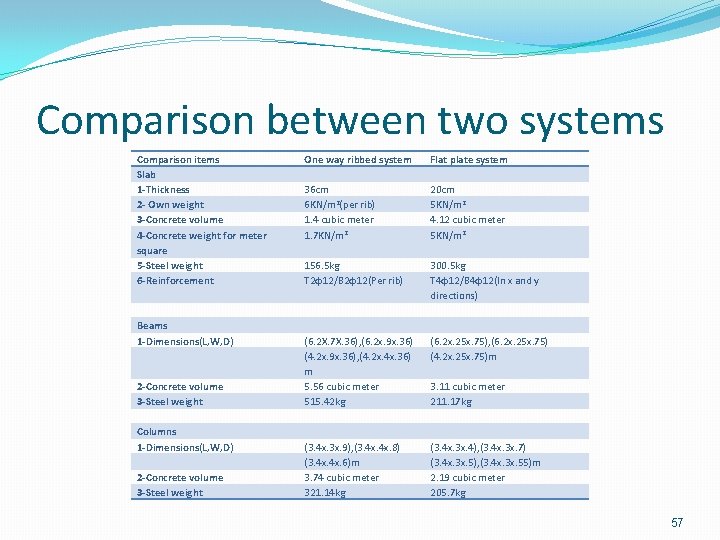
Comparison between two systems Comparison items Slab 1 -Thickness 2 - Own weight 3 -Concrete volume 4 -Concrete weight for meter square 5 -Steel weight 6 -Reinforcement Beams 1 -Dimensions(L, W, D) 2 -Concrete volume 3 -Steel weight Columns 1 -Dimensions(L, W, D) 2 -Concrete volume 3 -Steel weight One way ribbed system Flat plate system 36 cm 6 KN/m 2(per rib) 1. 4 cubic meter 1. 7 KN/m 2 20 cm 5 KN/m 2 4. 12 cubic meter 5 KN/m 2 156. 5 kg T 2ɸ 12/B 2ɸ 12(Per rib) 300. 5 kg T 4ɸ 12/B 4ɸ 12(In x and y directions) (6. 2 X. 7 X. 36), (6. 2 x. 9 x. 36) (4. 2 x. 9 x. 36), (4. 2 x. 4 x. 36) m 5. 56 cubic meter 515. 42 kg (6. 2 x. 25 x. 75), (6. 2 x. 25 x. 75) (4. 2 x. 25 x. 75)m (3. 4 x. 3 x. 9), (3. 4 x. 8) (3. 4 x. 6)m 3. 74 cubic meter 321. 14 kg (3. 4 x. 3 x. 4), (3. 4 x. 3 x. 7) (3. 4 x. 3 x. 5), (3. 4 x. 3 x. 55)m 2. 19 cubic meter 205. 7 kg 3. 11 cubic meter 211. 17 kg 57
Comparison between two systems 58
Thank you 59